Sunday, December 28, 2025
Home Blog Page 184

Time for Europeans to give diplomacy ‘time and space’: Iran’s Deputy FM

Nuclear Negotiations in Vienna

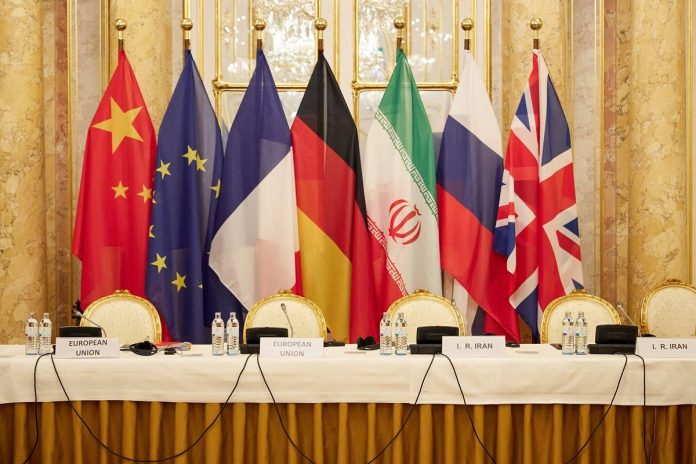
Gharibabadi made the remarks in an X post on Tuesday after he and Deputy Foreign Minister Majid Takht-Ravanchi met with senior diplomats from the three European signatories to the JCPOA, namely the UK, Germany, and France, in Geneva, focused on Resolution 2231.

Resolution 2231 is due to expire in October, officially lifting restrictions imposed on Iran’s nuclear program 10 years ago after the 2015 nuclear deal between Iran and the US, the E3, Russia, and China.

European countries, which have long threatened to trigger the so-called snapback mechanism, have said they will wait until the end of August to decide whether Tehran is serious about further negotiations on its nuclear work or whether they should invoke the snapback mechanism.

“Iran remains committed to diplomacy and a mutually beneficial diplomatic solution,” Gharibabadi added.

Iran asserts that European states lack both the legal standing and moral authority to invoke the “snapback” mechanism, a provision of the 2015 nuclear deal that would reimpose six UN Security Council resolutions against Tehran, originally adopted between 2006 and 2010.

To avert an imminent confrontation between Iran and Western governments, Russia has reportedly circulated a draft resolution proposing an extension of the current arrangement.

Under Moscow’s plan, the snapback provision would be extended but barred from activation for at least six months.

Iranian deputy foreign ministers Majid Takht-Ravanchi and Gharibabadi, along with senior representatives from the E3 countries, held a closed-door meeting at Iran’s Consulate General in Istanbul on July 25. The meeting, which lasted more than three hours, followed a similar round held on May 16 in Istanbul.

IAEA chief says first team of inspectors in Iran

IAEA

“Now the first team of IAEA inspectors is back in Iran, and we are about to restart,” he said.

“When it comes to Iran, as you know, there are many facilities; some were attacked, some were not,” Grossi added.

“So we are discussing what kind of modality is practical, [what kind of] modalities can be implemented, in order to facilitate the restart of our work there.”

“It’s not an easy situation, as you can imagine, because for some in Iran, the presence of international inspectors is detrimental to their international security. For some, that is not the case, ” the IAEA director-general stated.

He added that he had a “very good meeting” with US special envoy Steve Witkoff.

This comes after Iranian officials met with representatives of the E3 countries, UK, France, and Germany, in Geneva on Tuesday.

A diplomat said representatives of three European countries threatening to reimpose UN sanctions on Tehran over its nuclear program failed to agree with their Iranian counterpart on Tuesday on how to avoid the measures days ahead of a deadline,

The diplomat added efforts would continue to search for a solution ahead of an E3 deadline at the end of this month to invoke the so-called “snapback mechanism” of the 2015 Iran nuclear deal over what the countries have deemed Iran’s lack of compliance.

The snapback would mean a return to wide-ranging UN sanctions in place before the agreement, including a conventional arms embargo, restrictions on ballistic missile development, asset freezes, travel bans and a ban on producing nuclear-related technology.

The talks in Switzerland between representatives of Britain, France and Germany — known as the E3 — and Iran “ended without a final outcome,” stated the diplomat with knowledge of the meeting, speaking on condition of anonymity because they were not authorized to speak publicly about the sensitive discussions.

On July 2, Iran’s President Masoud Pezeshkian gave the final approval to a resolution that suspends cooperation with the IAEA.

The rationale for the move was the UN atomic agency’s politically-motivated resolution which paved the way for the US-Israeli acts of aggression against the Islamic Republic.

The resolution was approved during the public session of Iran’s Parliament on June 25.

According to the resolution, IAEA inspectors will not be permitted to enter Iran unless the security of the country’s nuclear facilities and that of peaceful nuclear activities is guaranteed, which is subject to the approval of Iran’s Supreme National Security Council.

Iran is also considering an entry ban on the IAEA chief, Rafael Grossi, who has come under fire for his politically motivated reports against Iran.

In an unprovoked, brazen assault on June 13, Israel targeted Iranian military commanders and nuclear scientists who had previously been placed on sanctions lists based on IAEA reports. Israel also killed civilians.

On June 22, the US military bombed Natanz, Fordow, and Isfahan nuclear sites in violation of the United Nations Charter, international law and the Nuclear Non-Proliferation Treaty (NPT).

Grossi remained silent. He did not condemn the onslaught, drawing criticisms from Iranian officials.

President Pezeshkian says Iran installs over 1,000 MW of solar panels

Speaking at the National Industry and Mining Day ceremony in Tehran on Tuesday, Pezeshkian outlined the government’s target of generating at least 7,000 megawatts of electricity from solar power.

The president called on companies and financial institutions to actively support the expansion of this sector.

“Without energy, development is meaningless,” the president stated.

“We must move toward clean energy.”

Hundreds of former EU ambassadors, officials call for tougher stance on Israel

Gaza War

“We express our profound disappointment that, in response to the deteriorating situation in Gaza, no substantive measures have been taken by the EU to pressure Israel to end its brutal war, to resume vital humanitarian assistance by mainstream providers, and to dismantle its illegal occupation of both Gaza and the West Bank,” signatories wrote in the letter seen by Irish broadcaster RTE News.

They warned that if the EU fails to take “an effective stand,” action will be left to individual member states or “groups of like-minded countries,” which would lack the “full force of EU-wide collective action.”

The officials also expressed “dismay” that, in the four weeks since their previous letter – signed by 58 former EU ambassadors – no cease-fire has been agreed in Gaza. Instead, they noted, Israel has begun implementing plans to empty Gaza City.

The letter condemned Israeli government plans to expand illegal settlements in East Jerusalem, calling it an “openly declared aim … to sabotage the longstanding two-state solution, backed by the vast majority of UN member states and the EU.”

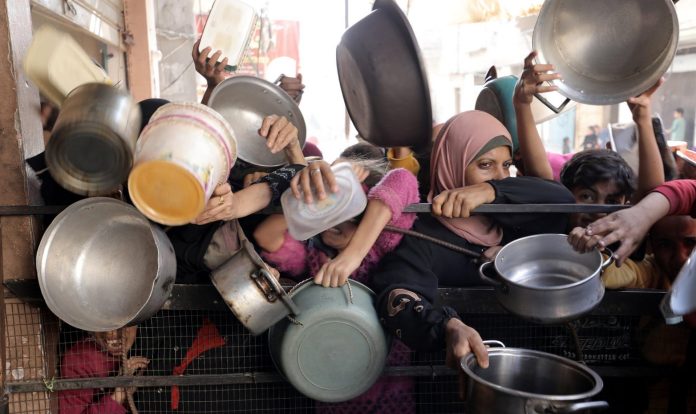
“If this was not bad enough, the Integrated Food Security Phase Classification (IPC) confirmed on 22 August that a man-made famine now exists in these same areas of Gaza, with half a million people there facing starvation, destitution and death,” it added.

The letter was addressed to European Commission President Ursula von der Leyen, European Council President Antonio Costa, European Parliament President Roberta Metsola, EU foreign policy chief Kaja Kallas, as well as the leaders and foreign ministers of the 27 member states.

Amnesty says Israel’s destruction in Lebanon could amount to war crimes

Lebanon War

The human rights organisation announced on Tuesday it found Israel manually laid explosives and bulldozers to “devastate civilian structures, including homes, mosques, cemeteries, roads, parks and soccer pitches, across 24 municipalities”.

Erika Guevara Rosas, a senior director at Amnesty, stated in the statement that the destruction had “rendered entire areas uninhabitable and ruined countless lives”.

In November 2024, a ceasefire ended more than a year of hostilities between Israel and Hezbollah, including two months of open war during which Israel sent in ground troops and conducted a major bombing campaign. Israel has been violating the ceasefire since, on a near-daily basis.

Amnesty said its analysis from October 1 of last year – at about the start of Israel’s ground offensive – until late January of this year showed “more than 10,000 structures were heavily damaged or destroyed during that time”. It added that “much of the destruction took place after November 27”, when the ceasefire took effect.

“In some videos, soldiers filmed themselves celebrating the destruction by singing and cheering,” it noted, adding that much of the destruction was done “in apparent absence of imperative military necessity and in violation” of international humanitarian law.

Amnesty said it sent Israeli authorities questions in late June about the destruction but had not received a response.

“Given the scale of destruction carried out by the Israeli military, many residents of southern Lebanon have nothing to return to,” Rosas stated, adding, “The Israeli authorities must provide prompt, full and adequate reparations to all victims of violations of international humanitarian law and war crimes, both individuals and entire communities.”

Amnesty also urged states to end weapons transfers and other military support to Israel.

Human Rights Watch (HRW) has also previously accused Israel of war crimes in its latest war with Hezbollah.

In October 2024, HRW stated that Israeli attacks on Lebanese medics were apparent war crimes. In April 2025, it said Israel conducted indiscriminate attacks on civilians between September and November 2024.

Israel claims to target Hezbollah sites and operatives, but attacks from October 2023 to the day before the ceasefire killed nearly 4,000 people in Lebanon, many of them civilians.

In March, the World Bank put the war’s total economic cost on Lebanon at $14bn, including $6.8bn in damage to physical structures.

Under the November agreement, Hezbollah was to pull its fighters back from near the border, with the Lebanese army deploying to the south and dismantling the armed group’s infrastructure there, a process the new government has begun.

Earlier this month, Lebanon approved a United States-backed plan to disarm Hezbollah by the end of the year, in exchange for an end to Israeli army attacks on its territory. Israel was to fully withdraw its troops from Lebanon, but it has so far refused. Hezbollah has refused to disarm.

Syria condemns Israeli military incursion countryside of Damascus, demands UN action

Israeli Army

In a statement, the Syrian Foreign Ministry described the incursion in Beit Jinn town in the Damascus countryside, carried out by 11 military vehicles and nearly 60 soldiers, as a “grave threat to regional peace and security” and a “flagrant violation of international law.”

The ministry added the escalation represents “a direct threat to peace and regional stability,” warning that such practices undermine international efforts to restore security.

It also called on the UN Security Council to adopt “urgent and effective measures to deter Israel from its aggressive practices and ensure the protection of Syria’s sovereignty.”

After the fall of the Bashar al-Assad government in late 2024, Israel expanded its occupation of the Syrian Golan Heights by seizing the demilitarized buffer zone, a move that violated the 1974 Disengagement Agreement with Syria.

The new Syrian administration, in place since late December 2024, has not posed any threat to Israel, yet the Israeli military has repeatedly crossed into Syrian territory and carried out airstrikes that killed civilians and destroyed Syrian military sites and infrastructure.

Ukrainian attacks disrupt around 17% of Russia’s oil refining capacity: Reuters

Russia Ukraine War

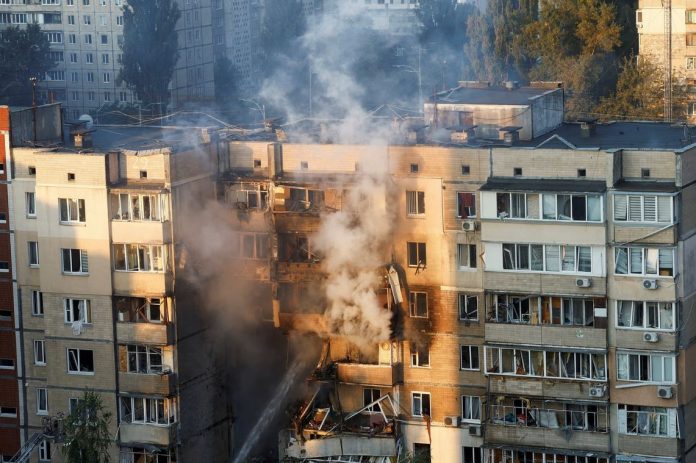
Kyiv has targeted dozens of refineries, oil depots, and military-industrial sites since the start of Russia’s full-scale invasion in 2022 to disrupt Moscow’s war effort. Winter drone attacks forced at least four Russian refineries to temporarily shut down.

The attacks have disrupted Russia’s ability to process and export oil and created gasoline shortages in some Russian regions, as well as in occupied Crimea.

Kyiv has increased the attacks recently ahead of potential peace talks following U.S. President Donald Trump’s meeting with Russian President Vladimir Putin in Alaska on Aug. 15 and with President Volodymyr Zelensky in Washington on Aug. 18.

Most recently, Ukrainian drones struck an oil refinery in Russia’s Samara Oblast and a gas terminal in Leningrad Oblast.

Lukoil’s refinery in Volgograd Oblast and a Rosneft facility in Ryazan have also come under attack in recent weeks.

A massive fire also broke out at the Novoshakhtinsk oil refinery in Rostov Oblast after another drone strike on Aug. 21. It took five days to extinguish the fire.

Ukraine’s military estimates that long-range strikes have cost Russia around $74.1 billion, or 4.11% of its projected gross domestic product (GDP) in 2025 alone.

Iran, Russia talk military cooperation, regional security

Iran National Army Day

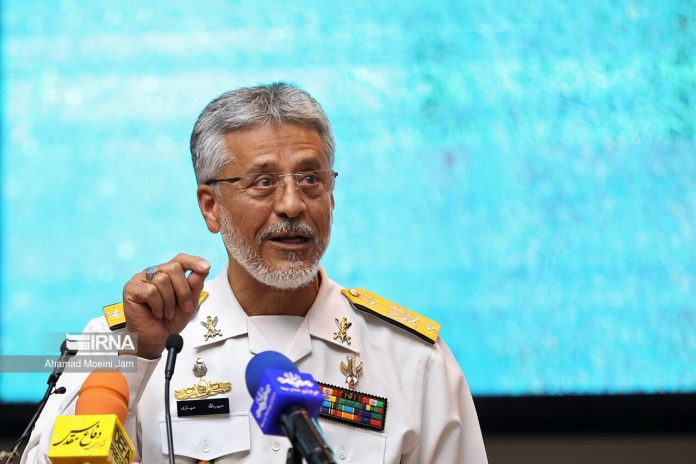
According to the ministry’s statement, the two sides reviewed ongoing matters in defense collaboration and discussed prospects for expanding military ties. They also exchanged views on pressing global and regional security developments, with particular focus on the situation in the South Caucasus.

Fomin expressed appreciation for Jalali’s contributions to advancing Moscow–Tehran relations. The Iranian ambassador, for his part, highlighted the dynamic and multifaceted nature of current cooperation between Tehran and Moscow in the military sphere and reiterated the Islamic Republic’s commitment to further developing these ties.

The Russian Defense Ministry emphasized that the meeting was conducted in a friendly atmosphere of mutual trust, with both sides reaffirming their determination to deepen strategic cooperation between the two countries.

Iran condemns Australia’s expulsion of envoy, denies anti-Semitism allegations

Iranian Foreign Ministry Spokesperson Esmail Baqaei said Tuesday that the decision is “unfounded and politically motivated,” adding that the allegations of anti-Semitism made by Canberra are “baseless and absurd.”

“There is no such concept as anti-Semitism in our culture and history; it is a Western and European phenomenon,” Baqaei said during his weekly press briefing.

He also dismissed claims that Iran was engaged in destabilizing activities in Europe, calling them “fabricated accusations.”

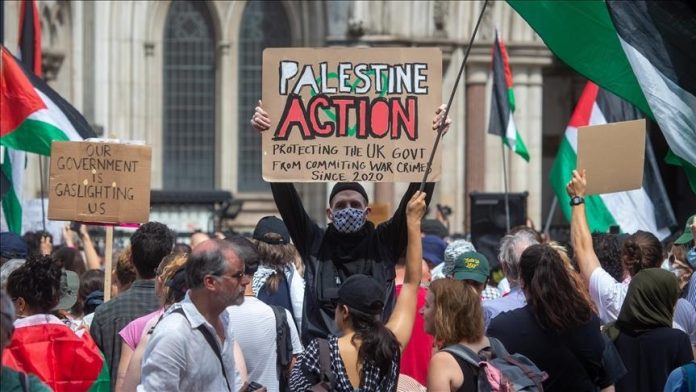
Baqaei suggested that Australia’s decision was influenced by domestic unrest, pointing to recent mass protests in the country condemning Israel’s military actions in the occupied Palestinian territories.

The remarks came after Australian Prime Minister Anthony Albanese accused Iran of organizing anti-Semitic attacks in Australia and said the country was severing diplomatic relations with Tehran in response.

“This decision appears to be a reaction aimed at compensating for the rare moments of criticism of the Israeli regime expressed in Australia,” Baqaei said.

The spokesperson warned that “any inappropriate diplomatic action will be met with a response,” noting that Tehran is assessing its next steps and will make an “appropriate decision” regarding the matter.

Gaza war will have ‘conclusive’ ending in two to three weeks: Trump

Gaza War

“Right now they’re talking about Gaza City – there’s always talking about something,” Trump said in the Oval Office during a meeting with South Korean President Lee Jae Myung.

“At some point, it’s going to get settled, and I’m saying you better get it settled soon. You have to get it settled soon,” he added.

For the first time since taking office, Trump gave a specific timeframe for when he imagined the war’s end.

“I think in the next two to three weeks, you’re gonna have a pretty conclusive ending,” he said before adding, “It’s a hard thing to say because they’ve been fighting for thousands of years.”

Trump is known for his impromptu style, and other deadlines he has given to enact tariffs have come and gone.

In general, the Trump administration has shown no urgency to end Israel’s genocide and has backed Israel’s decision to launch a new onslaught on Gaza City, experts say.

Speaking alongside Trump at the White House, Secretary of State Marco Rubio said the US wants the war to end, but the stipulation is the removal of Hamas.

“We want it to end. It has to end with no Hamas,” he added.

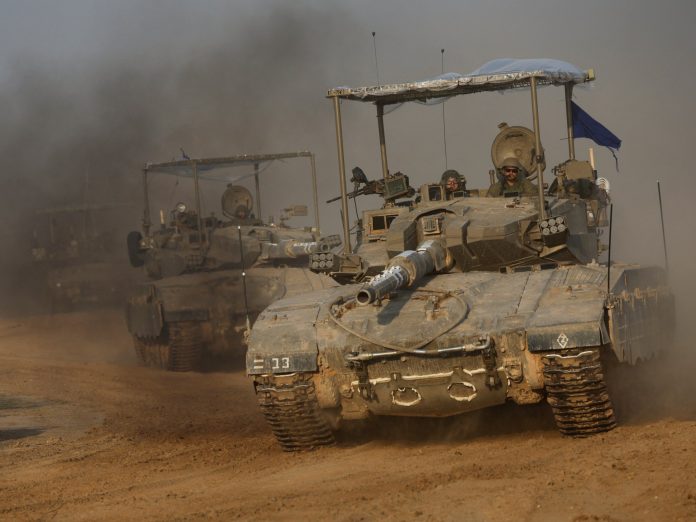
Despite a 22-month Israeli offensive following the Hamas-led 7 October 2023 attack on the occupied territories, the Palestinian group continues to launch guerrilla-style attacks on Israeli soldiers. US officials announced in January that Hamas had recruited almost as many fighters as Israel has killed.

Over 62,000 Palestinians have been killed in Gaza since October 2023, according to Palestinian health officials, the majority of them women and children.

Trump’s remarks on Monday were in response to questions over Israel’s devastating double-tap raid on Nasser hospital in southern Gaza that killed at least 20 people, of whom five were journalist.

The second part of the strike was caught vividly on camera by a Jordanian news station. The footage showed the obliteration of unarmed Palestinian rescue workers in safety vests trying to retrieve wounded people from the hospital.

Trump said he didn’t know about the Israeli attack but said, “I’m not happy about it. I don’t want to see it.”

Instead of addressing the deaths of Palestinians, however, Trump returned to talking about the Israeli captives still held in Gaza.

Israel says there are 20 captives still in the enclave – all military-aged men – but Trump has repeatedly said that number is less.

Trump stated on Monday that a “very serious diplomatic push” to end the war was underway, but didn’t provide details.

“It’s got to get over with because, between the hunger and all of the other problems – worse than hunger, death, pure death – people being killed,” Trump added.