Monday, December 29, 2025
Home Blog Page 169

Iran’s FM says Tehran unafraid of talks or war, rejects speculation on SCO membership

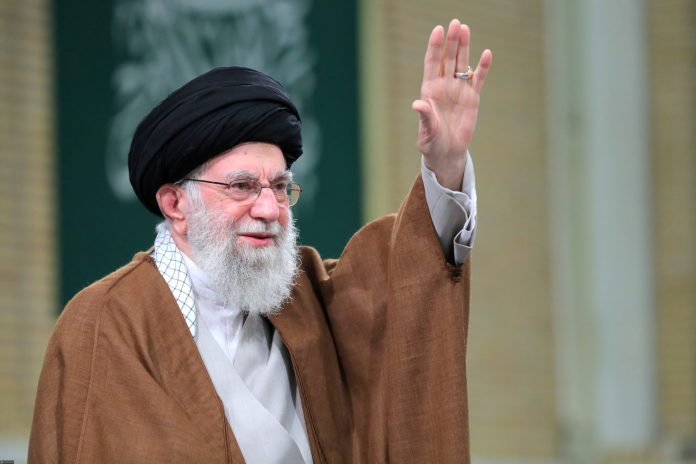
Abbas Araghchi

Speaking late Wednesday upon returning from President Massoud Pezeshkian’s visit to China, he described the trip as a milestone in bilateral relations and dismissed rumors that Iran’s membership in the Shanghai Cooperation Organization (SCO) could be revoked. “There is no such provision, and member states expressed their support for Iran,” he said.

Araghchi noted that the Iranian president’s meeting with his Russian counterpart was extended due to the breadth of political and economic issues under discussion.

Addressing speculation over the shorter meeting with China’s president, he explained that such encounters are traditionally brief during multilateral summits with many leaders in attendance.

On European efforts to trigger the “snapback” sanctions mechanism, the minister said Tehran, Moscow, and Beijing had submitted a joint letter to the United Nations and were pursuing further initiatives.

He revealed that Russia and China have already drafted a resolution at the Security Council to counter the move, which Iran is actively consulting on.

Araghchi also confirmed ongoing talks with the International Atomic Energy Agency (IAEA), stressing that new circumstances require a new framework for cooperation.

Kiev refutes Putin-Zelensky meeting in Moscow

President Of Ukraine Volodymyr Zelensky

Speaking to reporters in Beijing on Wednesday, Putin suggested that Zelensky could travel to the Russian capital to negotiate peace terms. Hungary, Switzerland, and Türkiye are among the countries that have previously expressed their readiness to host such talks.

In a post on X, Ukrainian Foreign Minister Andrey Sibiga said that at least seven countries are prepared to host a potential Putin-Zelensky summit.

“These are serious proposals and President Zelensky is ready for such a meeting at any time,” he wrote.

“Yet, Putin continues to mess around with everyone by making knowingly unacceptable proposals,” Sibiga added, calling for “increased pressure” on Russia.

Putin has repeatedly said he is open to meeting with Zelensky at the “final stage” of negotiations. He reiterated on Wednesday that a summit would only take place if it is “properly prepared and would yield positive results.”

“At the end of the day, if Zelensky is ready, he can travel to Moscow,” he added.

At the same time, the Russian leader again questioned Zelensky’s status as head of state, noting that his five-year presidential term expired last year and no new election was called due to martial law in Ukraine.

Russia has insisted that in order to secure a lasting peace, Ukraine must recognize its new borders and abandon plans to join NATO.

Hamas says agrees to formation of ‘independent administration of technocrats’ to run Gaza Strip

Hamas

“Hamas is still awaiting Israel’s response to the proposal put forward by mediators on Aug. 18, which was accepted by the group,” it said in a statement.

It reiterated that it is ready to reach a comprehensive agreement “that would see the release of all Israeli captives in exchange for an agreed number of Palestinian prisoners held in Israeli jails, ending the war on Gaza, the withdrawal of all occupation forces, opening the crossings to allow the entry of all necessary supplies into the Strip, and beginning the reconstruction process.”

The group affirmed its “approval for the formation of an independent national administration of technocrats to manage all affairs of the Gaza Strip and immediately assume responsibilities in all sectors.”

Israeli Prime Minister Benjamin Netanyahu rejected Hamas’ statement, calling it “spin.”

“The war can end immediately under the conditions set by the Cabinet: the release of all hostages, dismantling of Hamas’ weapons, demilitarization of Gaza, Israeli security control in Gaza, and establishment of an alternative civilian government that does not educate for terrorism, does not dispatch terrorism, and does not threaten Israel,” announced Netanyahu’s office.

Tel Aviv estimates that 48 Israeli captives remain in Gaza, including 20 alive, while more than 10,800 Palestinians are being held in Israeli prisons, where they suffer from torture, starvation and medical neglect, with many killed as a result, according to Palestinian and Israeli human rights and media reports.

About two weeks ago, Hamas announced its acceptance of a proposal by mediators for a prisoner swap and a 60-day ceasefire, but Israel had refrained from stating its position.

On Aug. 20, Netanyahu instead stated he had ordered the acceleration of plans to reoccupy Gaza City, despite international warnings that it could result in the enclave’s total destruction, greater suffering for Palestinians and mass displacement.

Israel has killed more than 63,700 Palestinians in Gaza since October 2023. The military campaign has devastated the enclave, which is facing famine.

Last November, the International Criminal Court issued arrest warrants for Netanyahu and his former Defense Minister Yoav Gallant for war crimes and crimes against humanity in Gaza.

Israel also faces a genocide case at the International Court of Justice for its war on the enclave.

Former Iranian President Rouhani urges national strategy based on people’s will, not mere slogans

Hassan Rouhani

Speaking to his advisers in the aftermath of Iran’s 12-day conflict with the US-Israeli alliance in June, Rouhani stressed that national strategy must evolve with the country’s realities and shortcomings.

“Our national strategy, if based on development, has one framework. But if it is based on the idea of guiding the entire world according to our own judgment, that is something else,” Rouhani said. “We must design a strategy that is shaped by the will of the people.”

He argued that while some elements of Iran’s 46-year strategic framework have been successful, others have shown weaknesses that must be addressed.

“Where there is doubt or hesitation about a policy, we can consult the people. Their wishes must be the foundation of our national strategy,” he added.

Rouhani warned that ignoring these lessons and relying solely on slogans could leave Iran vulnerable to future crises.

“If we change and complete our strategy, strengthen national cohesion, and follow the will of the people, we can prevent new wars,” he concluded.

Official says Iran still under cyber attacks two months after Israel’s assault

Cyber Attack

Mohmmad Amin Aghamiri, who serves as secretary of Iran’s Supreme Council of Cyber Space, said on Wednesday that the size and scope of cyber attacks on Iran have remained almost unchanged since the end of the Israeli aggression in late June.

“We are engaged in operations to fend off and counter cyber attacks by the enemies on a daily basis,” stated Aghamiri in a meeting with members of the Iranian parliament.

He added, however, that the cyber attacks have failed to disrupt online services in Iran, adding that attacks have been dealt with using elite teams of cyber defense experts who work around the clock to protect sensitive services.

The official did not elaborate whether the attacks had all been carried out by the Israeli regime or if other countries had been involved.

Iran suffered a barrage of damaging cyber attacks on its banking systems at the start of the Israeli aggression on June 15.

Iran’s banks of Pasargad and Sepah were the main victims of the attacks, with millions of customers losing access to online services for at least two days.

The two banks quickly returned their online services and operations to normal.

Aghamiri stated that Iran is still at war in cyberspace, adding that the enemy will continue to target sensitive infrastructure in Iran with cyber attacks because they are “less costly and less risky compared to physical attacks”.

Iranian lawmakers urge withdrawal from NPT amid rising tensions

Iran Nuclear Program

The demand was raised during Wednesday’s open session of the parliament, where a written warning addressed to Foreign Minister Seyed Abbas Araghchi was read out by Ahmad Naderi, a member of the presiding board.

The statement, signed by lawmaker Mohammadreza Ahmadi and 59 others, criticized Western violations of commitments under the 2015 nuclear deal, or JCPOA.

The legislators noted that “Washington’s withdrawal from the accord and Europe’s failure to uphold their obligations have left Iran with little reason to continue cooperation.”

In a separate development, Esmaeil Kowsari, a member of the National Security and Foreign Policy Committee, stressed that the final decision on quitting the NPT rests with Iran’s Supreme National Security Council.

He described the possible activation of the “snapback” sanctions mechanism by European states as “unlawful and illegitimate,” noting that Iran has legal and political options to respond.

Kowsari added that if international efforts fail to stop Western measures, Iran will consider “appropriate reciprocal actions,” which could include withdrawal from the NPT, but emphasized that “alternative strategies” are also under review.

Iran seeks guarantees before resuming talks with US, EU troika

Majid Takht Ravanchi

Speaking to a Turkish outlet, he emphasized that “diplomacy cannot continue under military aggression,” referencing Israeli and US strikes on Iran in June.

Takht-Ravanchi confirmed that indirect messages between Tehran and Washington are being exchanged through mediators, including Oman. However, he stressed that without assurances, talks cannot restart.

“We do not want to see the same scenario repeated,” he said, adding that Washington must prove it will not undermine negotiations.

In discussions with the European E3 — Britain, France, and Germany — the deputy minister reiterated that uranium enrichment is “non-negotiable” and must remain part of any deal. He underlined that zero enrichment is “impossible and unacceptable,” while sanctions relief is an essential condition for Iran.

The diplomat also condemned the strikes as “clear violations of international law,” noting heavy civilian casualties. He voiced appreciation for Turkey’s role as a host and said Ankara remains a preferred venue for talks.

Takht-Ravanchi reaffirmed Iran’s stance that its nuclear program is peaceful and fully within the framework of the Nuclear Non-Proliferation Treaty (NPT).

Israeli drones drop grenades near peacekeepers in Lebanon: UNIFIL

“This is one of the most serious attacks on UNIFIL personnel and assets since the cessation of hostilities agreement of last November,” UNIFIL said in a statement on Wednesday.

“One grenade impacted within 20 metres [22 yards] and three within approximately 100 metres [110 yards] of UN personnel and vehicles.”

The peacekeepers were working on Tuesday to clear roadblocks that were hindering access to a UN position, UNIFIL added.

Israel has been violating the November ceasefire it reached with Hezbollah, carrying out near-daily attacks on Lebanon, claiming to target Hezbollah sites and members but also killing large numbers of civilians, displacing communities, and destroying infrastructure and residential buildings.

UNIFIL said the Israeli army was informed in advance of its road clearance work in the area, southeast of the village of Marwahin.

“Any actions endangering UN peacekeepers and assets, and interference with their mandated tasks are unacceptable and a serious violation of Resolution 1701 and international law,” UNIFIL added, referring to the resolution adopted at the end of a 2006 war to stop hostilities between Israel and Hezbollah.

The Israeli military said it did not intentionally target the peacekeepers but dropped several sonic bombs near a suspect in a border area without providing evidence. It added that contact was made with the peacekeeping force and it explained details of what had happened.

The UN has expressed “serious concern” about the Israeli grenade attack. UN chief Antonio Guterres’s spokesman Stephane Dujarric said: “Whether or not they meant to do it or didn’t mean to do it, … the Israeli [military was] fully informed in advance of the work that we were doing on road clearance in that area.”

“They knew exactly where we were, when we were going to be there,” Dujarric stated, adding, “And obviously, we’re relieved that no one was hurt, but this could have been very tragic indeed.”

Established in 1978, UNIFIL patrols Lebanon’s southern border with Israel.

Last week, the UN Security Council unanimously extended the peacekeeping mission in Lebanon until the end of 2026, after which a yearlong drawdown and withdrawal is to commence.

The winding-down of UNIFIL has been pushed heavily by Israel and the United States, who accuse the peacekeeping force of providing political cover for Hezbollah since the 2006 war, which ended in an impasse, and of failing to work to disarm Hezbollah – despite that not being the UN body’s stated mission.

Meanwhile, Israel continues to occupy at least five points in Lebanese territory after its invasion of southern Lebanon in October. The ceasefire reached in November stipulates that Israeli forces should withdraw from southern Lebanon, but that has not yet happened.

Hezbollah Secretary-General Naim Qassem has rejected growing pressure to disarm the group, warning that Lebanon’s sovereignty could be achieved only by ending Israeli “aggression”.

Qassem said last month that the Lebanese government must first ensure Israel complies with the ceasefire agreement before talks on a national defence strategy can take place.

“The resistance will remain as a strong barrier, preventing Israel from achieving its goals, and Israel will not be able to remain in Lebanon or achieve its expansionist project through Lebanon,” the Hezbollah chief added.

He dismissed Lebanese government and foreign proposals to integrate Hezbollah’s arsenal into a national defence strategy, insisting that Israel must first withdraw from Lebanese territory, release prisoners and halt its attacks.

Pentagon chief: US seeking ‘deter’ Russia and China

Pentagon

Speaking to Fox News, Hegseth argued that the large military parade in Beijing on Wednesday, attended by Chinese President Xi Jinping and Russian President Vladimir Putin, highlighted the closer ties between the two neighbors.

“Unfortunately, the weakness of the previous administration has driven Russia and China closer together. That was a terrible development of a lack of American leadership and a lack of American strength,” Hegseth said.

“But that’s why President Trump has charged us at the Defense Department to be prepared, rebuild our military in historic ways, restore the warrior ethos, and reestablish deterrence,” he added.

Hegseth later clarified that although the US does not seek conflict with Russia or China, it aims to “maintain strategic advantage.”

Moscow and Beijing have described their relations as a strategic partnership “without limits.” After the West imposed sweeping sanctions in response to the Ukraine conflict in 2022, Russia redirected much of its trade and supply chains toward China.

Both countries have condemned Washington’s “Cold War mentality” and pledged to work toward a fairer, more equitable model of international relations.

Trump warns Putin on Ukraine war

Speaking to reporters at the White House on Wednesday, Trump said he planned to talk to Putin in the coming days, but the Russian leader was aware of his administration’s stance on the war.

“I have no message to President Putin. He knows where I stand, and he’ll make a decision one way or the other,” Trump stated, adding, “Whatever his decision is, we’ll either be happy about it or unhappy. And if we’re unhappy about it, you’ll see things happen.”

Trump’s comments came after Putin said earlier that he would be willing to meet his Ukrainian counterpart Volodymyr Zelensky in Moscow.

“Donald asked me for such a meeting. I said: ‘Yes, it’s possible, let Zelenskyy come to Moscow,’” Putin stated at the end of his visit to China, where he attended Beijing’s commemorations of the 80th anniversary of Japan’s defeat in World War II.

“I have never ruled out the possibility of such a meeting,” Putin continued, adding, “But is there any point? Let’s see.”

Putin added that Moscow would achieve its aims in Ukraine militarily if it could not reach an agreement.

“Let’s see how the situation develops,” Putin said.

Trump has suggested a one-on-one meeting between Putin and Zelenskyy as part of his efforts to bring an end to the three-and-a-half-year-long conflict.

Despite Trump’s pledge to bring a swift end to the conflict, Moscow and Kyiv remain far apart on the terms of any potential peace agreement.

Russia has announced that any deal with Ukraine would need to include land in four regions it has annexed since 2022, while Kyiv has ruled out ceding any territory.