Monday, December 29, 2025
Home Blog Page 166

‘He can come to Kyiv’: Zelensky mocks Putin’s Moscow invitation

Zelensky

“He can come to Kyiv,” Zelensky said in an interview with ABC News, laughing and shaking his head after being asked about the Moscow invitation.

“I can’t go to Moscow when my country’s under missiles, under attack, each day. I can’t go to the capital of this terrorist.”

Despite repeatedly avoiding an in-person meeting, Putin claimed that he has “never ruled out” direct talks with the Ukrainian president, adding, “If Zelensky is ready, let him come to Moscow.”

The meeting between the two leaders would be a crucial step toward negotiating an end to the full-scale war in Ukraine, now ongoing for three and a half years.

Following talks with Putin in Alaska on Aug. 15, U.S. President Donald Trump stated that he was working to facilitate a potential meeting between the Russian and Ukrainian leaders. The Kremlin has denied that any such agreement was reached.

According to Russian Foreign Minister Sergey Lavrov, a bilateral summit between Putin and Zelensky is “not ready at all,” despite Trump’s statements. Talking to U.S. media in August, Lavrov repeated Russian propaganda narratives that Zelensky is not a legitimate leader, a justification often used by the Kremlin to dodge the meeting.

Zelensky has previously voiced readiness to meet Putin on neutral ground, including during Russian-Ukrainian peace talks in Istanbul earlier this year — a proposal rejected by Moscow.

Despite international efforts to negotiate an end to the war, Moscow has refused calls for a ceasefire and continued to push maximalist demands, namely, a ban on Ukraine joining NATO and control over the entire Donetsk Oblast, including areas not controlled by Russian forces.

Simultaneously, Russia has ramped up aerial attacks against Ukrainian cities and continued ground offensive operations in Ukraine’s east.

West floats plan to send Bangladeshi or Saudi forces into Ukraine buffer zone: NBC

According to the outlet, Washington’s role would be to use drones, satellites, and other intelligence capabilities to monitor conditions and coordinate with participating nations. Moscow has repeatedly rejected the idea of Western or NATO troops in Ukraine as part of any peace settlement.

Politico previously outlined the same proposal for a buffer zone, suggesting involvement of third-party states but not naming them, and indicating that French and British troops could make up much of the force. A former Pentagon official told the outlet the plan reflected Kiev’s European backers “grasping at straws.”

On Friday, Russian President Vladimir Putin again stressed Moscow’s opposition, warning that foreign soldiers would either become targets for Russian forces during hostilities or serve no purpose if a genuine peace agreement were reached. He added that “the West’s dragging of Ukraine into NATO was one of the causes of the conflict” and said any settlement would have to include security guarantees for both Russia and Ukraine.

On Tuesday, Ukraine’s President Volodymyr Zelensky met with members of the “coalition of the willing,” the group of nations supplying Kiev with weapons and promising security commitments in the event of a resolution with Russia. Most of them have publicly ruled out putting their own forces on the ground.

Meanwhile, Moscow has announced it plans to establish its own buffer zone along parts of the border to protect Russian civilians, particularly in Kursk and Bryansk regions. Putin noted in May that Ukrainian forces often target non-military assets, including homes and civilian vehicles such as ambulances and farm equipment, which he said made such measures necessary.


Iran executes man convicted over deadly attack in Semirom

Iran Prison

According to the Judiciary’s media center, Bahramian was described as a “top-level offender” in Semirom and was accused of involvement in the killing of security officer Mohsen Rezayi during unrest in January 2023.

Rezayi, 37, was shot in the head during an armed assault on security forces and left behind two children.

Officials said Bahramian had taken part in the incident with other armed individuals, using a Kalashnikov and a hunting rifle to fire at security personnel and incite attacks on the governor’s office, judiciary building, and local officials, including the Friday prayers leader.

Bahramian was arrested later that month after security operations.
The Judiciary said he confessed during interrogations, and prosecutors charged him with moharebeh, or enmity against God, a capital offense under Iranian law.

His trial was held at a court in Isfahan with legal representation.
The death sentence was upheld by the Supreme Court after an appeal and was carried out early Saturday morning following completion of legal procedures.

Former Iranian president Rouhani donates 25,000 books to National Library

Hassan Rouhani

The handover ceremony took place on Saturday, with several cultural and political figures in attendance.

Rouhani said many of the books contain his personal notes, including annotations about when and under which professors he studied them.

He recalled his education in a school established in 1961 by Ayatollah Mohammad Beheshti in Qom, where students were taught both traditional religious texts and subjects beyond the usual seminary curriculum.

He also shared memories of his university studies, emphasizing the role these books played throughout his academic and political career.

Among those attending the ceremony were minister of cultural heritage, tourism and handicrafts; Seyyed Reza Salehi Amiri, head of the National Library; Gholamreza Amirkhani, former presidential adviser Hesamoddin Ashna; academic Najafgholi Habibi; and journalist Mohammad Gouchani.

The donation is expected to enrich the National Library’s archives, offering researchers and readers access to rare and annotated works.

Iran says, E3, US silence on Israel’s expansion of Dimona eliminating non-proliferation credibility

Dimona nuclear power plant
A partial view of the Dimona nuclear power plant in the southern Israeli Negev desert.

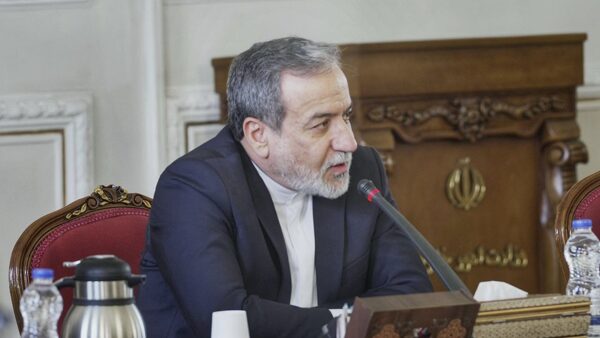
Araghchi made the remark in a post on his X account on Friday after experts analyzing satellite imagery report that construction has intensified on a significant new building at a site central to Israel’s nuclear weapons program, which they say could be a new reactor or a facility to assemble nuclear arms.

The work at the Shimon Peres Negev Nuclear Research Center near the city of Dimona will renew questions about Israel’s widely believed status as the only entity possessing nuclear bombs in West Asia.

In his post, Araghchi reiterated Iran’s continued warnings that the Western “hysteria” over nuclear proliferation in the West Asia region is “all fluff”.

“The issue, in their view, is not the existence—or expansion—of atomic weapon arsenals. It is about who gets to advance scientifically, even with peaceful nuclear programs,” the top Iranian diplomat wrote.

It is not a surprise, he continued, that “there is deafening Western silence over the apparent expansion of the only nuclear weapons arsenal in our region—the nukes in the hands of their genocidal ally.”

“The E3 (Britain, France and Germany) and the US may be in denial, but their silence is eliminating any credibility to utter anything about non-proliferation,” Araghchi pointed out.

Images taken on July 5 by Planet Labs PBC show intensified construction at the site of the dig. Thick concrete retaining walls seem to be laid at the site, which appears to have multiple floors underground. Cranes loom overhead.

Israel is widely believed to manufacture its nuclear weapons using a heavy water reactor, which produces plutonium for atomic bombs and tritium to boost their explosive yield.

Both the Israeli regime and its staunchest ally, the US, have declined to comment, adhering to Israel’s policy of neither confirming nor denying the existence of its nuclear arsenal.

Israel’s major construction at the Shimon Peres Negev Nuclear Research Center comes as the regime launched a blatant and unprovoked act of aggression against Iran on June 13, assassinating numerous high-ranking military commanders, nuclear scientists, and ordinary civilians.

More than a week later, the US joined the aggression by bombing three Iranian nuclear sites, an action which constitutes a grave violation of the United Nations Charter, international law, and the Nuclear Non-Proliferation Treaty (NPT).

Israel is estimated to possess between 200 and 400 nuclear warheads, positioning it as sole possessor of non-conventional arms in West Asia.

However, it has consistently declined to accede to the Treaty on the Non-Proliferation of Nuclear Weapons (NPT) and has not permitted international inspections of its nuclear facilities amid enduring diplomatic support of the United States.

Attacks against Palestinians by Israeli soldiers, illegal settlers up 39% in West Bank: UN

Israel Palestine West Bank

Citing the Office for the Coordination of Humanitarian Affairs (OCHA), UN spokesperson Stephane Dujarric said at a news conference that “since January, more than 2,780 Palestinians have been injured by Israeli forces, or settlers.”

“That’s a 39% increase compared to last year. This includes nearly 500 people injured by Israeli settlers. That’s a twofold rise over the same timeframe,” he stated.

Noting that “as of Monday, OCHA has also documented the demolition of more than 1,150 structures across the West Bank this year for lacking Israeli-issued building permits,” Dujarric described the permits as “almost impossible for any Palestinian to obtain.”

“That’s a 44% increase compared to the same period,” he added.

Dujarric said: “The ongoing offensive in Gaza City has further intensified today, increasing the damage to civilians and facilities on which they depend to survive.”

“Earlier today, Israeli forces attacked a high-rise building that they say was used to execute attacks against them. Initial information collected by OCHA indicates that tents sheltering displaced people were damaged nearby. We’re also concerned by the announcement that more high-rise buildings will be attacked soon,” he added.

Between Wednesday and Thursday, he said that OCHA recorded nearly 3,000 movements from northern Gaza to the south, bringing the total since Oct. 14 to nearly 41,000.

On humanitarian access, Dujarric added OCHA attempted to coordinate 29 missions with Israeli authorities over two days, but “19 of them were either denied outright or initially approved but then significantly delayed or otherwise impeded.”

US in ‘very deep’ talks with Hamas about Gaza war: Trump

Gaza War

“We are in very deep negotiations with Hamas,” Trump told reporters at the White House.

“If you don’t let them (hostages) all out, it’s going to be a tough situation. It’s going to be nasty.”

“I think of the 20, there could be some that have recently died, is what I’m hearing. I hope that’s wrong,” he said, adding, “There are 20 people, maybe a little less, but there are 20 people that we want out. We want the bodies.”

Around 250 hostages were taken to Gaza following a cross-border attack by Hamas on Israel on Oct. 7, 2023. Tel Aviv estimates that nearly 50 Israeli hostages are being held in Gaza, including 20 who are alive.

Meanwhile, more than 10,400 Palestinians are being held in Israeli prisons, suffering from torture, starvation, and medical neglect, which has resulted in many deaths, according to Palestinian and Israeli human rights and media reports.

In mid-August, Hamas accepted a ceasefire and hostage deal proposed by Egyptian and Qatari mediators. While Israel has not responded to the proposal, Netanyahu gave orders to proceed with a plan to occupy Gaza City.

Israel has killed nearly 64,000 Palestinians in Gaza since October 2023. The military campaign has devastated the enclave, which is facing famine.

Last November, the International Criminal Court issued arrest warrants for Israeli Prime Minister Benjamin Netanyahu and his former Defense Minister Yoav Gallant for war crimes and crimes against humanity in Gaza.

Israel also faces a genocide case at the International Court of Justice for its war on the enclave.

US military officials involved in European plan to send 10,000 forces to Ukraine: WSJ

The scheme drawn up primarily by European army chiefs includes two groups of forces that are to be sent to Ukraine, according to the report. One of them would be tasked with training and assistance to the Ukrainian military, while the second would serve as a “reassurance force” for Kiev. The troops are to be deployed once Moscow and Kiev reach a peace deal.

A total of 26 nations agreed to contribute to “security guarantees” for Ukraine in various ways, French President Emmanuel Macron said earlier this week, following a meeting of the so-called ‘coalition of the willing’ – a group of Kiev’s European backers.

The current commitments would allow for a deployment of over 10,000 troops to Ukraine, the WSJ source said, adding that the plan “received input from some US generals,” including the US head of the NATO Allied Command Operations.

The level of US involvement in the scheme remains unclear, the report said, adding that there have been no clear statements from President Donald Trump.

Russia has expressed strong opposition to any NATO troop deployment to Ukraine.

On Friday, President Vladimir Putin warned that foreign soldiers would either become targets for Russian forces or serve no purpose if a genuine peace agreement were reached.

He added that “the West’s dragging of Ukraine into NATO was one of the causes of the conflict” and said any settlement would have to include security guarantees for both Russia and Ukraine.

Iranian Reform Front leader files complaint against state TV

In a letter to Hamzeh Khalili, chairman of the Supervisory Council on IRIB, Mansouri said the broadcaster aired programs that distorted and discredited the Reform Front’s recent 11-point proposal aimed at addressing the country’s current crises.

She argued that instead of encouraging dialogue and national solidarity, the programs engaged in “accusations, distortions, and clear unfairness,” while denying the Reform Front an opportunity to respond.

Mansouri stressed that the statement was presented “beyond partisan considerations” and sought to prevent future crises and strengthen national stability.

She recalled the role of reformists in moments of national challenge, including during the 12-day war with Israel in June, and criticized IRIB for portraying the movement as “submissive.”

Her complaint also cited Article 175 of Iran’s Constitution, which requires the broadcaster to uphold freedom of expression and impartiality.

A copy of the complaint was sent to Minister of Culture Abbas Salehi, the deputy chair of the supervisory council.

US Navy killed North Korean civilians during botched mission: NYT

The newspaper reported that the classified mission was carried out by the US Navy’s SEAL Team 6 during high-stakes diplomatic negotiations between Washington and Pyongyang in early 2019.

The elite special forces unit – the same one that killed former al-Qaeda leader Osama bin Laden in 2011 – was tasked with covertly going ashore in North Korea and planting a listening device to spy on the country’s leadership.

But working in the dead of night with blackout communications, a series of errors led to civilians – several North Koreans reportedly diving for shellfish – inadvertently coming across the US special forces as they splashed ashore.

The SEALs opened fire, killing all those on board a small fishing vessel, the Times report said, without specifying the number of casualties.

Officials familiar with the mission told the Times that the US soldiers “pulled the bodies into the water to hide them from the North Korean authorities”. One source described how SEAL members “punctured the boat crew’s lungs with knives to make sure their bodies would sink”.

The Times said it gained knowledge of the botched mission through interviews with dozens of people, “including civilian government officials, members of the first Trump administration and current and former military personnel with knowledge of the mission”.

All spoke on condition of anonymity due to the mission’s classified status, the news outlet said. It added that several people said their decision to provide details was out of concern that the US military’s special operations failures are “often hidden by government secrecy”.

Sources said President Trump, during his first term in office, gave the mission its final go-ahead.

Trump denied any knowledge of the operations when questioned by reporters about the report on Friday.

“I could look, but I know nothing about [it],” Trump said.

“I’m hearing it now for the first time,” he added.

US officials said it was “unclear” whether Pyongyang ever pieced together what had happened in 2019.

North Korea did not make any public statements about the deaths of civilians at the time and has yet to comment on the story published by the daily.