Thursday, April 23, 2026
Home Blog Page 166

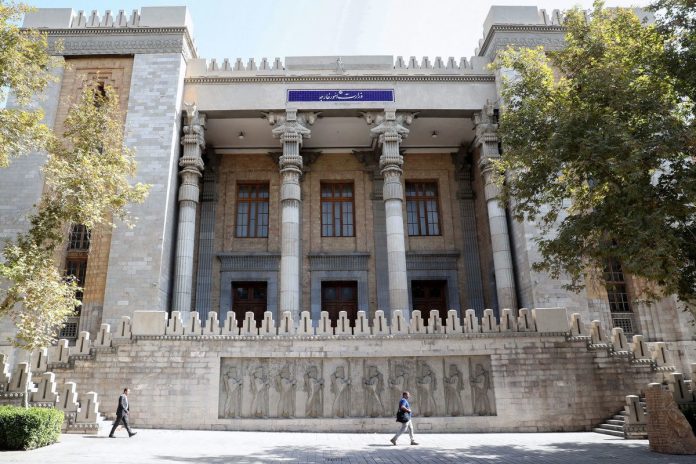
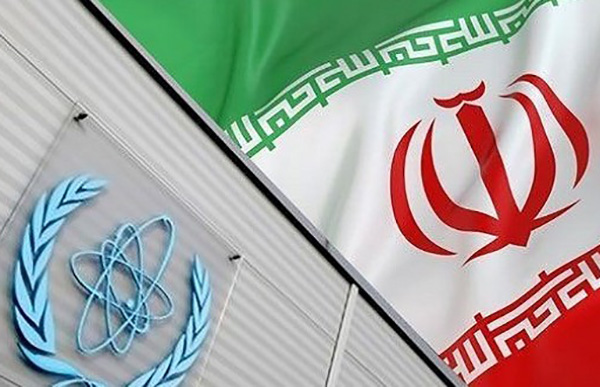
Tehran condemns E3’s move to ‘snapback’ UN sanctions

Iranian Foreign Ministry

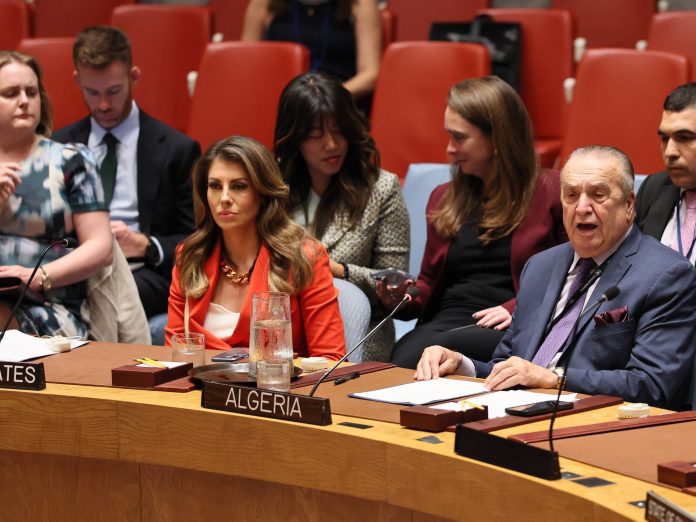
The reaction came after the UN Security Council on Friday voted against a draft resolution that would have permanently lifted sanctions linked to Iran’s nuclear program.

Nine members opposed the measure, while Russia, China, Pakistan, and Algeria backed it, and two abstained. As a result, the UN sanctions against Iran will be re-imposed by September 28 if no agreement is reached.

In a statement, the Iranian Foreign Ministry said the move amounted to “an unlawful, unjustified and provocative act” that undermines ongoing diplomatic processes.

The Ministry added, “The destructive actions by three European countries (Britain, France and Germany) to reinstate the annulled UN Security Council resolutions come at a time when Iran’s safeguarded nuclear facilities were attacked and damaged by the Israeli regime and the United States.”

It said these attacks violate the UN Charter, endanger international peace and security, and severely undermine the foundations of the non-proliferation regime.

The Ministry added, “The three European countries not only declined to condemn these aggressive actions by Israel and the United States but also perpetrated a dual violation by abusing the JCPOA dispute resolution mechanism.”

The statement outlined five points, noting that the European action completes the process of reviving canceled resolutions and “seriously weakens” diplomacy.

The ministry highlighted that the full responsibility for the consequences lies with the United States and the E3, which “misrepresented facts, made unfounded allegations, and pressured some non-permanent Council members.”

The measure lacked consensus and went ahead despite strong opposition from several Council members, damaging both the credibility of the body and the non-proliferation regime, noted the statement.

Iran’s nuclear program is peaceful and reflects the will of its people to pursue scientific and technological progress, noted the ministry, adding that Tehran will defend its rights, including through diplomacy, while “reserving the right to respond to any unlawful measures.”

Finally, it urged all responsible members of the international community to reject the European action and avoid granting it legitimacy.


US revokes sanctions waiver for Iran’s Chabahar port

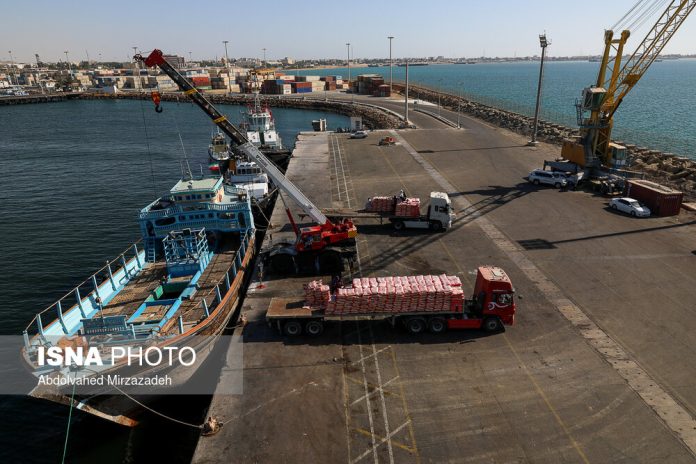
Chabahar Port

The White House announced on Friday that the exemption, in place since 2018, will end on September 29.

The waiver had allowed India to develop the Shahid Beheshti terminal at Chabahar, seen as a key gateway to Afghanistan and Central Asia. With its withdrawal, entities involved in the project may now face penalties.

US State Department spokesperson Thomas Pigott said the decision was consistent with the Trump administration’s so-called “maximum pressure” policy. He said that the revocation means any person or company engaged in the port’s operation could be exposed to sanctions.

Located in Chabahar, the port gives India access to Afghanistan and beyond, while also feeding into larger connectivity schemes such as the International North-South Transport Corridor.

India has already provided equipment worth $25 million, shipped food supplies through the port, and, in May 2024, signed a 10-year agreement to operate it. Under that deal, India pledged $120 million in investment and offered an additional $250 million credit line for infrastructure upgrades.

The waiver was originally granted in recognition of the port’s importance for stabilizing Afghanistan and facilitating humanitarian shipments.

Iran, meanwhile, has long slammed Washington’s reliance on sanctions. Officials in Tehran describe the approach as an “addiction” that has persisted since the 1979 revolution, with various Iranian entities repeatedly targeted under shifting pretexts.

Meanwhile, the sanction comes as tensions between New Delhi and Washington have already been rising under the Trump administration. Earlier this year, the White House imposed 50 percent tariffs on Indian goods, doubling an earlier rate.

Trump justified the move by accusing India of indirectly financing Russia’s war in Ukraine through oil purchases. The tariffs, which came into force in August, now cover most Indian exports to the US.

The measures hit at a time when bilateral trade stood at more than $87 billion, making India one of America’s largest partners. Experts warn the duties could shrink India’s exports to the US to nearly half within two years.

New Delhi has condemned the tariffs as “unfair, unjustified, and unreasonable,” and signaled a stronger tilt toward Moscow and Beijing.


Iran slams European troika for failing to respect Tehran-IAEA deal

Speaking to Russia’s news outlet RIA Novosti on Friday, Khatibzadeh said the three countries had previously pledged to honor any deal between Tehran and the IAEA, but instead have “taken further wrong steps” and politicized Iran’s nuclear case.

He noted that the agreement was signed in Cairo and welcomed by IAEA Director General Rafael Grossi, who reported it to the agency. “After this deal, we saw nothing from the Europeans but criticism and mistakes”, he said. Khatibzadeh stressed that Tehran remains committed to diplomacy.

He however said Iran’s future actions depend on the stance of its counterparts regarding the reimposition of sanctions. Khatibzadeh argued that Europe has no legal basis to trigger the snapback mechanism, calling its current efforts politically motivated.

The Iranian official reiterated that the window for diplomacy remains open, adding that any new nuclear agreement must be based on principles defined by Iran’s foreign policy and national interests.

US vetoes UN Security Council Gaza ceasefire demand for sixth time

The resolution, approved by 14 of the 15 members of the council on Thursday, called for an “immediate, unconditional and permanent ceasefire in Gaza respected by all parties”, the release of all captives held by Hamas and other groups, and a lifting of restrictions on humanitarian aid into the besieged and bombardment enclave.

Drafted by the council’s 10 elected members, the resolution went further than previous iterations to highlight what diplomats called the “catastrophic” humanitarian situation in Gaza after nearly two years of war in the Gaza Strip, which has killed at least 65,100 people, according to Palestinian health officials.

As expected, the United States vetoed the effort. “US opposition to this resolution will come as no surprise,” said Morgan Ortagus, US deputy special envoy to the Middle East.

“It fails to condemn Hamas or recognise Israel’s right to defend itself, and it wrongly legitimises the false narratives benefitting Hamas, which have sadly found currency in this council,” she continued.

Ortagus added that the UN-backed Integrated Food Security Phase Classification’s official declaration of famine in the enclave last month had employed “flawed methodology”, hailing the work of the heavily militarised GHF hubs, where so many Palestinians have been killed while seeking food for their families.

After the vote, the Palestinian Ambassador to the United Nations Riyad Mansour stressed that the US veto was “deeply regrettable” and had prevented “the Security Council from playing its rightful role in the face of these atrocities and to protect civilians in the face of genocide”.

“Unfortunately, the Council remains silent at a great cost for its credibility and authority,” Mansour continued, adding, “This demonstrates that when it comes to atrocity crimes, the use of the veto should simply not be allowed.”

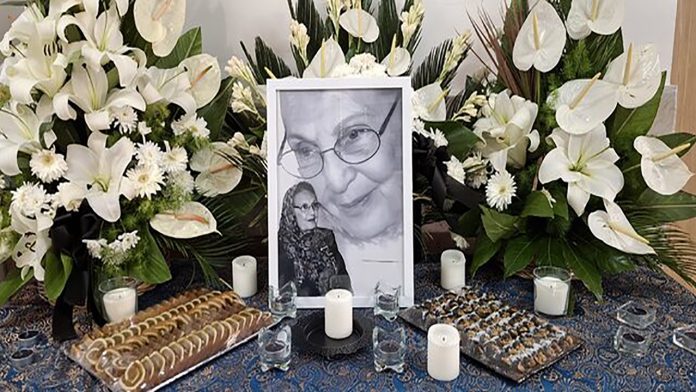
Iran mourns educator, author Samineh Baghcheban

Former students, cultural figures, and officials gathered to honor her legacy before her burial in the section of Notables at Behesht Zahra cemetery.

Baghcheban, who died on September 16 at the age of 97, was the daughter of Jabar Baghcheban, founder of Iran’s first school for the deaf.

After his death in 1966, she took over the school’s leadership, continuing the family’s mission of advancing education for children with hearing disabilities.

Attendees included her sister, Parvaneh Baghcheban, presidential adviser Ali Rabiei, poet Mohammad-Reza Shafiei Kadkani, and numerous former students spanning generations.
Many addressed the crowd in sign language, recalling her tireless work in education and literature.

Rabiei, conveying condolences from President Massoud Pezeshkian, described the Baghcheban family as central to Iran’s cultural identity.

“Iran means Jabar Baghcheban, Iran means Samineh Baghcheban, and Iran means everyone who has served culture and society,” he said.

Baghcheban authored several acclaimed children’s books, including The Wooden Bridge and Norooz and the Kites, and promoted Persian folk songs and stories through sign-language adaptations.

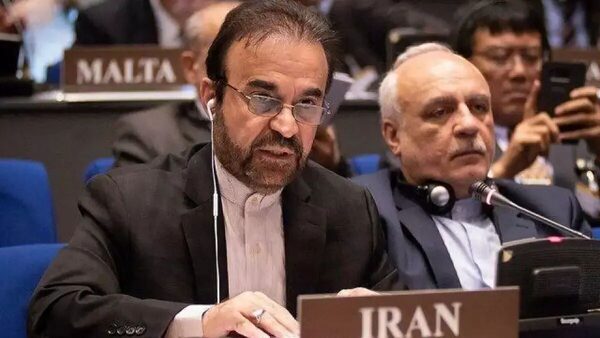
Iran denounces US violations at IAEA general conference

Reza Najafi warned that the international community’s indifference toward the actions of the US and the Zionist regime could have serious consequences, urging decisive measures in response.

Speaking under Iran’s proposed agenda item titled “Prohibition of All Forms of Attack and Threat of Attack Against Nuclear Facilities Under IAEA Safeguards,” he praised countries—especially members of the Non-Aligned Movement (NAM)—that responsibly condemned the military aggression carried out by the US and the Zionist regime against Iran.

He called for holding both the United States and the Zionist regime accountable for their blatant violations of international law and the non-proliferation regime.

Najafi also revealed that several IAEA member states with close ties to Iran and other co-sponsors of Iran’s proposed resolution—despite strongly condemning Israel’s aggressive attacks—have privately admitted they are under heavy pressure and threats from the United States not to support the resolution.

The 69th IAEA General Conference, one of the agency’s most significant annual gatherings, opened Monday at its Vienna headquarters with the participation of senior representatives from member states. The weeklong conference will run until Friday and will cover a wide range of issues concerning the agency’s work and budget.

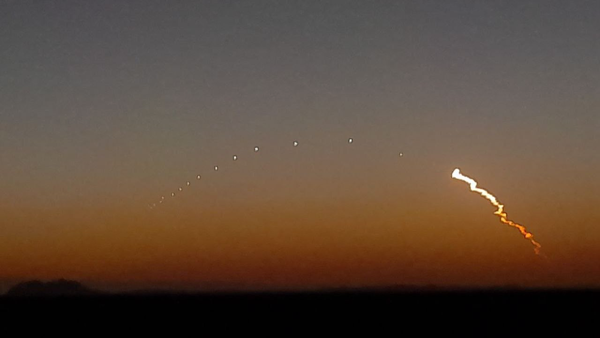
Glowing object seen in Iranian skies linked to domestic system tests

Residents in Golestan, Semnan, Khorasan Razavi, Isfahan, and parts of South Khorasan reported seeing a bright object moving across the night sky. The unusual sight quickly drew attention on social media, with photos and videos shared widely.

In response, the deputy governor for political and security affairs in Golestan Province said the incident was connected to internal system testing.

“This matter is related to domestic system tests. There is absolutely no cause for concern,” the official stated. He added that further details would be released if necessary.

The sighting follows similar reports from eastern parts of the country a day earlier, where luminous objects were also captured and circulated online.

The events stirred curiosity and concern months after the Israeli regime waged a war against Iran, which culminated in a ceasefire.

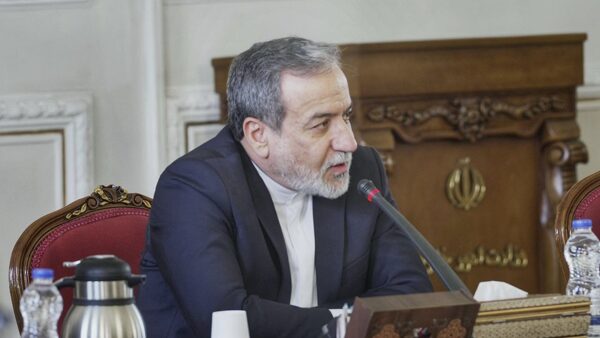
Foreign Minister: Iran’s Proposal to E3 Reasonable, Logical

Seyed Abbas Araqchi said Thursday night that in his phone conversation the day before with the foreign ministers of the three European countries — Germany, France, and the United Kingdom — as well as with Ms. Kaja Kallas, the EU High Representative for Foreign Affairs, he presented this plan to his European counterparts.

He added that, instead of addressing the substance of this plan, Iran is now facing a series of excuses and clear evasions — including the absurd claim that the Ministry of Foreign Affairs does not represent the entire political structure of Iran.

The Iranian foreign minister expressed satisfaction that French President Emmanuel Macron has acknowledged that Iran’s proposed plan is reasonable.

Araqchi said, “Macron and the international community must know that I enjoy the full support of all branches of the Islamic Republic of Iran, including the country’s Supreme National Security Council.”

He stated, “It is now time for the UN Security Council to step in and replace confrontation with diplomacy. The risk is at its highest level.”

On August 27, the three European countries sent a letter to the Security Council initiating the process of triggering the snapback mechanism to reimpose previously lifted UN Security Council sanctions against Iran.

Araqchi also referred on X to Iran’s recent agreement with the International Atomic Energy Agency (IAEA) and a new chapter of cooperation with the Agency, as well as the presentation of a creative, fair, and balanced proposal addressing real concerns, adding that implementing this idea could be done swiftly and could prevent a crisis by resolving the main lines of disagreement.

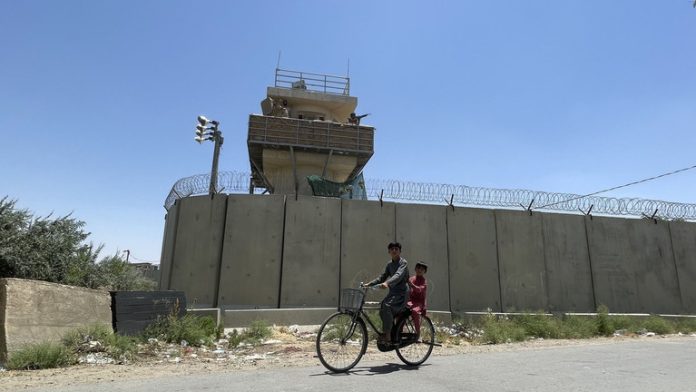
Trump admin. wants key Afghan air base back

American troops hastily evacuated the base in July 2021, a month before Taliban militants seized Kabul, toppling the UN-backed government and ending the 20-year US occupation of the country.

“We should have never given it up,” Trump told reporters at the Oval Office on Friday. He added that during his trip to the UK the previous day, the US was negotiating the issue with the new Afghan government.

“We want that base back,” he said.

“One of the reasons we want the base is, as you know, it’s an hour away from where China makes its nuclear weapons,” he stated Thursday during a joint press conference with British Prime Minister Keir Starmer.

Photos and videos of the looted base and abandoned military equipment became symbols of the failure of the US war in Afghanistan.

Although Trump had negotiated the transition of defense responsibilities to local authorities during his first term, he blamed the fall of Kabul to the Taliban on former US President Joe Biden, calling the chaotic departure of the last American soldiers “a disgrace.”

Zakir Jalaly, an Afghan Foreign Ministry official, wrote on X on Thursday that the people of Afghanistan would reject the return of American troops.

“Afghanistan and the US need to engage with one another, and can have economic and political relations based on mutual respect, without the US maintaining any military presence in any part of Afghanistan,” he added.

Following the US withdrawal, the originally Soviet-built airfield came under the control of Afghanistan’s Taliban-led defense ministry. Trump has repeatedly alleged that the Chinese are using the base, but this claim has been rejected by Kabul and lacks credible evidence.

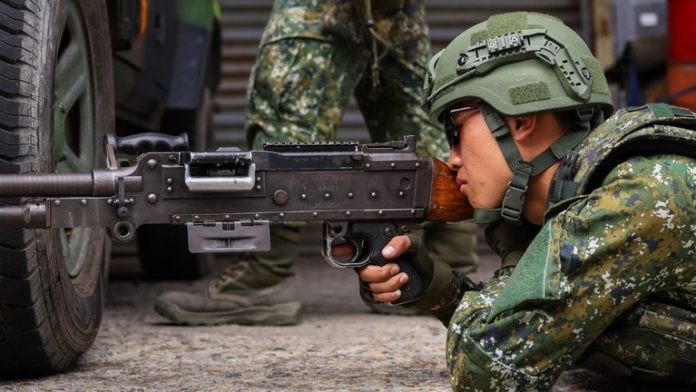
Trump blocks arms deal with Taiwan: WaPo

The Post linked the decision to Trump’s efforts to negotiate a trade deal with Beijing and his potential meeting with Chinese President Xi Jinping, which is expected to take place on the sidelines of the APEC summit in South Korea next month.

The weapons deal, reportedly worth more than $400 million, was described as “more lethal” than previous deliveries. According to the Post, Trump’s team believes Taiwan should purchase its own weapons, reflecting the president’s “transactional” approach to foreign policy. A White House official told the outlet that the decision has not yet been finalized.

Beijing, which considers the self-governing island its territory, strongly opposes any foreign military aid to Taipei. Xi has stated China seeks peaceful reunification but reserves the right to use force. In December, the Chinese Foreign Ministry warned Taipei that “relying on the US to seek independence and using military means to pursue independence is a path to self-destruction.”

The Taiwanese Defense Ministry declined to comment on the report but announced that “Taiwan and the US maintain a close security cooperation mechanism, with all exchange programs carried out on schedule to build a comprehensive defense system.”

Washington has approved several arms sales to Taiwan in recent years, including the delivery of NASAMS air-defense missile systems.