Monday, December 29, 2025
Home Blog Page 164

Trump says an agreement on Gaza could come soon, issues ‘last warning’ to Hamas

Gaza War

Trump made the comments to reporters on Sunday after arriving in Washington, DC, following a brief trip to New York.

“We’re working on a solution that may be very good,” he said, describing Israel’s ongoing war on Gaza and Hamas’s holding of dozens of Israeli captives as a “hell of a problem”.

“It’s a problem we want to solve for the Middle East, for Israel, for everybody. But it’s a problem we’re going to get done,” he stated.

“You’ll be hearing about it pretty soon. We’re trying to get it ended, get the hostages back,” he added.

Earlier on Sunday, Trump said he had put forward a new proposal to end the war in Gaza, saying that Israel had accepted his terms. He went on to warn Hamas to accept his conditions, saying that he informed the group about the “consequences” of turning down the offer.

Throughout the 23-month war, US officials have repeatedly claimed that Israel has accepted ceasefire efforts, even as Israeli leaders continued to publicly pledge to intensify their offensive, which leading rights groups and scholars have described as a genocide.

“Everyone wants the Hostages HOME. Everyone wants this War to end!” Trump wrote on his Truth Social platform.

“The Israelis have accepted my Terms. It is time for Hamas to accept as well. I have warned Hamas about the consequences of not accepting. This is my last warning, there will not be another one!” he added.

It remains unclear what Trump’s terms entail.

The US president has previously issued similar verbal warnings to Hamas and predicted that the war would end soon. Most recently, on August 25, Trump stated he thought the war would come to a “conclusive ending” within three weeks.

There was no immediate comment from Israel on Trump’s latest offer.

But The Times of Israel, citing a source close to Israeli Prime Minister Benjamin Netanyahu, said the Israeli government was “seriously considering” the proposal.

For its part, Hamas confirmed receiving “ideas” from the US for ending the war.

“Hamas welcomes any initiative that helps in the efforts to stop the aggression against our people,” the group said.

“We affirm our immediate readiness to sit at the negotiation table to discuss the release of all prisoners in exchange for a clear declaration to end the war, the full withdrawal from Gaza, and the formation of a committee to manage Gaza from Palestinian independents, who will immediately begin their work,” it added.

The Palestinian group is thought to be holding some 50 captives, of whom 20 are still believed to be alive.

Trump told reporters on Sunday that he thought all the captives would be returned, saying, “I think we’re going to get them all.”

He noted that some may already have died, but the aim would be to have their bodies returned.

Hamas has previously announced it was willing to release all of the captives in one go in exchange for an end to the war and the withdrawal of Israeli troops from Gaza.

According to Israeli media, Trump’s latest offer requires Hamas to free all the remaining captives on the first day of the truce in exchange for thousands of Palestinian prisoners jailed in Israel.

Israel would also call off its large-scale offensive in Gaza City, while negotiations to end the war would begin under the personal oversight of Trump, The Times of Israel reported.

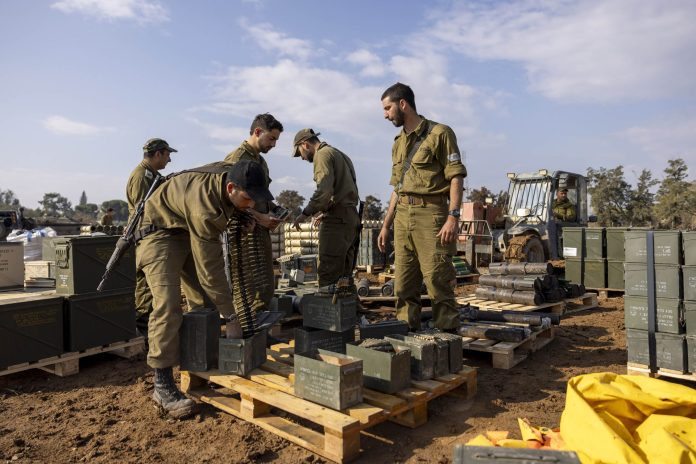
Trump’s proposal comes as Israel steps up its campaign to capture Gaza City against the pleas of rights groups and Western officials.

The US president has been a staunch supporter of Israel. Last week, his administration imposed sanctions on Palestinian rights groups for cooperating with the International Criminal Court’s investigation into Israeli abuses.

Trump also previously called for removing all Palestinians from Gaza and turning the enclave into a US-owned “Riviera of the Middle East” – a plan that rights advocates decried as an ethnic cleansing push.

Netanyahu has embraced Trump’s mass displacement proposal, presenting the push to ethnically cleanse Gaza as an effort to allow Palestinians to voluntarily leave the territory.

But legal scholars say that people have no real choice when they are under the threat of constant Israeli bombardment.

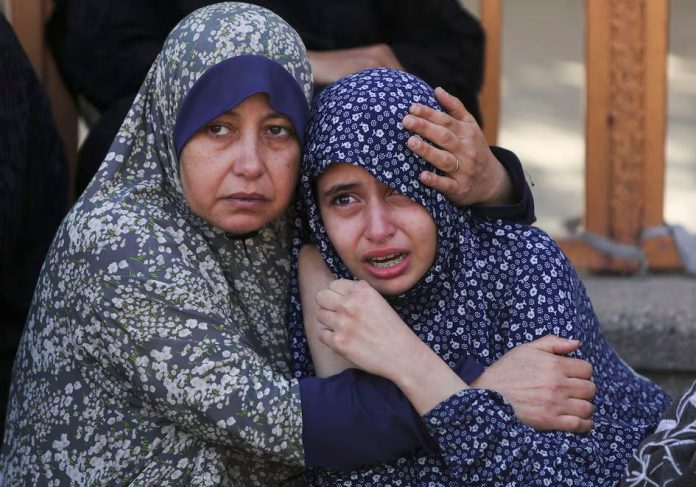
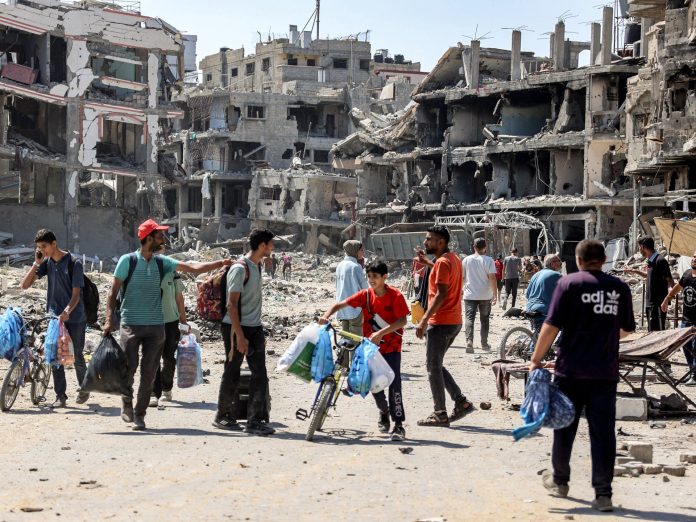
The Israeli campaign has killed more than 64,000 Palestinians, triggered a man-made famine and levelled most of the territory to the ground.


President Pezeshkian: Iranian fighters delivered strong slap to US, Israel with missiles

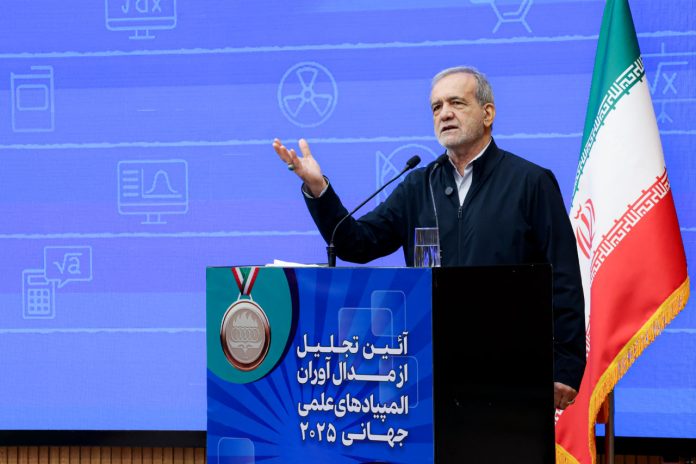
President Pezeshkian, on Monday, speaking at the 39th Islamic Unity Conference in Tehran, said that it was the unity and cohesion of our people that disappointed the US and Israel.

The president emphasized that the US and Israel thought they could strike Iran with a few missiles and then the people would take to the streets; they pinned their hopes on this in all their media and news, but the people completely disappointed them.

Pezeshkian said: Our people and Muslims will not bow before oppression, tyranny, and aggression, and this was the message that the Iranian people sent to the enemies.

He noted: All Islamic countries condemned the aggression of Israel and the US, and we appreciate all of them.

Summit with Trump ‘gave Putin what he wanted’: Zelensky

Volodymyr Zelensky

“It’s a pity that Ukraine was not there, because I think that President Trump gave… Putin what he wanted,” Zelensky said about the high-level summit in Anchorage on Aug. 15.

Ukraine was not invited to the meeting, which marked Putin’s first visit to the U.S. during the full-scale war and was seen as a clear break from the diplomatic isolation imposed on the Russian leader.

Putin doesn’t want to meet with me, but he wants very much to meet with the president of the United States, to show everybody video and images that he is there,” Zelensky stated in the interview.

Though Trump met Zelensky and European leaders in Washington a few days after the Alaska summit, Putin continues to avoid a meeting with the Ukrainian president, despite Trump’s effort to arrange it.

Zelensky has previously voiced readiness to meet Putin on neutral ground, including during Russian-Ukrainian peace talks in Istanbul earlier this year. The Kremlin has rejected a proposal and suggested a meeting in Moscow, which was, in turn, dismissed by Zelensky.

“He can come to Kyiv,” Zelensky told ABC News.

I can’t go to Moscow when my country’s under missiles, under attack, each day. I can’t go to the capital of this terrorist.”

Despite international efforts to negotiate an end to the war, Moscow has refused calls for a ceasefire and continued to push maximalist demands, namely, a ban on Ukraine joining NATO and control over the entire Donetsk Oblast, including areas not controlled by Russian forces.

Simultaneously, Russia has ramped up deadly aerial attacks against Ukrainian cities.

Speaking to ABC News, Zelensky noted that “Putin’s goal is to occupy Ukraine,” and “until he can do it, the victory is on our side.”

“So that’s why for us to survive is a victory,” he added.

Following the latest Russian strike on Ukraine, Trump renewed his threats of economic repercussions against Moscow, saying he was ready to move into the “second phase” of sanctions on Russia.

Trump added that “certain European leaders” would visit the White House in the next two days to discuss a peace settlement, though he did not provide names or details.

While Trump has threatened to impose tough penalties on Russia on several occasions, his administration has not enacted any new sanctions against Moscow since Trump took office in January.

The White House has also threatened to impose widespread secondary tariffs on Russian oil importers, but has only taken this step once. In August, Trump imposed steep secondary tariffs on India, one of the major buyers of Russian oil since the full-scale invasion of Ukraine in 2022.

Indian officials have announced that the U.S. tariffs will not stop the country’s imports of Russian oil.

Trump expresses frustration with Putin after heavy air attack on Ukraine

Putin and Trump


“I’m not happy, I’m not happy about the whole situation,” Trump told reporters after landing at Joint Base Andrews following his trip to see the U.S. Open men’s tennis final in New York.

Trump insisted that no one had been tougher than he on Russian and Putin, and he defended his efforts to end the war, saying those efforts would continue

“I’m not thrilled with what’s happening,” Trump continued. “I believe we’re going to get it settled. I’m not happy with anything having to do with that war.”

Russia’s attack on Ukraine on Sunday was also notable because Moscow hit a Ukrainian government building for the first time since the war began.

The attack did not suggest any signs of a slowdown by Putin and Moscow, even after Trump has increasingly shown his frustration.

Trump in his remarks on Sunday, however, was careful not to single out Russia or Putin for criticism.

When a reporter asked Trump what he thought the biggest obstacle was to getting a peace deal, Trump did not mention the Russian leader or Moscow.

“Well we’re going to see. We have some very interesting discussions,” he said, noting that European leaders would be coming to Washington this week.

Trump in recent weeks has expressed growing exasperation with Putin. He repeated Sunday that he thought the Russia-Ukraine war would have been the easiest conflict to resolve upon his return to office. It has turned out to be among the most intractable.

President Pezeshkian stresses need for strengthening unity among Islamic states

In a meeting on Sunday, the Iranian president highlighted that ongoing collaboration among Islamic nations is essential for development and resilience against external pressures.

The Iranian officials believe that continuous unity and cooperation among Islamic countries in all areas will not only pave the way for development and progress, but no power will be able to sanction or defeat Muslim nations, Pezeshkian said.

Regarding Iran-Iraq relationship, the president reaffirmed that geographical borders cannot affect the deep-rooted ties between the Iranian and Iraqi peoples, which are fortified by shared religious and cultural bonds. He warned against divisive issues that could undermine Islamic unity, urging vigilance against plots by adversaries aiming to create discord.

The president also stressed that the strength of the Islamic community lies in solidarity, particularly against common threats like the Israeli regime, which is a tool of American imperialism.

He praised the steadfastness of the people of Gaza and the recent resilience shown by Iran, asserting that no military might could break their unity.

Addressing the upcoming pivotal elections in Iraq, Pezeshkian called for political cohesion beyond ethnic and sectarian lines, viewing it as vital for Iraq’s empowerment and the broader Islamic community. He reiterated Iran’s commitment to strengthening comprehensive relations with Iraq.

Al-Hakim praised the valor of the Iranian people during the recent war imposed by the Israeli regime, highlighting the global admiration for their courage. He noted the importance of political support from Arab and Islamic nations for Iran, which could enhance cooperation among Islamic countries.

He described President Pezeshkian’s visit to Iraq as valuable, noting that Iraqis closely follow Iran’s officials and recognize him as honest and straightforward.

The Iraqi officials called for boosting economic and trade relations between Iran and Iraq, recognizing that current exchanges do not reflect the true potential of their partnership.

E3 has no ‘legal, moral right’ to activate snapback mechanism against Iran: Russia

Iran Nuclear Program

Russia’s Permanent Representative to International Organizations in Vienna, Mikhail Ulyanov, made the remarks in an exclusive interview with Press TV on Sunday, where he discussed the upcoming IAEA Board of Governors meeting in Vienna, focusing on Iran’s nuclear program and recent snapback sanctions triggered by the E3.

“It was not occasional that the snapback mechanism was launched by three European states who formally still remain participants in the JCPOA. They don’t have a legal, procedural, or even moral right to do that because they are violators,” the Russian diplomat said.

“They violated the JCPOA very significantly as well as Resolution 2231, and according to the legal opinion of the International Court of Justice of 1971, if a party violates an agreement, it has no right to refer to the same agreement for blaming another counterpart,” he added.

Ulyanov pointed out that the European trio and the US have been actively contributing to the politicization of the IAEA’s activities, citing an example where the Secretariat of the Agency and Iran were engaged in discussions regarding potential future agency activities, only for the E3 to trigger the snapback mechanism in New York when progress was being made in the negotiations.

This pattern of behavior by the European nations has led to repeated disruptions in the sphere concerning Iran’s nuclear dossier, he said, describing it as ‘irrational and inexplicable’.

“The Europeans time and again create problems in the sphere that relates to the nuclear dossier of Iran. It’s very irrational. It’s very strange. It has no plausible explanation, but this is a matter of fact,” he said.

According to Ulyanov, discussions within the IAEA’s Board of Governors have increasingly taken on a politicized nature, especially regarding Iran, evolving beyond technical matters and becoming intertwined with political considerations.

Furthermore, the Russian official emphasized that Washington’s involvement in the snapback process is nonexistent, as President Donald Trump withdrew from the nuclear deal, JCPOA, and President Joe Biden did not rejoin the deal.

He also stressed that France, Germany, and Britain do not have the “legal, procedural, or even moral right” to trigger the snapback mechanism because “they are violators”.

Ulyanov further noted that the E3 had significantly violated the JCPOA as well as Resolution 2231, stressing that, according to the 1971 Advisory Opinion of the International Court of Justice, a party that violates an agreement forfeits its right to reference the same agreement to blame another party.

He also raised concerns about the West’s exit strategy following the implementation of the snapback mechanism and the re-imposition of all UN Security Council sanctions by the end of September, emphasizing Russia’s preference for diplomatic solutions and collective discussions involving all JCPOA participants.

Ulyanov also highlighted that Russia and China have collaborated on a draft resolution to extend Resolution 2231 and the JCPOA for six months, aiming to provide more time for diplomatic efforts without resorting to snapback.

He further cautioned about the potential negative consequences of Iran’s withdrawal from the NPT, underscoring the extensive inspections carried out in the country as one of the most inspected nations.

Ulyanov agreed with the assessment that the nuclear issue is being utilized as a geopolitical tool to contain Iran, Russia, and China.

The Russian top envoy also commented on the increasing politicization and confrontation within international organizations like the UN and IAEA, noting a departure from earlier years’ cooperation and consensus.

He also expressed regret over the erosion of the ‘Vienna spirit’ of consensus in international organizations due to geopolitical tensions, pointing out Russia’s efforts to counterbalance Western dominance in multilateral forums.

Iran witnesses longest lunar eclipse of century

Known as the “blood moon,” the event was visible to the naked eye from every region of Iran.

In Tehran and surrounding cities, including Rey, Damavand, and Varamin, the eclipse began at 18:58 local time and lasted until 00:25, making it one of the deepest and most prolonged eclipses of 2025.

Despite occasional light pollution, favorable weather conditions allowed large numbers of people to witness the phenomenon.

During the eclipse, the moon took on a coppery-red hue as Earth’s shadow fully covered its surface.

According to the Iranian Astronomical Society, the color change occurs when sunlight passes through Earth’s atmosphere, scattering shorter wavelengths and leaving only red light to illuminate the moon.

Amateur and professional astronomers set up telescopes in parks, mountains, and observatories, welcoming crowds eager to experience the celestial display.

Photographers also seized the opportunity to capture striking images of the crimson moon above Tehran’s skyline and natural landscapes.

Experts say the event was one of the most significant astronomical highlights of the year.

Muslims must cut off ties with Israel to confront its ‘catastrophic crimes’ in Gaza: Iran’s Leader

Ayatollah Khamenei made the remarks in a meeting with President Masoud Pezeshkian and his cabinet ministers in Tehran on Sunday.

The Leader said the Zionist entity is committing numerous crimes and astonishing catastrophes without any sense of shame.

“Although these crimes are carried out with the support of a power like the United States but the way to confront this situation is not closed,” Ayatollah Khamenei added.

“The protesting countries, particularly the Muslim states, must completely cut off their trade and even political relations with the Zionist regime and isolate it,” the Leader emphasized.

The Leader described Israel as the “most isolated and hated” regime in the world and stated that one of the main lines of Iran’s diplomacy should be urging other nations to cut political and commercial ties with the criminal regime.

Elsewhere in his remarks, Ayatollah Khamenei stated the government in Iran is duty-bound to strengthen the components of national power and dignity.

The Leader noted that the most important of these components are the nation’s spirit, motivation, unity, and hope, which must be created and reinforced both in words and actions.

Efforts should be made to prevent their weakening, Ayatollah Khamenei stressed.

Ayatollah Khamenei also urged the administration to prioritize improving the economy and living conditions of the Iranian people.

He highlighted the need for the spirit of work, effort, and hope to prevail over a state of “neither war nor peace.”

FM warns “E3’s gambit on Iran bound to backfire”

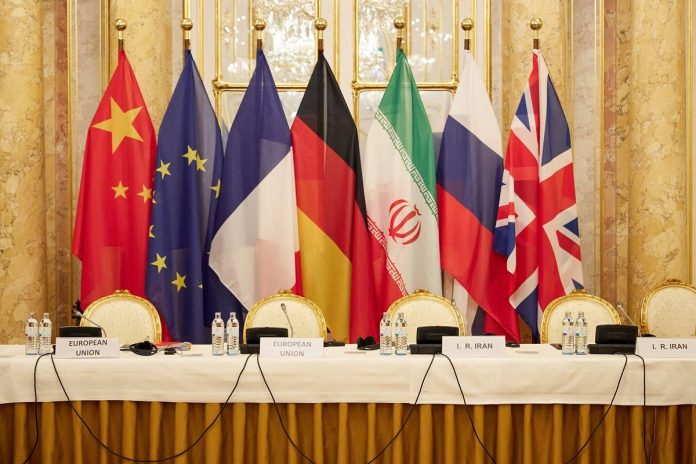
Nuclear Negotiations in Vienna

“The E3’s gambit lacks any legal standing, chiefly because it ignores the sequence of events that led Iran to adopt lawful remedial measures under the nuclear deal,” the top diplomat wrote in an article.

What follows is the article written by Araqchi, published by The Guardian on Sunday, September 7:

A message from Tehran for Britain, France and Germany: You made a big mistake reimposing sanctions – pull back

For more than two decades, Europe has been at the heart of the ongoing, manufactured crisis over my country’s peaceful nuclear programme. In many ways, the European role has reflected the state of broader international power relations. Once a moderating force aspiring to restrain a belligerent America with maximalist aims in our region, Europe is today enabling the excesses of Washington.

Last week, Britain, France and Germany – or the E3 – said they had activated the process to “snap back” UN sanctions on Iran. The mechanism was set up to penalize significant non-performance under the 2015 nuclear deal signed by Iran, the E3, the US, China and Russia.

The E3’s gambit lacks any legal standing, chiefly because it ignores the sequence of events that led Iran to adopt lawful remedial measures under the nuclear deal.

The three countries want the world to forget that it was the US, and not Iran, that unilaterally ended participation in the joint comprehensive plan of action (JCOPA), the formal name of the deal. The E3 are additionally omitting how they failed to uphold their part of the bargain, not to mention their outrageous welcoming of the bombing of Iran in June.

Britain, France and Germany may appear to act out of spite. But the truth is that they are intently pursuing a reckless course of action based on the logic that it may provide them with a seat at the table on other issues. This is a grave miscalculation that is bound to backfire. President Trump has made clear that he views the E3 as tangential actors. This is evident in the way Europe is sidelined from issues that are vital to its future – including the Russia-Ukraine conflict. The message from Washington is loud and clear: to gain relevance, the E3 must exhibit undying fealty. The recent images of European leaders sat in the Oval Office before President Trump vividly underscore this dynamic.

Things were not always like this. When the E3 was formed in 2003, to rein in the George W Bush administration after its invasions of Afghanistan and Iraq, Iran welcomed the endeavor. But talks collapsed when Europe could neither offer anything substantial nor stand up to Washington. At the time, my colleagues wanted Iran to keep 200 centrifuges for small-scale uranium enrichment, only to be met with American maximalism channeled through the E3. War did not erupt partly because the US woke up to the heavy price tag – in both blood and treasure – of illegally occupying Iran’s neighbors to the east and west.

Following an eight-year race of sanctions v centrifuges between Iran and the west, during which my country amassed 20,000 centrifuges – 100 times more than in 2005 – two important dynamics enabled unprecedented dialogue: E3 and US acquiescence to enrichment in Iran, and Iranian recognition of America as a negotiating partner. This fundamental realignment directly led to the signing of the JCPOA. The bargain was straightforward: unprecedented oversight and curbs on Iranian enrichment in exchange for the termination of sanctions. The formula worked.

Yet, one decade later, we are almost back at square one. President Trump initiated an avoidable cascade of events when he ceased US participation in the JCPOA in 2018 and reimposed all sanctions.

Initially distraught with the sabotage of a landmark agreement, the E3 pledged remediation, publicly recognizing that “the lifting of nuclear-related sanctions and normalization of trade and economic relations with Iran constitute essential parts of the agreement”. The French finance minister, Bruno Le Maire, thundered that Europe is not a “vassal” while other European leaders insisted that their “strategic autonomy” would ensure continuation of trade with Iran and that the dividends pledged to my people, including the sale of oil and gas along with effective banking transactions, would follow. None of it materialized.

While failing to uphold its own obligations, Europe has expected Iran to unilaterally accept all restrictions. Exhibiting this mentality, Britain, France and Germany declined to condemn the US attack on my country in June – on the eve of diplomatic talks – and yet are now demanding UN sanctions on Iranians for supposedly rejecting dialogue.

As I have cautioned my E3 counterparts, their gambit will not achieve the result they seek. On the contrary, it will only further sideline them by eliminating it from future diplomacy, with broad negative consequences for all of Europe in terms of its global credibility and standing.

There is still time – and a dire need – for an honest conversation.

It does not make any sense for the E3 to claim participation in a deal pillared on uranium enrichment in Iran while demanding that Iran must disavow those very capabilities. Openly cheerleading illegal military strikes on Iranian nuclear facilities protected by international law – as Germany’s chancellor has done – does not constitute “participation”.

While this lawless behavior is fueling calls for action to ensure “never again”, Iran remains open to diplomacy.

It is ready to forge a realistic and lasting bargain that entails ironclad oversight and curbs on enrichment in exchange for the termination of sanctions. Failing to seize on this fleeting window of opportunity may have consequences destructive for the region and beyond on a whole new level.

Israel may be pitching itself as capable of conducting war on behalf of the west. But as in June, the truth is that the powerful armed forces of Iran are ready and able to once again pummel Israel into running to “daddy” to be bailed out. The failed Israeli gambit this summer cost American taxpayers billions of dollars, robbed the United States of vital hardware that is now missing from its inventories, and projected Washington as a reckless actor dragged into a rogue regime’s wars of choice.

If Europe truly wants a diplomatic solution, and if President Trump wants the bandwidth to focus on real issues that are not manufactured in Tel Aviv, they need to give diplomacy the time and space that it needs to succeed. The alternative is not likely to be pretty.