Monday, December 29, 2025
Home Blog Page 163

Hundreds of artists vow boycott of Israeli film institutions amid Gaza war

Gaza War

In a pledge released on Monday, the artists – who include Olivia Colman, Ayo Edebiri, Mark Ruffalo, Riz Ahmed, Tilda Swinton and Javier Bardem – decried the “unrelenting horror” in Gaza, where Israel has killed more than 64,000 Palestinians and flattened most of the territory.
“Inspired by Filmmakers United Against Apartheid who refused to screen their films in apartheid South Africa, we pledge not to screen films, appear at or otherwise work with Israeli film institutions – including festivals, cinemas, broadcasters and production companies – that are implicated in genocide and apartheid against the Palestinian people,” the statement read.

Examples of being complicit in Israeli rights violations include “whitewashing or justifying genocide and apartheid, and/or partnering with the government committing them”, it added.

The pledge cited International Court of Justice rulings that concluded a genocide charge against Israel is plausible and found the Israeli occupation of Palestinian territory is illegal.

Over the 23 months of the Gaza war, leading academics, rights groups and United Nations experts have accused Israel of committing genocide against Palestinians.

Genocide – defined by the UN as “acts committed with intent to destroy, in whole or in part, a national, ethnical, racial or religious group” – is one of the gravest war crimes.

Palestinian rights advocates have long called for celebrities to use their reach and status to bring awareness to the plight of Palestinians.

Hollywood has been historically pro-Israel, producing movies like the 1960 film Exodus, which valorised the founding of Israel, and regularly inserting positive references to Israel in blockbusters.

But in recent years, many actors and directors have spoken out against Israel’s policies – sometimes to the detriment of their own careers.

For example, in 2023, actor Susan Sarandon, who signed Monday’s pledge, was dropped by her talent agency after attending a Palestine solidarity rally.

After the outbreak of the war in Gaza, Melissa Barrera, who also joined the boycott call, lost her role in the horror franchise Scream over social media posts critical of Israel.

Still, voices sympathetic to Palestinians continue to grow louder in the film industry.

In March, No Other Land, an Israeli-Palestinian film focused on the ongoing destruction of the Palestinian community of Masafer Yatta in the occupied West Bank, won the Oscar for best documentary feature.

More recently, The Voice of Hind Rajab, which tells the story of a five-year-old Palestinian girl who was trapped in a car with slain family members before Israeli soldiers also killed her, received a 23-minute standing ovation at the Venice Film Festival.

The movie centres on Rajab’s heart-wrenching calls to rescuers while under Israeli fire in Gaza City.

Monday’s pledge comes as Israel pushes to systematically destroy Gaza City, having already levelled most of the besieged enclave.

“As filmmakers, actors, film industry workers, and institutions, we recognise the power of cinema to shape perceptions,” the statement said.

“In this urgent moment of crisis, where many of our governments are enabling the carnage in Gaza, we must do everything we can to address complicity in that unrelenting horror.”

EU may impose sanctions on China over Russia: FT

European Parliament

The British newspaper reported that EU officials began discussing the matter on Sunday. A source said that the talks are still at a “very early stage.” Before committing to any punitive measures against Beijing, Brussels reportedly wants to have the “full backing of the US and co-ordination with Washington,” according to the FT.

To ensure this, EU officials travelled to the US on Monday, while US Energy Secretary Chris Wright will head to Brussels later in the week, the paper wrote.

Following the escalation of the Ukraine conflict in February 2022, China emerged as the top importer of Russian oil.

Earlier this year, the EU sanctioned several Chinese firms over their alleged support for industries that aid Russia’s military. Beijing slammed the move as “unreasonable” and accused the bloc of “double standards.” It emphasized that China strictly regulates dual-use goods and insisted it has not supplied any lethal weapons to parties involved in the Ukraine conflict.

On Sunday, US Treasury Secretary Scott Bessent suggested the US and EU could impose more sanctions on countries that buy Russian oil.

Beijing earlier vowed to “ensure its energy supply” in ways that protect its interests, and cautioned that “tariff wars have no winners.”

Last month, US President Donald Trump doubled tariffs on India to 50% citing New Delhi’s continued purchases of Russian oil. Indian officials denounced the move as “unfair, unjustified, and unreasonable.” Finance Minister Nirmala Sitharaman said last week that India will continue to buy Russian crude, stressing that the nation’s oil purchases are driven by its economic priorities and not external pressure.

Last week, during his four-day visit to China, Russian President Vladimir Putin warned the West against talking to such global economic powerhouses as China and India in an “unacceptable” tone. He argued that pressure on Beijing and New Delhi is intended to slow their economic rise.


Spain announces several measures against Israel, including arms embargo

At the heart of the package is a royal decree law to formalise and make permanent Spain’s embargo on the purchase and sale of weapons, ammunition and military equipment to Israel.

Although the embargo has been applied de facto since October 2023, Sanchez said the decree would remove any ambiguity after months of controversy and doubt.

Additional measures include banning ships carrying fuel for the Israeli army from docking in Spanish ports, and denying access to Spanish airspace for state aircraft transporting defence material bound for Israel.

Spain will also bar entry to individuals “directly involved in genocide, human rights violations and war crimes” in Gaza, a prohibition that could apply to Israel’s Prime Minister Benjamin Netanyahu and members of his government.

Madrid will also prohibit imports from Israeli settlements in the occupied West Bank and Gaza, while restricting consular services to Spanish citizens living in those settlements to a bare minimum.

On the humanitarian front, Sanchez pledged enhanced support for the Palestinian Authority, including a larger Spanish presence in the EU mission in Rafah and new cooperative projects.

Spain will also contribute an additional €10 million to UNRWA, the UN agency for Palestinian refugees, and increase its overall humanitarian aid to Gaza to €150 million by 2026.

“These nine measures will be implemented immediately,” Sanchez added.

In response to Spain’s announcement, Israel’s Foreign Minister Gideon Saar criticised the measures as “antisemitic”, while his government announced it would bar left-wing Spanish Labour Minister Yolanda Diaz and Youth Minister Sira Rego from entering Israel.

The Spanish government immediately hit back at Saar’s comments.

“The Spanish government strongly rejects the false and slanderous accusations of anti-Semitism made by the Israeli government against Spain and the Spanish people, as well as the unacceptable ban on two members of the Spanish government entering Israel,” an official statement read.

“The measures relating to the inhumane situation in Gaza and the West Bank, announced today by the President of the Spanish Government, reflect the majority opinion of Spanish society and are adopted within the framework of its sovereignty and in line with its defence of peace, human rights and international law.”

The prime minister opened his address on Monday by recalling the “countless persecutions and injustices” endured by the Jewish people throughout history, including the Holocaust.

He expressed Spain’s support for Israel’s existence and condemned the Hamas attacks of 7 October 2023. But he drew a distinction between legitimate defence and Israel’s current actions: “One thing is to protect your country and your society, and another very different thing is to bomb hospitals and starve innocent children.”

He argued that what Netanyahu’s government claims is a military response to terrorism “has ended up becoming a new wave of illegal occupations” and “an unjustifiable attack on the Palestinian civilian population”.

Sanchez stated that the campaign is now widely recognised as genocide, citing the opinion of the UN special rapporteur on Palestine Francesca Albanese and other legal experts.

Sanchez has been among the most outspoken European leaders in criticising Israel’s onslaught on Gaza and was the first EU diplomat to call it out as genocidal.

“63,000 dead, 159,000 wounded, 250,000 people at risk of acute malnutrition and nearly two million displaced, half of them children,” he said, adding, “This is not self-defence; it is extermination of a defenceless people and a flagrant breach of humanitarian law.”

Sanchez criticised the international community for failing to halt the war, accusing major powers of being mired between “indifference” and “complicity” with Netanyahu. While acknowledging that Spain cannot stop the offensive on its own, he insisted it would not give up trying.

The prime minister recalled Spain’s recognition of the State of Palestine last year as part of earlier efforts and said the new measures were designed to “take another step forward to stop the genocide in Gaza, pursue its perpetrators and support the Palestinian people”.

Although he admitted the measures would not be enough to halt Israel’s invasion or its alleged war crimes, Sanchez said they were intended both to increase pressure on Netanyahu’s government and to ease some of the suffering in Gaza.

He concluded: “I want Spanish society to know that, faced with one of the most infamous episodes of the 21st century, your country, Spain, was on the right side of history.”

Sanchez has repeatedly accused the EU of double standards for failing to apply sanctions to Israel.

“It makes absolutely no sense that we’ve passed 18 sanction packages on Russia for its aggression against Ukraine and Europe but, with double standards, haven’t even been able to suspend the Association Agreement with Israel when they are flagrantly violating Article 2 in terms of human rights,” he stressed in June.

Madrid has been among a minority of EU states, including Slovenia, Ireland and the Netherlands, that have led efforts calling for the EU to review the EU-Israel Association Agreement since February 2024.

In their meeting in mid-July, the EU’s 27 foreign ministers failed to agree on the suspension of the controversial agreement, which covers both trade and political relations. They also failed to agree on nine other possible measures against Israel put forward after it was found to have breached the human rights provisions of the trade agreement.

The measures that would have been agreed included full suspension of the agreement, suspension of its preferential trade provisions, an arms embargo, sanctions on Israeli ministers, and imposing a ban on trade with Israeli settlements in occupied Palestine.

Slovenia last month became the first EU country to take action independently, imposing a full arms embargo on Israel. Later in August, Germany announced the suspension of military exports to Israel that could be used in Gaza, in response to Israel’s plan to fully occupy the Palestinian enclave.

Sweden and the Netherlands have also called on the EU to suspend the agreement with Israel over the continued Gaza siege and its ban on the UN’s humanitarian aid operations.

But Dutch Foreign Minister Caspar Veldkamp resigned last month citing his government’s failure to impose additional sanctions on Israel.

Iran’s President stresses BRICS’ role in countering unilateralism

In the extraordinary meeting of BRICS leaders, which was held on Monday virtually, the Iranian president argued that unilateral policies not only jeopardize the national interests of independent nations but also disrupt global cooperation and hinder sustainable development.

Pezeshkian stressed the urgent need for a serious overhaul of global governance structures. He called for a reevaluation of the United Nations Security Council’s composition and functionality, as well as reforms in the international financial system.

He emphasized that groups like BRICS and other Global South institutions bear a special responsibility in guiding the transition to a multipolar, democratic, and equitable order where the voices of developing countries are heard.

Pezeshkian pointed out the recent geopolitical tensions and the growing impact of climate change as factors threatening economic growth and international peace.

He criticized the disproportionate influence of a few powerful nations and the politicization of economic tools, which erode trust among countries and undermine effective global governance.

The president proposed several initiatives for BRICS during his virtual speech. The initiatives include reforming international financial structure, promoting inclusive multilateralism by strengthening the UN to amplify the voices of developing nations, ensuring equitable access to essential resources through global public goods cooperation, establishing a support mechanism for members facing illegal sanctions, and fostering sustainable development by encouraging innovation and cooperation in green and digital economies.

Pezeshkian reaffirmed Iran’s commitment to active collaboration within BRICS, emphasizing that effective countermeasures against unilateralism would benefit not only member nations but the entire international community.

He concluded by stressing the importance of strengthening multilateralism and adhering to sustainable development principles for a better future.

New sanctions won’t force Russia to change course: Moscow

Kremlin

“No sanctions will be able to force the Russian Federation to change the consistent position that our president has repeatedly spoken about,” Kremlin spokesperson Dmitry Peskov told a Russian state media reporter.

The comments come as the European Union is preparing a 19th package of sanctions targeting Russian banks and the energy sector, Bloomberg reported. U.S. President Donald Trump has also repeatedly threatened to implement secondary sanction on Russian oil if Moscow’s invasion continues, although he has yet to do so.

Peskov further claimed that sanction “turned out to be absolutely useless in terms of exerting pressure on Russia.”

Despite Peskov’s claims, sanction have undeniably played an impact on Russia’s economic fortunes, vastly limiting the country’s trade with international partners, and weakening the country’s ability to sell oil to fuel the country’s war machine.

Following an initial economic surge led by the country’s defense industry following the start of Russia’s full-scale invasion, Russia’s economy has continued to face uncertainty amid high inflation, slowed economic growth, and near-record interest rates.

Despite the challenges faced by Russia’s economy, Moscow has shown no indication it is ready to halt its war in Ukraine. Russian President Vladimir Putin has repeatedly repeatedly refused to attend an in-person meeting with President Volodymyr Zelensky, brokered by U.S. President Donald Trump.

4 Israeli soldiers killed in fighting in Gaza

Israeli Army

The four dead soldiers served in the 401st Armored Brigade’s 52nd Battalion, a military statement read.

According to the Yedioth Ahronoth daily newspaper, the four were killed in a Hamas attack on a fortified position in Gaza City.

The new deaths brought the number of Israeli soldiers killed in Gaza since October 2023 to 904, military figures showed.

Authorities responsible for Iran’s Shahid Rajaee Port explosion declared

Gholamhossein Mohseni Ejei described the incident as tragic, adding that significant progress has been made over the past four months in dealing with the aftermath.

He said measures include crisis management, reopening the port, judicial investigation, support for victims’ families, and compensation for injuries.

Following the incident, 5 certified experts launched an investigation and issued a report on the explosion.

The report cites multiple contributing factors, including improper storage of hazardous materials, insufficient environmental controls, and putting economic considerations above safety requirements. It also identified 21 responsible entities.

They include the Ports and Maritime Organization of Hormozgan Province, importers and exporters, Iran Customs, the Central Bank, Ministry of Health, and Ministry of Roads and Urban Development.

The report underlined the need for strict international regulation compliance and a proactive safety culture to prevent future disasters. The May 31, 2024 explosion at Shahid Rajaee Port killed some 60 people and injured 1,000.

Shooting in East Jerusalem kills at least six

Paramedics said at least 12 people were injured and six were in “serious condition” after the shooting on Monday morning at Ramot Junction. Several others were “lightly injured by glass” and treated at the scene, Israel’s paramedic service, Magen David Adom, added.

Israeli police described the shooting as a suspected “terror attack”.

“A security officer and a civilian” shot and killed the perpetrators soon after the shooting began, police confirmed.

The police said the perpetrators arrived in a vehicle and opened fire at a bus station.

Israeli forces closed all checkpoints between East Jerusalem and the occupied West Bank after the attack.

The Israeli military said it had reinforced its forces in the wider Jerusalem area and was conducting a wide-ranging search for what it described as “accomplices” in the shooting.

In reaction to the shooting, the Palestinian Authority (PA) has “reiterated its firm position of rejecting and condemning any targeting of Palestinian and Israeli civilians”. Its presidential office said in a statement from Ramallah in the occupied West Bank that the PA denounces “all forms of violence and terrorism regardless of their source”.

Neither Hamas nor the Palestinian Islamic Jihad has claimed responsibility for the shooting but have expressed “congratulations” for the attack.

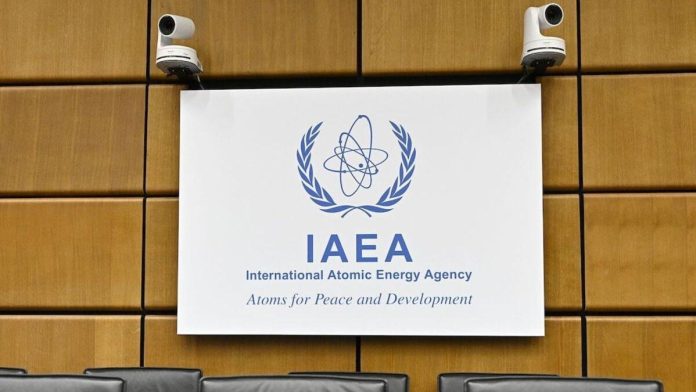
IAEA head notes progress in Iran talks over nuclear site inspections

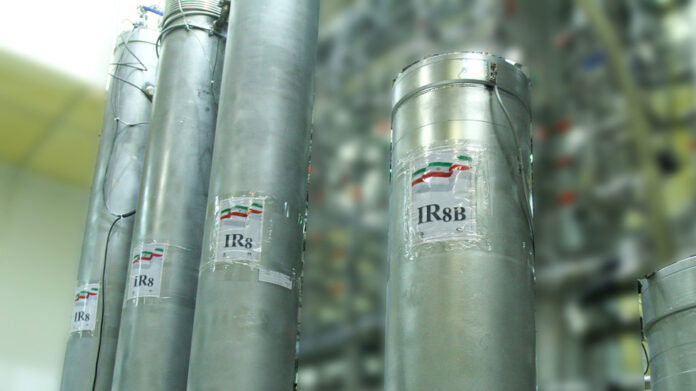
On Monday, the director general of the United Nations nuclear watchdog, Rafael Grossi, told the 35-nation IAEA Board of Governors in Vienna, Austria, that “Progress has been made”.

“It is my sincere hope that within the next few days it will be possible to come to a successful conclusion of these discussions,” Grossi said, adding: “There is still time, but not much.”

He did not elaborate on what the timeframe meant exactly.

While Tehran allowed inspectors from the IAEA into Iran at the end of August, the Ministry of Foreign Affairs announced no agreement had been reached on the resumption of full cooperation with the watchdog.

Following a 12-day war, which saw Israel and the United States bomb cities across Iran, as well as Fordo, Natanz and Isfahan nuclear facilities, in June, Tehran decided to change its collaboration with the IAEA.

Iran expressed anger at the IAEA for paving the way for Israel’s attack by censuring the country the day before Israel struck with a damning report in May that declared that Tehran was in breach of the Treaty on the Non-Proliferation of Nuclear Weapons (NPT).

Fury then followed when the watchdog did not condemn Israeli or US attacks. In July, Iran passed a law suspending cooperation with the agency.

Within the law, any future inspection of its nuclear sites needs approval by Iran’s Supreme National Security Council.

However, last week, Grossi told the Reuters news agency in an interview that the board was pushing for a deal to inspect Iranian sites, including those targeted by Israel and the US.

Grossi confirmed that the IAEA had no information from Iran on the status or whereabouts of its stock of highly enriched uranium since Israel’s attacks on June 13.

“I believe there is a general understanding that by and large, the material is still there. But, of course, it needs to be verified. Some could have been lost,” he stated.

“We don’t have indications that would lead us to believe that there has been major movement of material,” Grossi added.

Late last month, France, Germany and the United Kingdom triggered a mechanism to reimpose sanctions on Iran after a series of meetings failed to reach an agreement on the Iranian nuclear programme.

The three European countries, known as the E3, had been warning Tehran for weeks that UN sanctions could be reimposed by October when a 2015 nuclear agreement between Tehran and major powers expires.

Iran signals change in IAEA safeguards commitment after war: Spokesman

Speaking at a weekly press conference on Monday, Esmaeil Baqaei commented on a recent IAEA report and claims made by Director General Rafael Grossi.

“We have reviewed the report and will communicate our positions to the IAEA and its Board of Governors through an official note,” he said, noting that Iran expected a fair assessment taking into account the June attacks on its nuclear sites.

Baqaei described the Israeli strikes as severe enough to warrant detailed coverage from the International Atomic Energy Agency to prevent future repetitions.

He stressed that the IAEA has now recognized that Iran’s safeguards obligations cannot be implemented in the same way as before the Israeli and US military attacks.

“This is a unique situation, and no inspection protocols existed for these circumstances. The Agency understands that Iran’s perspectives must be taken into account,” he added.

The spokesperson said that this understanding has been discussed during three rounds of negotiations in Tehran and Vienna. While final conclusions have not yet been reached, he described the process as positive, emphasizing that Iranian negotiators have considered field realities, parliamentary law, and guidance from the Supreme National Security Council.

He added that Iran is now awaiting the finalization of the new framework for its cooperation with the IAEA.

On September 3, Iranian Foreign Minister Abbas Araqchi said Tehran will not provide any new cooperation with the IAEA before the conclusion of negotiations.

“In view of these developments, how and under what framework Iran and the IAEA should cooperate is a matter under negotiation, and in fact, the Agency itself has agreed that new developments require a new framework of cooperation,” Araqchi said.

“No new cooperation will be there until the negotiations are concluded,” he stressed.

The foreign minister added that Iran “will do everything” to prevent the re-imposition of UN sanctions under the snapback mechanism.