Tuesday, December 30, 2025
Home Blog Page 154

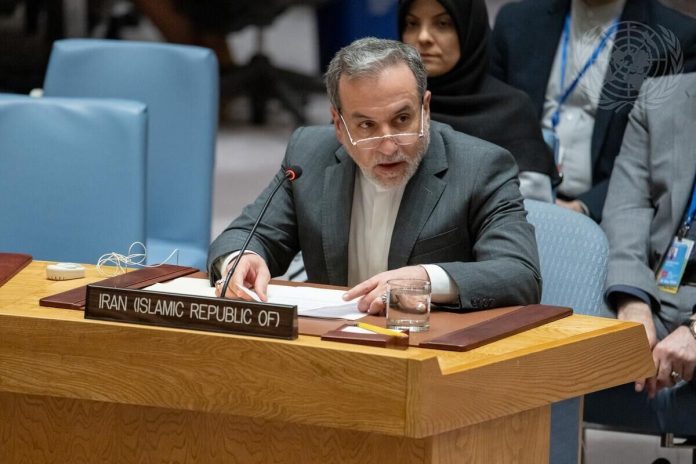
Iran FM stresses ECO’s role in countering unilateralism

Abbas Araghchi

Speaking on Tuesday at the opening ceremony of the Second National Conference on Iran and the Economic Cooperation Organization in Tehran, Araqchi said that ECO “can and must play a leading and effective role in shaping the new regional economic architecture.”

He noted that in recent years, ECO has been receiving growing attention among member states, particularly those that joined the organization in the early 1990s.

Araqchi stressed that an institution with such history and with the membership of key countries from Central, South, and West Asia undoubtedly represents significant added value for all. “What we need now more than ever is a collective and coordinated decision to move toward realizing an ‘ideal ECO,’” he added.

The Iranian top diplomat described ECO as a suitable platform to synergize efforts toward sustainable development, regional security, and shared prosperity in the face of global economic fluctuations, geopolitical challenges, and rapid technological changes.

According to Araqchi, the Islamic Republic of Iran believes ECO can and should take a pioneering role in shaping a new regional economic order based on the principles of partnership, mutual respect, and common interests.

He also recalled the Iranian President’s proposal for establishing an ECO Artificial Intelligence Center, noting that such a mechanism could serve both as a springboard for regional technological cooperation and as a driver of collaboration across all areas of interest among ECO member states.

Two police officers killed in armed attack in southeastern Iran

Crime Scene

The attack took place on Tuesday morning along the Khash-Zahedan road, near Sib and Suran county. Gunmen ambushed the vehicle carrying members of the local police force, firing multiple rounds before fleeing the scene.

Officials described the incident as a “terrorist attack” targeting security personnel.

“Unfortunately, two of our officers lost their lives in this brutal assault, and one more sustained injuries,” the provincial police confirmed in a statement.

Security forces launched an immediate operation to track down the attackers, though no group has yet claimed responsibility.

The province, located near Iran’s borders with Pakistan and Afghanistan, has witnessed sporadic violence in recent years involving separatist militants, extremist groups, and cross-border smugglers.

Authorities vowed to continue pursuing those behind the attack.

Doha summit slams Israel’s attack against Qatar

The Persian Gulf Cooperation Council (PGCC)’s pledge to “activate a joint defence mechanism” may have been the most actionable result of the summit, which was opened by Qatari Emir Sheikh Tamim bin Hamad Al Thani, who called the Israeli bombing “blatant, treacherous, and cowardly”.

The PGCC countries, Bahrain, Kuwait, Oman, Qatar, Saudi Arabia and the United Arab Emirates, have formed a defence pact to address the security concerns of the member states.

“My country’s capital was subjected to a treacherous attack targeting a residence housing the families of Hamas leaders and their negotiating delegation,” Sheikh Tamim said in his opening speech.

The Hamas leaders had been meeting to discuss the latest United States-backed proposal for a ceasefire in Gaza.

Sheikh Tamim called for “concrete steps to address the state of madness of power, arrogance, and bloodthirstiness obsession that has befallen the government of Israel, and what resulted and continues to result from it”.

The attack on mediators proved that Israel had “no genuine interest in peace” and was seeking to “thwart negotiations” to end the war in Gaza that has killed more than 64,800 Palestinians, he added.

The emergency summit was organised after fury swept the region following Israeli strikes on September 9, which killed six people.

The PGCC announced that consultations were already under way among the bloc’s military bodies to build up “Gulf deterrent capabilities”, with a meeting of the group’s Unified Military Command to take place soon in Doha, according to Majed Mohammed Al-Ansari, spokesman for Qatar’s Ministry of Foreign Affairs.

No further details were available about the new defence mechanism, which states that an attack on one member state is an attack on all.

“The joint statement obviously called for a meeting of the high command to be held here in Doha to discuss further steps to ensure that the safety and the joint security of the GCC countries is addressed,” Al-Ansari told Al Jazeera.

“The GCC stands in one line,” he added.

The Qatari emir also warned against Israel’s expansionist vision of the region, with repeated bombings of Lebanon, Syria and Yemen. Israel has also grabbed Syrian land and refused to withdraw its forces from southern Lebanon.

Israeli Prime Minister Benjamin Netanyahu is dreaming of making the Arab region “an Israeli sphere of influence”, Sheikh Tamim continued, adding that it “is a dangerous illusion”.

No immediate political or economic measures were announced against the Israeli aggression at the summit.

But Jasem Mohamed Albudaiwi, the secretary-general of the PGCC, urged US President Donald Trump to rein in Washington’s closest ally, Israel.

“We expect our strategic partners in the US to use their influence on Israel for it to stop this behaviour – we really do expect that,” Albudaiwi stated.

“They have leverage and influence over Israel, and it’s about time that this leverage and influence are used”.

Despite expectations of more forceful measures, the summit’s final communique largely consisted of condemnations and pledges of solidarity.

“We condemn in the strongest terms Israel’s cowardly and illegal attack on the State of Qatar. We respond with absolute solidarity with Qatar and support for its steps,” read the memo issued by member states of the Arab League and the Organisation of Islamic Cooperation (OIC).

The communique also praised Qatar’s response to the attacks, voiced solidarity with Doha’s mediation role alongside Egypt and the US, and rejected any justification for further aggression.

The member states also rejected “Israel’s repeated threats of the possibility of targeting Qatar again”.

When questioned about these threats, as well as Israel’s resolve to target Hamas “anywhere”, Al-Ansari said Qatar would make use of the international system to hold Israel to account.

“We will hold Israel accountable in the international community, and our tool in doing that is our belief in international law and international organisations,” he added.

“This is why we went to the [United Nations] Security Council and now, of course, to the Arab and Islamic Organisations and GCC … we are working very closely with all our partners to make sure that we deter Prime Minister Netanyahu from attacking sovereign states again.”

While the joint communique stopped short of hard measures, several Arab and Islamic leaders tabled stronger, more actionable responses to Israel.

Iran president stresses Saudi Arabia’s role in fostering Islamic unity

During discussions with Saudi Crown Prince Mohammed bin Salman on the sidelines of the extraordinary Arab-Islamic Summit in Doha on Monday, President Pezeshkian stated that if Islamic countries stand united, the Israeli regime would not dare to attack any Muslim nation.

He expressed his satisfaction with the growing relationship between Iran and Saudi Arabia.

The president emphasized that deepening cooperation between the two nations would benefit not only their interests but also those of other Muslim countries in the region.

Pezeshkian also said that Iran is ready to expand cooperation with Saudi Arabia at regional and international levels.

The Saudi crown prince expressed his happiness with the improving relations among major Islamic countries, including Iran, Saudi Arabia, and Turkey.

He stressed the importance of empowering Islamic nations to effectively defend their sovereignty and dignity against Israeli aggression.

Bin Salman also highlighted the urgent need for Islamic countries to collaborate in addressing the situation in Palestine and Gaza, stating that this region is in a special condition, and enhancing cooperation and unity among Islamic nations is not just an option; it is an essential necessity.


President Pezeshkian advocates for enhanced Iran-Lebanon relations

In a meeting with Lebanese President Joseph Aoun on the sidelines of the extraordinary Arab-Islamic Summit in Doha on Monday, President Pezeshkian highlighted Iran’s commitment to expanding cooperation and strengthening ties with Lebanon and other regional countries, grounded in mutual respect and win-win interactions.

Pezeshkian reiterated his long-standing goal of fostering unity and cohesion within Iran and among neighboring Muslim countries, a commitment he has maintained since his presidential campaign.

He also noted that Iran’s approach to strengthening cooperation is rooted in religious teachings, advocating for a principle that encourages mutual respect:

“What we wish for ourselves, we should wish for others as well.”

He expressed confidence that adhering to this principle would prevent issues in diplomatic relations.

Addressing the ongoing aggression of the Israeli regime against Muslim nations, Pezeshkian asserted that its actions demonstrate a blatant disregard for boundaries and human rights.

The Iranian president lamented the silence of countries that claim to defend freedom and human rights, which not only ignore the violence in Gaza but also provide military and legal support to the regime.

In response, President Aoun expressed his pleasure at meeting with Pezeshkian and affirmed Lebanon’s desire for friendly relations based on mutual respect and interests with Iran. He expressed optimism about overcoming obstacles to further develop cooperation between the two nations.

Aoun also conveyed Lebanon’s wishes for progress, prosperity, and peace for Iran, condemning the Israeli regime’s aggression against the Islamic Republic.

He acknowledged that differing viewpoints among countries are natural but emphasized that through understanding and continuous collaboration, they can overcome any barriers to enhancing their friendly relations.

Stronger Islamic unity most effective response to Israel: Iran’s president

Pezeshkian and Sisi

During his meeting with Egyptian President Abdel Fattah el-Sisi on the sidelines of the extraordinary Arab-Islamic Summit in Doha on Monday, the Iranian president expressed optimism about the rapid establishment of official relations between Iran and Egypt.

President Pezeshkian conveyed his satisfaction with the diplomatic exchanges between the two countries.

He noted that both nations share a rich and proud history, and their cooperation could significantly benefit not only their own countries but also the broader region.

President el-Sisi expressed his happiness with the progress in bilateral relations.

He highlighted the potential for Iran and Egypt to work together to serve their mutual interests and those of other regional nations.

El-Sisi also stressed the importance of closer ties among Islamic countries and the need for a unified and practical stance against the escalation and persistence of Israeli crimes.


Britain bans Israelis from military academy over Gaza war

Gaza War

London’s Royal College of Defence Studies (RCDS) will not enrol students from Israel from next year, the Ministry of Defence (MoD) has confirmed. The college is part of the Defence Academy, overseen by the MoD.

The announcement comes after Declassified reported in July that Israeli army officers had been studying at the RCDS since 2023.

One officer, Yeftah Nortkin, commanded a patrol company during Israel’s 2008-9 war in Gaza, in which hundreds of children were killed.

After he completed his RCDS course in July last year, Nortkin led the Israeli army’s “Bang” division in its invasion of Lebanon.

An MoD spokesperson told the Telegraph that “the Israeli government’s decision to further escalate its military operation in Gaza is wrong. There must be a diplomatic solution to end this war now, with an immediate ceasefire, the return of the hostages and a surge in humanitarian aid to the people of Gaza.”

The spokesperson added all military courses in Britain emphasise “compliance with international humanitarian law”.

Meanwhile, Amir Baram, the director general of Israel’s defence ministry who studied at the RCDS, said Britain’s decision was “a profoundly dishonourable act of disloyalty to an ally at war”.

Baram stated in a letter to the MoD that it was a “discriminatory act” and a “disgraceful break with Britain’s proud tradition of tolerance – and plain decency”.

The ban is the latest diplomatic spat between the UK and Israel, two historic allies, in recent months.

The UK government banned Israeli officials from Britain’s largest arms trade show last week.

And Britain is poised to recognise a Palestinian state at the UN General Assembly in New York later this month, a move which Israeli Prime Minister Benjamin Netanyahu has denounced as “rewarding Hamas”.

However, Israeli President Isaac Herzog visited Britain last week and met Prime Minister Keir Starmer at Downing Street.

Herzog said afterwards that he both “argued” and had points of agreement with Starmer, whom he called Israel’s “ally”.


NATO ‘at war’ with Russia: Kremlin

Kremlin

NATO is de facto at war with Russia, Peskov has stated. According to him, the support the military bloc provides to Ukraine makes it a party to the conflict.

Peskov’s remarks came in response to a statement by Polish Foreign Minister Radoslaw Sikorski, who questioned the idea of security guarantees for Ukraine that would involve NATO troops.

Sikorski argued that Kiev’s Western backers are wary of a direct confrontation with Russia, which has repeatedly rejected any Western military presence in Ukraine, whether as peacekeepers or otherwise. Peskov countered that the US-led military bloc is already involved.

“NATO is at war with Russia. It is obvious and does not require any additional proof,” he said on Monday.

“NATO is de facto involved in this war. NATO provides both indirect and direct support to the Kiev regime. Therefore, it can be said with absolute certainty that NATO is at war with Russia,” he added.

At least 41 countries have contributed to Ukraine’s war effort since the conflict escalated in February 2022, either through military, humanitarian, or financial assistance, according to Germany’s Kiel Institute. Most of the support has come from NATO members, with 29 of its 32 states providing funding, as well as weapons systems ranging from armored vehicles, artillery, aircraft, and air defense to drones, missiles, and other equipment.

The US-led military bloc has also been pushing for increased militarization in response to what officials describe as the ‘Russian threat’, pledging to raise defense spending among European NATO members to 5% of GDP. Several officials have claimed that Russia could attack member states once the Ukraine conflict is resolved.

Moscow has dismissed the claims as nonsense, accusing the West of stoking Russophobia to justify soaring military budgets and distract from domestic problems. It has stressed that NATO expansion toward Russia’s borders was one of the main causes of the conflict, and insists that any settlement with Kiev must account for Russia’s security by guaranteeing Ukrainian demilitarization and neutral, non-nuclear status.


Tehran press court finds former MP guilty over Israeli spy sexual allegations

The announcement was made by jury spokesman Akbar Nasrollahi.

He added that editor-in-chief of Hamshahri Online Danial Haji Abolhassan Memar was also convicted of spreading immorality, publishing falsehoods, and disseminating inaccurate reports regarding the issue. He said the jury ruled that Kavakebian and Haji Abolhassan Memar were not deserving leniency.

Nasrollahi noted that Kavakebian had reiterated his earlier claims during an interview with Hamshahri Online, citing alleged evidence such as statements by Shakdam herself and a hotel’s reported records, though these were deemed unreliable.

The final verdict will however be issued by the court judge.

Iran’s President: Israeli aggressors must be punished, held accountable

Masoud Pezeshkian

Pezeshkian said on Monday evening at the summit of Arab-Islamic heads of state convened to discuss the Israeli attack on Qatar: “The brazen September 9, 2025 attack on Qatar was a premeditated operation by the Zionist regime aimed at undermining diplomatic efforts to end the genocide in Gaza.”

The Iranian president stressed: “This attack on diplomacy is more than a crime; it is a shameless, public declaration that force, not law, now decides. Unfortunately, the terrorists ruling Tel Aviv, feeling emboldened by impunity after a similar betrayal of diplomacy in June 2025 and the start of their aggressive war against Iran, have become more daring.”

Pezeshkian added: “The attack on Doha showed that no Arab or Muslim country is safe from Tel Aviv’s aggression. The aggressor must be isolated, its arms and financing cut off, and its leaders held accountable in courts of justice. But these measures will not be effective without practical unity.”

He condemned the support that the United States and Europe give to Israel and emphasized: “More than 64,000 Palestinians have been killed in less than two years; children are starving while the world merely watches and issues condemnations.”