Tuesday, December 30, 2025
Home Blog Page 148

US plans $6bn in new weapons sales to Israel: WSJ

Israel Army

The proposed sales include a deal worth $3.8 billion for 30 AH-64 Apache helicopters and a $1.9 billion deal for 3,250 infantry assault vehicles for the Israeli army, the WSJ said, citing people familiar with the matter.

The weapons likely would not be delivered for two to three years, the WSJ cited one person.

The arms would be paid for by US-provided foreign military financing, according to the documents reviewed by the journal.

Citing people familiar with the issue, the report added the State Department is seeking the approval of the four top Republican and Democratic leaders of the House Foreign Affairs Committee and the Senate Foreign Relations Committee.

The proposed arms sales were first sent to congressional leaders about a month ago, before Israel’s strike on Hamas leaders in Qatar, according to the report.

The administration has continued to seek approval for the sales since the Israeli attack, the people stated, per the report.

Salt crystals shine along Iran’s Kal-Shur River

Originating from the villages of Jajarm, the river winds through desert landscapes, where its saline waters form glistening salt crystals along the banks.

The unique phenomenon occurs as the river passes through arid terrain, leaving behind crystallized salt formations that locals describe as both beautiful and practical.

For residents of nearby villages, this is more than a spectacle: for two months each year, they engage in the traditional practice of harvesting salt directly from the river.

This annual harvest continues a centuries-old tradition, providing families with both household supplies and a modest source of income.

More in pictures:

October 6, 2025 declared as “Tehran Day”

Iran Flag

The decision was made during a council meeting held on September 20 at the Tehran Governor’s Office, chaired by Mohammad Hassan Aboutorabi-Fard, Tehran’s interim Friday prayer leader, and attended by Governor Mohammad Sadegh Motamedian.

Officials said the initiative aims to commemorate key events from 1906, when Mozaffar al-Din Shah Qajar signed the Constitutional Decree in August of that year.

Shortly afterward, on October 7, 1906 (14 Mehr 1285), the first session of the National Consultative Assembly convened at Golestan Palace in the presence of the Qajar monarch. This session laid the foundation for Iran’s first constitution and cemented Tehran’s status as the country’s capital.

Governor Motamedian emphasized that “Tehran Day” would serve as an opportunity to highlight the capital’s historical, cultural, and tourism potential.

Planned events include historical seminars, photography exhibitions, and guided tours to promote public awareness and celebrate Tehran’s heritage.

Portugal says to recognise a Palestinian state

In a statement on Friday, the Portuguese Ministry of Foreign Affairs said the recognition will take place on Sunday, a day before a high-level conference on Palestinian statehood at the United Nations General Assembly (UNGA).

“The Ministry of Foreign Affairs confirms that Portugal will recognise the State of Palestine,” the ministry wrote in a statement on its website.

“The Official Declaration of Recognition will take place on Sunday, September 21st, before next week’s High-Level Conference,” the statement added.

According to Portugal’s Correio da Manha newspaper, the country’s centre-right Prime Minister Luis Montenegro consulted with the president and parliament before finalising the decision.

It marked the end of nearly 15 years of debate in the Western European country’s parliament, Correio da Manha reported, after the proposal was first put forward by the country’s Left Bloc political party in 2011.

Portugal’s announcement comes days after a landmark UN inquiry found that Israel’s war on Gaza amounts to a genocide.

At least 65,000 people have been killed and 165,900 wounded since Israel’s onslaught began in October 2023. Many thousands more are believed to be buried under the rubble.

The Portuguese government first announced its intentions on recognising Palestine as a state in July, citing “extremely worrying evolution of the conflict”, as well as the humanitarian crisis and Israel’s repeated threats to annex Palestinian land.

Earlier on Friday, an adviser to French President Emmanuel Macron stated that Andorra, Australia, Belgium, Luxembourg, Malta and San Marino plan to recognise the State of Palestine alongside France at the high-level meeting it is co-organising with Saudi Arabia in New York on Monday.

Canada and the United Kingdom have also announced that they intend to do the same.

They will join some 147 countries, representing 75 percent of UN members, that had already recognised Palestinian statehood as of April this year.

Portugal was also among 145 countries which voted on Friday to create an option for Palestinian President Mahmoud Abbas to address the UNGA in New York next week by video, after the United States denied him a visa.

Israel and the US have strongly criticised countries moving to recognise Palestine

Earlier this week, Luxembourg’s Prime Minister Luc Frieden and Foreign Minister Xavier Bettel told a parliamentary commission that their country intends to recognise Palestinian statehood at the UNGA.

Bettel also stated that he would propose a bill to parliament so that Luxembourg could take further measures, such as sanctions, according to the country’s broadcaster RTL Letzebuerg.

US ends deportation protections for Syrians

The announcement came as Temporary Protected Status (TPS) was set to end for Syrians at the end of the month, ending protections that have been in place since 2012, shortly after war began in the middle eastern nation.

“This is what restoring sanity to America’s immigration system looks like,” DHS Assistant Secretary for Public Affairs Tricia McLaughlin said in a statement.

“Conditions in Syria no longer prevent their nationals from returning home. Syria has been a hotbed of terrorism and extremism for nearly two decades, and it is contrary to our national interest to allow Syrians to remain in our country. TPS is meant to be temporary.”

TPS can be awarded for countries experiencing civil unrest or natural disasters, allowing the government to halt any deportations to the country.

When the Joe Biden administration renewed the protections in 2024, it cited widespread insecurity caused by the civil war.

“The ongoing civil war in Syria is in its thirteenth year and has involved large-scale destruction of infrastructure, widespread civilian casualties, and human rights abuses and violations. The humanitarian consequences are dire, including mass displacement of civilians, high levels of food insecurity, and limited access to healthcare and clean water,” DHS wrote at the time.

“These impacts have been compounded by the February 6, 2023, earthquake, which resulted in the further destruction of infrastructure and has contributed to the further breakdown of the economy and strained an already overburdened healthcare system,” it added.

Syrian leader Bashar al-Assad was deposed in December, but the country remains in chaos.

The United States Institute for Peace described Syrians as dealing with “the aftermath of nearly 14 years of brutal conflict where it is estimated that least 500,000 people were killed and more than 13 million forcibly displaced.”

A Reuters investigation released Friday described warring factions within the country, finding “a lawless frontier under the control of armed groups with scores to settle.”


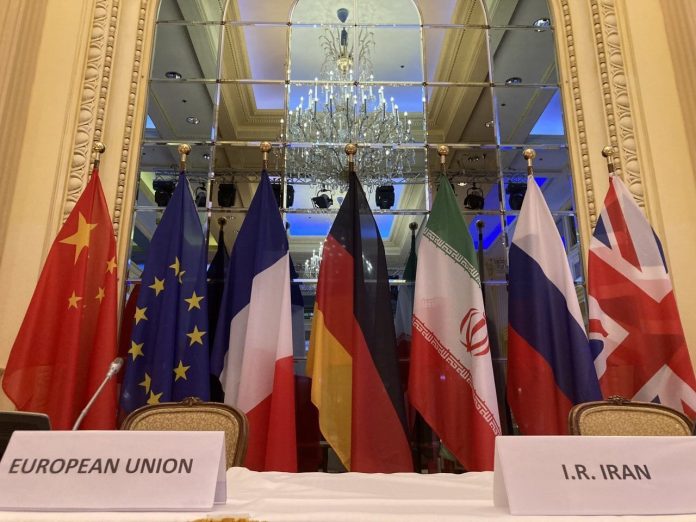
Tehran condemns E3’s move to ‘snapback’ UN sanctions

Iranian Foreign Ministry

The reaction came after the UN Security Council on Friday voted against a draft resolution that would have permanently lifted sanctions linked to Iran’s nuclear program.

Nine members opposed the measure, while Russia, China, Pakistan, and Algeria backed it, and two abstained. As a result, the UN sanctions against Iran will be re-imposed by September 28 if no agreement is reached.

In a statement, the Iranian Foreign Ministry said the move amounted to “an unlawful, unjustified and provocative act” that undermines ongoing diplomatic processes.

The Ministry added, “The destructive actions by three European countries (Britain, France and Germany) to reinstate the annulled UN Security Council resolutions come at a time when Iran’s safeguarded nuclear facilities were attacked and damaged by the Israeli regime and the United States.”

It said these attacks violate the UN Charter, endanger international peace and security, and severely undermine the foundations of the non-proliferation regime.

The Ministry added, “The three European countries not only declined to condemn these aggressive actions by Israel and the United States but also perpetrated a dual violation by abusing the JCPOA dispute resolution mechanism.”

The statement outlined five points, noting that the European action completes the process of reviving canceled resolutions and “seriously weakens” diplomacy.

The ministry highlighted that the full responsibility for the consequences lies with the United States and the E3, which “misrepresented facts, made unfounded allegations, and pressured some non-permanent Council members.”

The measure lacked consensus and went ahead despite strong opposition from several Council members, damaging both the credibility of the body and the non-proliferation regime, noted the statement.

Iran’s nuclear program is peaceful and reflects the will of its people to pursue scientific and technological progress, noted the ministry, adding that Tehran will defend its rights, including through diplomacy, while “reserving the right to respond to any unlawful measures.”

Finally, it urged all responsible members of the international community to reject the European action and avoid granting it legitimacy.


US revokes sanctions waiver for Iran’s Chabahar port

Chabahar Port

The White House announced on Friday that the exemption, in place since 2018, will end on September 29.

The waiver had allowed India to develop the Shahid Beheshti terminal at Chabahar, seen as a key gateway to Afghanistan and Central Asia. With its withdrawal, entities involved in the project may now face penalties.

US State Department spokesperson Thomas Pigott said the decision was consistent with the Trump administration’s so-called “maximum pressure” policy. He said that the revocation means any person or company engaged in the port’s operation could be exposed to sanctions.

Located in Chabahar, the port gives India access to Afghanistan and beyond, while also feeding into larger connectivity schemes such as the International North-South Transport Corridor.

India has already provided equipment worth $25 million, shipped food supplies through the port, and, in May 2024, signed a 10-year agreement to operate it. Under that deal, India pledged $120 million in investment and offered an additional $250 million credit line for infrastructure upgrades.

The waiver was originally granted in recognition of the port’s importance for stabilizing Afghanistan and facilitating humanitarian shipments.

Iran, meanwhile, has long slammed Washington’s reliance on sanctions. Officials in Tehran describe the approach as an “addiction” that has persisted since the 1979 revolution, with various Iranian entities repeatedly targeted under shifting pretexts.

Meanwhile, the sanction comes as tensions between New Delhi and Washington have already been rising under the Trump administration. Earlier this year, the White House imposed 50 percent tariffs on Indian goods, doubling an earlier rate.

Trump justified the move by accusing India of indirectly financing Russia’s war in Ukraine through oil purchases. The tariffs, which came into force in August, now cover most Indian exports to the US.

The measures hit at a time when bilateral trade stood at more than $87 billion, making India one of America’s largest partners. Experts warn the duties could shrink India’s exports to the US to nearly half within two years.

New Delhi has condemned the tariffs as “unfair, unjustified, and unreasonable,” and signaled a stronger tilt toward Moscow and Beijing.


Iran slams European troika for failing to respect Tehran-IAEA deal

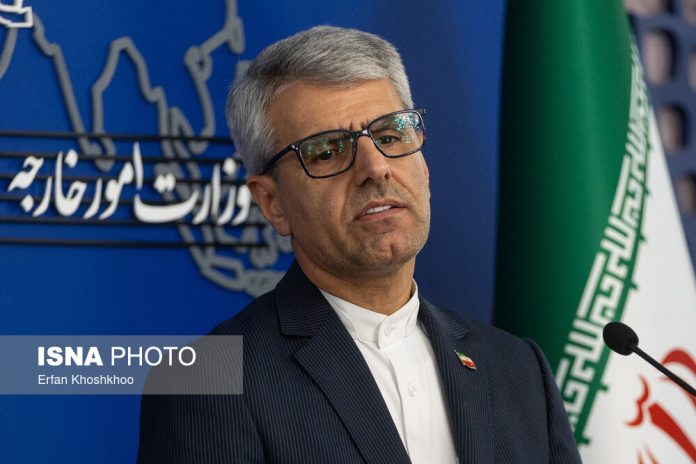
Speaking to Russia’s news outlet RIA Novosti on Friday, Khatibzadeh said the three countries had previously pledged to honor any deal between Tehran and the IAEA, but instead have “taken further wrong steps” and politicized Iran’s nuclear case.

He noted that the agreement was signed in Cairo and welcomed by IAEA Director General Rafael Grossi, who reported it to the agency. “After this deal, we saw nothing from the Europeans but criticism and mistakes”, he said. Khatibzadeh stressed that Tehran remains committed to diplomacy.

He however said Iran’s future actions depend on the stance of its counterparts regarding the reimposition of sanctions. Khatibzadeh argued that Europe has no legal basis to trigger the snapback mechanism, calling its current efforts politically motivated.

The Iranian official reiterated that the window for diplomacy remains open, adding that any new nuclear agreement must be based on principles defined by Iran’s foreign policy and national interests.

US vetoes UN Security Council Gaza ceasefire demand for sixth time

The resolution, approved by 14 of the 15 members of the council on Thursday, called for an “immediate, unconditional and permanent ceasefire in Gaza respected by all parties”, the release of all captives held by Hamas and other groups, and a lifting of restrictions on humanitarian aid into the besieged and bombardment enclave.

Drafted by the council’s 10 elected members, the resolution went further than previous iterations to highlight what diplomats called the “catastrophic” humanitarian situation in Gaza after nearly two years of war in the Gaza Strip, which has killed at least 65,100 people, according to Palestinian health officials.

As expected, the United States vetoed the effort. “US opposition to this resolution will come as no surprise,” said Morgan Ortagus, US deputy special envoy to the Middle East.

“It fails to condemn Hamas or recognise Israel’s right to defend itself, and it wrongly legitimises the false narratives benefitting Hamas, which have sadly found currency in this council,” she continued.

Ortagus added that the UN-backed Integrated Food Security Phase Classification’s official declaration of famine in the enclave last month had employed “flawed methodology”, hailing the work of the heavily militarised GHF hubs, where so many Palestinians have been killed while seeking food for their families.

After the vote, the Palestinian Ambassador to the United Nations Riyad Mansour stressed that the US veto was “deeply regrettable” and had prevented “the Security Council from playing its rightful role in the face of these atrocities and to protect civilians in the face of genocide”.

“Unfortunately, the Council remains silent at a great cost for its credibility and authority,” Mansour continued, adding, “This demonstrates that when it comes to atrocity crimes, the use of the veto should simply not be allowed.”

Iran mourns educator, author Samineh Baghcheban

Former students, cultural figures, and officials gathered to honor her legacy before her burial in the section of Notables at Behesht Zahra cemetery.

Baghcheban, who died on September 16 at the age of 97, was the daughter of Jabar Baghcheban, founder of Iran’s first school for the deaf.

After his death in 1966, she took over the school’s leadership, continuing the family’s mission of advancing education for children with hearing disabilities.

Attendees included her sister, Parvaneh Baghcheban, presidential adviser Ali Rabiei, poet Mohammad-Reza Shafiei Kadkani, and numerous former students spanning generations.
Many addressed the crowd in sign language, recalling her tireless work in education and literature.

Rabiei, conveying condolences from President Massoud Pezeshkian, described the Baghcheban family as central to Iran’s cultural identity.

“Iran means Jabar Baghcheban, Iran means Samineh Baghcheban, and Iran means everyone who has served culture and society,” he said.

Baghcheban authored several acclaimed children’s books, including The Wooden Bridge and Norooz and the Kites, and promoted Persian folk songs and stories through sign-language adaptations.