Kremlin rejects US estimates of 100,000 Russian casualties in Ukraine since December
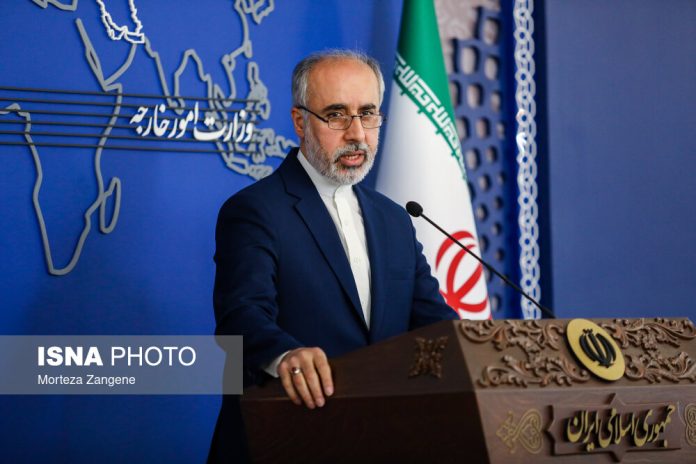
Washington has “absolutely no way” to give accurate estimates of Russian losses in Ukraine, Kremlin spokesperson Dmitry Peskov stated Tuesday.
“Washington has absolutely no way to give any correct numbers, and this is how it should be treated. You need to focus on the numbers that the Ministry of Defense will publish in due time,” Peskov said.
The White House on Monday estimated that the Russian military has suffered at least 100,000 casualties in Ukraine in the past five months, including more than 20,000 dead, half of which were Wagner fighters. The US is defining the term “casualty” as both wounded and killed.
The Russian Ministry of Defense has not released updates on the casualties since last September, when Russian Defense Minister Sergei Shoigu announced that 5,937 Russian soldiers have been killed.
On Tuesday, Shoigu appeared to issue a rebuttal to the US claim, saying, “despite the unprecedented military assistance from Western countries, the enemy is suffering significant losses. Over the past month alone, they have lost more than 15,000 people.”
Russia’s new military defenses reveal Moscow’s fear that Ukraine could achieve “major breakthrough”
Russia has built “extensive systems of military defensive works” in southern regions bordering with Ukraine, indicating the Kremlin’s “deep concern” Kyiv’s spring counter offensive could mark a “major breakthrough” in the conflict.
The latest intelligence update from Britain’s defense intelligence agency said Moscow has constructed some of the most sprawling and complex defensive trenches “seen anywhere in the world for many decades,” along the northern border of annexed Crimea, and “well inside” Russia’s southern Belgorod and Kursk regions.
“These defences are not just near the current front lines but have also been dug deep inside areas Russia currently controls,” the agency said in an assessment shared on Twitter Monday. It added that construction started in summer 2022, several months after Russia launched its brutal military campaign.
“The defences highlight Russian leaders’ deep concern that Ukraine could achieve a major breakthrough,” the ministry noted.
“However, some works have likely been ordered by local commanders and civil leaders in attempts to promote the official narrative that Russia is ‘threatened’ by Ukraine and NATO,” it added.
Satellite imagery shows the extent of Russian defenses that have been built up in parts of southern Ukraine – layers of anti-tank ditches, obstacles, minefields and trenches.
The defenses continue for hundreds of miles across the meandering southern front – where Ukrainian forces are expected to concentrate their counter-offensive in the coming weeks.
Such defenses, however, are only as good as the forces assigned to each sector. On their own they are a limited impediment. Which is why the Russians have pushed more units into southern Ukraine. These defensive lines have become critical to their overall goals.
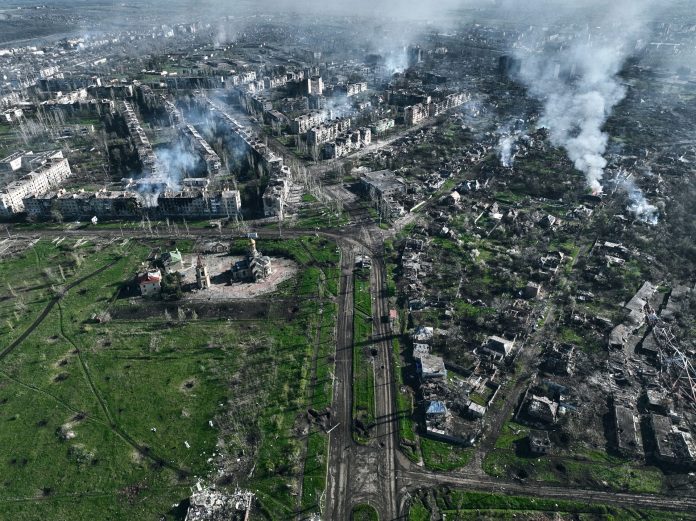
Ukraine vows to keep Bakhmut as it prepares for a counterattack
Ukraine’s military vowed to keep defending the city of Bakhmut as it prepares for an expected counteroffensive.
“Together with the commanders, we have made a number of necessary decisions aimed at ensuring the effective defence and inflicting maximum losses on the enemy,” General Oleksandr Syrskyi, commander of Ukrainian ground forces, said in remarks after a visit to troops fighting in Bakhmut.
“We will continue, despite all the forecasts and advice, to hold Bakhmut, destroying Wagner and other most combat-capable units of the Russian army,” he told soldiers in video footage of his visit.
“We give our reserves an opportunity to prepare and we are preparing for further actions ourselves,” he added.
Window to extend Black Sea grain deal is shrinking: Kremlin
The Kremlin says that the window to extend the Black Sea grain deal is shrinking with ongoing talks between the parties concerned, not yielding any results.
Kremlin spokesman Dmitry Peskov told reporters on Tuesday that part of the deal concerning Russia’s interests was not being implemented.
Moscow has warned that it will not agree to extend the deal beyond May 18 if its demands are not met.
Russia preparing new ‘acts of goodwill’: Ukraine
Ukraine’s Defence Minister Oleksii Reznikov says that due to defeats on the battefield, Moscow is preparing new “acts of goodwill”, according to a report by Ukrainian news agency Interfax Ukraine.
“If you observe a number of public statements on Russian resources, you can see that there are already phrases like: ‘We must end the SVO (special military operation)’, ‘we must move to defense’, “we must keep our ‘newly-gained’ territories,” Reznikov stated in an interview with Interfax Ukraine.
He highlighted that while this was all Russia’s propaganda “it gets more difficult every time.”
Reznikov’s comments come as Ukraine prepares for a counter-offensive against Russia, which Kyiv says will be “a boost” for the country as the war continues to rumble.
Ukraine loses over 15,000 military in April despite west’s military aid: Russia
Ukrainian troops have lost more than 15,000 service people in April, Russian Defense Minister Sergei Shoigu said on Tuesday.
“The Russian Armed Forces are actively operating along the entire line of contact. Despite unprecedented military assistance from Western countries, the enemy is suffering significant losses. Over the past month alone, it has lost more than 15,000 people,” Shoigu stated at a meeting with the ministry’s senior officials.
Russia destroyed eight aircraft, 277 drones, 430 tanks and other armored combat vehicles of Ukraine in April in military operation zone, the minister added.
“Our servicemen destroyed eight aircraft, 277 unmanned aerial vehicles, 430 tanks and other armored combat vehicles, 18 multiple rocket launchers, 225 field artillery and mortar shells,” he continued.
The Russian military has already received enough ammunition in 2023 to carry out effective strikes against the enemy, Shoigu stated.
“This year, the armed forces have already supplied a sufficient amount of ammunition to inflict effective fire damage to the enemy,” Shoigu concluded.
Ukrainian units oust Russian forces from some Bakhmut positions: Top general
Ukrainian forces have removed Russian troops from some positions in Bakhmut, according to top Ukrainian general Oleksandr Syrskyi.
“The situation (in Bakhmut) is quite difficult,” Syrskyi wrote on Telegram, adding, “At the same time, in certain parts of the city, the enemy was counterattacked by our units and left some positions.”
Meanwhile, Wagner claimed its mercenary forces have advance in the eastern town but warned they lack ammunition.
Russia taking steps to increase arms production: DM
Russia’s Defence Minister, Sergei Shoigu, says Moscow has taken measures to increase the pace of production of weapons and military equipment to enable its troops to carry out its operations in Ukraine, according to state media reports.
According to Russia’s RIA Novosti state news agency, Shoigu highlighted that the Russian army now has all the weapons it needs on the battlefield.
But he called on Russia’s state-owned Tactical Missile Weapons company “to double production of high-precision weapons as soon as possible.”
Russian official makes new claim of Ukrainian attacks on Bryansk region
A Russian official on Tuesday stated Ukrainian forces had shelled the border town of Kukovichi overnight — the third time in three days he has accused Ukraine of attacking the southwest Russian region of Bryansk.
Bryansk Gov. Alexander Bogomaz, whose region shares a border to its south with Ukraine and to its west with Belarus, made the latest allegations in a Twitter post, adding there were no casualties.
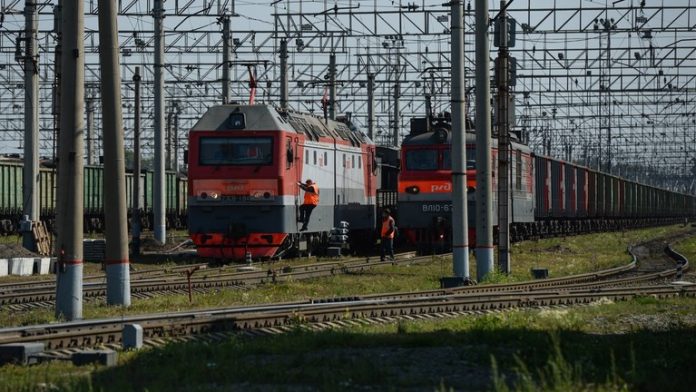
It comes after he claimed on Monday that an IED exploded along the Bryansk-Unecha railway, which borders Ukraine, causing a freight train to derail.
Video footage taken at the scene of the railway explosion shows dozens of destroyed and burned out rail cars smoldering as emergency crews put out several fires. There were no casualties in that incident, he said.
On Sunday, the governor noted Ukrainian shelling killed four civilians after strikes hit residential buildings in the village of Suzemka, in Syzemsky district.
Putin orders Russian govt to clarify rules on dividend payments to ‘unfriendly’ investors
Russian President Vladimir Putin on Tuesday ordered his government to “clarify” the procedure for how Russian companies can make dividend payments to shareholders from so-called “unfriendly countries”.
Russia considers all countries that have hit it with sanctions over its military campaign in Ukraine to be “unfriendly”. It has hit back with its own package of counter-sanctions and capital controls which restrict the ability of companies and investors from these countries to transfer profits or dividends back home.
The Kremlin announced proposals on dividend payments should “include conditions that residents expand their production in Russia, develop businesses based on new technologies and invest in the Russian economy.”
Putin asked the government to come up with proposals by May 20, a document published by the Kremlin said.
Scores of foreign companies have exited the Russian market since Moscow sent tens of thousands of troops into Ukraine last February, while many others are still trying to wind down their businesses or waiting for approval from a government commission to sell their assets.
The Kremlin triggered fresh fears it could be prepared to nationalise foreign businesses last week with a decree to take “temporary control” of the Russian assets of Finnish energy group Fortum and Germany’s Uniper in a move it said was retaliatory and could be repeated.
US estimates Russia has suffered over 100,000 casualties since December
The Joe Biden administration announced new estimated casualty figures Monday from Russia’s winter offensive in Ukraine, saying that the country has suffered more than 100,000 casualties since December and the “stunning” number is a key signal that Moscow’s effort has “backfired.”
White House official John Kirby told reporters Monday that Russia has “exhausted its military stockpiles and its armed forces” and since December, the US estimates Russia has suffered more than 100,000 casualties, including over 20,000 killed in action.
The US is defining the term “casualty” as both wounded and killed.
Kirby, who serves as National Security Council coordinator for strategic communications, noted that “nearly half” of those casualties were fighters with the Russian private company Wagner.
Kirby lambasted a recent assertion from Wagner leader Yevgeny Prigozhin, who said Sunday that his group had only suffered 94 casualties. Kirby called Prigozhin’s comments “just a ludicrous claim.”
Pressed on the source of the new 100,000 figure, Kirby stated it was “based on some downgraded intelligence that we’ve been able to collect.” He declined to provide information on Ukrainian casualties, noting that the US has “never” provided such information and would defer to Ukraine on the matter.
Kirby added that the Ukrainians “are the victims here, Russia is the aggressor, and I’m simply not going to put information in the public domain that’s going to, again, make it any harder for the Ukrainians.”
The official noted that it’s ultimately Ukraine’s decision to declassify the information and make their casualty figures public.
“I don’t need to abide by that same sense of courtesy for the Russians — haven’t done it and I ain’t going to start now,” he continued.
Kirby said that “most” of Russia’s efforts have “stalled and failed” as the battle for the eastern city of Bakhmut continues. He added that Russia has made “incremental” gains in the town that has “very little strategic value.”
“The bottom line is that Russia’s attempted offensive has backfired. After months of fighting and extraordinary losses, Russia continues to be focused on a single Ukrainian city with limited strategic value,” the official noted.
Kirby said any decision about a spring counteroffensive from Ukraine would be “for President (Volodymyr) Zelensky to make,” but that the US will continue to provide military aid and support.
The US official also told reporters a future package for Ukraine would be unveiled “very soon.”
“What we want to stay focused on is making sure that we’re helping them be as ready as they can be for whenever they choose to step off. And that means, obviously, in material support,” he added.
Wagner boss asks for more ammunition to take Bakhmut
The head of the Wagner Group appealed to Russia’s defence ministry to increase ammunition shipments to his troops fighting in Bakhmut.
In a video posted on his Telegram channel, Yevgeny Prigozhin stated he needed at least 300 tonnes of artillery shells daily to try and take the city.
“Three hundred tonnes a day is 10 cargo containers – not a lot at all … But we are being given no more than a third of that,” Prigozhin said as he inspected boxes of rifles in a warehouse he said was in the town of Soledar, to the northeast of Bakhmut.
Prigozhin has previously accused the defence ministry of “betraying” his fighters by not providing sufficient ammunition.
Russia still hasn’t completely captured Bakhmut: Ukraine military
The Ukrainian military says it is locked in a “positional struggle” as fierce fighting continues to rage in Bakhmut, adding it has been able to push back Russian forces after a series of counterattacks.
“I can definitely confirm the information that the enemy in Bakhmut left some positions after some of our counterattacks,” Serhii Cherevatyi, the spokesperson for the Eastern Grouping of the Ukrainian Armed Forces, told a national broadcaster.
“There is a positional struggle there,” Cherevatyi added, explaining that the frontline was constantly shifting.
“Sometimes the enemy has some success after a powerful artillery strike and the destruction of infrastructure, and they can move forward. But we counterattack and often win back our positions after inflicting fire on the enemy,” he continued.
Cherevatyi added that for all its efforts, Russia still had not been able to “completely” capture Bakhmut.
The spokesperson went on to say that although the Russian military’s airborne units had reinforced positions in Bakhmut, Wagner forces continued to be the ones carrying out the assaults.
“However, due to heavy losses, they have been reinforced by airborne units. In addition, in an effort to capture Bakhmut completely, we also note that the enemy is also using snipers from special units and even special services (counterterrorism, for instance) to hit our positions as much as possible,” he stated.
Cherevatyi said Russian forces were having to be more mindful of their use of artillery shells and rockets, but rejected claims by Wagner founder and financier Yevgeny Prigozhin that his fighters were being starved of ammunition.
“They have been given a general norm of shells, just like other units of the aggressor,” he continued, adding, “Over the past 24 hours, the enemy has fired 304 times at the Lyman-Kupiansk direction with various artillery systems. However, of course, if we take the summer of 2022, they could use an unlimited amount of ammunition along the entire front line non-stop. Now they no longer have this luxury.”
“What Prigozhin is talking about is that they are used to having a lot of ammunition. Now they are forced to limit themselves,” he added.
Cherevatyi concluded by defending Ukraine’s strategy for the region, stating that “the enemy has not been able to take Bakhmut for nine months.”
“Thus, we are conducting a successful defense operation and are achieving our main goal: destroying the enemy’s military potential, personnel, and equipment to the maximum extent possible,” he said, stating, “In particular, Wagner is close to being completely destroyed.”
Zelensky, Trudeau discuss defence cooperation
Ukrainian President Volodymyr Zelensky has spoken to his Canadian counterpart, Justin Trudeau, and discussed defence cooperation and increased sanctions.
On Twitter, the Ukrainian president said, “Noted the beginning of the Russian assets confiscation and called for increased sanctions pressure on Russia. Coordinated positions on the eve of the NATO summit and other international events.”
Ukraine says it has no knowledge of peace mission involving Vatican to resolve conflict with Russia
Ukraine said it has “no knowledge” of a peace mission involving the Vatican to resolve the conflict with Russia.
“President Volodymyr Zelensky has not consented to any such discussions on Ukraine’s behalf,” a Ukrainian official close to the presidential office told CNN, adding, “If talks are happening, they are happening without our knowledge or our blessing”.
The official dismissed any papal role after Pope Francis on Sunday told journalists that the Vatican is part of a mission to end the war in Ukraine.
“The mission is in the course now, but it is not yet public,” he said after a three-day trip to Hungary.
“When it is public, I will reveal it,” the pope added.
Last week, Ukrainian Prime Minister Denys Shmyhal met Francis at the Vatican and said he had discussed a “peace formula” put forward by Zelensky and invited the pope to visit Ukraine.
Former US marine killed in Ukraine
A former US marine, Cooper “Harris” Andrews, 26, was killed on the outskirts of Bakhmut late last week, according to his mother and colleagues in Ukraine.
Andrews, from Cleveland, Ohio, was hit by a mortar, his mother, Willow Andrews said, likely on April 19 on the so-called “Road of Life” — a rare access road into Bakhmut used by the Ukrainian military to resupply their forces and also to evacuate civilians.
Andrews’ body has yet to be recovered, she said, due to the ongoing fighting around Bakhmut. The city’s outsized symbolic importance has led to intense fighting as Moscow desperately tries to seize it.
Andrews worked for an activist group known as the Resistance Committee, according to its social media statements. The group said he was killed assisting the evacuation of civilians from the city.
Andrews left Cleveland, Ohio in November and joined the Foreign Legion in Ukraine, a group of foreign fighters helping the Ukrainian military. His contract ended in March, his mother said, and he decided to stay on.
The US Department of State announced on Monday it could “confirm the death of a US citizen in Ukraine,” without naming the individual.
“We are in touch with the family and providing all possible consular assistance,” a State Department spokesperson stated, adding, “Out of respect for the family’s privacy during this difficult time, we have nothing further to add.”