Russian Presidential Spokesman Dmitry Peskov had no comment on a report on the website of US journalist Seymour Hersh that European countries have been secretly urging Kiev to stop the conflict.
Peskov merely noted that the flow of weapons supplied by the West to Ukraine was only increasing.
“I don’t know what information this journalist has. We perceive concrete facts. We see that the flow of weapons, the flow of ammunition and equipment to Ukraine is increasing. The level of tactical and technical parameters of the arms being supplied is also increasing. These are the facts that we are observing,” Peskov told reporters on Wednesday.
Earlier in the day, US Pulitzer Prize-winning journalist Seymour Hersh said on his website that a group of European countries led by Poland had secretly called upon Ukrainian President Volodymyr Zelensky to stop the conflict, “even by resigning [his post] himself.”
Hersch said that that group included Baltic and East European countries, in particular, Hungary, Latvia, Lithuania and Estonia. At the same time, the journalist pointed out that the Ukrainian president was reluctant to satisfy their plea and, for that reason, was “beginning to lose the private support of his neighbors.”
As Hersh notes, one of the main reasons driving these European countries to call for an end to the conflict is the more than five million Ukrainian refugees who have been taken in and accommodated by neighboring countries.
Earlier, Hersh claimed that, according to his sources, Ukraine was in a difficult position, and the prolongation of the conflict depended entirely on how many more compatriots Zelensky was ready to sacrifice in battle. He also added that the conflict continued because US President Joe Biden was determined to win in Ukraine. At the same time, according to Hersh, the US leader was receiving incomplete intelligence about the conflict, as some US intelligence memos had not been reaching him.
Russia is ready to examine proposals by African and Latin American countries on resolving the ongoing Ukraine crisis, Russian Foreign Minister Sergey Lavrov said on Wednesday.
Russia’s top diplomat made this statement at a press conference following talks with his Belarusian counterpart Sergey Aleinik.
“[Belarusian Foreign Minister] Sergey [Aleinik] recalled that there were other initiatives – … a Brazilian initiative and an initiative of the South African president,” Lavrov stated.
“In both cases we responded to initiatives from Latin American and African friends that we were ready to consider any of their proposals that were prompted by a sincere desire to help stabilize the world order. But so far, unlike our Chinese neighbors, we have not seen documents on the issue either from the Brazilians or the Africans,” he added.
“We have confirmed our readiness to maintain contacts whenever they are interested, because it is in our interests to deliver to as many as possible of our partners on all continents the logic that becomes clear to an independent observer,” Lavrov continued.
South African President Cyril Ramaphosa stated on May 16 that the governments of Russia and Ukraine had agreed to receive an African delegation, whose goal is to find a peaceful solution to the Ukrainian conflict.
He added that he had discussed the possibility with the presidents of Russia and Ukraine, Vladimir Putin and Volodymyr Zelensky, who agreed to receive the African delegation in Moscow and Kiev.
Western states insist that they are ready to consider only Zelensky’s “peace plan” for settlement in Ukraine, but will accept no initiatives that Moscow is ready to discuss, Lavrov said said.
“Europe makes no attempt to hide its attitude towards the [Chinese peace initiative on Ukraine], its attitude is the same as in Washington, it’s all coordinated; the attitude is such that is Russia said that it could be discussed then it is no good. It is being directly stated that Russia is unwilling to negotiate on Zelensky’s terms, and there can be no other basis for negotiations, that the only plan that will be promoted by the West is Zelensky’s ten-point plan,” he stated.
The minister added that the West continues to promote Zelensky’s initiative even though Ukrainian authorities have legally ruled out an option of negotiations with Russia last year.
“It was said: ‘we will only accept what Zelensky will find acceptable’,” Lavrov continued, pointing out that “the tail is wagging the dog, as it already happened in US history before.”
Germany says Russian assets could be used to pay for Ukraine damage
The German government is looking into ways to secure money to pay for damage caused by Russia’s invasion of Ukraine, including the possibility of using Russian assets to compensate the country, a government spokesperson says.
Chancellor Olaf Scholz, together with other European leaders, set up a damage register for the war in Ukraine at a Council of Europe summit in Iceland.
“The register will pave the way for Russia to pay for Ukraine damage,” the German chancellor added.
Scholz stated that his country is looking for a more pragmatic solution to prevent the circumvention of sanctions imposed on Russia.
The United States announced it expects the Group of Seven (G7) countries to agree at a weekend summit to adjust their approach to sanctions so that, at least for certain categories of goods, all Russian exports are automatically banned unless they are on a list of approved items.
Speaking on the sidelines of a Council of Europe summit in Iceland, Scholz told reporters that he hoped an agreement would be reached soon “without there being any major system changes”.
The chancellor will be among the leaders attending the G7 meeting in Japan.
President: Poland will not send F-16 fighter jets to Ukraine
Polish President Andrzej Duda says Warsaw will not provide F-16 fighter jets to Ukraine.
“We have a relatively small number of F-16 aircraft,” Duda was quoted as saying in Polish media reports.
“This does not allow these machines to be transferred to Ukraine. We are ready to transfer MiG-29 aircraft to Ukraine. We are doing it successively. We have initiated a coalition of military support for Ukraine,” he continued.
Duda stated at a Council of Europe summit in Iceland that Poland is, however, ready to support the training of Ukrainian pilots on F-16 aircraft.
Kremlin won’t enter into ‘hypothetical discussions’ on Black Sea grain export deal
Kremlin spokesperson Dimitry Peskov says the Kremlin will not enter into “hypothetical discussions” as the extension of the Black Sea grain export deal hangs in the balance.
“While the decision about the fate of the grain deal has not been announced, you need to wait for its announcement and not hypothetically talk about the prospects,” Peskov told reporters.
The grain deal between Ukraine and Russia allows Ukraine to export grain and fertiliser from its Black Sea ports to the rest of the world. The deal is set to expire on Thursday.
Earlier, Russia’s UN ambassador, Vassily Nebenzia, said Moscow would only consider extending the agreement beyond Thursday if “systemic problems” linked to Russia’s agricultural exports were resolved.
‘Fighter jet coalition to be formed this year’: Ukraine’s FM
Dmytro Kuleba, Ukraine’s minister of foreign affairs, says that a coalition to provide Ukraine with fighter jets from the West will be formed this year, according to local media reports.
In an interview with a national broadcaster he noted how some of Ukraine’s Western allies had already agreed to train Ukrainian troops to use fighter jets and also form the international coalition, he said, “This is all the result of the international trips made by the president and all of us who work on the diplomatic front. Our priority is the F-16, but we are not cancelling other aircraft options. It’s like with tanks.”
Over the weekend, Ukraine’s President Volodymyr Zelensky visited Germany, France and the UK seeking to drum up more military support. He also called on the West to provide more fighter jets to Ukraine.
So far, the Netherlands and the UK have pledged more fighter jet support to Ukraine.
Air supremacy will be of ‘exceptional concern’ for Russia: UK
In its daily update on the war in Ukraine, the UK’s Defence Ministry announced that air supremacy will be of “exceptional concern” for Russia.
Highlighting how during the last week, the air battle over the Russia-Ukraine border intensified, with Kyiv shooting down Moscow’s KILLJOY air-launched ballistic missile and four Russian Aerospace Forces (VKS) aircraft crashing after apparently being shot down,”the increased air threat over Russia’s border region will be of exceptional concern”, the update said.
“The apparent vulnerability of KILLJOY is likely a surprise and an embarrassment for Russia: Russian President Vladimir Putin has touted the system as undefeatable,” the ministry added.
Russia expends more munitions to overwhelm and confuse Ukrainian air defenses: US official
Russia is expending more munitions than usual in an attempt to overwhelm and confuse Ukrainian air defenses, according to a US official familiar with the matter.
Russia launched larger aerial attacks from several directions at once, the official said, targeting command and control centers in Kyiv and other high-value locations.
Russia may have begun the expanded attacks in an attempt to force Ukraine to delay its highly-anticipated counteroffensive, the official said. But Ukraine has been able to withstand the attacks, intercepting a high percentage of the incoming missiles and drones with the layered air defenses provided by Western nations.
The expanded attacks may even work to Ukraine’s advantage, the official added, as Russia dips deeper into its limited supply of precision munitions.
On Tuesday, Russia unleashed a barrage with hypersonic Kinzhal missiles launched from fighter jets, Kalibr cruise missiles fired from the Black Sea, and land-based Iskander missiles, the head of Ukraine’s military said. The attack came from the north, south and east. The attack likely damaged – but did not destroy – a Patriot system, another official told CNN, as the US assesses the extent of the damage.
Earlier this month, Ukraine used its newly-delivered Patriot missiles to intercept a hypersonic Kinzhal missile, marking the first time the US-made missile interdicted a weapon Russian President Vladimir Putin claimed was impossible to stop.
Last week, President Volodmyr Zelensky stated that Ukraine needs “a bit more time” before it begins its counter-offensive
UK and Netherlands working to build international coalition to help Ukraine procure F-16 fighter jets
British Prime Minister Rishi Sunak and Dutch Prime Minister Mark Rutte are working to build an “international coalition” to help Ukraine procure F-16 fighter jets “at this pivotal moment in the resistance to Putin’s invasion,” according to the Downing Street readout of the leaders’ meeting Tuesday.
“The Prime Minister and Prime Minister Rutte agreed they would work to build international coalition to provide Ukraine with combat air capabilities, supporting with everything from training to procuring F16 jets,” a Downing Street spokesperson said, following Sunak and Rutte’s meeting at the Council of Europe Summit in Iceland.
Sunak also “reiterated his belief that Ukraine’s rightful place is in NATO and the leaders agreed on the importance of allies providing long-term security assistance to Ukraine to guarantee they can deter against future attacks,” according to the spokesperson.
Ukraine swiftly welcomed the news of the international coalition talks.
“We need F-16s and I am grateful to our allies for their decision to work in this direction, including training our pilots. In particular, Belgium has confirmed its readiness to train,” said Andriy Yermak, the head of Ukrainian President Volodymyr Zelensky’s office, on Telegram.
Speaking in the United Kingdom Monday, Zelensky welcomed promises of fresh military aid from European leaders – but renewed his demands to be provided with modern fighter jets.
Ukraine is hankering for US-made F-16s to help secure its skies, but some of its allies have been reluctant to offer weapons that would allow Kyiv to reach Russian soil.
Following his visit with the British prime minister Monday, Zelensky hinted that Ukraine is closer to receiving F-16s, saying that Ukraine and the UK “continue to work on the fighter jet coalition,” and “we’re actively moving forward.”
Zelensky also thanked Great Britain for agreeing to train Ukrainian pilots.
Russian defense minister denies Ukraine shot down 6 Kinzhal missiles
Russian Defense Minister Sergei Shoigu denied Ukraine shot down as many as six hypersonic Kinzhal missiles in the early hours of Tuesday.
“The Russian Federation has not launched as many ‘Kinzhals’ as they allegedly shoot down every time when making their statements,” Shoigu told Russian state media RIA Novosti.
He said the number of intercepts claimed by Ukraine was “three times more than [the missiles] we are launching.”
“And they get the kind of missile wrong all the time,” Shoigu claimed, adding, “That’s why they don’t hit them.”
Ukrainians claimed they intercepted all 18 Russian missiles launched at the country in the early hours of Tuesday morning, including six Kinzhals.
US State Department won’t rule out designating Russia a state sponsor of terrorism: Blinken
US Secretary of State Antony Blinken said the State Department would not rule out designating Russia a state sponsor of terrorism for its accused atrocities in Ukraine.
In an angry line of questioning at a Senate Appropriations Committee hearing on China Tuesday, Sen. Lindsey Graham asked Blinken: “You’re never going to designate Russian state sponsored terrorism, are you?”
Blinken quickly responded, “never say never.”
Blinken later in the hearing highlighted the sanctions that the US has put on Russia.
Lawmakers and Ukrainian officials have repeatedly put pressure on the Joe Biden administration to designate Russia as a state sponsor of terror, but the Biden administration has not taken that action out of concern for unintended consequences.
Earlier this year the US Treasury Department announced that it would designate the Russian mercenary organization Wagner as a “transnational criminal organization.”
German chancellor says a “register of damages” is needed for Ukraine from the Russian war
A “register of damages” listing all the harm caused by Russia during its war in Ukraine is important for the reconstruction of the war-torn country, German Chancellor Olaf Scholz said upon arrival to a Council of Europe summit in Reykjavik, Iceland, on Tuesday.
The register was the “prerequisite” for Ukraine’s allies to work on a joint plan for the reconstruction of the country, Scholz stated, adding it was of “the utmost importance” for Ukraine’s future.
European leaders have gathered in Reykjavik for a summit of the COE, the European body governing human rights on the continent. It’s only the fourth summit of the body in almost 75 years of its establishment.
Council of Europe says its “top priority” during summit is supporting Ukraine
The main European body governing human rights on the continent is meeting at its fourth summit in almost 75 years on Tuesday, with a “top priority” of supporting Ukraine against Russia’s war.
The Council of Europe, which was set up in 1949 in the wake of World War II to promote “human rights, democracy and the rule of law” across Europe, held its first summit in 1993 following the fall of the Berlin Wall. It has not held a summit since 2005.
The COE’s Secretary General Marija Pejčinović Burić said that the war in Ukraine “must take center stage” at the summit.
“Accountability for the death and destruction caused by Russian aggression is vital,” she added.
Tiny Kox, president of the COE Parliamentary Assembly, said “the return of a large-scale war of aggression in Europe” highlights that the “solidity and resilience of European democracies, their respect for human rights, and their adherence to the rule of law are the best guarantees for each other’s prosperity, security and peaceful future.”
Russia was expelled from the COE in March 2022 after its full-scale invasion of Ukraine. There are now 46 member states of the Council, as well as six observer states: the United States, Canada, Mexico, Japan, Israel and The Holy See.
Russia claims it hit a US-made Patriot air defense system, while Ukraine says it intercepted all missiles
The Russian Defense Ministry claimed it destroyed a US-made Patriot air defense system in Kyiv in a missile strike on Tuesday.
“The Armed Forces of the Russian Federation delivered a concentrated strike with long-range air and sea-based high-precision weapons at the points of deployment of the Armed Forces of Ukraine, as well as at the places of storage of ammunition, weapons and military equipment delivered from Western countries,” it said in a post on Telegram, adding, “The goal of the strike has been reached. All assigned objects have been hit.”
However, Ukraine said it intercepted all 18 Russian missiles launched at the country in the early hours of Tuesday morning, including six Kinzhal missiles.
Ukraine’s Air Force spokesperson, Yuriy Ihnat, would only say, “We cannot comment on this. We’ll stay out of commenting on Russian sources.”
Ukraine has received at least two Patriot systems, one from the United States and one from Germany, to enhance its air defenses. Defense Minister Oleksii Reznikov has said they are critical to defend Ukrainian infrastructure against ballistic missiles.
Last week, two US officials told CNN that Russia had tried to destroy a US-made Patriot air defense system in Ukraine with a hypersonic missile on the night of May 4. That attack failed, and the Ukrainian military instead intercepted the missile using the Patriot system, the officials added.
Grain deal failure may increase number of undernourished to 19 million: International Rescue Committee
The renewal of the Black Sea Grain Initiative is critical to limit “future shock” to the security of global food supplies, the International Rescue Committee said in a statement on Tuesday.
“The looming expiration of the Black Sea grain deal risks further food market instability at a time of record food insecurity,” the humanitarian organization said.
“With 349 million people across 79 countries estimated to experience acute food insecurity this year, the Black Sea grain deal must be extended,” it added.
The grain initiative, which is set to expire on May 18 if not renewed, is a deal between Russia and Ukraine allowing the safe exportation of grain from Ukraine’s Black Sea ports.
According to the IRC, as much as 90% of imports into East African countries are shipments supported by the grain deal. Should these imports stop, there will be a “spike in the number of undernourished people” to almost 19 million in 2023, it said.
IRC East Africa Emergency Director Shashwat Saraf said in the statement that food shortages and a lack of affordable fertilizer are increasing food prices, making it difficult for people in countries like Somalia to “predict if they will be able to afford a meal the next day.”
“The expiration of the Black Sea Grain Initiative is likely to trigger increased levels of hunger and malnutrition, spelling further disaster for East Africa,” he continued.
“Constructive extension of the grain deal means bringing in more food into the global system and, as a result, helping to lower soaring costs and to maintain market stability,” he stated.
“It is crucial the international community unequivocally stands behind maintaining Ukraine’s grain exports,” he added.
European leaders focus on cost of Russia’s war on Ukraine
Ways to hold Russia to account for its war against Ukraine, including keeping a tally of losses and damage inflicted by Moscow’s forces, are the focus of talks as European leaders meet in Iceland for a two-day summit.
“A big topic will be the accountability of Russia for the crime of aggression it is constantly committing by waging war in Ukraine,” President of the European Commission Ursula von der Leyen told reporters.
The leaders are expected to approve a new Register of Damages, a mechanism to record and document evidence and claims of damage, loss or injury incurred as a result of the Russian invasion.
Russia has denied deliberately targeting civilians in bombing Ukrainian cities, although dozens of town and cities have been laid to waste by its air raids and artillery since the invasion began in February last year.
Ukraine has used long-range “Storm Shadow” missiles against Russian targets: Sources
Ukrainian forces have begun using long-range “Storm Shadow” missiles provided by the UK to strike Russian targets, two US officials and a Western official familiar with the matter told CNN Tuesday.
A spokesperson for the Ukrainian Ministry of Defense declined to comment.
The Storm Shadow is a long-range cruise missile with stealth capabilities, jointly developed by the UK and France, which is typically launched from the air. With a firing range in excess of 250km, or 155 miles.
The United Kingdom had delivered multiple “Storm Shadow” cruise missiles to Ukraine, giving the nation a new long-range strike capability.
Ukraine claims to have liberated areas north and south of Bakhmut
Within the past few days, Ukrainian forces have liberated substantial areas to the north and south of the embattled eastern city of Bakhmut in Donetsk region, Ukraine’s Deputy Defense Minister Hanna Maliar has claimed.
“Our troops liberated about 20 square kilometers (more than 7 square miles) of the Bakhmut suburbs in the north and south of the city,” Maliar said on her Telegram channel.
Her claim cannot be verified and many observers think Ukrainian progress has been more modest than that.
Maliar acknowledged that Russia is also making advances in Bakhmut, bringing in paratroopers and “destroying the city with artillery.”
“The enemy has an advantage in terms of numbers of people and weapons. At the same time, due to the actions of our military, it has not been able to implement its plans in the Bakhmut sector since last summer,” she added.
Russia’s oil exports climb to highest levels since invasion of Ukraine
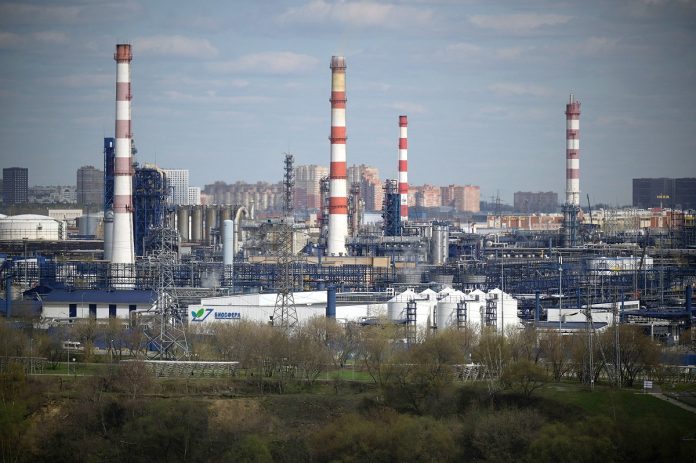
Russia’s oil exports have risen to their highest levels since the country invaded Ukraine more than a year ago.
Russia exported 8.3 million barrels per day of crude and refined oil in April, the International Energy Agency (IEA) said in its monthly oil report released Tuesday. An increase in crude oil exports offset a decline in exports of refined products, the agency added.
The rise comes despite the European Union imposing a ban on all seaborne imports of Moscow’s crude oil last year, and a total ban on imports of refined oil products.
Russia has managed to divert huge volumes of its oil to China and India.
India has become one of the biggest buyers of Russian oil since Moscow invaded Ukraine – and sends much of it back to Europe as refined fuel.
In an article published in the Financial Times on Tuesday, European Union chief Josep Borrell said that the EU should crack down on India reselling Russian oil into Europe. Borrell warned this practice “is certainly a circumvention of sanctions and member states have to take measures.”
“Russia seems to have few problems finding willing buyers for its crude and oil products,” the IEA said in its report.
Still, Russia’s oil export revenues dropped 27% in April compared with the same month in 2022, the agency estimated.
Tax receipts from the country’s oil and gas sector — which contributes about 45% to its federal budget — were down by nearly two-thirds over the same period.
The IEA added Russia may be increasing its oil exports as a way to compensate for a drop in revenue. The country did not deliver on its commitment to OPEC+, the group of oil producing nations, to slash exports by 500,000 barrels per day last month, according to IEA estimates.
US expresses cautious support for African peace mission to Ukraine, Russia
White House National Security Council Spokesman John Kirby has said the US would support any third-party proposal to end Russia’s war in Ukraine “as long as it can be seen as credible”.
South African President Cyril Ramaphosa said on Tuesday that Russian President Vladimir Putin and Ukraine’s President Volodymyr Zelensky had agreed to meet a group of African leaders to discuss a potential peace plan for the conflict.
“We would support any third-party peace proposal as long as it can be seen as credible, enforceable and sustainable. And for those three things to be the case, it’s got to be supported by President Zelensky and the Ukrainian people,” Kirby stated, referring to the African proposal on Ukraine.
“That means that the Ukrainians have to be 100 percent behind it… It has to start with the UN Charter being a foundational element. And it has to start with President Zelenskyy’s support and his 10-point proposal [being] a part of that framework,” he added.
EU should crack down on India reselling Russian oil into Europe: Top diplomat
European Union foreign policy chief Josep Borrell has said that the EU should crack down on India reselling Russian oil into Europe as refined fuel.
In an article published in the Financial Times on Tuesday, Borrell said “we have to act” to stem the flow of oil from Russia to India, which has become one of the biggest buyers of Russian oil since Moscow launched its invasion of Ukraine.
“If diesel or gasoline is entering Europe … coming from India and being produced with Russian oil, that is certainly a circumvention of sanctions and member states have to take measures,” he stated.
“If they sell, it is because someone is buying. And we have to look at who is buying,” Borrell added.
The EU has not made any moves to crack down on India reselling Russian oil into Europe. However, Borrell told the Financial Times that he would raise the issue with India’s foreign minister, who he is due to meet on Tuesday.
Before the war – and the sanctions which followed – Europe had long been the biggest buyer of Russian energy. The EU had hoped that the embargo from a huge importer like themselves would pile pressure on the Russian economy, but Moscow has found other buyers in Asia.
India, which imports 80% of its oil, before the war bought only about 2% to 3% from Russia. But as oil prices shot up last year, the government steadily increased its intake from Moscow, taking advantage of heavy discounts.
A recent report from the International Energy Agency found that Russian oil exports “reached a post-invasion high” in April this year.
“Russia seems to have few problems finding willing buyers for its crude and oil products,” the report added.
Hungary blocks tranche of EU off-budget military support for Ukraine
Hungary did not approve the disbursement of the next tranche of military support for Ukraine provided under the EU’s European Peace Facility (EPF).
The EPF, created in 2021, is an off-budget instrument aimed at enhancing the EU’s ability to prevent conflicts, build peace and strengthen international security.
“Hungary does not agree with the fact that the European Union, along with other existing tools, uses the European Peace Facility solely with regard to Ukraine as this does not allow sufficient funds to be channelled to promote the EU’s interests in other areas,” the government spokesman’s office said.
It added other areas where the funds could be used included the Balkans or North Africa.
The EU has provided a total of about 3.6 billion euros ($3.9bn) for military support for Ukraine so far under the EPF.
Hungary has been in a dispute with Brussels, as the bloc has suspended any payments of EU recovery funds until Budapest’s nationalist government implements reforms to improve judicial independence and tackle corruption.