Wednesday, December 24, 2025
Home Blog Page 1432

Iranian foreign minister stresses Helmand water rights in conversation with Afghan counterpart

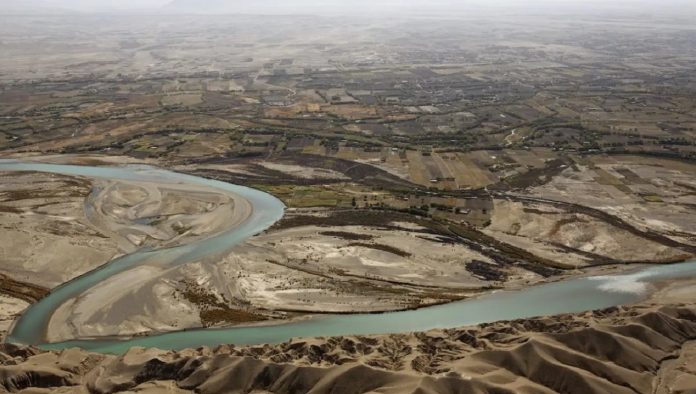
Helmand river

In a phone conversation with Taliban’s foreign minister Amir Khan Muttaqi on Wednesday, Amirabdollahian said the Taliban government’s verbal commitment to providing Iran’s water rights from Helmand was a positive matter but he demanded action.

“Opening the water gates [into Iran] by Afghanistan and providing Iran’s water share in practice is a serious demand of the Islamic Republic of Iran and this affects bilateral relations,” Amirabdollahian said.

He said the Taliban’s failure to allow Iran’s share of water from Helmand to flow into the country’s territory had caused a drought and much suffering for Iranians in Sistan-and-Baluchestan Province.

The Iranian foreign minister repeated a demand that water from the river be immediately allowed into Iran.

Muttaqi repeated the Taliban government’s commitment but spoke of drought in Afghanistan itself and technical issues.

The two sides also discussed border security, as well as cooperation in the transfer of electricity, railway, and border trade.

Iranian economy minister’s trip to Saudi Arabia sign of bigger development: Report

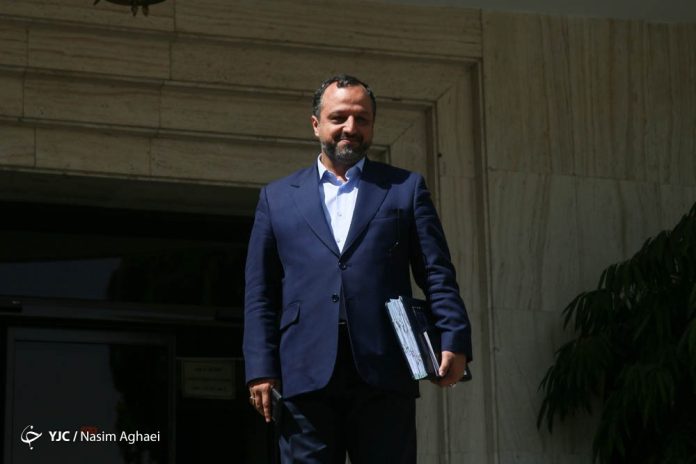
Ehsan Khandouzi

An article on Nour News, which is associated with the Supreme National Security Council (SNSC) of Iran, said that while Khandouzi’s trip — officially meant for him to take part in a summit of the Islamic Development Bank (IsDB) — was significant, his meetings with Saudi officials and the resultant agreements were more important.

The article said that after Iran and Saudi Arabia announced a reestablishment of their ties in March after seven years of a hiatus in relations, “hostile” Persian-language media and “some domestic media [outlets]” cast doubt about the viability and durability of that agreement.

Khandouzi’s trip to Jeddah, it said, proved all of those insinuations wrong, “because the development of economic ties and envisioning a comprehensive outlook to remove obstacles in that area technically indicate the countries’ serious determination to enhance ties.”

The Iranian economy minister said after his trip to Jeddah that he had met with his counterparts from Saudi Arabia on the sidelines of the IsDB summit, and that they had called for a quick resumption of economic ties between Saudi Arabia and Iran.

Last month, Iranian Foreign Minister Hossein Amirabdollahian met with Saudi Foreign Minister Prince Faisal bin Farhan Al Saud in Beijing.

At the end of that meeting, the two sides issued a joint statement in which they also stressed each other’s economic capacities and their potential in the enhancement of bilateral relations.

China had mediated the rapprochement between Iran and Saudi Arabia.

Iran leader says Hajj aims to unify Muslims against Israel, arrogance

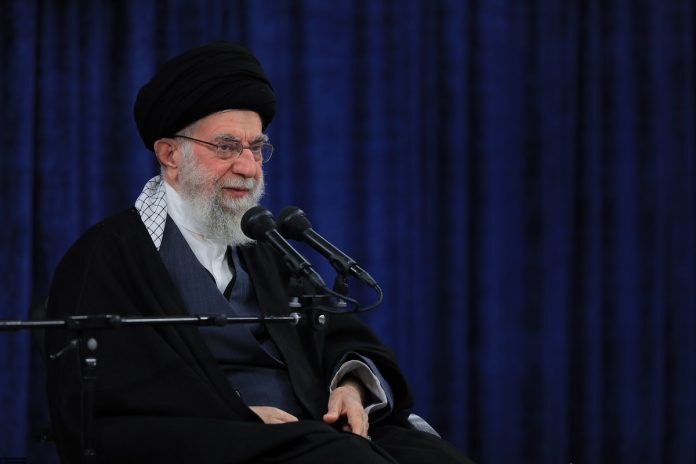
Ayatollah Seyyed Ali Khamenei

Ayatollah Khamenei made the remarks during a meeting with a group of Hajj officials at Imam Khomeini Hussainia in southern Tehran on Wednesday morning before they begin dispatching pilgrims from the country to Saudi Arabia for the annual rituals of Hajj.

“The purpose of Hajj is to unify the Islamic Ummah against disbelief, oppression, arrogance, and human and non-human idols,” he noted.

He also added that “culture-building” should be done in introducing the fundamental concepts of Hajj to people.

“I insist that the respected Hajj officials build up the culture in these fields,” he said. “Make sure that whenever the Hajj is mentioned, concepts such as civilization-building, global unity, cross-border and international perspective, and elimination of discrimination occur to today’s young person,” the Leader stressed.

Ayatollah Khamenei added that culture-building should be done by the clerics who are in the Hajj caravans and also Hajj officials.

Beginning next week, 89,000 pilgrims from 21 Iranian provinces will be dispatched from Iran to Saudi Arabia for the annual Hajj this year.

Elsewhere in his remarks, the Supreme Leader said one of the worldly benefits of Hajj is that Muslims in this huge gathering declare their presence and power against the Zionist regime and the influence of arrogant powers, and stand up to the oppressors of the world.

“The days of Hajj are a great opportunity to get to know the nations and global issues so that the false news of the media and lying news agencies do not lead people away from the realities of the world and deceive them,” he continued.

“If we are aware of global issues, we can understand the enemy’s real objective and the reason for its insistence on some issues. As in many issues, the officials have been careful and have acted correctly, and Iran’s very good advancements in regional and global issues, which have angered America, have been the result of this attentiveness,” Ayatollah Khamenei noted.

Turkey’s opposition says filed complaints over suspected irregularities at ballot boxes

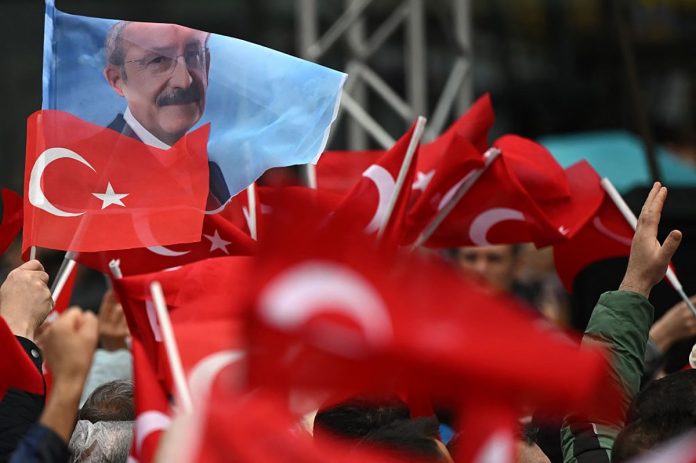
Kemal Kilicdaroglu

However, opposition party officials said the objections were unlikely to alter the result of the presidential vote, which is headed to a runoff on May 28 between Erdogan and challenger Kemal Kilicdaroglu.

Muharrem Erkek, a deputy chairman of the secularist Republican People’s Party (CHP), said irregularities at each ballot box ranged from one single wrongly counted vote to hundreds of such votes.

He added the CHP had formally raised objections over 2,269 ballot boxes nationwide for the presidential election and 4,825 for the parliamentary vote that also took place on Sunday, though they represent a tiny proportion of the total number.

“We are following every single vote, even if it does not change the overall results,” Erkek told reporters in Ankara.

Erdogan’s ruling AK Party and its nationalist allies won a strong parliamentary majority, while in the presidential vote, Erdogan fell just shy of the 50% threshold needed to win outright.

Kilicdaroglu, the CHP chair, received 44.9% in what was seen as the biggest electoral challenge to Erdogan’s 20-year rule. A third candidate, Sinan Ogan obtained 5.17%.

Erdogan, now in pole position, says only he can ensure stability in Turkey, a NATO member state, as it grapples with a cost-of-living crisis, soaring inflation and the impact of devastating earthquakes in February.

The opposition alliance that includes the CHP has urged young voters to turn out to support Kilicdaroglu in the runoff.

Mehmet Emin Ekmen, a deputy chairman of DEVA, one of six parties in the opposition alliance, told Reuters: “We do not have strong evidence to say irregularities can change the presidential race results or get another opposition candidate elected to the parliament”.

“Since Erdogan officially started his election campaign yesterday, I believe the opposition alliance should also channel its energy into the runoff,” he added.

Kremlin castigates CIA plot to “recruit Russian spies”

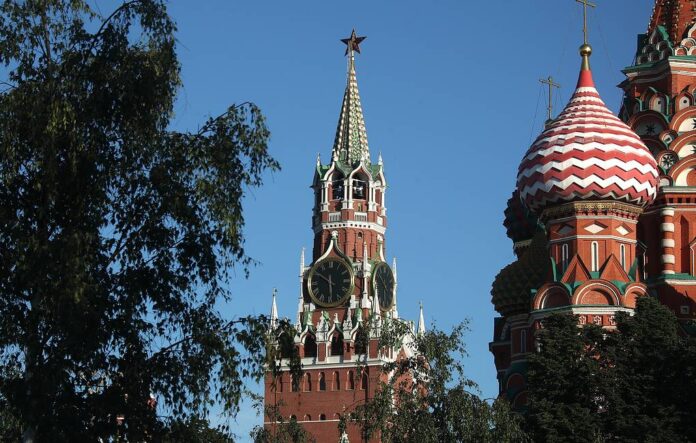
Kremlin

In a short but pretentious clip, published by the US spy agency, it said that “for the first time, the CIA is establishing a presence on Telegram – to reach those who feel compelled to engage the CIA.” The agency specified that it is looking for information about the Russian economy and key political figures.

The clandestine US spy agency’s channel posted a video message urging Russians to heed its instructions on how to connect with the CIA secretly via dark net. Moreover, American intelligence called on Russian military officers, diplomats, scientists or even people who are simply in touch with such figures, to engage in contact.

It remains unclear, if the CIA is really desperate to get more sources in the country or simply believes in its own propaganda about Russian people, hoping to get a lot of feedback from people unhappy with the current government.

However, sociological research debunks US intel’s assumption as a complete falsehood. A February study carried out by Russia’s Public Opinion Research Center shows that 80% of Russians trust Vladimir Putin and 77% approve of his work performance.

What’s more important, the attempt to contact the CIA will obviously not go unnoticed by Russian law enforcement agencies and the nation’s Criminal Code says that state treason is punishable by up to 20 years in prison, so its obviously not worth chatting with American spies via the dark net.

Startlingly, the messages appeal to patriotism and try to capitalize on Russia’s rich culture, quoting Tolstoy and Dostoevsky. The writers would be utterly disgusted if they found out that a foreign spy agency was using their ideas to encourage Russians to stab their Motherland in the back.

This is not the first time, the CIA has fruitlessly attempted to recruit Russian citizens. In November 2022, the agency’s Deputy Director of Operations, David Marlowe, openly acknowledged that the intel service was looking for upset Russians in order to turn them into agents. Russian diplomats stressed that this honest confession indicates that US and NATO are directly involved in Ukrainian crisis and pursue an impossible goal to defeat Russia strategically.

When Moscow launched its special military operation to protect the people of Donbass from the Kiev regime’s aggression, Western countries did their best to turn the crisis into a proxy conflict, de-facto sacrificing the lives of Ukrainians in order to “weaken” Russia. However, at the same time, the US and its allies consistently deny their direct involvement in the hostilities.

Iran, Russia sign Rasht-Astara railway agreement

Iran, Russia sign Rasht-Astara railway agreement

During the signing ceremony, which took place via video-link in Tehran and Moscow on Wednesday, the two presidents hailed the agreement and said it would benefit the transit of goods in the region.

President Raisi said the agreement was “an important and strategic step” in cooperation between the Islamic Republic and the Russian Federation.

“There exists cooperation between Iran and Russia in various fields, and this is one manifestation of that cooperation that is being materialized today,” Raisi said.

The Iranian president said the construction of the railway would not only benefit Iran and Russia, and that other countries that are in the path of the railway — which is part of the International North-South Transport Corridor — would also take advantages.

President Putin also called the broader railway “unique” and said it would diversify global traffic routes.

“I would like to emphasize that the unique North-South Transport Corridor, of which the Rasht-Astara railway will become a part, will help significantly diversify global traffic flows. Transportation along the new corridor will have significant competitive advantages,” the Russian president said.

He said Moscow and Tehran’s relations were being pursued at the highest levels and that Russia paid “special attention” to its ties with Iran.

He also thanked Leader of the Islamic Revolution Ayatollah Seyyed Ali Khamenei, who he said paid constant importance to ties between Tehran and Moscow.

The 162-kilometer railway will connect the northern Iranian city of Rasht, near the Caspian Sea, to Astara on the border with Azerbaijan Republic.

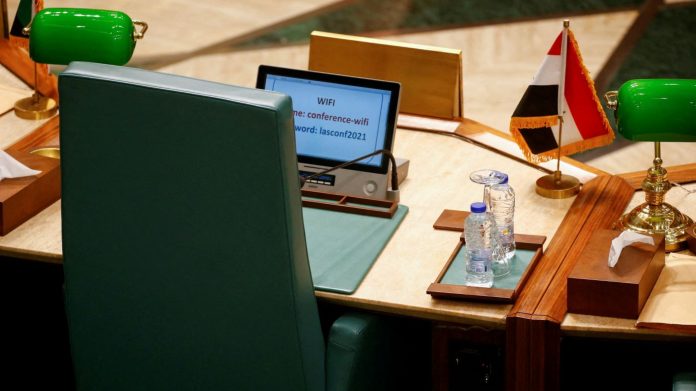
Syria’s presence in Jeddah summit ‘a new phase’ in Arab world: Arab League

Syria Arab League

Hossam Zaki, the assistant secretary general of the Arab League, made the statement ahead of the second consecutive day of the Arab Economic and Social Council meetings attended by the member states’ representatives and senior officials in Jeddah on Tuesday.

“I gave a speech today on behalf of the secretary-general of the Arab League, in which we welcomed the presence of Syria, which paves the way for a new phase of the Arab situation and benefits all societies,” Zaki said.

“We are keen, through these meetings, to ensure that the discussed topics are of interest to Arab citizens and their reality,” he continued, adding, “We have not yet achieved economic integration at the highest level, but there are good steps we have taken to achieve this integration.”

The second preparatory meeting of the Arab summit, scheduled to be held in Jeddah on May 19, started on Tuesday with the participation of Syria’s delegation chaired by Deputy Foreign Minister Ayman Sousan.

The meetings of the Arab Economic and Social Council are discussing ways to enhance joint Arab action to achieve sustainable development, and other social and economic issues of concern to Arab countries.

“We again welcome the presence of Syrian delegation at these meetings,” Hamid Chabeira, the Algerian ambassador in Cairo and permanent representative in the Arab League, said in a speech, stressing the need for unity and solidarity among the Arab countries.

The undersecretary of the Saudi Ministry of Foreign Affairs for international Affairs, Abdul Rahman al-Rasi, also welcomed the presence of the Syrian delegation in the meetings, wishing them success.

“Saudi Arabia extended its hand to the brothers due to its belief in the importance of joint Arab action,” he stated, adding, “We will continue work to follow up this issue and resume the process of the Arab League.”

Arab government representatives in Cairo voted on May 7 to return Syria to the Arab League after a 12-year suspension, with all 13 of the 22 member states attending the session endorsing the decision.

The Arab League had suspended the membership of Syria, one of its founding members, in November 2011, at the start of foreign-backed militancy in the country. Syria denounced the move as “illegal and a violation of the organization’s charter.”

Riyadh and Damascus agreed in March to resume diplomatic relations and re-open embassies after more than a decade, prompting other Arab countries to race for the re-establishment of ties with Syria.

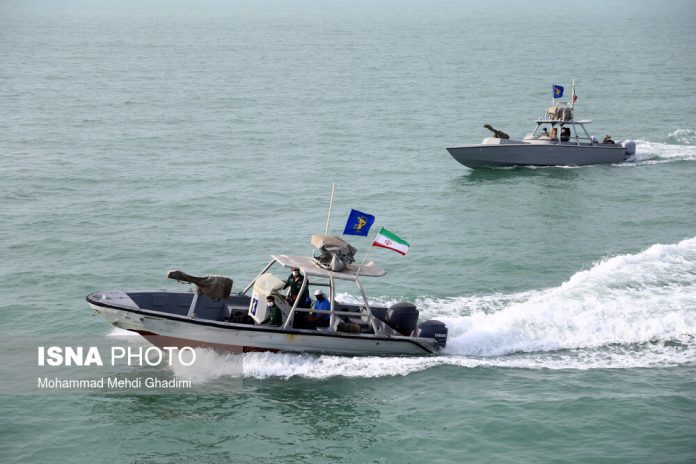
IRGC Navy chief: Iran has so far seized 35 ships in southern waters

IRGC Boat

Rear Admiral Alireza Tangsiri said, “Iran does not seize ships for no reason. For years, the Persian Gulf has become a safe route, and the Strait of Hormuz is under our surveillance.”

In recent weeks, Iranian naval forces have impounded three ships off the country’s southern coast for their breaches of shipping safety law, with the US claiming that the moves are “illegal” and “endanger” shipping safety.

Iran dismisses the claims as baseless, saying the vessel seizures are in fact meant to consolidate the maritime law.

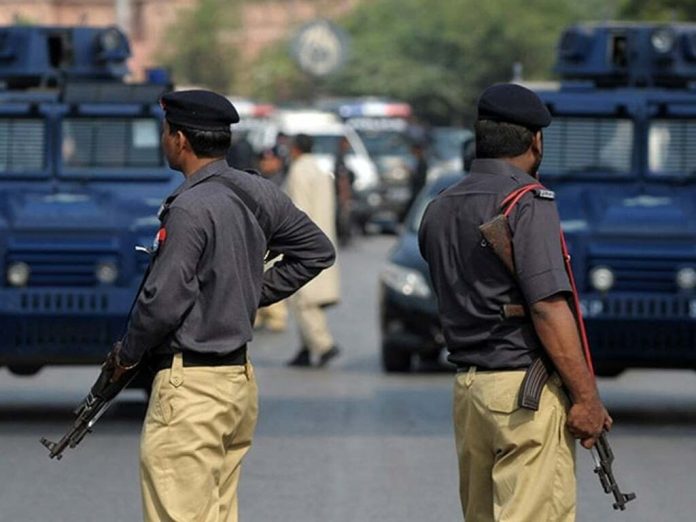
Pakistani police officer opens fire at girls’ school bus, killing 1

Pakistani Police

The shooting happened in the Swat Valley in Khyber Pakhtunkhwa province.

Senior police official Nasir Satti said officer Alam Khan was immediately arrested. He added the shooting was not a militant attack.

Satti stated tat officers were questioning Khan to determine what prompted him to fire at the bus as it was leaving the school that serves girls up to age 17. He said four students and a woman who was on the bus were injured in the shooting.

Satti added Khan was on security duty at the school because of concerns of possible militant attacks.

The Swat Valley was the stronghold of the Pakistani Taliban, formally called the Tehreek-e-Taliban Pakistan, until 2019 when security forces cleared the region of militants after military operations.

Gun violence targeting children is rare in Pakistan. However, nearly 150 people, mostly students, were killed in 2014 when TTP militants attacked a school in Peshawar, the capital of Khyber Pakhtunkhwa. Since then, authorities have deployed police at schools across the country, especially in the volatile northwest where the Pakistani Taliban have stepped up attacks on security forces in recent months.

The Pakistani Taliban are a separate group but also a close ally of the Afghan Taliban, who seized power in neighboring Afghanistan in August 2021 as US and NATO troops were in the final stages of their pullout from the country after 20 years of war.

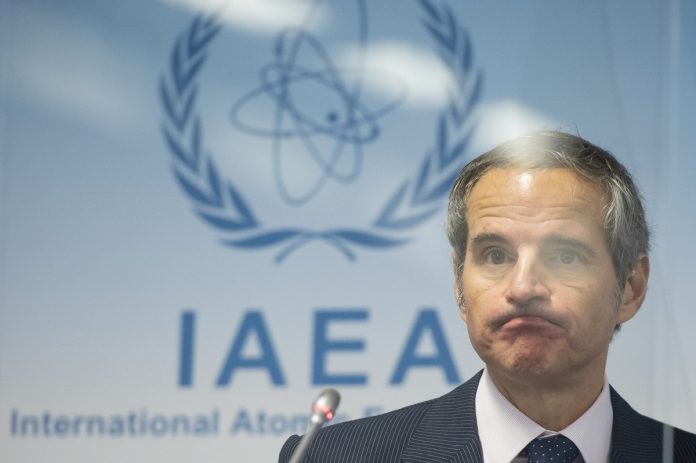
Iran nuclear chief: IAEA head Grossi in no position to comment on JCPOA revival talks

Rafael Grossi

Speaking to reporters on Wednesday in Tehran, Mohammad Eslami reacted to the recent remarks by IAEA Director-General Rafael Grossi, who, in an interview with CBS News, cast doubt on “the prospects of a swift return” to the Iran nuclear deal, officially named the Joint Comprehensive Plan of Action (JCPOA).

Eslami reminded Grossi that the IAEA is solely in charge of monitoring the technical aspect of the JCPOA’s implementation, and that the nuclear watchdog is not a party to the talks, which have been at a stalemate since late 2021.

“The IAEA is not in charge of the negotiations, and that responsibility lies on the P5+1 group,” including the US, which abandoned the deal in 2018, France, Britain, Russia China plus Germany, Eslami added.

Elsewhere, he said Iran continues cooperation with the agency based on the Safe Guards Agreement and the Non-Proliferation Treaty (NPT), and that there has been “no disruption” in interactions between the two sides.

Grossi had claimed in the interview that the level of interactions with Tehran could not currently be “assessed to be good.”

Iran and the IAEA have been locked in a dispute triggered by Israeli and US allegations against Tehran’s peaceful nuclear activities.

Grossi visited Tehran in March for high-level talks with Iranian officials, including with President Ebrahim Raisi, in an effort to resolve the differences.

In a joint statement after the visit, the two sides agreed that interactions will continue in a spirit of collaboration and in full conformity with obligations under IAEA’s Comprehensive Safeguards Agreement.