African peace delegation to visit Russia soon: FM
Russia has announced that African leaders would visit capital Moscow next month or early July under a peace initiative for the war in Ukraine announced by South African President Cyril Ramaphosa.
“Taking into consideration the wishes of President Ramaphosa, we are talking about mid, end June or beginning July” for the visit, Foreign Minister Sergey Lavrov said.
On Tuesday, Ramaphosa stated that Russian President Vladimir Putin and Ukraine leader Volodymyr Zelensky had each agreed to receive the six-member mission, which will visit Moscow and Kyiv.
Ukrainian military claims gains around Bakhmut
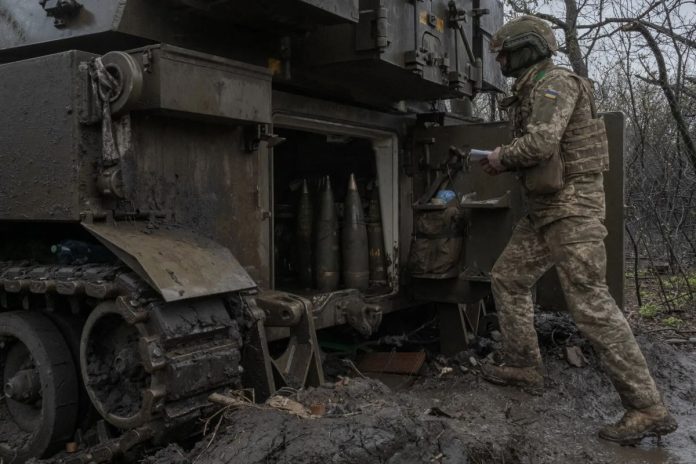
Ukrainian forces have made advancements around the embattled eastern city of Bakhmut over the past day, despite coming under heavy fire from Russian troops, a spokesperson for Ukraine’s military said Thursday.
“In the course of the fighting, our units continue to advance on the flanks, despite the fact that they do not currently have an advantage in personnel, ammunition and equipment,” Serhii Cherevatyi, the spokesman for the Eastern Grouping of the Ukrainian Armed Forces, told Ukrainian TV.
“We managed to advance from 150 (492 feet) to 1,700 meters (5,577 feet),” he added.
The head of the Russian paramilitary Wagner group, Yevgeny Prigozhin, has also claimed that his fighters have advanced within the eastern city, as fierce fighting continues for the territory still controlled by Ukrainian troops.
Bakhmut has been the target of a months-long assault by Russian forces that has so far failed to capture the city.
Last week, Ukrainian forces claimed to have conducted “effective counterattacks” in the area. Colonel-General Oleksandr Syrskyi, commander of the Ukrainian Land Forces, said his army had forced Russian troops to retreat by “a distance of up to 2 kilometers (1.2 miles).”
Those gains have reportedly continued this week. Ukraine’s Deputy Defense Minister Hanna Maliar claimed Wednesday that “our troops liberated about 20 square kilometers (more than 7 square miles) of the Bakhmut suburbs in the north and south of the city.”
However, Maliar acknowledged that Russia is also making advances in Bakhmut, bringing in paratroopers and “destroying the city with artillery.”
Russian attacks on Kyiv ‘senseless’: Ukraine official
Secretary of the National Security and Defense Council of Ukraine Oleksiy Danilov has called Moscow’s latest attacks on Kyiv “senseless”, actions that he claimed were being committed to raise “patriotic hysteria” in Russia.
“In Russia, a process of despair and disappointment with the authorities is developing against the background of the unsuccessful offensive and failures at the front,” he posted on Twitter.
Kremlin confirms two-month extension of Black Sea grain deal
Moscow has agreed to a two-month extension of the Black Sea grain deal, Kremlin spokesperson Dmitry Peskov confirmed on Thursday after talks on easing restrictions on Russian agricultural exports.
“We can confirm that the Russian side has also decided to continue this so-called Black Sea deal for a period of two months,” Peskov told reporters.
He described it as a “relative result” for Russia, adding that the pact’s fate was, “in the hands of those with whom the UN must agree on its Russian part.”
Russia had previously threatened to pull out of the deal, complaining that a separate agreement with the UN to facilitate shipments of Russian grain and fertilizers, brokered as part of the negotiations on the deal last July, was not being adhered to.
The deal was first established in July 2022 to ensure the safe exportation of Ukrainian grain amidst Russian blockades of Ukrainian ports. The deal – which the United Nations and Turkey helped broker – was set to expire on Wednesday before it was renewed.
According to the European Commission, Ukraine accounts for 10% of the world wheat market, 15% of the corn market and 13% of the barley market. It is also a key global player in the market of sunflower oil.
Should the deal not have been renewed, food security around the world would have been jeopardized. The International Rescue Committee (IRC) wrote on Tuesday that as much as 90% of imports into East African countries are shipments supported by the grain deal. If these imports were to stop, there would be a “spike in the number of undernourished people” to almost 19 million in 2023, the IRC said.
The new deal will now be in effect until July 18th.
EU to discuss sanctions on Russian diamonds in Japan: Official
G7 leaders meeting in Japan will discuss sanctioning Russia’s billion-dollar trade in diamonds, an EU official said Thursday, hoping to further starve Moscow of funds for its war in Ukraine.
“We believe we need to limit exports from Russian trade in this sector,” the official added.
Freezing of Finland’s bank accounts forced retaliatory step: Moscow
Moscow has said a decision to freeze bank accounts of Finnish embassies and consulates in Russia was a response to what it called the unfriendly acts of “the collective West”.
Officials from Finland and Denmark said on Wednesday the diplomatic bank accounts of both countries had been frozen, prompting their embassies to make payments in cash.
“This is not an initiative from the Russian side. We are reacting to the situation created by the authorities of several countries of the collective West, including, to our regret, Finland,” Kremlin spokesperson Dmitry Peskov stated.
Moldova says wants to join EU ‘as soon as possible’
Moldova wants EU membership “as soon as possible” as protection against a threat from Russia and hopes for a decision to start negotiations “in the next months,” the country’s president has told AFP news agency.
“Of course, nothing compares to what is happening in Ukraine, but we see the risks and we do believe that we can save our democracy only as part of the EU,” she said.
Ukraine says Russia launched 30 missiles overnight and it intercepted all but one
Ukraine claims to have downed 29 out of 30 cruise missiles launched by Russia overnight, according to a statement from the Ukrainian Air Force on Telegram.
The missiles came in “several waves” and “from different directions,” the statement said.
“A total of 30 sea-, air-, and land-launched cruise missiles were launched,” the Ukrainian Air Force announced in the statement, adding that air defenses “destroyed 29 cruise missiles.”
The Air Force also claimed to have also shot down two attack drones and two reconnaissance drones.
Several explosions were heard overnight across Ukraine, including the capital Kyiv, as authorities activated air defenses against a nationwide Russian attack.
Ukraine’s Operational Command South said earlier Thursday that one person had been killed and two injured when a Russian missile hit an industrial infrastructure facility in the southern port city of Odesa.
“No panacea in resolving the crisis”: Chinese envoy tells Ukrainian officials
China’s Foreign Ministry on Thursday confirmed that Beijing’s special envoy Li Hui met with President Volodomyr Zelensky and other senior Ukrainian officials on Wednesday.
In a statement, the ministry announced Li reiterated that China is willing to serve as a peace broker for resolving the Ukrainian crisis, on the basis of its previously stated positions on the war.
“There is no panacea in resolving the crisis. All parties need to start from themselves, accumulate mutual trust, and create conditions for ending the war and engaging in peace talks,” Li said, according to the readout.
kyiv’s readout made no mention of the meeting with Zelensky.
Instead it said Li met foreign minister Dmytro Kuleba and discussed “topical issues of cooperation between Ukraine and China,” as well as “ways to stop Russian aggression.”
Last week, China’s Foreign Ministry announced Li would visit Ukraine, Poland, France, Germany and Russia starting May 15 — just days before the Group of Seven (G7) leaders are expected to affirm their solidarity against Moscow in a summit in Hiroshima, Japan.
China has attempted to cast itself as a peace broker and deflect criticism that it has not acted to help end Russia’s war in Ukraine, more than one year after Moscow invaded its western neighbor.
The Ukrainian statement on Li’s visit appeared to allude to daylight between Beijing and Kyiv’s positions on ending the conflict.
Kuleba talked about restoring peace “based on respect for Ukraine’s sovereignty and territorial integrity” and emphasized “that Ukraine does not accept any proposals that would involve the loss of its territories or the freezing of the conflict.”
He also stressed the importance of China’s participation in the implementation of Zelensky’s “peace formula,” according to the statement.
EU proposes more military funds for Ukraine: Report
European Union security and foreign policy chief Josep Borrell has reportedly requested another €3.5 billion ($3.8 billion) to bolster the collective fund used to supply weapons to Ukraine. The European official previously warned that Kiev’s forces would collapse “in a matter of days” without continued Western support.
Borrell asked EU member states to authorize new funding for the European Peace Facility (EPF) on Wednesday, diplomatic sources told Reuters, with one official stating, “We have to top up” as the facility is running low on money.
The large cash injection allegedly sought by Borrell will require unanimous approval from EU governments, which already agreed last year that more money could be authorized “in case of need.” The reported request comes as Kiev is expected to launch a major offensive to reclaim territory lost to Moscow.
Borrell has been among Ukraine’s most vocal backers within the EU, repeatedly lobbying for additional military support and insisting that Western aid would determine the country’s fate. At an event in Italy earlier this month, he argued that it was “not the moment for diplomatic conversations about peace.”
“If we don’t support Ukraine, Ukraine will fall in a matter of days. So, yes, I would prefer to spend this money,” he said, adding that “we don’t have a choice.”
Though the EPF was created in 2021 to help furnish military gear to developing nations, the fund was repurposed to focus on Ukraine soon after Russia launched its military operation in the neighboring state more than a year ago. EU officials have already set aside nearly €8 billion ($8.6 billion) for the project.
The EPF is separate from the union’s budget – as the 27-member bloc is ostensibly barred from directly funding military operations – and was initially allocated €5 billion ($5.4 billion) intended to last until 2027. Those funds were quickly exhausted following many arms shipments to Kiev over the course of last year, forcing the EU to approve another massive spending hike in December.
Russia has warned that continued Western military support to Ukraine will only prolong the fighting and do nothing to deter its objectives, saying that the weapons, intelligence and training provided to Kiev’s forces had already made them de facto parties to the conflict.
Explosions heard in Kyiv as Ukraine raises nationwide air raid alert
Explosions were heard in Kyiv and other Ukrainian regions in the early hours of Thursday, as authorities reported a countrywide air attack.
“Multiple explosions have occurred in the capital, in the Darnytskyi and Dniprovskyi districts. Emergency services are en route to the affected areas,” Kyiv Mayor Vitaliy Klitschko said on Telegram.
Other explosions were reported in the Desnianskyi district.
The Kyiv city military administration announced the capital’s air defenses were activated, resulting in falling debris in the Darnytskyi district, which caused a fire.
“Data on casualties and damage are currently being updated. Remain in your shelters until the air raid alert is over!” Serhiy Popko, the head of the city military administration, said on Telegram.
Nationwide air raid alert: Air defense forces in Vinnytsia, in west-central Ukraine, were activated to “countering airborne threats,” Serhiy Borzov, the head of the region’s military administration, wrote on Telegram.
“We are currently facing another wave of cruise missile attacks from the enemy!” Borzov added.
Wagner boss claims fighters continue to advance in Bakhmut
Yevgeny Prigozhin, leader of the Wagner private military company, said his fighters have advanced in Bakhmut amid fierce fighting surrounded by the remaining buildings still controlled by Ukrainian troops.
“Wagner PMC has advanced 260 meters [0.16 miles] more in Bakhmut,” Prigozhin posted on the Telegram channel of his Concord Group.
“The enemy now occupies 1.85 km of territory [1.15 miles]. The enemy offers fierce resistance. They fight for every house, every entranceway, every square meter of territory, despite the fact that the enemy only occupies a tiny percentage of territory,” he continued.
Prigozhin added it wasn’t possible to surround remaining Ukrainian positions because of the recent withdrawal of Russian paratroopers.
“Really [what happened was], Russian paratroopers, as a result of an enemy assault near Bakhmut, took up a favorable line, for the enemy,” he stated.
Taking aim at Valery Gerasimov, the Russian General Staff chief, Prigozhin said “the instantaneous retreat of Gerasimov from the enemy today does not allow to close [Bakhmut] off. But we are advancing.”
Prigozhin has frequently been at odds with the Russian Defense Ministry on its tactics and leadership in the conflict.
2 Patriot system components were damaged in Russian attack: US official
Two components of a Patriot battery were damaged in a Russian attack Tuesday, but the system “was never offline,” according to a US official familiar with the matter.
The Russian barrage —which consisted of hypersonic Kinzhal missiles, Kalibr cruise missiles and other munitions — damaged the Patriot battery’s generator and part of the system’s electronics.
The damage was minimal, according to three other US officials, with one describing it as “minor.” The system remained functional throughout the attack and remains online, an official said.
The US sent inspectors to examine the system on Tuesday, after being told by the Ukrainians that the system appeared to have been damaged, one of the officials stated.
US officials are still assessing how exactly the Patriot components were damaged since it does not appear that any of the components sustained a direct hit from a Russian Kinzhal missile or other munition.
One possibility is that debris from a falling missile damaged the Patriot components, but officials are examining other options as well.
Hungary may halt further EU sanctions against Russia after Ukraine blacklists Hungarian bank
A Hungarian official says it would be very difficult for Hungary to join the European Union’s next round of sanctions against Russia after Ukraine blacklisted a Hungarian bank.
Hungarian Foreign Minister Péter Szijjártó described the move by the Ukrainian National Agency on Corruption Prevention (NAZK) to include Hungarian Bank OTP on its list of “international sponsors of war” as “outrageous.”
He added “that as long as OTP stays on this list, it will be very difficult for us to even enter into negotiations on the eleventh sanctions package,” and “it will be very difficult for us to negotiate economic restrictions that require additional sacrifices.”
In a statement earlier this month, NAZK said the decision to classify OTP bank as an international sponsor of war was “due to the position of the bank’s management to continue operations in Russia” as well the bank’s “recognition of the so-called Donetsk and Luhansk ‘people’s republics.’”
The Hungarian Foreign Minister refuted Kyiv’s claims on Monday, saying that as Hungary’s biggest bank, “OTP has not violated any international laws. Its operations fully comply with all kinds of expectations and legislation.”
Szijjártó also stated placing the bank “on the list of international sponsors of war is unacceptable and scandalous.”
A senior EU official, briefing journalists in Brussels on Wednesday, said the EU’s priority “is to ensure that we can support Ukraine so that they can win,” and that “we’re going to talk to the Ukrainian side. We’ll talk to the Member States, talk to Hungary, of course.”
The senior official said it’s not for the EU “to decide what private banks do. But again, we have to deal with a question that is influencing and affecting decisively one of our main foreign policy objectives, which is to support Ukraine.”
“It’s affecting our decisions on military and financial support. We have to deal with that, we will be dealing with that and I can tell you that the High Representative [Josep Borrell] is already dealing with that,” the official added.
The official also noted that EU Foreign Ministers will discuss the issue on Monday in Brussels at a scheduled meeting. The Ukrainian Foreign Minister Dmytro Kuleba will also attend the meeting virtually.
Ukraine says heavy fighting continues in Bakhmut
The Ukrainian military announced that Russian forces launched S-300 missiles at Bakhmut, adding that there were air strikes in several locations around the city.
“Heavy fighting for Bakhmut continues. In addition, during the day the enemy conducted unsuccessful offensive actions in the direction of Ivanivske,” the military’s General Staff said.
Ivanivske is a village to the west of Bakhmut.
Ukraine is holding on to the substantial areas around Bakhmut that it claims to have taken back from Russian troops, and Ukrainian forces are still advancing in certain areas, according to Ukrainian Deputy Defense Minister Hanna Maliar.
“Almost 20 square kilometers liberated in the suburbs in recent days have not been lost. We are moving on. We are advancing in some areas,” Maliar said on her Telegram account.
She added “fierce fighting” continues around the embattled eastern city, adding that Russian troops are also “advancing somewhat.”
Maliar’s statement cannot be verified, and many observers think Ukrainian progress has been more modest than claimed.
On Tuesday, Maliar stated that Ukrainian troops “liberated about 20 square kilometers (more than 7 square miles) of the Bakhmut suburbs in the north and south of the city.”
Chinese envoy wraps up visit to Ukraine: FM
A senior Chinese official has finished a two-day visit to Ukraine, according to the Ministry of Foreign Affairs of Ukraine.
The ministry said on its website that Li Hui, China’s special representative on Eurasian affairs, visited Ukraine from May 16 to 17.
“The trip was made pursuant to the agreements reached during a telephone conversation between President Volodymyr Zelenskyy and President Xi Jinping on April 26,” it added.
Li met with Foreign Affairs Minister Dmytro Kuleba, according to the site, but the ministry did not say whether he had also met the Ukrainian president.
“During the meeting, the parties discussed topical issues of cooperation between Ukraine and China both at the bilateral level and within international organizations, as well as ways to stop Russian aggression,” the ministry said, offering few further specific details.
It added Kuleba had talked about “restoring a sustainable and just peace based on respect for Ukraine’s sovereignty and territorial integrity.”
“He emphasized that Ukraine does not accept any proposals that would involve the loss of its territories or the freezing of the conflict,” according to the ministry.
Kuleba stressed “the importance of China’s participation in the implementation of the President’s Peace Formula, the Black Sea Grain Initiative, nuclear safety and other important international efforts,” the ministry said.
China has attempted to cast itself as a peacebroker and deflect criticism that it has not acted to help end Russia’s war in Ukraine, more than one year after Moscow invaded its western neighbor. Beijing has refused to condemn the invasion and instead bolstered its economic and diplomatic ties with Moscow.
Council of Europe creates “register of damage” for Russia’s full-scale invasion of Ukraine
The Council of Europe (COE) announced that it has established a “register of damage” to help hold Russia accountable for its actions in Ukraine, the organization announced on Wednesday at the conclusion of a two-day summit in Reykjavik, Iceland.
The register — officially the “Register of Damage Caused by the Aggression of the Russian Federation Against Ukraine” — will document “damage, loss or injury caused by the Russian aggression against Ukraine,” the COE said, in an initiative that will last for an initial period of three years.
The system is “vital” if Moscow is to be held liable for compensation to victims of the war, stated Marija Pejčinović Burić, secretary general of the COE.
“It is one of the first legally binding decisions to hold Russia accountable for its acts,” she added.
The COE has 46 member states. The gathering in Reykjavik is only the fourth summit since the council was established in 1949. The summit’s “top priority” was supporting Ukraine in Russia’s war, according to the COE’s website.
“The register is an important step towards accountability for crimes committed in Russia’s brutal war and a strong message of support to Ukraine,” Iceland’s Prime Minister Katrín Jakobsdóttir said.
Ukrainian Prime Minister Denys Shmyhal said that the register is “an important milestone on the road to justice and reparations for Ukraine and the Ukrainians who have suffered so much from this war.”
“We invite other states, from all corners of the world, to join the Register of Damage as a sign of support for the important issue of Russia’s accountability for its war against Ukraine,” he added.
Forty nations — including some, like the United States, who had observer status at the summit — have joined the register, with a further three having expressed an intention to join.
Nine countries who are either member or observer states of the council have not yet joined the agreement: Armenia, Azerbaijan, Bosnia and Herzegovina, Hungary, Serbia, Turkey, The Holy See, Israel and Mexico.
Black Sea grain deal will be extended for 2 months
An agreement has been reached to extend the deal that allows grain to be exported from Ukrainian ports in the Black Sea, according to Turkish, Ukrainian and Russian officials.
Turkish President Recep Tayyip Erdogan was first to announce that the deal, which was scheduled to expire Thursday, will be extended for two months.
The agreement, brokered by Turkey and the United Nations, was originally signed last year and has since been extended.
Oleksandr Kubrakov, the Ukrainian minister of Communities, Territories and Infrastructure Development, has confirmed that the grain deal has been extended.
“The grain deal has been unblocked and will continue to be in effect until July 18. The world will continue to receive Ukrainian products thanks to the efforts of our partners in the agreement – Turkey and the UN,” Kubrakov said on Facebook.
“We are grateful to our partners for their unwavering and focused position that the agreement should continue to work and on the terms signed by all parties,” Kubrakov added.
Russia had balked at extending the deal without better guarantees for its own exports.
“In mid-April, Russia began to unreasonably restrict the work of the Initiative, and in May it actually blocked it by refusing to register a new fleet and conduct inspections of the fleet that is being loaded at Ukrainian ports,” said Kubrakov.
“Almost 70 vessels are currently waiting in Turkish territorial waters, 90% of them are ready to deliver the products of our farmers to the world,” he claimed.
“We welcome the continuation of the Initiative, but emphasize that it must work effectively. For this purpose, it is necessary to eliminate the problems that Russia has been creating for several months now by sabotaging inspections and registration of the new fleet,” he added.
Russian Foreign Ministry spokesperson Maria Zakharova has also confirmed the extension of the Black Sea Grain initiative.
However, Zakharova said that “distortions in the implementation of the grain deal should be corrected as quickly as possible.”
The US State Department praised the two-month extension Wednesday, with spokesperson Vedant Patel saying in a briefing that we “strongly support the UN’s and Turkey’s efforts on the deal, which keeps the global food and grain prices low.”
Patel also chastised Russia for the need to repeatedly extend the deal.
“We should not need to remind Moscow every few weeks to keep their promises and to stop using people’s hunger as a weapon in their war against Ukraine,” stated Patel.