Wednesday, December 24, 2025
Home Blog Page 1430

Syria’s president in Saudi Arabia in first visit since war

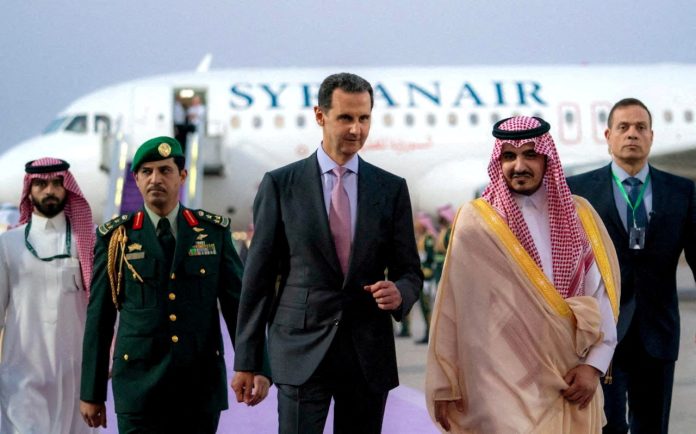
Syria's President Bashar al-Assad arrives in Jeddah to attend the Arab League summit

Assad has arrived in Saudi Arabia to take part in an Arab League summit upon an official invitation from King Salman bin Abdulaziz Al Saud, the first such participation since foreign-backed militancy began in the country more than a decade ago.

Assad arrived at King Abdulaziz International Airport in the Red Sea port city of Jeddah on Thursday to attend the 32nd regular session of the 22-member bloc the following day, Syrian state television reported.

The Syrian presidency said in a statement on May 10 that the 57-year-old leader had received an invitation to the May 19 Arab summit in Saudi Arabia.

Assad stated that the summit “will enhance joint Arab action to achieve the aspirations of the Arab peoples,” the statement added.

Arab government representatives in Cairo voted on May 7 to return Syria to the Arab League after a 12-year suspension.

All 13 of the 22 member states that attended the session endorsed the decision. However, there is still no Arab consensus on normalization of ties with Damascus.

Several governments did not attend the meeting. Among the most notable absentees was Qatar, which continues to back the so-called moderate opposition groups against the incumbent Damascus government.

The vote in the Egyptian capital came days after top Arab diplomats met in Jordan to discuss a roadmap to bring Syria back into its fold as the foreign-sponsored conflict is in its last stages.

The decision also includes a commitment to ongoing dialogue with Arab governments to gradually reach a political solution to the conflict, in line with UN Security Council Resolution 2254.

Additionally, the Arab League set up a communications committee consisting of Saudi Arabia and Syria’s neighbors Lebanon, Jordan and Iraq to follow up on the developments.

The Arab League suspended Syria’s membership in November 2011, citing an alleged crackdown by Damascus on opposition protests. Syria has denounced the move as “illegal and a violation of the organization’s charter.”

Syria was one of the six founding members of the Arab League in 1945. In recent months, an increasing number of countries and political parties have called for the reversal of its suspension from the Arab League.

Riyadh and Damascus agreed in March to resume diplomatic relations and re-open embassies after more than a decade.

Assad has already visited the United Arab Emirates (UAE) and Oman and is expected to visit other Arab states as well in the near future.

The detente process began after Iran and Saudi Arabia clinched a deal to restore diplomatic relations and re-open embassies. Observers say the deal signed in China after seven years of estrangement will boost synergy among Muslim states to help resolve regional issues.

Israel and certain Western states have gone to great lengths to isolate Syria. Yet, a growing number of regional countries, including the UAE, Egypt, Jordan, and Oman, have expressed readiness to resume diplomatic relations with Damascus.
Iran rejects Azerbaijan claims over “Tehran involvement in coup plot”

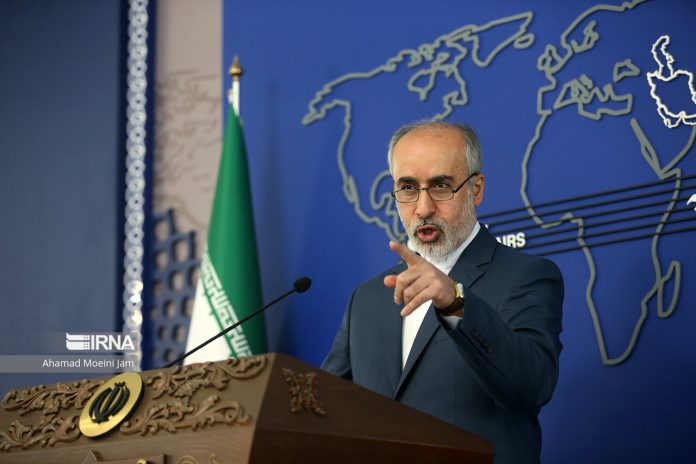
Nasser Kanaani

Azerbaijan Republic has recently arrested nine Azeri nationals, accusing them of having links to Iranian secret services and plotting to stage a coup and assassination operations in the Cacause Republic.

“Unfortunately, the government of the Republic of Azerbaijan has been arresting and detaining its citizens for some time on false accusations and claims of connection with Iranian institutions,” Iranian Foreign Ministry Spokesman Nasser Kanaani said on Thursday.

Kanaani rejected the claims of any official or unofficial connection between these individuals with Iran, and said, “The connections between the citizens of the two countries are emotional, historical, religious and even familial, and the government of Azerbaijan should not securitize its citizens’ deep historical ties and attribute them to the neighbors.”

“Dealing with citizens who commit wrongdoings and break laws is the natural right of all governments, but arresting and imprisoning a large number of citizens under the claim of ties to Iran is unacceptable,” he added.”

Iran says will use pressure against Taliban over Helmand if necessary

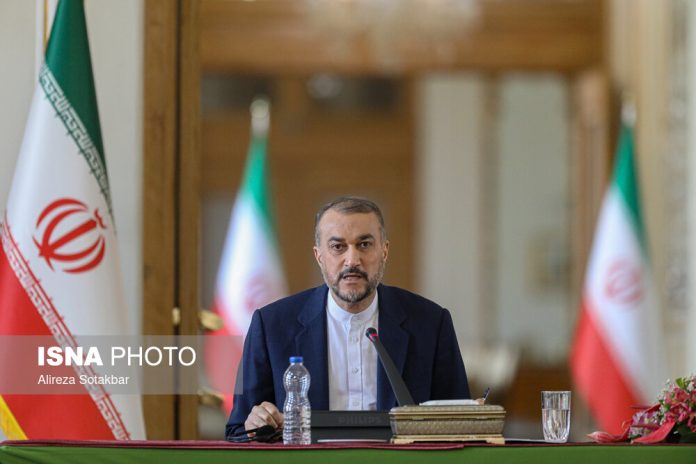
Iranian Foreign Minister Hossein Amirabdollahian

Amirabdollahian made the comments during a visit on Thursday to Iran’s southeastern border province of Sistan and Baluchestan, where he is scheduled to follow up on the case of Iran’s water rights, which have long been at the center of a dispute with Afghanistan.

He said based on the 1973 treaty between Iran and Afghanistan, the people of Iran’s Sistan and Baluchestan have “a natural right” to benefit from the water that flows into the country from Afghanistan, and that Tehran would “pursue this with seriousness.”

“If necessary, pressure tools will be used against that part of Afghanistan’s ruling body that refuses to go along with the granting of water rights to Iran,” he added.

Taliban officials recently claimed that due to low water levels, even if they opened the dam, nothing would reach Iran.

Referring to the claim, Amirabdollahian said Iran will not buy mere political comments, calling for the formation of an expert team to look into the claim.

Meanwhile, the Iranian Space Agency said satellite images showed that the Afghan government prevented water from reaching the Iranian side of the border in some places by creating numerous dams and diverting the flow of water.

The agency said it was ready to submit the images, captured by the Iranian-made Khayyam satellite, to the Foreign Ministry.

Earlier in the day, President Ebrahim Raisi, on a visit to Sistan and Baluchestan, warned the Taliban to stop blocking the access of Iranians to their water share.

Defense minister urges nonstop development of Iran’s missile, space programs

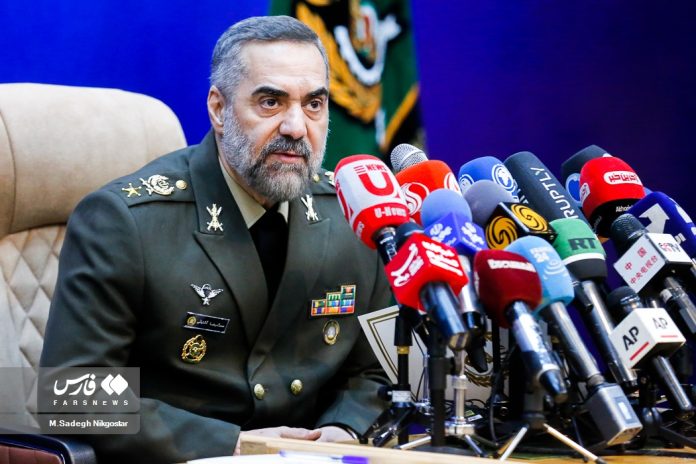
Iran’s Defense Minister General Mohammad Reza Ashtiani

At a meeting with the director, deputy directors, and other officials from the Aerospace Industries Organization of the Defense Ministry on Thursday, General Ashtiani said plans envisioned for the current Iranian calendar year marked a “giant step” by the Aerospace Industries Organization and indicated the organization’s move toward “more favorable circumstances and a more brilliant future.”

He said homegrown management patterns at the Defense Ministry were applicable to other issues in the country.

The defense minister said the needs of military and civil sectors had to be met with “higher speed, precision, and reliability.”

Brigadier General Ashtiani said the Islamic Republic of Iran faced diverse threats and called the existence of various missile defense systems one of the priorities of the Islamic Republic of Iran’s defense doctrine.

He stressed that the technologies used in the defense systems had to be kept up-to-date and that the necessary training had to be constantly given in the areas of operation, logistics, and maintenance.

Turkey vote: Kilicdaroglu accuses Erdogan of allowing unchecked migration

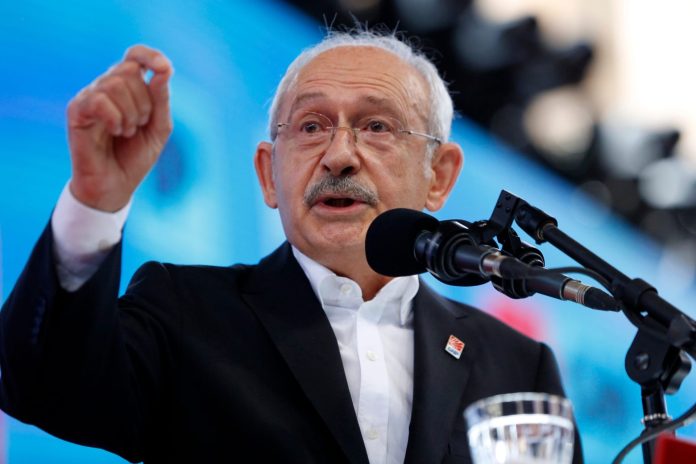
Kemal Kilicdaroglu

Kemal Kilicdaroglu, candidate of a six-party opposition alliance, trailed Erdogan in the first round of the presidential election held on Sunday, confounding expectations in opinion polls that he would come out ahead.

Kilicdaroglu’s latest comments came after his party said it had filed complaints over suspected irregularities at thousands of ballot boxes in Sunday’s landmark elections.

Erdogan’s ruling AK Party and its nationalist allies won a comfortable parliamentary majority in Sunday’s elections, while Erdogan fell just shy of the 50% threshold needed to win outright in the presidential contest.

Kilicdaroglu, chair of the secularist Republican People’s Party (CHP), received 44.9% in what was seen as the biggest electoral challenge to Erdogan’s 20-year rule.

A third candidate, nationalist Sinan Ogan, obtained 5.17% and both Erdogan and Kilicdaroglu are expected to seek his endorsement in negotiations this week.

“We will not abandon our homeland to this mentality that allowed 10 million irregular migrants to come among us,” Kilicdaroglu stated in a video posted on Twitter on Wednesday, warning the number of migrants could go up to 30 million.

“Those who love their homeland, come to the ballot box,” Kilicdaroglu urged voters.

He provided no evidence regarding the number of migrants. Turkey hosts the world’s largest refugee population of around 4 million, according to official figures.

Turkish authorities have caught nearly 50,600 irregular migrants this year as of May 11, after apprehending some 285,000 in 2022, according to Interior Ministry data.

Kilicdaroglu’s nationalist-flavoured video suggested that his campaign was departing from its previous more moderate stance.

It could also be seen as appealing to supporters of Ogan, who had campaigned on sending back migrants, including some 3.6 million Syrians displaced by war to the south.

Erdogan, now in pole position, says only he can ensure stability in Turkey, a NATO member state, as it grapples with a cost-of-living crisis, soaring inflation and the impact of devastating earthquakes in February.

Analysts say Erdogan’s insistence that the opposition was backed by Kurdish militants – using fabricated videos and without any evidence – had chimed with his voter base, outweighing their economic worries.

His message was an allusion to the pro-Kurdish Green Left Party (YSP), which backed Kilicdaroglu but was not part of the six-party opposition alliance.

The YSP, which is the third largest party in the new parliament after Erdogan’s AKP and Kilicdaroglu’s CHP, denies ties to the Kurdish militants.

Mehmet Ali Kulat, chairman of MAK polling company, stated that for many voters the opposition did not appear sufficiently tough on terrorism.

“The government made voters answer this question: ‘Okay, you lost some of your wealth and resources but do you want to lose your state too?” Kulat added.

In Wednesday’s video, Kilicdaroglu also accused Erdogan of cooperating with the network Ankara accuses of orchestrating a 2016 coup attempt. The network is classed in Turkey as a terrorist organisation.

Metropoll pollster Ozer Sencar said the opposition alliance had created a fractured image due to internal disputes.

“They damaged their reputation,” he added.

MAK’s Kulat announced a majority of voters in the 11 provinces hit by the earthquakes had also mostly supported Erdogan because they believed he was best placed to rebuild devastated cities.

Separately on Wednesday the CHP said it had filed complaints over suspected irregularities at thousands of ballot boxes in the elections, though party officials said the objections were unlikely to alter the overall result of the presidential vote.

Kremlin says Moscow and Tehran to resume mutually beneficial relations despite US pressure

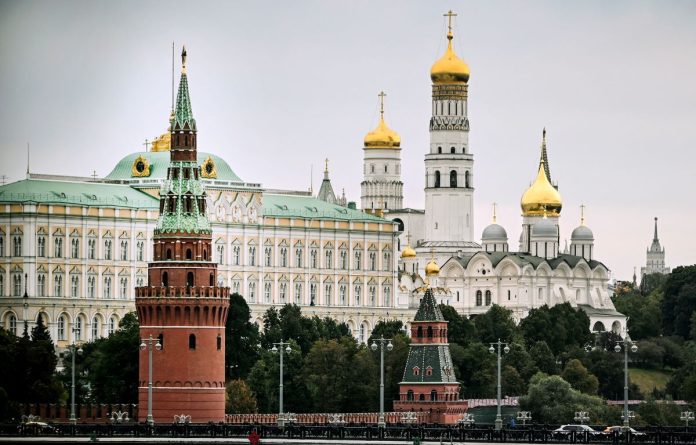
Kremlin

“We never had any illusions that the US would give up its attempts to put pressure on Russia, Iran and other countries that are looking for truly mutually beneficial cooperation. We always knew that the pressure would continue,” he told reporters.

However, this pressure will not affect the building of mutually beneficial relations between Russia and its partners, the spokesman added.

“But we have also always been confident that both Russia and a whole group of countries, including Iran, which, by the way, has adapted very, very well to this pressure from the US, will continue their systematic work to build a relationship based on mutual benefit, mutual respect, consideration of each other’s interests and concerns,” Peskov continued.

Russia and Iran have recently started to deepen their economic and energy ties to counter Western sanctions faced by both countries.

Train loaded with grain derails in Crimea due to outside intervention: Firm

Russia Train

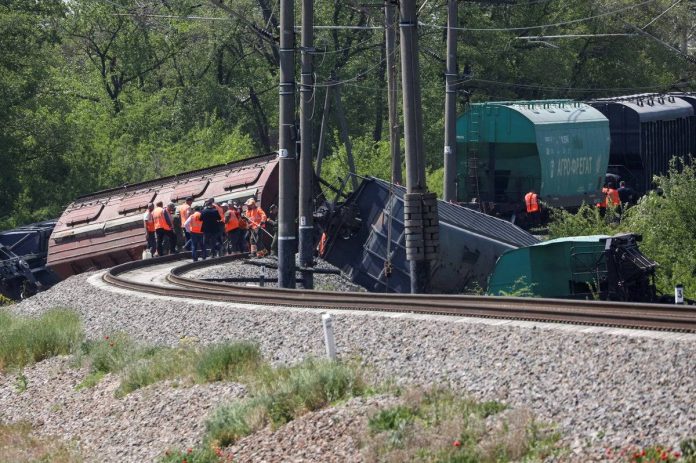
“A freight train derailed as a result of the interference of unauthorized persons in the operation of railway transport. There are no casualties. There is no environmental threat,” the company said on Telegram.

The cars derailed on a railway stretch between the railway stations of Chistenkoe and Pochtovoe earlier in the day, Sergey Aksyonov, the head of the Republic of Crimea, specified.

The train traffic was immediately suspended and emergency trains were sent to the site, he added.

The Grand Service Express transportation company told Sputnik there had been no passenger trains in the area where the railway accident took place.

Crimean Transport Minister Nikolai Lukashenko stated that at least eight cars had derailed, adding that the traffic was expected to be resumed by Thursday evening.

Sergey Aksenov, the Moscow-appointed head of the peninsula, wrote on Telegram that wagons carrying grain “fell off the rails” in Simferopol. He later added that authorities were investigating.

Ukraine has not commented on the incident.

The Ukrainian military has in recent months carried out attacks in Crimea to harass the Russian Black Sea fleet and disrupt vital Russian supply lines. Ukrainian leaders have previously stated that their goal is to recapture Crimea, which was illegally annexed by Russia in 2014.

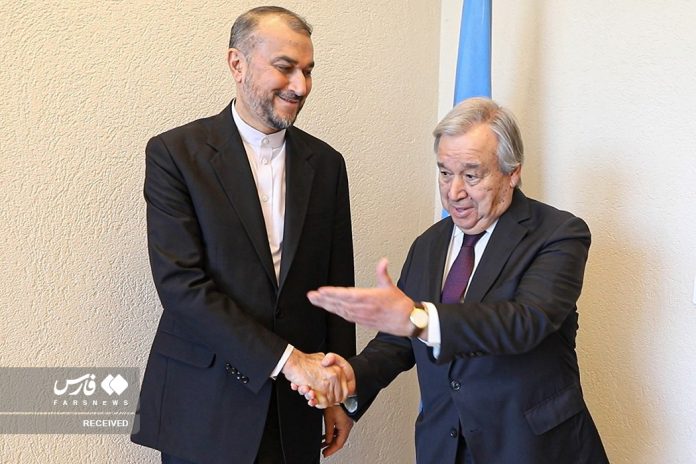
UN chief holds phone talks with Iranian FM over JCPOA

António Guterres and Amirabdollahian

“The Secretary-General spoke today with H.E. Mr. Hossein Amir-Abdollahian, Foreign Minister of the Islamic Republic of Iran. The Secretary-General and the Foreign Minister exchanged views on several issues, including Yemen, Afghanistan, developments in the Gulf region and the Joint Comprehensive Plan of Action (JCPOA),” Dujarric said in a statement on Wednesday.

Iran’s chief nuclear negotiator and Deputy Foreign Minister for Political Affairs Ali Bagheri Kani has recently stated that the United States dealt a devastating blow to the international rule of law by withdrawing from the 2015 nuclear deal, adding that the opportunity to revive the landmark agreement will not last forever.

Bagheri Kani made the remarks in tweets last Tuesday, marking the fifth anniversary of the United States’ unilateral withdrawal from the Joint Comprehensive Plan of Action (JCPOA) in defiance of international criticisms.

“A critical reminder: 5 years ago, the US rendered a fatal blow to ‘rule of law at the international level’ by unlawfully withdrawing from JCPOA. Ever since, the US has failed to reverse its wrongful act. Iran’s legitimate remedial measures will continue,” he wrote.

“The full implementation of JCPOA (with effective sanctions lifting at its core) could be resumed, should the reneging party (and EU/E3) demonstrate credible political will to that effect. No opportunity is forever!”

Iran proved the peaceful nature of its nuclear program to the world by signing the JCPOA with six world powers. However, Washington’s exit in May 2018 and its subsequent re-imposition of sanctions against Tehran left the future of the deal in limbo.

Negotiations kicked off in the Austrian capital city of Vienna in April 2021, with the intention of removing anti-Iran sanctions and examining the United States’ seriousness in rejoining the accord.

The talks, however, have been at a standstill since August 2022 due to Washington’s insistence on not removing all the sanctions and its failure to offer necessary guarantees that it will not abandon the deal again.

Turkey says to soon begin developing roadmap to normalize relations with Syria

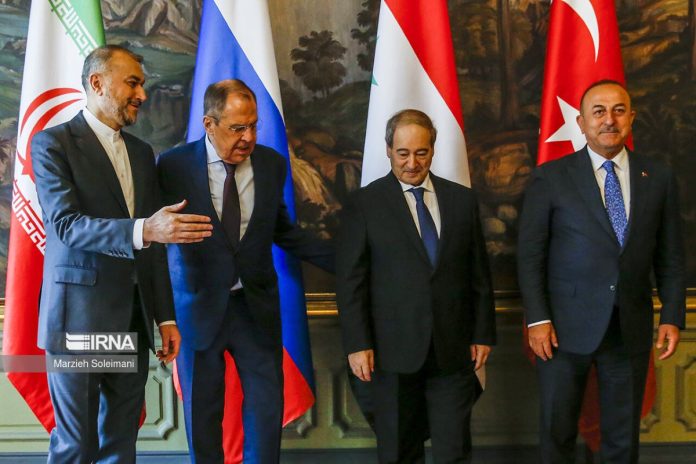
Iranian Russian Turkish Syrian FMs

Last week, Moscow hosted a quadrilateral ministerial meeting of the top diplomats from Russia, Iran, Turkey and Syria on the restoration of relations between Ankara and Damascus.

According to Cavusoglu, the meeting was constructive.

“We have decided to develop a roadmap. In the near future, a committee will be created in the department of the deputy foreign minister together with other departments and work will begin on the development of this roadmap,” Cavusoglu told reporters.

At the end of the four-party meeting in Moscow, top diplomats from Iran, Turkey, Russia and Syria stressed the Arab country’s sovereignty and territorial integrity, and setting up a roadmap to improve strained ties between Damascus and Ankara.

They also emphasized the importance of increasing international humanitarian aid to Syria with the aim of facilitating the voluntary, safe and dignified return of Syrians to their homeland and post-war reconstruction.

The agreement comes a week after Syria and Arab governments meeting in Jordan agreed to set up a roadmap of their own to resolve the Syrian conflict and improve ties.

Syria has been returning to the Arab fold and restoring relations with its neighbors in a slow but steady process that culminated with a decision Sunday by the Arab League to reinstate Syria’s membership after 12 years.

Turkey severed its relations with Syria in March 2012, a year after the Arab country found itself in the grip of rampant and deadly violence waged by foreign-backed militants, including those supported by Ankara.

Since 2016, Turkey has launched several military incursions in northwest Syria and captured an important enclave previously held by US-backed Kurdish forces fighting the Damascus government.

Russia and Iran, on the other hand, entered Syria at the request of Damascus, and played a key role in defeating the terrorists and reclaiming much of the country back.

Syria and Turkey are currently taking steps toward reconciliation after 11 years.

In the last bid to mend ties between Ankara and Damascus, the defense ministers and intelligence chiefs of Russia, Syria, Turkey, and Iran met in Moscow late last month and discussed the withdrawal of Turkish troops from Syria.

The process of normalizing ties between Ankara and Damascus kicked off on December 28, 2022, when the Russian, Syrian and Turkish defense ministers met in Moscow, in what was the highest-level meeting between the two sides since the outbreak of the Syrian conflict.

Syrian President Bashar al-Assad said in January that a rapprochement with Turkey would depend on Turkey ending its occupation of northern Syria and its support for militant groups fighting against the Damascus government.

Post-9/11 wars contributed to 4.5 million deaths: Report

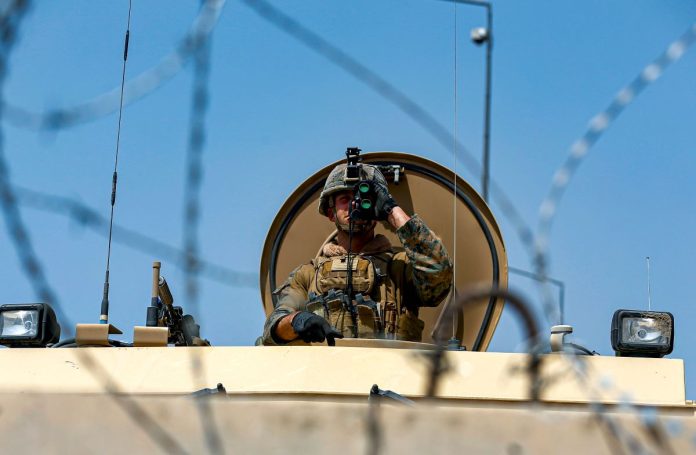
US Troops

According to the research report from the Costs of War project at Brown University Watson Institute, nearly one million people were directly killed by conflicts in Afghanistan, Iraq, Pakistan, Syria, Yemen, Libya and Somalia.

The report has also estimated that at least 3.6 to 3.7 million of the casualties were “indirect” deaths caused by a variety of factors, including failed economies, extreme poverty, malnutrition, disease, destroyed health infrastructure, environmental contamination and reverberating trauma and violence.

The numbers of direct and indirect war casualties are still continuing to grow from ongoing global conflicts after more than two decades, the report added.

“These wars are ongoing for millions around the world who are living with and dying from their effects,” it said, emphasizing that women and children “suffer the brunt of the impact.”

“Indirect deaths are devastating, not least because so many of them could be prevented, were it not for war,” the report said, adding that it is difficult to estimate indirect deaths, as they do not occur immediately after the battles.

“A death from hunger mostly occurs at some distance from this attention to spectacle and it may happen months or years after war disrupts access to food. Often, people affected by war are displaced and transient, making them hard to track,” according to the report.

The report also acknowledged that it is difficult to disentangle indirect war death factors from the ones that might have occurred in places where people are already suffering from high rates of poverty, disease, and malnutrition.

It singled out the US for its role in many post-9/11 wars, particularly the casualties over the past 20-plus years in Afghanistan.

Though the US withdrew its military forces from Afghanistan in 2021, officially ending the war, Afghans are “suffering and dying from war-related causes at higher rates than ever.”

The US invaded Afghanistan in October 2001 following the September 11, 2001 attacks on the United States, despite the fact that no Afghan national was involved in the attacks. Hundreds of thousands of Afghans died in the US war of aggression on the country. Nevertheless, the Taliban returned to power in 2021, 20 years after their removal by US forces.

The report also called on Washington to repair the damage inflicted by post-9/11 conflicts, saying, “Reparations, though not easy or cheap, are imperative.”

“In laying out how the post-9/11 wars have led to illness and indirect deaths, the report’s goal is to build greater awareness of the fuller human costs of these wars and support calls for the United States and other governments to alleviate the ongoing losses and suffering of millions in current and former war zones,” it said.

Stephanie Savell, the report’s author and co-director of the Costs of War project also noted that “There are reverberating costs, the human cost of war, that people for the most part in the United States don’t really know enough about or think about.”

The author further stated that the researchers applied the Geneva Declaration Secretariat’s average ratio of four indirect deaths for every one direct death, adding that while that ratio may be lower in Iraq, it would be higher in Yemen or Afghanistan and thus the ratio was deemed accurate to arrive at the “reasonable and conservative” estimate of 4.5-4.6 million.