
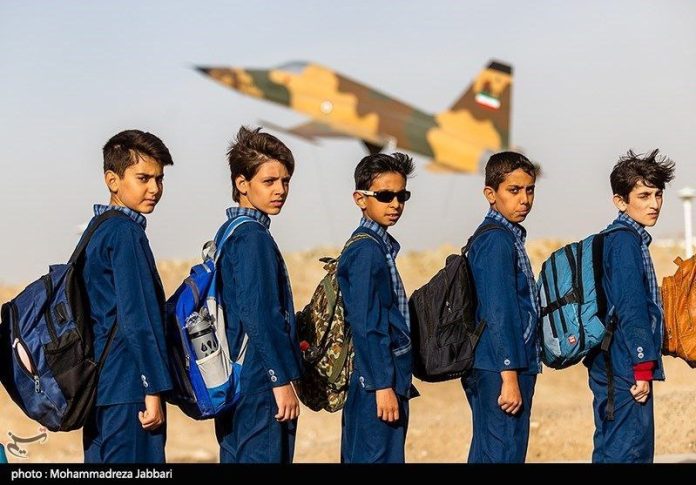
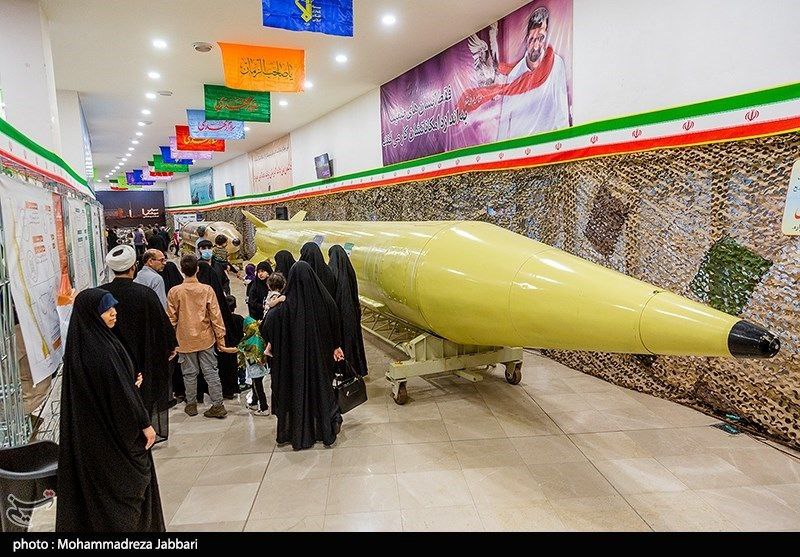
More in puctures:
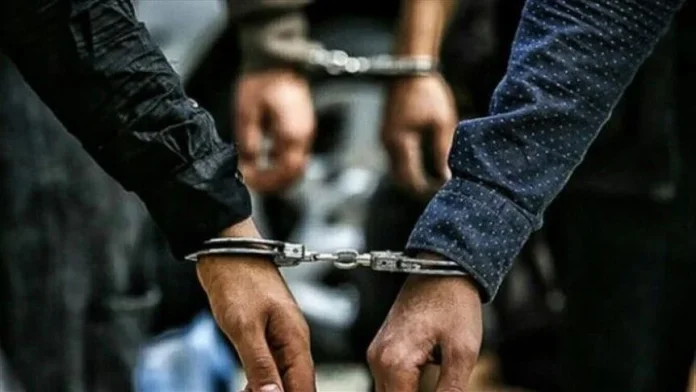
In a joint operation, the intelligence forces of Iran’s Islamic Revolution Guards Corps and the Intelligence Ministry busted the so-called Daesh-Khorasan network, Iranian media reported.
The main element of the network was also identified and arrested.
The individual, who had been under watch for a few years, was busy recruiting members for Daesh in Tehran and other Iranian provinces.
More details will later be released on the intelligence operation.
Fifteen people, including children, lost their lives and dozens more were injured in a mass shooting that took place at Shah Cheragh Shrine in October 2022, at a time when Iran was grappling with a wave of unrest triggered by the death of a young woman in police custody.
Daesh claimed responsibility.
Iranian intelligence bodies had earlier other terrorists behind the act of terror.
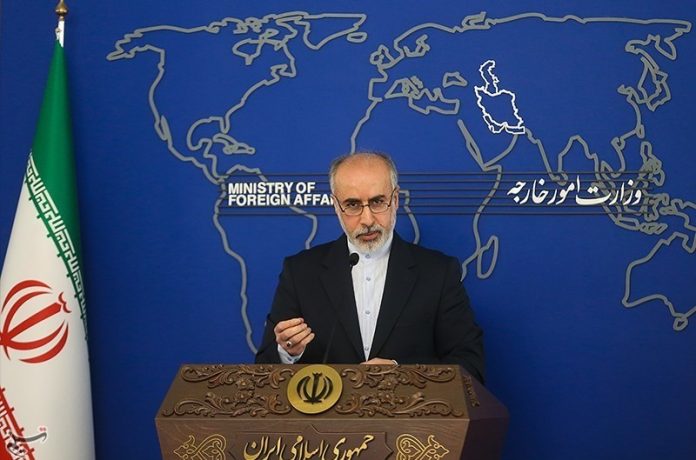
“The US seizes Iran’s oil shipments for no reason at all, but when Iran seizes ships because of their violations, they blame Iran,” said Spokesman for the Iranian Foreign Ministry Nasser Kanaani.
Iran, he said, considers the allegations of US authorities regarding endangering the safety of navigation in the Persian Gulf and the Strait of Hormuz “to be completely rejected and baseless.”
In three separate incidents, Iranian naval forces have impounded three ships off the country’s southern coast in recent weeks for their breaches of shipping safety law.
Responding to one of the incidents in early May, State Department spokesman Vedant Patel claimed, “Iran’s harassment of vessels and interference with navigational rights in regional and international waters are contrary to international law and disruptive to regional stability and security.”
Kanaani, however, said it is actually the US that threatens the safety of navigation by acting against international maritime law and seizing Iranian oil shipments in the high seas.
The US has cited “violations” of its unilateral sanctions to justify confiscations of Iran-related ships at sea.
“Iran bears the greatest responsibility for securing the Persian Gulf and the Strait of Hormuz, and the destabilizing actions of the Americans only double Iran’s responsibility in dealing with the violators,” Kanaani added.
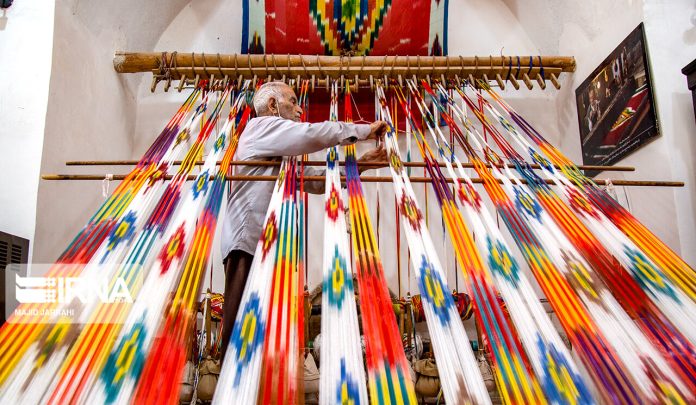
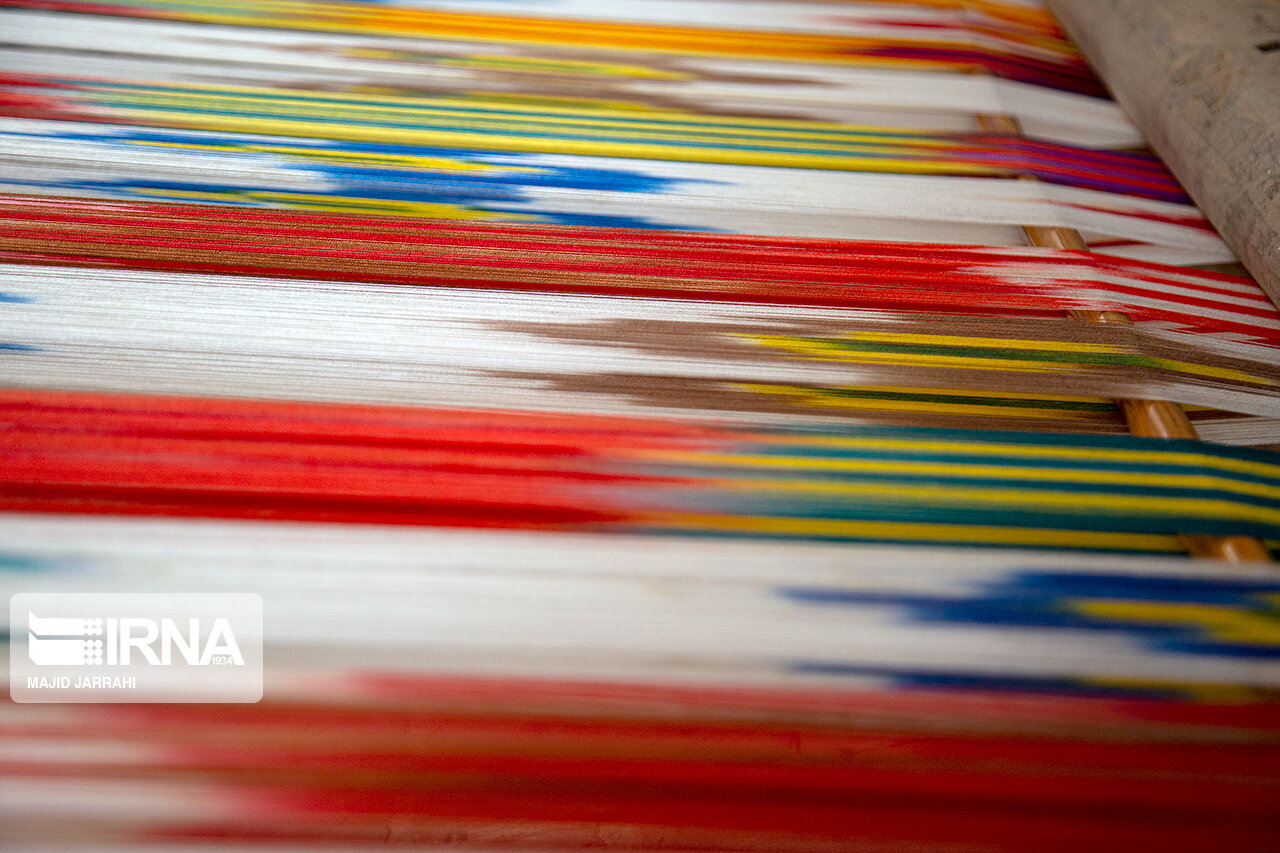
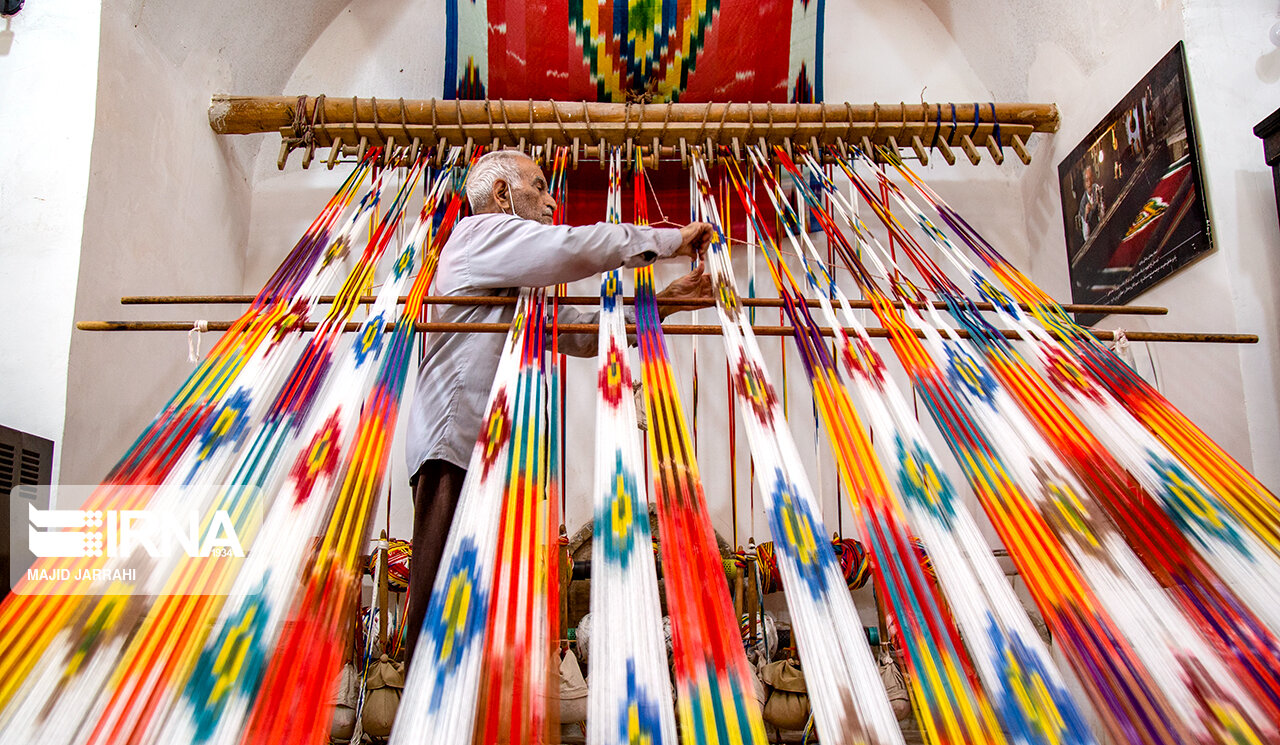
Ikat weaving (Daraee bafi) dates back 800 years. It was a fabric that was produced using silk and natural colors. Some believe that it is called Daraee because in the past, Ikat was considered as an asset in the dowry of every bride.
Others believe the reason why it was called Daraee was that only the rich and the powerful could afford to buy the fabric.
The pictures used in Ikat are known as Chalipa in the traditional Persian art in which they have been used for thousands of years.
Examples of the famous patterns and pictures include mono-flower, quadro-flower and checkered design.
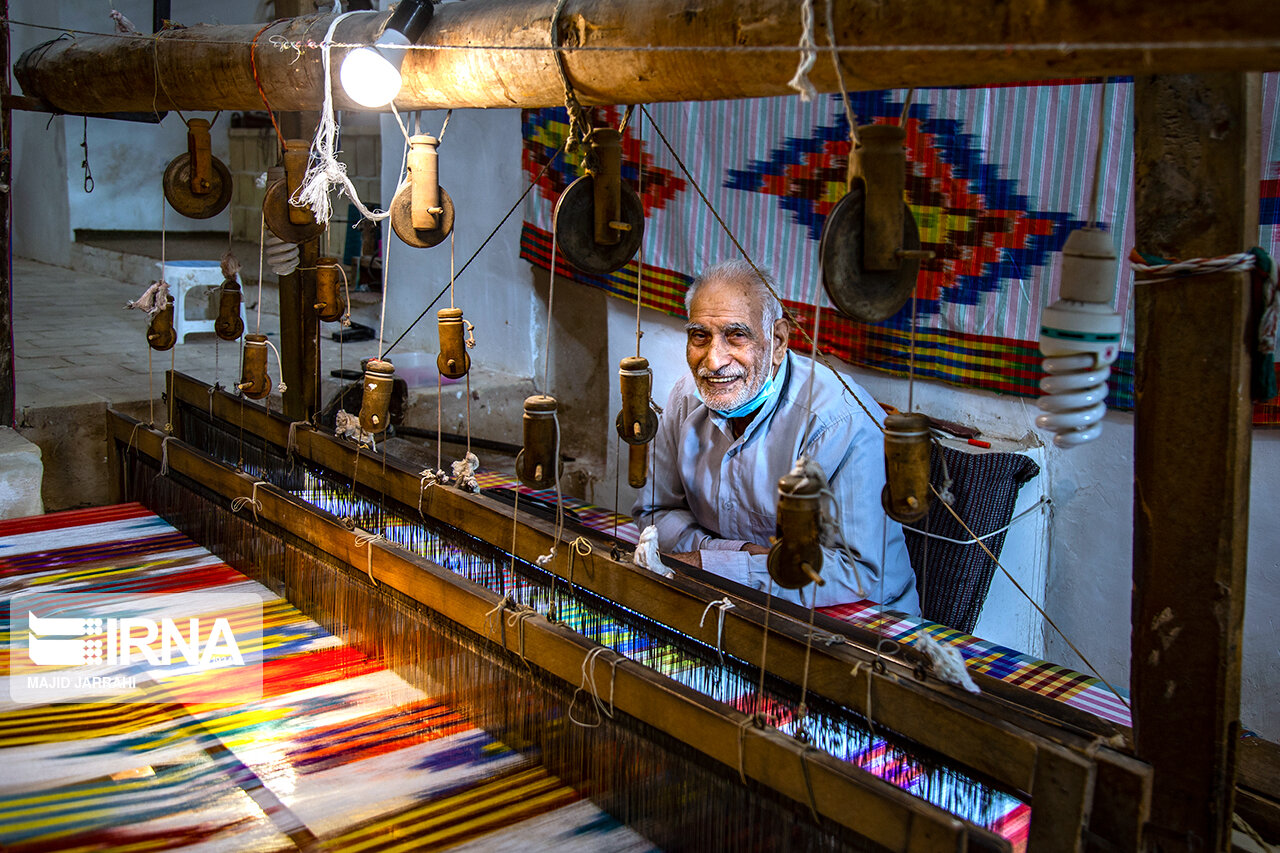
Ikat is a Malayan word meaning “to knot” and “to dye”.
It was an old technique for weaving patterned fabrics. In this technique, the fabric’s threads are dyed before weaving. This technique was in vogue in a number of countries in the world.
The Ajunta wall paintings that were drawn in northwest India some 50 years ago show women wearing garments with Ikat pictures.
The absence of any other proof makes it difficult to determine the exact date of the weaving of the garments and makes it impossible to track the development of techniques and influence of foreign patterns.
Ikat was woven in Latin American countries from Mexico to Peru. This is while this weaving method was tracked down in most of the lands falling within the Islamic realm from Madagascar to Spain and from India to West Africa.
This method has existed in Iran since a long time ago in various regions such as Yazd, Kashan, Azarbaijan, Khuzestan, Tabriz and Gilan.
However, the technique is concentrated more than any other area in the traditional workshops of Yazd.
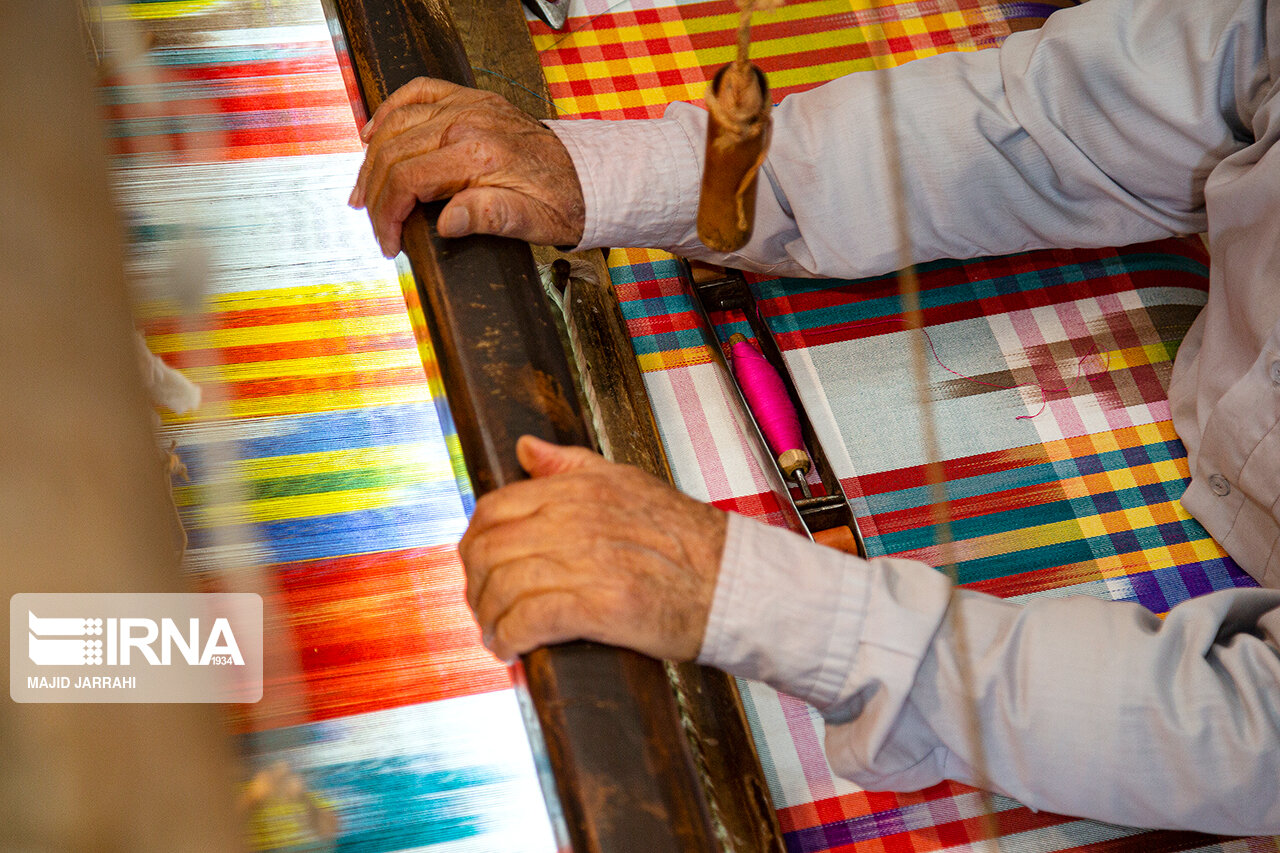
This beautiful fabric goes into tablecloths, bed covers, bedspreads, clothing decorations, scarves, bags, backpacks, and even coats.
In the past, natural silk was used to weave Ikat, but today viscose thread is used as warp and synthetic silk or viscose as woof. Meanwhile, creating pictures and patterns in this fabric using natural colors was very common in the past.
The rose madder and carmine were used for red color, tree bark or flower for yellow color, and various minerals and soils for black color.
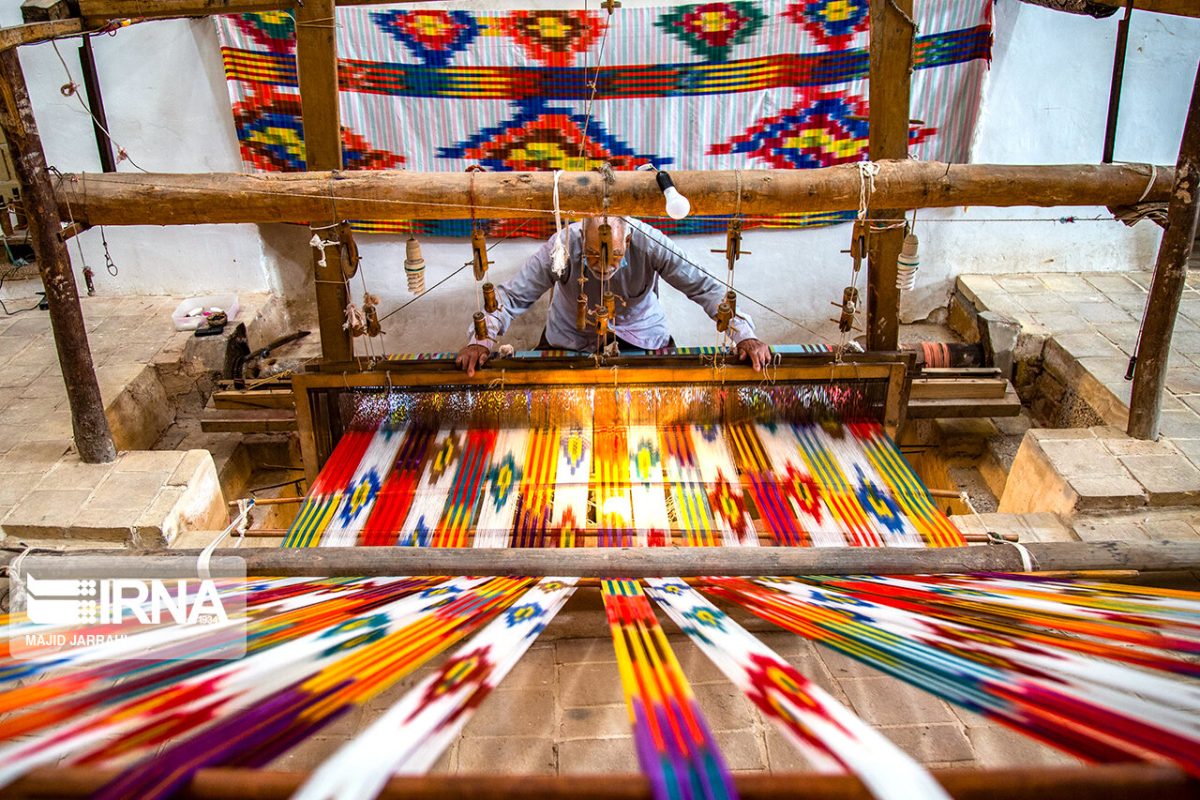
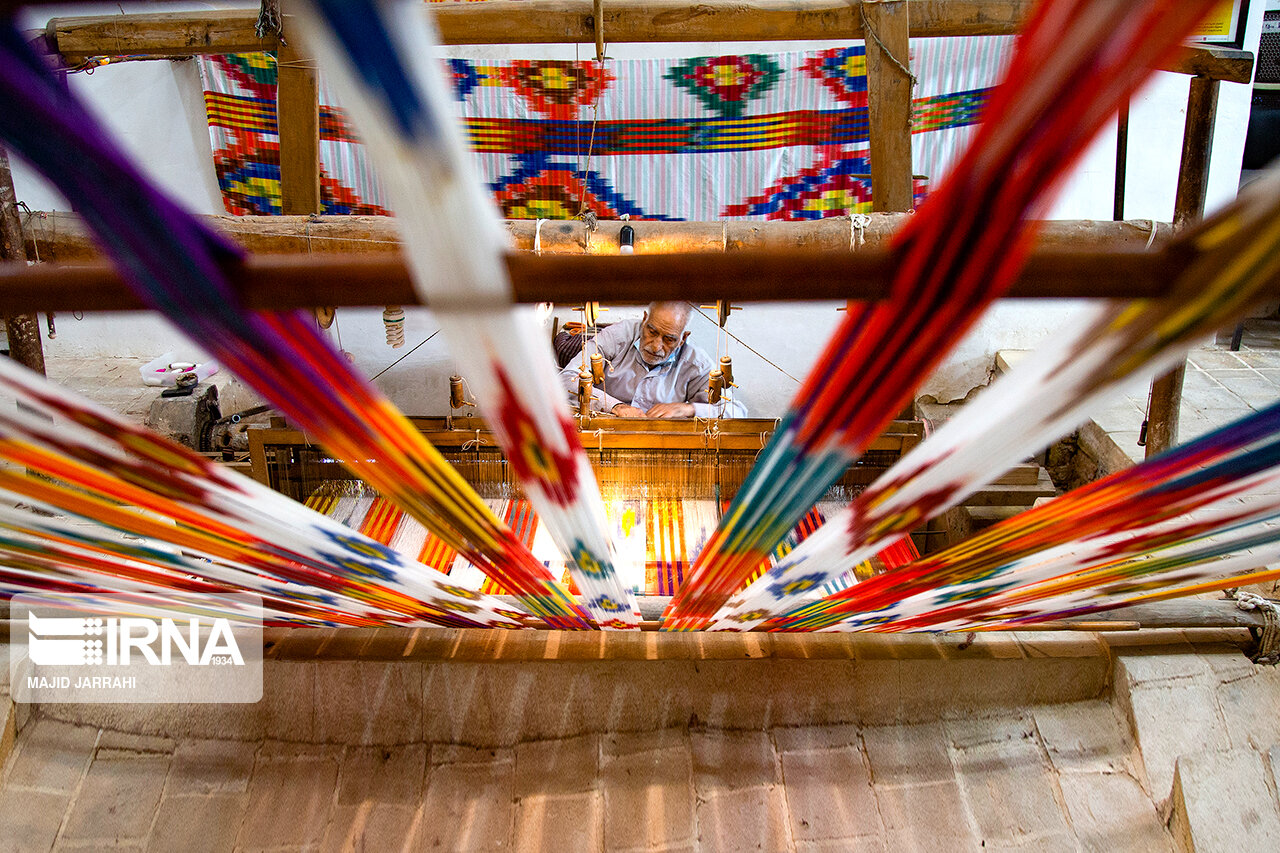
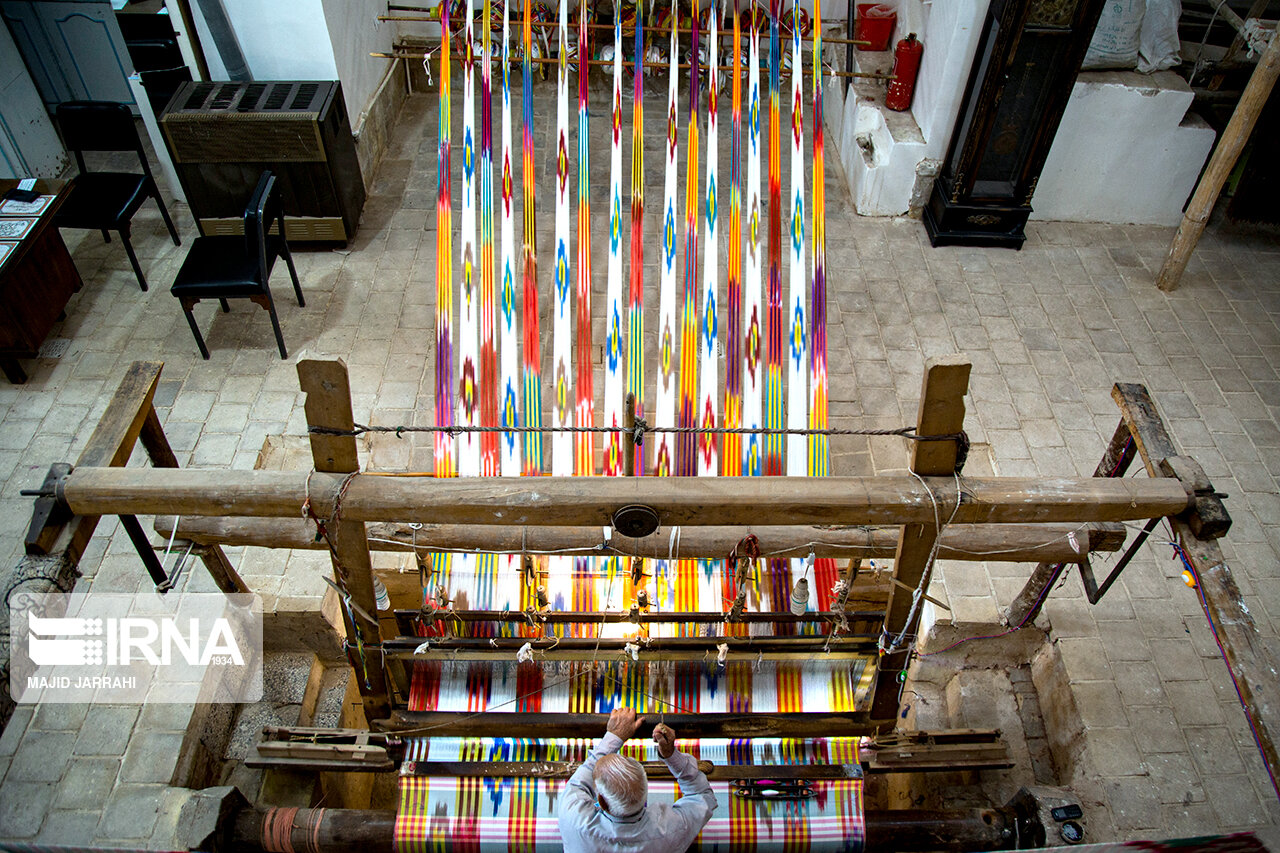
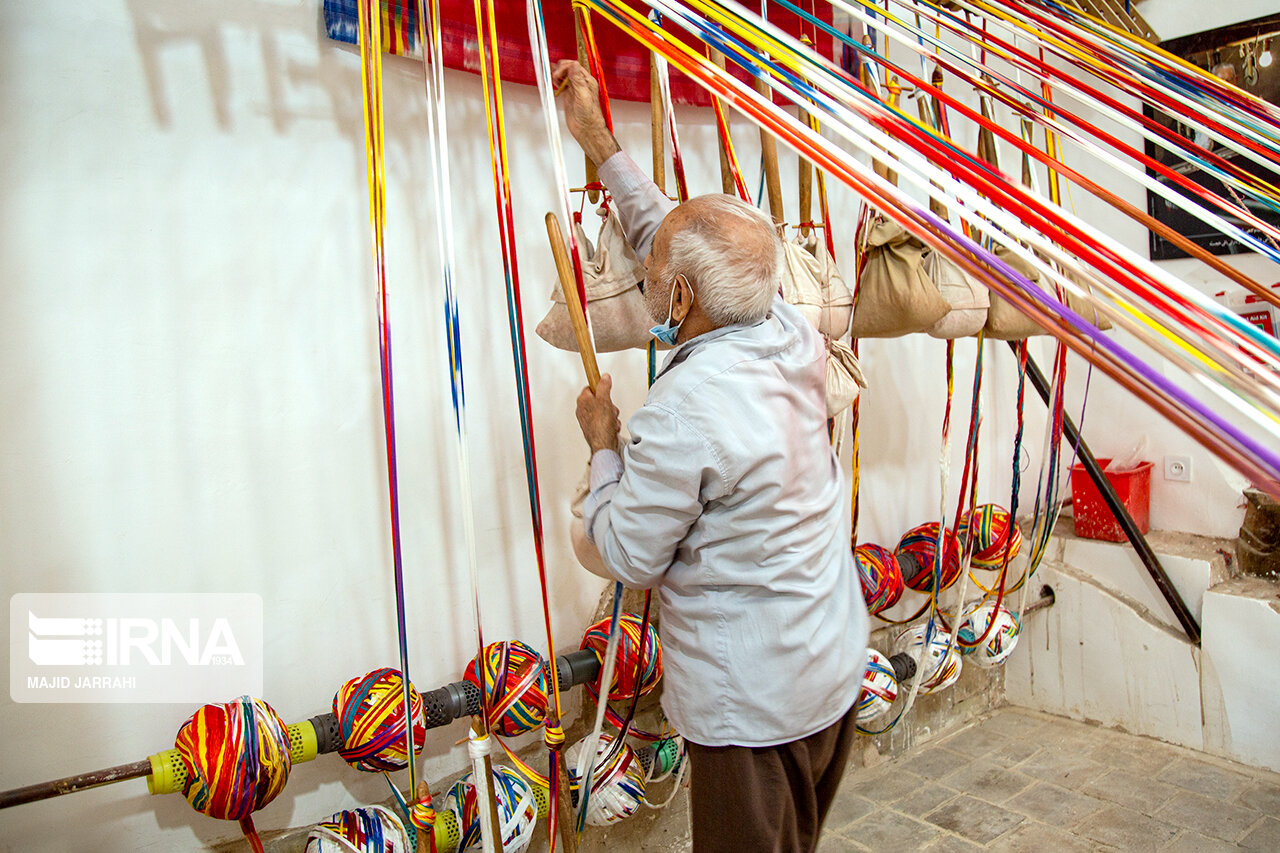
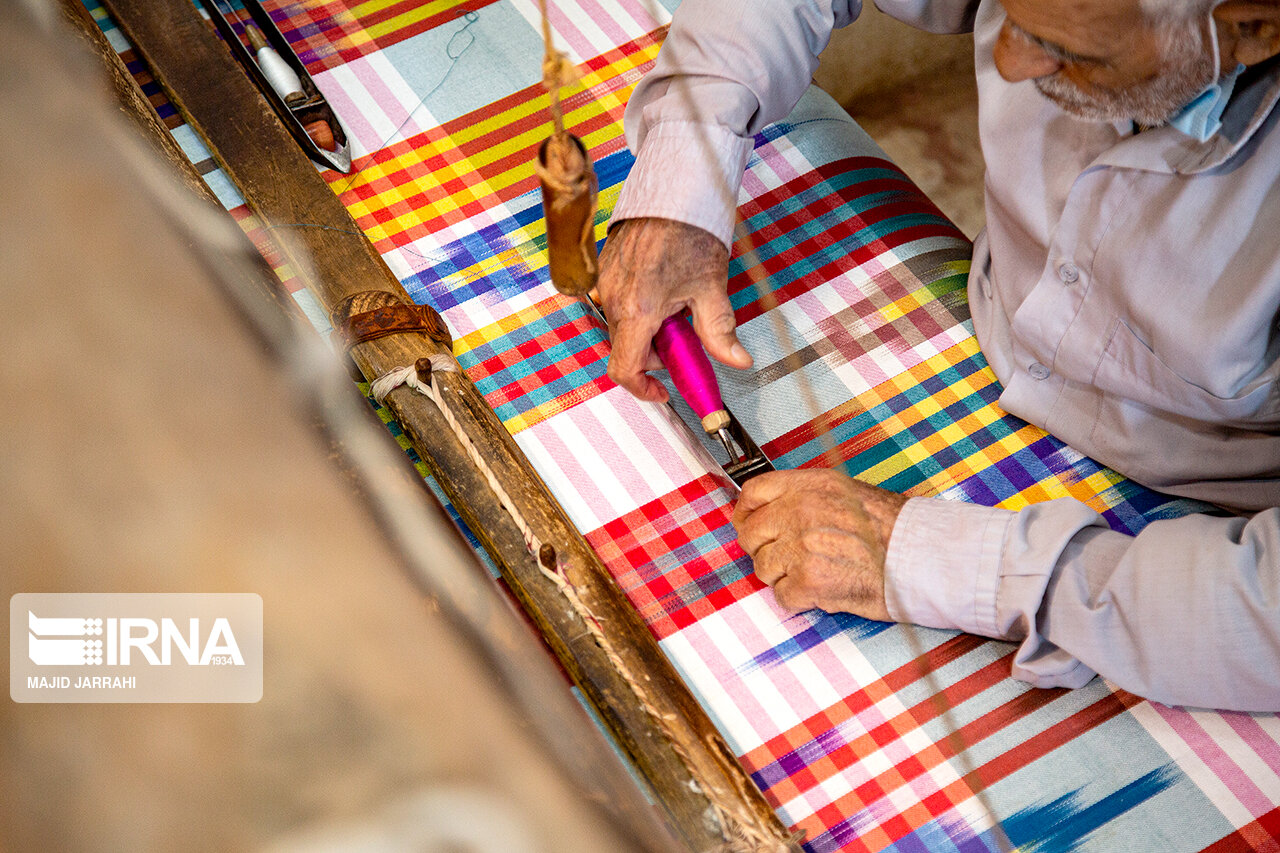
The unique features of the fabric include the way it’s woven and the patterns created thereon. While weaving it, Ikat makers move the patterns onto the fabric by dyeing the warp and woof of the fabric. They then weave Ikat.
This is meticulous and time-consuming work, but the end result is very beautiful and valuable.
Given that Daraee’s texture and its special weaving technique are unique, you cannot find any identical pictures and designs on the garment.
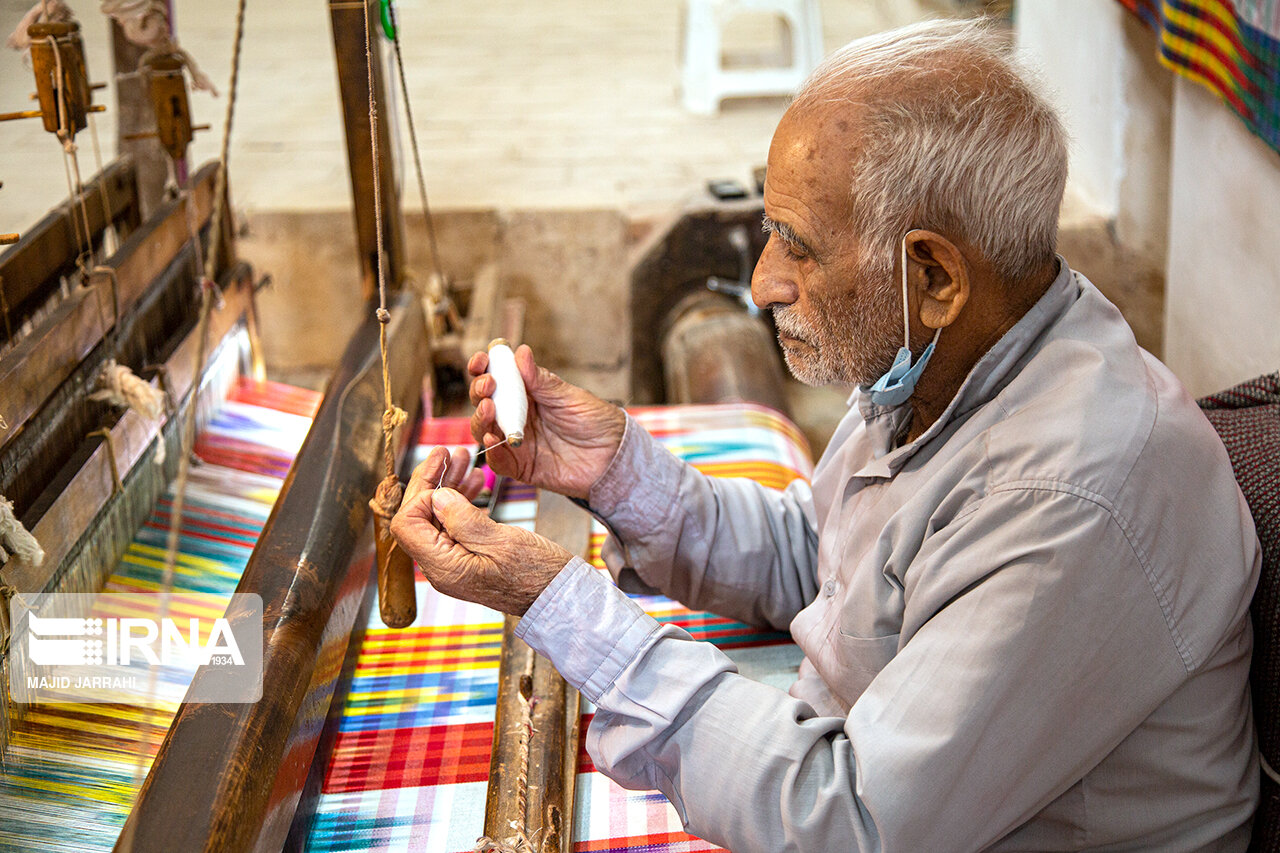
There are three types of Ikat: Warp Ikat, woof Ikat and warp and woof Ikat. Each is woven in its own way.
To weave warp Ikat, impenetrable thread is used for the purpose of closing the fabric. Then, the fabric is infused in a dye bath.
To weave woof Ikat, threads are wound on a rectangular frame. Those responsible for creating a pattern on the fabric are closed with impenetrable threads.
In the warp and woof type, the dyeing is done through tying method. This is tedious work. The warp and woof Ikat is the most popular expensive type due to the delicacies used in making the fabric.
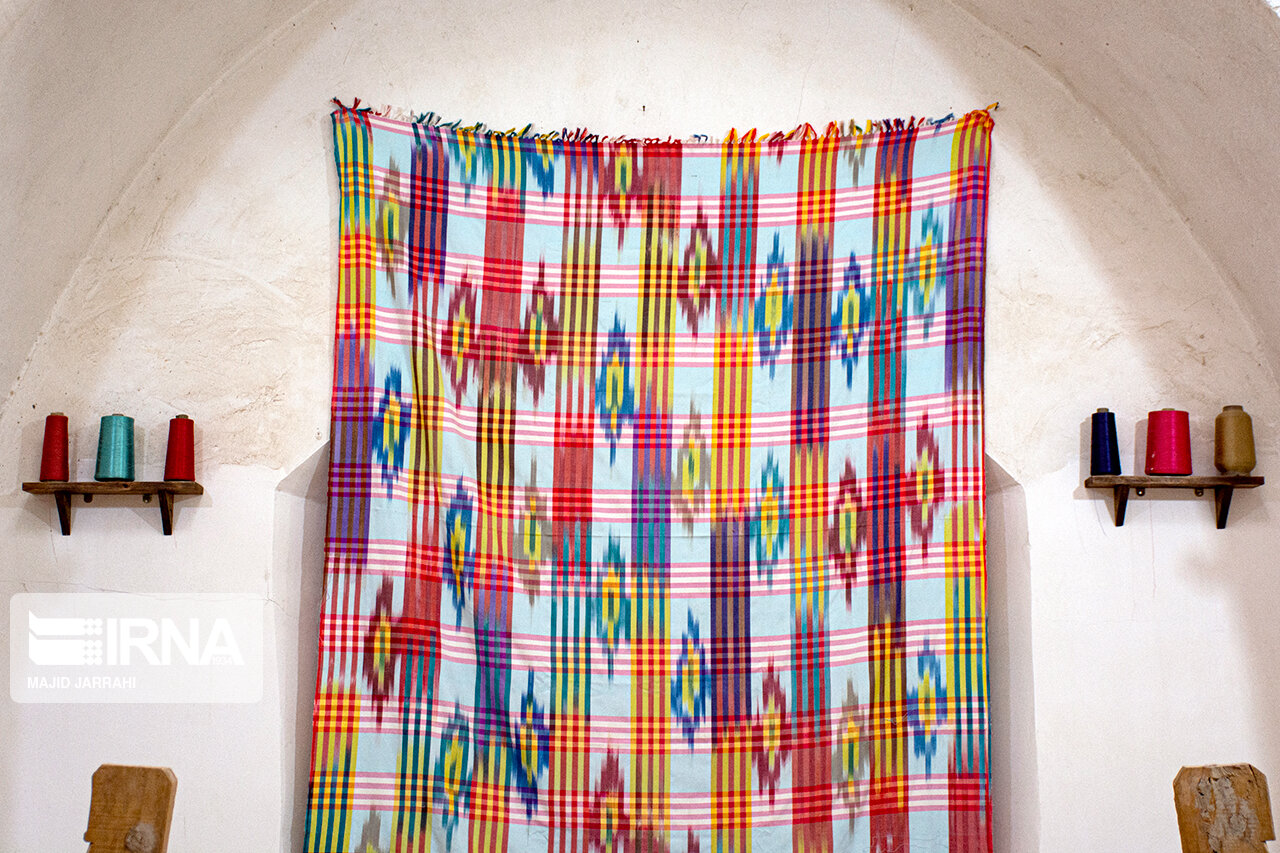
Ikat weaving was highly popular and famous in the past. It still attracts the attention of Iranian and foreign tourists although it’s not booming.
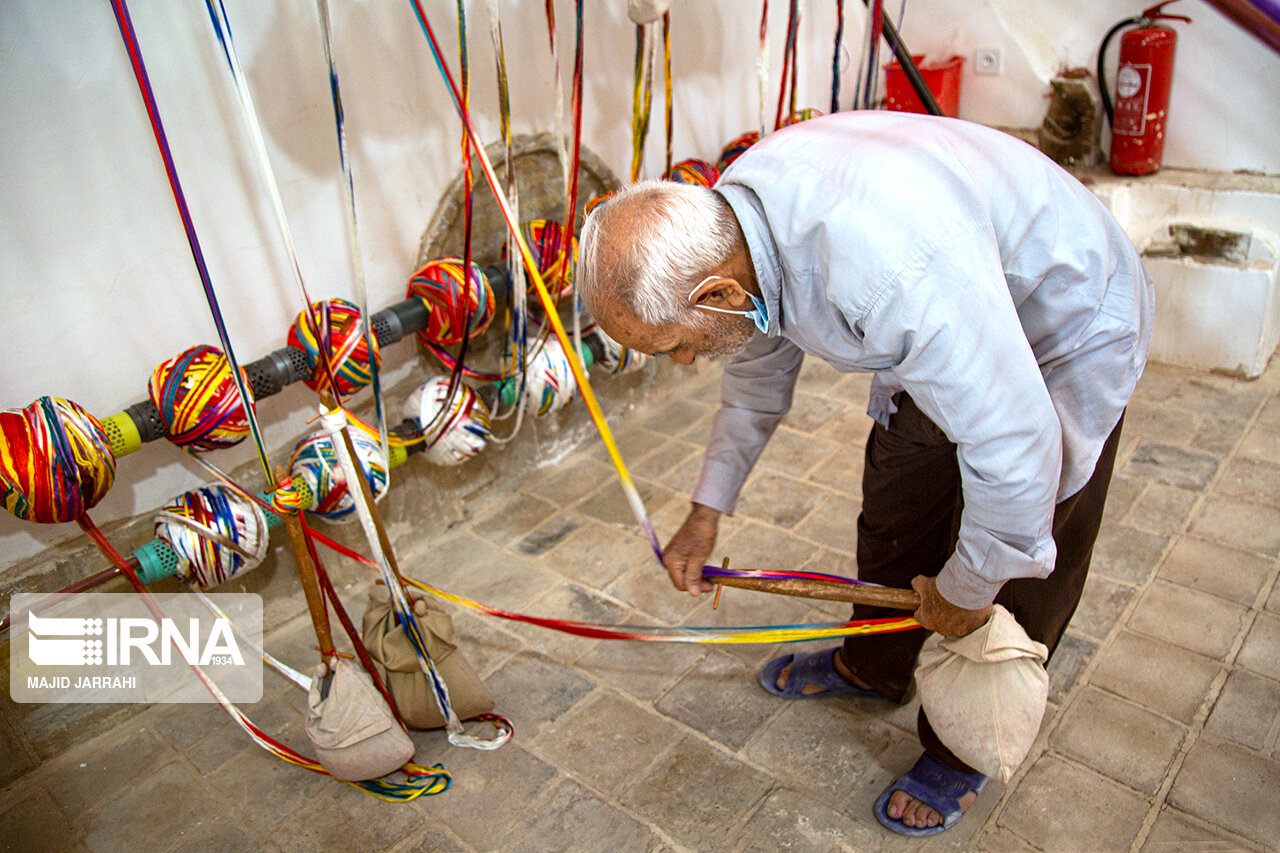
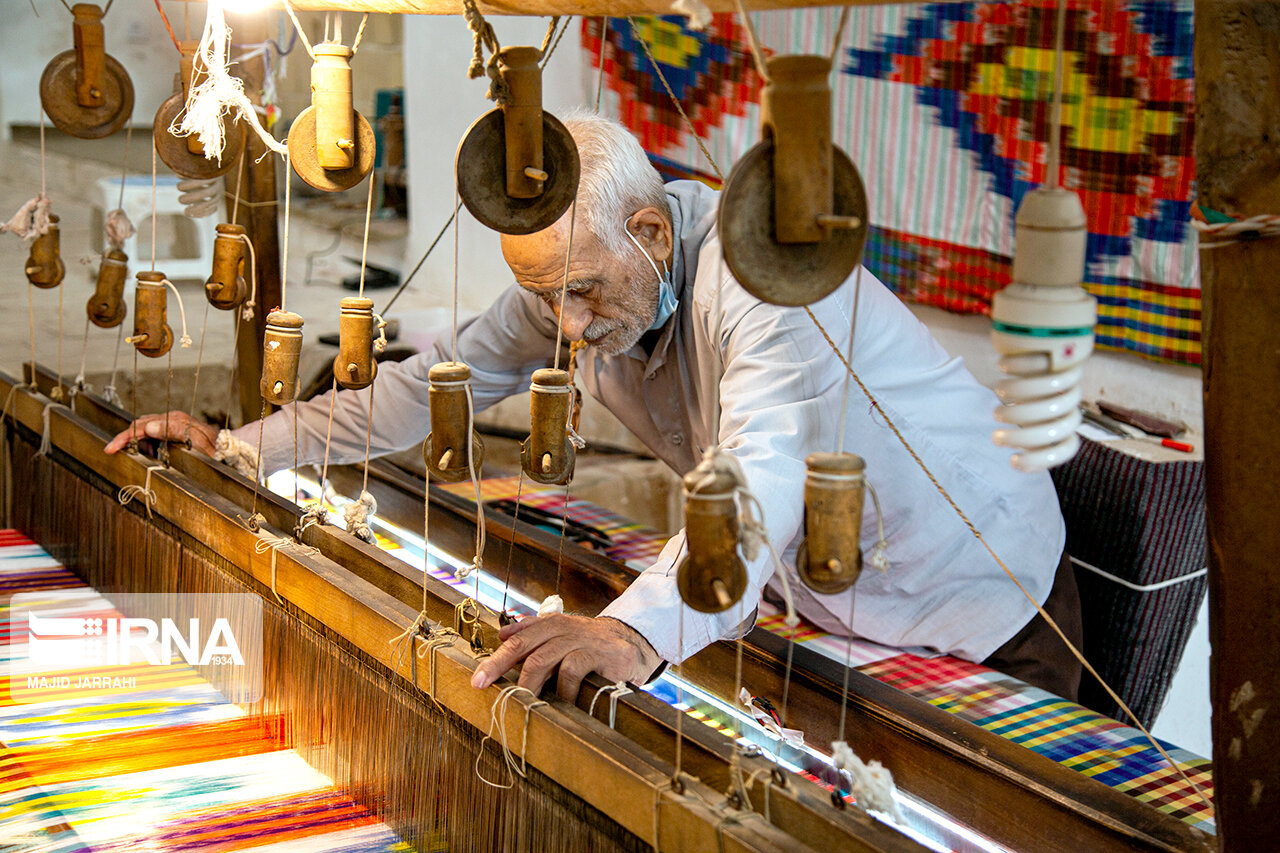
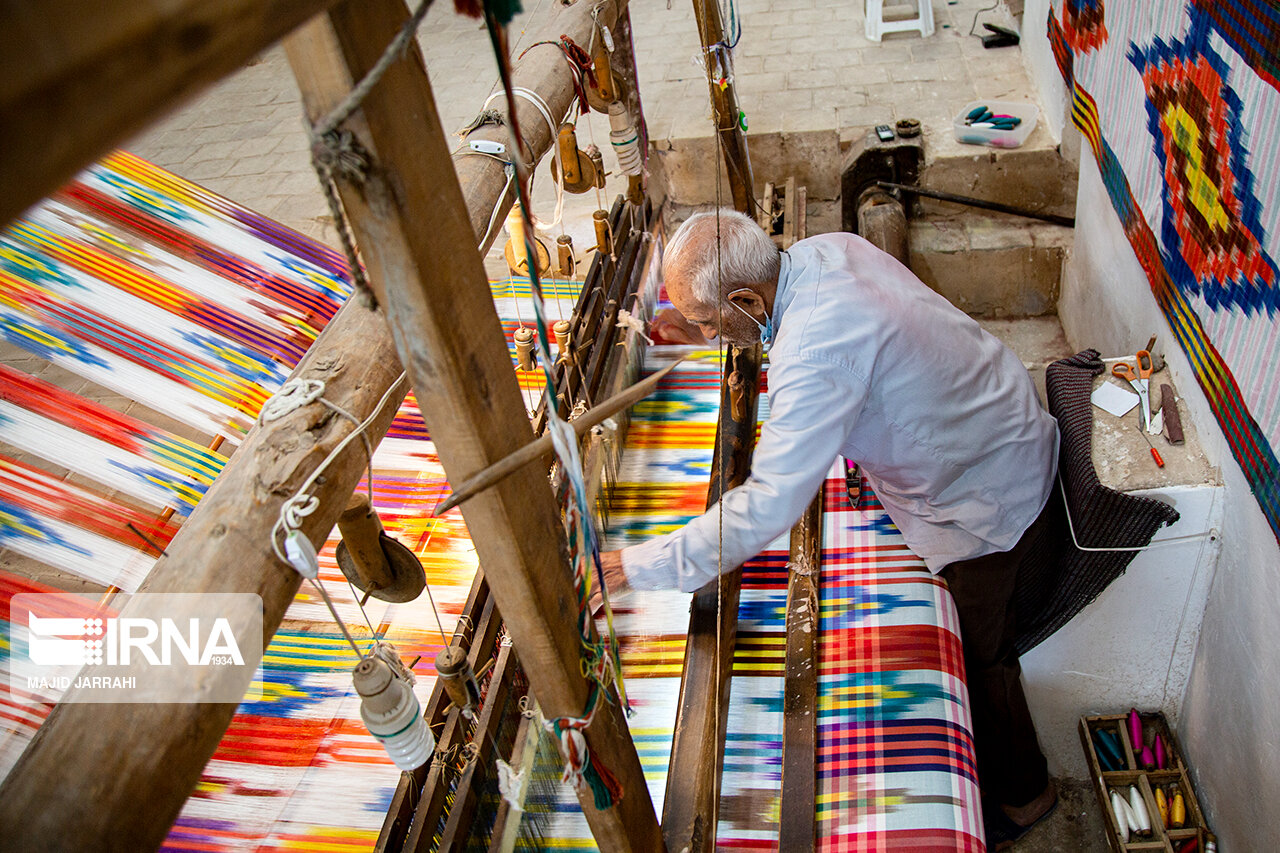
Hossein Nikkhah, 78, is one of the few surviving Ikat weavers in Iran now. He’s worked at Daraee Bafi workshops since the age of 5 due to his love for the job.
The reason for the decline of the industry stems from the fact that Ikat weaving is very difficult and it even calls for high physical strength.
Unfortunately, the youth are reluctant to work in the business. Despite that, in the old alleyways of Yazd’s ancient areas, Ikat weaving, continues and remains popular hundreds of years after it came into being.
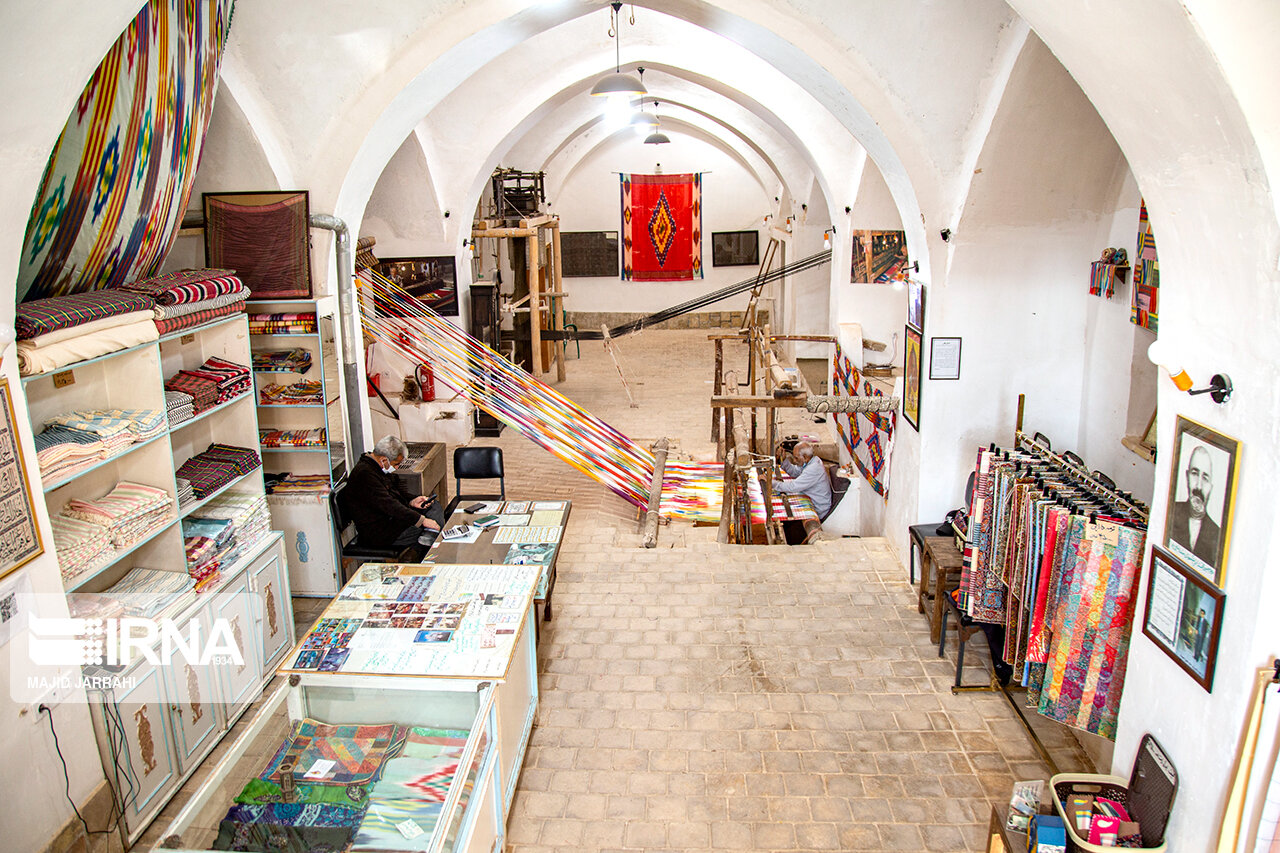
It should be noted that this workshop is a tourist attraction in the old parts of Yazd now and tourists certainly pay a visit even if they do not intend to buy Ikat.
Today, in addition to tablecloths and bed covers, dress makers use Ikat in their designs.
Undoubtedly, we all look for durable and precious stuff for souvenir for our loved ones.
Daraee of Yazd can be the best souvenir of this world famous city. Other handicraft industries of Yazd are: Zilu weaving, Termeh, Shamad weaving, Dandani weaving, Yazdi handkerchief, Shawl weaving and Chadorshab weaving.
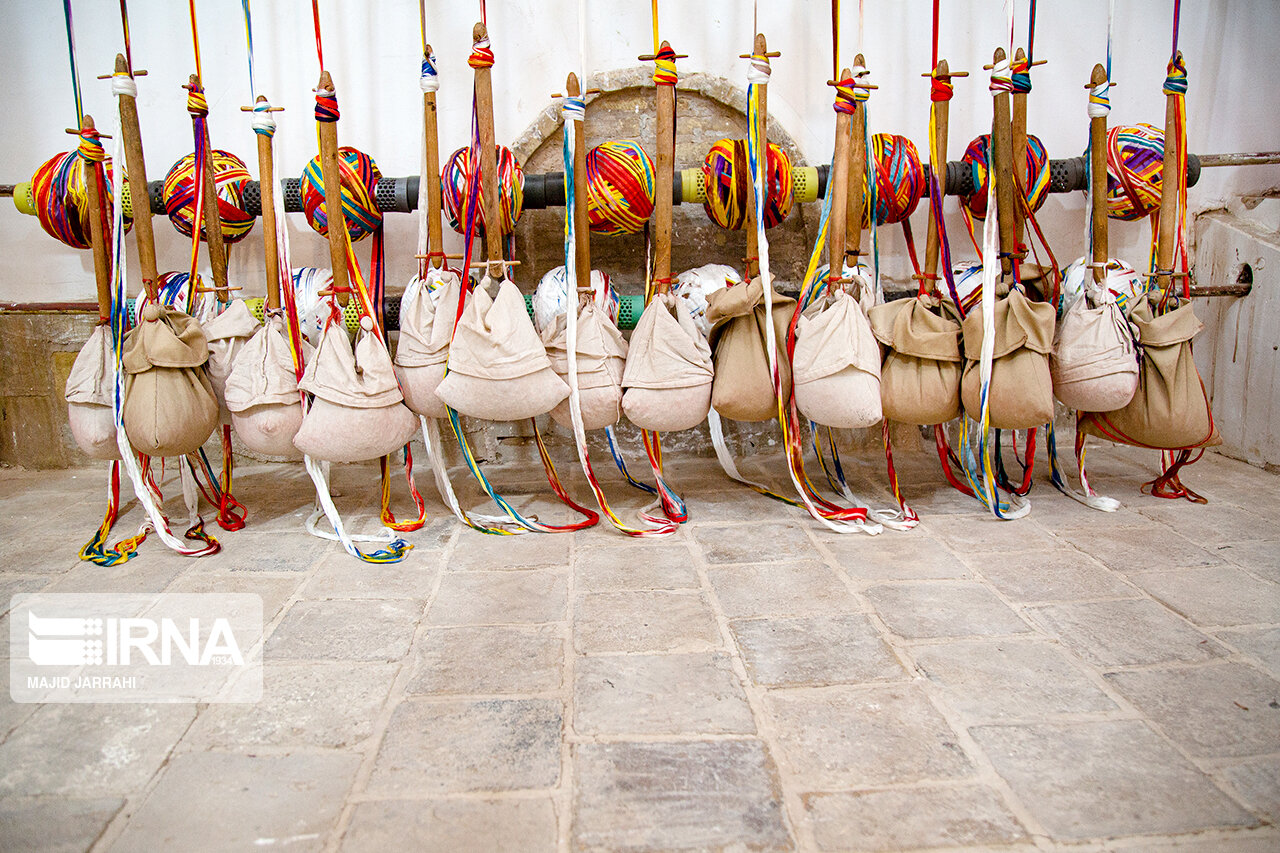
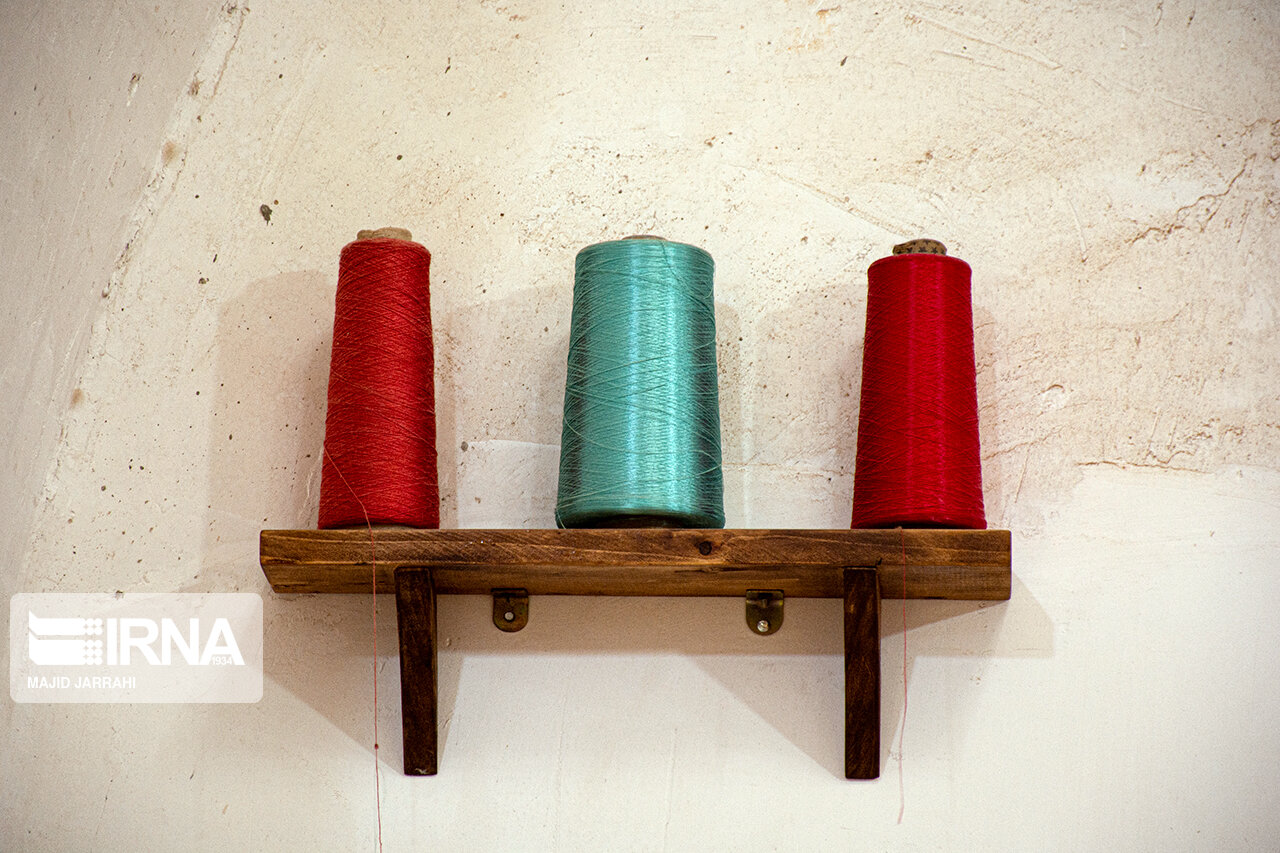
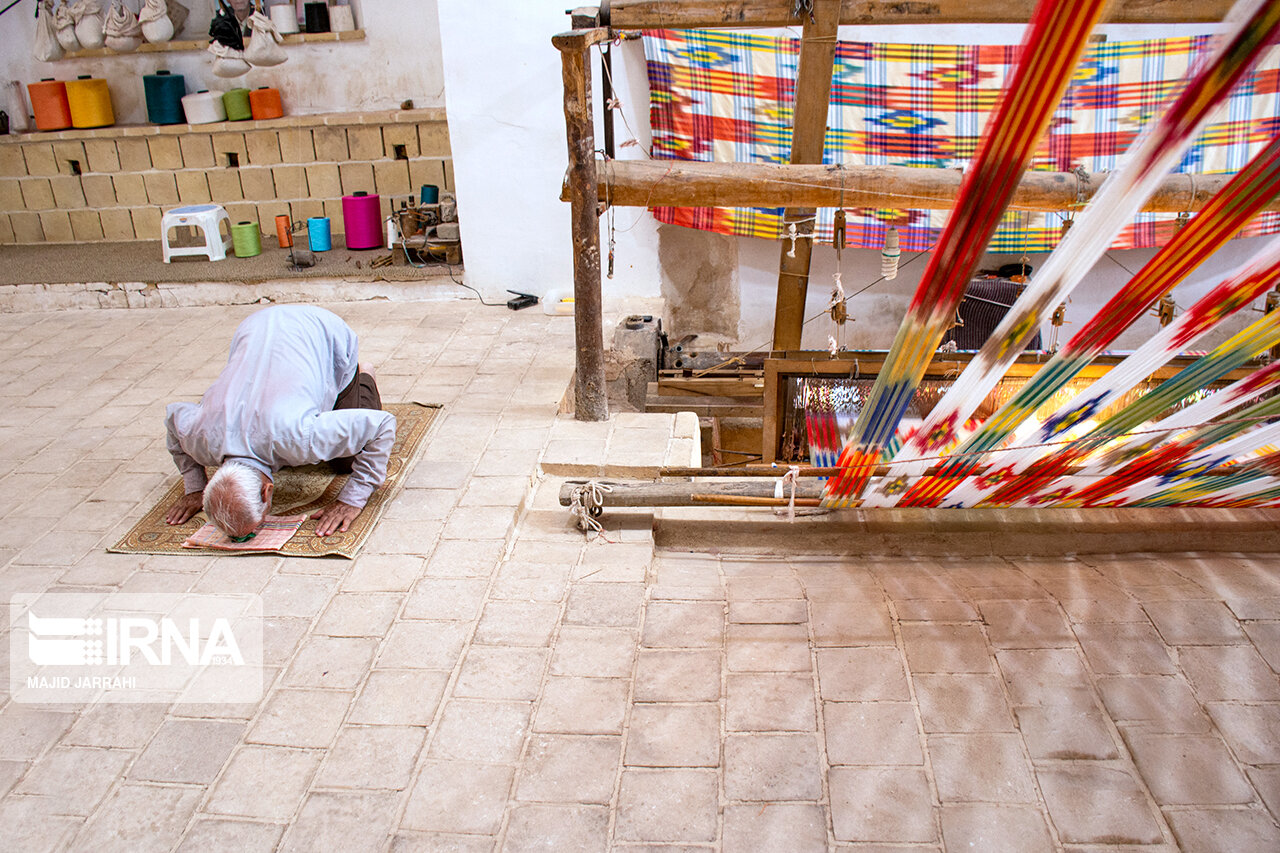
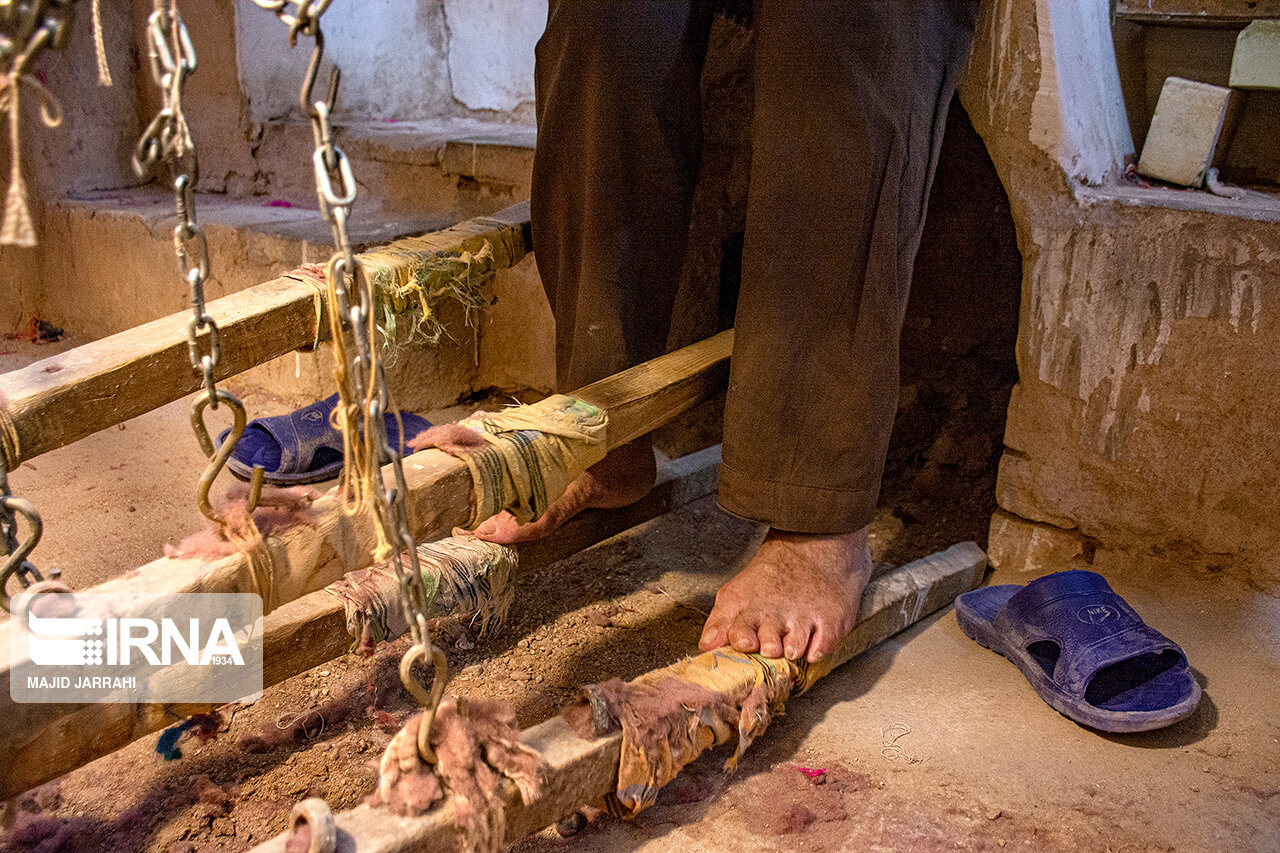
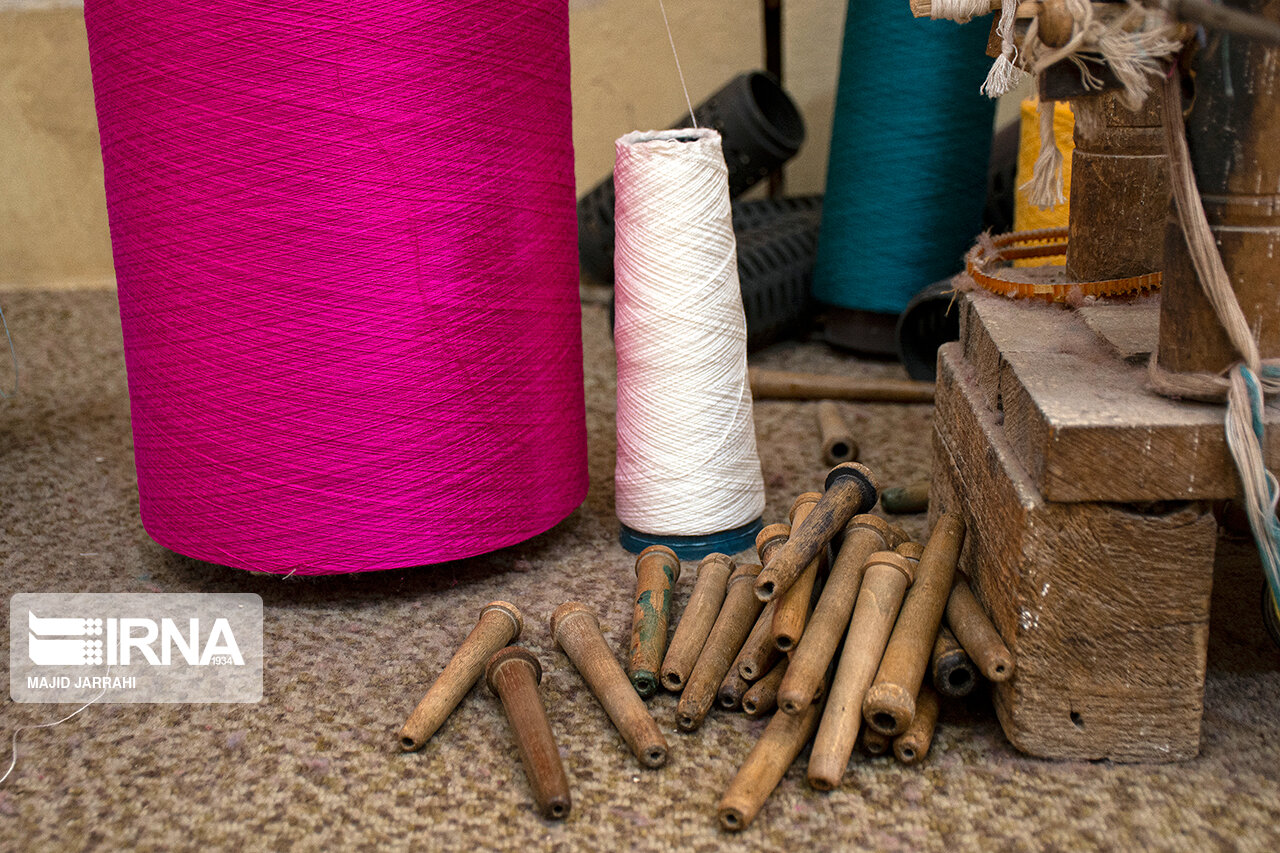
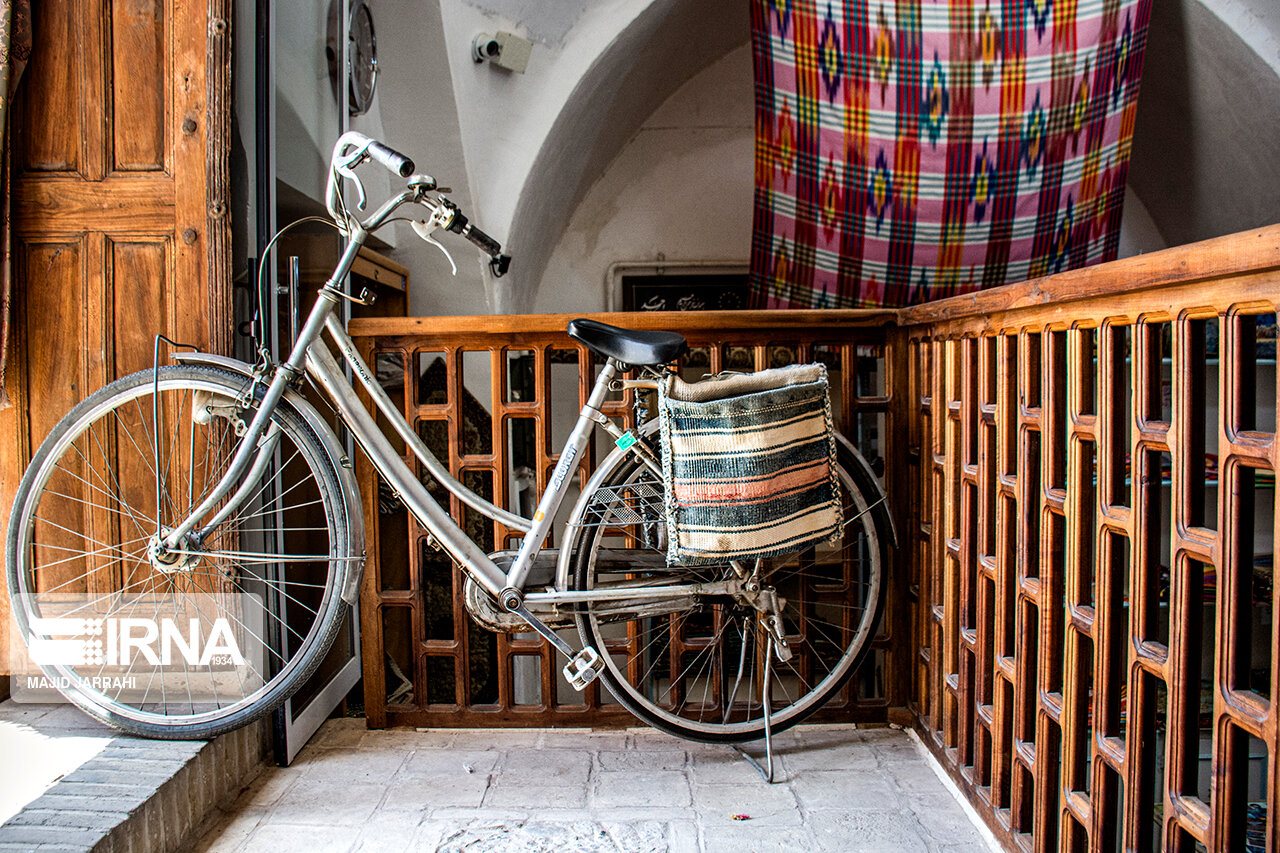
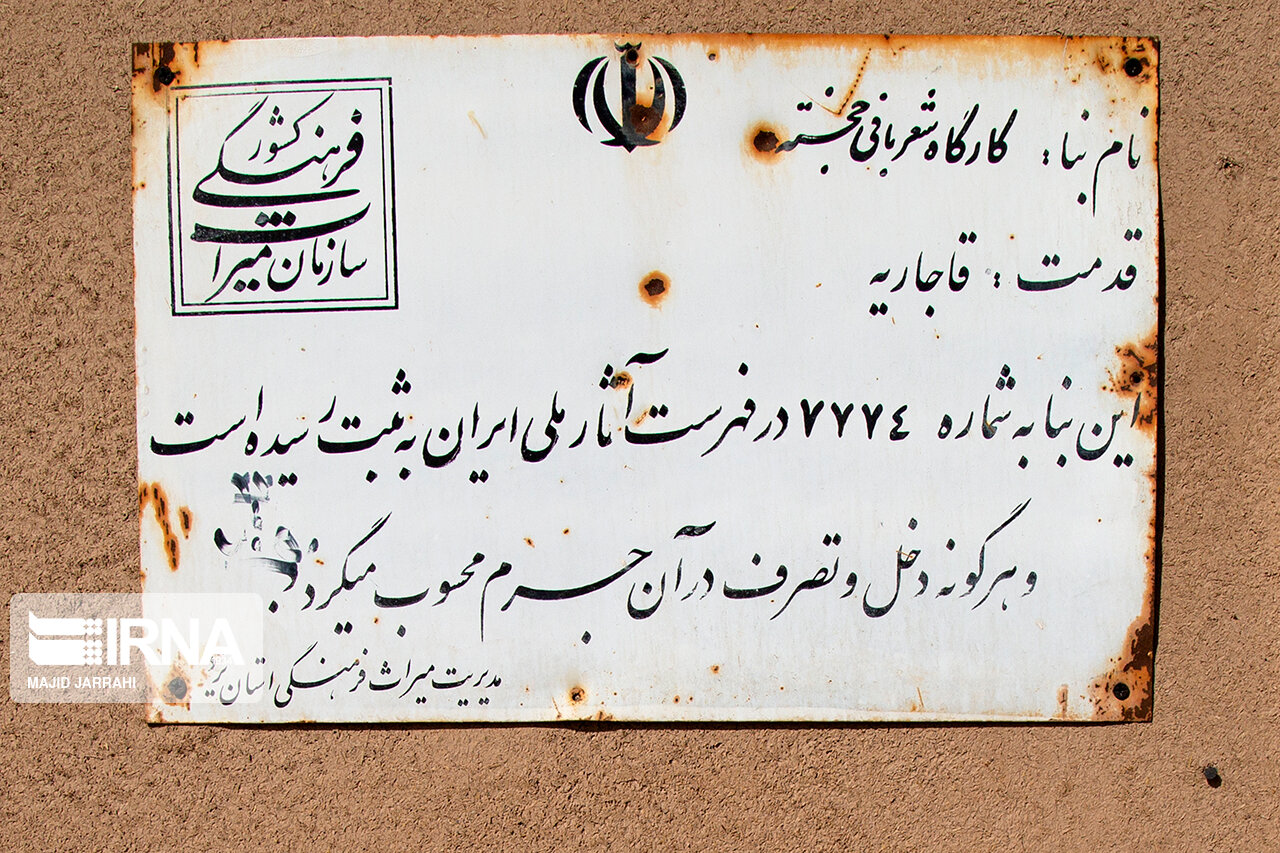
This album shows pictures of an old Ikat weaving workshop and Master Nikkhah in Yazd’s ancient area.

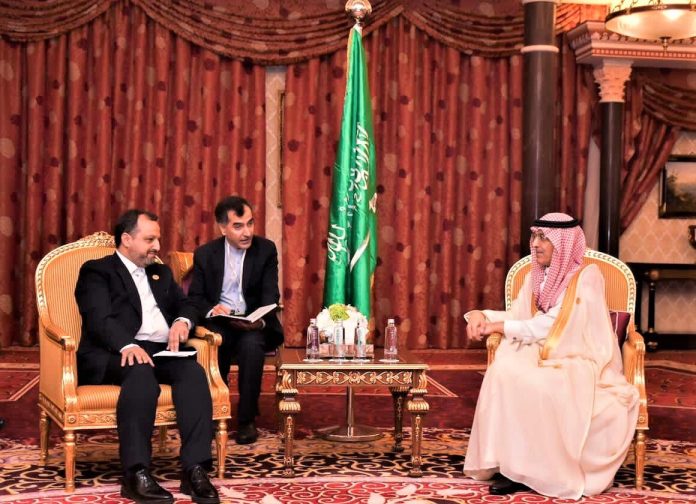
Khandouzi, who had been to the Saudi city of Jeddah to take part in a summit of the Islamic Development Bank, said economic diplomacy had been made possible during the trip.
“A constructive meeting was held between me and my Saudi counterpart, in which, given the resumption of political ties between Iran and Saudi Arabia, Saudi officials stressed that economic foundations, too, should be promptly facilitated,” Khandouzi said.
He said he had also discussed with Saudi officials hajj pilgrimage-related issues such as flights from Iran and pertinent banking matters, as well as the facilitation of visits by Iranian businessmen, which he said “they welcomed.”
Saudi Arabia severed ties with Iran seven years ago. In March, the two countries announced a rapprochement mediated by China.
Last month, Iranian Foreign Minister Hossein Amirabdollahian met with Saudi Foreign Minister Prince Faisal bin Farhan Al Saud in Beijing. At the end of that meeting, the two sides issued a joint statement in which they also stressed each other’s economic capacities and their potential in the enhancement of bilateral relations.
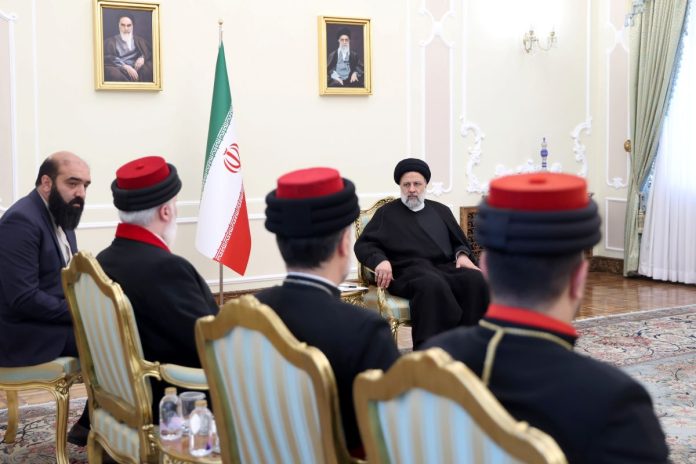
“Humanity doesn’t only need development and prosperity…; one of the most important needs of humans in… [developed] societies, which has been neglected, is spirituality, morality, and connection with God,” Raisi said during the meeting with Mar Awa III and an accompanying delegation in Tehran on Monday.
Raisi called “faith and morality” “a pivotal issue of humanity,” and said the two have to be defined well by religious figures to help solve issues faced by the world.
“The foundation of the civilization and modernity that divine prophets have promised is rationality, spirituality, morality, and justice,” the Iranian president said.
Mar Awa III for his part expressed satisfaction about the “special efforts” by Iranian officials to facilitate interfaith dialog.
“The presence of representatives of [different] religions within the government of the Islamic Republic indicates this government’s depth of belief in and respect for divine religions,” he said.
He also expressed hope that interfaith commonalities and friendships would further grow.
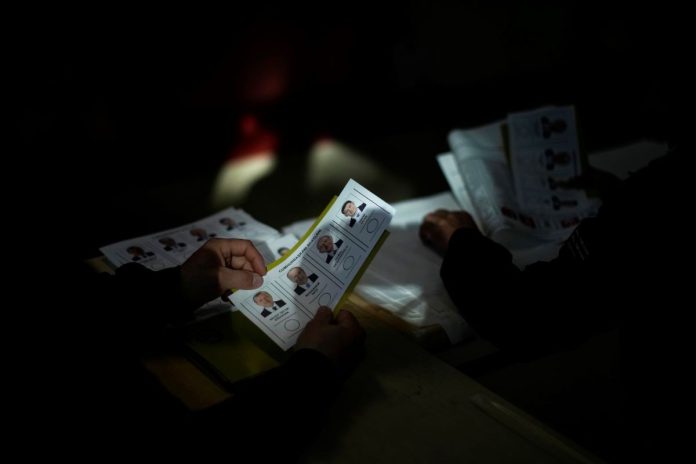
Turkey will have a runoff election on May 28 after longtime leader President Recep Tayyip Erdogan was forced into a second round with only a narrow lead over his rival, Kemal Kilicdaroglu.
Neither candidate achieved the required 50% to take the presidency outright, but Kilicdaroglu now faces a tough battle to win the second round after Erdogan performed better than some opinion polls had suggested.
Erdogan took 49.5 percent of Sunday’s vote, with Kilicdaroglu getting 44.89 percent, the Council announced.
This is only the third time that Turks directly voted for a president, with Erdogan winning both previous elections outright in the first round.
Sinan Ogan from the ATA Alliance, the third candidate, received 5.17 percent, while Muharrem Ince of the Homeland Party – who withdrew from the race just three days before the elections but remained on the ballot – got 0.44 percent.
In particular, the vote for Ogan, kingmaker or spoiler, pushed the race into a run-off.
Two weeks is a long time in an election cycle, and whoever eventually wins the presidency will be determined also by whose alliance will control parliament.
The Turkish news agency published preliminary results that showed AK Party won 266 seats, while the main opposition leader Kilicdaroglu’s Republican People’s Party (CHP) won 166 seats in the 600-seat parliament.
The polls were held against a background of a cost-of-living crisis that saw inflation peak at 85 percent in October and earthquakes in February that killed more than 50,000 in the country. These factors buoyed opposition hopes of unseating a leader known as reis, or “chief”, by supporters of the governing Justice and Development Party (AK Party).
CHP leader Kilicdaroglu’s six-party Nation Alliance has pledged to dismantle an executive presidential system narrowly voted in by a 2017 referendum. The opposition alliance also promised to restore the independence of the judiciary and the central bank and to reverse crackdowns on free speech and dissent under Erdogan.
Turkey’s elections had been billed as the most consequential since its first fair multi-party polls in 1950 – boiling down to a choice between five more years of Erdogan, Turkey’s most electorally successful politician, or a new direction under an old party that has reinvented itself in recent years.
During a wearying campaign, Erdogan frequently spoke at multiple rallies in a day, highlighting the advances made in Turkey during his 20-year rule while simultaneously lambasting the opposition for supporting “terrorism” or being in thrall to the West.
Kilicdaroglu, who has set the CHP on a more social democratic path since taking the helm of the party in 2010, was able to call on the support of alliance partners and the nationally recognised CHP mayors of Ankara and Istanbul to share the burden of public appearances.
Both candidates made use of social media to get their messages across in a vote where nearly five million were casting their ballots for the first time, with Kilicdaroglu employing Twitter videos filmed at his home in Ankara.
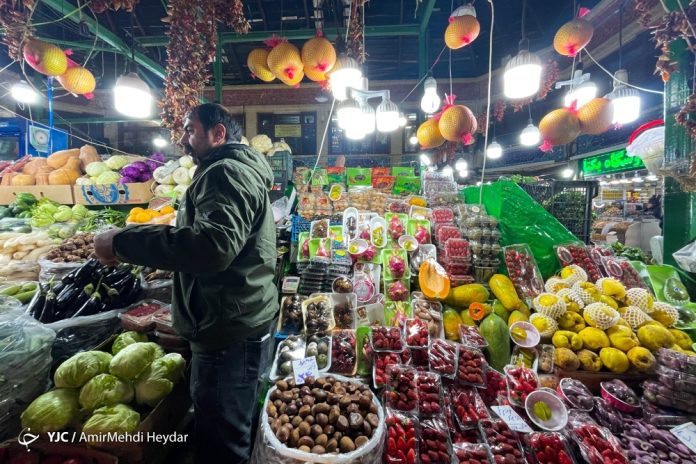
Shahriar Haydari, who sits on the Iranian Parliament’s National Security and Foreign Policy Committee, told Rooydad 24 news outlet on Monday that inflation “is rising by the day and there seems to be no ‘containment of inflation and growth in production levels.’”
He was referring to the motto of the year as determined by Leader of the Islamic Revolution Ayatollah Seyyed Ali Khamenei on New Year’s Day.
Haydari compared the Raisi administration to that of former President Hassan Rouhani and said the incumbent has fared “by far better than the previous administration in terms of resources and revenue.”
“Except that the former administration was able to contain inflation to some extent and enhance livelihoods, but this administration… has not,” the Iranian lawmaker said.
“These are clear instances of how the former administration had capable managers and this one has incompetent ones.”
Raisi has said his administration’s main plan is to control inflation and bring about sustainable economic growth.
His administration has set the tackling of inflation and currency devaluation in Iran as priorities for the 2023-2024 budget presented to the Parliament.
Still, an Iranian daily that is said to be close to Iranian Parliament Speaker Mohammad Bagher Qalibaf recently cited official records to say that the inflation rate in Iran set a new record high of 45.8% in March.

Witnesses told the Palestinian Safa news agency that a large number of Israeli troops stormed the Askar refugee camp, located on the outskirts of the northern West Bank city of Nablus, early on Monday.
Confrontations broke out in the area between Israeli soldiers and resistance forces during the raid, with both sides exchanging heavy gunfire.
Ahmad Jibril, the head of the Palestinian Red Crescent Emergency and Ambulance Department in Nablus, told the official Palestinian news agency WAFA that two Palestinians were shot with live bullets during the confrontations. He said one of them died while the other was shot in the chest and is reported to be in critical condition.
The Palestinian Ministry of Health identified the victim as Saleh Mohammad Sabra, 22, saying he was struck in the chest with an Israeli live bullet.
Moreover, Israeli forces surrounded the family house of Abdel Fattah Hussein Kharousha, a member of the Hamas resistance group who carried out a retaliatory operation in the West Bank town of Huwara last February and shot dead two Israeli settlers, in preparation to demolish it.
Israel’s decades-old policy of leveling family homes of attackers has long drawn criticism from human rights groups that call it collective punishment.
Some also question its effectiveness in preventing future attacks, saying such demolitions only exacerbate tensions and fuel hatred in Palestinian communities.
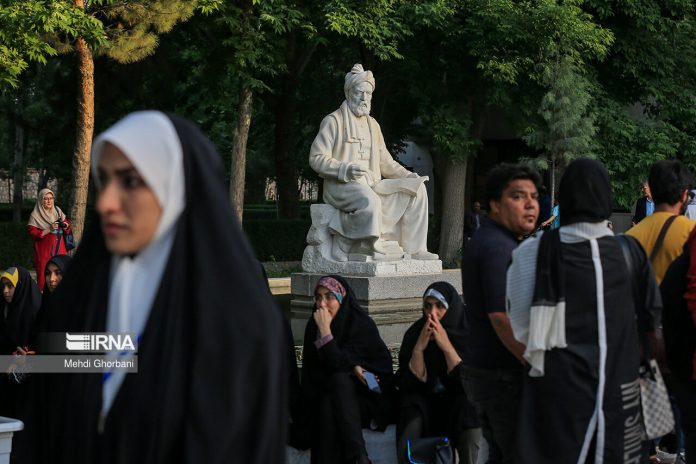
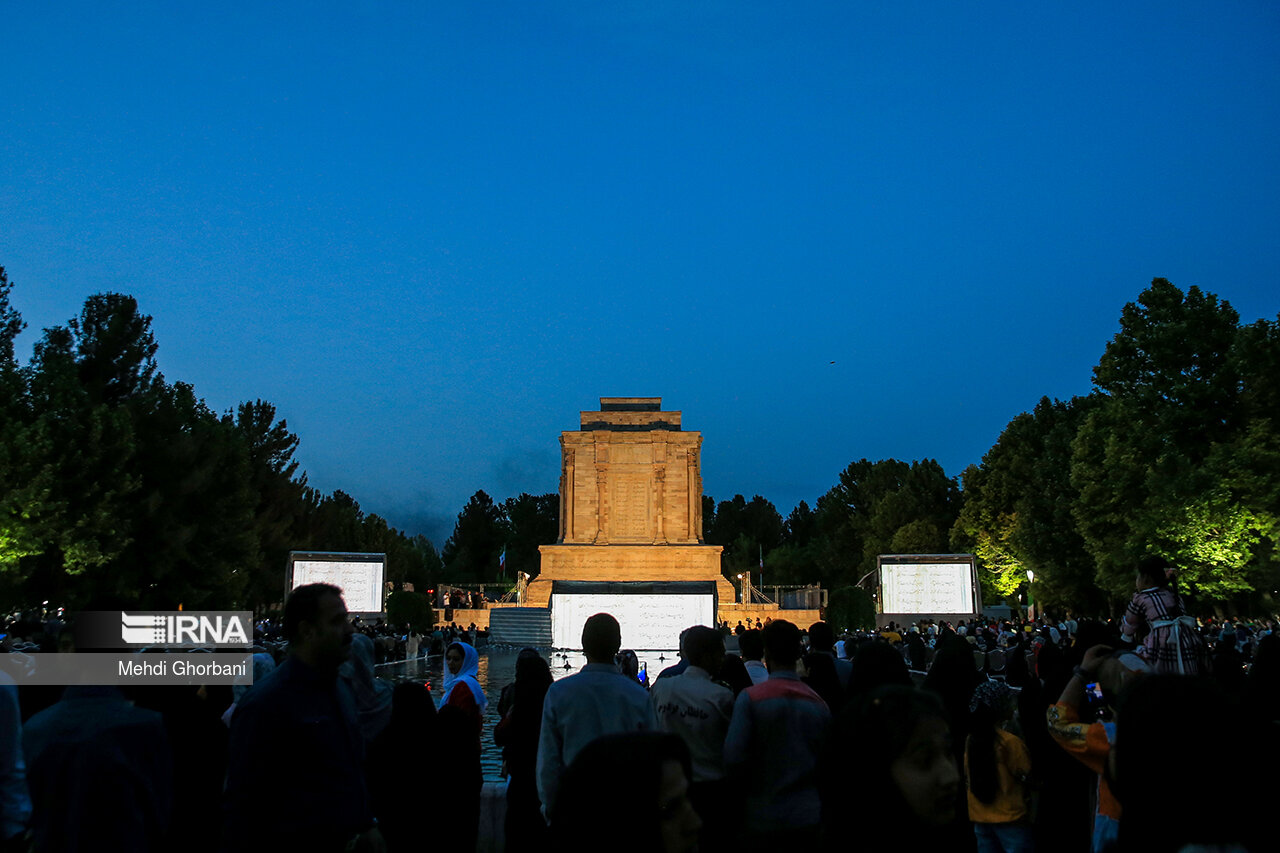
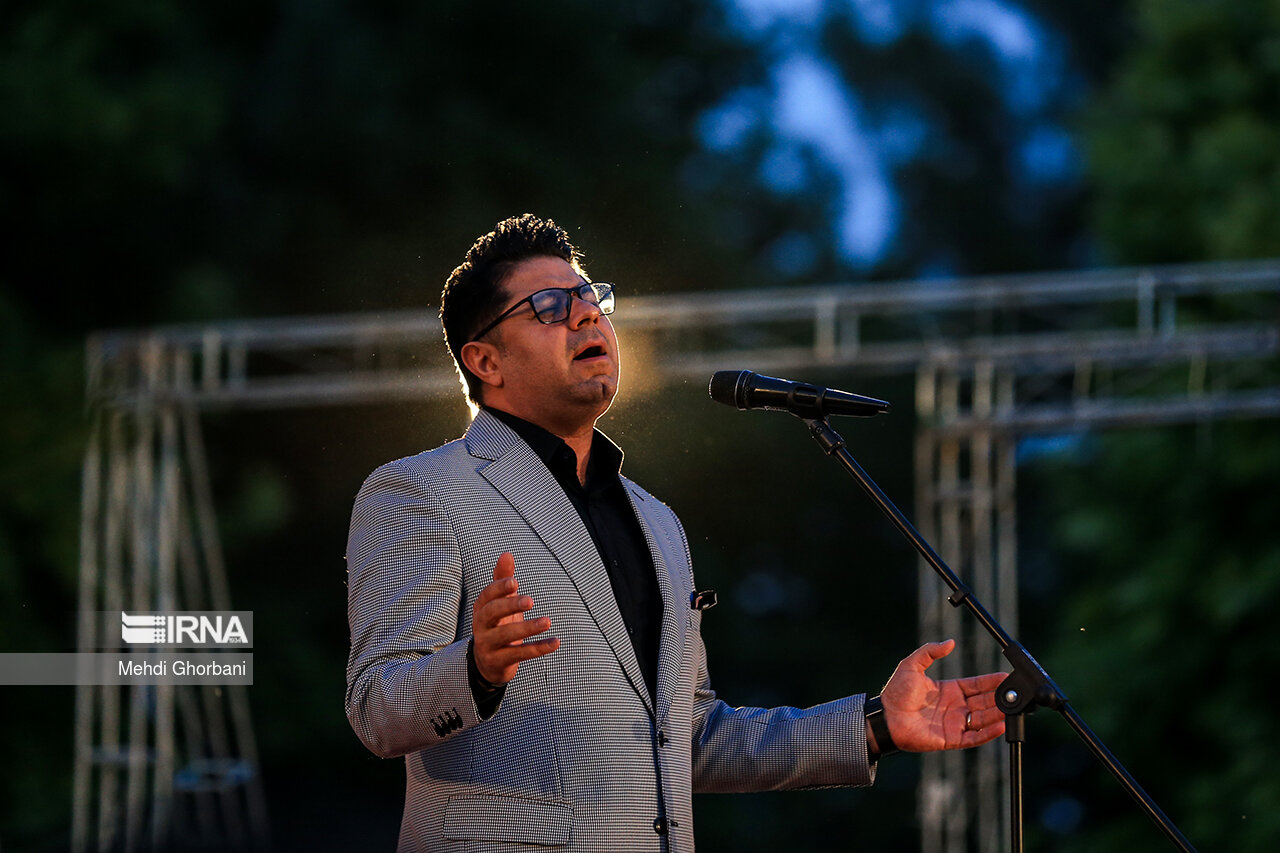
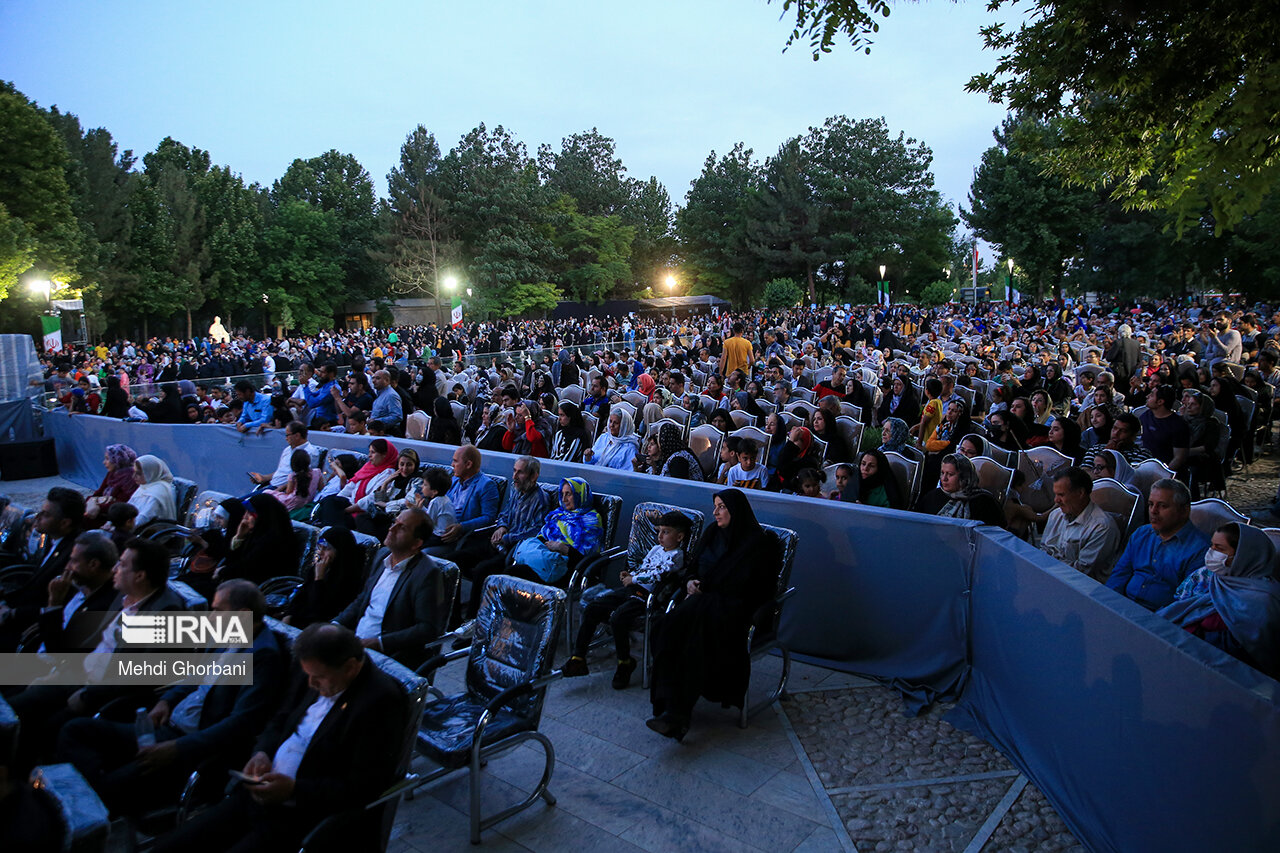
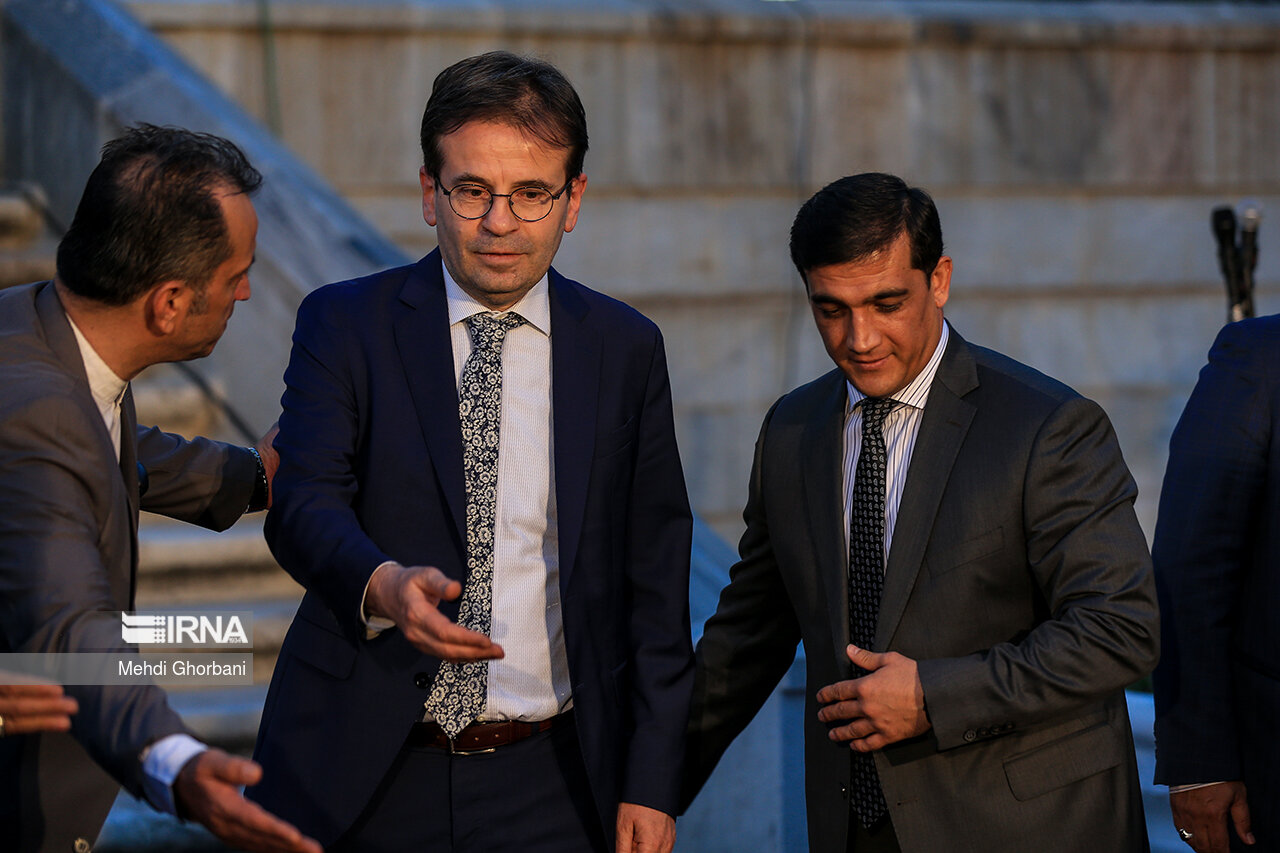
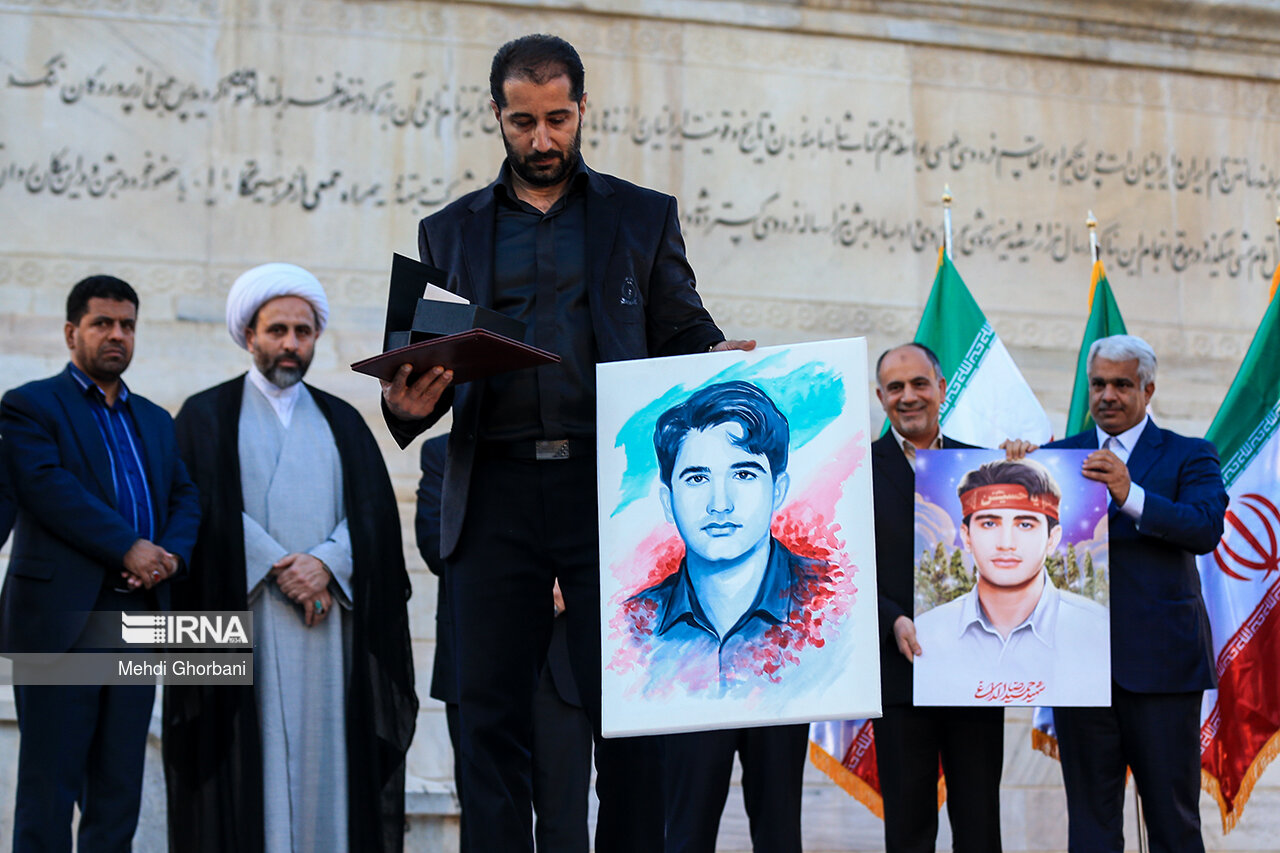
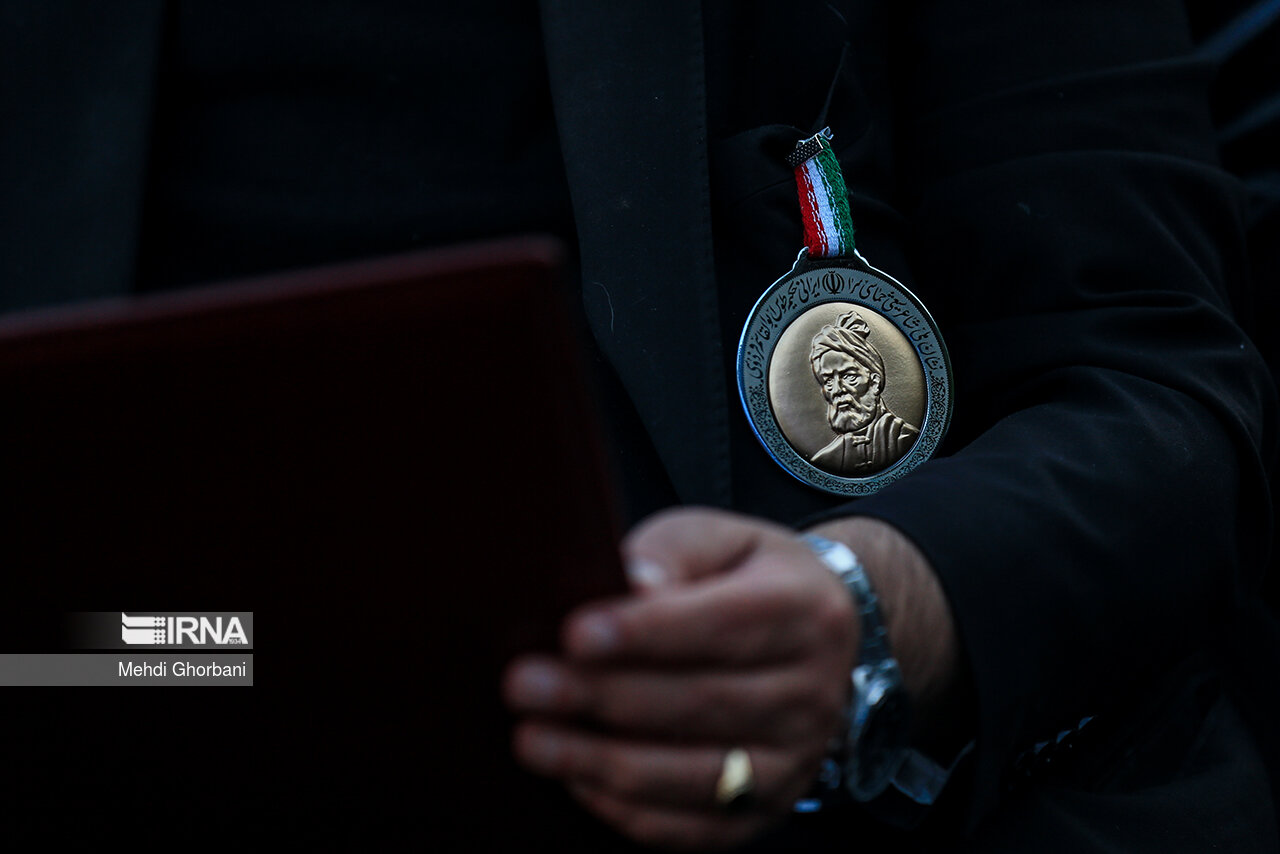
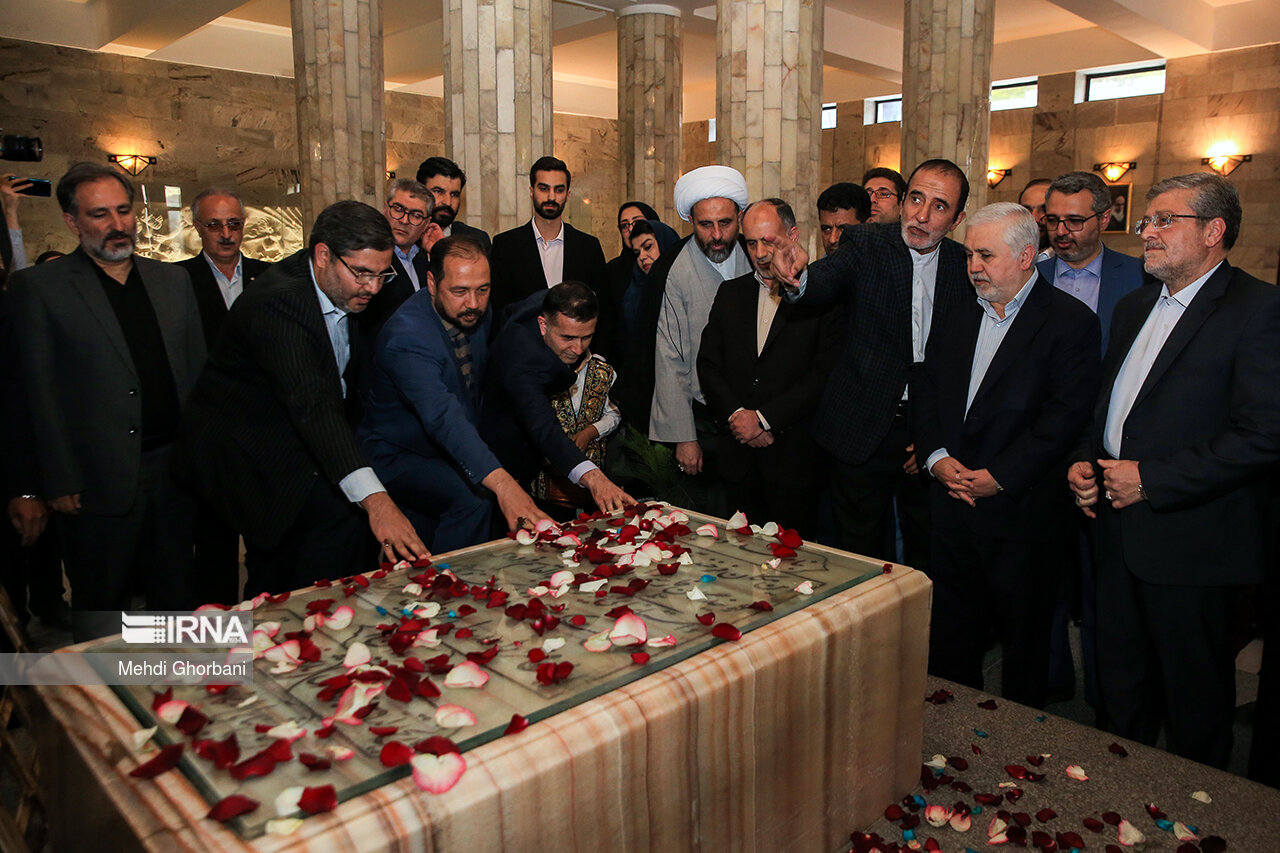
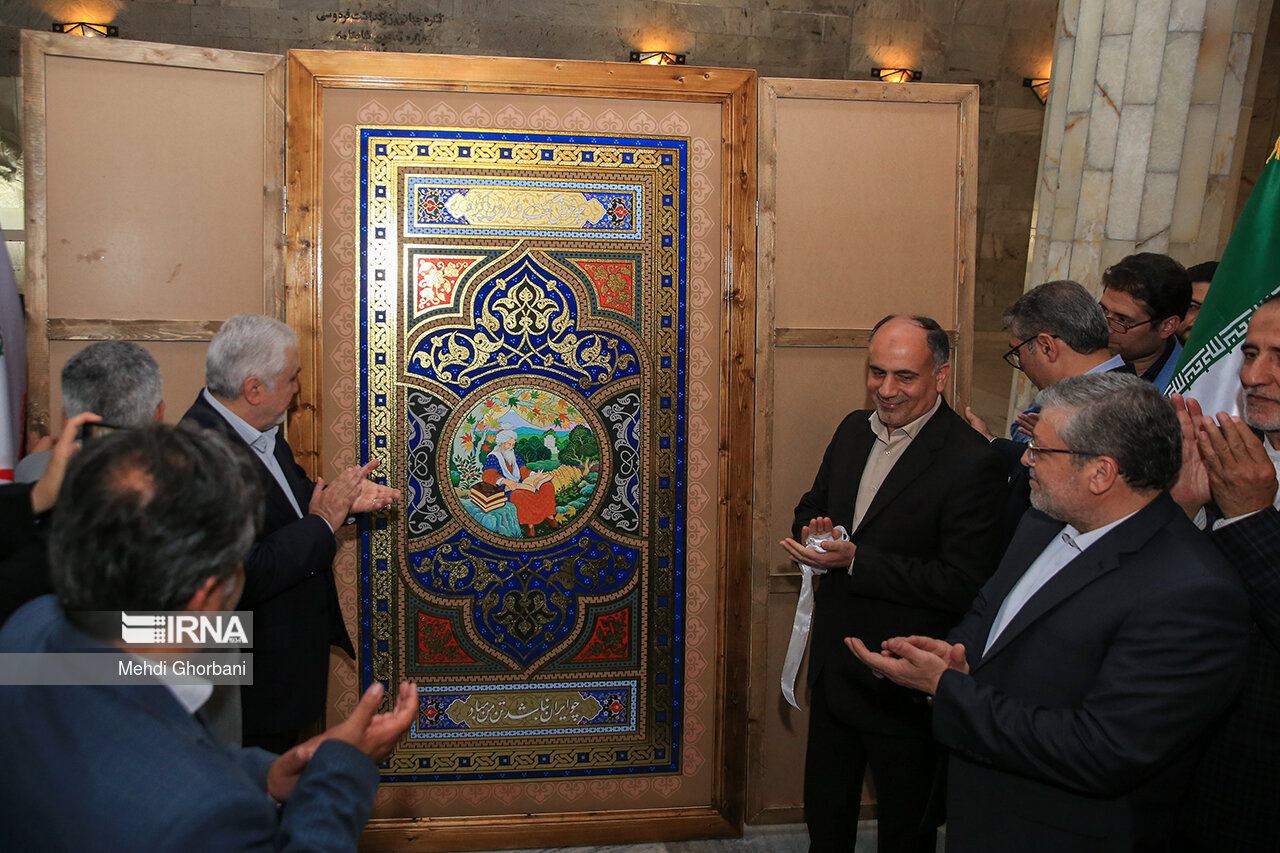
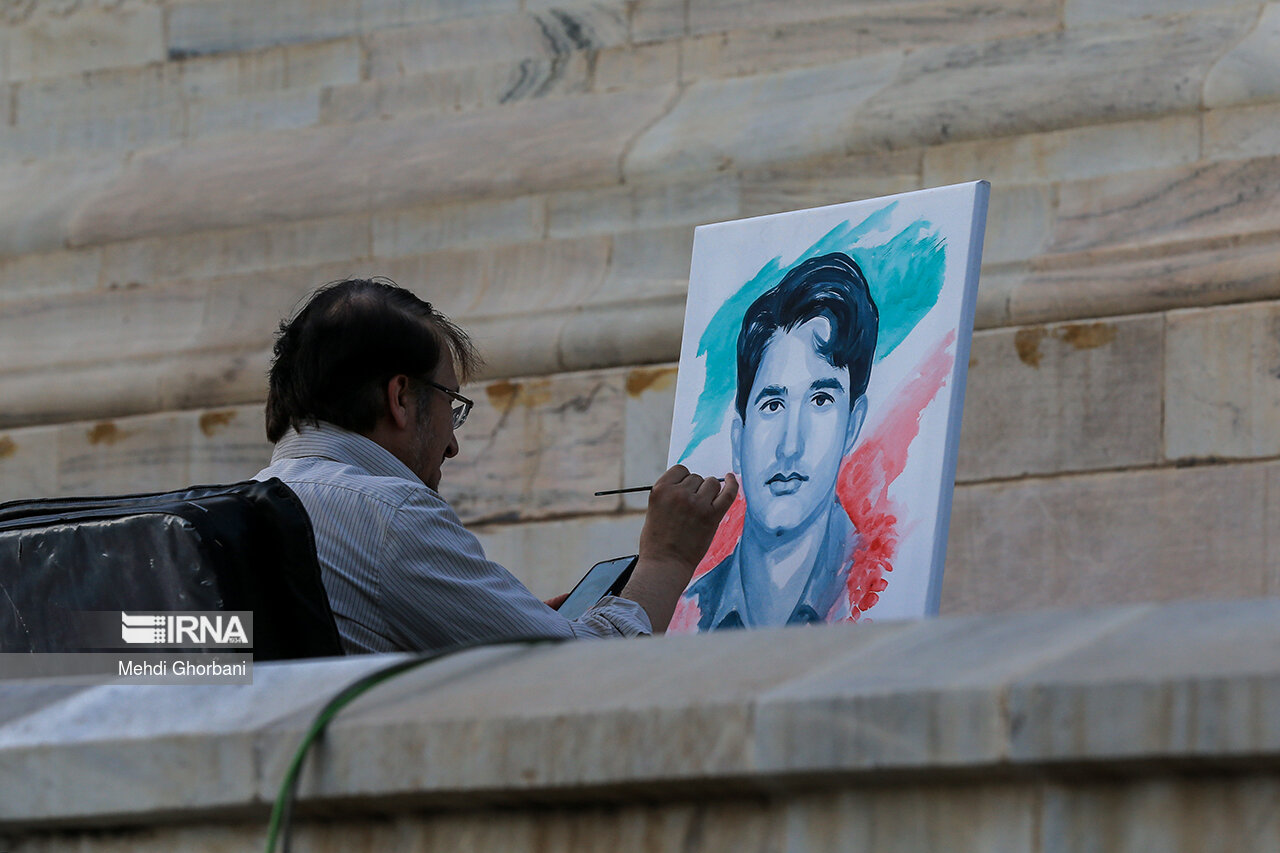
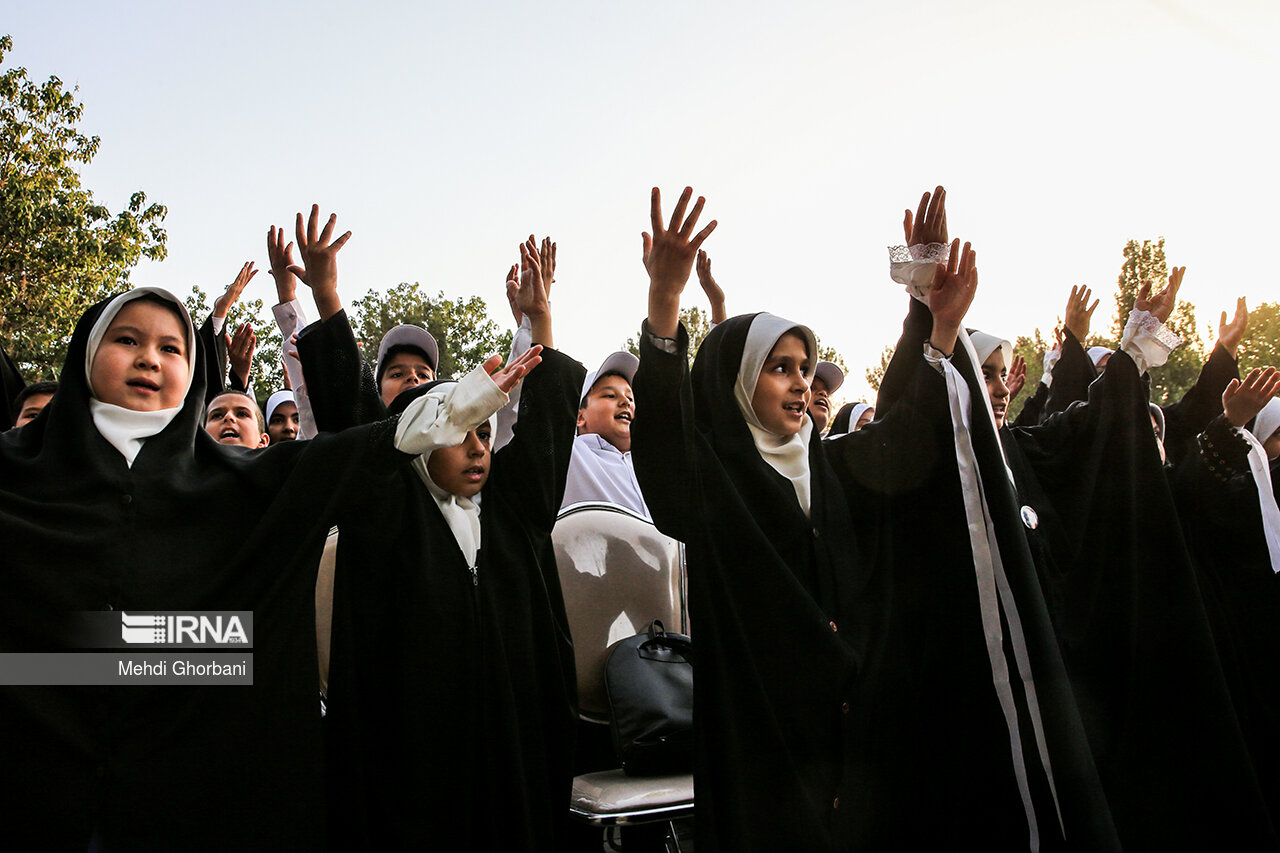
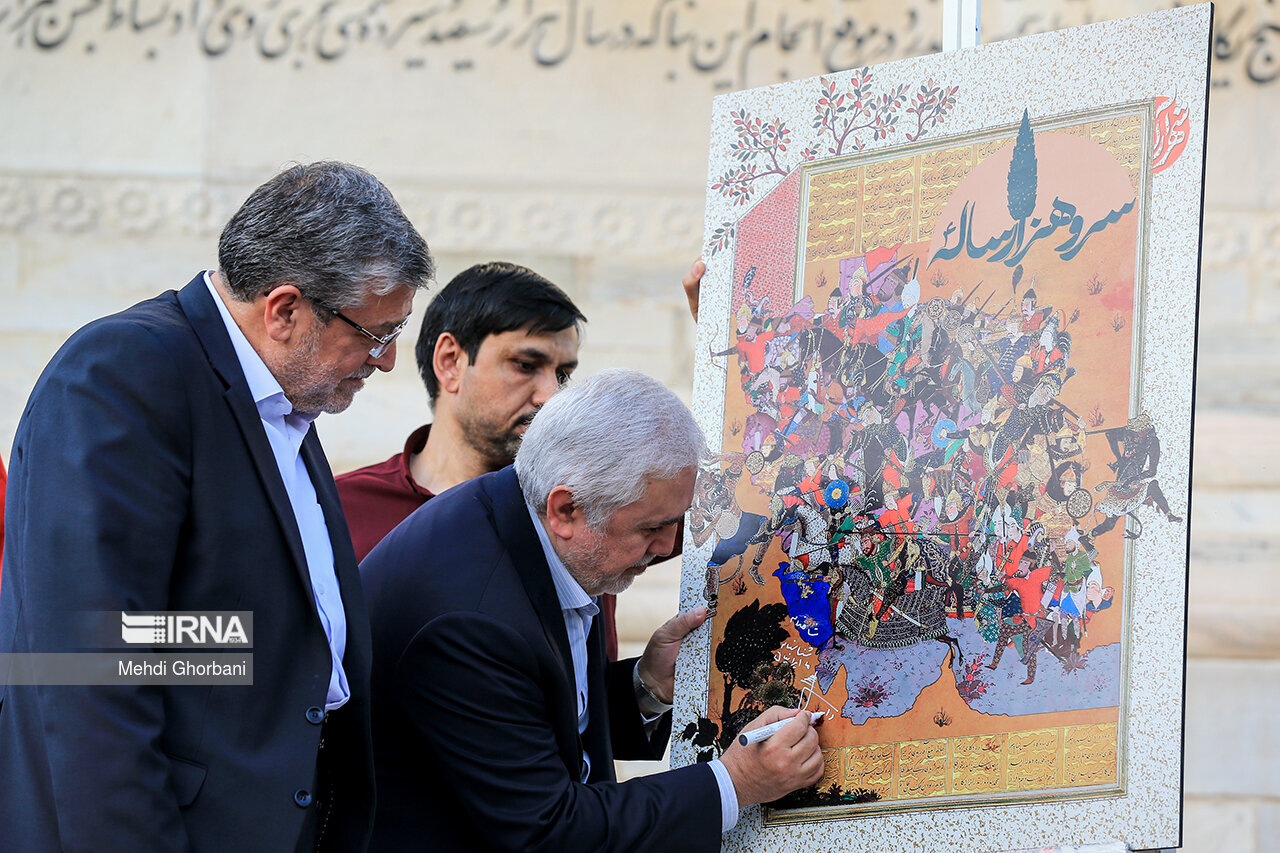
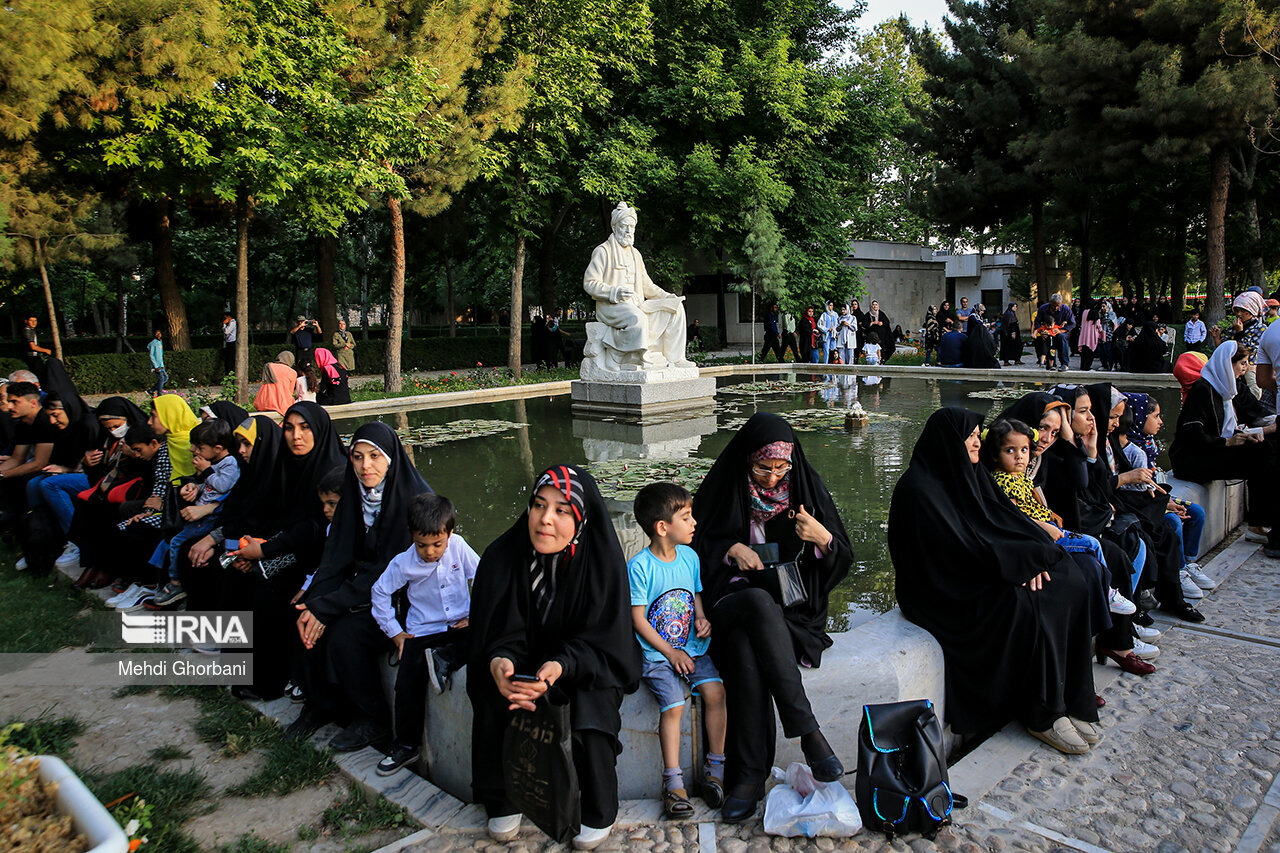
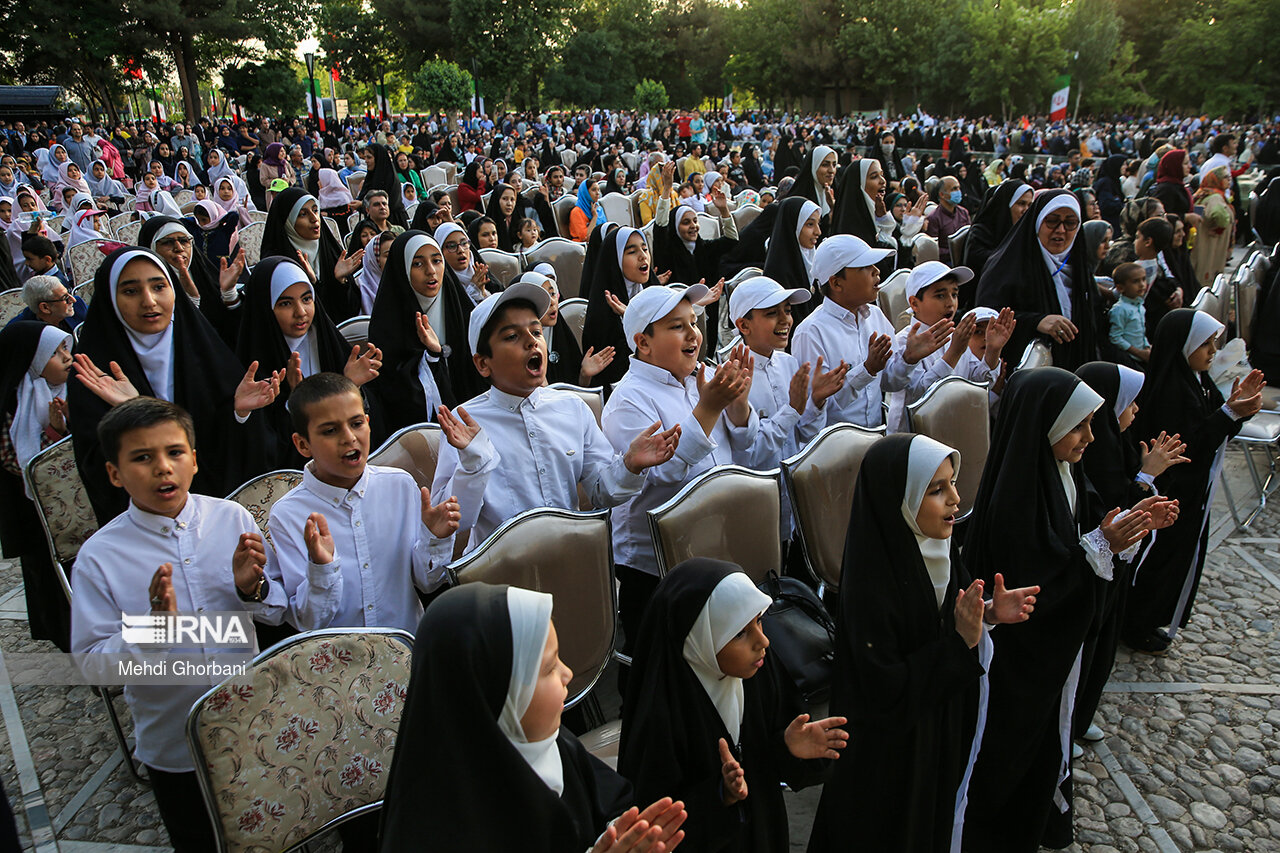
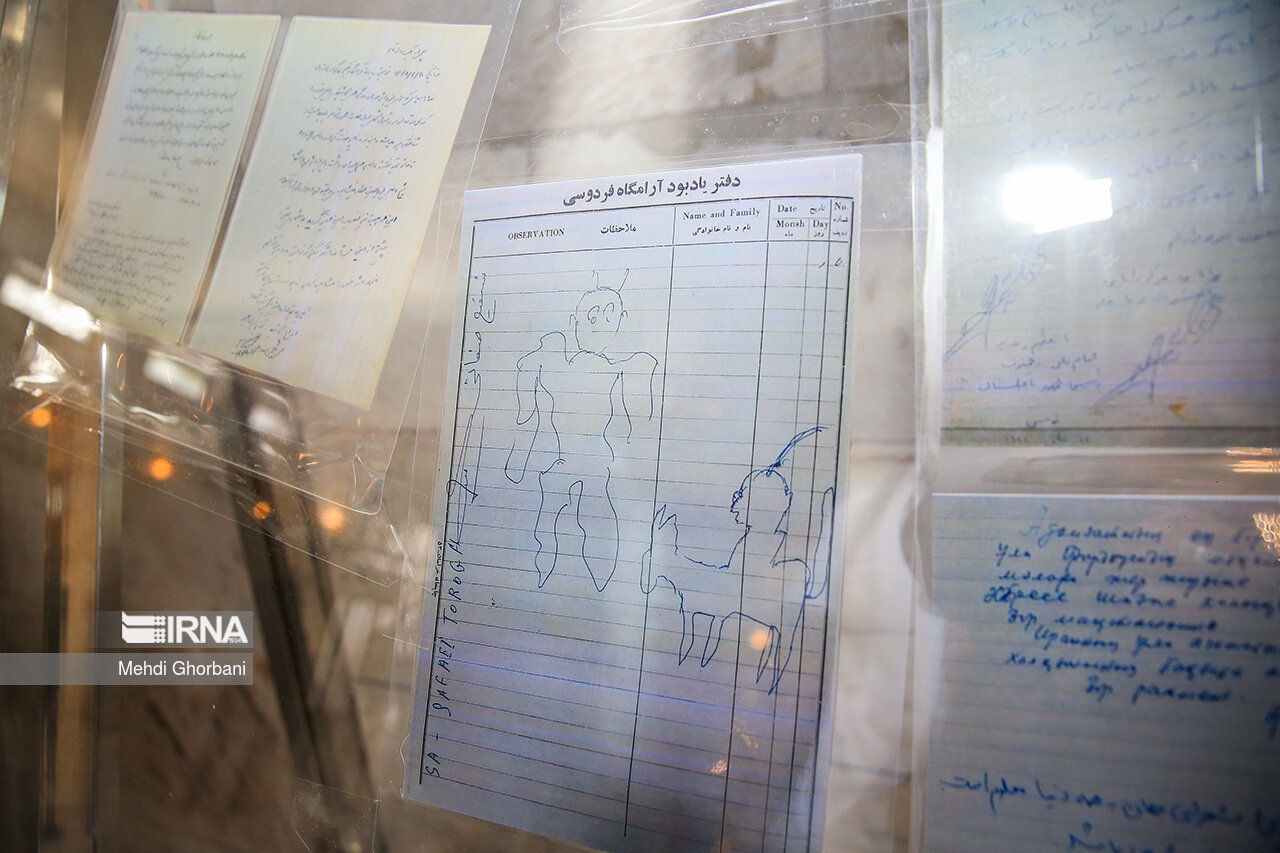
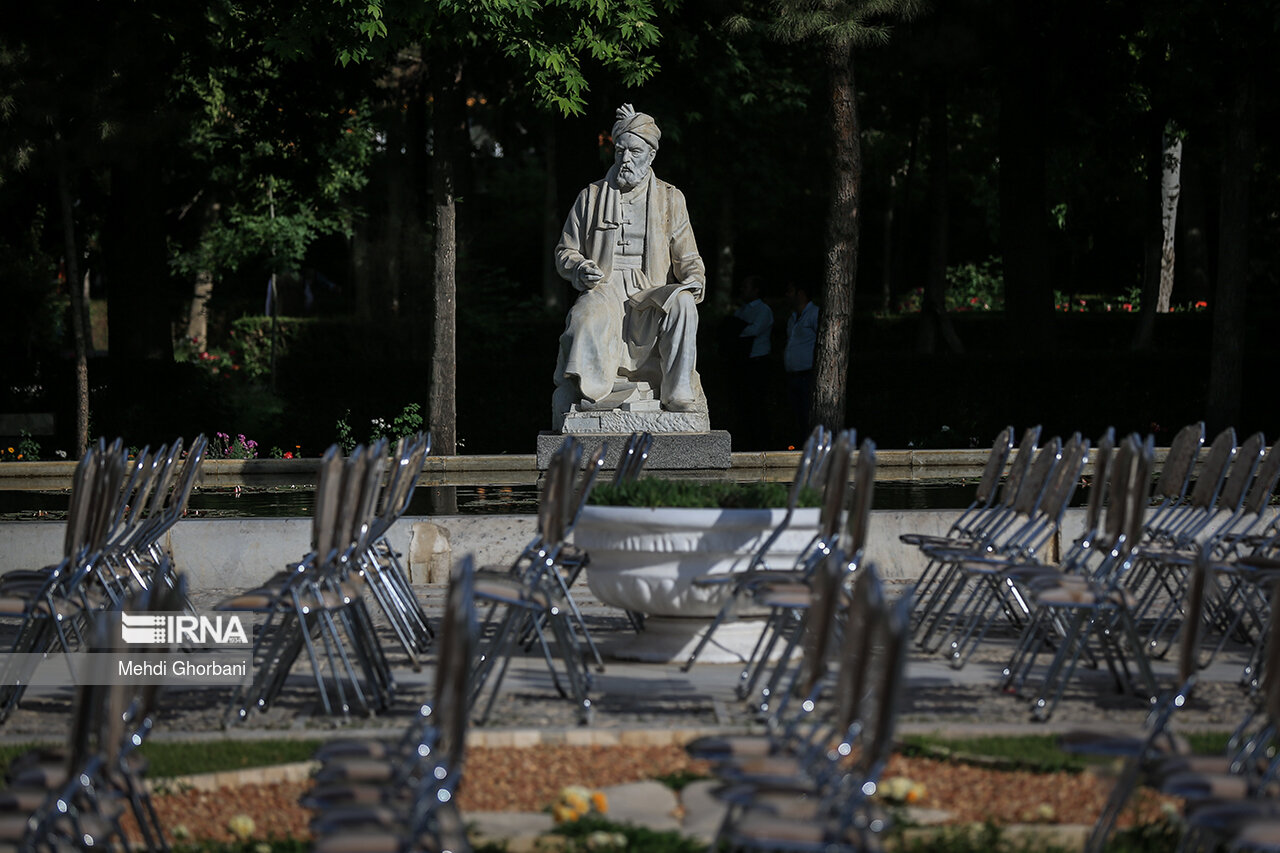
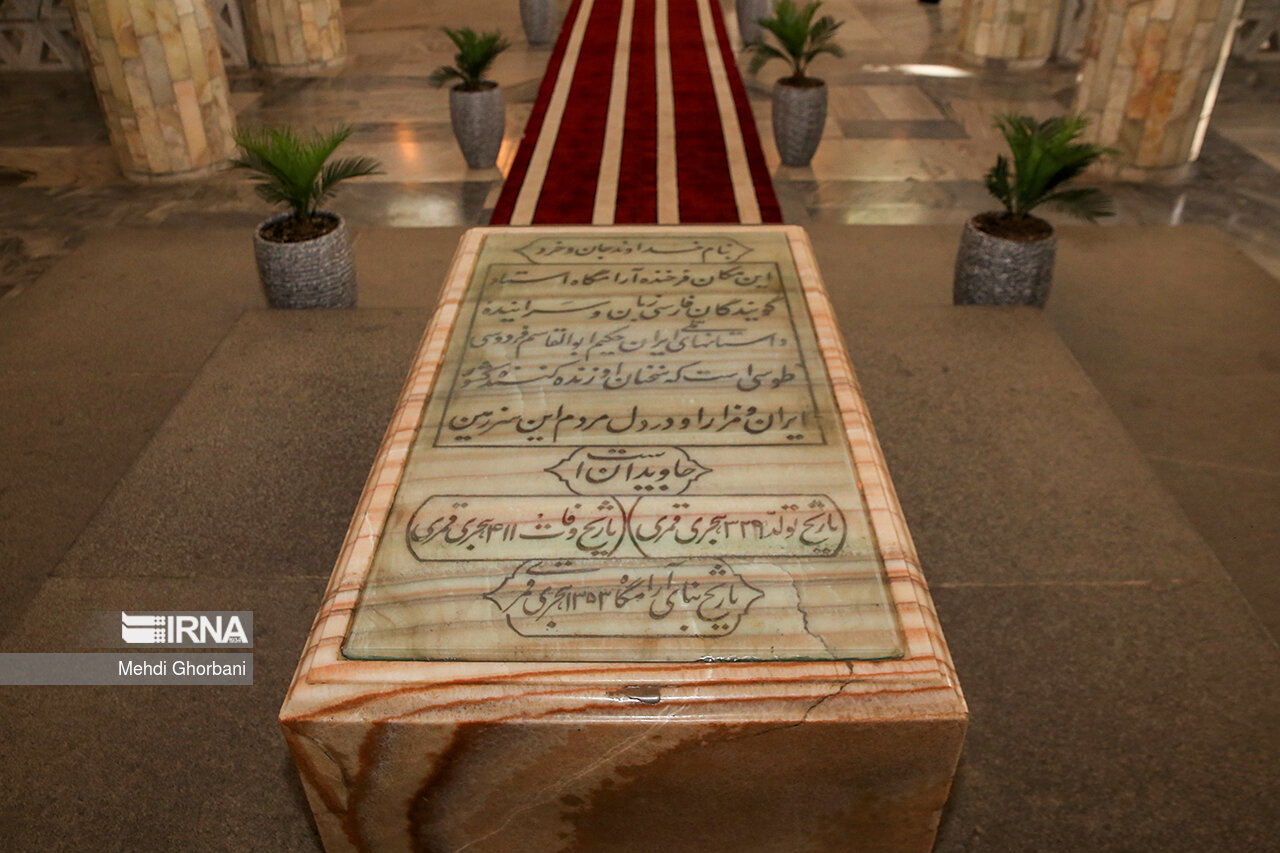
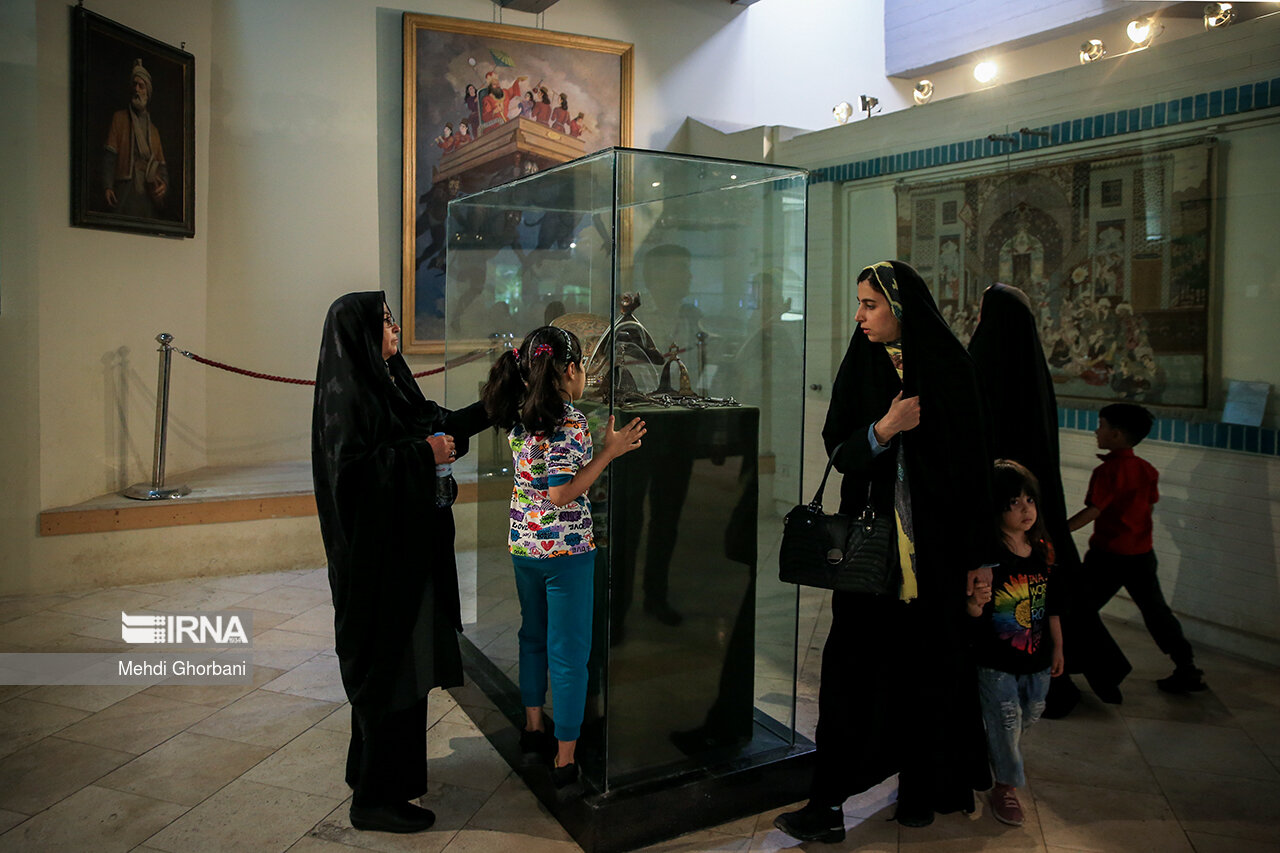
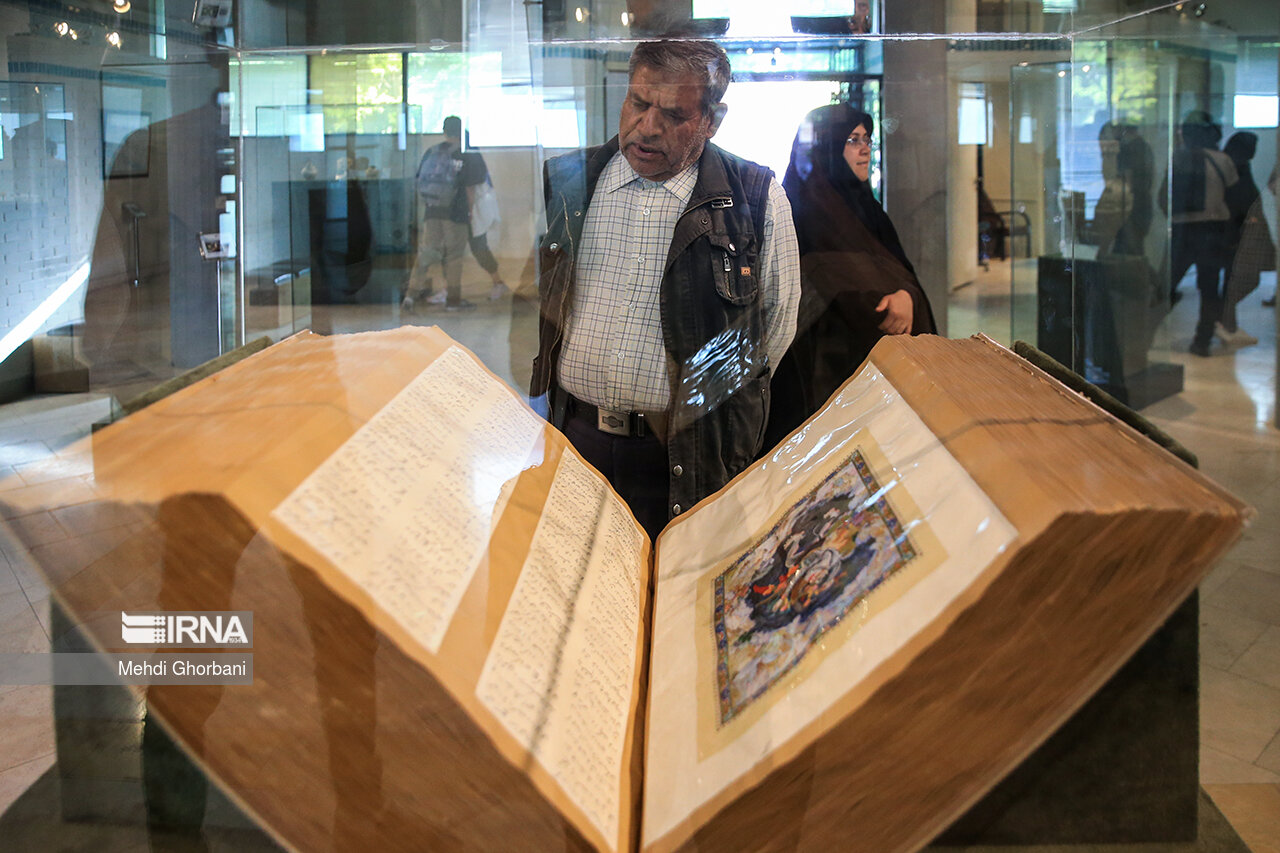
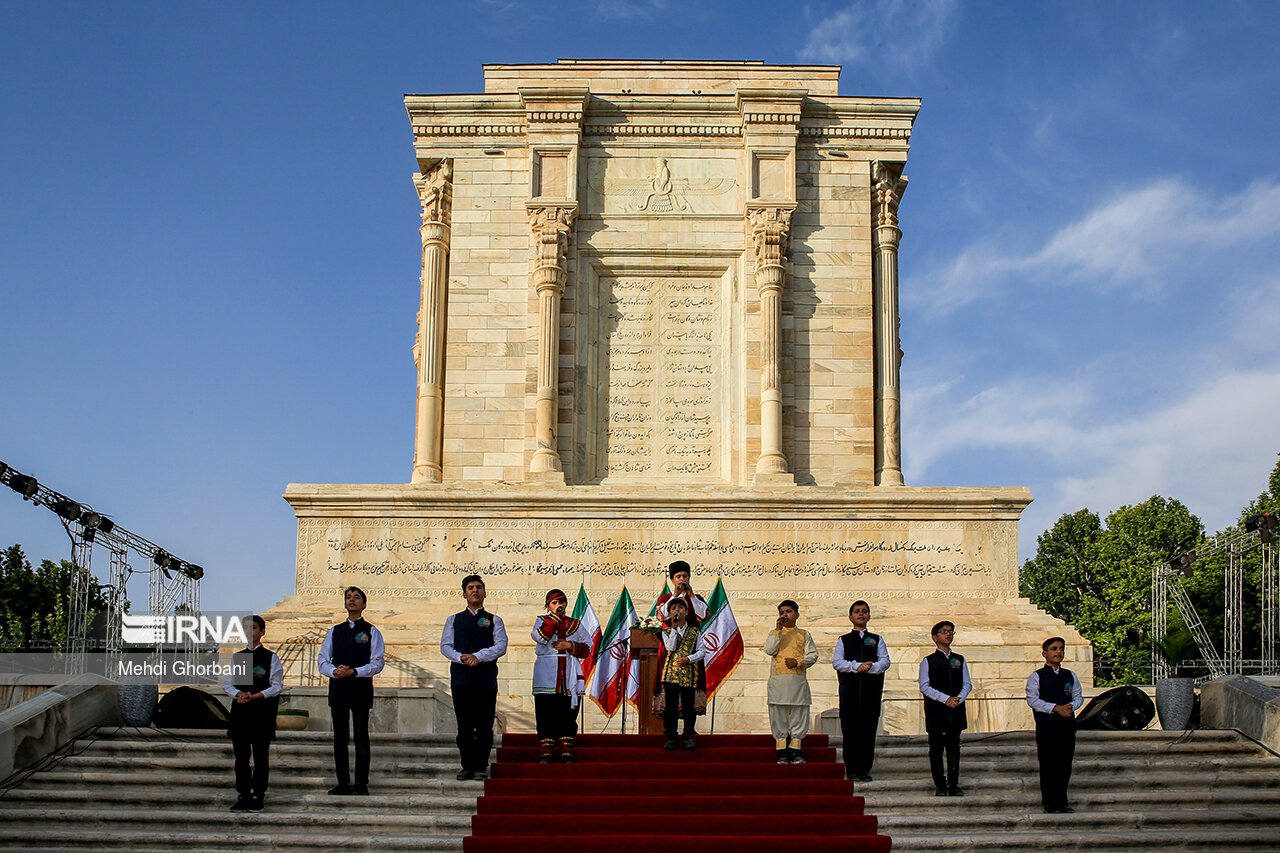
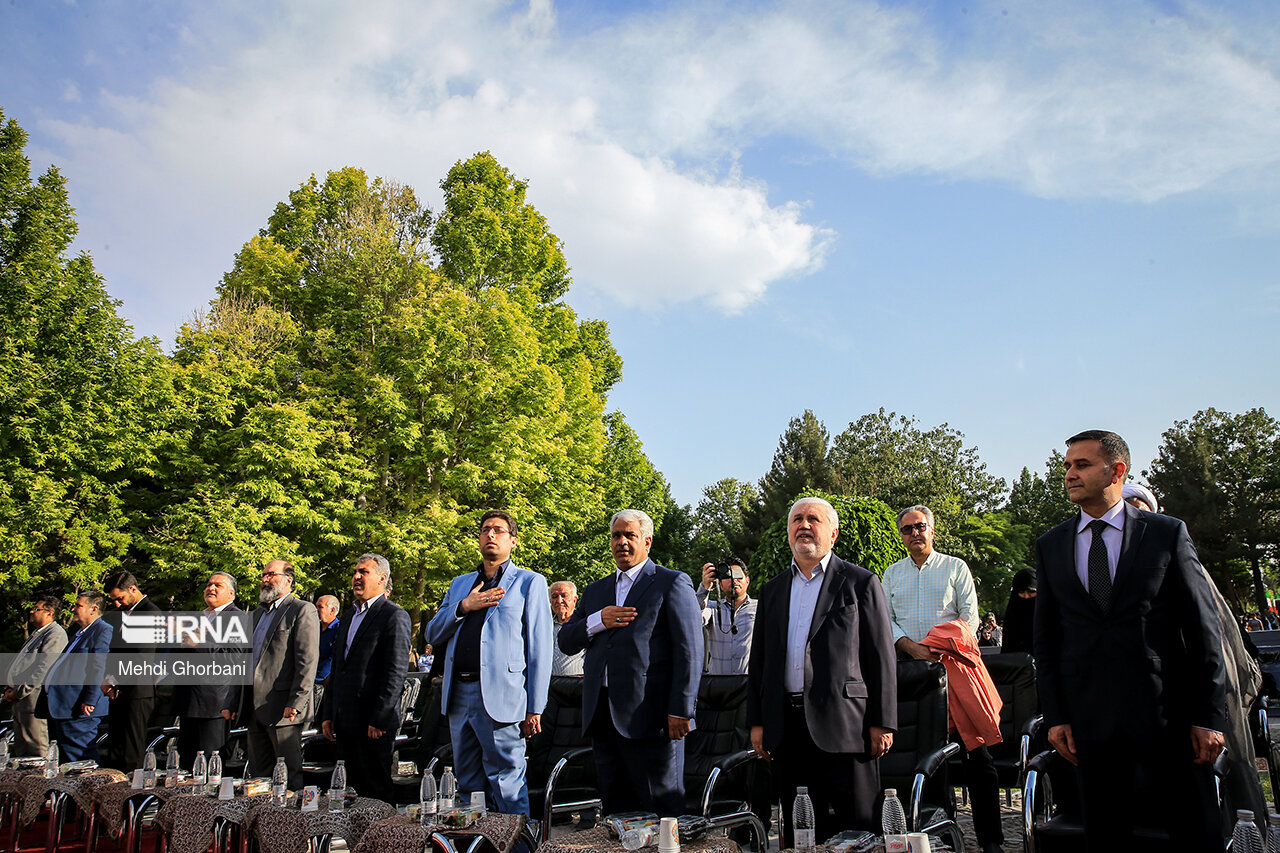
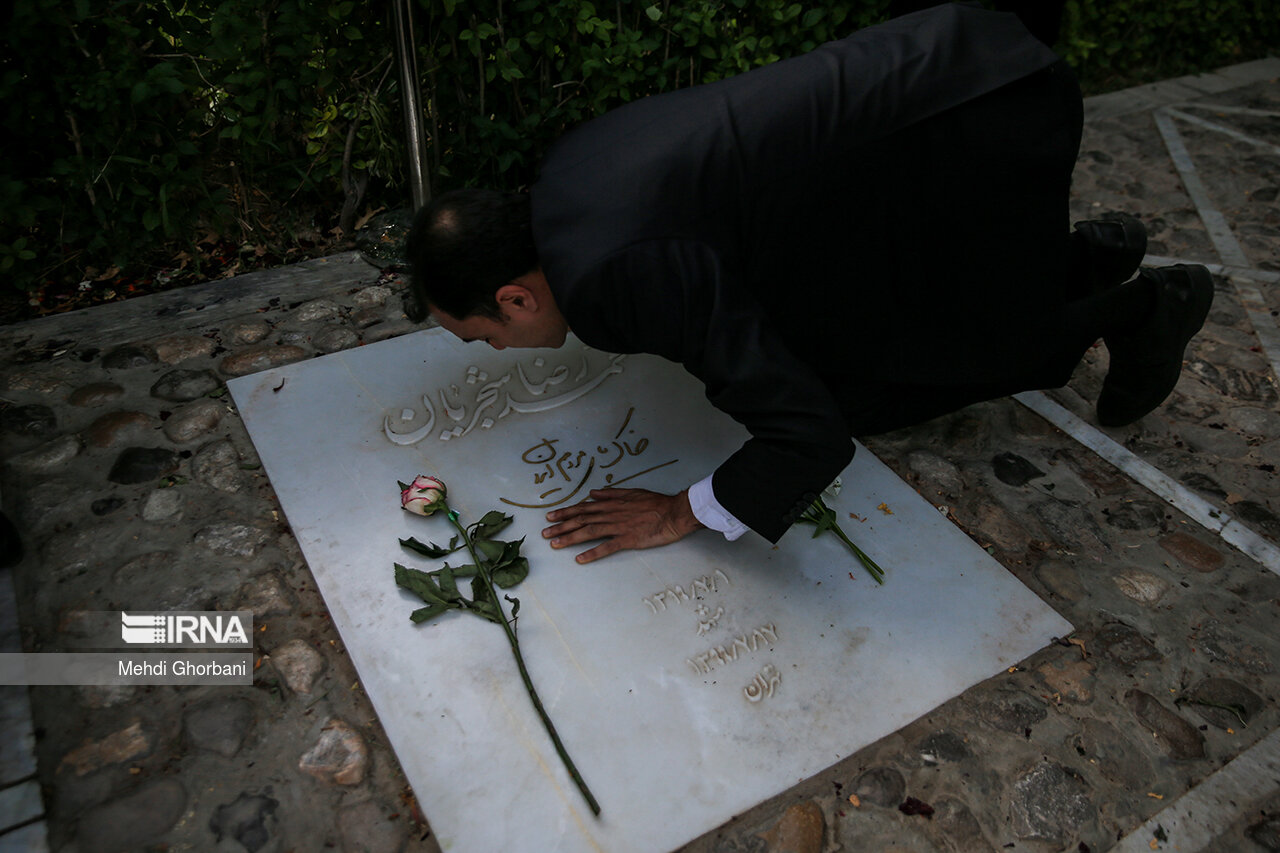
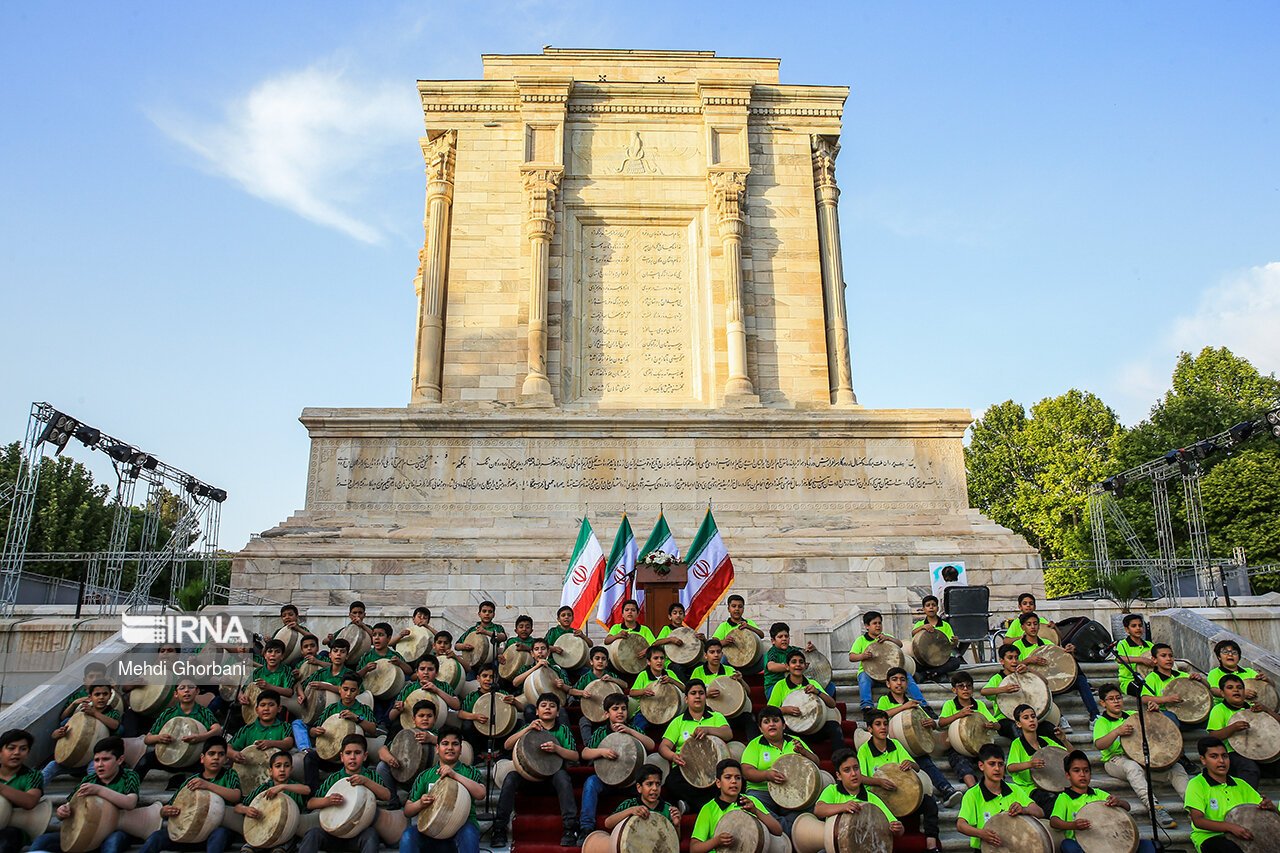
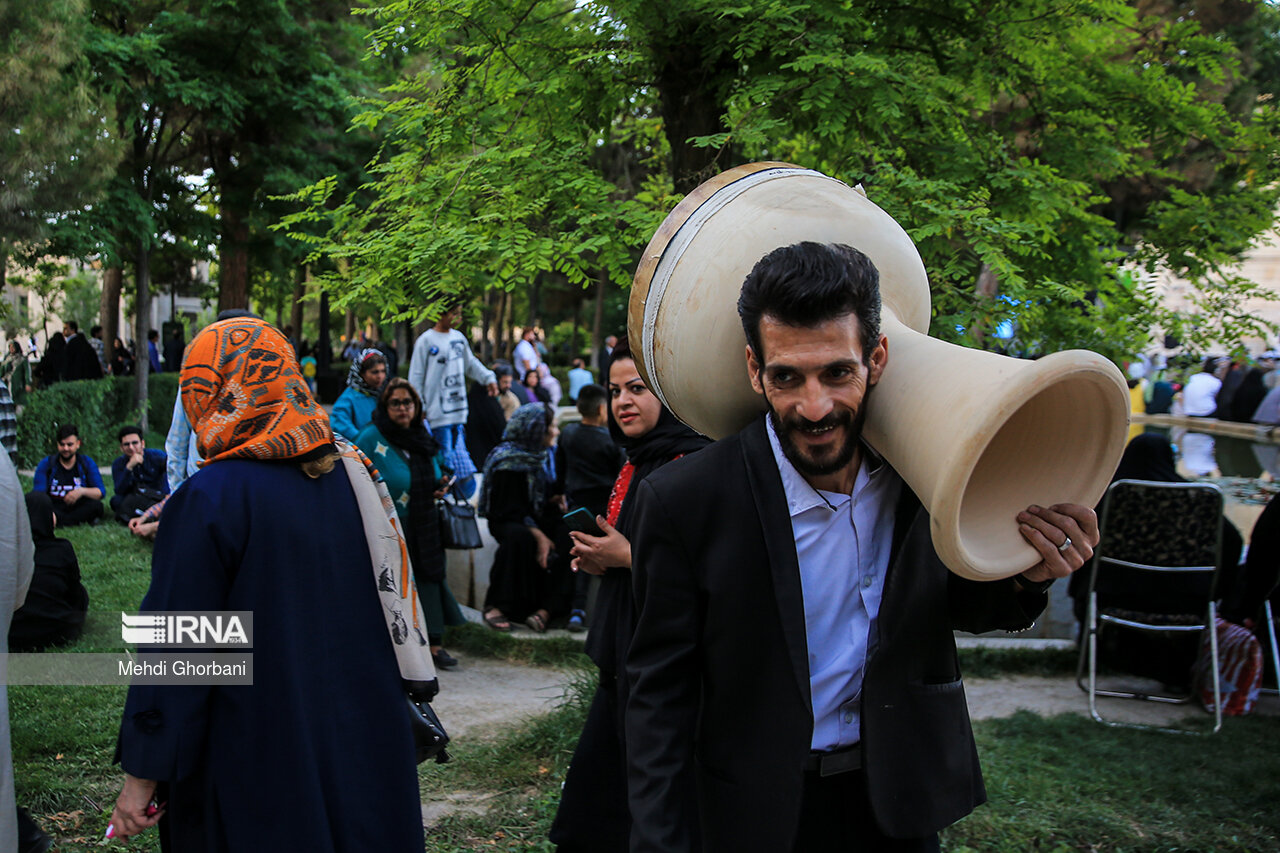
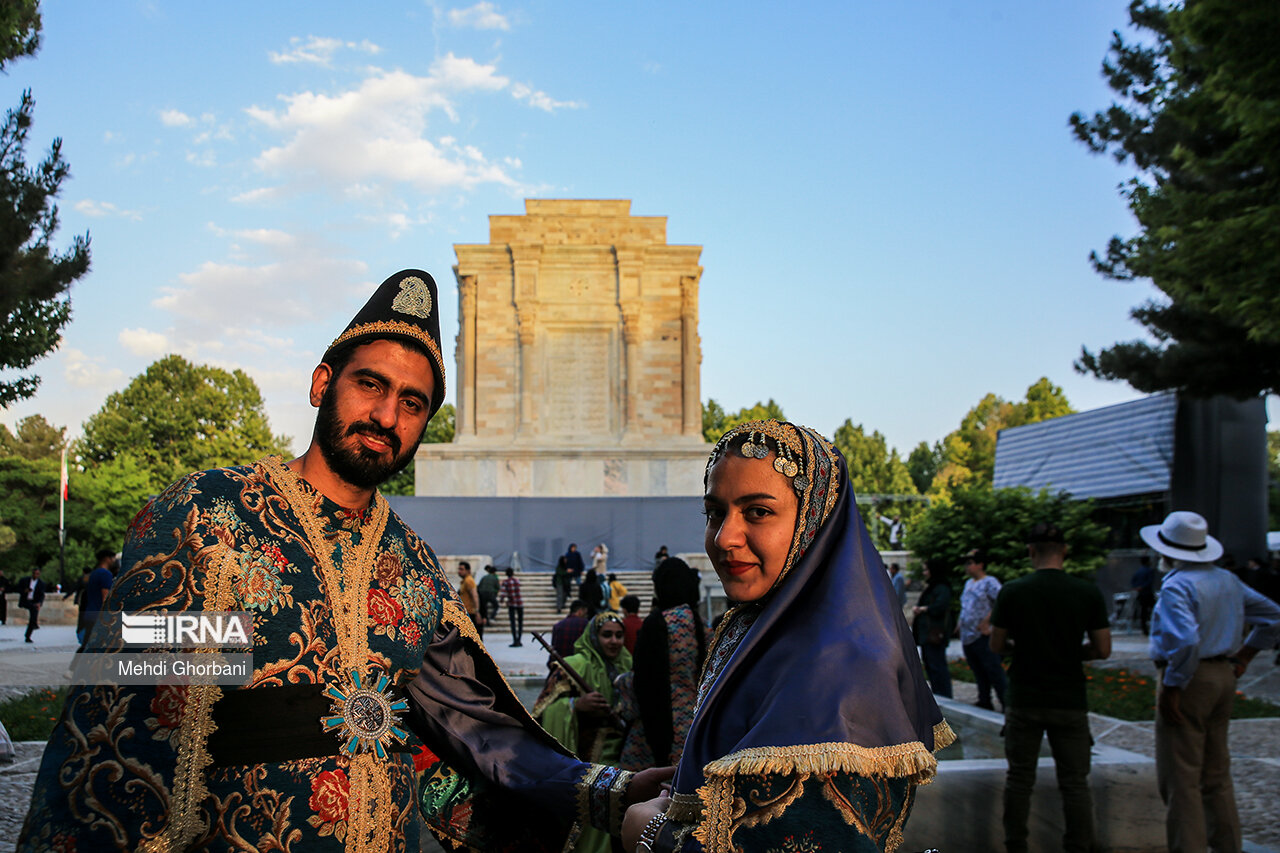
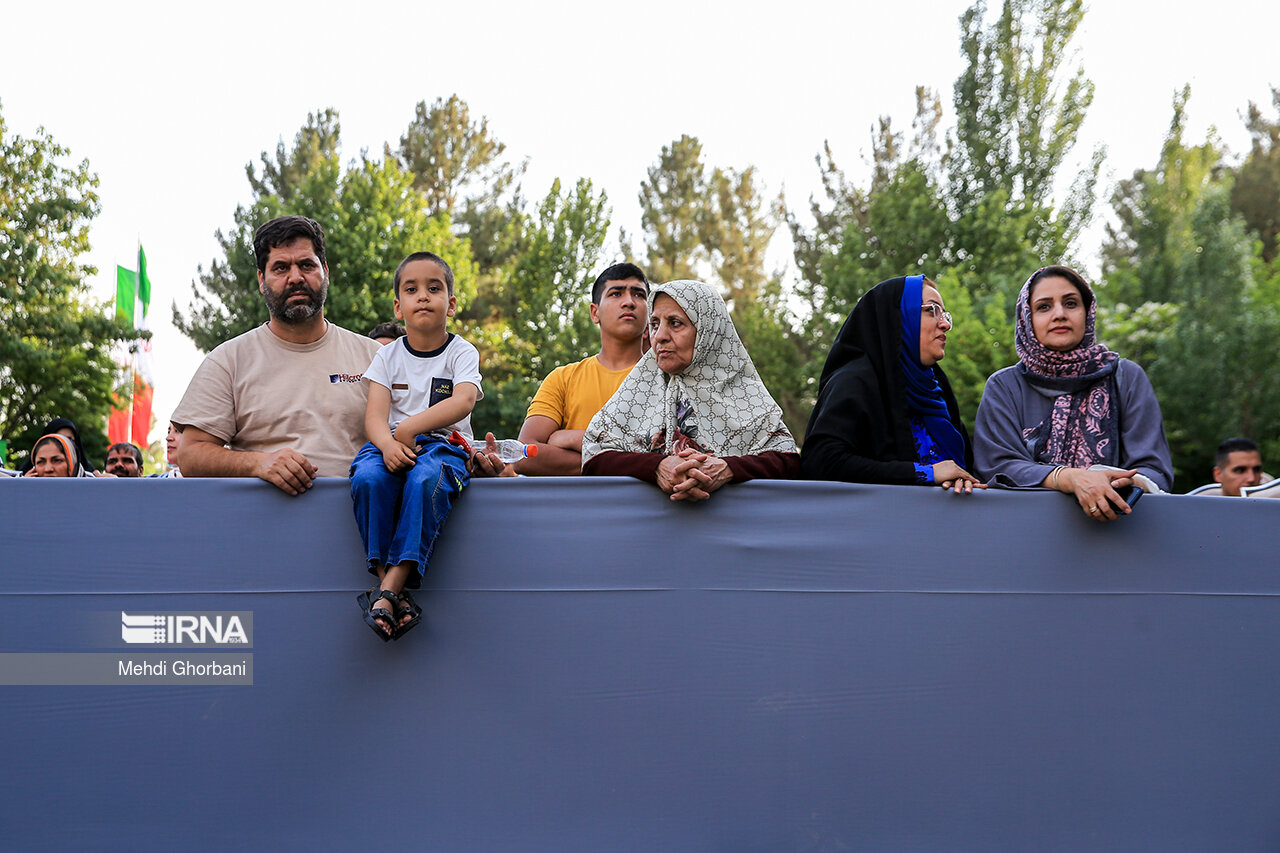
Sunday, May 14, was National Persian Language Day in Iran, and no one is believed to have contributed more to the language than Ferdowsi, whose Book of Kings is written in verse using exclusively Persian words.
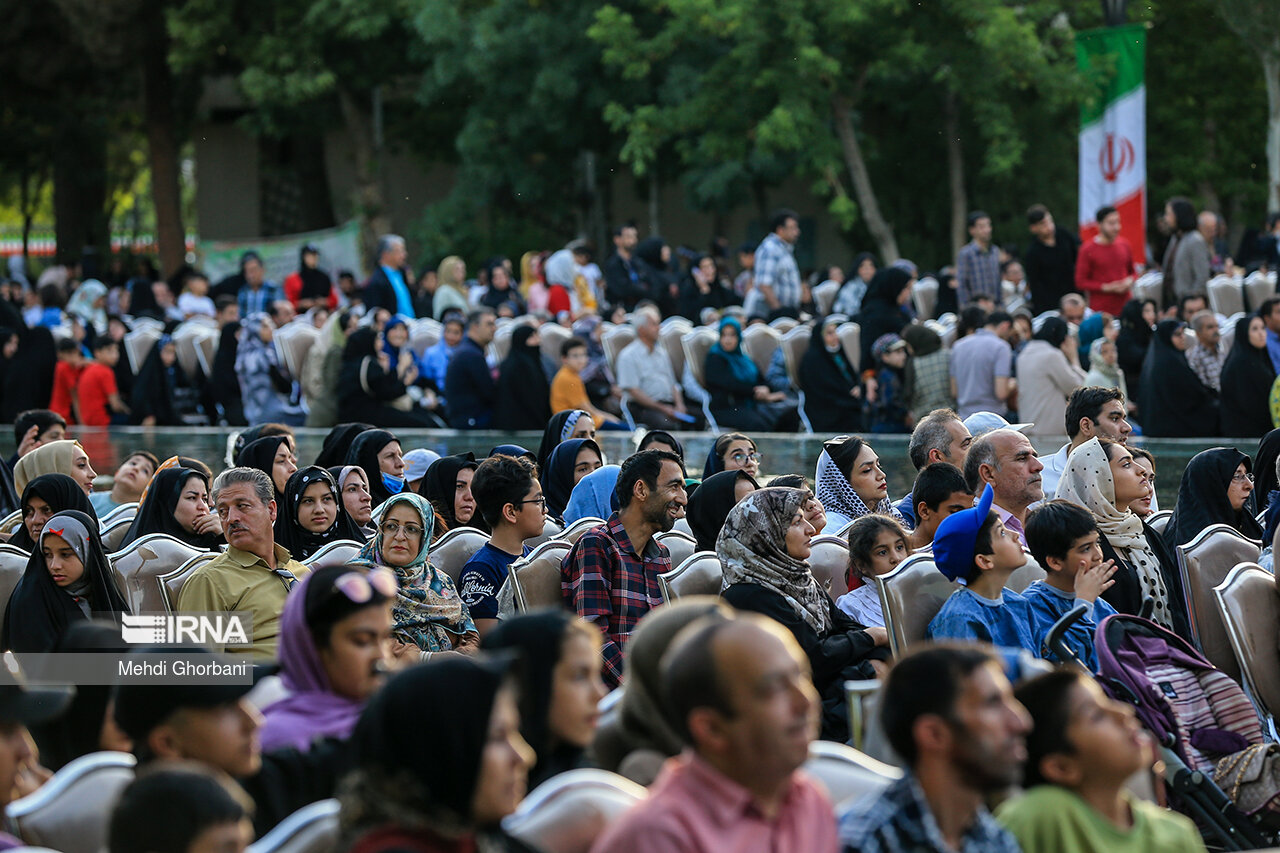
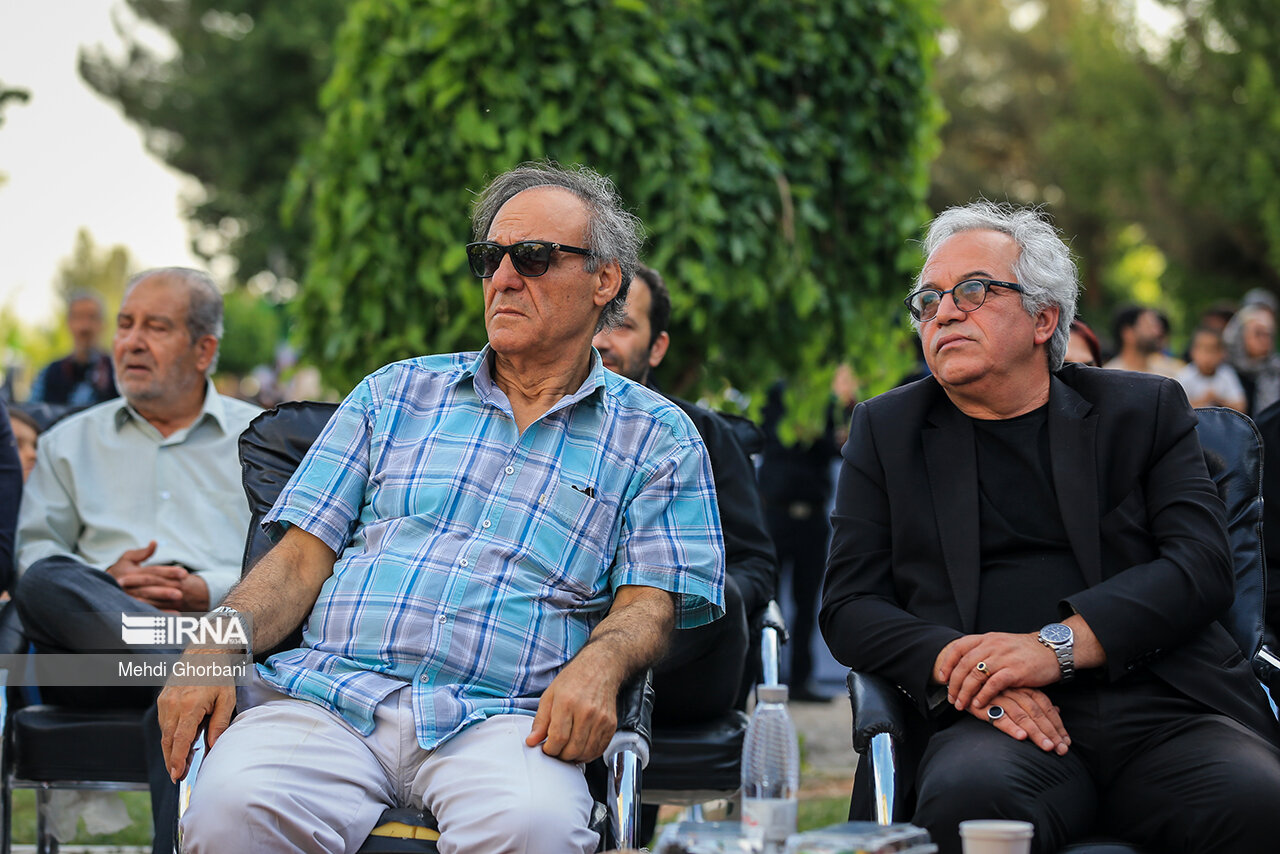
Here is a selection of images showing enthusiasts and officials during the event at his tomb on National Persian Language Day.






© All Content by IFP News ( Iran Front Page ) is licensed under a Creative Commons Attribution 4.0 International License.
