Wednesday, January 14, 2026
Home Blog Page 1431

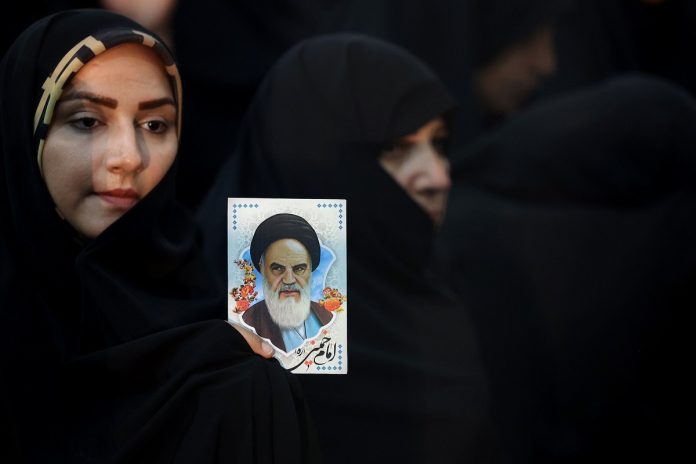
Iranians mark 34th anniversary of Imam Khomeini’s departure

Imam Khomeini

On Sunday morning, masses of people from all walks of life gathered at Imam Khomeini’s Mausoleum south of Tehran, along with the country’s top officials and military men as well as ambassadors and dignitaries of other countries.

Imam Khomeini’s successor, Leader of the Islamic Revolution Ayatollah Seyyed Ali Khamenei, led the large mourning procession at the venue.

Similar mourning ceremonies were also held a large gathering halls in many cities countrywide.

The Imam Khomeini-led Islamic Revolution put an end to centuries of autocratic rule in Iran, replacing it with a one-of-a-kind democratic system of governance based on Islam.

Imam Khomeini passed away in 1989 at the age of 87, almost a decade after the victory of the Islamic Revolution.

Huge rallies held against Israeli PM’s “judicial coup” for 22nd week

Israel Protest

The protests, now in their 22nd week, continued on Saturday despite Netanyahu’s announcement in March that the contentious legal proposals were being put on hold.

In the central city of Tel Aviv, some 100,000 people waved Israeli flags, lit torches and beat drums, according to Israeli media.

“We will keep demonstrating to show them that even if they have paused in the reform plan, we will stay mobilised – they will not be able to pass laws on the sly,” said Ilit Fayn, a 55-year-old dentist.

Netanyahu’s government, a coalition between his Likud party and extreme-right as well as ultra-Orthodox Jewish allies, argues the proposed changes are needed to rebalance powers between legislators and the judiciary.

Critics say it will grant the government unrestrained power and upend the country’s system of checks and balances.

The plan would weaken the judiciary and limit judicial oversight on laws and government decisions, which critics say directly threatens civil rights as well as the rights of minorities and marginalised groups.

Protests have continued even though the government and opposition are in talks to find a compromise on the plan.

“It’s important for us to eliminate the possibility of Israel becoming a dictatorship,” Arnon Oshri, a 66-year-old farmer, told the AFP news agency.

“This corrupt government is full of outlaws who are degrading our country to the level of a third-world country,” he continued, adding, “It took 2,000 years for the Jewish people to have a state and we cannot lose it because of a bunch of fanatics.”

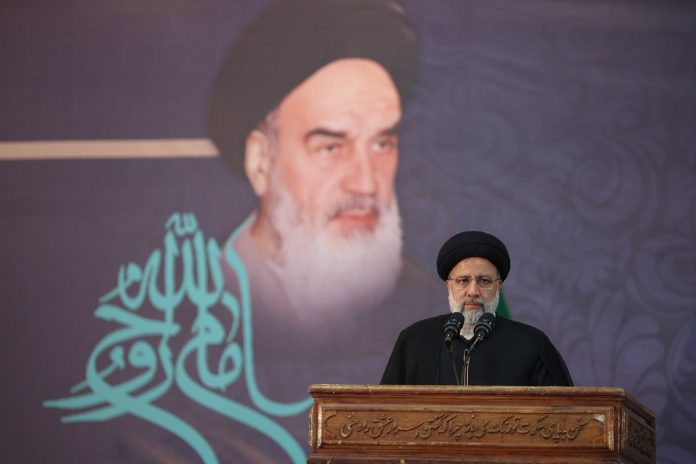
Raisi: Imam Khomeini’s Revolution changed all political equations in world

Ebrahim Raisi

Raisi made the remarks on Saturday evening during a speech at the Mausoleum of Imam Khomeini, on the eve of the anniversary of the departure of the influential politico-religious leader.

“The Imam’s Revolution disrupted all political equations in the world and formed new ones,” said Raisi.

He described the Islamic Revolution as one of the major factors behind the formation of a new world order today.

“Today, we see that the elements of American strength and unilateralism are declining, and new powers such as regional organizations, especially in Asia, are emerging,” the president added.

Raisi also highlighted the Islamic Republic’s role in the formation of a regional resistance front against Israeli occupation.

“Today, we clearly see that the situation of the Zionist regime, as the unholy child of America in the region, has never been as bad as it is today in the past 70 years since its establishment,” he added.

Today, Raisi added, all powerful countries acknowledge Iran’s regional might.

“Our power in the region is inevitable and undeniable, and no equation can be formed except with the involvement of Islamic Iran,” he said.

Live Update: Russia’s “Special Operation” in Ukraine; Day 466

Russia Ukraine War

Several drones tried to attack Crimea: Local leader

Five drones were shot down overnight over Russia’s Crimea, and four others were intercepted by means of electronic warfare and forced to land, the region’s leader Sergey Aksyonov has stated.

One of the destroyed UAVs crashed in the city of Dzhankoy in the north of the peninsula, Aksyonov said. Windows were shattered in three homes and several cars as a result, he added.

Another unexploded unmanned aircraft was discovered on the territory of a private house, according to the Crimean leader. Some 50 people had to be evacuated from the area before the drone was deactivated, he wrote.

“There were no casualties or injuries as a result of the overnight attack. I ask everyone to remain calm and trust only reliable sources of information,” Aksyonov said.

A week ago, six UAVs were intercepted using electronic warfare, or shot down above the peninsula. In early May, at least ten drones targeted Sevastopol, but the assault was repelled by Russian forces.


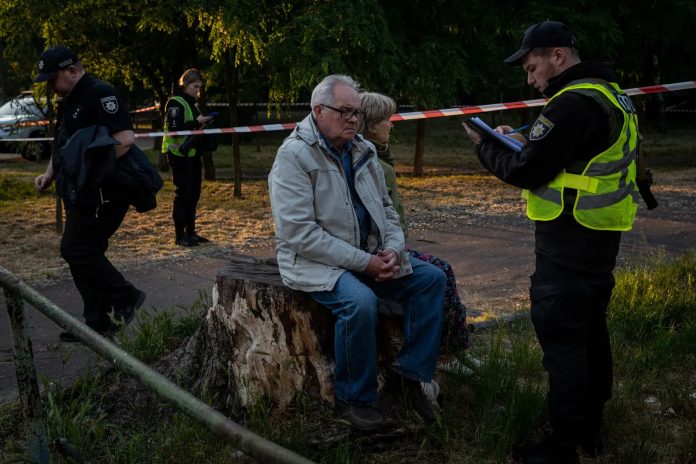
Ukrainian official: At least 20 people, including children, wounded in Russian attack near Dnipro

A Russian attack left at least 20 people wounded in Ukraine’s Dnipropetrovsk region Saturday, said Serhii Lysak, the head of the region’s military administration.

Five children are among those injured, Lysak added.

Lysak stated the explosion rocked Pidhorodne — a riverfront town outside Dnipro, the region’s administrative center and one of the largest cities in Ukraine. The blast hit a two-story residential building, trapping people under the rubble, according to the regional leader.

Ukrainian President Volodymyr Zelensky also blamed Russian forces for hitting the buildings, saying via Telegram that people were still buried in the wreckage.

Ukrainian State Emergency Services announced two buildings caught fire after they were hit, but one of the blazes was already extinguished


Wagner chief again criticizes Russian military and says his fighters may go to Belgorod

The head of the Wagner private military company, Yevgeny Prigozhin, claimed in a Telegram post Saturday that unidentified Kremlin factions “are destroying (the) Russian state” and trying to sow discord between him and Chechen leadership and its fighters.

Prigozhin said a conflict with Chechen leader Ramzan Kadyrov arose — but has since been settled — because of the Wagner chief’s criticism toward Russian Defense Minister Sergei Shoigu and Chief of the General Staff Valery Gerasimov.

Prigozhin claimed that he criticizes the defense minister and the chief of the general staff because “they don’t do their job correctly.”

Prigozhin repeatedly berated Russian military leadership during the grinding battle in the eastern city of Bakhmut, accusing top brass of not providing enough ammunition.

“They didn’t supply us with shells, and this is the reason why so many of my people got killed,” he stated Saturday.

But Prigozhin said he never talked negatively about the Chechen leader or his “Akhmat” detachment. He also added he is not interested in “stirring up ethnic conflicts.”

Prigozhin also commented on developments in Belgorod, the region that borders Ukraine and has seen recent shelling and cross-border incursions, which he called “a clear attempt to capture that area.”

He criticized the Russian Defense Ministry over the handling of the incursions, which Moscow blames on Ukraine. Ukrainian officials have insisted that the groups going across the border are anti-Putin Russian nationals acting independently.

“The Ministry of Defense is not in a state to do anything at all as it de-facto doesn’t exist — it is in chaos,” Prigozhin stressed.

“Dangerous games have become commonplace in the Kremlin towers,” the Wagner chief continued, referring to unidentified Kremlin factions.

“They have been playing games for a while now not understanding what they are doing. They are simply destroying the Russian state today,” he added.

“If the Ministry of Defense doesn’t stop what is happening in the Belgorod region soon enough, don’t stop that chaos that is happening around capturing of Russian Federation territory, then we (Wagner units) will certainly come to the Belgorod region and we will protect our people,” Prigozhin said, adding, “we won’t wait on the invitation.”


Russia continues to suffer “significant” losses near Bakhmut: Ukraine

Russia continues to suffer “significant losses” during fighting around Bakhmut in eastern Ukraine, the Commander of Ukraine’s Ground Forces Oleksandr Syrskyi said Saturday after visiting troops on the front line.

“The enemy continues to suffer significant losses in the Bakhmut direction,” Syrskyi said on the messaging app Telegram.

“Defense Forces (of Ukraine) continue to fight. We will win,” he added.

Syrskyi’s comments came after Yevgeny Prigozhin, the leader of the Russian private military company Wagner, said that 99% of his troops had left Bakhmut after handing over their positions to soldiers from the Russian military.

Bakhmut has been the site of one of the bloodiest battles between Russian and Ukrainian forces since the Kremlin launched its invasion last year. Prigozhin claimed victory and control of the city last month, though Ukraine says it continues to have a foothold on the southwestern edge of the city.

Reports suggest that front lines in and around the city have been largely static. In early May, while Wagner forces were pushing westward out from the center of Bakhmut, Ukrainian forces had been making limited territorial gains on higher ground to the northwest and southwest of the city.

In its daily operational update, Ukraine’s Armed Forces claimed on Saturday that Russia’s attempted offensive actions near Ivanivske, a small town around 5 miles west of Bakhmut, were unsuccessful.

Kyiv announced that Russian forces had carried out air strikes on nearby Bila Hora and Chasiv Yar, as well as a missile strike on the town of Druzhkivka, in the same part of the Donetsk region.


Growing number of attacks bring the war to Russian territory

Russian officials have reported deadly attacks in at least four locations in the Belgorod region and Ukrainian-aligned Russian units are ramping up their incursions, bringing the war to Russian territory.

At least seven people have been killed by shelling in Russian border regions since Friday, according to Belgorod’s regional Gov. Vyacheslav Gladkov.

Two men and a woman were killed in a barrage of 18 rockets fired on the village of Sobolevka, Gladkov said in a series of posts on his Telegram channel. A gas pipeline and a power line were also damaged in the strike.

Sobolevka, which is located in the Valuisky city district, is the easternmost location to have been struck over the past two weeks. A rail line runs through the village and enters Ukraine in Russian-occupied territory south of the attack, suggesting it may have been targeting Russia’s supply lines.

To the northwest along Russia’s border with Ukraine, two women were killed in the village of Maslova Pristan when their car was hit by fire, Gladkov said. Two other women were killed in separate shellings on nearby villages.

Two units responsible for recent assaults on the border regions – Freedom for Russia Legion and the Russian Volunteer Corps – are made up of Russian soldiers opposed to President Vladimir Putin. Though not officially part of the Ukrainian Armed Forces, they effectively fall under the command of Ukraine’s security forces.

While the cross-border attacks have a military impact, forcing Russia to consider redeploying resources to protect what have been shown to be weak borders, they also appear designed to have an impact on Russian morale.

Legion spokesperson Alexei Baranovksiy appeared on Ukrainian television Saturday and was asked about the aims of the incursions.

It was not about trying to “die heroically,” he stated.

“This is a task to distract the Russian army from other directions; it is a task to gain combat experience, to show Russia that resistance (against Putin) is possible, and it is necessary to join it,” Baranovskiy added.


Kremlin says France can hardly be a ‘moderator’ in Ukraine conflict

France can hardly be a “moderator” in the Ukrainian conflict due to its active participation in it, Kremlin Spokesman Dmitry Peskov said.

Peskov told Russian state television reporter Pavel Zarubin that, at the same time, President Vladimir Putin is open to any contacts in order to achieve Russia’s goals.


Kiev dismisses Indonesia’s ‘strange’ Ukraine peace plan

Ukraine’s defense minister has rejected a peace plan proposed by his Indonesian counterpart to end the war between Kiev and Moscow.

Ukrainian Defense Minister Oleksii Reznikov, who was attending the two-day Shangri-La Dialogue security summit in Singapore, dismissed the proposal suggested by Indonesian Defense Minister Prabowo Subianto, describing the peace plan as a “strange” and “Russian plan”.

“It sounds like a Russian plan, not an Indonesian plan,” Reznikov stated, adding, “We don’t need this mediator coming to us (with) this strange plan.”

The Indonesian defense minister had suggested an “immediate cessation of hostilities,” a ceasefire “at present positions,” and demilitarized zones that would be guaranteed by peace observers from the United Nations peacekeeping forces.

The former army ex-special forces general also proposed holding a “referendum in the disputed areas” under the auspices of the UN.

Indonesian President Joko Widodo traveled to Kiev and Moscow and met the countries’ leaders last year, while his country chaired the G20 bloc of major world economies.

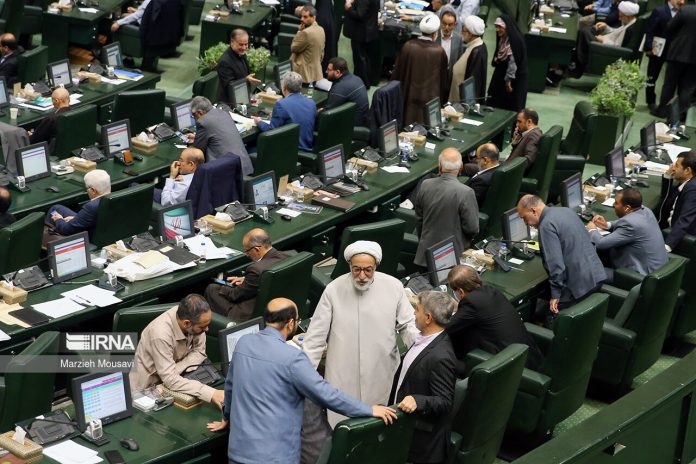
Iranian MP: Egyptian, Jordanian parliamentary groups invited to visit Tehran

Iranian Parliament

Abbas Golrou, head of the Foreign Relations Committee of the Parliament’s National Security and Foreign Policy Commission, said although Iran-Egypt ties are officially at the level of the interests sections for the moment, both sides have already introduced diplomatic representatives at the ambassador level, and they have direct relations.

In the Committee, he said, “we tried to pursue parliamentary consultations with countries with which diplomatic relations are at a lower level. In this regard, I had a meeting last week with the envoys of Egypt and Jordan and invited the parliamentary groups of these two countries to visit Tehran, and we hope that these visits will take place as soon as possible.”

In March, Iran and Saudi Arabia announced a China-brokered agreement for the reconciliation and resumption of diplomatic ties, following a 7-year-long rupture.

Interactions between Iran and the Persian Gulf neighbors have since witnessed a significant boost.

Iran has been pursuing similar agreements with Bahrain and Egypt, too.

Last week, Leader of the Islamic Revolution Ayatollah Seyyed Ali Khamenei said in a meeting with Oman’s visiting Sultan that he would welcome the restoration of full diplomatic ties with Egypt, raising the prospect of Cairo and Tehran normalizing relations after decades of strain.

Iran’s Central Bank governor meets IMF chief in Washington

International Monetary Fund (IMF)

In the meeting on Friday, Mohammad Reza Farzin said Tehran seeks to increase in its cooperation with the IMF while observing the national interests, especially under the tough American sanctions.

The CBI chief criticized the rejection of Iran’s request for a loan at height of the global battle against the coronavirus pandemic under pressure from the US.

Iran, however, managed to contain the deadly virus through interactions with foreign parties and development of its own vaccines at home, he added.

Farzin pointed to the Iranian administration’s agenda for policy reforms with the goal of achieving economic stability, despite the US sanctions, adding that the CBI will take great steps toward reducing the rising inflation rate by 30 percent in the current Persian calendar year, which will end on March 20, 2024.

For her part, the IMF chief thanked Iran for its efforts in supporting the Fund’s member states.

The meeting, she added, means a resumption of the CBI’s interactions with the IMF and could help present a positive image of the Iranian economy.

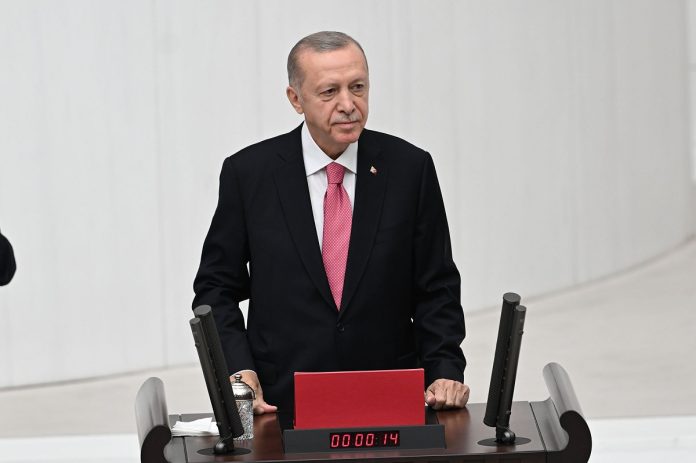
Erdogan sworn in as Turkey’s president after historic win

Recep Tayyip Erdogan

“I, as president, swear upon my honour and integrity before the great Turkish nation and history to safeguard the existence and independence of the state … to abide by the constitution, the rule of law, democracy, the principles and reforms of Ataturk, and the principles of the secular republic,” Erdogan said in a ceremony at the parliament in Ankara, which was broadcast live on television on Saturday.

The 69-year-old leader will later in the day name his cabinet, which will be tasked with handling an economic crisis that has witnessed runaway inflation and the collapse of the lira.

Turkey’s longest-serving leader faces considerable diplomatic challenges amid tensions with the West.

Saturday’s inauguration in parliament will be followed by a lavish ceremony at the presidential palace in the capital Ankara attended by dozens of world leaders.

He won the May 28 run-off against a powerful opposition coalition, and despite an economic crisis and severe criticism following a devastating February earthquake that killed more than 50,000 people.

Erdogan won 52.2 percent of the vote while his rival Kemal Kilicdaroglu 47.8 percent, official results show.

Addressing the country’s economic troubles will be Erdogan’s priority with inflation running at 43.70 percent, partly due to his unorthodox policy of cutting interest rates to stimulate growth.

Turkey’s new members of parliament started being sworn in on Friday in their first session after the May 14 election, also attended by Erdogan.

His alliance holds a majority in the 600-seat parliament.

Erdogan’s victory came against a unified opposition coalition led by Kilicdaroglu, whose future as leader of the CHP party remains in doubt following the defeat.

Belgium thanks Iran for release of European nationals

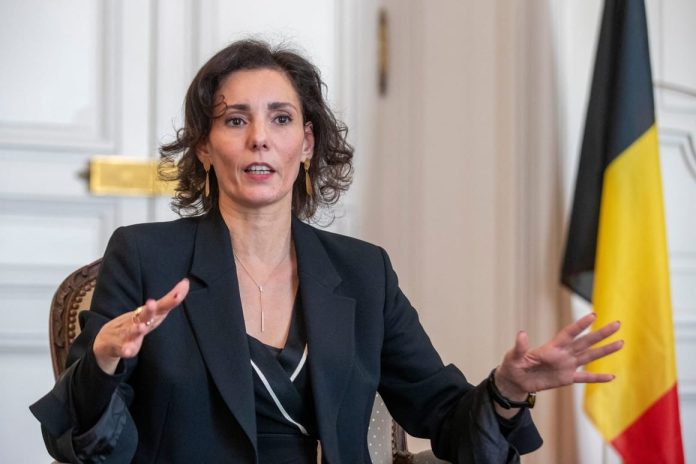
Belgian foreign minister Hadja Lahbib

Hadja Lahbib, in a phone conversation with her Iranian counterpart Hossein Amirabdollahian, recalled Iran’s humanitarian move and expressed hope that a new horizon will open in ties between the two countries in the wake of the recent development.

Lahbib highlighted the position of her country in the European Union, and said Belgium is ready to help facilitate closer ties between the Islamic Republic of Iran and Europe.

Iran’s top human rights official confirmed the release of two Iranian-Austrian nationals and a Danish citizen, who were serving prison terms in Iran for security-related crimes, on “humanitarian grounds.”

“Two imprisoned Iranian citizens, namely Massoud Mosaheb and Kamran Qaderi, and a Danish prisoner were released today on humanitarian grounds,” read a tweet on Friday evening by Kazem Gharibabadi, the vice-president of the Judiciary for International Affairs and the Secretary-General of Iran’s High Council for Human Rights.

The news was earlier announced by Vienna and Copenhagen, who thanked Oman and Belgium for their helping in securing their release.

For his part, Iranian Foreign Minister Hossein Amirabdollahian expressed satisfaction with the results of the joint efforts that led to the release of the prisoners of the two sides.

He expressed hope that the recent development will have a positive impact on efforts to open a new page in the relations between the two sides as well as in ties between Iran and Europe.

Amirabdollahian added that considering the role of Belgium in the European Union, Iran can expect that goal-oriented and effective dialog will be placed on the agenda of the Islamic Republic of Iran and the European sides with mutual respect.

3 Israeli soldiers killed in shooting incident on Egypt border: Army

Israeli Army

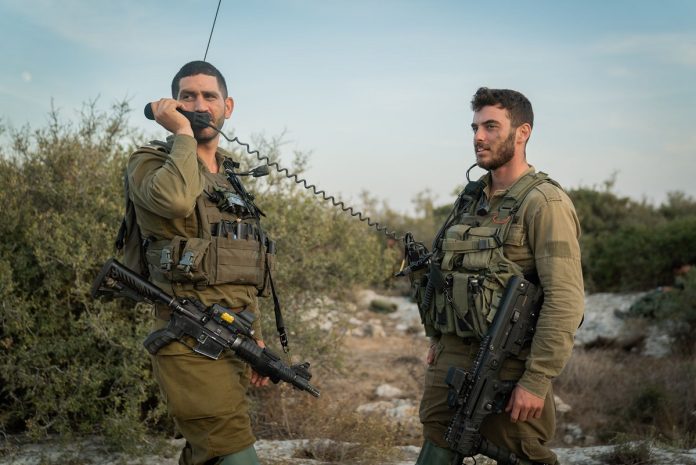
A shootout in southern Israel along the Egyptian border killed three Israeli soldiers Saturday, the army announced, in a rare instance of deadly violence along the frontier.

The military said an assailant was in “Israeli territory” when he opened fire at troops. The soldiers returned fire, killing the gunman.

The army added one of the killed soldiers was a woman.

The exchange of fire reportedly took place around the Nitzana border crossing between Israel and Egypt. The crossing is located about 40 kilometers (25 miles) southeast of the point where Israel’s border with Egypt and the Gaza Strip converge. It’s used to import goods from Egypt destined for Israel or the Hamas-ruled Gaza Strip.

Egypt was the first Arab country to sign a peace treaty with Israel in 1979.

Israel built a fence along the porous border a decade ago to halt the entry of African migrants and militants who are active in Egypt’s Sinai desert.

Donor countries provide $107mn out of $300mn needed for Palestinians

UN Gaza

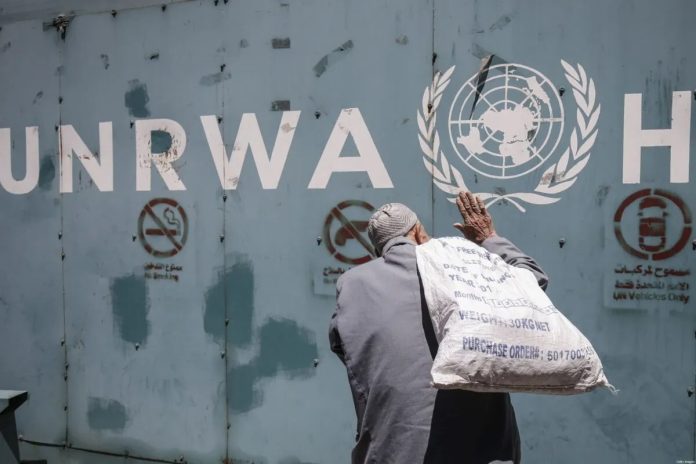
Philippe Lazzarini, commissioner general of the agency known as UNRWA, said in a statement he was grateful for the new pledges but they are below the funds needed to keep more than 700 schools and 140 clinics open from September through December.

“We will continue to work tirelessly with our partners, including host countries – the refugees’ top supporters – to raise the funds needed,” he added.

The pledging conference, which took place at the UN headquarters in New York on Friday, came as UN chief Antonio Guterres warned that the UNRWA “is on the verge of financial collapse”, pointing out that the agency is already running with a shortfall of nearly $75mn.

At the beginning of the year, the UNRWA appealed for $1.6bn for its programmes, operations and emergency responses across Syria, Lebanon, Jordan and the Israeli-occupied territories of the West Bank, East Jerusalem and the Gaza Strip. That includes nearly $850m for its core budget, which includes running schools and health clinics.

According to the UNRWA, donors on Friday announced $812.3mn in pledges, but just $107.2mn were new contributions. The countries pledging new funds were not announced.

Lazzarini told a press conference on Thursday that the UNRWA needs $150mn to keep all services running until the end of the year, and an additional $50m to start 2024 without liabilities. In addition, he said, the agency needs $75mn to keep the food pipeline in Gaza operating and about $30mn for its cash distribution programme in Syria and Lebanon.

The UNRWA was founded in the wake of the creation of the state of Israel in 1948 to provide hundreds of thousands of Palestinian refugees who were forcibly displaced from their homes with education, healthcare, social services and in some cases, jobs. Today, their numbers – with descendants – have grown to some 5.9 million people, most in the Gaza Strip and occupied West Bank, as well as neighbouring countries in the Middle East.

The UNRWA has faced a financial crisis for 10 years, but Lazzarini said the current crisis is “massive,” calling it “our main existential threat.”

“It is deepening, and our ability to muddle through is slowly but surely coming to an end,” he stated, adding, “The situation is even more critical now that some of our committed donors have indicated that they will substantially decrease their contribution to the agency.”

Guterres said in a speech read by his chief of staff at the start of the pledging conference that “when UNRWA’s future hangs in the balance, so do the lives of millions of Palestine refugees relying on essential services”.

Those services include education for more than half a million girls and boys, healthcare for about two million people, job opportunities for young people in Gaza and elsewhere, psycho-social support for hundreds of thousands of children, and a social safety net for nearly half a million of the poorest Palestinians, he added. More than 1.2 million Palestinians also receive humanitarian assistance.