Wednesday, December 24, 2025
Home Blog Page 1419

Russia predicts trade with China to hit record $200 billion

Mikhail Mishustin and Chinese Premier Li Qiang

Russia has been hit by unprecedented Western sanctions since it unleashed a devastating war against Ukraine and has been shut out of much of the global economy.

But China, which has declared “no limits” to its friendship with its northern neighbor, has thrown the Kremlin an economic lifeline, tempering the impact of its banishment from the global financial system.

Last year, bilateral trade jumped nearly 30% to a record $190 billion, mainly boosted by China buying Russian energy. This year, their trade continued to surge, up 41% in the first four months, according to Chinese customs figures.

“I believe that this year we will be able to achieve the goals set by the two countries’ leaders and bring the total trade to $200 billion,” Mishustin said during a speech at the China-Russia business forum in Shanghai on Tuesday, according to China’s state-run Global Times.

That will be one year ahead of the schedule set by Russian President Vladimir Putin and Chinese leader Xi Jinping in 2019.

Energy cooperation with China remains Russia’s “absolute priority,” Mishustin added.

Massive rallies held against Israeli PM’s plan to ‘loot’ public money

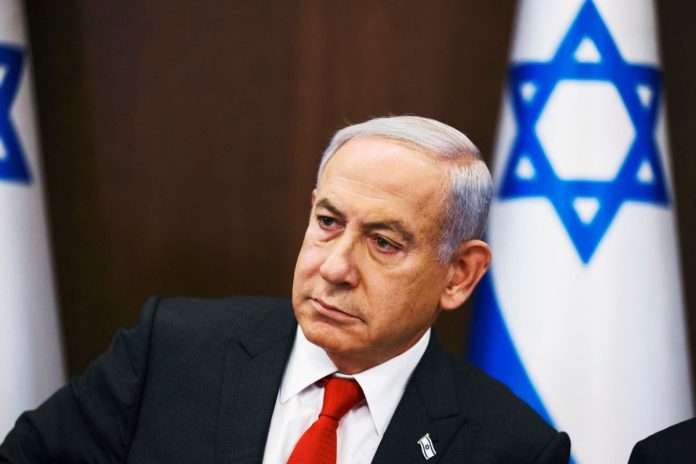
Benjamin Netanyahu

Thousands of Israeli settlers rally in the occupied holy city of al-Quds in protest at the Israeli prime minister’s plan to use public funds to buy the support of his extremist political allies.

The demonstration saw the participants rally towards the Knesset (the Israeli parliament).

The demonstrators lambasted the regime’s Prime Minister Benjamin Netanyahu for seeking to allocate huge amounts of money in the annual budget to ultra-Orthodox Israelis’ welfare.

The protesters amassed in front of the Knesset as the legislature was about to vote on the budget.

A day earlier, Netanyahu had announced that the regime would grant married ultra-Orthodox Israelis, who are engaged in religious study rather than work, a total of 250 million shekels ($67.5 million) in the annual budget.

The grant was part of a last-minute deal with one of the ultra-Orthodox parties in the regime’s coalition of hard-right and ultra-Orthodox political parties to ensure the party’s support for the budget.

Chanting slogans, beating drums, and blowing horns, the protesters said the prime minister was seeking to “loot” public money to curry favor with his coalition allies.

The demonstration was organized by the same group of activists, who have been protesting since January at the cabinet’s similarly controversial plan to “overhaul” the regime’s judicial system.

Under that scheme, Netanyahu seeks to give the regime’s extremist cabinet more say in the process of selecting the Supreme Court’s judges, while seeking to empower the politicians and the Knesset to override the court’s rulings.

Hundreds of thousands have been protesting the so-called “reforms” on a weekly basis since January when Netanyahu announced them.

Faced with overwhelming public pressure, including the biggest protests ever seen across the occupied territories as well as several strikes, Netanyahu announced a pause in the scheme on March 27 to supposedly enable talks on the reforms.

Iran-Saudi rapprochement to have positive effects on Palestine: Islamic Jihad leader

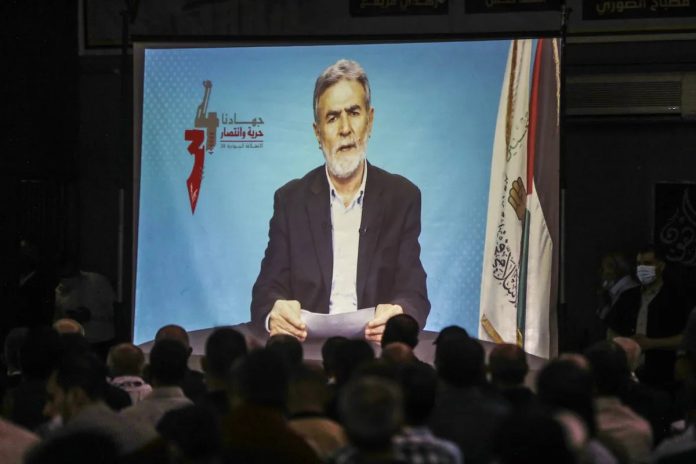
Ziyad al-Nakhalah

“The Tehran-Riyadh agreement has had a positive impression on the region and removed the existing tensions”, Nakhala said during an interview with the Arabic-language hayawashington news site on Tuesday, adding that the agreement will have “positive results” for the Palestinian cause as well.

After several days of intensive negotiations hosted by China, Iran and Saudi Arabia clinched a deal on March 10 to restore diplomatic relations and reopen embassies.

Diplomatic relations between Riyadh and Tehran were severed by Saudi Arabia in January 2016 after Iranian protesters, angered by the execution of prominent Shia cleric Sheikh Nimr Baqir al-Nimr by the Saudi government, stormed its embassy in Tehran.

He further denounced as “a big disappointment” the normalization of ties by some Arab states with Israel, calling on the Arabs to support Palestinians’ resistance.

Back in September 2020, Israel signed normalization agreements with the UAE and Bahrain during an official ceremony at the White House.

The normalization deals, which Sudan and Morocco later joined, have sparked widespread condemnations from the Palestinians as well as nations and human rights advocates across the globe, especially within the Muslim world.

Elsewhere in his remarks, Nakhala reacted to Israeli prime minister Benjamin Netanyahu’s threats of assassinating the resistance movement’s leaders, saying, Israel will be the target of attacks by resistance should Netanyahu dare “target” the leaders of the resistance movement in other arenas.

“We are also able to target their capital and other occupied cities,” he stated.

Nakhala further stressed that the martyrdom of resistance commanders has not weakened the military structure of the resistance movement, adding that their deputies assumed their responsibility immediately.

The Israeli regime launched a relentless campaign of airstrikes against Gaza on May 9, assassinating several resistance commanders.

In response, Palestinian resistance factions have launched retaliatory strikes toward Israeli cities and settlements.

After five days of fighting, the two sides agreed to an Egyptian-brokered ceasefire that took effect on Saturday night.

At least 33 Palestinians, including 13 civilians, were killed and 147 others wounded in the latest round of Israeli strikes on the Gaza Strip, according to Gaza’s health ministry.

The conflict marked the worst episode of fighting between Gaza’s resistance factions and the Israeli regime since a 10-day war in 2021.

‘Israeli claims on Iran nuclear work new, nonsense psy-war to shift attention away from its woes’

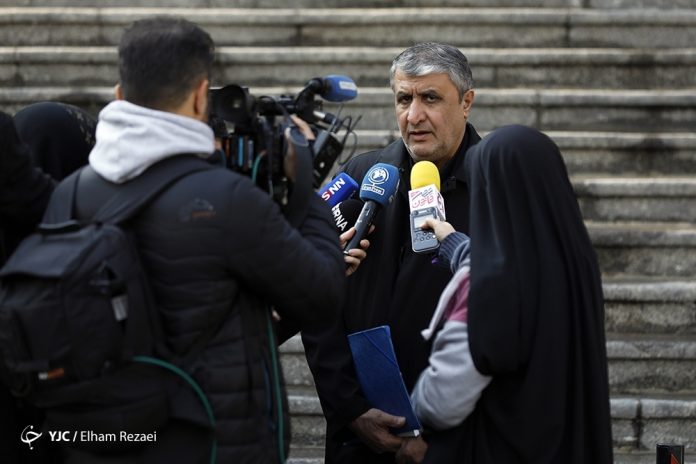
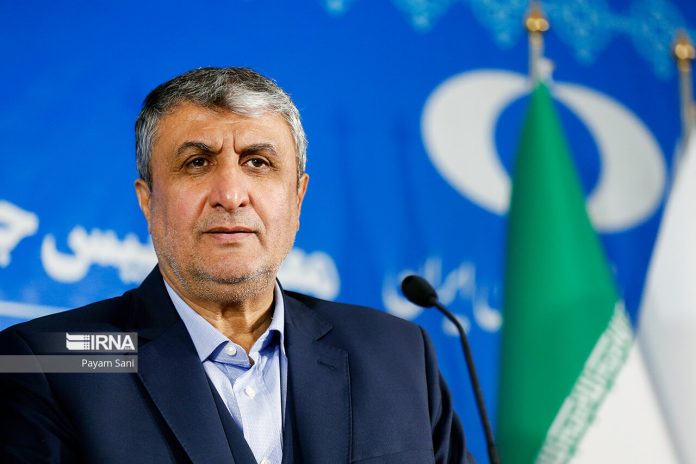
Mohammad Eslami

Speaking to reporters following a cabinet meeting on Wednesday, Mohammad Eslami, the head of the Atomic Energy Organization of Iran (AEOI), said, “The Zionist enemy has been talking nonsense for years.”

Whenever Tel Aviv finds itself at a difficult situation inside the occupied territories or in the broader region, it steps up such allegations and “psychological operations,” Eslami said.

Citing “experts and satellite imagery,” the Associated Press reported earlier this week that Iran was busy building a nuclear site near a peak of the Zagros Mountain range, western Iran.

In the wake of the report, Israel issued new threats of military action against Iran.

Eslami added that Iran’s nuclear work meets the regulations of the International Atomic Energy Agency (IAEA), and “whenever it seeks to engage in any activity, it coordinates with the agency.”

“In the past, the enemies tried to put maximum pressure on the country by creating hype.

In recent months, they have faced failure and now they have started to bring up news issues, which are the same old rejected cases of the past and have no credibility,” he added.

Iran, ASEAN stress efforts to bolster bilateral cooperation

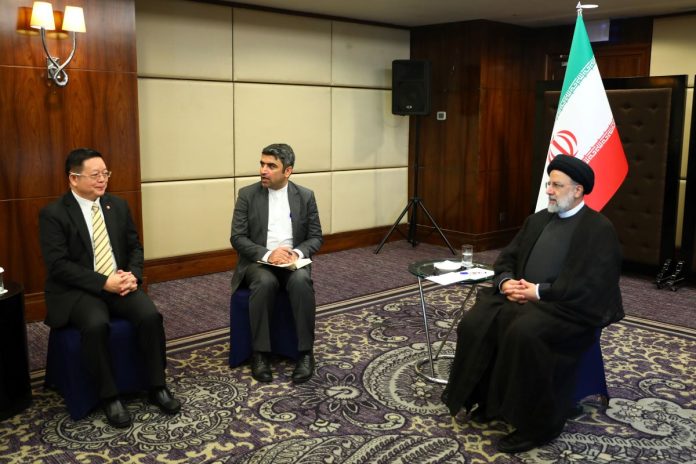
Raisi and Kao Kim Hourn

In a meeting with ASEAN Secretary-General Kao Kim Hourn in Jakarta on Wednesday, Raisi hailed the politico-economic association’s contribution to the member countries’ economic development.

He laid emphasis on his government’s priority of expanding ties with the politico-economic association and its member nations.

For his part, the ASEAN head stressed the importance of the role and status of Iran in the region and offered a report explaining the association’s plans for enhancement of ties with Tehran.

The two sides also exchanged views on issues of regional significance.

ASEAN is an intergovernmental organization of 10 Southeast Asian countries: Brunei, Cambodia, Indonesia, Laos, Malaysia, Myanmar, the Philippines, Singapore, Thailand, and Vietnam.

The bloc was established in 1967 with the goal of accelerating economic growth, social progress, and cultural development and to promote peace and security in Southeast Asia.

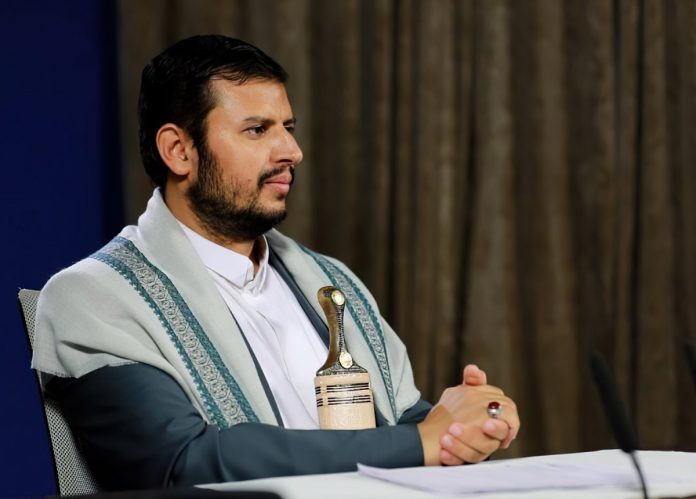
Houthi chief: Saudi Arabia can ensure peace for itself by stopping hostilities against Yemen

Abdul Malik al-Houthi

“The Saudi regime can only achieve peace, security, and stability through implementing peace for Yemeni people, and lifting the blockade on them,” al-Houthi said in a televised address on Tuesday.

“It is possible for the Saudi and Emirati regimes to stop their aggression against Yemen in a fair and correct manner,” he added.

Saudi Arabia started a brutal war of aggression against Yemen in March 2015, enlisting the assistance of some of its allies, including the United Arab Emirates.

The war, which has enjoyed generous arms, logistical, and political support from the United States and several other Western governments, has been seeking to restore power in Yemen to the country’s former Riyadh- and Washington-friendly government.

The former Yemeni government’s president Abd Rabbuh Mansur Hadi resigned from the presidency in late 2014 and later fled to Riyadh amid a political conflict with Ansarullah. The movement has been running Yemen’s affairs in the absence of a functioning administration.

The war has, meanwhile, killed tens of thousands of Yemenis and turned entire Yemen into the scene of the world’s worst humanitarian crisis.

In March 2022, the Saudi-led coalition announced that it would cease all hostilities within Yemen. The truce was extended twice in 2022, but not prolonged in October when it lapsed.

“Let everyone hear [this], we will continue to confront the aggression if targeting Yemen is continued,” the Houthi leader said.

“Our people’s suffering and the deprivation of their wealth cannot continue without response,” he added, noting, “No one can justify the continuation of the siege and occupation [of Yemen].”

Houthi also accused the United States of “obstructing real peace” and “fair entitlements for our dear people.”

He, however, noted that the US was, itself, “facing deep crises,” identifying it as “the most indebted country in the world.”

“International events indicate that the US is heading towards decline, and has begun to weaken economically,” the Houthi leader concluded.

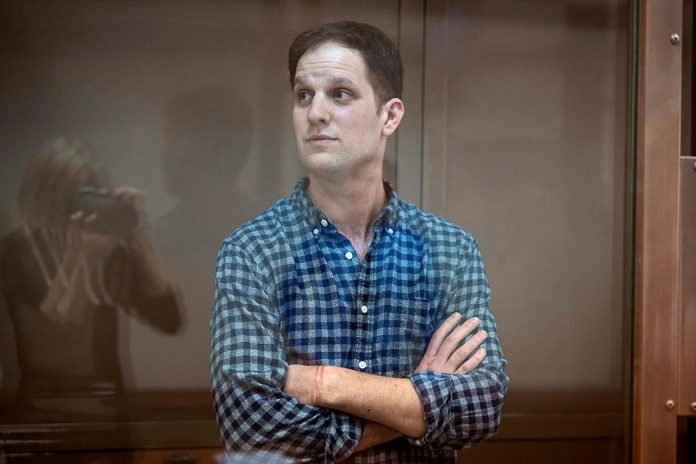
Russian court extends WSJ reporter’s detention by 3 months

Evan Gershkovich

“The court granted the investigator’s request to extend the measure of restraint in the form of detention until August 30,” the court said, according to the state media.

Gershkovich, who has been designated as wrongfully detained by the US State Department, appeared in court in April to ask that his pre-trial detention be under house arrest rather than in jail. That appeal was denied, and he is being held at Moscow’s notorious Lefortovo Prison.

The Wall Street Journal announced it was “deeply disappointed” with the court’s decision.

“While we expected there would be no change to Evan’s wrongful detention, we are deeply disappointed. The accusations are demonstrably false, and we continue to demand his immediate release,” it said in a statement Tuesday.

The White House is reiterating that Gershkovich “shouldn’t be detained at all”.

John Kirby of the US National Security Council told CNN’s Kate Bolduan he was learning the news of that extension at that moment, saying, “I don’t know if I have an official reaction by the White House on this except to say that he shouldn’t be detained at all.”

“Journalism is not a crime. We’ve said this before. He needs to be released immediately. That is still President Biden’s view. It’s still the administration’s view. And we’re still going to work very, very hard to see if we can get him home with his family where he belongs. He should not be detained, certainly not extended,” he stated.

The State Department called on Russia to immediately release him and the other detained American, Paul Whelan. Spokesperson Matthew Miller called the claims against Gershkovich baseless.

Kirby said the United States wants consular access to Gershkovich, which the Russians have denied two requests this month. He said these visits are important to talk to Gershkovich directly and see how he’s doing.

“It’s difficult to know exactly why they’re denying it. It could be just, you know, spitefulness over — you know, antipathy towards the United States, antipathy towards the free press, or there could be some sort of legal excuse that they’re trying to pin this on,” Kirby added.

Miller also acknowledged that Gershkovich’s parents were present in Moscow, but stressed the US did not help them travel to Russia, as the State Department is advising US citizens not to travel to the country.

“Personally, I can only imagine how difficult it must be to see your child detained overseas, especially to be detained wrongfully, and so I’m certainly not going to criticize any parent for wanting to see their child,” Miller continued.

The US embassy in Moscow has also said it was “deeply concerned” by the Russian court’s decision.

“We are deeply concerned by today’s Russian court decision to prolong the pre-trial detention of Wall Street Journal reporter Evan Gershkovich by an additional three months. This follows last week’s denial of the Embassy’s request for a consular visit to Evan Gershkovich, marking the second time Russian authorities have unjustifiably denied consular access in this case,” the embassy said in a statement.

“The United States strongly objects to Russia’s ongoing denial of consular access to Mr. Gershkovich. We reiterate that the claims against him are baseless and call for Mr. Gershkovich’s immediate release,” it added.

The Kremlin has so far not commented on Washington alleging Moscow of denying the embassy’s consular access to Gershkovich.

When asked by CNN about this topic during a regular briefing with journalists earlier on Tuesday, Kremlin spokesperson Dmitry Peskov stated, “No, we are not dealing with this issue.”

Report: UK special forces operated secretly in several countries, including Iraq, Yemen

UK special forces

An investigation by a research group, Action on Armed Violence, revealed that the UK’s elite military units carried out covert operations in Russia, Ukraine, Nigeria, Kenya, the Philippines, as well as Muslim countries of Iraq, Algeria, Libya, Tunisia, Oman, Somalia and Yemen, according to the Guardian.

They were most recently involved in Sudan after the outbreak of violence in the African country.

UK special forces units were also sent to Pakistan and Afghanistan, according to the report.

The authors of the investigative report said UK special forces carried out secret operations in France, Mali, Cyprus and Estonia, as well.

Particularly in Syria, UK special forces have had continuous military activity since 2012 in a joint effort with opposition forces aimed at toppling the government of President Bashar al-Assad.

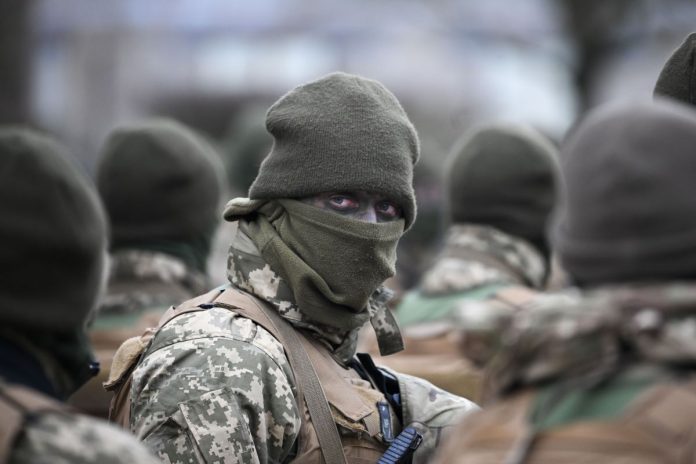
In Ukraine, the Pentagon documents leaked earlier this year showed that fifty members of UK special forces were in the former Soviet republic alongside Kiev forces fighting against Russia.

The exact mission of the UK special forces was not stated in the Pentagon’s leaked papers.

Britain’s operations in the past included extracting, evacuation and transporting UK nationals from conflict zones, hostage rescues, exfiltration, training courses and protection.

During his tenure, Britain’s former Prime Minister David Cameron had even reportedly granted a “carte blanche,” otherwise a license to kill, to the members of the elite Special Air Service (SAS) of the country.

High-risk operations across the globe — which are largely carried out by members of the SAS, Special Boat Service and Special Reconnaissance Regiment, among other secretive military units such as the 18 (UKSF) Signals Regiment and the Future Commando Force (FCF), are directly ordered by the prime minister or defense secretary and are kept highly secret.

Major military acts of war conducted by UK special forces must be approved by the British parliament; however, small-scale special forces operations can be carried out without MPs’ permission and are not subject to committee investigations.

In this regard, UK special forces were the subject of scrutiny after a public inquiry found that units had carried out more than 50 summary executions of alleged Taliban members in Afghanistan between 2010 and 2011.

Meantime, the UK policy, detailed in the Command Paper, Defense in a Competitive Age, mandates the military to increase its secret operations in other countries to protect Britain’s interests across the globe.

The doctrine requires a shift in focus for the future in order to counter Russia and China.

In related news, UK Secretary of State for Defense Ben Wallace warned last week about the growing threat of Russia and China, stating, “conflict is coming.”

Turkey disbands Mossad cell spying on people linked to Iran

Turkey Police

MIT officers, in coordination with the Istanbul Chief Public Prosecutor’s Office, led an investigation into the Israeli spying network for a year and a half, Turkish media reported on Tuesday.

Turkish authorities found out that the Mossad cell had targeted one company and 23 individuals having commerce relations with Iran.

The group of 15 operated a countrywide network and was led by Selçuk Küçükkaya, an operative trained in Europe, the MIT said in a statement.

Two of those arrested were Turkish nationals, it added.

Küçükkaya had met in person with Mossad executives in several European countries, where he received spy training and was taught on how to use the Israeli agency’s secret communications system.

Küçükkaya and his agents were arrested when he mailed a threatening package to one of his targets, who then filed a complaint with police.

The last time the MIT dismantled a Mossad cell in Turkey was in December when seven agents were arrested for spying on Palestinians.

Iran Nuclear chief: Demand on rise worldwide for Iranian-made heavy water

Mohammad Eslami

Mohammed Eslami, the head of the Atomic Energy Organization of Iran, said Tuesday that derivatives of heavy water greatly contribute to the country’s economy and bring about a significant change in the medical sector and production of medicines.

“Participation in international conferences and exhibitions shows that Iran is at the same level as the leading countries in the world in various sectors of the nuclear industry, including radiopharmaceuticals,” he said.

Eslami said Iran exported radiopharmaceuticals to nine countries prior to the coronavirus pandemic, and that the exports will return back on track now that the situation has returned to normal.

Last month, the AEOI’s spokesman, Behrouz Kamalvandi, said the US was in the past seeking to buy heavy water from Iran, whose products are among the world’s best.