Saturday, January 3, 2026
Home Blog Page 1410

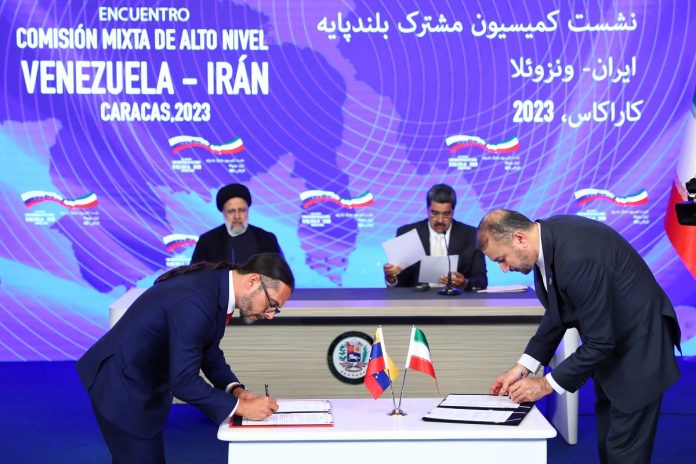
Iran, Venezuela ink 19 agreements for cooperation during President Raisi’s visit

Iran Venezuela

The agreements were inked by senior officials of Iran and Venezuela during a ceremony in Caracas on Monday, in the presence of Iranian and Venezuelan Presidents Ebrahim Raisi and Nicolas Maduro.

The documents cover bilateral cooperation in a variety of sectors, including communications and information technology, energy, insurance, maritime transport, higher education, agriculture, medicine, cultural exchanges, as well as the development of mineral cooperation.

At a joint presser with Maduro, President Raisi said the Iranian nation had proved its friendship with the Venezuelan people and showed that it is a “friend in need.”
He said shared interests, positions and enemies have rendered cooperation between Tehran and Caracas “deep and strategic.”

The Iranian president said the two countries were determined to boost relations in various fields. Iran and Venezuela, he added, seek to increase the value of their bilateral trade to $10 billion, in the first phase, and $20 billion in the second.

For his part, Maduro also emphasized Venezuela’s resolve to promote relations with Iran in all areas.

In another ceremony, Maduro awarded the Venezuelan National Medal of Honor to the Iranian president.

President Raisi arrived at Simon Bolivar International Airport in Caracas earlier on Monday, leading a high-ranking delegation, at the formal invitation of his Venezuelan counterpart.

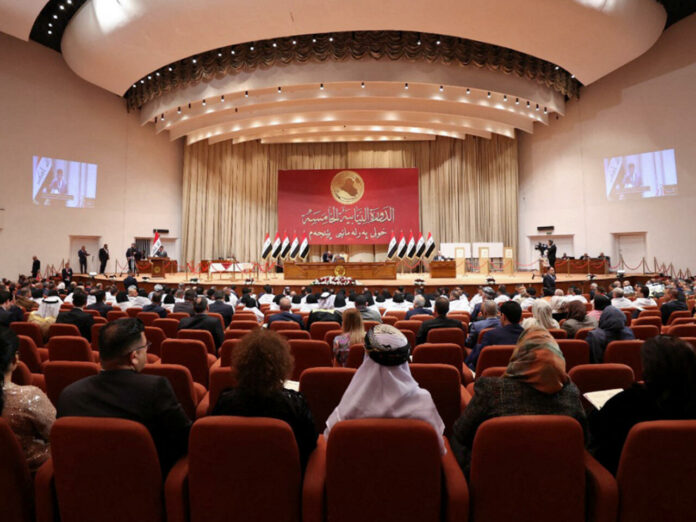
Iraq’s parliament passes record $153bn budget

Iraq parliament delays selection of new president

The budget deficit is estimated at a record 64.36 trillion Iraq dinars, more than double the last budget deficit in 2021, according to a budget document and lawmakers.

The budget is based on an oil price of $70 per barrel and projects oil exports at 3.5 million barrels per day (bpd), including 400,000 bpd from the semi-autonomous Kurdistan region, lawmakers said.

The budget sets the exchange rate for oil revenues in U.S. dollars at 1,300 dinars per dollar. It will remain valid through 2025, though it is subject to amendment, including to the oil price it uses given its near-total dependence on oil revenue.

The budget adds more than half a million new public sector workers, hiring that flies in the face of the recommendations of many observers who say Iraq should tighten fiscal policy.

Mohammed Nouri, a member of the parliament’s finance committee, told Reuters ahead of the session more than a million new workers were added, including contractors, daily employees and full-time staff.

Ahmed Tabaqchali, a visiting fellow at the London School of Economics Middle East Center, put the figure of new employees at about 600,000, which he said would raise the total cost of public wages and pensions to more than $58 billion (76 trln dinars).

“The more you increase this kind of spending, the more you increase your vulnerability. The oil price has to go higher and higher just to sustain spending which is crippling and will lead to more and more borrowing,” he added.

The International Monetary Fund in a May 31 note said the increasing public wage bill would contribute to mounting deficits and financial pressure, barring a big increase in oil prices.

To break even, Iraq required an oil price of $96 bpd, it added, while the price averaged $71.3 bpd in May.

“A significantly tighter fiscal policy is needed to strengthen resilience and reduce the government’s dependence on oil revenues while safeguarding critical social spending needs,” the IMF announced.

Iraq’s budgets are supposed to be adopted before the beginning of the year they cover but are frequently delayed or not passed at all due to instability and political disputes.

The country has one of the fastest-growing populations in the world, projected to double from 43 million to about 80 million by 2050, while most of the economy is state-led, with high unemployment and frequent protests over various discontent.

The budget takes steps to address long-standing issues between Iraq and the semi-autonomous Kurdistan region, with its oil revenues set to be deposited in an account overseen by the Iraqi central bank.

Baghdad previously had no say over Kurdistan’s expenditure of oil revenues, with Kurdistan unilaterally exporting crude via Turkey despite Baghdad’s objections.

But Kurdish officials were forced to negotiate with Baghdad after Turkey halted crude exports in April when an international arbitration ruling deemed them unlawful.

Under an agreement signed between Baghdad and Erbil in April, Iraq’s state-run marketing company SOMO will have the authority to market and export crude oil produced from fields controlled by the Kurdish region.

The flows have not resumed despite Baghdad asking Ankara to do so on May 11.

Situation in Izeh calm despite rumors of unrest, following deadly incidents: Report

Crime Scene

Citing its correspondent, IRNA news agency reported on Monday that the businesses are open as usual and traffic is normal, despite rumors to the contrary.

Earlier, a member of Iran’s law enforcement, Mohammad Qanbari, was killed and another injured in a car-ramming attack in Izeh, Khuzestan Province.

The officer had been on guard at an entrance into the city in the wake of calls for protests in Izeh on the birthday anniversary of Kian Pirfalak, the 9-year-old boy killed by armed terrorists during the riots of 2022.

The attacker in the Sunday incident was identified as Pouya Molaei Rad, the cousin of Kian Pirfalak’s mother, who was at a cemetery.

Kian was one of the seven victims of indiscriminate shootings at people and security forces by heavily-armed foreign-backed terrorists at a major crossroads in Izeh on November 16, 2022.

The deadly shooting was carried out amid protests and riots that broke out following the death in police custody of a young Iranian woman in the Iranian capital of Tehran.

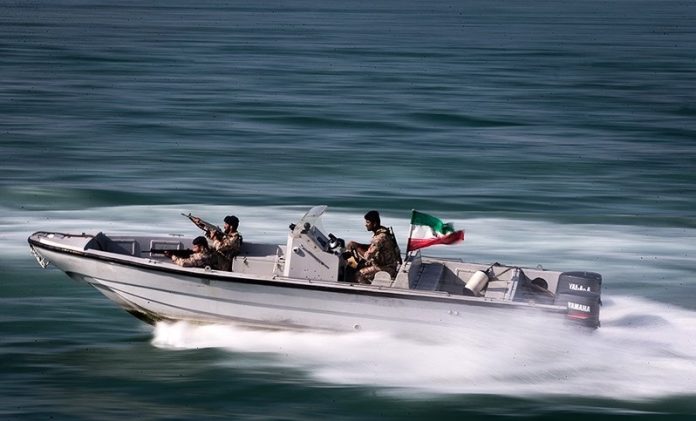
IRGC boats armed with 2,000-km missiles for 1st time: Navy chief

IRGC Boat

Real Admiral Alireza Tangsiri announced the news in a Radio interview, adding that enemies are well aware of Iran’s progress in the defense industry, and that is why they have been trying to throw a wrench in the Islamic Republic’s push to promote its military.

He said prior to the 1979 Islamic Revolution, the Iranian Navy would not even dare ask the powers why they entered the country’s territorial waters.

Today, however, it is the world powers, including the US, that dare not enter the Iranian territorial waters thanks to the Navy’s strength, and when they do, they swiftly change course and enter the neighborly waters, the commander added.

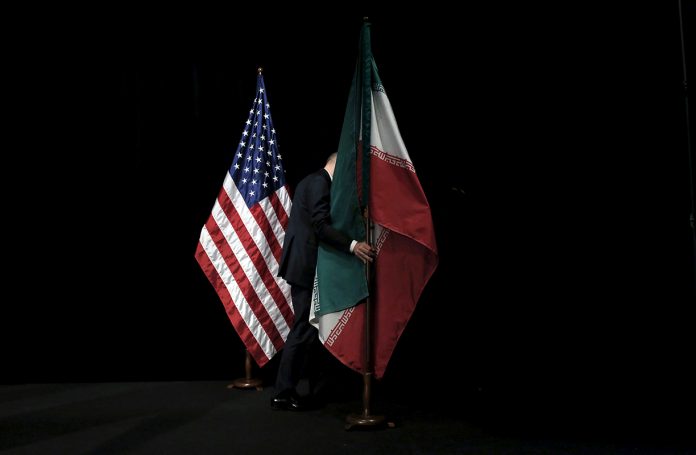
Advisor to Iranian team: No direct talks ongoing between Iran and US

Iran US Flags

Mohammad Marandi told Al-Araby that such reports are not correct and all talks between Iran and the US are indirect and being held through such intermediaries as Oman or the United Nations.

He said Iranian and American officials do not even sit in the same room during the negotiations.

Marandi said the entire process of negotiations on prisoners swap and the release of frozen Iranian assets are due to the US sanctions.

Earlier, Iranian Foreign Minister Hossein Amirabdollahian told French Le Figaro that the diplomatic process and discussions with the European Union on the nuclear issue continue.

Amirabdollahian also underlined that exchange of messages between Tehran and Washington are done through intermediaries in the region and in Europe.

Saudi Arabia announces huge investment deals at Arab-China summit

China and Saudi Arabia

The meeting comes amid growing commercial and diplomatic ties between Beijing and Middle Eastern countries, including a recent landmark Chinese-brokered rapprochement between powerhouses Iran and Saudi Arabia that has shifted regional relations.

The oil-rich kingdom is hosting the conference, now in its 10th edition, for the first time.

Over two days, it brings together more than 3,500 government and business officials from China and Arab countries, the Saudi investment ministry said in a statement.

The event “marked its first day with the signing of US$10 billion (S$13.4 billion) in investment agreements”, the statement added – the vast majority of which are for projects in Saudi Arabia or by Saudi firms and government entities.

This figure includes a US$5.6 billion memorandum of understanding between the Saudi investment ministry and Human Horizons, a Chinese maker of electric and self-driving cars.

More than half of the total sum is in the memorandum of understanding, as well as a separate “cooperation agreement” and a “framework agreement” involving other companies, according to the statement.

It detailed agreements in various fields, including technology, agriculture, renewable energy, real estate, natural resources and tourism.

At the launch of the conference, Saudi Foreign Minister, Prince Faisal bin Farhan, highlighted the potential in increased trade and economic ties between China and Arab countries.

“(This) meeting is an opportunity… to build a shared future towards a new, beneficial era for our peoples,” he stated.

According to the Saudi statement, a US$533 million deal was concluded between AMR ALuwlaa Company and Zhonghuan International Group (Hong Kong) for the establishment of an iron factory in Saudi Arabia.

Saudi ASK Group and the China National Geological & Mining Corp inked a US$500-million cooperation agreement on copper mining in the kingdom, the statement added.

Chinese President Xi Jinping in December visited Saudi Arabia – the world’s largest crude exporter – prompting criticism from Riyadh’s longtime ally the United States.

Asked about the US criticism, Saudi Energy Minister, Prince Abdulaziz bin Salman, said: “I actually ignore it.”

He added that business people “will go where opportunity comes your way”.

During a trip to Riyadh last week, US Secretary of State Antony Blinken said Washington was “not asking anyone to choose between the United States and China”.

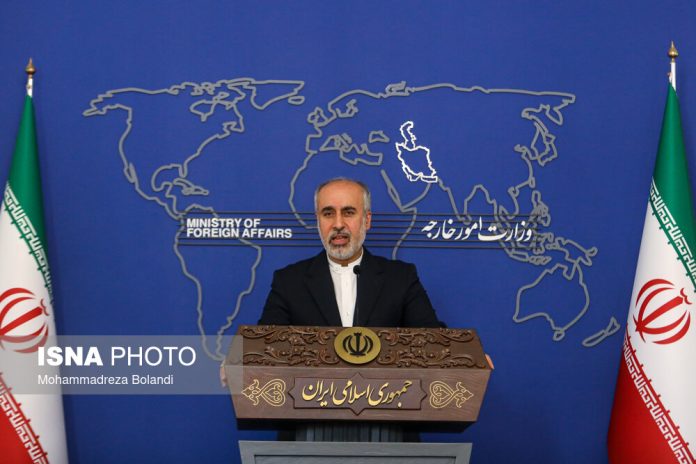
Tehran: Serious steps taken toward release of frozen Iran assets

Nasser Kanaani

Nasser Kanaani said in his weekly presser on Monday that Tehran is negotiating with relevant governments to that end.

The spokesman also added that Iran has never left the negotiating table in the talks for the removal of anti-Tehran sanctions within the framework of the 2015 nuclear deal, the Joint Comprehensive Plan of Action, JCPOA.

He said Tehran is pursuing a policy of offsetting sanctions using the domestic potential and ties with friendly and neighboring countries. But he said the diplomatic process to end the sanctions has never come to a halt.

Kanaani added that Iran will base its stance on the actions of parties to the talks.

He also rejected reports of an interim deal with the US as media speculation.

The spokesman added that no framework other than the JCPOA is being considered and all reports on an interim deal are politicized and aimed at undermining the current talks.

Kanaani added talks with the US on a prisoner swap are also underway, adding that Iran is pursuing the negotiations through liaisons and with a humanitarian approach.

He said a prisoner swap will take place in the near future if the other side is serious.

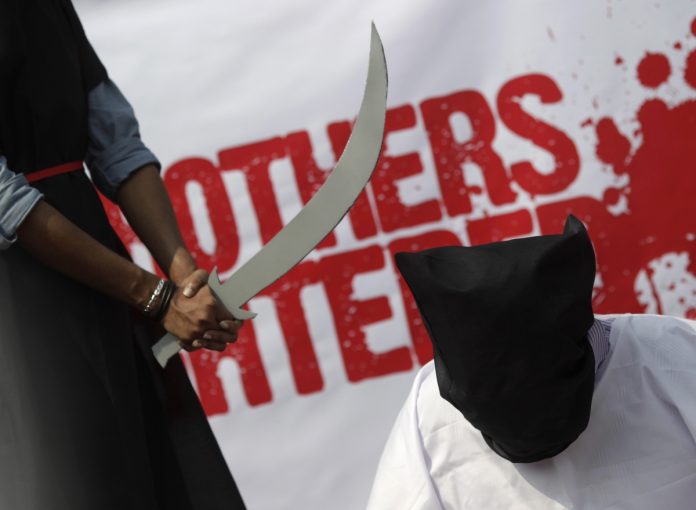
Saudi Arabia executes three over officer death, ‘terror charges’

Saudi Execution

Since the start of the year, Saudi authorities have executed 52 people, including 20 for terrorism-related offences, according to an AFP tally.

In a statement on Sunday, the Saudi Interior Ministry said that the three men had killed an officer in the capital Riyadh and burned his body by setting fire to his vehicle.

They were also convicted of financing terrorism and possessing weapons, ammunition and “material used in the manufacture of explosives”, the ministry noted.

Authorities carried out the death sentences on Sunday in Riyadh, the ministry added.

The statement did not specify the method used, but the kingdom has often carried out executions by beheading.

Most executions for “terrorism” this year have taken place in the kingdom’s eastern region where the Shia Muslim minority is concentrated.

Earlier this month, Saudi Arabia executed three men from the eastern region. The interior ministry identified the three Saudis as Hussein bin Ali al-Muhaishi, Zakaria bin Hassan al-Muhaishi and Fadel bin Zaki Anseef.

It said the Specialised Criminal Court had found them guilty of “joining a terrorist cell, possessed and been trained in the use of weapons, attacking security centres and security men with the intent of killing them”.

Two of them were also charged with rape and adultery.

In May, three men from the same majority Shia region were also executed for similar security charges. Last month, Saudi Arabia also executed two Bahrainis after being convicted on terrorist-related offences.

The European Saudi Organisation for Human Rights (ESOHR) director, Ali Adubisi, told Middle East Eye that there exists a pattern in Saudi Arabia of mixing criminal and security charges in execution cases.

“In general, this is a deliberate confusion to make people accept the execution and minimise sympathy. In prison, you’ll find offenders charged with sodomy or adultery imprisoned for a few years, but no death sentence was issued against them,” he stated.

Jeed Basyouni, who leads the work in the Middle East and North Africa for human rights group Reprieve, told MEE at the time that the Specialised Criminal Court nominally hears “terrorism” cases, but it is often used to convict those critical of the government on trumped-up charges, after being “tortured into confessing to ‘crimes’ they didn’t do”.

The oil-rich eastern region of Saudi Arabia, including the Qatif area, is home to many of the country’s Shia minority.

There have been sporadic protests in the region for years over accusations of widespread discrimination. Last year, at least 48 other people linked to the 2011 anti-government protests in Qatif were executed.

Adubisi added that Saudi Arabia lacks transparency in its legal proceedings and court trials, making execution cases appear as “kidnapping and killing”.

Saudi Arabia is one of the world’s most prolific executioners.

Last year it put to death 147 people, 81 of them on a single day for terrorism-linked crimes. The mass execution sparked an international outcry.

More than 1,000 death sentences have been carried out since King Salman assumed power in 2015, according to a report published earlier this year by British-based Reprieve and the ESOHR.

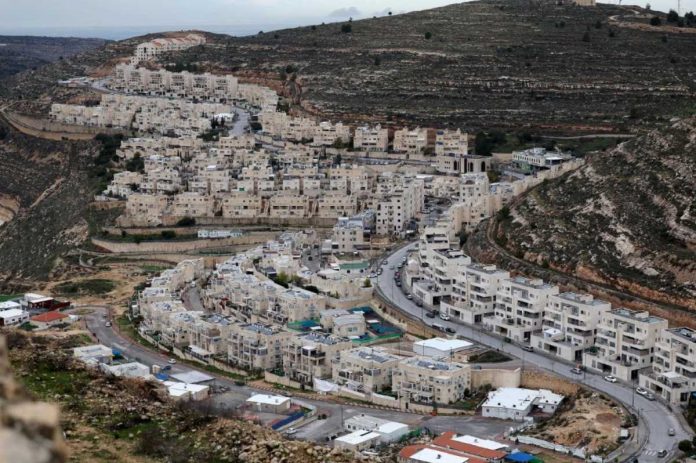
Persian Gulf Council calls for global action to stop Israel’s settlement construction plans

Israeli settlements

The foreign ministers voiced the condemnation during the body’s 156th ministerial meeting in the Saudi Arabia’s capital city of Riyadh on Sunday.

The ministers rejected the regime’s efforts to annex the settlements or impose its sovereignty over them, saying such efforts are against the resolutions adopted by international organizations, most notably the United Nations Security Council Resolution 2334.

The resolution, which was adopted in December 2016, describes Israeli settlements in the occupied West Bank and al-Quds as “a flagrant violation under international law.”

The GCC foreign ministers also urged the international community to mount pressure on the occupying regime to reverse its settlement policies.

They reaffirmed their support for the sovereignty of the Palestinian people over the occupied territories, calling for the establishment of an independent Palestinian state with East al-Quds as its capital.

In late February, the UN secretary-general called for an end to Israel’s settlement activities, stressing the illegality of all structures built in the occupied Palestinian territories.

“All settlement activity is illegal under international law. It must stop,” Antonio Guterres said while addressing the UN Committee on the Exercise of the Inalienable Rights of the Palestinian People.

In late May, a European Union representative condemned the Israeli regime’s plans for the construction of nearly 600 new illegal settler units in the occupied West Bank, calling on Tel Aviv to reconsider the decision.

Sven Kuhn von Burgsdorff, the EU’s ambassador to Palestine, made the remarks during a visit by a delegation of 20 European ambassadors and consuls to the historical town of Sebastia, north of Nablus.

He also denounced the occupying regime’s support for Israeli settlers to return to evacuated settlements in the northern West Bank.

Israel has built over 230 settlements since its 1967 occupation of the Palestinian territory of the West Bank, including East al-Quds. The settlements house more than 600,000 Israeli settlers.

Palestinians want the West Bank to serve as part of their future state, with East al-Quds as its capital.

In another part of their statement, the ministers condemned incursions into the al-Aqsa Mosque Compound by Israeli settlers and officials as an extension of the regime’s plans to Judaize the occupied city of al-Quds.

The compound, which is located in the Old City of al-Quds, is Islam’s third holiest site.

According to an agreement signed between Israel and the Jordanian government following the former’s occupation of East al-Quds, non-Muslim worship at the compound is prohibited.

Illegal Israeli settlers, however, regularly storm the compound amid strict protection provided for them by Israeli forces.

China’s envoy to Iran says Beijing-Tehran deal beneficial for both countries

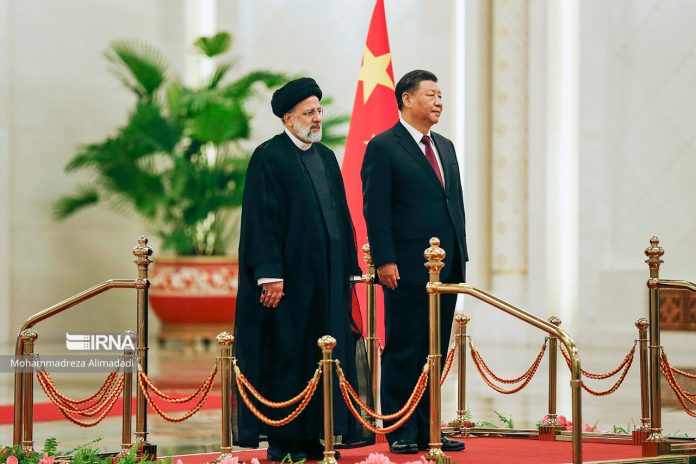
Raisi Xi

In an interview with Fars news agency published on Sunday, the ambassador described as “very proper” the current state of Beijing-Tehran relations.

“Two years ago, we signed the 25-year agreement with Iran, which includes political, economic, cultural, tourism, and health ties, among others. Since then, the pact has developed well through bilateral cooperation and deals,” he said.

The envoy also referred to February’s visit by Iranian President Ebrahim Raisi to Beijing, where he met with his Chinese counterpart Xi Jinping. It marked the first state visit to China by an Iranian president in the past two decades.

During the trip, the two heads of state “held very important talks and reached a consensus to still develop the 25-year agreement. This issue will be beneficial to the livelihood of the people of both states,” he added.

China is Iran’s largest trade partner. Both countries are subject to different levels of illegal sanctions imposed by the US.

They have enjoyed close ties in recent years, particularly after the United States reinstated sanctions on the Iranian economy in 2018 after unilaterally withdrawing from the 2015 nuclear deal.

The two countries signed the landmark 25-year partnership agreement in March 2021 in an attempt to strengthen their long-standing economic and political alliance.

The deal was announced during President Xi’s visit to Tehran back in 2016. It sets the outlines of China-Iran cooperation in political, cultural, security, defense, regional, and international domains for the next 25 years.