Saturday, December 20, 2025
Home Blog Page 14

Iran’s president highlights Kazakhstan trip as platform to deepen bilateral ties

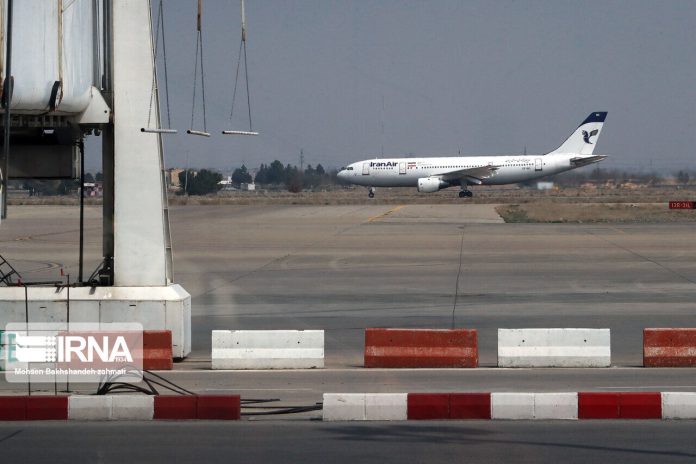
Speaking at Mehrabad Airport in Tehran before his departure, he noted that the trip is being made at the formal invitation of Kazakh President Kassym-Jomart Tokayev.

President Pezeshkian said that expert committees from both governments have prepared a series of planned agreements aimed at strengthening bilateral collaboration.

He added that Iran seeks deeper and more sincere ties with other Muslim-majority countries based on shared beliefs, stressing the importance of mutual assistance and the exchange of experience across the region.

The president will then travel from Kazakhstan to Turkmenistan at the invitation of President Serdar Berdimuhamedow to attend the World Conference on Peace and Trust.

The event will host leaders from across the region and, according to President Pezeshkian, provides an important platform for presenting Iran’s views on international peace and stability.

He criticized widespread warmongering by those claiming to defend peace and humanity, saying regional nations are witnessing atrocities against civilians.

President Pezeshkian added that the conference would allow for direct dialogue with regional leaders to promote practical steps toward peace and trust.

Iran envoy urges decisive global action to end Israeli genocide in Gaza

Gaza War

Amir Saeid Iravani made the remarks on Tuesday at the UN General Assembly’s meeting marking the 10th anniversary of the International Day in Commemoration of the Victims of the Crime of Genocide.

The envoy stressed that silence could not erase neither the crime nor the suffering of its victims, underscoring that confronting genocide was not optional, but a legal and moral duty.

“We reiterate our highest level of commitment to combating and preventing the crime of genocide,” he said, emphasizing that the world had to act “decisively, collectively, and immediately” to stop the atrocities and uphold the dignity of those affected.

Iravani noted that the Islamic Republic, as a co-sponsor of the resolution establishing the international day, paid tribute to all victims whose suffering “compels the international community to act with moral certainty and clarity.”

Preventing genocide, he reiterated, was a binding obligation rooted in international law and a responsibility shared by all nations.

“It is our collective responsibility to prevent and punish the perpetrators of genocide wherever and whenever the threat of genocide arises,” he said.

The regime launched the genocide in October 2023 after a historic resistance operation against the occupied territories that had come as a response to decades of Israeli occupation and aggression.

The war has so far claimed the lives of around 70,400 Palestinians, mostly women and children.

The victims include hundreds who have been killed during daily Israeli violations since early October when Tel Aviv supposedly agreed to a ceasefire deal with Gaza’s Hamas resistance movement.


Iran FM highlights need for stable, tension-free ties with Azerbaijan amid regional turmoil

Abbas Araghchi
In an op-ed published by Azerbaijan’s APA news agency, Araqchi described Iran as a reliable partner and a steadfast pillar of support for “our brothers north of the Aras River.”
He noted that the Islamic Republic of Iran was among the first countries to recognize the independence of the Republic of Azerbaijan and, by immediately upgrading its consulate to an embassy, sent a clear message of comprehensive support to the world.
Referring to the Karabakh crisis, he wrote that throughout the long years of the Karabakh conflict, Tehran’s principled policy consistently rested on respect for territorial integrity and the return of occupied territories.
According to Araqchi, bilateral ties — backed by deep historical foundations — have expanded across multiple domains, including economic and transit cooperation, political and security engagements, and cultural and social exchanges.
He added that over the past 34 years, Iran, out of a sense of neighborly and humanitarian duty, has provided the Nakhchivan Autonomous Republic with access to the rest of Azerbaijan through its territory, ensuring uninterrupted connectivity between Nakhchivan and mainland Azerbaijan.
Araqchi wrote that today, to further facilitate and enhance this access, the “Aras Corridor Project” is being vigorously pursued. This strategic initiative is not only a transit route but also a symbol of both countries’ determination to diversify communication channels.
The Iranian foreign minister announced that the construction and commissioning of the “Kalala–Aghband Bridge” will soon be completed, enabling the fifth border crossing between Iran and Azerbaijan to begin operations. This new crossing, he said, will create fresh opportunities for economic cooperation and complete the regional connectivity puzzle.
Highlighting Tehran–Baku cooperation in the energy sector, he added that Iran is planning electricity exchange and the trilateral interconnection of power grids with the participation of Russia — a move that would transform the Caucasus into a regional energy hub.
Araqchi emphasized that on the political front, high-level consultations between the two countries are ongoing, and despite ups and downs, the overall trajectory of relations has been upward. The determination of senior officials on both sides, he said, is to overcome misunderstandings and advance a comprehensive expansion of ties.
Underscoring the necessity of regional security, he wrote that Iran firmly believes security and stability in this region are not imported commodities, and can only be achieved through the cooperation of regional countries and without foreign interference.


Iran’s President Pezeshkian raps US naval deployment near Venezuela in call with Maduro

The remarks came on Wednesday during a telephone conversation with Venezuelan President Nicolas Maduro, in which the two sides discussed bilateral ties and recent regional developments.

President Pezeshkian said the US deployment, carried out under “baseless pretexts,” violates international norms and constitutes an unlawful escalation.

US President Donald Trump defended the provocative campaign, arguing it was a necessary escalation to stem drug trafficking into the United States, claiming that the nation is in an “armed conflict” with drug cartels.

The Iranian president reaffirmed Iran’s support for Venezuela’s independence, stability, and territorial integrity, emphasizing that Tehran regards Caracas as a “true friend and ally.”

He added that Iran remains committed to backing the Venezuelan government and people, and is prepared to expand cooperation across all sectors.

Maduro, for his part, thanked Iran for its longstanding support and said the two nations have built a durable partnership that serves as a model of cooperation.

He labeled recent US actions in the Caribbean as provocative and contrary to the UN Charter, adding that American allegations against Venezuela have faced international and domestic criticism.

Hamas proposes long-term ceasefire if Israel fully withdraws from Gaza Strip

Hamas

The official, who spoke on condition of anonymity because of the sensitivity of the talks, said the offer was presented to Egyptian, Qatari and Turkish mediators in Cairo last week. The offer represents what he described as a substantive move by Hamas intended to give momentum to the next phase of the ceasefire negotiations.

“The proposal is clear,” the official said.

“Hamas is offering a guarantee that no weapon will be fired from Gaza against Israel, and it will do that by burying the weapons. It offered to establish a hudna (a term used in Islamic tradition to describe a long-term truce) for seven to ten years between Gaza and Israel, and Hamas will not use the weapons.”

According to the official, the hudna would be guaranteed by the mediating states, who would act as guarantors of compliance. He said the weapons would be concealed, and that the mediators would directly supervise the commitments made by Hamas.

“During this period Gaza will be busy with itself,” the official added, referring to reconstruction and internal governance after more than two years of devastating war, displacement and siege.

Hamas has until now refused to hand over its weapons except under the authority of a democratically elected leadership of a fully sovereign Palestinian state. The movement has repeatedly stated that its armed campaign against Israel would only end once the occupation of Palestinian land ends.

The new offer, however, concerns Gaza specifically and does not address Hamas’s military capacities or political activities in the occupied West Bank, where Israel has continued near-daily raids despite the Gaza ceasefire.

The senior official stressed that the offer was also shaped by changes in the regional diplomatic landscape, singling out Egypt for what he said was a shift in Cairo’s position in favour of the needs of Palestinians in Gaza.

Egypt, he noted, recently insisted that the Rafah crossing must allow movement in both directions, including the return of displaced Palestinians. Israel, for its part, has only permitted departures from Gaza and has blocked thousands from returning to their homes in the north and centre of the strip.

“The mediators have renewed relations with Hamas,” the official said, adding, “Hamas found progress in the mediation and made many positive steps. The movement believes in a pragmatic way of reaching common positions.”

Since US President Donald Trump unveiled his 20-point plan for the enclave, significant ambiguity and challenges remain regarding both the establishment of the International Stabilisation Force (ISF) in Gaza and the formation of a technocratic Palestinian government that would operate under the so-called “board of peace”.

US officials have stated they expect “boots on the ground” early next year, but while countries like Indonesia have agreed to contribute troops, there is no roadmap for setting up the force, and its exact makeup, command structure and responsibilities have not been defined.

“No country is willing to provide troops without a clear idea of where they would be deployed and what their mission would be,” the official said.

“The mediators have presented ideas but nothing concrete has emerged.”

Asked why Hamas appeared to place so much confidence in Trump’s ability to pressure Israeli Prime Minister Benjamin Netanyahu, the official said Trump’s recent communications with Israel had signalled a rare rift.

He pointed to US special envoy Steve Witkoff’s suggestion that amnesty be offered to more than 150 Hamas fighters trapped in Rafah. Witkoff reportedly said the amnesty could serve as a “model” for the rest of Gaza.

Trump raised the issue directly with Netanyahu in a phone call. According to US officials, Trump asked why the fighters were being killed instead of allowed to surrender. Netanyahu replied that they were “armed and dangerous”.

The Palestinian official insisted that internationally, the view was shifting.

“All the capitals of the world know that the party that violated the ceasefire is Israel, not Hamas,” he continued, adding, “Hamas has done everything it committed to do. Israel is looking for a lost body in Zeitoun and cannot find it. The picture is very clear.

“We depend only on ourselves”.

Asked whether Palestinians had been abandoned once again by Arab and Muslim governments – many of which backed an agreement in Sharm el-Sheikh that avoided any reference to a Palestinian state – the official said the Palestinian people were under no illusions.

“After Allah (God), the Palestinian people depend only on themselves. The Palestinian people will not surrender or give up their struggle,” he said, adding, “Yes, there are many difficulties. It is not easy to force Israel to retreat. But in the end, we will reach our goals and gain our rights.”


Iran reissues arrest orders for seven fugitives in $3.5bn Debsh tea corruption case

Iran Court

The warrants, previously issued multiple times and delivered to both general and special enforcement units, have been renewed as authorities continue efforts to locate the individuals involved in the embezzlement amounting to $3.5 billion of foreign currency.

The judiciary announced that enforcement of the sentences began immediately after the verdicts became final and the files were transferred to the execution department.

The latest action, dated December 6, 2025, involves the Tehran Prosecutor’s Office’s special operations unit, which is pursuing the fugitives.

All convicted individuals in the Debsh Tea case have been placed under travel bans and prohibited from conducting financial transactions.

Judicial officials say legal procedures to seize the bail and guarantees posted by the absconding convicts have already been initiated.

Former agriculture minister Seyed Javad Sadati Nejad and former minister of industry, mine and trade Seyed Reza Fatemi Amin were also convicted of aiding the major economic disruption.

Their initial five-year prison terms were reduced to two years and one year, respectively.

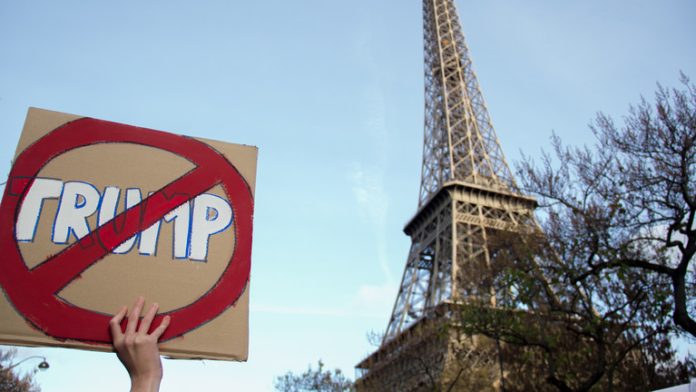
EU says Trump’s comments ‘provocation’

She made the comments while addressing a European Parliament committee on Tuesday, as an interview with Trump was published in which he claimed that “Europe is weak” and “decaying,” days after the publication of the US National Security Strategy (NSS) by the White House. The document warns that Europe is facing “civilizational erasure” through migration policy, and suppression of the political opposition.

Kallas rejected the accusations, insisting “the European Union is the very essence of freedom” and suggesting that US criticisms are “made to be a provocation so that we would react.”

Previously, European Council President Antonio Costa also hit out against Washington’s new foreign policy strategy, particularly its plans to support “patriotic European parties.” The NSS calls on these to stand up for democratic freedoms and “unapologetic celebrations” of national identities.

Costa warned the US not to interfere in the EU’s “democratic life,” insisting Washington has no right to tell European citizens “which are the right parties and the wrong parties.” He also surmised that the US and the EU now have “differences in our worldviews.”

Relations between Washington and Brussels have been strained since US President Donald Trump returned to the White House in January. The US and the EU now regularly clash over trade, defense spending, digital regulation, as well as the Ukraine conflict.


President Pezeshkian attends ceremony marking Women’s Day

The event, organized to honor the role and contributions of women in Iranian society, brought together government officials, guests, and representatives from various organizations.

Iran has designated the birth anniversary of Hazrat Fatimah, the daughter of Islam’s Prophet Muhammad (PBHU), as Women’s and Mothers’ Day.

More in pictures:

FM says Tehran after a ‘strong region free from foreign interference’

Araghchi stressed that lasting stability and security in the region required collective cooperation among the regional states.

He, meanwhile, praised China’s “constructive approach” to West Asian issues and underlined the Islamic Republic’s commitment to strengthening ties with its neighbors, including Saudi Arabia, under its good-neighborliness policy.

He highlighted the “growing trajectory” of Tehran-Riyadh relations across areas of mutual interest, noting continued consultations between the two sides, particularly at the foreign-minister level.

Araghchi also identified China’s role in reinforcing international peace and stability, supporting multilateralism and the rule of law, and bolstering cooperation across the developing world as “very important.”

He noted that Tehran and Beijing were determined to use all available capacities to expand bilateral relations.

For their part, the heads of the Chinese and Saudi delegations, Waleed al-Kharaii, who is Saudi Arabia’s deputy foreign minister, and Miao Deyi, China’s vice foreign minister, thanked Iran for hosting the trilateral session and affirmed their countries’ readiness to broaden cooperation with Tehran “in all fields.”

The meeting, attended by Majid Takht-Ravanchi, Iranian deputy foreign minister for political affairs, concluded with the signing of a joint document by the three deputy foreign ministers.

A section of the document underscored Beijing’s readiness to continue supporting and encouraging the steps taken by Tehran and Riyadh to strengthen their bilateral ties across multiple domains.

In March 2023, after several days of intensive negotiations hosted by China, Iran and Saudi Arabia agreed to resume their diplomatic relations and reopen their embassies and diplomatic missions following seven years of estrangement.

The countries had severed their ties in January 2016 after Riyadh’s execution of Sheikh Nimr al-Nimr, a prominent Shia cleric, prompted angry protesters to storm the Saudi Embassy in Tehran.


Trump gives Zelensky ‘days’ to respond to Ukraine peace plan: FT

One person told FT that US President Donald Trump was hoping to reach a deal by Christmas. Zelensky reportedly told US envoys that he needed time to consult with Kiev’s European backers.

Although Trump had said last month that he would like to see an agreement by Thanksgiving, he later told journalists that he did not have a specific timeline.

The US president submitted a peace plan in November that reportedly called for Ukraine to withdraw troops from part of Russia’s Donbass they currently control, one of Moscow’s key conditions for a broad ceasefire.

Zelensky acknowledged during his trip to London on Monday that the US was pushing him towards “a compromise,” but added that no agreement on territory had been reached. He reiterated that Ukraine was not willing to give up any land without a fight.

Russian troops have been making steady gains on different sections of the front line, while Ukrainian commanders say they are outgunned and struggling to replenish battlefield losses with new conscripts.