Friday, January 2, 2026
Home Blog Page 1399

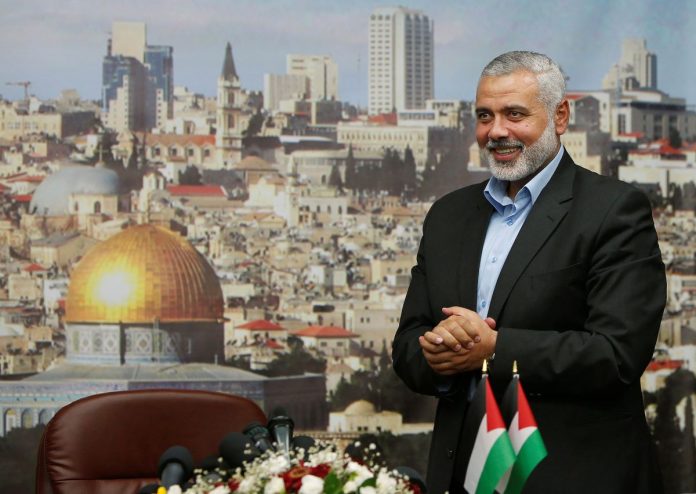
Hamas delegation headed by Ismail Haniyeh in Tehran on official visit

Ismail Haniyeh

According to the Palestinian Information Center, the Hamas delegation is scheduled to hold talks with Iranian officials on the latest developments on the ground and in political terms in Palestine.

The delegation comprises of Haniyeh’s deputy Sheikh Saleh al-Arouri, as well as several other senior Hamas officials.

The visit comes after leaders of the Palestinian Islamic Jihad, headed by its director general Ziyad al-Nakhalah, visited Tehran and held talks with senior Iranian officials last week.

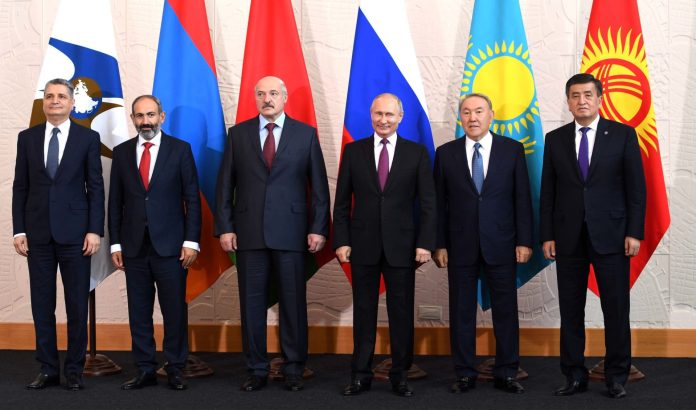
Russia says Iran, regional bloc likely to sign free trade pact by year-end

Eurasian Economic Union (EAEU)

“Now, indeed, the EAEU has come very close to concluding such an agreement with Iran. This issue was touched upon, including at the Eurasian Intergovernmental Council and received the support of the heads of government. Therefore, we are making progress. The agreement can be signed,” the Russian Deputy Prime Minister stated in an interview with TASS on the sidelines of the St. Petersburg International Economic Forum (SPIEF).

According to him, the EAEU is developing a number of FTA agreements with several more states, with which negotiations are also underway.

“[We are in talks with] Egypt, India, Indonesia, and the UAE. All these countries are friendly to us, they are growing markets, so respectively the economic center of the new multipolar world is moving in their direction,” Overchuk added.

He drew attention to the fact that even in a bilateral format, negotiations on free trade zones are “very difficult, and they take years.”

“Negotiators need to take into account a lot of different interests. In our case, the interests of all five EAEU member states, their businesses and consumers are involved here. All this should be taken into account by our negotiators. This is a complex process,” the deputy chairman of the Russian government concluded.

Member-states of the Eurasian Economic Union (EAEU) are Russia, Armenia, Belarus, Kazakhstan and Kyrgyzstan.

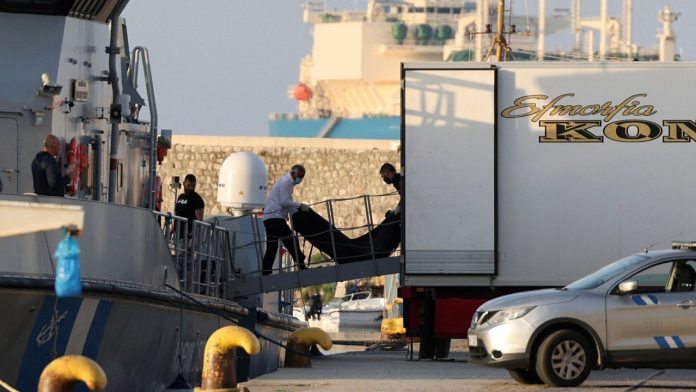
Pakistan arrests 10 suspected human traffickers after Greece boat tragedy

Greece boat tragedy

Prime Minister Shehbaz Sharif also ordered an immediate crackdown on Sunday on agents engaged in people smuggling, saying they would be “severely punished”.

“The prime minister has given a firm directive to intensify efforts in combating individuals involved in the heinous crime of human trafficking,” his office announced in a statement.

The federal investigation agency arrested the suspected human traffickers from different parts of the Islamabad-controlled part of Kashmir – also known as Azad Jammu and Kashmir – and another from Karachi airport who was trying to flee abroad, local TV Geo News reported.

Senior officer Khalid Chauhan said police picked up the suspects amid a crackdown on human traffickers. Police are interrogating them for their alleged roles in luring, trapping and sending locals abroad after extracting huge amounts of money from them.

The 10 suspected traffickers “are presently under investigation for their involvement in facilitating the entire process”, said Chaudhary Shaukat, a local official from Pakistan-administered Kashmir.

Every year, thousands of young Pakistanis embark on perilous journeys attempting to enter Europe without proper documents in search of a better life.

Reports indicate there were at least dozens of Pakistanis onboard the trawler that sank off Greece’s Peloponnese peninsula on Wednesday, killing at least 78 people with hundreds more still missing.

As many as 750 men, women and children – also from Syria, Egypt, and the Palestinian territories – were on board the vessel, trying to reach relatives in Europe. The sinking was one of the worst disasters of its kind this year. The Greek coast guard has defended its response to the tragedy.

Young men, primarily from eastern Punjab and northwestern Khyber Pakhtunkhwa province, often use a route through Iran, Libya, Turkey, and Greece to enter Europe.

People have been offering their support to relatives of those presumed to have been on the boat.

Raja Sakundar, of Bindian village in Kotli district of Azad Kashmir, stated his four nephews aged 18 to 36 remain missing.

“We were informed by the media [of the tragedy]. When children are not found or die, you can understand what a parent goes through,” he added.

Raja Muhammad Majeed asked the Pakistani government to bring back his nephew, Raja Awais.

“If he is dead, bring back [the] body,” he stated, adding, “When we bury him here, his mother, sisters and others can go to his grave and offer prayers. We will be patient.”

Local media published estimates that 298 Pakistanis might have died in the Greek boat disaster, 135 from the Pakistani side of Kashmir. Other reports suggested there were about 400 Pakistani nationals onboard.

The prime minister on Sunday declared a national day of mourning for citizens who died. He expressed his grief over the tragedy and said the national flag will fly at half-staff on Monday.

The foreign ministry spokesperson, Mumtaz Zahra Baloch, said in a statement that Pakistan’s embassy in Greece remains in contact with the Greek authorities to identify the 78 recovered bodies.

“At this stage, we are unable to verify the number and identity of Pakistani nationals among the deceased,” she stated, adding that the identification process will take place through DNA-matching.

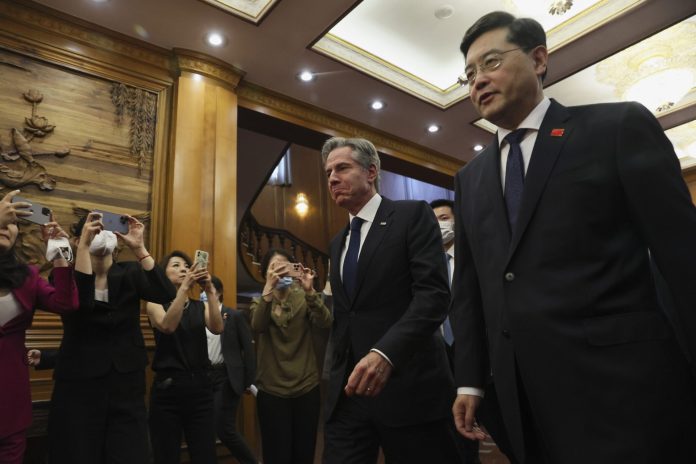
Beijing-Washington relations hit all-time lowest: China’s FM

Qin Gang Antony Blinken

“As of today, relations between China and the United States are the lowest level since the establishment of diplomatic relations between our countries. It is not in the interests of the peoples of China and the United States,” China’s Central Television quoted him as saying.

According to Qin, political strains between Beijing and Washington are advantageous for other countries. He stressed that his country’s authorities “have been consistently pursuing a consistent and stable policy” toward the US. In his words, China wants peaceful development and cooperation on a mutually beneficial basis.

“We hope that the American side will have an objective and rational position toward China,” he added.

Blinken is visiting China from June 18-19. His visit was initially planned for February but the visit did not take place due to the incident with a Chinese balloon, which was shot down by a US missile within the US airspace. Beijing claimed that it was a meteorological blimp but Washington insisted that the balloon had been used to collect “sensitive information.”

This is the first visit by a top US diplomat to China since October 2018.

China demands the United States stick to the principle of one China and refrain from helping separatists in Taiwan, Qin stated.

“We insist that the United States adhere to the one-China principle and bilateral agreements, implement its commitments concerning the refusal from supporting activists of the so-called movement for Taiwan’s independence,” he continued.

According to the Chinese minister, the Taiwan issues is an important problem that affects China’s key interests and is linked with “the most obvious risks.”

Taiwan has been governed by its local administration since 1949 when the Kuomintang’s remaining forces headed by Chiang Kai-shek (1887-1975) were defeated in the Chinese Civil War and took refuge on the island. Taiwan has preserved the flag and several other symbols of the Republic of China that had existed before the Communists took over the mainland. According to China’s official position supported by most countries, including Russia, the Island of Taiwan is one of China’s provinces.

Blinken’s Sunday meeting with Qin, which stretched more than five hours and then wrapped with a working dinner, resulted in progress “on a number of fronts,” with both sides showing a “desire to reduce tensions,” a senior State Department official told reporters Sunday.

“Profound differences” between the US and China, however, were also clear during the meeting, the official added.

Blinken also met with China’s top diplomat Wang Yi at the start of the second and final day of a rare visit to Beijing on Monday, aimed at preventing the many disagreements between the rival powers from spiraling into conflict.

The two top diplomats shook hands inside a red-carpeted hall at the Diaoyutai state guest house in Beijing, before talks that State Department officials said lasted for around three hours.

During the meeting, Yi focused on analyzing the essence of the Taiwan issue, emphasizing that there is no room for any compromise for China on this matter. He stressed that Beijing will not compromise on the issue of Taiwan, and Washington must respect China’s sovereignty.

The US must genuinely adhere to the one-China principle established in the three joint US-China communiques, respect China’s sovereignty and territorial integrity, and clearly oppose Taiwan independence, the top official added.

Yi also noted that the United States should make a choice between dialogue and confrontation, cooperation and conflict.

“The secretary of state’s trip to Beijing comes at a critical time in Sino-US relations, a choice must be made between dialogue and confrontation, cooperation and conflict,” he continued.

He also said that as history moves forward, Sino-US relations should move forward as well.

“We must show responsibility to the people, history, the world, reverse the downward trend in China-US relations, and work together to find ways for the US and China to get along in a new era,” he added.

All eyes will be on whether Blinken will also meet with Chinese President Xi Jinping later in the day, an engagement sources familiar with the matter said was expected but was yet to be confirmed by the State Department or Chinese officials.

Live Update: Russia’s “Special Operation” in Ukraine; Day 481

Russia Ukraine War

NATO won’t formally invite Ukraine to its July summit

NATO will not issue a formal invitation to Ukraine to join the military alliance during a high-profile summit in the Lithuanian capital, Vilnius, in July, NATO chief Jens Stoltenberg said Monday.

“At the Vilnius summit and in the preparations for the summit, we’re not discussing to issue a formal invitation. What we are discussing is how to move Ukraine closer to NATO,” Stoltenberg told journalists during a joint press conference alongside German Chancellor Olaf Scholz in Berlin.

The secretary general added that although consultations are ongoing regarding Ukraine’s bid to join NATO, he is “not in a position to pre-empt the outcome of these consultations.”

“What I can say is that the Allies actually already agree on a lot,” Stoltenberg remarked, referencing NATO’s membership invitations to Finland and Sweden as an example.

“We also agree on what we stated in 2008 that Ukraine will become a member of the alliance. We also agree that is not for Russia, but for Ukraine and NATO allies, to decide when the time is right to invite Ukraine,” Stoltenberg added.

Ukraine’s leader, Volodymyr Zelensky, has pressed Stoltenberg on previous occasions to commit to a timeframe for Ukraine’s membership bid.

During a visit to Moldova in early June, Zelensky stressed that Ukraine “is ready to be in NATO and is merely “waiting [for] when NATO will be ready.”


China has assured US it will not provide lethal aid to Russia: Top US diplomat

China has assured that it has not and will not provide lethal aid to Russia, but the United States remains concerned that Chinese companies may do so, US Secretary of State Antony Blinken said Monday.

Blinked stated that the assurance is appreciated and there is no evidence to contradict them.

“What we do have ongoing concerns about, though, are Chinese firms — companies that may be providing technology that Russia can use to advance its aggression in Ukraine. And we’ve asked the Chinese government to be very vigilant about that,” Blinken added.


UK to uphold sanctions until Moscow pays compensation to Kyiv

Britain introduced new legislation to maintain Russian sanctions until Moscow pays compensation to Ukraine, the British foreign ministry says.

“As Ukraine continues to defend itself against Russia’s invasion, the terrible impacts of Putin’s war are clear. Ukraine’s reconstruction needs are – and will be – immense,” British Foreign Secretary James Cleverly stated.

“Through our new measures today, we’re strengthening the UK’s sanctions approach, affirming that the UK is prepared to use sanctions to ensure Russia pays to repair the country it has so recklessly attacked,” he added.


Moscow declines UN offer to help due to security concerns: Kremlin

The Kremlin says Moscow’s decision to decline United Nations help in areas flooded by the Kakhovka dam breach is due to security concerns and “other nuances”.

On Sunday, the UN said Russia had declined its offers of help as the death toll rises.

The dam’s collapse on June 6 unleashed floodwaters across southern Ukraine and Russian-controlled parts of the Kherson region, destroying homes and cutting off supplies to residents.


Ukraine has recaptured 8 southern settlements in past 2 weeks: Deputy DM

Ukraine’s military has recaptured eight settlements from invading Russian forces in the south of the country over the past two weeks, Deputy Defense Minister Hanna Maliar said Monday.

In a Telegram post, Maliar said offensive operations in the Berdiansk and Melitopol directions in the Zaporizhzhia region had liberated the communities of Novodarivka, Levadne, Storozheve, Makarivka, Blahodatne, Lobkove, Neskuchne and Piatykhatky,

The status of Piatykhatky had been in dispute Sunday after the Russian government denied a report from its own installed leader in occupied southern Ukraine, refuting his claim that Kyiv’s forces had retaken the village.

On Monday, Maliar stated Ukrainian forces had advanced 7 kilometers (4 miles) into Russian-occupied territory in the southern Tavria sector, reclaiming an area spanning 113 square kilometers (44 square miles).

She praised “the professionalism and courage” of Ukrainian soldiers for the advances in the frontline.

“Last week, our troops were both on the offensive and on the defense,” she added.

In eastern Ukraine, Maliar said Russian forces launched more than 5,800 attacks and used more than 277,000 munitions over the past week. Russian troops had been more active against a Ukrainian advance near Bakhmut and Lyman-Kupyansk, Avdiivka and Mariinka, she added.


Seven injured in Ukrainian shelling of Russia’s Belgorod: Governor

Seven civilians, including a child, were injured in Ukrainian shelling of the Valuyki town area in Russia’s Belgorod border region overnight, its governor has said.

Five multistorey buildings and four houses were damaged, with one building on fire, Vyacheslav Gladkov said.

Separately, Roman Starovoyt, the governor of the Kursk region, north of Belgorod and also bordering Ukraine, said Ukrainian forces shelled two villages there. There were no casualties, according to preliminary information.


UN condemns Russia for blocking aid access to occupied areas hit by dam collapse

The United Nations condemned Russia on Sunday for denying humanitarian aid access to Russian-occupied areas affected by the Nova Kakhovka dam that collapsed earlier this month.

“The UN has been engaging with the governments of Ukraine and the Russian Federation regarding effective delivery of humanitarian aid to all people affected by the devastating destruction of the Kakhovka Dam,” the statement by Denise Brown, a humanitarian coordinator for Ukraine said, adding that Russia had so far declined the UN’s request to access the areas under its occupation.

The UN urged the Russian authorities “to act in accordance with their obligations under international humanitarian law” and that the UN will continue to seek the necessary access to the Russian-occupied affected areas.

The death toll in the major dam collapse has risen to at least 45 people, officials said Sunday. The flood also carried filthy water downstream and off the southern coast, posing serious health risks.

Last week, Ukrainian President Volodymyr Zelensky called for international support to help rescue victims of the dam collapse in Russian-occupied areas of Ukraine and accused Russia of not providing “any real help to the people in the flooded areas.”

“In the occupied territory, it is only possible to help people in some areas — Russian terrorists are doing everything to make the victims of the disaster as many as possible,” Zelensky said last week.

Russian-backed officials in occupied parts of Ukraine have said the government will provide “maximum” support to the areas affected, and that humanitarian aid was being distributed. On Thursday, Andrey Alekseenko, the Russian-backed head of the Kherson regional government, said humanitarian aid and monetary compensation were being given out in affected areas.


South Africa leader hails ‘impactful’ meetings with Putin, Zelensky

An African peace mission on the Ukraine war that failed to spark enthusiasm from either Moscow or Kyiv was still impactful, South African President Cyril Ramaphosa says.

A day after the delegation visited St Petersburg, Russian news agencies quoted Kremlin spokesman Dmitry Peskov as saying that President Vladimir Putin showed interest in the 10-point plan presented by African leaders, but it would be “difficult to realise”.

In Kyiv the previous day, Ukrainian President Volodymyr Zelensky told the African delegation – the first since the start of the war to hold separate face-to-face talks with both leaders on their peace initiative – that allowing negotiations now would just “freeze the war” and the suffering of the Ukrainian people.

However, Ramaphosa cast the trip to Ukraine and Russia in a positive light, tweeting on Sunday: “[The] Africa Peace Initiative has been impactful and its ultimate success will be measured on the objective, which is stopping the war.”

He added the Africans would keep talking to Putin and Zelenskyy, and would brief United Nations Secretary-General Antonio Guterres on their efforts so far.


Zelensky says most intense fighting is happening on southern front

Ukrainian President Volodymyr Zelensky says the toughest fighting is taking place on Ukraine’s southern front, and he praised Kyiv’s forces for holding off Russian assaults in the east.

Zelensky made the comments in his daily address Sunday, saying Ukrainian troops are “advancing, position by position, step by step” and “are moving forward.”

The opening stages of Kyiv’s counteroffensive have been marked by probing attacks — seemingly testing the Russian lines of defense — and modest gains, but no apparent major breakthroughs.

Russian troops “continue to focus their main efforts on the Lyman, Bakhmut, Avdiivka and Marinka directions,” the Ukrainian military’s General Staff said Sunday, referring to a series of eastern Ukrainian frontline cities stretching from north to south.

“Heavy fighting continues,” it added.

Zelensky stated that not a single US Patriot air defense system has been destroyed in Ukraine, and that nearly three dozen missiles and about 50 attack drones were destroyed over the past week. He also added the Ukrainian Air Force carried out more than 100 strikes on enemy positions over the past week.

The Russian defense ministry said in its daily report Sunday that “the Armed Forces of Ukraine are most actively advancing in the (southern) Zaporizhzhia direction, with forces of up to 3 battalion groups, reinforced with tanks and armored combat vehicles.”

A Russia-backed official said earlier Sunday that Ukraine has retaken a village near Zaporizhzhia city. Moscow denies the report, saying troops repelled attacks there.

Russian forces also repelled eight Ukrainian army attacks in various settlements east and northeast of Donetsk city, the defense ministry claimed in its report.


Authorities in Ukraine’s southern Mykolaiv region warn of contaminated water

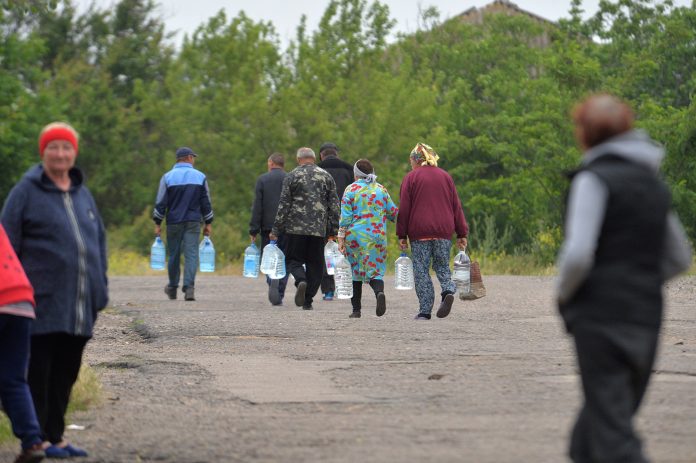
Mykolaiv health authorities have urged residents to refrain from using water in the southern region for drinking, and warned not to swim or fish, after contaminants were discovered.

The warning, issued Sunday, comes after authorities in the Odesa region also closed beaches for health reasons.

The devastating Kakhovka dam collapse and subsequent flooding in southern Ukraine has turned the Dnipro River and Black Sea coastline into “a garbage dump and animal cemetery,” according to Ukrainian authorities.

Now cholera-like vibrio has been detected in open waters of the Mykolaiv region, the Regional Centre for Disease Control and Prevention posted on its official Facebook page Sunday. The discovery means the water could potentially cause acute intestinal infections, local authorities said.

The Disease Control Centre also warned of high ammonia levels.

In neighboring Odesa, authorities have closed off beaches because poor water quality poses a “genuine threat” to local residents.

Odesa’s sandy beaches and holiday resorts were once packed with Ukrainian and foreign visitors before the war hit. The beaches have been largely abandoned by swimmers in recent months, as mines from the war with Russia wash on to the shoreline. That situation has only worsened in the wake of the dam collapse.

The Nova Kakhovka dam in southern Ukraine collapsed on June 6. Both Ukrainian and Russian officials blame an explosion from the opposing side for causing the breach.

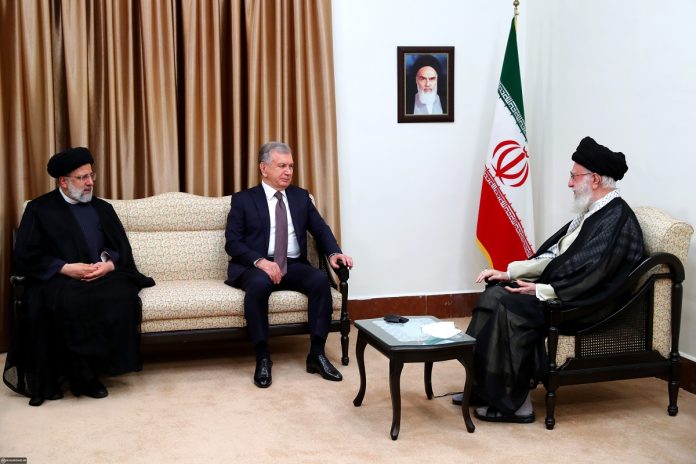
Ayatollah Khamenei says Iran and Uzbekistan should employ commonalities to bolster ties

Ayatollah Khamenei and Uzbekistan President Shavkat Mirziyoyev

The Leader stated that the two countries share unique historical, cultural and scientific attributes.

Ayatollah Khamenei commended a new phase in bilateral relations after a long suspension and said that for years the scope of relations between Iran and Uzbekistan was “very limited.”

The Leader added that President Mirziyoyev’s visit and talks with senior Iranian officials would hopefully open the door to a better future in relations.

“The Islamic Republic of Iran has the capability to connect Uzbekistan to high seas through Turkmenistan and Afghanistan. And the grounds for bilateral cooperation exceed trade and transportation,” Ayatollah Khamenei continued.

The Leader stated innovations in a variety of scientific and technological fields can lead to the improvement of cooperation.

Ayatollah Khamenei urged Tehran and Tashkent to disregard those who are against the expansion of relations.

During the meeting, which was also attended by President Ebrahim Raisi, Mirziyoyev hailed his historic meeting with Ayatollah Khamenei.

The Uzbek president praised the Iranian nation’s resilience in the face of US-led sanctions and said Iran’s grand achievements, particularly in science and technology, proved that a nation can achieve major goals by pursuing the wise guidelines of its leader and through unity.

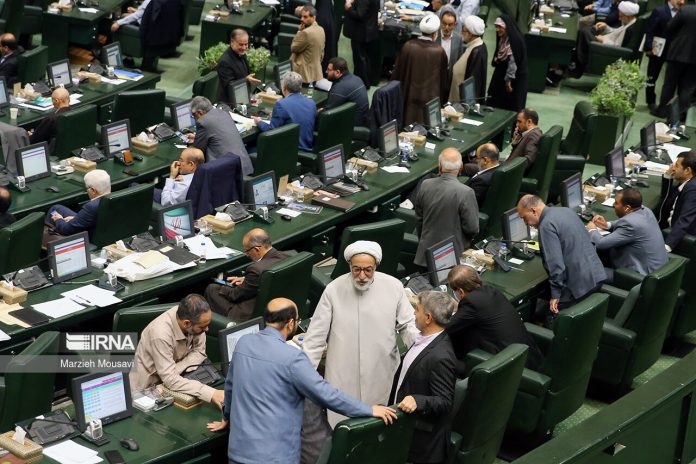
Iranian parliamentary delegation to visit Afghanistan to pursue water share

Iranian Parliament

Mohammad Sargazi, representing the city of Zabol in Sistan and Baluchestan Province at parliament, added that the Iranian foreign minister was notified of the planned trip.

He also said the parliamentary delegation will be made up of lawmakers representing Sistan and Baluchestan Province and members of the parliamentary friendship group of Iran and Afghanistan.

Sargazi referred to the planned visit by a team of Iranian experts to the Kajaki Dam in Afghanistan.

He said under the 1972 Treaty between Iran and Afghanistan, if the Afghan side declares that the water year is not normal, it should give the Iranian side information on the amount of Helmand River and Iran can then request a visit to the Dehravood water measurement station to check the level of the water of Helmand River.

The MP noted that the experts will report to the Iranian parliament on the amount of water of the Kajaki Dam.

Iran has said the Taliban have violated the 1972 agreement as sufficient water from Helmand River is not flowing toward Iranian side as per the treaty.

The Taliban deny having breached the agreement.

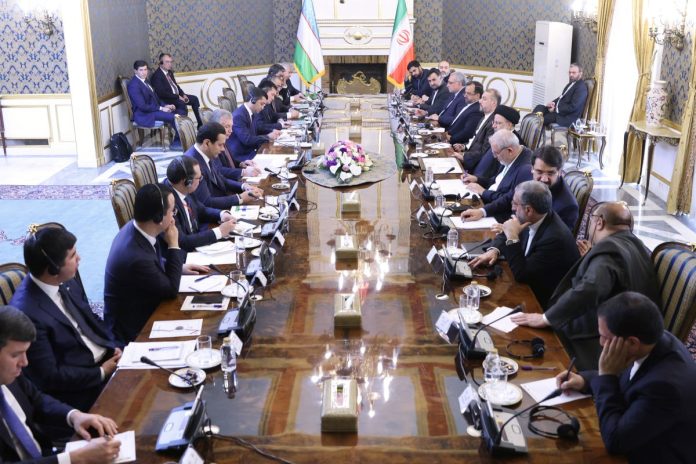
Iran and Uzbekistan sign 11 cooperation agreements 

Iran and Uzbekistan Delegations

The ceremony in which the documents were signed happened in the presence of the presidents of the two countries in Tehran on Sunday.

The agreements are about preferential trade, free zones, pharmaceuticals, insurance and transportation.

The administration of President Ebrahim Raisi has made expansion of ties with neighbors and regional states as a centerpiece of its foreign policy.

The Raisi administration believes that this would help blunt Western sanctions against Iran. It however notes that Iran is open to improving ties with all world countries, but neighbors and regional countries are a top priority in this regard.

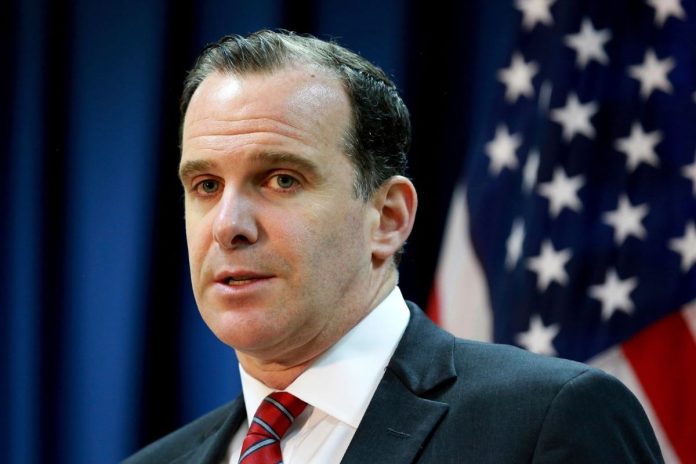
Biden’s senior ME adviser visits S. Arabia to discuss possible normalization with Israel

Brett McGurk

Axios has reported that McGurk had arrived in Saudi Arabia to hold “talks with Saudi officials that will focus on the administration’s efforts to reach a normalization agreement between the Israel and the kingdom as well as other issues.”

According to the report, McGurk was also expected to meet with Saudi Crown Prince Muhammed bin Salman to discuss the kingdom’s normalization of relations with Israel.

McGurk’s visit is part of attempts by the White House to push for a Saudi-Israeli deal in the next six to seven months before Biden’s presidential election campaigns.

The top advisor’s trip to Saudi Arabia comes less than two weeks after US Secretary of State Antony Blinken visited the kingdom and met bin Salman, with Saudi officials having snubbed the US diplomat’s latest push for the normalization deal.

Saudi Foreign Minister Prince Faisal bin Farhan Al Saud said at a joint press conference with Blinken that “without finding a pathway to peace for the Palestinian people…any normalization will have limited benefits.”

Saudi Arabia cautiously welcomed the US-brokered normalization deals between the Israeli regime and the United Arab Emirates, Bahrain, Sudan and Morocco in 2020.

The oil-rich kingdom itself, however, has been expected to jump on the bandwagon since then, as the two sides have seen growing contacts and de-facto rapprochement in recent years, despite claims that it is committed to the 2002 so-called Arab Peace Initiative, which conditions normalizing ties with Israel on the establishment of an independent, sovereign Palestinian state within the 1967 borders.

The Riyadh regime in November 2020 granted permission for Israeli airlines to use its airspace, hours before the first Israeli flight to the UAE was set to take off.

Palestinian leaders, activists and ordinary people have repeatedly rejected Arab-Israeli normalization deals as “a stab in the back of the Palestinian cause and the Palestinian people.”

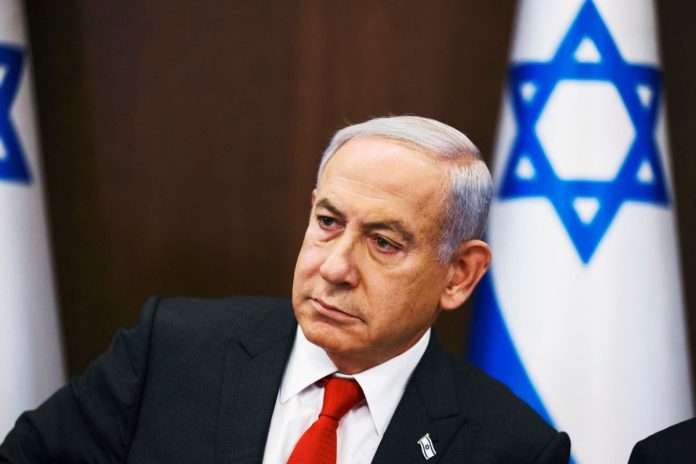
Netanyahu seeking ‘active steps’ on Israel judicial overhaul despite mass rallies

Benjamin Netanyahu

Netanyahu’s televised remarks to his cabinet were spare on detail and come after opposition leaders last week suspended negotiations pending the formation of a key panel for selecting judges.

Unveiled soon after Netanyahu’s religious-nationalist coalition took power in late December, the sweeping reforms would roll back some Supreme Court powers and give the government more control over appointments to the bench.

The proposed legislation set off unprecedented street protests, with critics of Netanyahu – who is on trial on corruption charges he denies – accusing him of trying to curb judicial independence.

He says he wants to balance out branches of government and end perceived court overreach. But with Israel’s economy bruised by the furore and foreign allies voicing worry for its democracy, he froze the reforms in March and entered into the compromise talks.

“We gave a month and then another month and then another month – three months. Their (opposition) representatives did not agree to the most basic understandings. The intention was just to waste time,” Netanyahu told his cabinet.

“Most of Israeli society understands that there need to be changes in the judicial system,” he continued, adding, “That’s why we will meet this week and commence with active steps … in a measured way commensurate with the mandate we were given.”

With his coalition wielding 64 of parliament’s 120 seats, the ratification of reform bills, should they be brought to vote, looked possible.

But opposition leader Yair Lapid suggested Netanyahu could not be certain of a majority, after some members of the coalition voted in a secret ballot last week in favour of an opposition lawmaker joining the Judicial Appointments Committee.

“If Netanyahu goes ahead with the coup unilaterally as he has stated, he will find that he is the prime minister of less than half of the people of Israel, less than half the economy, less than half of the defence establishment and less than half of the Knesset (parliament),” Lapid tweeted.