Tuesday, December 30, 2025
Home Blog Page 1359

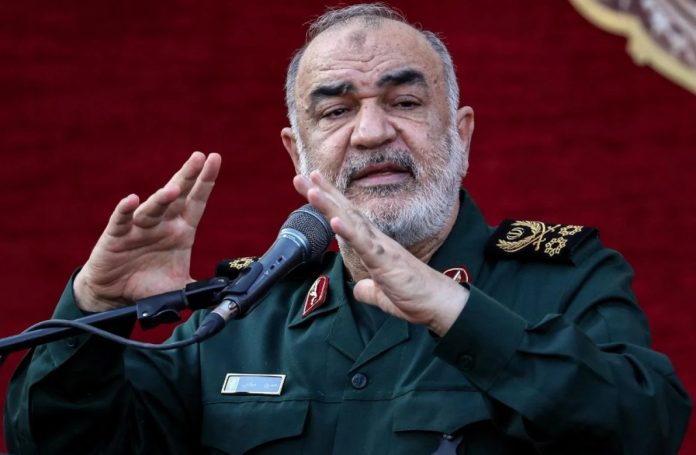
IRGC chief: Iran, Pakistan can eliminate terrorists from border via joint efforts

Hossein Salami

In a meeting on Saturday with Pakistani Army Chief Asim Munir in Tehran, Brigadier General Hossein Salami said, “We consider the security of Pakistan as our security and we will end the life of terrorist groups by expanding interactions, cooperation and joint actions.”

“Our regional environment has always been influenced by international political forces and there are powers that do not tolerate the unity and cohesion of Muslims,” he said.

The IRGC chief added that the US and the Israeli regime have always been involved in the wars that break out in Muslim countries.

He said the insecurity and clashes at the joint Iran-Pakistan border are in line with the same “dangerous policies pursued by the global hegemonic system aimed at sowing discord among Muslim nations.”

For his part, the Pakistani army chief emphasized the importance of increasing defense and security interactions between the two countries.

“In order to solve the challenge of insecurity and activities of terrorist elements in the common border areas of the two countries, we are ready to strengthen the cooperation [with Iran] and use the most suitable solutions to overcome the current situation and achieve progress in other areas of mutual interest,” he added.

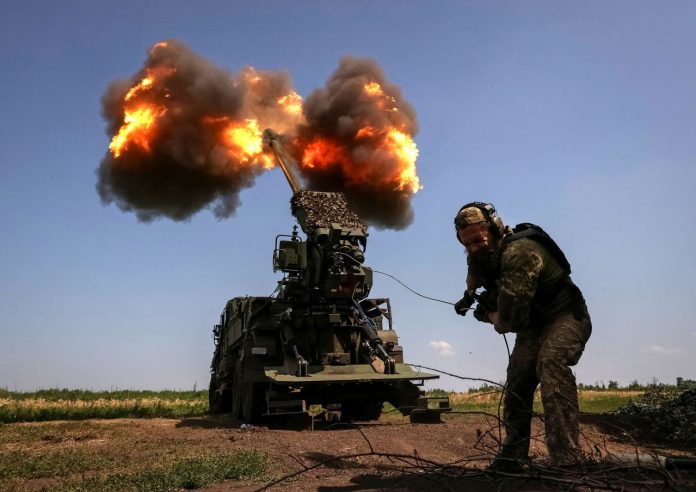
Russia’s “Special Operation” in Ukraine; Day 508: Putin says Ukrainian counter offensive ‘not succeeding’

In addition to east, there’s movement on southern front: Ukraine military

A spokesman for the military’s southern command has said that Ukrainian forces advanced more than a kilometre in one part of the southern front.

In a statement on Sunday, the military announced Kyiv made incremental gains in parts of the east and south since launching its long-awaited counteroffensive.


Ukraine is ‘gradually moving forward’ near Bakhmut: Official

Kyiv said Sunday it was advancing near the eastern city of Bakhmut, which Russia seized in May in the longest and bloodiest battle of the war.

“We are gradually moving forward in the Bakhmut area. There is a daily advance on the southern flank around Bakhmut. On the northern flank, we are trying to hold our positions, the enemy is attacking,” Deputy Defence Minister Ganna Malyar wrote on Telegram.

Malyar also stated that Ukraine’s forces were on the defensive against Russian forces near the eastern city of Kupiansk.

“For two days in a row, the enemy has been actively attacking in the Kupiansk sector in the Kharkiv region. We are on the defence,” Malyar stated, adding that “fierce battles are going on, and positions… change several times a day.”


Ukraine’s counteroffensive ‘not succeeding’: Russia

Russian President Vladimir Putin has stressed the Ukrainian counteroffensive aimed at recapturing territory is “not succeeding” and that attempts to break through Russian defences have failed.

Putin made the remarks in an interview with state television, excerpts of which were released on Sunday.

“All attempts by the enemy to break through our defence … have not been successful throughout the entire offensive,” Putin stated.


Russia will use ‘sufficient stockpile’ of cluster bombs if necessary: Putin

Russia’s President Vladimir Putin stated his nation has a “sufficient stockpile” of cluster bombs and that Moscow reserves the right to use them if such munitions are used against Russian forces in Ukraine.

Ukraine has received cluster bombs from the United States, munitions banned in more than 100 countries. Kyiv has pledged only to use them to dislodge concentrations of enemy soldiers.

“Of course, if they are used against us, we reserve the right to take reciprocal action,” Putin said in a state TV interview, excerpts of which were published on Sunday.

Both Moscow and Kyiv have used the munitions during the war, and Ukrainian regional officials have accused Russian forces of using them to target civilians.


Russia claims to have ‘deactivated’ 10th drone over Crimea

The number of drones Russia claims to have downed over Crimea on Sunday has risen to 10 as the Russian governor of Sevastopol, Mikhail Razvozhayev, announced on Telegram that another drone had been electronically deactivated.

The Russian defence ministry earlier on Sunday said their air defence shot down two unmanned aerial vehicles and electronically disabled five others.

The ministry also said its forces destroyed two naval drones, and the thwarted attack resulted in “no casualties or destruction”.


One person killed in overnight shelling: Kharkiv governor

Ukrainian officials say a civilian was killed and another wounded in Russian shelling in Ukraine’s Kharkiv region overnight.

The region is situated in the northeast of Ukraine and is home to the country’s second-largest city, Kharkiv.

Ukraine recaptured much of the eastern Kharkiv region in September, with Russian forces occupying now only a small strip of land there.

Oleh Sinehubov, Kharkiv’s governor, said on the Telegram messaging app that a 33-year-old man was killed after Russia fired at a residential building in the village of Kolodiazne in the region overnight.

He added Russia had launched four S-400 surface-to-air missiles overnight at Kharkiv.


Ukrainian drone attack on Crimea ‘thwarted’: Russian defence ministry

Russia’s air defence forces and fleet in the Black Sea have shot down nine Ukrainian drones over the Crimean port of Sevastopol, according to a Moscow-installed official.

Russia’s defence ministry also announced its forces had destroyed seven aerial and two underwater drones.

“This morning, an attempt by the Kyiv regime to carry out a terrorist attack by seven unmanned aerial vehicles and two unmanned underwater vehicles on objects on the territory of the Crimean Peninsula near the city of Sevastopol was thwarted,” the ministry said on the Telegram messaging app.

It added that two aerial drones were shot down over the Black Sea at a great distance from the coastline, while five were intercepted by Russia’s electronic warfare forces.

There were no casualties and no damage, the ministry noted.


US treasury secretary says Ukraine aid best boost for global economy

US treasury secretary Janet Yellen has stated that redoubling support for Ukraine is the “single best” way to aid the global economy.

Yellen, speaking on the sidelines of a G20 finance minister summit in India, added a “key priority” was “to redouble our support for Ukraine” in its defence against Russia.

After visiting Kyiv in February, Yellen said she had seen first-hand “the massive difference” that foreign assistance was making, both to civilians and the Ukrainian military.

“Ending this war is first and foremost a moral imperative,” Yellen told reporters in Gandhinagar, adding, “But it’s also the single best thing we can do for the global economy.”

“Budgetary support is critical to Ukraine’s resistance,” she continued.

“By helping keep the economy and the government running, we are giving Ukraine the support it needs so it can fight for freedom and its sovereignty,” Yellen said.

She added that one of Washington’s “core goals” was to “combat Russia’s efforts to evade our sanctions”.


Russian forces ‘intercept eight Ukrainian drones over Crimea’

Russia’s air defence forces and fleet in the Black Sea have shot down eight Ukrainian drones over the Crimean port of Sevastopol, according to a Moscow-installed official.

Mikhail Razvozhayev, the Russian-installed governor of Sevastopol, stated the drone attack took place early on Sunday over the port of Sevastopol and the city’s Balaklava and Khersones districts.

“No objects, either in the city or in the water area were damaged,” he said on the Telegram messaging app.

One drone was shot down over the sea, five were intercepted by Russia’s electronic warfare forces and two water surface drones were destroyed on the outer shore, he added.

There was no immediate comment from Kyiv on the attack on the Crimean Peninsula, which Russia annexed from Ukraine in 2014.

Ukraine almost never publicly claims responsibility for attacks inside Russia or on Russian-controlled territory in Ukraine but has been saying in recent months that destroying Russia’s military infrastructure helps Kyiv’s counteroffensive.


South Korea promises $150m aid after Zelensky talks

South Korean President Yoon Suk-yeol has made a surprise visit to Ukraine, offering a show of support for the country in its war against Russia.

Yoon’s office said on Saturday that he travelled to Ukraine with his wife, Kim Keon-hee, following trips to Lithuania for a NATO summit and to Poland. It is his first visit since Russia invaded Ukraine almost 17 months ago.

After the two leaders met, President Volodymyr Zelensky thanked Seoul for its “firm support of Ukraine’s sovereignty and territorial integrity” and the “significant political, security, economic and humanitarian aid” it has supplied since the start of Russia’s war.

“Today, during this first visit of the president of the Republic of Korea to Ukraine in the history of our relations, we talked about everything that is important for people to lead a normal and safe life,” Zelensky said, adding, “Thank you for the meaningful talks. Thank you for your strong support.”

Yoon pledged on Saturday to “expand the scale” of his country’s non-lethal military assistance to Ukraine, adding that humanitarian aid would be increased to $150m in 2023 from $100m last year.

He also stated that he and Zelensky agreed on cooperating on post-war reconstruction efforts in Ukraine. Additionally, South Korea will also launch a scholarship fund named after Yoon and Zelensky to expand support for Ukrainian students in South Korea.


Ukraine’s counteroffensive is “slow,” but Western allies remain patient: Kyiv

Senior Ukrainian officials and generals alike continue to describe tough fighting and limited progress on the battlefield as they look to drive Russian forces out of the country and turn the tide of the war.

Just days after Ukraine’s key partners met at the NATO summit in Lithuania, pledging even deeper security ties — albeit without specifying any timetable for Ukraine’s potential membership in the alliance — Kyiv insists it does not feel under pressure to deliver quick results.

Speaking to journalists in Kyiv following his attendance at the NATO summit, the head of the Office of the President of Ukraine, Andriy Yermak, admitted the counteroffensive — seen as being underway since the start of June — was “hard work.”

“It’s not going that fast; it is slow,” he said, adding that it is important Ukrainians are told the truth about developments on the ground.

Asked if Ukraine’s Western allies were looking for quick results, Yermak stated there was no such pressure from partner countries. Instead, he said, they just ask: “What else do you need to expedite victory?”

One of the more encouraging areas for Ukraine’s offensive appears to be around the battered city of Bakhmut in the east, though without any reports of significant breakthroughs.

“The Bakhmut direction remains one where our defense forces have the initiative. Our defense forces are pushing the enemy on the southern and northern flanks, storming their positions,” military spokesperson Serhii Cherevatyi said on Ukrainian television Saturday, adding that “the enemy is putting up fierce resistance.”

Mapping by DeepStateMap.Live, which updates changes on the ground daily and is widely used by analysts, has suggested almost no shifts in the front line around the city for many days, even as Ukrainian forces continue efforts to regain villages like Klishchiivka to the southwest and Berhivka to the northwest, where fighting has raged for weeks.

Further to the north, in the roughly 100-kilometer (about 62-mile) stretch of land between the towns of Lyman and Kupyansk, Cherevatyi said Russian forces were “actively attacking.”

The area was held by Russia for almost six months last year before being recaptured in a Ukrainian offensive in October; in recent weeks, it has become a renewed focus of Russian firepower.

“This direction is the leader in the (Russian) use of artillery, mortars and multiple rocket launchers shelling. The enemy carried out 570 attacks and 11 air raids over the last day,” Cherevatyi continued.

According to Russian military bloggers, one of the areas where Moscow’s forces have been concentrating their efforts is around the village of Novoselivske in northeastern Ukraine. On Telegram, the popular Rybar account described Russian advances through forested areas to the south of the village, as well as the digging of a new defensive line close to a nearby railway line.


Putin holds call with South African president about grain deal as deadline looms

Russian President Vladimir Putin and South African President Cyril Ramaphosa talked by phone Saturday about the soon-expiring deal that allows grain to be exported from Ukrainian ports in the Black Sea.

While global food supplies are not as tight as they were last year, traders say prices would rise if the Black Sea grain deal is not renewed — and Putin has threatened to let the deal expire Monday if his demands are not met.

Though Russia has renewed the deal three times, it has repeatedly complained that a separate agreement with the United Nations to facilitate shipments of Russian fertilizers and grain, which was brokered as part of the package last July, has not yielded results.

On the call with Ramaphosa, “Putin stressed that the obligations set out in the relevant Russia-UN memorandum to remove obstacles to the export of Russian food and fertilizers still remain unfulfilled,” according to a Kremlin readout.

“Moreover, the main goal of the deal, namely the supply of grain to countries in need, including those on the African continent, has not been realized,” it said.

United Nations Secretary-General António Guterres sent a letter to Putin this week outlining a proposal to keep the deal alive and seeking to address another key demand from Moscow — access to some of the international financial mechanisms that sanctions have cut it off from.

More background: The Black Sea grain deal was brokered by Turkey and the United Nations in July 2022 after Russia launched its full-scale invasion of Ukraine and blockaded its ports, sparking fears of a global famine. Proponents say it was vital to addressing world hunger, as Ukraine is one of the world’s leading grain exporters.

Putin and Ramaphosa also agreed to hold a separate meeting at the upcoming BRICS summit — a meeting of leaders from Brazil, Russia, India, China and South Africa — for more discussion of the countries’ direct relations and international priorities, the statement said.

The BRICS summit is scheduled for August 22-24 in Johannesburg, South Africa, but the Kremlin has yet to confirm whether Putin will attend in person.

Iranian filmmakers slam court ruling against actress Azadeh Samadi

Azadeh Samadi

Cinema Daily said this came after a picture of the ruling went viral. The Cinema Directors Association and the Cinema Producers Union criticized the last paragraph of the verdict, which they described as weird.

The verdict says Azadeh Samadi must attend in psychotherapy sessions designated for socio-path personalities.

The cinematic body said this paragraph was an insult to the intelligence of all filmmakers and those working in the movie industry.

They added that the verdict is in breach of democracy.

Azadeh Samadi

Their statement noted that it seems that some “quarters seek to block all pathways to dialog in Iran and move beyond the republic.”

It expressed hope that the Judiciary chief revokes the ruling and the court officials apologize to the people working in the film industry.

The statement said the Cinema Directors Association and the Cinema Producers Union will stand firmly by Azadeh Samadi and all actresses who “get unfairly humiliated in a similar way.”

Ubder the Iranian law, observing Islamic hijab is obligatory.

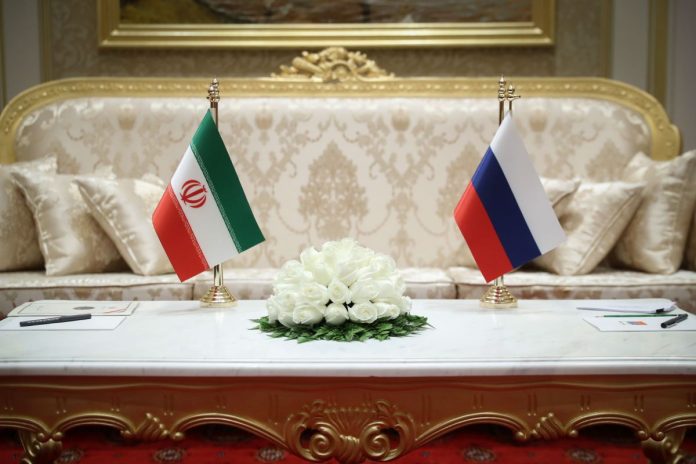
Former Iran ambassador to Moscow: Tehran must take Russia’s use of fake name for Persian Gulf seriously

Iran and Russia Flags

Mehdi Sanaei made the comments in an Op-Ed run by Iranian online news outlet Entekhab.

According to Sanaei, the name “Persian Gulf” in Russia’s political and media literature has been so accepted that the strategic waterway bore the same name in the country’s collective security document for the region in 2018 which partly addressed Iran’s Arab neighbors.

Sanaei added that during those years, no joint statement was ever issued by the UAE or other Arab countries, on the one hand, and Russia, on the other hand, regarding the three Iranian islands in the Persian Gulf.

The former Iranian envoy to Russia said despite that some reports claimed there was a similar statement in 2007, what just happened is a new development that must be analyzed.

Sanaei stressed that he never saw any Russian official use the fake name “Arabic Gulf”.

He said he only saw the Russian Arab speaking news channel Russiya al-Yaum (Russia Today) use it a couple of times, but he realized later that this happened under the influence of Arab staff of the channel.

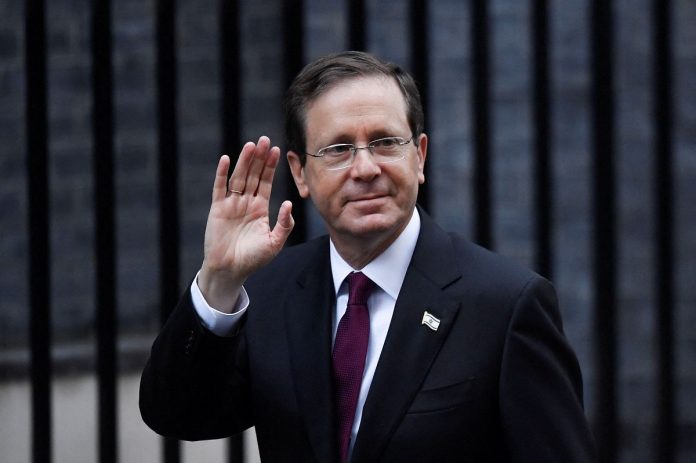
More US lawmakers join boycott of Israeli president’s speech to Congress

Israeli President Isaac Herzog

Congressman Jamaal Bowman told Axios that he is “probably going to be boycotting” Herzog’s speech, and Alexandria Ocasio Cortez told the news site she is not planning to attend the event.

Congresswoman Cori Bush of Missouri also announced she would not be attending, saying that “Congress should not be giving a platform to the president of a country that shows no respect for human rights”.

The lawmakers are snubbing the speech because of Israel’s treatment of Palestinians. A number of international and Israeli human rights groups, as well as experts and the UN, have labelled Israel’s treatment of Palestinians as apartheid and the latest operation in Jenin a “war crime”.

Palestinians have also witnessed heightened violence this year from Israeli forces and settler groups. More than 200 Palestinians have been killed both by these settlers and Israeli forces.

Earlier this month, Israel launched a military raid on the Jenin refugee camp in the occupied West Bank, killing 12 Palestinians and wounding more than 100 others.

So far, four lawmakers are boycotting Herzog’s speech, but the number does not come close to the amount that skipped the speech Prime Minister Benjamin Netanyahu delivered to Congress in 2015. Nearly 60 Democratic members of Congress did not attend that speech, in which Netanyahu criticised then-President Barack Obama over his attempts to secure a nuclear deal with Iran.

However, this is the second time this year that a small number of progressives in Congress have boycotted the speech of a major world leader over human rights issues.

When Indian Prime Minister Narendra Modi came and delivered a speech to Congress, six lawmakers – Bush, Omar, Bowman, Ocasio-Cortez, Summer Lee and Rashida Tlaib – did not attend. Omar also conducted a parallel policy briefing on the human rights situation in India, which was attended by Tlaib.

In announcing her boycott of Herzog’s speech, Omar in a Twitter thread on Wednesday referred to a 2019 decision by Israel to bar her and Tlaib from entering the occupied Palestinian territories.

“There is no way in hell I am attending the joint session address from a president whose country has banned me and denied Rashida Tlaib the ability to see her grandma,” Omar said.

Omar added that “we should not be inviting the president of Israel – a government who under its current prime minister barred the first two Muslim women elected to Congress from visiting the country – to give a joint address to Congress.”

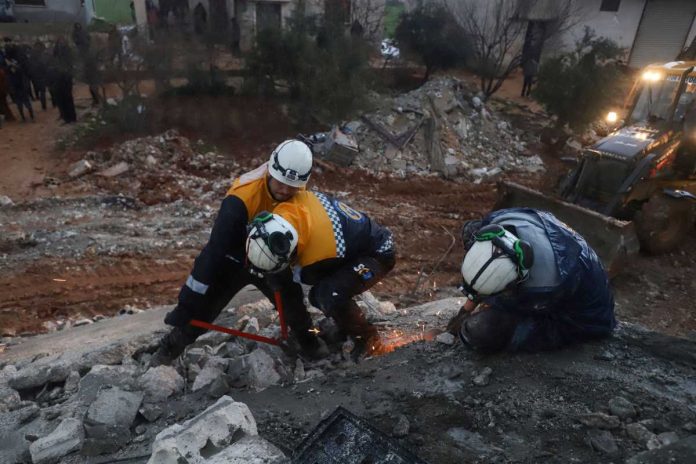
EU extends humanitarian exemption for Syria for another six months

Quake in Turkey and Syria

“To continue responding in a timely manner to the urgency of the humanitarian crisis in Syria, and to keep facilitating the rapid delivery of aid, the Council has decided to extend the duration of this humanitarian exemption for a further six months until 24 February 2024,” the council said in a statement.

Certain individuals and entities, involved in humanitarian activities in Syria will continue to be granted the exemption from the asset freeze and from the related prohibition on making funds, the statement read.

On February 6, a series of powerful earthquakes hit the southeastern regions of Turkey and some parts of Syria, toppling thousands of homes. The underground tremors, followed by hundreds of aftershocks, were felt in 11 Turkish provinces and in neighboring countries, including Syria. In Turkey alone, the earthquakes caused over 50,000 fatalities.

Over 12 years, the Syrian crisis has placed an estimated 15.3 million people in dire need of humanitarian assistance, including 5.5 million refugees forced to flee Syria to neighboring states and 6.8 million internally displaced people, according to the UN Refugee Agency.

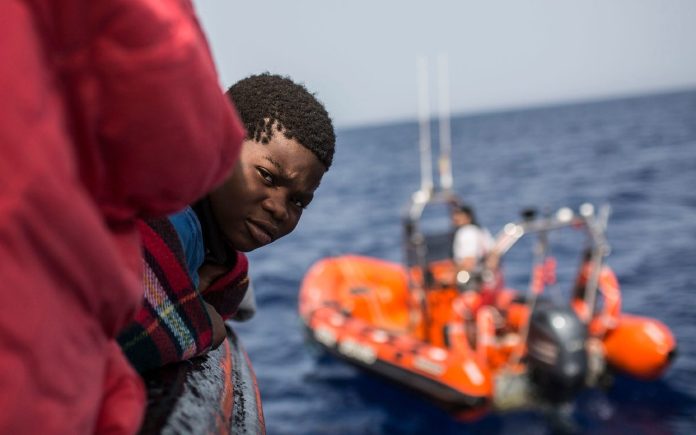
UNICEF says 11 children die every week attempting to cross Mediterranean migration route

Refugees and Immigrants

The figure is equivalent to about 11 children dying each week, “far beyond what we hear in news headlines,” Vera Knaus, the agency’s Global Lead on Migration and Displacement, told reporters attending the biweekly UN humanitarian briefing in Geneva, according to a UN press release issued at UN Headquarters in New York.

“We cannot continue to ignore what is happening stand by silently when nearly 300 children an entire plane full of children – are dying in the waters between Europe and Africa in just six months,” she added.

Conflict and climate change are forcing increasing numbers of children to embark on the dangerous sea journey from North Africa to Europe, it was pointed out.

UNICEF estimated that 11,600 children have made the crossing during the first six months of the year again nearly twice as many as in the same period in 2022.

However, the agency warned that the true number of child casualties is likely to be higher as many shipwrecks in the Central Mediterranean leave no survivors or go unrecorded.

Ms. Knaus said it appears the world is “willfully ignoring what is happening”, given the numbers and the silence surrounding many of these preventable deaths.

“Children are dying not just in front of our eyes; they are dying while we seem to keep our eyes closed. Hundreds of girls and boys are drowning in the world’s inaction,” she added, noting that the Central Mediterranean is among the deadliest migration routes for children.

UNICEF further estimated that many children are making the crossing without their parents or guardians, with girls traveling alone especially vulnerable to violence throughout the journey.

During the first three months of the year, 3,300 unaccompanied or separated children arrived in Europe via the Central Mediterranean Sea route, or more than 70 per cent of the total.

In response to the escalating crisis, UNICEF is supporting countries in strengthening child protection, social protection and migration and asylum systems. Staff are also working with governments to provide support and inclusive services to all children, regardless of their legal status, or that of their parents.

“These deaths are preventable,” Ms. Knaus said.

“They are as much driven by the complex emergencies, conflicts and climate risks that drive children from their homes as by the lack of political and practical action to do what it takes to enable safe access to asylum and to protect the rights and lives of children Meanwhile, countries in the region, and the European Union (EU), must do more to protect vulnerable children at sea but also in countries of origin, transit and destination,” she added.

She also stressed the need for safe, legal and accessible pathways for children to seek protection and reunite with their families, through expanding access to family reunification, refugee resettlement or other humanitarian visas.

Additionally, countries must step up coordination on search and rescue operations at sea and ensure prompt disembarkation to safe locations.

Ms. Knaus stated the duty to rescue a boat in distress is a fundamental rule in international maritime law, and pushbacks at sea or land borders are violations of national, EU and international law.

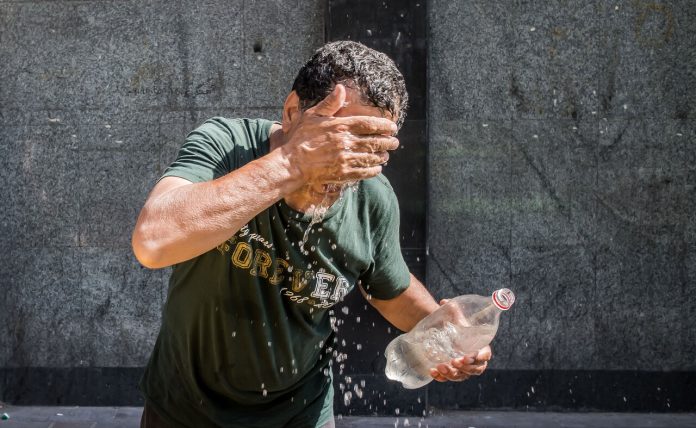
World Bank says Iran ranks 1st in drinking water access in urban, rural regions

Water Crisis in Iran

In a new report, the World Bank said 99.83% of Iranian people in urban areas and 82% in rural areas have access to drinking water, while those figures stood at 85.7 and 59.6 percent in the world and 83.2 and 69.5 percent in West Asian countries.

Iran’s localization and production of 80% of the equipment needed for water treatment plants, localization and production of 65% of the equipment needed for sewage treatment plants, localization and production of 90% of the equipment needed for water and sewage networks, water supply of about 100% of the urban population, which is higher than the global average, are among other indicators in the country’s water industry, added the report.

The achievement was attributed to substantial changes the Islamic Republic has made in its water industry, such as adopting new approaches to water resources management and development of water infrastructure and facilities.

The changes included the creation of a suitable and collaborative mechanism for managing watersheds, improving water productivity, reappropriation of water, bulk delivery of agricultural water, installing gauging tools and prevention of overharvesting and unauthorized withdrawal of water.

Construction of dams and irrigation and drainage networks, urban and rural water supply, and creation of sewage facilities and water stress management were also regarded as Iran’s new approaches to its water industry.

Iraq ramps up deployment of guards on Kurdistan region after Iran’s warning about terrorists

Iran Missile

“Under the guidance of the Commander-in-Chief of the Armed Forces [Prime Minister Mohammed Shia’ al-Sudani] as well as efforts and follow-up of the Minister of Interior [Abdul Amir al-Shammari], there has been an agreement with the Kurdistan Region to reopen the 21st Border Guard Brigade in Sulaymaniyah province on the border with Iran,” Director of Relations and Media in the ministry, Major General Saad Maan, told the official Iraqi News Agency on Friday.

He said that 50 concrete towers and 40 cameras have been erected, and construction of 47 border posts will soon begin on the Iraqi-Iranian border line.

“Specialized contracting companies will be invited next week to submit their bids, and they will start their activities after that. The monitoring center for border cameras will also be inaugurated at the same time, which will utilize 130 cameras. Efforts are underway to increase their number,” Maan added.

The senior Iraqi official stressed that the cameras will closely monitor Sinjar district in the Kurdistan region as well as border areas between Iraq and Iran, noting that a large monitoring hall will also come into service for security purposes.

Addressing an annual gathering of the Islamic Revolution Guards Corps (IRGC) commanders in the northeastern Iranian city of Mashhad on July 11, Chief of Staff of the Iranian Armed Forces Major General Mohammad Hossein Baqeri warned over the existence of armed separatist groups in northern Iraq that “cause insecurity at our borders.”

The general then noted that Iran will wait until September and hopes that the government of Iraq would honor its commitments.

“If the deadline passes and they (terrorists) remain armed or carry out any operation, our operations against those groups will definitely reoccur more severely,” he stated.

Since September last year, the IRGC has launched several raids against the positions of the notorious so-called Democratic Party of Iranian Kurdistan (PDKI) and the Komala Party in the northern Iraqi Kurdistan region.

The elite force has, on at least several occasions, urged the central government in Iraq as well as the Kurdistan region to meet their commitments toward Iran and take necessary measures to secure the common border.

Iran has repeatedly warned Iraqi Kurdistan’s local authorities that it will not tolerate the presence and activity of terrorist groups along its northwestern borders, saying the country will give a decisive response should those areas turn into a hub of anti-Islamic Republic terrorists.

On November 21, 2022, positions of anti-Iran separatist and terrorist groups in northern Iraq came under combined attacks using missiles and kamikaze drones. The strikes targeted the positions of the notorious PDKI and the Komala Party in northern Iraqi Kurdistan, Iran’s Arabic-language al-Alam television news network reported at the time.

According to the network, one attack saw four missiles being fired against a PDKI position in the town of Koy Sanjaq in Erbil Province. A separate attack featured kamikaze drones smashing into another site belonging to the group near Baharka village.

Simultaneously, kamikaze drones struck positions associated with Komala across two locations near the city of Sulaymaniyah.

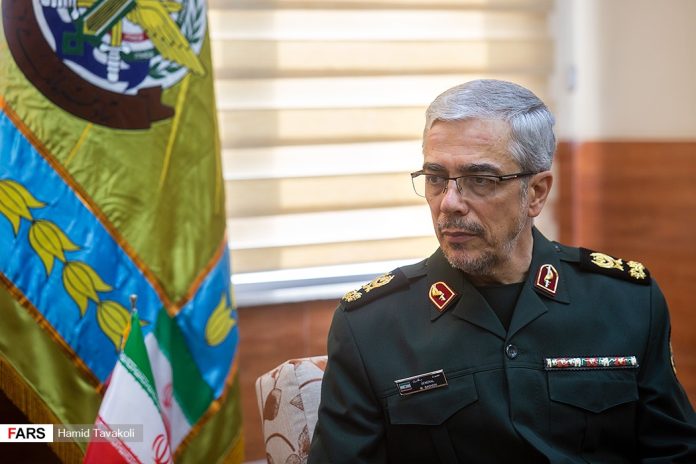
Iran’s top military commander meets with Pakistan’s Army chief

Chief of Staff of the Iranian Armed Forces Major General Mohammad Hossein Baqeri

Major General Baqeri met with General Munir at the headquarters of the chief of staff of Iran’s Armed Forces in Tehran on Saturday.

General Munir is in Tehran at the head of a high-ranking military delegation.

Mehr news agency reported that the meeting was held with the goal of enhancing military, training, defense, and security cooperation between Iran and Pakistan.

Major General Baqeri said at the meeting that a shared historical past between Iran and Pakistan could be built upon to enhance bilateral relations in various fields.

He said joint security and defense ties between the two countries were important for the region.

General Munir is scheduled to meet with other Iranian officials later during his visit.

Iran’s Sistan-and-Baluchestan Province, which borders Pakistan, has witnessed many attacks targeting both civilians and security forces by terrorists who mainly sneak into the country from Pakistan.