US delaying approval of F-16 training for Ukraine: Report
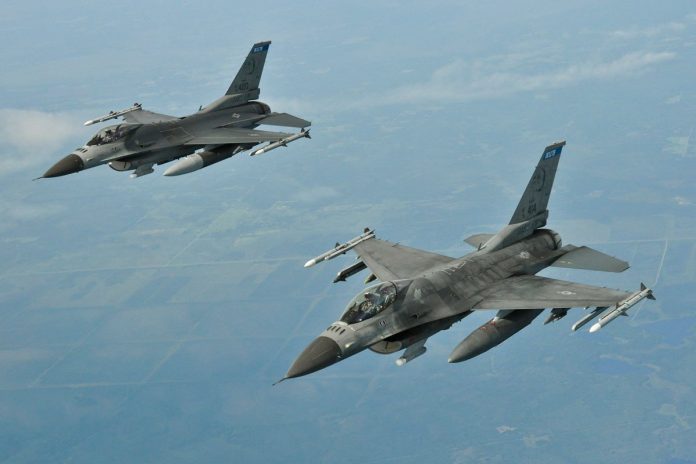
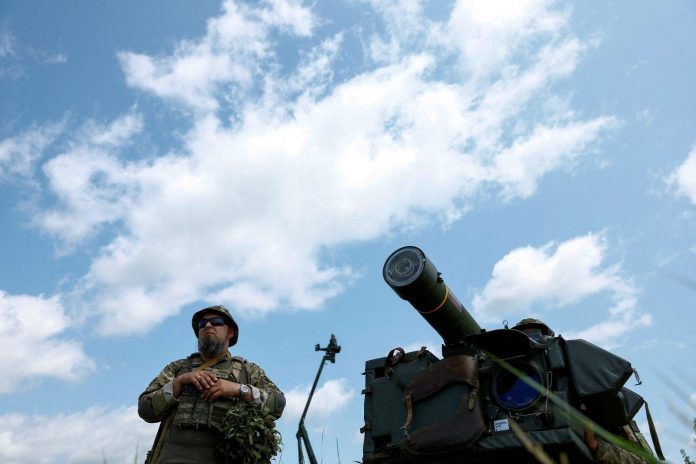
European countries have yet to receive formal approval from Washington to train Ukrainian pilots to fly US-designed F-16 fighter jets, Politico reported, citing sources.
The ‘international coalition’ seeking to help Kiev procure F-16s and train Ukrainian pilots was first announced by the UK and the Netherlands in mid-May, with the US coming on board a few days later. A total of 11 countries have supported the initiative, with a training center expected to be set up in Romania.
However, the US State Department has not approved the request to transfer instruction manuals, flight simulators, and other materials required for training, Politico said, adding, however, that there is no indication that the US will not eventually greenlight the move.
Pentagon spokesman Garron Garn said the request “is still being reviewed.”
William LaPlante, the department’s acquisition chief, told the outlet that the Pentagon has to “make sure we’re ready to go with the technical manuals being translated and the tech data packages and a sustainment plan” before approving the transfer.
In recent months, Ukraine has repeatedly demanded that its Western backers send F-16 jets, saying they could play a key role in countering Russian air power. Earlier this week, Ukrainian Foreign Minister Dmitry Kuleba said Kiev could deploy the first F-16s by late March 2024.
Russian President Vladimir Putin has warned that if F-16s are sent to Ukraine, they “will burn” just like other Western hardware. Foreign Minister Sergey Lavrov has described the potential deliveries as an escalatory move, noting that the aircraft can carry nuclear weapons.
In early June, Politico reported that senior US officials believe that future support for Ukraine hinges on the success of its much-hyped counteroffensive, and should Kiev fail to deliver, the military assistance “will likely dry up.” Later the same month, the Financial Times reported, citing sources, that Western officials are not impressed by the results of the counteroffensive.
The Russian Defense Ministry said the Ukrainian counteroffensive, which has been underway for more than a month, has failed to gain any ground. According to Defense Minister Sergey Shoigu, since the start of the push, Kiev has lost more than 26,000 soldiers and around 3,000 units of heavy military equipment.
Ukrainian officials, including President Volodymyr Zelensky, attempted to shift the blame for the slow progress onto the West, citing delays in military aid.
EU divided over profiting from Russian assets: Report
EU leaders and the European Central Bank have argued over a plan to use profits generated by Russian assets that are frozen under EU sanctions, Bloomberg reported, citing anonymous sources.
The EU has frozen assets and reserves belonging to the Russian state worth some worth some €207 billion ($217 billion) since the beginning of Moscow’s military operation in Ukraine. The assets are expected to generate around €3 billion in interest. A large chunk of the funds is held at the Belgian settlement giant Euroclear, where it generated nearly €750 million in taxable profit by the first quarter of this year, according to the clearing house’s own data.
The EU leaders have repeatedly called to use the funds ‘to rebuild’ Ukraine and agreed last month to begin work on a windfall tax to acquire the interest generated on the funds.
However, ECB President Christine Lagarde warned during a meeting on Thursday that a windfall tax could undermine the euro and lead to a re-think among reserve holders, Bloomberg reported, quoting people familiar with the discussions.
Lagarde reportedly said that the amount at stake was far greater than the few billions that the move would generate for Ukraine. Any decision should only happen if the G7 nations, among which are Canada, Japan, the United Kingdom and the United States, are on board too, she added.
European commission Vice President Valdis Dombrovskis reportedly countered Lagarde’s arguments by saying that the windfall option does not affect Russia’s assets themselves nor does it apply to the EU’s role in safekeeping securities. Lagarde is said to have shaken her head at Dombrovskis’ counterarguments.
Some member states support Lagarde’s position while others believe that it was only a question of how to advance, and not if, Bloomberg concludes.
Moscow has repeatedly described any seizure of its assets by Western governments as theft and illegal under international law.
South Korea President visits Ukraine
South Korean President Yoon Suk Yeol was visiting Ukraine on Saturday for talks with President Volodymyr Zelensky, the South Korean presidential office said.
The surprise trip came after Yoon attended a NATO summit in Lithuania and visited Poland this week, where he expressed solidarity with Ukraine and explored ways to support its fight against Russia’s invasion.
Yoon visited the site of mass killings in Bucha near the capital Kyiv, before visiting Irpin, a residential area that received large-scale missile attacks. He was expected to hold a summit with Zelensky afterward, his office added.
A US ally and rising arms exporter, South Korea has faced renewed pressure to provide weapons to Ukraine, which Yoon’s administration has resisted in favour of humanitarian and financial aid, wary of Russia’s influence over North Korea.
Yoon stated this week his administration was preparing to send de-mining equipment and ambulances, following a request from Ukraine, and will join NATO’s trust fund for Ukraine.
Zelensky asked Yoon to boost military support when they met for the first time in May.
South Korea’s defence ministry has announced it was discussing exporting ammunition to the US, but said media reports that Seoul had agreed to send artillery rounds to the US for delivery to Ukraine were inaccurate.
“We view Russia’s invasion of Ukraine as a challenge to the international community’s freedom, human rights and the rule of law,” Yoon stated upon meeting Polish President Andrzej Duda on Thursday, adding that South Korea could be a good partner in rebuilding Ukraine.
South Korea’s Ministry of Land, Infrastructure and Transport announced on Friday it planned to support the reconstruction of Ukraine’s infrastructure, such as transportation, energy and industry.
South Korean companies and companies in Ukraine and other countries signed agreements on Friday for cooperation in the reconstruction of Ukraine, the ministry added.
NATO sponsors ‘nuclear terrorism’: Russia
Western countries are encouraging Ukraine to conduct attacks on Russia’s nuclear sites, Russian Foreign Ministry spokeswoman Maria Zakharova said following a drone crash in the city of Kurchatov, which is adjacent to the Kursk Nuclear Power Plant.
“The countries that supply [drones] to Kiev – do they plan to resettle on Mars in case of a nuclear disaster?” Zakharova wrote on her Telegram channel on Saturday.
“The people in NATO countries must understand that their governments are sponsoring nuclear terrorism carried out by Kiev,” she added.
Zakharova’s statement came after a UAV exploded and crashed in Kurchatov early Friday morning, damaging a residential building. The city, which is named after nuclear physicist Igor Kurchatov, was founded in the late 1960s to serve the nearby power plant. It is also home to companies that manufacture parts for nuclear reactors.
US officials downplay cluster bombs for Ukraine: Report
Cluster munitions, which Washington has recently decided to provide to Kiev, will not have a significant impact on the situation on the front lines in the short run, the New York Times reported on Friday, citing former US officials and military analysts.
The ammunition will not “immediately help” Ukraine’s offensive and will only allow Kiev’s troops to hold out as they face a drastic ammunition shortage, the experts believe.
“The scale of effect will be modest,” Jack Watling, a senior research fellow at the Royal United Services Institute (RUSI) in London, told the paper, adding that the real impact will only be seen when “Ukraine has significantly more ammo.”
Colin Kahl, the US undersecretary of defense for policy, said the cluster bombs will only allow Ukraine to “sustain the artillery fight for the foreseeable future.”
According to the analysts, the Ukrainian military is likely to use cluster munitions to sustain the high rate of artillery fire as they revert from Western combined-arms tactics to Soviet-style heavy artillery shelling of Russian positions.
“It looks like they’re back to an artillery duel,” Amael Kotlarski of the defense intelligence company Janes told the Times.
Western advisers have hailed synchronized attacks by infantry, tanks, and artillery as superior tactics to the artillery-centered approach that both Russia and Ukraine had used before. Ukrainian commanders, however, apparently became disillusioned with these tactics after their troops suffered heavy losses in unsuccessful attempts to penetrate Russian defenses over the past month, the daily reported.
This development did not sit well with senior US officials, who have “privately expressed frustration” in recent weeks. The paper also described the artillery duel strategy as less efficient and more costly.
US is “very close” to a decision on providing guided missiles to Ukraine: Zelensky aide
One of Ukrainian President Volodymyr Zelensky’s most senior aides has expressed optimism Kyiv might soon be adding Army Tactical Missile Systems (ATACMs) to its arsenal of weapons.
The US-manufactured guided missile has a range of up to 300 kilometers (about 186 miles).
Andriy Yermak told journalists in Kyiv he believed the Joe Biden administration was “very close” to making a decision on approving the transfer of the missiles to Ukraine, though he stressed that a final decision had not yet been made.
Ukrainian leaders have had ATACMs close to the top of their wish list since the early months of the war. The missiles’ longer range would bring more Russian targets into view, including some in occupied Crimea, as well as in Russia itself, a fact that has worried the US.
Key among the Russian targets Ukraine is looking to hit are ammunition dumps and fuel depots, as well as buildings housing Russian soldiers far behind the frontlines.
In recent months, Ukraine has stepped up these strikes in what are described as shaping operations, aimed at disrupting and degrading enemy supply lines ahead of ground offensives. Reports suggest Ukraine has begun to make effective use of Storm Shadow missiles, which were donated by the UK in May and have a range of about 250 kilometers (155 miles).
Russia “investing everything” to stop Ukrainian forces in south and east: Zelensky
President Volodymyr Zelensky said Russia is applying its maximum efforts to stop Ukraine’s advancements in the southern and eastern parts of the country.
“The Russian forces on our southern and eastern lands are investing everything they can to stop our warriors. And every thousand meters of advance, every success of each of our combat brigades deserves gratitude,” Zelensky stated in his nightly address on Friday.
“Our full focus is on the frontline,” Zelensky added.
Zelensky also said there will be further negotiations with international partners after returning from the NATO summit in Vilnius.
“We will not reduce our international activity for a single day, in particular with regard to the Peace Formula, security guarantees for Ukraine on its way to NATO, and agreements with partners on weapons for Ukraine and sanctions against Russia,” he added.
Russia has increased intensity of shelling on Ukraine’s northern border: Ukrainian border guard
Russia has greatly increased the intensity of shelling of Ukraine’s northern border, the State Border Guard Service of Ukraine said on Friday.
The intensity of shelling near the Chernihiv-Sumy region “tripled” in June compared to May, according to Andrii Demchenko, a spokesperson for the State Border Guard Service of Ukraine.
“Since the beginning of this year, Chernihiv, Sumy, and Kharkiv regions have been shelled by the enemy more than 1,000 times,” Demchenko said, adding that Russia continues shelling the border areas on a daily basis.
“The Sumy and Kharkiv regions have been the most frequently shelled,” he continued.
The Ukrainian military had earlier advised residents of the northern Sumy region’s border area to leave their homes in light of increased Russian shelling. Serhiy Naiev, commander of the Joint Forces of the Armed Forces of Ukraine, encouraged residents to evacuate, saying, “The Sumy direction remains the most dangerous in the Northern operational zone.”
Number of Russian military personnel in Belarus has decreased: Ukraine
The number of Russian military personnel in Belarus has greatly decreased, according to the State Border Guard Service of Ukraine on Friday.
Ukraine recorded around 2,000 Russian military personnel stationed at Belarusian training grounds until recently, but at the moment “almost all Russian troops have been withdrawn from the territory of Belarus,” said spokesperson for the State Border Guard Service of Ukraine Andrii Demchenko.
“However, we cannot rule out the possibility that in some time, as part of the rotation, regular units may be brought back to the territory of Belarus,” Demchenko noted in a media briefing while emphasizing that the situation on the border with Belarus “remains fully under control.”
Ukraine’s Border Guard Service also said they have not observed “the organized deployment of Russian mercenaries” in the territory of Belarus.
However, that comment follows the Belarusian Defense Ministry announcing on Friday that Wagner private mercenary group fighters are training Belarusian fighters near the town of Osipovichi, about 90 kilometers (56 miles) south of the capital Minsk.
Turkish president says he hopes Black Sea grain deal will be extended
Turkey is preparing to host Russian President Vladimir Putin in August and both countries agree the Black Sea grain deal should be extended, Turkish President Recep Tayyip Erdogan said during a press conference in Istanbul on Friday, despite Russia’s threats that it may quit the deal.
The United Nations Secretary-General António Guterres “sent a letter to Mr. Putin. I hope that with this letter and the joint effort by us and Russia, the grain corridor will be extended,” Erdogan added.
The deal is due to expire Monday. Putin said Thursday that Russia may quit the Black Sea grain deal if its demands are not met. A key Russian demand has been to allow access to international payments mechanisms currently out of bounds to Russian banks as part of an international sanctions regime.
EU and WHO announce commitment to strengthen medical evacuation operations in Ukraine
The European Union and World Health Organization are working to further bolster medevac operations in Ukraine to ensure the country’s people get timely medical care, according to an EU statement released Friday.
“Medical evacuations are an essential part of the European Union’s emergency support to Ukraine. Russia’s full-scale invasion leaves military and civilians heavily wounded while also ruining healthcare infrastructure,” said Peter M. Wagner, the head of the European Commission’s Service for Foreign Policy Instruments.
“In coordination with the EU Civil Protection Mechanism, our new project will further help alleviate the pressure on Ukraine’s healthcare system, helping evacuated patients to return and integrate into national rehabilitation schemes, while also supporting provision of the best possible care for patients,” Wagner added.
Since the start of the full-scale invasion, more than 2,350 Ukrainian patients have been transferred to hospitals in 21 European countries to receive treatment for “severe war wounds or conditions that cannot currently be easily treated inside Ukraine, such as specialized cancer treatments and rehabilitation support,” according to the EU.
More than 370 patients have requested and been supported to return to Ukraine following their treatment.
“The project will help the Ukrainian Ministry of Health to further develop and formalize the procedures of their dedicated Medevac Coordination Unit, particularly the new efforts being made to ensure the safe return of patients who have finalized their acute treatment abroad and wish to continue their rehabilitation in their home country,” the EU statement said.
WHO European Region Emergency Director Dr. Gerald Rockenschaub added: “Safe transfer of patients across borders requires all partners to work together effectively and efficiently to ensure that people can get the life-saving treatment they desperately need. We welcome this opportunity to build on our relationship with our partners, both in the European Union and other institutions.”
Biden authorizes Pentagon to send up to 3,000 reserve forces to Europe amid the war in Ukraine
US President Joe Biden authorized the Pentagon to send up to 3,000 reserve forces to Europe as Russia’s war in Ukraine continues.
The US has more than 100,000 service members in Europe, a number that has grown since Russia’s invasion began in February 2022.
Under the new authorization, the reservists would be part of Operation Atlantic Resolve, the ongoing rotational deployments that bolster NATO and its eastern flank. The newly signed executive order designates Operation Atlantic Resolve as a contingency operation, which gives reservists the same benefits as active-duty service members.
No US troops are directly involved in the war in Ukraine as Kyiv is not a member of the NATO alliance.
“This new designation benefits troops and families with increases in authorities, entitlements, and access to the Reserve component forces and personnel,” said Joint Staff Director of Operations Lt. Gen. Douglas Sims at a press briefing.
The move gives the Defense Department another option to send more capabilities to assist US European Command. But a defense official said it would likely take approximately six months to send these reservists to the theater because of the advance notice required.
The added troops would likely work in logistics and sustainment, or medical fields like dentistry and health care — roles that the reserves typically have more of than the active-duty force.
Since 2014, US forces have deployed to Europe under Atlantic Resolve to work with allies and partners in the region. Pentagon press secretary Brig. Gen. Patrick Ryder added that the new designation will enable the Defense Department to “provide better system support and sustain our forces.”
“(T)his includes things like increased contracting responsiveness, personnel-related entitlements that give activated reservists the same benefits as active component personnel,” he continued, stating, “It also, as a secretary-level operation, enhances our ability to track spending directly associated with this contingency.”
The executive order approving the mobilization of more forces gives officials the ability to call on troops “to come support Atlantic Resolve, and as I just highlighted, be entitled to the same kind of benefits as their active-duty counterparts.”