Zelensky appeals for security guarantees “on our way to NATO membership”
President Volodymyr Zelensky stated Ukraine is “on the way to NATO membership,” and that in the process, it “needs effective security guarantees.”
“While we are on our way to NATO membership, Ukraine needs effective security guarantees on the way to the Alliance. We now have an appropriate package of guarantees, and I ask you to support and join it,” the president said in a series of tweets.
Zelensky also referred to the conditions that Ukraine must meet to accede to NATO. Some Ukrainian officials have described these as vague or unclear.
“The absolute majority of our people expect specifics about these conditions. We perceive them as security conditions. We understand that Ukraine cannot become a member of NATO while the war is ongoing. But then it will be our common strength when Ukraine joins the Alliance,” he added.
Earlier Wednesday, NATO Secretary General Jens Stoltenberg stressed that the joining the alliance was always conditions-based and mentioned interoperability of forces.
Earlier Wednesday, Zelensky criticized the alliance, saying it was “absurd” that a timeline had not been set for Ukaine’s invitation and membership to NATO.
Biden: US is doing “everything we can” to support Ukraine
US President Joe Biden addressed the frustration that has been expressed by Ukrainian President Volodymyr Zelensky over Ukraine’s needs during Russia’s war, and said, “the United States is doing everything we can.”
“Your resilience and the resolve has been a model for the whole world to see. And the frustration, I can only imagine. I know you’re many times frustrated about when things get to you quickly enough and what’s getting to you and how we’re getting there. But I promise you, the United States is doing everything we can to get you what you need as rapidly as we will get it to you,” Biden stated before his meeting with Zelenksy.
Biden and G7 leaders unveiled a substantial show of support for Ukraine Wednesday at the NATO Summit in Vilnius, Lithuania, offering a joint declaration of support for Ukraine aimed at bolstering the war-torn country’s military capability.
The security guarantees from leading nations and assurances that Ukraine’s future lies in NATO on Wednesday appeared to calm brewing worries that Ukrainian frustrations at not being admitted to the alliance would overshadow one of the most significant meetings of the alliance in recent memory.
Zelensky arrived in Lithuania on Tuesday and had issued a blistering statement expressing his frustration at not receiving more specific details on when and how Ukraine would join the alliance.
Biden: G7 joint declaration will ensure support for Ukraine will last “long into the future”
US President Joe Biden said members of the Group of 7 are launching a joint declaration “to make it clear that our support will last long into the future.”
In remarks with Ukrainian President Volodymyr Zelensky and Japanese President Fumio Kishida at the NATO summit in Vilnius, Lithuania, Biden said “we’re not waiting” for the NATO accession process to play out before guaranteeing long-term security commitments to Ukraine.
“This starts a process by which each of our nations and any other nation who wishes to participate will negotiate long-term bilateral security commitments with and to Ukraine. We’re gonna help Ukraine build a strong, capable defense across land, air and sea … It will be a force of stability in the region and deter against any and all threats,” Biden stated.
The US president promised to help Ukraine “for as long as that takes.”
Zelensky praises NATO summit talks but says membership invite would have been “optimum”
Ukrainian President Volodymyr Zelensky said his discussions with allies at the NATO summit in the Lithuanian capital Vilnius have been “good,” but emphasized his ultimate goal of accession for Ukraine.
“We can state that the results of the summit are good, but should we receive an invitation they would be the optimum,” Zelensky stated.
“We highly appreciate the recognition that Ukraine will not need a membership application plan on its way to NATO. I would like to have success at this summit for everyone – for our soldiers, for our citizens, for our children, for everyone,” he added.
NATO has eased the pathway for Ukraine to join NATO but not offered a specific time frame.
Ukraine’s bid for NATO membership has dominated talks at the conference in Vilnius this week, where G7 leaders are expected to pledge further military aid for Kyiv.
“Today those guarantees could be confirmed by the G7 countries,” Zelensky said, adding “this will surely become a very important and specific success.”
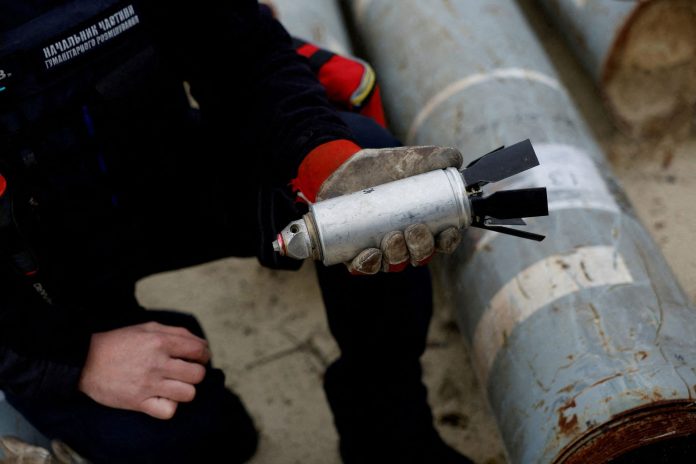
Asked about the US decision to send cluster munitions to Ukraine, Zelensky thanked US President Joe Biden.
“I know it was a challenge in the United States, it was a challenge in the US congress and there are people who are not sharing the support with regards to the cluster munitions. But I want us to take a look at this from a different perspective, from a perspective of fairness,” he said.
The Ukrainian President also added that Kyiv needs “long-range weapons” and said he will raise “this issue.”
NATO head says Putin victory is “biggest risk” of war in Ukraine
NATO Secretary General Jens Stoltenberg said “the biggest risk” would be if Russian President Vladimir Putin won the war in Ukraine, in strong remarks highlighting the threat of the conflict to Europe’s security landscape.
“There is a full-fledged war going on in Europe and there is no risk free option for NATO allies, but the biggest risk is if President Putin wins,” Stoltenberg stated on the second day of the NATO summit in Vilnius in Lithuania.
“That’s exactly why it’s important for NATO allies to support Ukraine,” he added.
“It will be a tragedy for Ukraine if President Putin wins, but it will be dangerous for us, it will make us more vulnerable,” he continued.
Kremlin says Western security guarantees for Ukraine ‘dangerous’
The Kremlin has announced that it was misguided and “potentially very dangerous” for the West to give Ukraine security guarantees, and said they would infringe on Russia’s own security.
G7 countries are expected to announce an international framework that would pave the way for long-term security assurances to embolden Ukraine in the face of current and future Russian aggression.
Ukraine is now closer to NATO than ever before: Chief
NATO chief Jens Stoltenberg tells reporters in Lithuania that “Ukraine is now closer to NATO than ever before.”
In a joint press conference with Ukrainian President Volodymyr Zelensky at the military alliance’s Summit, he told Zelensky: “I look forward to the day we meet as allies.”
While Zelensky said the results of the NATO summit are good with allies pledging more defence packages, he stated an ideal situation would have been an invitation to Kyiv to become a member of the alliance.
Germany pledges Patriot missile defense systems to Ukraine
Germany is to send Ukraine additional launchers and missiles for Patriot missile defense systems, Ukrainian President Volodymyr Zelensky said Wednesday.
“We continued the conversation on security guarantees for Ukraine on its way to NATO with Chancellor Scholz. Thank you for your support,” Zelensky said on Telegram.
“There is an agreement on additional Patriot launchers and missiles for them from Germany. This is very important to protect life in Ukraine from Russian terror,” he continued.
“I am grateful for Germany’s readiness for long-term, multi-year support of Ukraine and our defense of freedom. Long-term support programs are the best signal to everyone in the world that our Europe will remain a space of security and peace,” he added.
On Tuesday, Germany announced weapons and military aid worth €700 million ($769.9 million), the country’s defense ministry said in a statement.
Allies of Kyiv have previously sent Patriots to Kyiv, increasing Ukraine’s capacity for long-range air defense.
The Patriot has a powerful radar to detect incoming targets at long range, making it capable of intercepting ballistic missiles and more.
The war in Ukraine shifted Europe’s security landscape, prompting NATO member countries including Germany to rethink its approach to national security strategy and modernize its military capacity.
Kremlin says ‘visit to China’ on Putin’s agenda
The Kremlin has said that a visit by President Vladimir Putin to China was on the agenda.
Kremlin spokesperson Dimitry Peskov told reporters in Moscow that now was a good time to maintain the good relations that exist between Moscow and Beijing.
He added that the date of the president’s trip would be announced when it had been finalised.
China has not condemned Russia’s actions in Ukraine and also downplayed the recent short-lived Wagner rebellion.
At their meeting in Lithuania, NATO leaders said “the deepening strategic partnership between the People’s Republic of China and Russia and their mutually reinforcing attempts to undercut the rules-based international order run counter to our values and interests.”
NATO leaders also called on China to condemn Russia’s war of aggression against Ukraine and abstain from supporting Russia’s war effort in any way.
Ukraine to receive “substantial” new aid package: US official
US President Joe Biden and NATO leaders have “unanimously agreed” to send a “substantial” new aid package to Ukraine, National Security Council senior director for Europe Amanda Sloat told reporters Wednesday — but she declined to provide additional details.
The alliance will also hold the inaugural meeting of the NATO-Ukraine Council, before Biden meets with President Volodymyr Zelensky, with “near and long-term support for Ukraine” on the agenda, Sloat said.
Later Wednesday, Biden will give a major address on foreign policy, reflecting on the strength and power of the NATO alliance, Sloat added.
Biden and G7 leaders set to announce new boost for Ukraine’s military capabilities
US President Joe Biden and G7 leaders are set to make a “major announcement” with Ukrainian President Volodymyr Zelensky Wednesday in Vilnius, Lithuania, about boosting Ukraine’s military capabilities, offering additional assistance to the war-torn country as its leader expresses frustration with path to NATO membership.
“The United States, along with G7 leaders will announce our intent to help Ukraine build a military that can defend itself and deter a future attack,” National Security Council senior director for Europe Amanda Sloat told reporters during a briefing Wednesday.
The announcement will start a process of bilateral negotiations with Ukraine, Sloat said.
There will be a “long-term investment in Ukraine’s future force” aimed at “ensuring Ukraine has a sustainable fighting force capable of defending Ukraine now and deterring Russian aggression in the future, a strong and stable economy, and the help Ukraine needs to advance the reform agenda to support the good governance necessary to advance Ukraine’s Euro-Atlantic aspirations,” she continued.
Sloat added the purpose of the declaration would be twofold: bolstering Ukraine’s deterrence, and sending a message to Russia.
She stated the announcement will be made at “an event with the G7 leaders and President Zelensky” following the end of the NATO Summit, with more information to come.
UK announces major funding package for Ukraine — including $65 million for equipment repair
The United Kingdom is expected to announce a new major funding package for Ukraine, which will include additional ammunition and combat vehicles, as well as £50 million ($64.7 million USD) in support for equipment repair and a new military rehabilitation center, according to a Downing Street statement.
The UK also said G7 partners are expected to agree to an international framework for Ukraine’s long-term security arrangements on Wednesday, which “will set out how allies will support Ukraine over the coming years to end the war and deter and respond to any future attack.”
“It is the first time that this many countries have agreed a comprehensive long-term security arrangement of this kind with another country,” according to Downing Street.
Following a joint declaration on Wednesday, G7 partners “will provide more defense equipment, increase and accelerate intelligence sharing, bolster support for cyber and hybrid threat defenses, expand training programs and military exercises, and develop Ukraine’s industrial base,” the statement said.
The British government’s latest funding package will include:
- Additional rounds of Challenger 2 ammunition.
- More than 70 combat and logistics vehicles, including Combat Vehicle Reconnaissance Tracked vehicles.
- The UK will also provide funding for a rehabilitation center to aid Ukrainian soldiers who have been injured in combat.
“As Ukraine makes strategic progress in their counteroffensive, and the degradation of Russian forces begins to infect (Russian President Vladimir) Putin’s front line, we are stepping up our formal arrangements to protect Ukraine for the long term,” British Prime Minister Rishi Sunak said in the statement.
“Supporting [Ukraine’s] progress on the pathway to NATO membership, coupled with formal, multilateral, and bilateral agreements and the overwhelming support of NATO members will send a strong signal to President Putin and return peace to Europe,” Sunak said.
NATO allies approved group’s most “comprehensive defense plans” since Cold War: Chief
NATO allies gathered at the summit in Lithuania have approved the military alliance’s most “comprehensive defense plans” since the Cold War, the group’s chief Jens Stoltenberg said in a tweet on Tuesday.
“Allies took key decisions at a critical moment for our security. We agreed a package to strengthen Ukraine & provide a clear path towards NATO. We also approved our most comprehensive defence plans since the Cold War, backed by an enduring commitment to invest more in defence,” he wrote.
Ukrainian military says forces are making progress in south
The Ukrainian military said it is making progress on the southern front and has “conducted both offensive and effective defense operations.”
Valerii Shershen, a spokesperson for the forces in the south, said the Russians had been forced to “pull up reserves as a result of the onslaught by our strike units.”
He added other Ukrainian units continued to “consolidate their positions, conduct demining and are in number one readiness to continue the offensive.”
Ukrainian officials have made it clear that minimizing losses is their priority as they try to break down complex Russian defenses developed over a period of months.
In the east, Russian attacks continue around Marinka and Avdiivka, Shershen continued, adding, “We are fighting back and holding our ground. Over the last day, 18 combat engagements took place here, most of them in the area of Marinka.”
He claimed 74 Russian troops were killed, 85 wounded and 19 surrendered.
US ambassador to NATO says it is tough to agree on timeline for Ukraine’s accession
Julianne Smith, US Ambassador to NATO, told CNN that it is “very tough” to agree on a timeline for Ukraine’s accession to the alliance while the country is still at war.
“Even the Ukrainians themselves will tell you that they need to make further reforms. They’ve made good progress on a variety of democratic and security sector reforms, but they’ll have to continue working in that direction,” Smith told CNN Tuesday.
Smith reiterated that Ukraine has already taken positive steps, which led to NATO agreeing to streamline the accession process by removing a key hurdle for Ukraine — the requirement for a Membership Action Plan.
When asked about whether Ukraine’s position and the lack of a timeline gives Russia an incentive to continue fighting, Smith emphasized that allies have already committed to Ukraine’s future in NATO, as well as to giving the country long-term support.
“(Russian President Vladimir) Putin assumed when he started this war, that he could wait us out that the West would look the other direction and it would ultimately lose interest in Ukraine. And the reality is we’re at day 500 of this war, and no one is going anywhere,” she added.
Smith also stated the United States is “thrilled” Ukrainian President Volodymyr Zelensky is in attendance for the summit and for the first NATO Ukraine Council, adding, “I think this sends a very strong signal to President Putin.”
“Ukraine’s future is in NATO”: alliance members reaffirm in joint declaration at summit
NATO allies on Tuesday reaffirmed their support for Ukraine’s push for membership of the alliance, according to a final declaration issued by the 31-member group at a summit in Lithuania.
“Ukraine’s future is in NATO,” it said.
“We will be in a position to extend an invitation to Ukraine to join the alliance when allies agree and conditions are met,” it added.
NATO allies also reiterated their condemnation “in the strongest terms (of) Russia’s blatant violations of international law, the Charter of the United Nations, and OSCE commitments and principles.”
“We do not and will never recognise Russia’s illegal and illegitimate annexations, including Crimea,” the statement read.
“There can be no impunity for Russian war crimes and other atrocities, such as attacks against civilians and the destruction of civilian infrastructure that deprives millions of Ukrainians of basic human services,” according to the declaration.
NATO allies say China’s deepening partnership with Russia runs against alliance values
NATO allies have called on China to abstain from supporting the Russian war effort in Ukraine “in any way,” stressing that China’s “deepening” partnership with Russia runs against the alliance’s values.
In a joint communiqué published Tuesday, NATO allies said the “stated ambitions and coercive policies” of the People’s Republic of China (PRC) challenge the alliance’s “interests, security and values.”
“The deepening strategic partnership between the PRC and Russia and their mutually reinforcing attempts to undercut the rules-based international order run counter to our values and interests,” the allies said in the lengthy declaration.
“We call on the PRC to play a constructive role as a permanent member of the United Nations Security Council, to condemn Russia’s war of aggression against Ukraine, to abstain from supporting Russia’s war effort in any way, to cease amplifying Russia’s false narrative blaming Ukraine and NATO for Russia’s war of aggression against Ukraine, and to adhere to the purposes and principles of the UN Charter,” they added.
NATO allies issued a specific call to China to “act responsibly and refrain from providing any lethal aid to Russia” for use in the war in Ukraine.
China has refused to condemn Moscow’s full-scale invasion of Ukraine or call for the withdrawal of Russian troops from Ukraine’s territory.
In late May, China’s envoy for the war in Ukraine, Li Hui, carried out a two-week tour of Europe in which China stressed resolving the conflict between Russia and Ukraine. Although China has adopted a neutral stance toward the conflict, NATO leaders, including French President Emmanuel Macron, have publicly expressed their hope that Chinese President Xi Jinping could “reason” with his Russian counterpart Vladimir Putin.
Xi last met with Putin during a state visit at the Kremlin in March, and the two leaders touted the close ties and strategic visions shared by their countries.
Ukraine reaches agreement on coalition to train pilots on F-16 fighter jets
Ukrainian Defense Minister Oleksii Reznikov says Ukraine has reached an agreement with 11 partner states on forming a coalition that will train pilots on F-16 combat aircraft.
Tweeting from Vilnius, Lithuania, where he is attending the NATO summit, Reznikov stated, “It’s official: a coalition for F-16 training of the Ukrainian Air Force has been formed! Today, 11 partner states + Ukraine signed a Memorandum outlining the terms. I’m especially grateful to Denmark and the Netherlands for their outstanding leadership in this process.”
President Volodymyr Zelensky and other Ukrainian officials have made the acquisition of F-16s a priority in their negotiations with Western partners. So far, no government has committed to providing Ukraine with the US-made aircraft.
US President Joe Biden administration has signaled to European allies that the US would allow them to export F-16 fighter jets to Ukraine, according to sources familiar with the discussions.
The Pentagon also announced in May that “F-16s for Ukraine is about the long-term commitment to Ukraine,” and not for the country’s current counteroffensive.
A handful of European countries have a supply of the US-made F-16s, including the Netherlands, which has signaled a willingness to export some of them to Ukraine. But the US would have to approve that third party transfer because of the jets’ sensitive US technology.