Thursday, December 25, 2025
Home Blog Page 1341

Islamic countries should cut diplomatic, economic relations with Sweden: Hezbollah leader

Quran

Nasrallah’s Saturday remarks came after on Friday, he called on all Muslim countries to expel the Swedish ambassadors from their capitals in reaction to a second instance of the desecration of Muslims’ holy book in Sweden.

Nasrallah said the positions that are being adopted by Arab and Muslim countries on this sacrilegious act “must lead to severance of [their] diplomatic and economic relations” with the Swedish government.

Adding to his Saturday comments, the Hezbollah leader stated the Muslim world should not be duped by the Swedish and Danish governments sufficing to mere apologies over the sacrilegious acts.

Nasrallah was referring to two instances of the desecration of the Holy Quran in Sweden and the repetition of the sacrilegious act in Denmark, which prompted Iran to summon the Danish ambassador to Tehran in vehement protest at the insulting act.

“We must not be deceived by the Swedish and Danish [governments’] apologies, [because] they are not enough and these governments must prevent such abusive behavior,” the Hezbollah leader added.

He also hailed the Iraqi government for reacting to the insulting act by expelling the Swedish ambassador from Baghdad and withdrawing its own envoy from Stockholm.

Nasrallah also warned the Swedish government against allowing the repetition of such sacrilegious acts on its soil, saying, “If the Swedish government remains on this path, it will be considered a country fighting Islam and Muslims.”

The Hezbollah leader urged the Swedish government to pay due attention to the remarks made by Leader of the Islamic Revolution Ayatollah Seyyed Ali Khamenei, especially to that part in which the Leader described Stockholm as a “government that has taken battle array against Islam” by authorizing desecration of Muslims’ holy book.

Nasrallah also warned that if it is confirmed that the Israeli spy agency, Mossad, is behind the desecration of the Quran, it would mean that such sacrilegious acts would continue and would be followed by strong popular and official reactions from the Muslim world.

Earlier in July, Iran’s Intelligence Ministry said the Iraqi national who burnt a copy of the Holy Qur’an in Stockholm was affiliated with the Israeli Mossad spy agency and engaged in espionage activities against resistance groups.

The ministry said in its statement that Salwan Momika was born in Iraq in 1986 and was hired by Mossad in 2019, stressing that his notoriety and criminal records in his home country were “accepted and welcomed by Zionists” at the time.

After being recruited by the Israeli spy agency, the Iraqi man “played a major role in spying on the resistance movement and advancing the project of Iraq’s disintegration,” the Intelligence Ministry added.

The ministry stressed that the desecration of the Holy Quran by Momika was part of an Israeli project to detract the world’s public attention away from the regime’s atrocities against Palestinians in the occupied West Bank, especially in the city of Jenin.

Palestinians call for international investigation into Israeli killing of teenager

Israel Palestine

Fawzi Hani Makhalfeh, 18, was driving with his friend Mohammed Mukheimar when Israeli forces opened fire at their car at about midnight.

Mukheimar was injured and arrested by Israeli forces.

Ahmed Jibril, the director of ambulance and emergency services at the Red Crescent, said that Makhalfeh was hit by several bullets, one of them directly in the head, out of dozens of bullets fired by the Israeli soldiers.

In a statement, the Israeli army claimed that the two Palestinians tried to drive a car into soldiers, but Makhalfeh’s family said the two did not target soldiers but were ambushed while driving home, and that their car was riddled with bullets.

The mayor of Sebastia, Mohammad Azem, stated that he was one of the first to arrive at the scene. He described a scene of bloody carnage, with more than 50 bullet holes in the chassis.

“He was a university student,” Azem continued, adding, “It was just so brutal.”

In a statement issued on Saturday, the foreign ministry described Makhalfeh’s killing as an “execution” and called for “bringing the perpetrators and those behind them to justice”.

“The firing of a hail of bullets at the vehicle they were traveling in reflects the magnitude of hatred, aggression, racism, and premeditated killing, which makes every Palestinian vehicle suspicious to the occupation soldiers a target that can be shot at and killing whoever is inside it,” the ministry stressed.

It held the Israeli government fully responsible for what it described as “the heinous crime of execution” its soldiers have committed in Sebastia, calling for an international investigation into it.

Hundreds of people attended the funeral ceremony in Sebastia on Saturday. Makhalfeh’s father helped carry his son’s body which was covered with the Palestinian flag while his head was wrapped in a keffiyeh. He told local media his son was hoping to get married soon.

Makhalfeh had just passed his high school exams and was in good spirits before the shooting, according to local reports.

The shooting came hours after a 17-year-old Palestinian was killed by Israeli fire elsewhere in the occupied West Bank.

The killings are part of a year-long period of violence, marked by repeated Israeli raids on the occupied West Bank, which has shown no signs of abating.

According to reports, 202 Palestinians have been killed in the occupied territories this year alone, with 165 in the occupied West Bank.

Sebastia, northwest of Nablus, is home to an ancient archaeological site, which the Israeli military seeks to seize from the Palestinians and assume full control over it.

Huge crowds march in Israel as vote on judicial curbs nears

Protest Israel

Carrying Israeli flags, a long column of protesters hiked up the winding highway to Jerusalem under a scorching summer sun, to the sounds of beating drums and anti-government chants and cheers.

The government’s attempt to change Israel’s judiciary has plunged the country into one of its worst political crises, sparking nationwide protests, denting the economy and stirring concern among western allies.

Protesters have been walking for days through a heatwave, camping out overnight and met by local people offering food and drink, with their numbers swelling as they reached the city gates in an unprecedented sight.

They plan to rally outside parliament before a Sunday debate and subsequent vote on the bill, which would limit the supreme court’s powers to void what it considers “unreasonable” government or ministerial decisions.

Netanyahu’s religious-nationalist coalition says the bill is needed to balance out the branches of power because the court has become too interventionist.

Critics say the amendment is being rushed through parliament and will open the door to corruption and abuses of power.

Polls suggest widespread misgivings among Israelis. Washington has urged Netanyahu to seek consensus on any judicial changes, which it said should keep Israel’s judiciary independent.

The crisis has even sown divisions within the military, long viewed as an apolitical melting pot for a fractious society, with concerns about war-readiness voiced on both sides of the debate.

Dozens of former security officials, including the heads of the military, police and the Mossad, some of whom served under Netanyahu, published an open letter to the premier on Saturday urging him to call off the vote and negotiate widely agreed reforms instead.

“The legislation is crushing those things shared by Israeli society, is tearing the people apart, disintegrating the IDF [Israel Defense Forces] and inflicting fatal blows on Israel’s security,” the letter said.

Netanyahu, who is on trial for corruption, which he denies, has stated he has been striving for broad agreements and has placed the onus on opposition parties to make compromises.

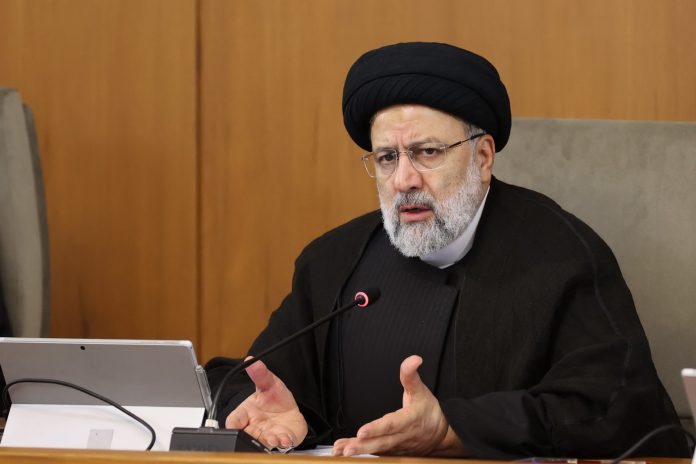
President Raisi says Sweden should bring insulters of Holy Quran to justice

Ebrahim Raisi

“Issuing statement on condemnation of the Holy Quran by the Swedish government is not sufficient by any means and that government should hand over the perpetrators of this crime to justice,” President Raisi said.

“As Supreme Leader of the Islamic Revolution (Ayatollah Seyyed Ali Khamenei) has emphasized what happened in Sweden is a conspiratorial and hazardous event and the support laid by the Swedish government behind this criminal act is tantamount to war buildup vis-a-vis the Muslim world,” he added.

Earlier on Saturday, Ayatollah Khamenei condemned a repeated case of desecration against the holy Quran in Sweden while saying that the individual behind the move should be given the strongest punishment.

“The insult against the holy Quran in Sweden is a bitter, conspiratorial and dangerous incident,” said Ayatollah Khamenei in the message issued on Saturday.

Ayatollah Khamenei stressed that all scholars of the Muslim world agree that the move to insult the holy Quran should face the harshest punishment possible.

He added that the Swedish government has declared war against the Muslim world by backing the criminal, adding that the support has caused hatred and animosity in the entire Muslim countries and their governments against Stockholm.

The Swedish government is supposed to hand over the agent behind the crime to the judicial system of the Muslim countries, the Leader stated.

Ayatollah Khamenei stressed that the conspirators behind the move should know that respect and grandiosity of the holy Quran will increase day by day and such conspiracies and people behind them will not be able to prevent the holy book from shining.

Live Update: Russia’s “Special Operation” in Ukraine; Day 515

Russia Ukraine War
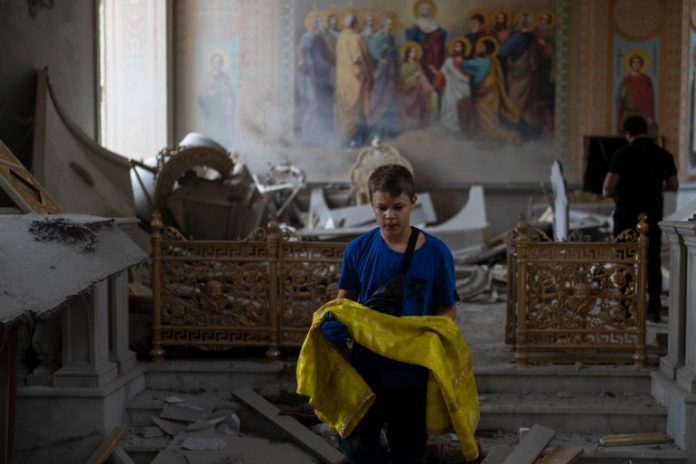
A boy helps salvage items at the Odesa Transfiguration Cathedral after it was heavily damaged in Russian missile attacks in Odesa, Ukraine, Sunday, July 23, 2023.

Ukrainian defense minister eyes next year for country’s accession to NATO

Ukraine’s defense minister says he is eyeing next year’s NATO summit as possible timing for Ukraine to be admitted to the alliance.

Oleskii Reznikov noted that next July’s summit in Washington, DC, will be the 75th anniversary of the alliance.

“Who knows, maybe it will be very important day for Ukraine,” Reznikov told CNN, adding, “It is just my forecast.”

The United States and other NATO countries have said it is impossible to admit Ukraine now because of the ongoing war. The alliance’s Article 5 says allies will come to the aid of a member if attacked.

Reznikov acknowledged that Ukraine will only be able to join the alliance once the war is over, referencing Article 5 and saying “we have no options to have a unanimous vote” while the conflict is ongoing.

When asked if he thought the war would be over by next summer he quickly answered, “Yes. We will win this war.”

Reznikov downplayed the Biden administration’s refusal to commit to Ukraine getting admitted immediately after the war’s end.

“I think it’s not necessary,” he said. Ukraine will have a streamlined admission process and in the meantime will continue to work on the necessary reforms, Reznikov added.

The defense minister emphasized that the benefits of admitting Ukraine to the alliance have only grown given its fight against Russia.

“After the victory, after then, it will be in the interest of NATO because we became a real eastern shield of NATO or eastern shield of Europe,” he said. Ukraine has gained “real combat experience — how to deter Russians, to defeat them, to beat them with using NATO standard weaponry,” he continued.


Russia’s goal to eliminate Ukraine from map “failed a long time ago”: US secretary of state

Russia has “already lost the war” in Ukraine in terms of what Moscow and Russian President Vladimir Putin sought to achieve, US Secretary of State Antony Blinken told CNN.

“The objective was to erase Ukraine from the map, to eliminate its independence, its sovereignty, to subsume it into Russia. That failed a long time ago,” the secretary said in an exclusive interview that aired Sunday.

Blinken acknowledged that Ukraine’s mission to regain territory captured by Moscow — which has gotten off to a slow start, by its own estimation — would be “a very hard fight.” He predicted that the war, which recently surpassed the 500 days mark, would continue for “several months.”

However, he said, along with the aid, military equipment and training Ukraine is receiving from various countries, Kyiv’s cause represents “the decisive element.”

“Unlike the Russians, Ukrainians are fighting for their land, for their future, for their country, for their freedom,” Blinken continued.


Ukraine needs “full-fledged sky shield” to defeat Russian attacks: Zelensky

Ukrainian President Volodymyr Zelensky reiterated his call for more air defense systems following another Russian attack on the port city of Odesa overnight, saying Sunday that “a full-fledged sky shield” is “the only way to defeat Russian missile terror.”

“We have already shown that we can shoot down even the Russian missiles that the terrorists boasted about. Thanks to the help of our partners and the air defense systems provided to Ukraine, our defenders of the sky have saved thousands of lives,” he said in a post on Telegram.

“But we need more air defense systems for our entire territory, for all our cities and communities,” he added.


Toll in Odesa strike rises to two killed, 22 wounded

The death toll from overnight strikes on the port of Odesa rose has risen to two, with 22 people wounded, including four children.

“A man born in 1974 was killed in the nighttime shelling,” Igor Klymenko, Ukraine’s minister of internal affairs, said on Telegram, bringing the toll to two.

“Twenty-two people were injured. Among them are four children: 11, 12, and two 17-year-olds.”


Lukashenko tells Putin Wagner forces ‘are asking to go West’

Belarus President Alexander Lukashenko stated he was “keeping” Russian Wagner mercenaries in central Belarus and that Minsk was “controlling” the situation with the group’s fighters on its territory.

“They are asking to go West, ask me for permission… to go on a trip to Warsaw, to Rzeszow,” Lukashenko said to Vladimir Putin, who smiled.

“But of course, I am keeping them in central Belarus, like we agreed.”

“We are controlling what is happening (with Wagner),” he continued, adding: “They are in a bad mood.”


Putin claims Ukrainian counteroffensive ‘failed’: Russian news agencies

President Vladimir Putin told his Belarus counterpart Alexander Lukashenko that an ongoing Ukrainian counteroffensive to push back Russian forces from Ukraine has “failed”, according to Russian news agencies.

“There is no counteroffensive,” Lukashenko said, according to the TASS news agency, before being interrupted by Putin: “There is one, but it has failed.”

Lukashenko is currently on a working visit to Russia.


‘Wagner Group’s footprint in Belarus is likely expanding’: ISW

The Institute for the Study of War has stated that the Wagner Group’s footprint in Belarus is likely expanding.

The Ukrainian Resistance Center reported on July 22 that approximately 50 Wagner personnel are in Sosnovy, Belarus.

The Center also reported that a field camp for approximately 300 Wagner personnel appeared at the Domanovo Training Ground in Ivatsevitsky Raion, Brest Oblast and that up to 30 Wagner instructors are training Belarusian forces across Belarus.


Two killed in Russian shelling on Kharkiv, houses pounded in Zaporizhzhia

Deadly Russian shelling continued overnight, striking targets in Ukraine’s Kharkiv and Zaporizhzhia regions.

At least 2 people were killed in northeastern Kharkiv, according to local military commanders. Two others were injured including a 60-year-old man and 72-year-old woman.

“Over the past day, the enemy has been massively shelling settlements in Kharkiv, Chuhuiv, Kupyansk and Izium districts with artillery, mortars and aircraft,” Oleh Syniehubov, head of Kharkiv region military administration, said on Telegram.

“Our defenders are holding their positions in the Kupyansk sector. The enemy has made no progress,” Syniehubov added.

Elsewhere, Russian forces struck 20 civilian settlements in Ukraine’s southern Zaporizhzhia region 69 times overnight into Sunday, the head of the Zaporizhzhia region military admiration Yurii Malashko said in a statement on Sunday.

Russian troops also attacked the outskirts of Zaporizhzhia city and the district with four missiles overnight, causing no casualties, according to Malashko.

Zaporizhzhia is a key front in Ukraine’s counteroffensive.


Zelensky condemns Russian strikes on Odesa: “No excuse for Russian evil”

Ukraine’s President Volodymyr Zelensky has said there is “no excuse for Russian evil” following a fifth night of Russian strikes on the city of Odesa.

“Missiles against peaceful cities, against residential buildings, a cathedral… There can be no excuse for Russian evil,” the Ukrainian leader wrote in a statement on Telegram Sunday.

“As always, this evil will lose. And there will definitely be a retaliation to Russian terrorists for Odesa. They will feel this retaliation,” he added.

“All those who suffered from this latest terrorist attack are being provided with assistance. I am grateful to everyone who is helping people and to everyone who is with Odesa in their thoughts and emotions,” he continued, noting, “We will get through this. We will restore peace. And for this, we must defeat the Russian evil.”

Ukraine has been struggling in the past week to repel a wave of Russian strikes against Odesa – with its air defenses unable to cope with the types of missiles that Moscow has used to pummel the region.

Saturday’s strikes damaged a Ukrainian Orthodox Church and several “architectural monuments.”


Cathedral hit as Russia launches fresh strikes on Odesa

Ukraine’s Air Force said on its Telegram messaging app that Russia launched high-precision Onyx missiles and sea-to-shore Kalibr cruise missiles on Odesa after midnight on Sunday.

Odesa governor Oleh Kiper said on Telegram besides killing one and injuring 19 people including four children, it also damaged residential and religious infrastructure.

The RBC-Ukraine news agency also reported that the city’s largest Orthodox church, the Spaso-Preobrazhenskyi Cathedral consecrated in 1809, had been severely damaged in the attacks.

Social media videos showed rubble inside a dark church-like structure lit up by a fire and a distressed man walking and repeating, “The church is no longer.”

Odesa has been bombed several times since the start of the invasion, and in January the United Nations cultural agency UNESCO designated the historic centre of the city as a World Heritage in Danger site.

Moscow had described the attacks as revenge for a Ukrainian strike on a Russian-built bridge to Crimea – the Ukrainian Black Sea peninsula seized by Moscow in 2014.

The city has come under repeated attack since Moscow pulled out of a grain export deal last week.

Ukraine has accused Russia of targeting grain supplies and infrastructure vital to the Black Sea deal.


Moscow slams Kiev’s ‘practice of terror’ following journalist’s death

Ukrainian shelling that claimed the life of a Russian journalist and left several others injured was not a coincidence, Russian Foreign Ministry spokeswoman Maria Zakharova said on Saturday.

Earlier the same day, a war correspondent from Russian news agency RIA Novosti, Rostislav Zhuravlev, was killed in an artillery strike in Zaporozhye Region.

The reporter, along with his colleagues, who also suffered injuries in the strike, was collecting information on Ukrainian cluster bomb strikes on settlements in the region, Zakharova explained.

“The Kiev regime is continuing its practice of criminal terror,” she said in a statement on Telegram.

The spokeswoman also accused Kiev’s Western backers of tacitly condoning these actions.

The US, UK, and France express their concerns over the security of journalists “in words only,” she stated.

Moscow also has “no illusions” regarding the “relevant international bodies,” Zakharova added, claiming that they are likely to “turn a blind eye to this heinous crime.”

This only shows the “political bias and dysfunctionality” of these organizations, she said, adding that their silence makes them “accomplices to the terrorist rampage of Kiev.”

Zakharova vowed there would be “well-deserved punishment” for those behind the killing of the Russian journalist, and that those who supply the Ukrainian military with cluster bombs “will share full responsibility” for his death.

Earlier this month, the administration of US President Joe Biden decided to provide Kiev with cluster munitions – a move that sparked criticism even among Washington’s NATO allies, including Canada, Germany, and the UK.

Russian President Vladimir Putin said in July that the use of cluster bombs should be regarded as a war crime. These weapons were banned by more than 110 nations under a UN convention in 2008 due to the grave danger they pose to civilians. Cluster munitions release small bomblets that scatter around a wide area and can remain unexploded for years, effectively acting as landmines.


Zelensky calls for Ukraine-NATO council after Russia’s withdrawal from Black Sea Grain deal

In their phone call Saturday, Ukrainian President Volodymyr Zelensky said he asked NATO Secretary General Jens Stoltenberg “to urgently convene” a meeting between Kyiv and members of the military alliance, due to Russia’s “aggressive steps” in the Black Sea.

Moscow has pulled out of a deal that allowed for the safe passage of Ukrainian grain exports during the war, throwing the near-future of the global food market into question.

“Any destabilization in this region and the disruption of our export routes will mean problems with corresponding consequences for everyone in the world,” Zelensky stated in his nightly address Saturday.

Zelensky noted a Ukraine-NATO council is urgently needed “for appropriate crisis consultations” and to decide on steps “to unblock and ensure the stable operation of the grain corridor.”

The Ukrainian leader added he expects the meeting to occur in a few days.


Number of Wagner fighters in Belarus “may reach about 5,000”: Ukraine’s Border Guard

The number of Wagner fighters in Belarus “may reach about 5,000,” according to Andrii Demchenko, a spokesperson for the State Border Guard Service of Ukraine.

“At the beginning, when mercenary groups began to enter Belarus, their number was estimated in the hundreds. However, now, given the available information about representatives of private military companies, their number is certainly different and may reach about 5,000,” Demchenko said in a media briefing with Ukrainian state news agency Ukrinform on Saturday.

He noted that such a number of Russian mercenaries does not pose a direct threat to Ukraine, but the border guards are ready for any situation.

“The situation on the border is fully under control,” he added.

Serhiy Naiev, the commander of the combined forces, commented on the situation on the border with Belarus in a Facebook update Saturday. He said “the steps that the members of the “Wagner” PMC in Belarus are taking aim to put psychological pressure and intimidate the population of Ukraine.”

Naiev added that “in order to prevent enemy actions, five sections of roads leading to the state border with Belarus were destroyed over the last week.”

He stated Ukrainian fighters created and mined more than 60 forest landslides, adding that “more than two and a half thousand anti-tank mines were laid.”

Wagner fighters arrived in Belarus following a short-lived mutiny by the private military group against the Kremlin last month. On Wednesday, its founder Yevgeny Prigozhin was apparently seen in a video greeting his fighters in the country.

The paramilitary group had served as a key cog in Russia’s war on Ukraine, but the future of its relationship with Moscow is now unclear.

Meanwhile, Belarusian forces will soon hold joint military exercises with Wagner fighters near the border with Poland, according to the country’s defense ministry.

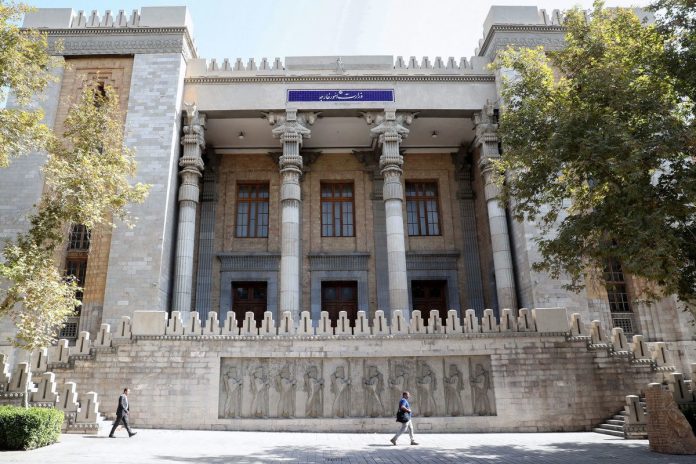
Danish envoy to Tehran summoned to Iran Foreign Ministry over desecration of Quran

Iranian Foreign Ministry

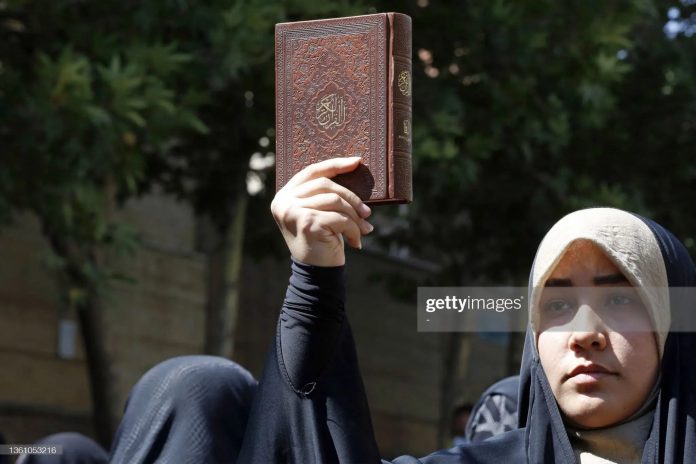
In the summoning session, the Director General of Western Europe Department at the Iranian Ministry of Foreign Affairs condemned any defiling of Islamic sanctities anywhere in the world, stressing that the book burning in Europe is reminiscent of the dark era of ignorance and the mediaeval period, which is per se the biggest threat to the freedom of thought in the West.

Referring to the passiveness of European governments in the face of book burning, the Iranian official said silence toward such a heinous cultural crime has no result other than violence and encouragement and promotion of terrorism.

He underlined that Iran believes if the Danish government had acted responsibly and effectively vis-à-vis insulting Islamic sanctities, the world would not be witnessing such a sacrilegious act today.

The Danish ambassador, for his part, expressed regret over the insult to the Holy Quran, saying Denmark’s foreign minister clearly condemned the desecration of the Quran as a horrible act.

Jasper Vahr noted that disrespecting other religions is a shameful act and, therefore, the Danish government disassociates itself from such embarrassing provocations, which have no other purpose than to create division.

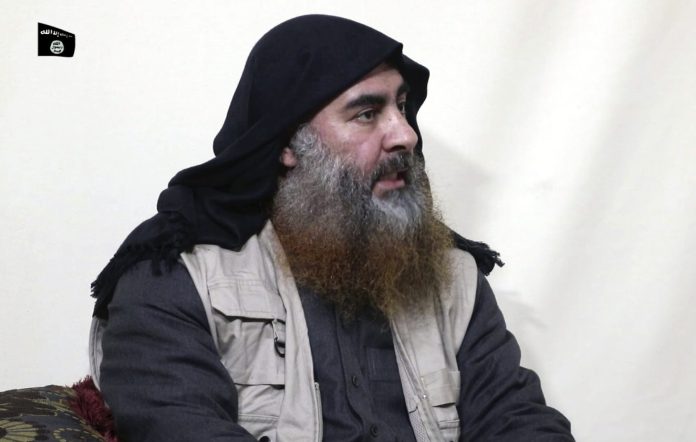
Pentagon files reveal flaws in US claims about Syrian casualties in Daesh leader raid

Abu Bakr Al Baghdadi

A set of newly-released confidential documents reject claims by the Pentagon that the US military’s 2019 deadly airstrikes on the Syrian hideout of the leader of the Daesh terrorist group did not leave civilian casualties.

The secret documents, released by National Public Radio (NPR), shed new light on the US special operations forces during their raid in Syria’s northern province of Idlib, which prompted Ibrahim al-Samarrai, also known as Abu Bakr al-Baghdadi, to blow himself up.

The media organization said it had obtained a redacted copy of the Defense Department’s confidential 2020 report on the incident.

NPR’s review of the documents, including aerial imagery from the operation on October 26, 2019, revealed that the US helicopter fire “killed and maimed” Syrian “civilians” during the raid while the Pentagon claimed those men were enemy combatants who had ignored warning shots.

“US troops fired warning shots mere seconds before launching airstrikes on the Syrian men’s van; this undermines the military’s assertion that the men demonstrated hostility by failing to stop or change course,” the documents said.

“The Pentagon provided no evidence that the victims were enemy combatants beyond the split-second assessment by US troops on the dark night of the raid,” they added, stressing that the US officials did not compile an intelligence dossier to support the claim that the victims were “unlawful enemy belligerents,” it added.

General Kenneth McKenzie, the commander of the operation, claimed days after the October raid on Baghdadi’s whereabouts that the van “displayed hostile intent, came toward us, and it was destroyed.”

The lone survivor of the airstrikes, Barakat Ahmad Barakat, now 39, was cited by NPR as saying that he and two friends were working as agricultural laborers at an olive press and that the friends were driving him home in their van.

Unaware of Baghdadi’s hideout and the presence of American forces, Barakat said they were startled to come under US airstrikes, fled the van and were targeted again.

“There was nothing suspicious at all. We kept moving normally. There was nothing ahead of us on the road,” Barakat said, adding, “Suddenly I felt something hit us.”

Barakat’s two friends, Khaled Mustafa Qurmo, 27, and Khaled Abdel Majid Qurmo, 30, were killed in the airstrikes. Barakat’s right hand was blown off and his left hand was badly injured.

Former US President Donald Trump officially announced in a news briefing at the White House at that time that Baghdadi had died during a US raid on his compound in the northern Syrian province of Idlib.

The US military officials claimed that their troops protected non-combatants, with the then-head of state calling the raid “impeccable.”

Syrian President Bashar al-Assad cast doubt on Trump’s claim that Daesh ringleader Baghdadi had been killed in an operation by the US military, calling the much-publicized operation a “fantastic play” staged by the Americans.

IRGC commander warns of revenge against desecrators of Quran

Hossein Salami

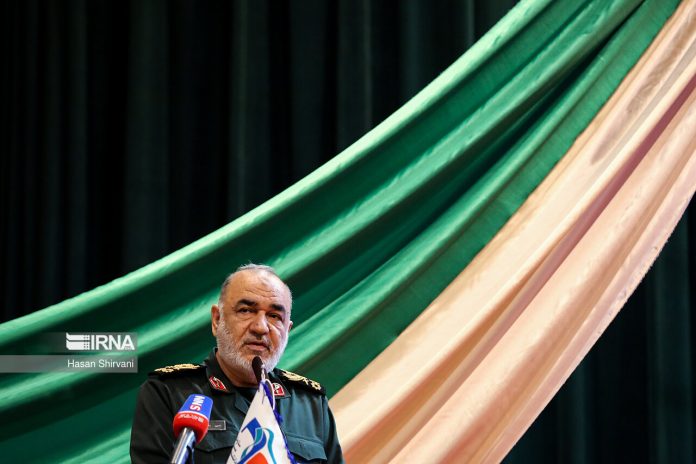
Brigadier General Hossein Salami said on Saturday those who desecrated the Quran will be punished sooner or later at the hands of pious people.

General Salami added that the repetition of such sacrilegious acts shows that they are being orchestrated by an evil strategy worked out at the anti-Islam quarters.

He described as a “deceptive slogan” the claim that the desecration of the Quran is allowed in order to respect freedom of speech.

Salami further said, “If someone wants to play with our religious and the Quran, we will play with their entire world”. The burning of the Quran in Sweden and then in Denmark has angered Muslims around the world.

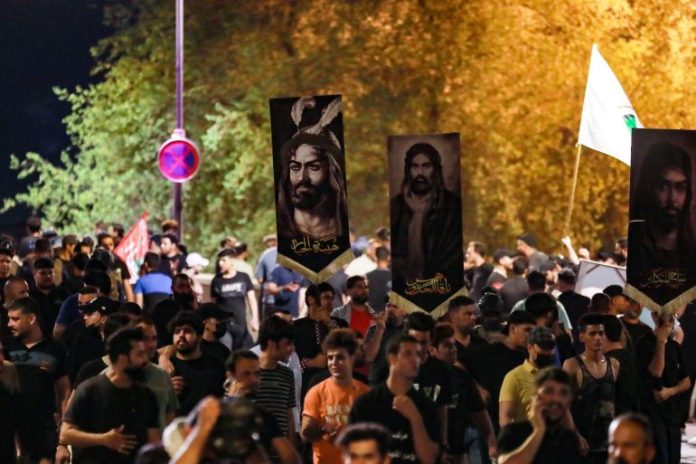
People have held spontaneously protests in different Muslim countries including Iran and Iraq to condemn the sacrileges acts and to demand the perpetrators be punished.

Iraqis attempt to storm Baghdad’s Green Zone over Quran burning

Nearly 1,000 protesters were dispersed by security forces early on Saturday, in reaction to reports of a Quran burning that took place a day earlier by a far-right group in front of the Iraqi embassy in Denmark.

Demonstrators chanted in support of influential Iraqi Shia religious and political leader Muqtada al-Sadr, carrying images of the leader and flags associated with his movement, alongside the Iraqi flag.

“Yes, yes to the Quran!” shouted the protesters, many of them young men.

Security forces blocked the Jumhuriya bridge leading to the Green Zone, which prevented the protesters from reaching the Danish embassy.

Another protest is planned for later in the day.

According to Danish media reports, the far-right, ultra-nationalist group Danske Patrioter burned a copy of the Quran and an Iraqi flag in front of the Iraqi embassy in Copenhagen and livestreamed the event on Facebook.

In response to the incident in Copenhagen, the Iraqi Ministry of Foreign Affairs condemned “in strong and repeated terms, the incident of abuse against the Holy Quran and the flag of the Republic of Iraq in front of the Iraqi Embassy in Denmark”, in a statement on Saturday.

The government urged the international community “to stand urgently and responsibly towards these atrocities that violate social peace and coexistence around the world”.

A separate statement said “We cannot allow to happen again” that which occurred at the Swedish embassy, AFP news agency reported.

The Iraqi government affirmed its “full commitment” to the Vienna Convention on Diplomatic Relations and said it guarantees “the protection and security provided to diplomatic teams”.

In a separate incident, demonstrators set fire to the headquarters of the humanitarian organisation Danish Refugee Council in the Basrah governorate of Iraq, according to reports by local media and Sky News.

The incidents come two days after Iraqis took to storming and burning the Swedish embassy in Baghdad after a second event was held to desecrate the Quran in Sweden. The embassy was forced to temporarily relocate to Stockholm following the violence.

Iraq’s prime minister cut diplomatic ties with Sweden in protest over the desecration, which also sparked action and condemnation from Muslim-majority countries in the Middle East.

The Swedish incident was carried out by Salwan Momika, a 37-year-old Christian Iraqi refugee in Sweden, who also burned pages of a Quran on June 28, the earlier incident also prompting mass protests in Iraq and condemnation from Muslim-majority countries.

Ayatollah Khamenei urges highest punishment for, handing over of criminal who violated Holy Quran

Leader of the Islamic Revolution Ayatollah Seyyed Ali Khamenei

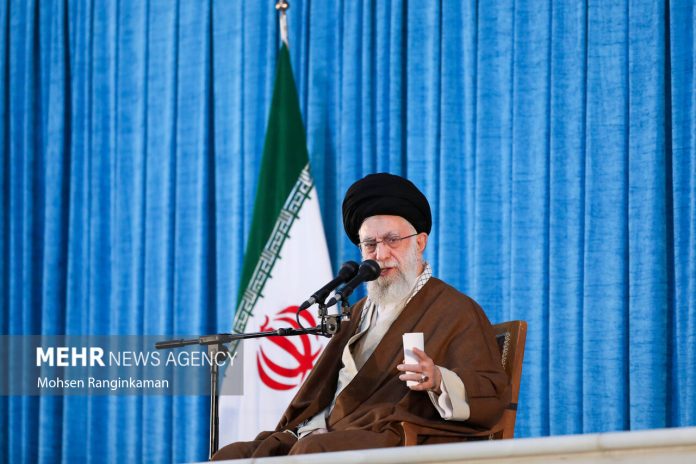
In a message issued following the defiling of the Holy Quran in the European country, Ayatollah Khamenei said all Islamic scholars agree that the individual who violated the Quran must receive the highest punishment.

The Leader called the sacrilege of the Holy Quran a bitter, conspiratorial, and dangerous incident and stressed the government of Sweden has to hand over the criminal to the judicial apparatuses of Islamic countries.

Ayatollah Khamenei added, “Sweden’s government, too, should know that, by supporting the criminal, it has taken an offensive posture against the Islamic world, and has attracted to itself the hatred and hostility of all Muslim nations and many of their governments.”

“The behind-the-scenes conspirators, too, should know that respect for and the glory of the Holy Quran will increase and its rays of guidance will grow more brilliant with each passing day; the likes of this conspiracy and those responsible for them are too small to be able to prevent that increasing brilliance”, reads Ayatollah Khamenei’s message.