Thursday, December 25, 2025
Home Blog Page 1338

Israeli soldiers kill 3 Palestinians in West Bank

Israeli Forces

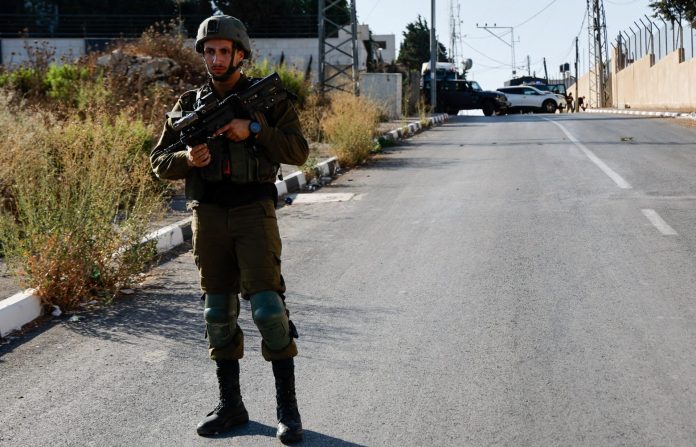
“Three Palestinians have been killed by Israeli bullets in Nablus,” the Palestinian Health Ministry said on Tuesday, adding the identities of those killed were still unknown.

The Israeli army claimed three “armed terrorists” had opened fire on its soldiers from a vehicle in a Nablus neighbourhood and the troops fired back “to neutralise” them.

Nablus is the territory’s commercial capital and a major focus of the Israeli military’s raids.

Palestinian media described the killings as an ambush following the Palestinians’ alleged attack on Israeli forces near a Jewish settlement overlooking Nablus.

Palestine TV showed footage of a military vehicle blocking access to the area of the incident, including an ambulance, as soldiers appeared to conduct an inspection.

The Israeli military claimed it confiscated three M16 rifles and other equipment from their car.

The occupied West Bank is currently experiencing a period of increasing violence, marked by repeated Israeli raids which have shown no signs of abating.

Earlier this month, Israel pounded the Jenin refugee camp with drones and missiles while hundreds of soldiers swarmed the area. Twelve Palestinians, including three children, were killed, along with one Israeli soldier.

The number of Palestinians killed this year in the occupied Palestinian territories, which includes East Jerusalem and Gaza, is more than 200, with the majority of fatalities recorded in the occupied West Bank.

Israeli Prime Minister Benjamin Netanyahu’s far-right, ultranationalist coalition has rejected talks with the Palestinian leadership, sought to expand illegal Jewish settlements in the West Bank and pushed for a more aggressive approach to Palestinian attacks.

Raids have only grown deadlier under the far-right government.

On Friday, Israeli forces killed two teenage Palestinian boys in the occupied West Bank. One of the boys, identified by the Palestinian health ministry as 17-year-old Muhammad Fouad Atta al-Bayed, was shot in the head. The other was Fawzi Hani Makhalfeh, who was driving with his friend Mohammed Mukheimar when Israeli forces opened fire at their car.

Earlier this month in Umm Safa, Palestinian health officials said 24-year-old Abdel-Jawad Hamdan Saleh was also fatally shot in the chest by Israeli forces during a demonstration.

Last month, several dozen illegal settlers rampaged through the occupied West Bank village, setting fire to vehicles and homes in days of consecutive vigilante attacks following the deadly shooting of four Israeli settlers at a petrol station between the Palestinian cities of Ramallah and Nablus.

New arrest warrant issued for former Pakistani PM, Imran Khan

Imran Khan

The electoral authority handed down a non-bailable arrest warrant on Monday, instructing the Islamabad Inspector General to bring Khan into custody over “contemptuous remarks” he is accused of making about the commission, multiple local media outlets reported. The former prime minister is expected to appear before officials on Tuesday.

Khan’s political party, Pak­istan Tehreek-i-Insaf (PTI), later shared an image of the warrant on social media, showing only the first page of the document.

The contempt charges were launched against the former prime minister and other PTI officials last year, with the commission previously asking them to appear in person to explain their position. However, Khan and his fellow party members challenged the order in the courts, arguing that the election body had abused its power.

In January, Pakistan’s Supreme Court ruled in favor of the government, allowing it to continue the proceedings against Khan, who skipped another hearing set earlier this month.

A senior Election Commission official said the warrant was “meant only for ensuring the presence of the suspect before the bench,” as reported by the newspaper Dawn, adding that Khan would be a “free man” afterward.

Now one of Pakistan’s top opposition leaders, Khan said he is “ready for jail” in a statement to supporters that was shared online after the news of the warrant broke.

Khan has faced a long list of charges since he was removed from office in a no-confidence vote last year, including “terrorism.” One year after his ouster, the 70-year-old politician and former cricket star was arrested in connection to a corruption case, triggering a wave of violent protests across Pakistan. He was released on bail within a matter of days, but later arrested again in a separate case.

Khan initially claimed he was overthrown in a coup at the behest of the US, but later told the Financial Times he no longer blames Washington, adding that Pakistan “must have good relationships with everyone, especially the United States.” He continues to point the finger at Pakistan’s army, however, maintaining that military officials played a major role in his removal from power and his subsequent legal cases.

With Pakistan’s next election set for November 10 at the latest, Khan has said the country’s military leadership is seeking to prevent him from running. “It’s all dependent on the establishment feeling that PTI will no longer be able to win the elections,” Khan told Bloomberg last month. “Once they are sure of that, then they’ll announce elections.”

Iran will retaliate if US takes hijacked Iranian oil: IRGC commander

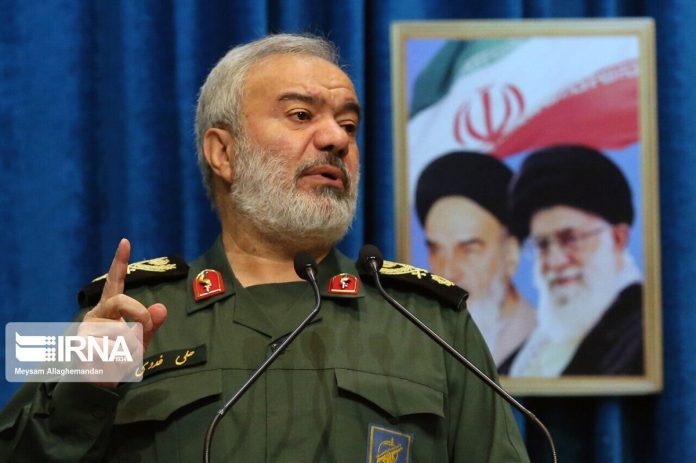
Rear Admiral Ali Fadavi

“If the enemies commit a folly and empty the Iranian tanker, we will act in kind. One of the country’s policies since the imposed [Iraqi] war has been acting in kind,” Deputy IRGC Commander Ali Fadavi said on Monday.

He said Iran’s enemies weren’t engaging in military warfare against Iran today and were instead waging economic war on the country.

“The US secretary of the treasury is responsible for war on Iran, and 50 days ago, she confessed on live television that for the past 44 years, whatever measure they have taken against Iran has failed,” the Iranian military commander said.

US Treasury Secretary Janet Yellen told lawmakers in a hearing in March that the US sanctions on Iran had not brought about Washington’s desired outcome. Fadavi said any country that allied with the US would similarly be defeated.

“America has made a mistake in its calculations many times and it has realized that it has many times, too,” Fadavi said.

US prosecutors are reportedly struggling to auction the seized Iranian oil near Texas, boarded on an oil tanker called Suez Rajan. The cargo was confiscated by the U.S. in April.

The Wall Street Journal has recently said the auctioning of 800,000 barrels of seized Iranian oil has been met with reluctance from US companies as they fear retaliation by Iran.

Hezbollah leader says Israel on path toward collapse, citing judicial plans

Israel Protest

Nasrallah made the remarks in a Monday speech after Israel’s Knesset approved a key part of the hugely unpopular plan that is spearheaded by the regime’s Prime Minister Benjamin Netanyahu.

“Today, as some people say, has been the worst day in the history of the Zionist regime,” Nasrallah stressed, adding, “This is what puts it on the path of collapse, fragmentation, and disappearance, God willing.”

He noted that since 2000, when the resistance front defeated Israel for the second time after its first defeat in 1985, the notion of the regime’s invincibility started to change in the Arab world.

“Therefore, [Israeli] settlers have been facing a cascade of crises [since that time] and today, we see that it is on the path toward collapse,” Nasrallah continued.

The bill approved by the Israeli lawmakers prevents the regime’s Supreme Court from striking down the extremist cabinet’s decisions if it deemed them to be “unreasonable.” It is part of a broader scheme that Netanyahu announced in January as means of supposedly curbing what he called decades of undue political interference by judges.

His opponents, however, say the so-called reforms would hand over unbridled powers to the politicians. They also accuse Netanyahu, who is on trial on several counts of corruption charges, of trying to use the scheme to quash possible judgments against him.

The crisis resulting from the Israeli cabinet’s effort to have the Knesset ratify the scheme has prompted weekly demonstrations across the occupied territories, which have in many cases turned violent.

On Monday, violent protests have rocked various parts of the occupied territories.

The crisis has also affected the regime’s military, where thousands of volunteer reservists have vowed not to report for duty if the cabinet continued with the plan. This has prompted warnings by some current and former military officials that Israel’s war readiness could be at risk.

Live Update: Russia’s “Special Operation” in Ukraine; Day 517

Russia Ukraine War

Moscow declares it is “impossible” to re-join grain deal until all conditions are met

The Kremlin announced it is “impossible” for Russia to return to the expired Black Sea Grain Initiative until all conditions are met, snubbing suggestions by UN Secretary General António Guterres to rejoin the crucial deal.

“Mr. Guterres’ letter [to Russian President Vladimir Putin] once again outlined a certain plan of action and a promise that one day it would be possible to fulfil the Russian part of these agreements,” Kremlin spokesperson Dmitry Peskov said on Tuesday.

“Unfortunately, at the moment it is impossible to return to this deal because it is not being implemented. At the same time, President Putin conveyed clearly Russia’s willingness to swiftly reinstate the agreement once the conditions are fulfilled,” he added.

Moscow has repeatedly insisted that the agreement in place does not allow for Russia to adequately export its own foodstuffs.

Commenting on the Kremlin’s attitude to the proposal of the Kyiv authorities to export grain through the ports of the Baltic, Peskov said: “It is the sovereign right of these states.”

Moscow will fight attempts to use any supply channels of Ukrainian grain for “military purposes and terrorist attacks” against Russia, Peskov added.

The Black Sea grain deal, first brokered last summer, allowed for the safe export of Ukrainian wheat from ports after Russia initially barricaded docks in the southern region and exacerbated a global food crisis.

Western allies of Kyiv have accused Russia of weaponizing the deal, the collapse of which prompted a rapid increase in global wheat prices and threatened food security in Global South countries that rely on Ukrainian grain.


Black Sea Fleet ships destroyed Ukrainian naval drones: Moscow

The Russian defence ministry says one of its Black Sea Fleet ships destroyed two unmanned Ukrainian naval drones that had attempted to attack it overnight.

In a statement, the ministry announced its patrol ship, Sergei Kotov, had been monitoring shipping in the southwest of the Black Sea at the time.

The ministry added that the fleet ships had opened fire on and destroyed the naval drones, and there had been no casualties.


Ukraine claims advances along southern front

Ukrainian forces have made gains along the southern front, according to Kyiv military officials and battlefield reports.

Andrii Kovalov, spokesperson for the Ukrainian military’s general staff said Tuesday that Kyiv’s forces “had success in the direction of Staromaiorske,” in the Berdiansk front, south of Velyka Novosilka.

Ukrainian forces are “entrenching themselves in the reached positions,” he continued, adding that Russian troops were “resisting strongly.”

In an update Tuesday, the general staff said Russian forces continued to focus on preventing Ukraine’s advances along the southern front, indicating stiff resistance.

“At the same time, the Ukrainian Defense Forces continue to conduct the offensive operation, on Melitopol and Berdiansk axes, consolidating their positions,” it added.

Some of those offensive operations toward Melitopol are taking place just south of the town of Orikhiv, with some advances reported over the past 24 hours.

The Institute for the Study of War said Ukraine was reportedly able to advance 1.7 kilometers (just over a mile) toward the northeastern outskirts of the village of Robotyne.

The advancement was documented by several Russian military bloggers.

Some reported Ukraine had shifted the vector of its attack in the area by going around Russian fortifications with the support of its artillery, driving Moscow’s troops back.

“They managed to force units of the armed forces of the Russian Federation to retreat to more advantageous positions,” Russian military blogger War Gonzo stated.

The Melitopol axis was one of the main thrusts of the early stages of Ukraine’s counteroffensive, where Kyiv first employed some of the Western equipment it received specifically for the push forward — meeting with notorious Russian resistance.

In the east, Ukrainian forces drove back the Russians near Andriivka, just south of the embattled city of Bakhmut, spokesperson Kovalov also claimed. The advance comes as Ukrainian troops continue offensive operations north and south of Bakhmut, he said.


US says it does not support attacks inside Russia

The White House announced it did not support attacks inside Russia after being asked about two drones from Ukraine that damaged buildings in Moscow.

“As a general matter, we do not support attacks inside of Russia,” White House spokesperson Karine Jean-Pierre told reporters in a press briefing.

Russia spoke of taking harsh retaliatory measures against Ukraine after the two drone attacks, including one close to the defence ministry’s headquarters, in what it called a brazen act of “terror”.


Ukraine will keep attacking targets in Crimea and Kerch Bridge: DM

Ukraine’s Defense Minister Oleksii Reznikov says that Ukraine will continue carrying out attacks on Russian-occupied Crimea and the Kerch Bridge that connects it to the Russian mainland, while also admitting that Ukraine’s plan for its sluggish counteroffensive is behind schedule.

As Russia has pummeled the southern port city of Odesa and the surrounding region over the past week, Ukraine has continued to carry out strikes inside Crimea. On Tuesday, Ukrainian drones hit an ammunition depot, just a week after seaborne drones struck the Kerch Bridge.

“All these targets are official targets because it will reduce their capacity to fight against us (and) will help to save the lives of Ukrainians,” Reznikov said in an interview with CNN.

Asked if Ukraine’s goal is to permanently disable the bridge, Reznikov responded: “It’s normal tactics to ruin the logistic lines of your enemy to stop the options to get more ammunition, to get more fuel, to get more food, etcetera. That’s why we will use these tactics against them.”

Reznikov also accused Russia of operating as “a terrorist state.”

The fifth night of Russian strikes in Odesa badly damaged more than two dozen landmarks in the historic city center. Drones meanwhile pounded the region’s port infrastructure, targeting crucial grain stocks days.


UN nuclear watchdog chief says agency discovered mines at Zaporizhzhia plant site

Experts from the International Atomic Energy Agency (IAEA) discovered mines at the Zaporizhzhia nuclear power plant (NPP) site, agency chief Rafael Grossi stated Monday —after previous claims by Kyiv that it had been mined.

“IAEA experts have observed directional anti-personnel mines on the periphery of the site of Ukraine’s Zaporizhzhia NPP,” Grossi said in a statement, adding that the mines were spotted during a walkdown on Sunday.

Zaporizhzhia NPP is currently occupied by Russian forces. Ukrainian President Volodymyr Zelensky has repeatedly called on world leaders to put pressure on Russia to hand the station over to the IAEA and for Russian fighters to leave the territory of the station.

Grossi added that the IAEA team has been aware of the previous placement of mines outside and inside of the plant and they have been told that it was “a military decision, and in an area controlled by military.”

“IAEA team saw some mines located in a buffer zone between the site’s internal and external perimeter barriers,” Grossi said, noting that the mines were “situated in a restricted area that operating plant personnel cannot access and were facing away from the site,” he continued.

Grossi called having explosives on the site “inconsistent with the IAEA safety standards and nuclear security guidance.”


Ukrainian counteroffensive is behind schedule but is going according to plan

Ukraine’s Defense Minister Oleskii Reznikov admitted that Kyiv’s counteroffensive is behind schedule, but insisted he is “not worried” because it is going according to plan, adding that it was a “misconception that every counteroffensive should be quick.”

Reznikov listed a few reasons why the counteroffensive may be slower than anticipated, including ammunition, artillery shells and artillery systems. “It’s a question of air defense. It’s a question that we have a very long battlefield line also. And we have against us big quantity of enemies. So it’s war, it’s not a computer game,” the defense minister said in an interview with CNN over the weekend in Kyiv.

The official stated, “our generals, our commanders, they see the real situation on the battlefield. And again, I have to repeat the main value for us is the life of for our soldiers.”

The situation on the southern front in Ukraine has been slowed largely due to intricate minefields laid by Russian forces who were given time to build up defenses. Ukrainian forces have had to resort to clearing, by hand, paths through the fields, Reznikov continued.

The minister added the Russians have “serious security zones with the mines” and that it “very difficult to break through.”

“We need to use our soldiers, sappers, deminers very slowly, and very slowly preparing the corridors for the real offensive movement,” Reznikov said, adding this activity in different places would confuse Russians on the main direction that Ukraine would take.


Zelensky appeals for an end to restrictions on Ukrainian grain exports through neighboring states

With Ukrainian grain exports through the Black Sea at severe risk, President Volodymyr Zelensky is arguing for a lifting of European restrictions on exports via land.

The restrictions were introduced in five European states bordering Ukraine in May to protect their markets against being flooded with cheaper Ukrainian grain. They are due to expire in September.

The European Commission stated when it introduced the measures: “Wheat, maize, rapeseed and sunflower seed originating in Ukraine can continue to be released for free circulation in all the Member States of the European Union other than the five frontline Member States: Bulgaria, Hungary, Poland, Romania and Slovakia. The products can continue to circulate in or transit via these five Member States by means of a common customs transit procedure or go to a country or territory outside the EU.”

The European Commission introduced the relief “given the exceptional circumstances of serious logistical bottlenecks experienced in five Member States.”

The restrictions have made it more difficult for Ukraine to export its grain using overland routes.

“We believe in the agreement with the European Commission, but we are preparing for any scenario. Our position is clear: blocking exports by land after September 15, when the relevant restrictions expire, is unacceptable in any form. We are in touch with all stakeholders to find a solution that suits everyone,” Zelensky stated Monday.

Zelensky’s remarks come as Russia has repeatedly struck the southern port city of Odesa, damaging grain warehouses and further threatening Ukraine’s ability to export food after the Black Sea grain deal collapsed.

Details of huge blow to Iran biggest terror network in 20 years

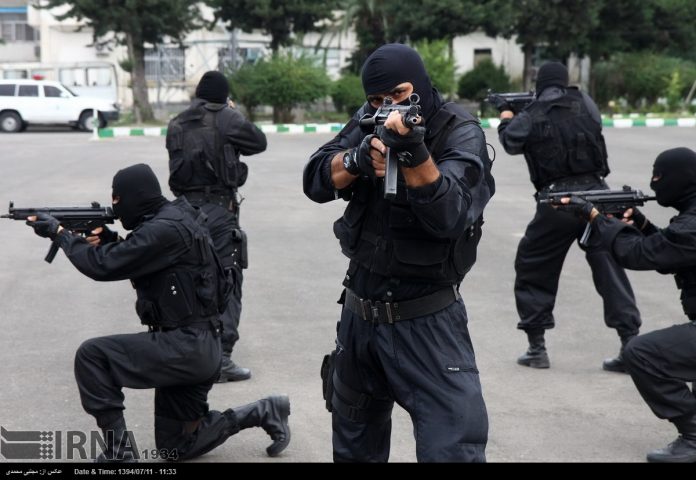
Iran Security Forces

The official added that the network aimed to cause tension and spark urban conflict in Iran.

He said the commanders of the teams were stationed in neighboring countries and provided necessary arms and equipment to their agents, and their most important feature was their strong desire to kill people and shift the blame onto the security forces, thus causing violence in Iran.

According to the official, two counter-revolutionary operatives named Shahin Zahmatkesh, alias Shahinlu, and Tadyon Tahamasbi, a former employee of the Foreign Ministry, shifted their activities in cyberspace toward forming networks for acts of terror.

He noted that what caused the terror network to get whacked was that they entered the terrorist phase after a while, and their first action was an attempt to bomb the tombstone of late General Qassem Soleimani in Kerman, southern Iran.

He said the network also wanted to blow up the gas pressure boosting near the western city of Yasuj during the president Raisi’s visit to the area.

He also said the network’s teams had explosives and arms caches.

The intelligence official added that security forces seized 43 bombs, 55 detonators and more than 100 kilograms of explosives.

President Raisi: Iran hopes Armenia-Azerbaijan negotiations will strengthen peace in region

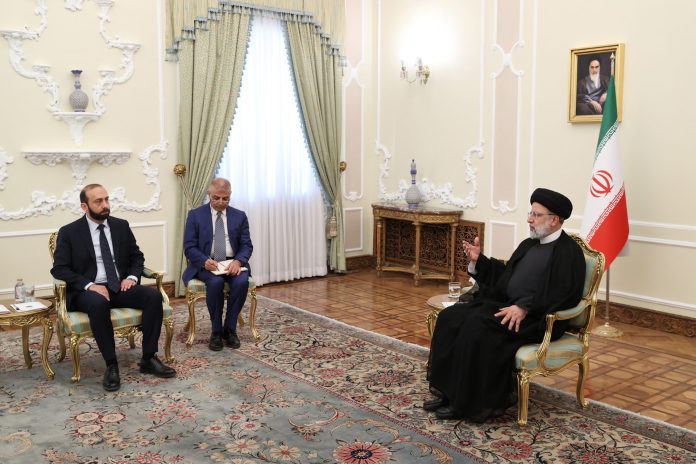
Iranian President and Armenian Foreign Minister

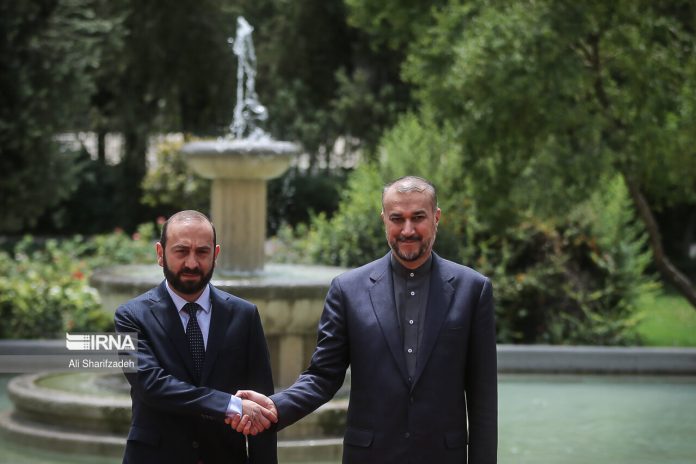
He made the remarks in a meeting with the Minister of Foreign Affairs of Armenia Ararat Mirzoyan in Tehran on Monday,

The president stressed that the Islamic Republic of Iran does not accept any geopolitical changes and shifting the borders of the countries in the region, adding, “Iran supports the sovereignty and territorial integrity of all the countries in the region.”

He emphasized the importance of improving the level of relations between the two countries as much as possible and said, “The Islamic Republic of Iran does not see any obstacle to the development of relations with Armenia”.

Mirzoyan appreciated Iran’s positions regarding the developments in the Caucasus region, stating,, “Armenia will never become a platform for anti-Iranian actions and always emphasises on the development of regional security and peace”.

He considered relations with the Islamic Republic of Iran to be very important for his country and emphasised on increasing diplomatic relations between the two countries and strengthening and deepening the relations between Tehran and Yerevan.

Israeli parliament votes on PM’s supreme court changes

Israel Parliament

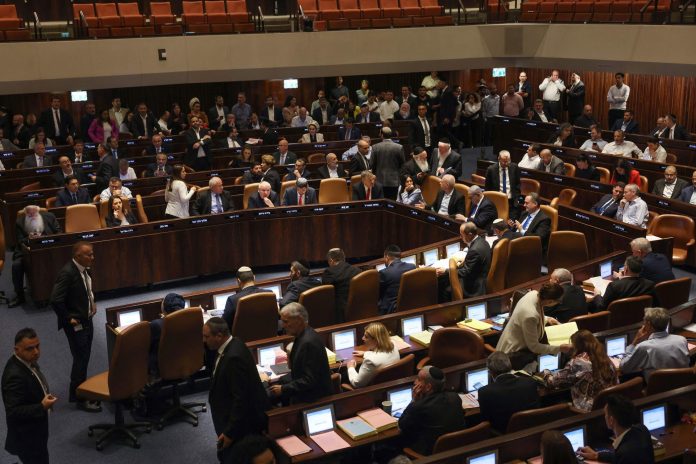
Israeli lawmakers have passed a key bill in the government’s controversial judicial reforms, as police use water cannons on protesters blocking roads leading to the parliament building.

Members of parliament passed the “reasonableness” bill by 64 votes to zero, after opposition lawmakers left the parliament in protest.

The bill would see the abolition of the “reasonableness standard”, eliminating the Supreme Court’s ability to block government decisions it deems unreasonable.

It’s part of a package of bills proposed by the government earlier this year, which is seeking to overhaul the judicial system in the country.

Demonstrators of the plan say it is necessary to restore the balance of power between government branches, while opponents say it will remove checks and balances and undermine the independence of the judicial system.

There were disagreements within the far-right coalition government’s ranks leading up to the vote, with Defence Minister Yoav Gallant reportedly calling for last minute compromise talks with the opposition.

However Justice Minister Yariv Levin and National Security Minister Itamar Ben-Gvir refused the proposal, according to Haaretz.

“We have taken the first step in a historic process to correct the judicial system,” Levin said following the vote.

Finance Minister Bezalel Smotrich stated that the government “left no stone unturned until the last minute but the opposition unfortunately opposed”.

Meanwhile, opposition leader Yair Lapid accused the coalition of abusing its power, and said he would petition Israel’s high court against the new law.

“This is a complete breaking of the rules of the game,” Lapid continued, noting, “The government and coalition can choose what direction the state goes in, but it can’t decide the character of the state.”

“This is a sad day, a day of our home’s destruction, of needless hatred, and look at the coalition celebrating,” he added.

Demonstrators wielding Israeli flags shut off streets near the Knesset building earlier on Monday, with some chaining themselves to one other.

Footage shared on social media showed firefighters using electric handsaws to break up the human chain of demonstrators, while security officers were seen forcefully removing others.

Two protesters were hospitalised after water cannons struck them in the head and neck, Haaretz reported.

At least 19 people were arrested in the Jerusalem protest, police confirmed.

On Sunday, US President Joe Biden called on Israel not to rush the “divisive” reforms.

“It looks like the current judicial reform proposal is becoming more divisive, not less,” Biden told Axios on Sunday.

“Given the range of threats and challenges confronting Israel right now, it doesn’t make sense for Israeli leaders to rush this – the focus should be on pulling people together and finding consensus,” he added.

There was a sharp decline in the stock market and the shekel weakened compared to dollar following comments by Lapid suggesting all attempts at compromise with the government had failed.

“In recent weeks, and especially in the past 48 hours, we did everything possible to reach agreements, as promised,” Lapid told reporters at the Knesset, adding, “Our main condition was to protect Israeli democracy, but with this government it is impossible to reach agreements that preserve Israeli democracy.”

Scores of petrol stations and shopping centres, among other businesses, were shut on Monday after the Israeli Business Forum decided to suspend business activity over the judicial reforms.

The forum represents some of the country’s biggest corporations and banks.

“We call on the prime minister to fulfill his duty and to understand the magnitude of the disaster that may occur,” it said.

Poll results reported by national broadcaster Kan found that 46 percent of Israelis opposed the amendment, while 35 percent were in favour and 19 percent undecided.

Tens of thousands of Israeli protesters set off on a march to Jerusalem from Tel Aviv last week, reaching the Knesset building ahead of the vote.

Demonstrations and strikes have taken place regularly since January in a bid to force the government to halt its judicial plan.

Protesters were given a boost recently after hundreds of reservist soldiers joined their calls.

On Friday, more than 1,100 Israeli Air Force reservists, including over 400 pilots, said in an unprecedented letter that they would suspend their volunteer reserve duty if the government plan was not scrapped.

Last week, Prime Minister Benjamin Netanyahu condemned the threat of reservists not showing up for duty, saying it was “akin to the destruction of democracy”.

“It cannot be the case that a group within the army threatens an elected government by saying that ‘if you don’t act as we like, we will stop defending the country’,” he stated.

Earlier on Monday, Netanyahu was discharged from hospital following an operation to fit him with a pacemaker.

He was admitted to Sheba Medical Centre near Tel Aviv on Saturday night after doctors said a heart monitor had detected “temporary arrhythmia”.

Iranian FM: Tehran welcomes peace talks between Armenia and Azerbaijan, 3+3 format

Hossein Amirabdollahian and Ararat Mirsoyan

Amirabdolalhian added that the Caucasus should not turn into a battlefield for big powers.
He was speaking at a press briefing with his Armenian counterpart Ararat Mirzoyan in Tehran on Monday. Amirabdolalhian noted that if the Caucasus becomes a field for competition between big powers, peace in the region will be delayed.

“We believe that the age of war-based order is over and now is the time for peace-based order in the Caucasus region” the top Iranian diplomat added. Amirabdollahian said unfortunately, some foreign players are looking for alignments and for taking advantage of the situation in the region.

He stressed that Iran welcomes the so-called 3+3 dialogue format between regional countries and that Tehran will continue its efforts to hold a meeting where Armenia and Azerbaijan will attend.

The 3+3 format is comprised on Iran, Russia, Turkey, the Azerbaijan Republic, Armenia and Georgia focusing on unlocking economic and transport communications in the South Caucasus region.

Amirabdollahian further told journalists at the press briefing that he and the Armenian foreign minister discussed bilateral ties and ways of expanding them at their meeting.

Mirzoyan also described Iran as a unique friend for Armenia.

The top Armenian diplomat said he extended an invitation to Iranian President Ebrahim Raisi to again visit Yerevan.

Iran censures US for prisoner exchange delay

Nasser Kanaani

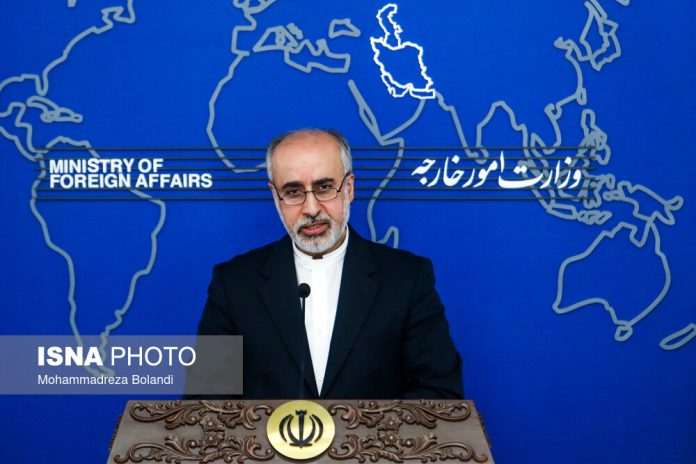
Speaking to reporters at a press conference on Monday, Kanaani said the US government lacks the necessary resolve to finalize the exchange of prisoners with Iran.

Iran has always been serious about the prisoner swap issue considering the importance that it attaches to the fate of its citizens, he stressed.

“The prolongation of this process, unfortunately, results from the US government’s lack of resolve,” Kanaani added.

Asked about the media stories on the arrest of a fourth American national in Iran, the spokesman stated he would neither confirm nor comment on such speculations.

He also highlighted the efforts made by certain governments that have good relations with both Iran and the US, reiterating that the completion of the prisoner swap depends on the US government’s political determination.

Iran and the US have conducted prisoner exchanges twice in the past, once in January 2016 when the Joint Comprehensive Plan of Action (JCPOA) was implemented, and again in December 2019.