Monday, December 29, 2025
Home Blog Page 131

Russia using ‘shadow fleet’ tankers to launch drones towards European cities: Ukraine

Russia Oil

The comments come amid increased tension between Russia and NATO countries over airspace violation. Over the past month, Russian drones have violated Polish, Romanian, and possibly Dutch, Finnish, and Danish airspace.

On Sept. 19, Estonia accused Russia of violating its airspace with three MiG-31 fighter jets, which remained in Estonian airspace for 12 minutes, triggering NATP’s Article 4. While on Sept. 26, Hungarian fighter jets intercepted five Russian aircraft over the Baltic Sea.

Zelensky made the comments during his evening address, calling for additional sanctions to be implemented on Russia’s shadow fleet, amid the drone threats.

“It is especially important that the sanctions hit Russia’s energy trade and the entire infrastructure of the Russian tanker fleet painfully,” Zelensky said.

“This is further evidence that the Baltic Sea and other seas should be closed to Russian tankers, at least for the shadow fleet,” he added.

Russia’s shadow fleet has been increasingly targeted by Western sanctions as Ukraine’s international partners seek to limit Russian oil revenues, which help fund Moscow’s war machine.

The shadow fleet includes hundreds of older, often uninsured or poorly maintained tankers. These typically operate under the flags of other countries and have little transparency, making it difficult for regulators to enforce sanctions.

Amid the European Union’s anticipated 19th sanctions package, U.S. officials have also considered new sanctions on Russia’s shadow fleet should Russian President Vladimir Putin fail to agree to a ceasefire in Ukraine.

Despite an initial deadline for the sanctions being set for Aug. 8, U.S. President Donald Trump has yet to implement additional sanctions on Russia.

Following Zelensky’s meeting with Trump in New York on the sidelines of the UN General Assembly earlier this week, the Ukrainian president said in his evening address that Kyiv “count(s) on strong steps from the United States of America.”


Russia says Tomahawk missile supplies from US won’t be game changer for Ukraine

“Even if it happens that the United States sends its Tomahawk missiles to Ukraine, currently there is no cure-all that could be a game changer on the front lines for the Kiev regime. No magical weapons exist, and Tomahawk or other missiles simply won’t be a game changer,” Peskov said when asked to comment on Washington’s statements about the possible supply of Tomahawk missiles to Kiev.

Moscow has heard Washington’s statements about possible Tomahawk cruise missile deliveries to Kiev and is thoroughly analyzing them, Peskov stated.

“We have heard these statements. We are thoroughly analyzing them. Our military specialists are closely monitoring it,” he added, responding to a question about the Kremlin’s assessment of statements regarding the US supplying Tomahawk missiles to Kiev, as well as the possibility that strikes against Russia with these missiles could be conducted with the consent of US President Donald Trump.

Earlier, US Vice President JD Vance stated that Washington is weighing selling Tomahawk missiles to its NATO allies for them to send those to Kiev, with the “final determination” being up to US leader Donald Trump.


UK may already be at war with Russia: Ex-head of MI5

Cyber Attack

Eliza Manningham-Buller, who led the domestic spy agency two decades ago, said she agreed with comments made by the Russia expert Fiona Hill, who argued in a Guardian interview earlier this year that Moscow was at war with the west.

Lady Manningham-Buller argued that the situation had changed “since the invasion of Ukraine and the various things I read about that the Russians have been doing here – sabotage, intelligence collection, attacking people and so on”.

Speaking on a podcast in which she was interviewed by the lord speaker, John McFall, she then referenced Hill, who advised Donald Trump during his first term as US president and co-authored the UK’s strategic defence review.

“I think she may be right in saying we’re already at war with Russia. It’s a different sort of war, but the hostility, the cyber-attacks, the physical attacks, the intelligence work is extensive,” she said.

Six Bulgarians living in the UK were jailed this year for their role in a spy ring conducting hostile surveillance around Europe, and five men were convicted for their involvement in an arson attack ordered by Moscow on a warehouse containing supplies destined for Ukraine.

Pat McFadden, then the Cabinet Office minister, said last year that Russia had stepped up its cyber-attacks against the UK. Hackers have targeted a string of British businesses. While the source of the attacks can take time to detect, many are suspected to have originated in Russia.

Several of the UK’s NATO allies in eastern Europe have been affected by recent drone incidents, most notably Poland where 19 unarmed Russian drones crossed into its airspace this month.

During the early part of Manningham-Buller’s period as MI5 chief between 2002 and 2007, there were hopes that Russia under Vladimir Putin would not revert to its Soviet ways and instead become a potential partner for the west.

Manningham-Buller met Putin in 2005 when he came to London after a G8 summit in Scotland, a time when Lord McFall suggested the Russian president was trying to put on a “pleasant face” to impress the leading western nations.

“I wouldn’t quite describe him as that,” Manningham-Buller replied.

“I didn’t anticipate that within a year he’d be ordering the murder on London streets of [Alexander] Litvinenko, but I thought he was quite an unpleasant man.”

Litvinenko, a former Russian FSB spy who lived in London, fell ill and died slowly in 2006 after he was poisoned with radioactive polonium. A public inquiry held a decade later concluded that two Russian agents killed him and that they were probably acting on Putin’s orders.

Manningham-Buller criticised the decisions by the US and UK governments to dramatically cut aid spending, arguing it would create a diplomatic opportunity for China to exploit poorer countries.

She added she had been struck by the quality of the HIV treatment work funded by the US in Africa, which she witnessed during her time a director and then chair of the Wellcome Trust, the medical research charity, after leaving MI5.

“You’d go to a pretty primitive hospital with people on pallets on the ground, but the George W Bush-funded Aids wing was a different scale. For Americans to stop all of that, and for our cutting back on aid, means that we leave space for your friendly Chinese diplomat,” she continued.

“If we withdraw from the world, they can move in because they have a strong economic base, so I think soft power … whether it’s the BBC World Service, whether it’s aid, whether it’s demining, all contribute importantly to our influence in the world, as well as being of humanitarian importance.”


Iran to showcase its first radar satellite this year

Hassan Salarieh told Fars News Agency that two main families of satellites are currently under development in Iran: remote sensing satellites and telecommunication satellites. In the communications sector, the Nahid satellite is under development, while in the remote sensing field, the Pars and Rad series are being pursued.

Salarieh noted that Pars-1 has already been launched, while the second version, Pars-2, was unveiled last year and is now being prepared for launch. The design of Pars-3, aimed at achieving imaging resolution of one meter or better, is also underway.

The project is being carried out under the leadership of the Iranian Space Research Center, in collaboration with the Ministry of Communications and a network of Iranian knowledge-based companies, he said

He added that the Rad satellite, a radar imaging satellite, is also under development. “Currently, two classes of radar satellites — Rad-1 and Rad-2 — are being designed,” Salarieh said. “Our goal is to unveil at least one of them before the end of this year.”


Iran remained at negotiating table until last moment: Pezeshkian

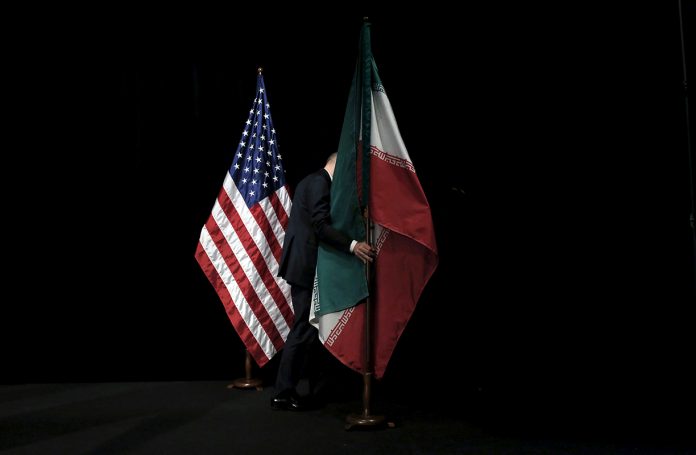
Speaking during a cabinet meeting on Sunday, Pezeshkian denounced the United States’ irrational behavior toward Iran’s sincere diplomatic efforts on the nuclear issue.

On Friday, the US and its allies, the so-called European troika, vetoed a draft resolution from Russia and China that sought to delay the imposition of the snapback mechanism that would reinstate the allies’ and the UN Security Council’s nuclear-related sanctions against Iran.

Pezeshkian stated that “any restrictions and sanctions are definitely reprehensible and unacceptable from our point of view,” adding “we have been present at the negotiating table until the last moment to clarify and reach a fair and logical solution.”

He criticized the other side for wanting “to take all our assets in exchange for a few months’ opportunity” before raising “new demands”—an approach he said “will never be accepted.”

He pointed to the US’s bullying tactics, saying in accordance with the Holy Quran, “the bullies will never be satisfied with us unless we submit to their will; however, this will never happen.”

Pezeshkian pointed to the failed attempts of the Americans to disrupt and sabotage Iran’s exports at the height of sanctions and war.

He contrasted Iran’s natural resource wealth with other nations, stating, “Many countries in the world not only do not have oil and gas resources, but are forced to import them to meet their domestic needs; however, they have taken the path of development and progress with seriousness.”

Iran, he noted, by relying on “the power of experts, elites, and the empathy of the people, will be able to reduce its dependence on oil resources and continue its development programs with strength.”

Pezeshkian reiterated that Iran has “never sought to acquire nuclear weapons and we do not,” a stance rooted not only in official policy but in a religious fatwa and principles.

He expressed Iran’s readiness for a “logical, fair” dialogue but rejected any negotiation that would entangle the nation in “new issues and problems.”


Iran introduces public reporting hotline as part of new phase in unauthorized Afghan migrant regulation

Afghan Refugees

The initiative was outlined Monday by Seyed Kamal Sadat, acting deputy for security and law enforcement at Tehran Governorate, during a meeting with provincial officials and media representatives.

According to Sadat, the second phase of the government’s plan to organize undocumented Afghans began in early September after the completion of the first phase earlier this year.

He stressed that the approach is not one of “absolute expulsion” but rather “organization and regulation,” with deportation limited to those residing illegally.

Official figures show that about half of all Afghan nationals in Iran live in Tehran Province.
Sadat said that by September 18, one-third of those identified as unauthorized had already left the country.

The backdrop to these measures is the mounting strain on Iran’s economy, housing market, and public services, which officials often link to the presence of millions of Afghan migrants.

Authorities say that since the beginning of the year, over a million illegal Afghan migrants have left the country as part of the broader campaign.

Taliban frees US citizen after Qatari mediation

The release of Amir Amiri, who was on his way back to the United States on Sunday, is the fifth US citizen to be freed by Afghanistan’s Taliban rulers, who returned to power in August 2021 after the withdrawal of US-led forces from the country after 20 years of occupation and war.

Negotiations lasted several months after Qatari officials secured an initial meeting between Amiri and the US special envoy for hostage affairs, Adam Boehler, sources with knowledge of the matter told Al Jazeera. The breakthrough that secured his release was reached this weekend, they said.

US Secretary of State Marco Rubio welcomed Amiri’s release, saying it marked the US government’s determination to protect American nationals from wrongful detention abroad.

“While this marks an important step forward, additional Americans remain unjustly detained in Afghanistan,” he stated, adding, “President [Donald] Trump will not rest until all our captive citizens are back home.”

Rubio did not provide details as to why or where Amiri was detained.

The other four American citizens released this year are Ryan Corbett, William McKenty, George Glezmann and Faye Hall.

Qatar, a member of the Persian Gulf Cooperation Council, also helped in the release of a British couple on September 19. They were imprisoned for months.

Qatar has been assisting the Trump administration in mediating the release of captives since Taliban forces seized Kabul on August 15, 2021, after the US-backed government collapsed and its leaders fled into exile.

While no country in the world formally recognises the Taliban-led government in Afghanistan, Doha has maintained diplomatic channels with the Taliban to facilitate dialogue and provide an avenue for sensitive negotiations.

Qatar’s foreign minister said Amiri was on his way to Doha and would then continue his journey to the US.

Minister of State at the Ministry of Foreign Affairs, Mohammed bin Abdulaziz bin Saleh Al Khulaifi, said in a statement on X that his release “serves as a significant step toward encouraging direct dialogue and enhancing communication channels between parties.”

Afghan Foreign Minister Amir Khan Muttaqi added that the step taken by his government was positive and thanked Qatar for its effective role in facilitating the release.


Hamas censures US plan to appoint Tony Blair in Gaza

The remarks came from senior Hamas political bureau member Husam Badran published by the group on Telegram.

They followed a report in Israel’s Haaretz daily newspaper quoting an Arab political source as saying the US administration has drawn up a plan to appoint Blair to head a temporary administration in Gaza.

Badran said linking any plan to Blair “is an ominous sign for the Palestinian people,” describing him as “a negative figure who deserves to stand before international courts for his crimes, especially his role in the war on Iraq (from 2003–2011).”

He went further, calling Blair “the devil’s brother,” and stated he “has brought nothing good to the Palestinian cause, the Arabs or the Muslims, and his criminal, destructive role has been well known for years.”

Badran stressed that managing Palestinian affairs in Gaza or the West Bank is an “internal matter that must be decided through national consensus, not imposed by any regional or international party.”

“The Palestinian people are capable of managing themselves; we have the resources and expertise to run our own affairs and our relations with the region and the world,” he added.

He revealed that since December 2023, Hamas’ leadership had made an internal decision — shared with Palestinian factions and friendly states — that it does not want to continue governing Gaza alone, even before the escalation of war and destruction.

On reported ceasefire proposals, Badran said: “We have not received any official proposal through mediators, which is the usual channel for such initiatives.”

He added that so far, everything being circulated “comes only through the media, whether attributed to (US President Donald) Trump or others.”

He noted this is not the first time that Washington, in coordination with Israel, has floated ideas and initiatives that later take time to be finalized and formally conveyed through mediators.

Earlier Sunday, Hamas announced in a separate statement that ceasefire talks have been suspended since Israel’s failed assassination attempt against Hamas leaders in Doha, Qatar on Sept. 9 and that it has received no new proposals in this regard.

This comes after Trump last Tuesday presented a 21-point plan to Arab and Muslim leaders on the sidelines of the 80th UN General Assembly in New York aimed at ending Israel’s two-year war on Gaza.

On Aug. 18, Hamas agreed to a mediator proposal for a partial ceasefire and prisoner exchange, but Israel failed to respond, despite the plan matching an earlier initiative put forward by US Middle East envoy Steve Witkoff and approved by Tel Aviv.

The Israeli opposition and families of captives accuse Prime Minister Benjamin Netanyahu of blocking any potential deal to end the war and bring home their relatives in order to protect his political survival.

Domestically, Netanyahu faces corruption charges that could land him in prison if convicted, while the International Criminal Court has issued an arrest warrant for him on charges of war crimes and crimes against humanity against Palestinians in Gaza.

The Israeli army has killed over 66,000 Palestinians, most of them women and children, in Gaza since October 2023. The relentless bombardment has rendered the enclave uninhabitable and led to starvation and the spread of diseases.

Senior Mossad agent executed in Iran

Iran Prison

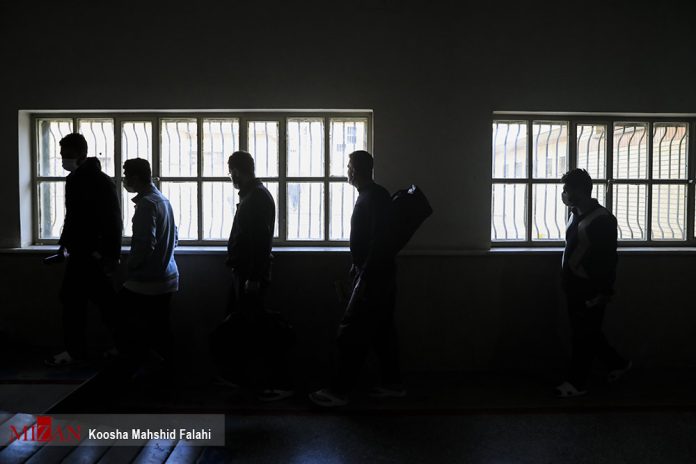
The death sentence was carried out after a full judicial process and confirmation by Iran’s Supreme Court.

According to official reports quoting the judiciary, Choubi was accused of deliberately providing classified information to Mossad, receiving payments, foreign travel expenses, and specialized training in return.

He cooperated with the agency over several years, including 63 in-person meetings across nine international trips, and 95 remote communications with Mossad officers, according to the judiciary.

Countries where meetings took place included the United Arab Emirates, Armenia, India, Thailand, Vietnam, Ireland, and Bulgaria.

Authorities noted Choubi was trained in secure communication systems and provided with advanced espionage tools, including versions of a system known as “Windows Red.”

He was also charged with assisting sabotage efforts, particularly targeting Iran’s nuclear sector, by helping install faulty or compromised equipment.

The judiciary said Choubi’s case was tried with legal representation and documented evidence. Following his appeal, the Supreme Court upheld the sentence, and the execution was carried out on Monday morning.

Hamas tells Israel to cease Gaza City military attacks as captives lives in danger

Israel Hamas Hostages

The Qassam Brigades, the armed wing of the Palestinian group, said on Sunday that contact has been lost with fighters holding Omri Miran and Matan Angrest after “brutal military operations and violent targeting in the Sabra and Tal al-Hawa neighbourhoods during the last 48 hours”.

“The lives of the two captives are in real danger, and the occupation forces must immediately withdraw to the south of Road 8 and halt aerial sorties for 24 hours starting from 18:00 this evening (15:00 GMT), until an attempt is made to extract the two prisoners,” it added.

Hamas released a “farewell picture” of captives in Gaza this month in another attempt to stop the Israeli army as it systematically destroys Gaza City and displaces hundreds of thousands of starving Palestinians once again.

Israel announced that 48 captives remain in Gaza, 20 of whom are alive. But Tel Aviv has refused to stop the war despite being increasingly accused of committing genocide and as Israeli families call and protest for a comprehensive deal to end the war and bring back all captives.

Their pleas have not been heeded by Israeli Prime Minister Benjamin Netanyahu’s far-right government, and relatives and supporters are blaming the government for their prolonged captivity.

The political wing of Hamas stated in a statement earlier on Sunday that the group has not received any new ceasefire or peace proposals from mediators Qatar and Egypt, even as United States President Donald Trump continues to predict an imminent ceasefire, which he has done several times in recent weeks.

The group confirmed that negotiations remain halted after Israel tried to assassinate top Hamas leaders in Doha on September 9 as they gathered to review a new ceasefire proposal presented by Trump.

But Hamas announced it is “ready to study any proposal from the brother mediators with positivity and responsibility, in a manner that preserves the national rights of our people”.

Far-right Israeli ministers stated on Sunday that they oppose a 21-point plan presented by Trump and any other deal that would put an end to the war before eliminating Hamas.

In a post on X, National Security Minister Itamar Ben-Gvir said: “Mr. Prime Minister, you have no mandate to end the war without a decisive defeat of Hamas.”

Finance Minister Bezalel Smotrich added he would “never agree to a Palestinian state – even if it is difficult, even if it has a price, and even if it takes time”.

More than 66,000 Palestinians have been killed in the Gaza Strip since the start of the war in October 2023, according to the enclave’s Ministry of Health.