Monday, December 29, 2025
Home Blog Page 1284

Gaza students face shortened terms after UN cuts hit education services

Students in Gaza

UNRWA runs 288 schools within the Gaza Strip, providing education to Palestinian refugees, who make up around two-thirds of the total population of the besieged enclave.

Since its establishment in 1949, following the mass expulsion of Palestinians during the creation of Israel in 1948, UNRWA has been committed to providing support, protection and essential services to approximately 5.6 million registered Palestinian refugees in Jordan, Lebanon, Syria, the West Bank and Gaza Strip.

This year, however, major spending cuts at the organisation mean many students fear they will not be able to finish their terms.

Gaza Adnan Abu Hasna, spokesperson for UNRWA in Gaza, told Middle East Eye that UNRWA had a shortfall of approximately $200m.

“We paid our teachers for August – however, we may not be able to pay them for September, as we have not got the funds for this yet,” he explained.

Abu Hasna attributed the crisis to a worsening global economy, and the war between Russia and Ukraine, which has resulted in the displacement of millions of Ukrainians.

“This has, of course, put more pressure on the donating countries,” he said.

This is not the first financial crisis facing the UNRWA.

The biggest hit to the organisation came in 2018, when former American President Donald Trump halted US funds to the refugee agency. Funding was resumed in April 2021 following the election of Joe Biden.

Abu Hasna stated that at present, UNRWA did not have the money to pay its employees until the end of the year.

“We will have the annual funds by the end of the year, but the shortage we have now is for the four months left of 2023,” he added.

Elham Hilles, 34, a mother of four children who study at UNRWA schools, said the news was a concern to her, as she was happy with their education.

“If the academic year stops next month, I will of course take the decision to move my children to government schools, but I just hope this won’t happen,” she told Middle East Eye in a phone interview.

On Wednesday, the Gaza director of UNRWA’s affairs, Thomas White, shared a picture of himself on social media, chatting with school students during his visit to Gaza earlier in August. In the tweet he confirmed the financial shortage and conceded that “the best thing we can do is provide them an education that is at risk without the additional funds”.

Mona Ahmed, a UNRWA English teacher who spoke to MEE on condition of anonymity, said that she was not overly concerned about the prospect of not receiving her salary, as “we frequently hear about these financial shortages, but our payments are consistently received in the end”.

Mona, who is one of 9,367 teachers working with UNRWA in the Gaza Strip, confirmed that the situation at her school highlighted the need for additional funding.

“I have over 45 students in each class, which is a notably large number that makes it challenging to provide each child with the individual attention they deserve,” she admitted.

Mona voiced her desire for at least a whiteboard in the classroom, noting that she was still using green boards and chalk.

“I’m requesting a whiteboard at a time when some children worldwide have access to tablets – can you imagine?” she added.

Despite never experiencing a salary reduction or delay, Mona still believes that the salary she receives – approximately $800 per month – is inadequate and does not reflect the stress of the job.

UNRWA recently announced the opening of three new schools in Khan Younis, south of the Gaza Strip, and Gaza City. It is also recruiting over 500 new teachers.

Mariam Rayyes, a mother of two students, said she was very worried to hear news of UNRWA’s financial shortfall, because if the UNRWA-run schools closed, she would be left with no other option as she had little respect for the Hamas-run government schools.

“I don’t think of sending my two daughters to a government-run school, I prefer UNRWA schools or private schools. But I don’t think I can afford private schools,” she added.

According to the World Bank, poverty in Gaza increased from 38.8 percent of the population to 53 percent by 2020. In 2017, over 75 percent of households depended on various forms of social assistance.

Gaza has been under an Israeli blockade since 2007, following Hamas’s victory in the 2006 parliamentary elections. Since then, Gaza has endured more than four military Israeli offensives, and many rounds of escalations.

Abu Hasna stated he was hopeful that the upcoming donors’ conference in New York, scheduled for September, would secure the necessary funding for UNRWA to resume its vital services.

Nonetheless, he highlighted that the agency’s financial situation is significantly influenced by global political shifts.

“With the prevalence of right-wing governments in donor nations, supporting UNRWA becomes increasingly challenging, especially considering the escalating conflicts in various regions across the globe,” he continued.
Israelis protest PM’s far-right cabinet for 35th consecutive week

Israel Protests

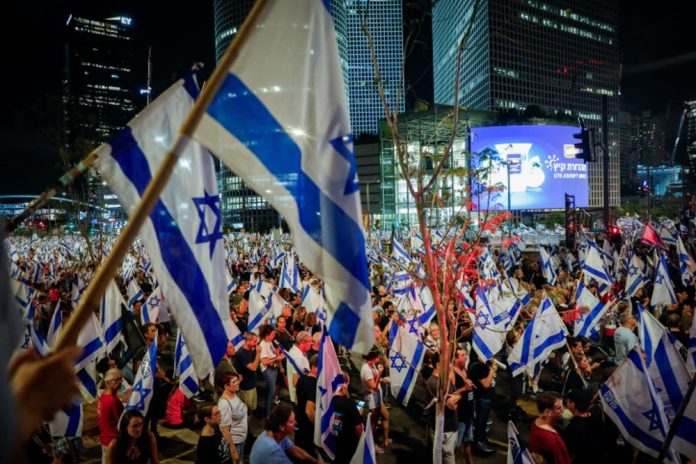
More than 100,000 protesters gathered in the coastal city of Tel Aviv alone on Saturday, chanting anti-regime slogans and carrying huge banners bearing caustic inscriptions against the regime’s politicians.

Once again in the focus was Netanyahu’s so-called judicial overhaul plan.

Proponents of the plan say it helps redistribute the balance of power between the politicians and the judiciary. Its opponents, however, accuse Netanyahu of trying his hand at a power grab. They say the premier, who is on trial on several counts of corruption charges, is also attempting to use the scheme to quash possible judgments against him.

The rallies have been a fixture since January, when the regime’s hard-right cabinet announced its plans to turn the scheme into law.

“I am here to tell everyone how scared I am …I am really afraid that the changes they want to do will destroy” Israel, one of the protesters was quoted by Reuters as saying.

“I came out here today with my family so that [we] can protest against the judicial coup. It’s a crucial time right now. We need to come out. We need to be in the streets,” another demonstrator added.

This week’s protests in Tel Aviv came after earlier on Saturday, violent clashes broke out between Eritrean protesters and the regime’s forces in which over 150 people were injured, including some 15 in serious condition. Around 30 Israeli forces were also hurt.

The rallies also came around two weeks before the Israeli Supreme Court is set to hear petitions regarding several key aspects of the overhaul scheme. According to Israeli media, the court’s decisions in favor of one or more of those petitions could lead to a direct confrontation between the executive and judicial branches of the regime and potentially even spark a “constitutional crisis.”

“We have a big vote in about two weeks. And I can’t tell you I am hopeful, but we are not gonna stop coming out until we are able to turn back and make sure that everyone has someone else watching over what they are doing. Nobody has the power to make changes at their whim,” a protester stated.

Shikma Bressler, one of the leaders of the anti-judicial overhaul protest movement, addressed the demonstration in Tel Aviv, saying that “wherever you look, the madness, the fanaticism, the messianic extremism, [and] all these sick evils are only increasing.”

As was the case in previous weeks, thousands of protesters also demonstrated outside Israeli president’s residence in the occupied city of al-Quds.

Demonstrators lit up flares and blocked the Karkur Junction in the northern part of the occupied territories, while in Haifa, which is likewise situated in the north, thousands joined the main rally at Horev junction.

Speaking in Haifa, former foreign minister Tzipi Livni said Netanyahu’s cabinet is “making reckless … decisions that are endangering all of our lives for the benefit of the right-wing messianic base, which is … acting wildly and violently in [the West Bank]….”

Protest organizers have planned a march for September 7-9, beginning in the northern city of Safed. A second march will be held from four locations in the south of the occupied territories towards the central city of Beersheba.

Curfew declared in Iraq’s Kirkuk following deadly unrest

Iraq Kirkuk Unrest

Prime Minister Mohammed Shia al-Sudani ordered the curfew in Kirkuk as well as “extensive security operations in the areas affected by the riots”, according to a statement from his office on Saturday.

He called on all parties to “play their part in preventing strife and preserving security, stability and order in Kirkuk Governorate”.

At least one civilian was killed and eight people were injured, a local official said.

But the circumstances surrounding the death were not immediately clear, the director of the local health authority, Ziad Khalaf, told the AFP news agency, adding that those injured had been hit by bullets, stones or glass.

He stated a member of the security forces was among the injured.

Tensions have been brewing for nearly a week in Kirkuk, which has historically been disputed between the federal government in Baghdad and authorities in the semi-autonomous Kurdish region in the north.

The frictions centre on the occupation of a building in Kirkuk that served as the headquarters for the Kurdistan Democratic Party (KDP) in the past but which the Iraqi army has used as a base since 2017.

The central government plans to return the building to the KDP in a show of goodwill but Arab and Turkmen opponents set up a camp outside the building to protest the handover last week.

The violence on Saturday was sparked when a group of Kurdish protesters approached the camp, according to officials.

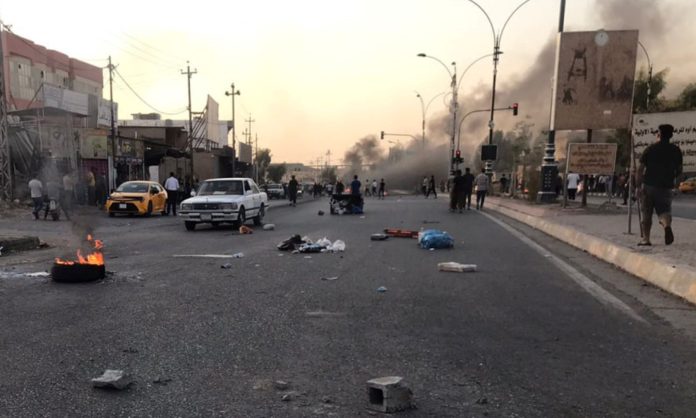
The AFP news agency reported that police deployed to the area fired warning shots to force the Kurdish demonstrators to disperse. The agency added vehicles on a main avenue were set on fire.

Masoud Barzani, a veteran Kurdish leader, accused “rioters” of blocking the highway from Kirkuk to Erbil, the Kurdish capital, with their sit-in.

He said this was “creating a tense and dangerous situation for residents”.

Barzani stated it was “surprising” that security forces had not prevented “the chaos and illegal behaviour of those blocking the road”, while on Saturday, “violence was used against Kurdish youth and demonstrators”.

His son Masrour Barzani, prime minister of the autonomous region, meanwhile called on al-Sudani in Baghdad to “intervene immediately to bring this unacceptable situation under control”.

He also urged “Kurdish citizens being persecuted in Kirkuk to show restraint and refrain from violence”.

Kirkuk, a flashpoint oil-rich province in northern Iraq along the fault lines between the Kurdish autonomous region and areas controlled by Iraq’s Shia-dominated central government, has been the focus of some of the country’s worst post-Daesh violence.

Kurdish forces controlled Kirkuk city after driving Daesh out in 2014 but were ejected by the Iraqi army in 2017, bringing the city back under Baghdad’s control.

When al-Sudani took power last year, he worked to improve relations between his government and the KDP and agreed to allow the party to reopen its headquarters in Kirkuk.

But Arab residents and minority groups who said they suffered under Kurdish rule, such as the Turkmen, have protested the KDP’s return.

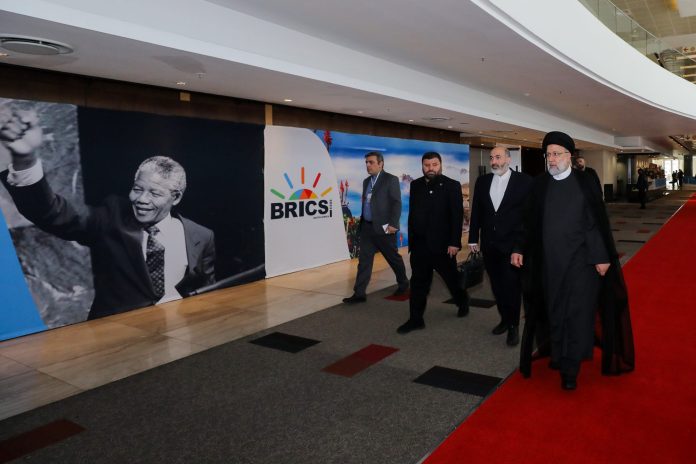
Analyst: BRICS, SCO memberships to have not much impact on Iran economy without bans lifted

BRICS Iran President Ebrahim Raisi

“I believe this issue is more related to the administration rather than the government,” said Hassan Baheshtipour, in an interview with Entekhab news outlet.

“Raisi believed the trend of talks should not be linked to people’s livelihood. This was a misinterpretation. The market and economy would naturally react to the negotiations that were underway,” he explained.

“If the talks made progress, the reaction would be positive, and if there was a stalemate, the reactions would be negative,” the expert added.

“In all countries, the economy naturally reacts to foreign policy,” he noted.

“The Raisi administration gradually arrived at the conclusion that if positive news is published about the negotiations, it will have a positive impact on the market,” he said.

“Within the same framework, it seemed that part of the administration, especially the foreign ministry, tried to publish positive news. Accordingly, they announced Iran’s membership in the Shanghai Cooperation Organization (SCO) before it was finalized. The same was true about Iran’s BRICS membership, which was widely promoted,” said the expert.

“But without the sanctions being lifted, these memberships will not have that much of a positive impact on economy,” he added.

Live Update: Russia’s “Special Operation” in Ukraine; Day 557

Russia Ukraine War

Ukraine accuses Russia of trying to create a “food crisis” after attacks on port infrastructure

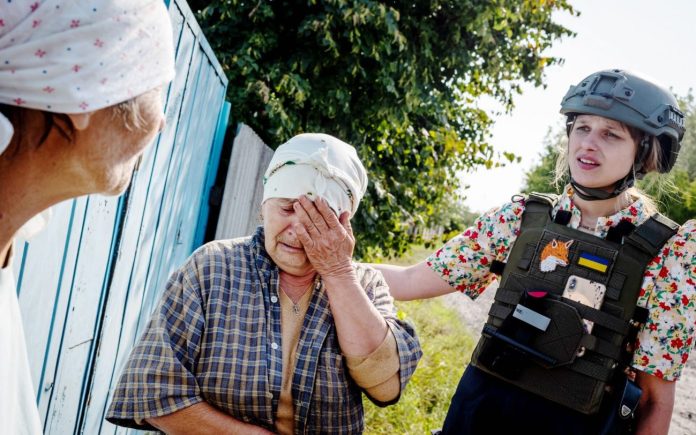
Ukraine has accused Russia of trying to create a food crisis after it attacked port infrastructure in the southern Odesa region.

At least two people were injured in the attacks, Ukrainian officials said. It is not clear where exactly was hit but an official said the port of Reni had been targeted.

The Danube river has become the main way for Ukraine to export its grain after the collapse of a UN and Turkey-brokered deal.

“Russian terrorists continue to attack port infrastructure in the hope that they will be able to provoke a food crisis and famine in the world,” the head of the office of the President of Ukraine, Andriy Yermak, said on the messaging platform Telegram.

“The main task for us and our partners today is to eliminate the ability of the Russian military-industrial complex to produce weapons for strikes against Ukraine. And to increase responsibility for those who help the enemy to circumvent sanctions,” he added.

“It [capability to produce weapons] cannot function without foreign components for weapons. After the destruction of the Russian military-industrial complex, the defeat of Russian troops will be complete.”

The Russian strike on the port in Odesa region came early Sunday, a day before Russian President Vladimir Putin and his Turkish counterpart, Recep Tayyip Erdogan, are scheduled to meet in Sochi, Russia with the grain deal likely to be a topic.

The meeting comes after Russia’s Foreign Minister Sergei Lavrov stated the country is willing to rejoin the Black Sea grain deal once it sees guarantees that promised benefits will be implemented. UN Secretary-General Antonio Guterres has presented “a set of concrete proposals.”


Russia signed 280,000 for contract military service this year

Some 280,000 people have signed up so far this year for professional service with Russia’s military, the deputy chair of the Russian Security Council, former President Dmitry Medvedev, stated.

Visiting Russia’s far east, Medvedev added he was meeting local officials to work on efforts to beef up the armed forces.

“According to the Ministry of Defence, since January 1, about 280,000 people have been accepted into the ranks of the Armed Forces on a contract basis,” including reservists, state news agency TASS quoted Medvedev as saying.


Ukraine’s Western backers are ‘pro-Nazi coalition’: Ex-president

Washington and its allies in Europe and elsewhere continue to support Kiev despite it acting increasingly like the Nazis during World War II, former Russian President Dmitry Medvedev said in a Telegram post on Sunday.

Moscow should abandon hope of reconciling with the West and see it for what it is, he believes.

The leaders of Ukraine are “increasingly talking about ‘holding all Russians accountable’,” Medvedev stated, adding that Kiev sees all Russian citizens as ‘Russians’ regardless of their ethnic background. In a thinly veiled reference to the Nazis’ plans for the Soviet Union, the former president said that the world had already seen similar aspirations.

Medvedev noted that Ukraine is still being supported by almost every single Western leader, as well as by the heads of Japan, Australia, and New Zealand. All of them “are direct and obvious Nazi accomplices,” he stated, adding that “they should be treated as the leaders of a pro-Nazi coalition.”

The former president, who now serves as the deputy head of Russia’s National Security Council and the Military Industrial Committee, then insisted that Russia should not “lapse into sweet daydreaming” about achieving reconciliation with the West and joining what he called a “big polyamory family of non-binary genders.”


Ukraine focuses on consolidating battlefield gains

“Consolidation” remained the watchword for the Ukrainian Armed Forces on Saturday following recent modest gains in the southern Zaporizhzhia region, while political figures in Kyiv, as well as US officials, pushed back against suggestions the Ukrainian counteroffensive is moving too slowly.

“The Ukrainian Defense Forces continue to conduct the offensive operation on (the) Melitopol axis, consolidating their positions and conducting counter-battery fire,” the military’s General Staff wrote in a Saturday update on Facebook.

Melitopol is located south of Zaporizhzhia city.

Ukraine has been focusing efforts around the village of Robotyne in recent weeks as it tries to move south toward occupied cities on or near the coast of the Sea of Azov.

An unofficial Telegram channel belonging to Ukraine’s 46th Brigade suggested there had been fresh limited Ukrainian gains to the southeast of Robotyne, posting: “There is an extension of the bridgehead along the enemy’s defense line in the direction of Verbove. The area of control is being expanded for further actions.”

The channel also reported fighting on higher ground outside the neighboring village of Novoprokopivka.

Ukraine’s current counteroffensive against Russia’s forces has been underway for three months, and there have been growing concerns that it is failing to achieve expected results.


Cargo ships depart Ukraine despite Russian threat

Two cargo ships have left Ukraine and are near to Bulgaria despite Russian threats in the Black Sea.

The Anna-Theresa, a Liberian-flagged bulk carrier holding 56,000 tons of pig iron, left the Ukrainian port of Yuzhny on Friday and is now close to Bulgarian territorial waters, said Oleksandr Kubrakov, the Ukrainian infrastructure minister.

A second vessel — the Ocean Courtesy, traveling with a Marshall Islands flag — left the same port on Friday with 172,000 tons of iron ore concentrate.

The vessel arrived at the Romanian Black Sea port of Constanta shortly before noon on Saturday, according to Marine Traffic.

The two vessels sailed through a temporary corridor for civilian ships from Ukraine’s Black Sea ports to the Bosporus, which avoids international waters.

Authorities at the Bulgarian port of Varna did not confirm on Saturday whether the Anna-Theresa will enter the port or continue to the Bosporus Strait.

The ships were the third and fourth vessels that used the interim corridor after Russia halted a wartime agreement aimed at ensuring safe grain exports from Ukraine.


Iranian basketball legend Hamed Haddadi retires from national team after two-decade career

Hamed Haddadi

The 38-year-old center had 14 points and eight rebounds in what was the last contest of a long career that included among other accolades playing in two Olympic Games.

“I have had a long career with the national team since the 2000s,” Haddadi stated after his last game.

“I try to play when I can even if I’m out of shape. I feel good but upset too because I leave my team,” he added.

Haddadi also thanked his doctor who he said helped him overcome an Achilles injury at the beginning of the year, making it possible for him to close out his national team career at the World Cup.

After this tournament, Haddadi entered the top-five for blocks in World Cup history with 31 rejections.

“It is time for the young generation. They need to get more time and more experience with more game-time”.

The Iranian national basketball team finished the 2023 World Cup without a single victory.

Iranian mobile taxi booking app hacked

Cyber attack

The IRLeaks hackers claimed the attack, saying it stole the information of users of Tapsi, a cellphone taxi app popular with many people in Iran.

The hacking group has demanded 35 thousand dollars in ransom to not reveal the information of the Tapsi users.

The managing director of the cellphone taxi app company has confirmed the news.

Tapsi says its main mission is to facilitate urban trips and to make them safer and more cost-effective.

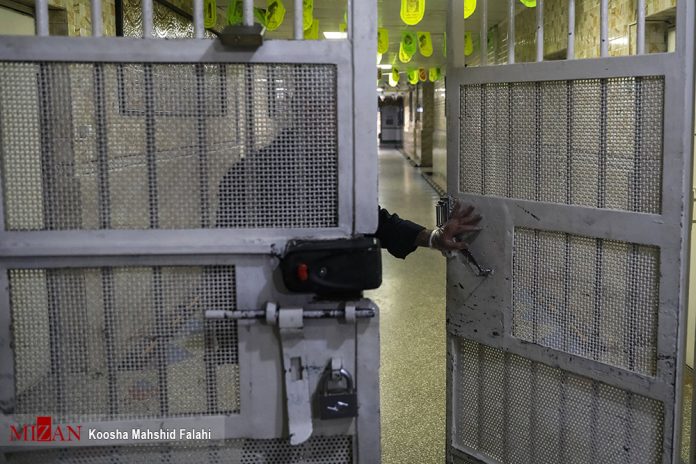
Woman arrested in Iran for killing 7 elderly men

Iran Prison

The 56-year-old confessed to the murders.

She was arrested after an 82-year-old man died in Mahmudabad town along the Caspian Sea, under suspicious circumstances and following a complaint lodged by his family.

Police quickly arrested the woman and she confessed to killing him under interrogation.

She admitted to having put many blood pressure pills in the old man’s water glass and to strangling him after he felt dizzy.

She also confessed to having killed six other elderly men with whom she had temporarily married.

The men are said to have all been rich people.

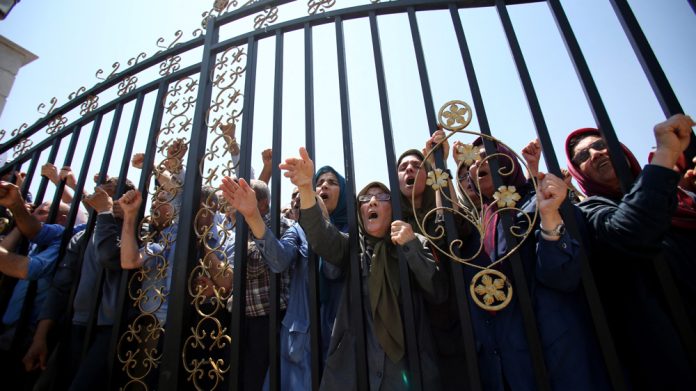
Report: Infighting at MKO camp in Albania as some members get help to flee to West

MKO

According to the Tehran-based Tasnim News Agency, the MKO is helping these members who hold higher posts escape the camp on which the Albanian officials are keeping close tabs for fear of terror acts by the MKO members holed up there.

The MKO’s effort to help these members flee to Western developed countries has angered rank and file members of the group who think they have been abandoned in Albania.

The report says the reason why those members of the MKO are escaping Albania is for fear of getting arrested by Albanian officials.

These members in the country stand accused of involvement in terrorist acts.

The MKO is responsible for the deaths or more than 17,000 Iranian officials and ordinary people since the 1980s.

During the Iran-Iraq war of the 1980-88
the terror group sided with the regime of Saddam Hussein, the former Iraqi dictator against Iran.

The MKO terrorists are based in Ashraf-3 camp near Manze, a small hill town 30 kilometers west of Albania’s capital Tirana.

The Albanian government has recently tightened the noose around the group to block any anti-Iran move by the terrorists.

Turkish foreign minister to visit Tehran on Sunday

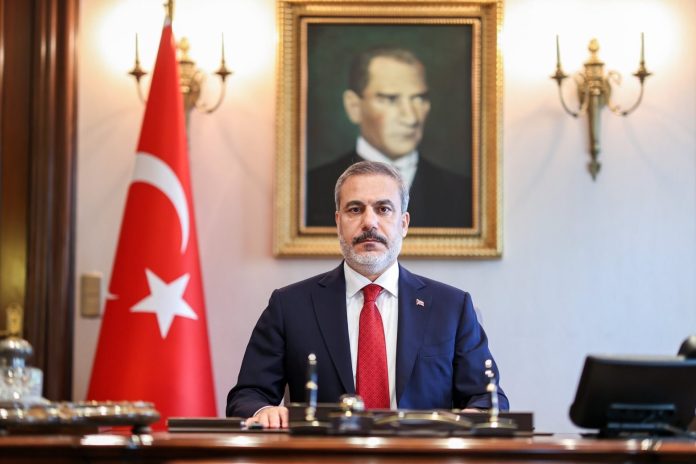
Foreign Minister of Turkey Hakan Fidan

The Turkish Foreign Ministry announced on Saturday that Fidan will travel to Tehran at the invitation of his Iranian counterpart Hossein Amirabdollahian.

“During the visit, Minister Fidan will hold high-level meetings in Tehran,” the ministry said.

“The visit will render the opportunity to discuss the possibilities for further advancing our bilateral cooperation in all fields with Iran and to exchange views on current regional and international developments,” it added.

Iran has on various occasion voiced readiness to promote cooperation with the government of Turkish President Recep Tayyip Erdogan, who won the run-off presidential election in Turkey on May 28 and extended his tenure for a further five years.

In a telephone conversation with Erdogan on May 30, Iranian President Ebrahim Raisi expressed hope that the economic, political, security, cultural and trade relations between Tehran and Ankara would grow further during the new term of the Turkish leader.