Monday, December 29, 2025
Home Blog Page 1281

Russia hits back at Armenian PM over Caucasus

Kremlin

“Russia continues to play an important role in stabilizing and de-conflicting this region” and it will continue doing so in the future, Peskov told journalists on Tuesday.

The press secretary was responding to comments made by Pashinyan in an interview with Italian newspaper La Repubblica on Sunday, in which the prime minister lamented that – despite Moscow’s complaints about the West trying to push it out of Armenia – “we see that Russia is itself abandoning the [South Caucasus] region.”

The PM went so far as to state that “we may wake up one day and see that Russia isn’t here anymore.”

Pashinyan also blamed Russian peacekeepers for “being unable or unwilling” to exercise control over the Lachin corridor, which links the disputed region of Nagorno-Karabakh to Armenian territory.

In 2020, Armenia and Azerbaijan fought a 44-day war for control over Nagorno-Karabakh – a section of Azerbaijani territory that has a predominantly ethnic Armenian population – which declared independence from Baku in the early 1990s. The fighting ended with a Moscow-brokered truce that involved deploying Russian peacekeepers to the area. However, clashes continue to flare up between the two former Soviet republics.

“We deeply respect Pashinyan” and expect his “constructive working relationship” with Russian President Vladimir Putin “to remain the key to close cooperation between the two countries,” Peskov stated, adding, “But we can’t agree with the points made by the prime minister.”

“Russia is an integral part of this region. Therefore, it can’t go anywhere. And Russia can’t abandon Armenia,” he insisted.

The Kremlin spokesman also noted that “there are more Armenians living in Russia than in Armenia itself. Most of them are exemplary and patriotic Russian citizens.”

Given the circumstances, it is paramount for Armenia and Azerbaijan to remain committed to the trilateral agreements that were reached after the 2020 conflict, Peskov explained, as “adhering to those agreements is the key to success.”

Resumption of Diplomatic Ties: Saudi envoy to Iran arrives in Tehran

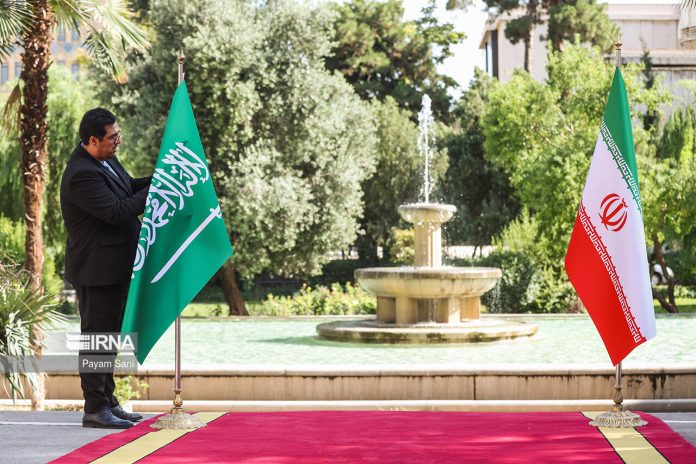
Iran and Saudi Flags

As a result, the diplomatic missions of both countries have been elevated to the ambassadorial level.

Last March after several days of intensive China-hosted negotiations, Iran and Saudi Arabia agreed to restore diplomatic ties and reopen embassies seven years after their relations were severed.

Diplomatic relations between the two counties were severed by Saudi Arabia in January 2016, after Iranian protesters, angered by the execution of prominent Shia cleric Sheikh Nimr Baqir al-Nimr by the Saudi government, stormed its embassy in Tehran.

The Iranian president has recently described Iran and Saudi Arabia as “two influential countries in the West Asia region and the Muslim world.”

Ebrahim Raisi has also called for the further promotion of ties between Tehran and Riyadh.

Iran-Saudi rapprochement ‘positive step’ towards promotion of regional security, stability: Iraq

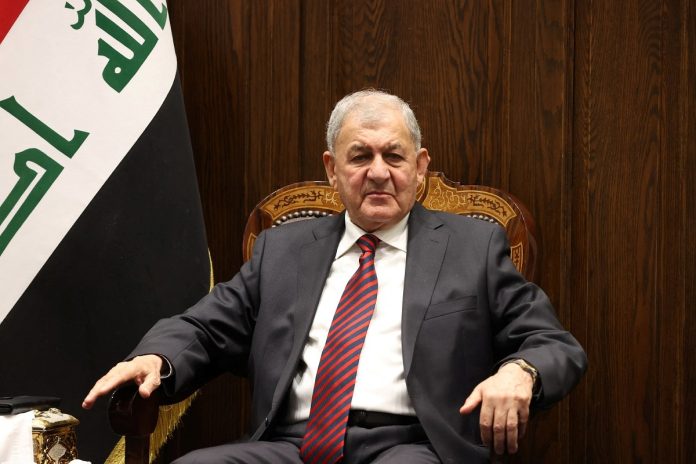
Abdel Latif Rashid

“The rapprochement between Iran and Saudi Arabia is a positive step to enhance security, stability and peace, and we appreciate the efforts made by China and Iraq for that rapprochement,” Rashid said in an interview with China’s official Xinhua news agency on Tuesday.

Diplomatic relations between Riyadh and Tehran were severed by Saudi Arabia in January 2016 after Iranian protesters, angered by Riyadh’s execution of prominent Shia cleric Sheikh Nimr Baqir al-Nimr, stormed its embassy in Tehran.

On March 10, after several days of intensive negotiations hosted by China, Iran, and Saudi Arabia agreed to restore diplomatic ties and reopen embassies seven years after their relations were severed.

In a joint statement after signing the agreement, Tehran and Riyadh highlighted the need to respect each others’ national sovereignty and refrain from interfering in the internal affairs of one another.

They also agreed to implement a security cooperation agreement signed in April 2001 and another accord reached in May 1998 to boost economic, commercial, investment, technical, scientific, cultural, sports, and youth affairs cooperation.

Pakistan hit by protests over surging energy costs

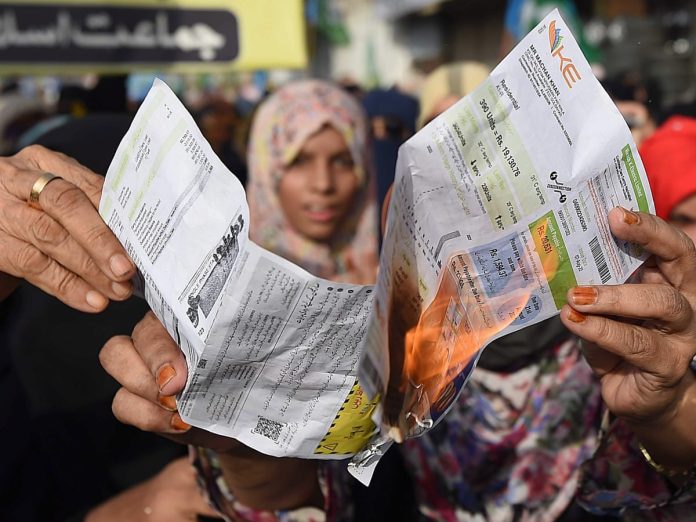
Pakistan Protest

The cost of electricity has doubled in the last three months to about 50 rupees (12p) a kilowatt. Petrol prices have shot up from 262 rupees a litre in June to 305 rupees this month.

Pakistan is in the midst of political and economic turmoil, with a record inflation rate of 36.4% and the prime minister, Imran Khan, ousted in April last year after a vote of no confidence. The country was also devastated by floods last year, which submerged much of the country.

Protests turned violent in Karachi last week when a worker from the utility company K-Electric (KE), which generates and distributes power to the city, was attacked by an enraged mob.

In Khyber Pakhtunkhwa province, the energy department requested police protection for its staff and installations after threats of attacks by protesters, according to VoA.

“Hunger can bring out the worse in people,” said Atiq Mir, president of the All Karachi Tajir Ittehad, a traders’ association.

The protests culminated at the weekend when shops and markets across Pakistan closed in response to a call by the Islamist party Jamaat-e-Islami. Closures on Friday and Saturday are thought to have cost the country an estimated 10bn rupees (£25m).

Mohammad Niaz, 37, who worked in Saudi Arabia until the Covid pandemic forced him back to Pakistan, stated the 30,000 rupees he earned every month as a waiter was not enough to cover his expenses.

“Food prices have skyrocketed, and my electricity bill has doubled in the last three months – when we just have electricity for nine hours in a day.”

After setting aside 6,000 rupees for school fees for his two children, and their bus fares, books and stationery, there was little left for food, he added.

According to the Pakistan Bureau of Statistics, the price of wheat flour has more than doubled since August 2022, meaning bread has doubled in price too. Sugar is also more expensive.

Perween Riaz, 54, a Karachi resident of nearly 20 years, stated she may move back to her village in Punjab province.

“Karachi is not for the poor any more,” said the carer, who earns 25,000 rupees a month. Her husband earns the same, working as a driver, and they have six children and two grandchildren to feed.

“In the last one year, food prices have only increased,” she continued, adding that her monthly groceries cost double what she paid two years ago.

KE’s director of communications, Imran Rana, said: “Prices of electricity are set by the government for the entire country, yet utilities across the country are under fire for something they do not control.

“Violence is not the answer,” he said, adding, “Assaulting utility staff, who are doing their job, will only compound the situation.”

The energy minister, Muhammad Ali, said the government was working to resolve the situation, but many of the current issues were outside its control.

“The soaring dollar rate and increase in global petroleum prices have meant that petroleum products are costing Pakistan much more,” he continued, adding, “In turn, they must be sold at the same high rate, which has led to a rise in electricity rates since the power was partly being generated from expensive imported fuel. This had to, unfortunately, be passed on to the consumers.”

The caretaker government’s hands were tied, he noted, because of a deal the previous government made with the International Monetary Fund to raise prices as a condition of securing a $3bn (£2.4bn) loan to avoid defaulting on foreign debt in July.

Another condition was an end to fuel subsidies.

“In the next few months, we are trying our best to take things towards betterment,” the minister said, adding, “Solutions have long been known but were never implemented.”

There have been calls for traders to revise their opening hours to avoid using electricity between 6.30pm and 10.30pm when charges are highest. Most traders currently operate from noon to 10pm. The move has been resisted by traders in the past.

A few have escaped the energy price rises. Azher Karimjee, a businessman, put 10KW solar panels on the roof and installed storage batteries when he built his house three years ago, and has “not paid a rupee to KE” because he is able to produce enough energy to sell it back to the power company.

“It was the best decision I made, although I have to admit the capital cost was high. Having storage batteries has been a big advantage during peak evening usage.”

The government is considering whether to regulate this tariff system to avoid losing revenue as rising “capacity payments” to independent power producers, which are fixed against interest and exchange rates, have increased as the rupee has depreciated and interest rates have risen.

Iran: 4mn pilgrims depart for Iraq’s Karbala for Arbaeen rituals

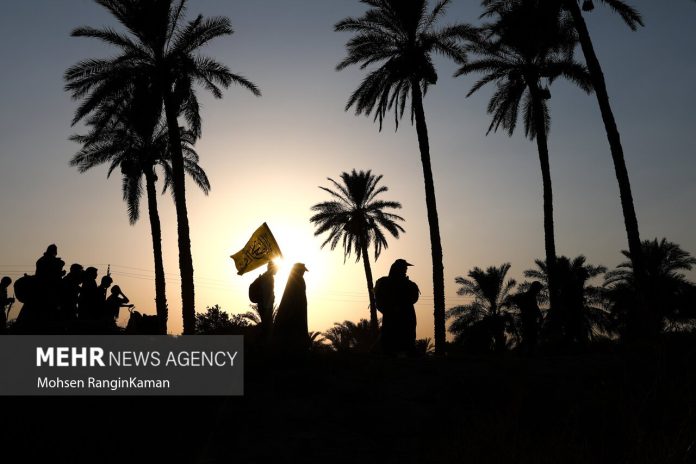
Iran Iraq Pilgrims

Ahmad Vahidi added: “Out of the 4 million pilgrims, around 1,450,000 departed for Karbala from the border terminals in Khuzestan Province, southwestern Iran, and over 300,000 have returned through these terminals.”

Vahidi went on to say that all necessary facilities are in place to cater to the needs of the pilgrims, and positive feedback has been received from them.

“Extensive arrangements have been made for pilgrims transportation, including many buses, with no reported issues during my visit. Many pilgrims are returning on Fridays and Saturdays, and essential facilities have been provided for those returning on other days,” noted the Iranian minister.

Arbaeen is a significant religious observance in the Islamic tradition, particularly for the Shia Muslims. It marks the end of the 40-day mourning period following Ashura, the religious ritual commemorating Imam Hussein’s martyrdom, the grandson of Prophet Muhammad, in the 7th century.

During Arbaeen, millions of pilgrims, mostly Shia Muslims, gather in the holy city of Karbala in Iraq, where Imam Hussein is laid to rest.

They embark on a pilgrimage to Karbala to pay their respects and show their grief for the suffering and sacrifices of Imam Hussein and his companions.

The processions involve long, often grueling journeys on foot, and participants frequently walk for miles, sometimes even across borders, to reach Karbala.

Israeli soldiers kill Palestinian youth, damage refugee camp

Israel Palestine

The Palestinian Ministry of Health announced 21-year-old Ayed Samih Khaled Abu Harb dead at 8:15am (06:15 GMT) on Tuesday, noting he was shot in the head. A funeral procession was held for him at 11am.

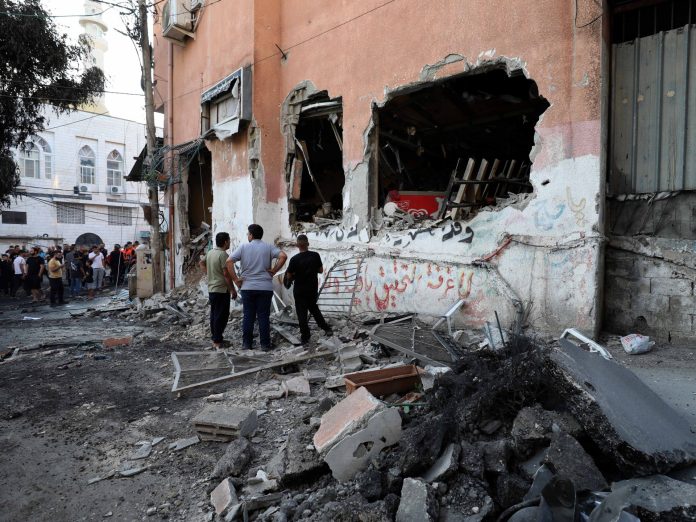
Israeli forces, with armoured tractors, stormed the overcrowded Nur Shams refugee camp from several fronts at dawn, inciting armed resistance from Palestinian fighters.

They bulldozed the road leading to the camp, which is minutes from Tulkarem city, and destroyed a number of homes and shops, as well as infrastructure, before withdrawing three hours later.

Taha al-Irani, head of the camp’s popular committee, spoke to Al Jazeera from the camp on Tuesday about the level of destruction and the shock of Abu Harb being killed and another man injured.

“I want to assure you that the martyr [Ayed], was just standing at his front door when he was killed, and the man in critical condition is a taxi driver who was headed to work,” al-Irani, 50, said, adding, “It’s total destruction in the camp … The main road tying the camp to other cities – to Tulkarem, Nablus, Ramallah – was partially destroyed.”

Nur Shams refugee camp, established in 1952, is one of the two camps in Tulkarem and was built to house Palestinian refugees from the Haifa area following the 1948 Nakba, or ethnic cleansing of Palestine by Zionist militias.

Mohammad Abu Talal, a 39-year-old supermarket owner, told Al Jazeera: “The army entered with bulldozers and tractors. They destroyed the shop, they destroyed everything.”

In a statement, the Tulkarem Directorate of Education announced that schools would be suspended on Tuesday.

With the death of Abu Harb, the number of Palestinians killed by the Israeli army since the beginning of this year has risen to 232.

The Israeli army announced it arrested 21 Palestinian “wanted suspects” overnight on Tuesday alone. The total number of Palestinians held in various forms of Israeli detention is in the thousands.

The Israeli army has been militarily occupying the West Bank, where some three million Palestinians live, for 56 years.

Over the past two years, Palestinian armed resistance has reorganised and risen in prominence, particularly in the north of the occupied West Bank. In response, Israel has been attempting to crush this resistance through near-daily raids on Palestinian cities, villages and refugee camps that almost always result in casualties.

Nur Shams was targeted in another recent large-scale Israeli raid on July 24, during which at least 13 Palestinians were injured, including four with live ammunition and nine by shrapnel. Israeli forces also damaged infrastructure badly during that raid, forcing the Palestinian Authority to dedicate a portion of its budget to the camp’s reconstruction.

“Thank God that we haven’t put out tenders for reconstruction of roads and infrastructure [after the earlier raids] yet,” stated al-Irani.

On August 5, the Israeli army raided the camp and shot 18-year-old Mahmoud Abu Sa’an in the head at point-blank range, killing him, the Health Ministry said. Abu Sa’an had just graduated from high school.

“If the Israeli thinks that he can achieve security and peace through his oppression and these crimes that he carries out, he is delusional. This would not come unless Palestinians are given their rights, to live in dignity in their state,” added al-Irani.

Iran defense minister: All anti-Tehran weapons sanctions to be lifted in weeks

Mohammad Reza Ashtiani

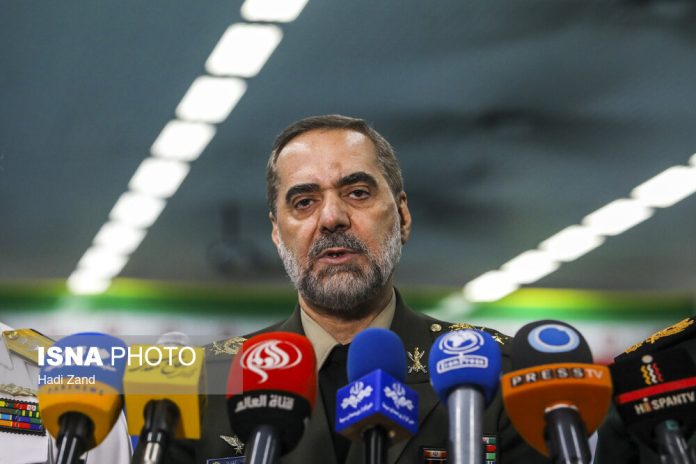
Brigadier General Mohammad-Reza Ashtiani, in an article published in the Arabic-language Iranian daily Al-Vefagh on Tuesday wrote , “The defense industries of the Islamic Republic of Iran have reached a level of maturity and prosperity that can be a point of convergence and connection for defense, technical and technological ties with independent and neighboring countries.”

Days before Iran’s Defense Week, starting on September 22, the Iranian Defense Minister said the country is especially focusing on its domestic capabilities to indigenize the defense industry, while stepping up ties with friendly nations.

The top official stated one of the most important missions of the Iranian Defense Ministry is “producing power and security” through the development of the capacities and capabilities in the defense industry, and focusing on the design and production of the country’s weapons requirements.

“The Ministry of Defense designs and manufactures all kinds of equipment and weapons needed by the armed forces in the air, sea, and land fields, and all kinds of ballistic and cruise missiles, all kinds of drones, surface and subsurface vessels, cyber equipment, … by relying on local knowledge and technologies,” he noted.

X accused of assisting Saudi Arabia in cracking down on critics: Report

X Twitter

The legal filing alleges that the network disclosed user data to the Saudi authorities “significantly more often” than to the US, UK and Canada, and ignored “the red flags” of a systemic crackdown on dissent on the platform by Saudi authorities dating from December 2014, when it was infiltrated by three Saudi agents.

The security breach exposed the identities of thousands of anonymous users, some of whom were subsequently detained and tortured.

The lawsuit was first filed in May by Areej al-Sadhan, the sister of a Saudi aid worker who was forcibly disappeared and subsequently sentenced to 20 years in jail.

The new claims, updated last week, say that Twitter, under the leadership of then-chief executive Jack Dorsey, overlooked efforts by the Saudi government to use the platform as a means to crack down on its critics, in the interests of preserving close ties with its top investor.

The claims come shortly after a Saudi court handed out a death sentence to Muhammad al-Ghamdi based on views he expressed in tweets, in what Human Rights Watch (HRW) condemned as an “escalation’” of the government’s campaign against freedom of expression.

Additionally, the new lawsuit claims that Ahmad Abouammo, a former Twitter employee who was later convicted in the US for acting as a double agent, had sent a message via Twitter to Saud al-Qahtani, a close aide to Saudi Crown Prince Mohammed bin Salman who was later accused of orchestrating the murder of journalist Jamal Khashoggi, that read “proactively and reactively we will delete evil, my brother”.

According to the lawsuit, this was a reference to the crackdown on Saudi dissidents using the platform that X either knew about or “deliberately” chose to ignore.

The lawsuit alleges that even after his resignation in 2015, Abouammo continued to submit requests to the platform for users’ confidential data, openly stating that the requests were on behalf of his “old partners in the Saudi government”.

Twitter was also quick to hand over documentation confirming users’ identity following emergency disclosure requests (EDRs), the lawsuit alleges, enabling Saudi authorities to access user information within hours of a tweet deemed critical of the kingdom.

Furthermore, the platform failed to alert its users of the scale and severity of the data breach and, by doing so, the company “put thousands of Twitter users at risk”, the lawsuit said.

Palestinian delegation to discuss Israeli-Saudi normalization with officials in Riyadh: Report

Mahmoud Abbas King Salman

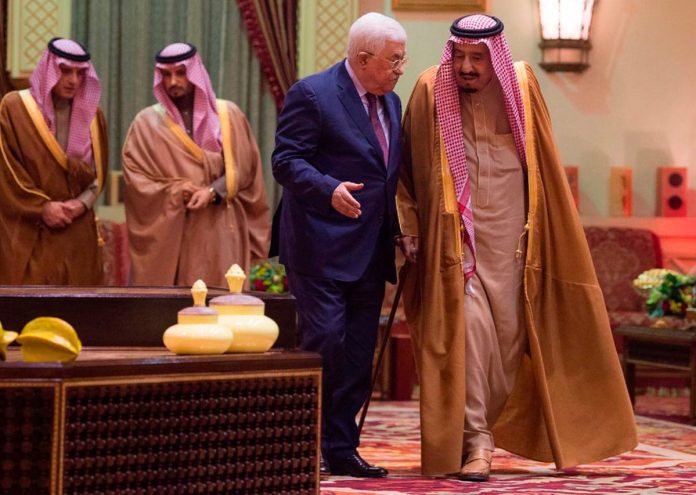
The delegation will travel to Saudi Arabia on Monday and include Hussein al-Sheikh, President Mahmoud Abbas’s deputy, Majed Farag, head of the PA intelligence service (GIS), and Majdi Khaldi, senior diplomatic advisor to Abbas.

The trio will hold discussions with Saudi Arabia’s Foreign Minister, Faisal bin Farhan Al-Saud, and the national security advisor, Musaed bin Mohammed Al-Aiban. They will also meet with Brett McGurk, the White House’s coordinator for the Middle East and North Africa.

According to Palestinian sources with knowledge of the trip, the PA officials will discuss issues raised by Saudi Arabia about the possible normalisation deal without presenting specific demands.

For months, Washington has been leading efforts to strike a deal between Saudi Arabia and Israel that would see them establish formal ties.

Saudi Arabia has held out the offer to normalise ties with Israel since 2002 under the Arab Peace Plan, which calls for an independent Palestinian state in the West Bank and Gaza Strip, with East Jerusalem as its capital.

However, many analysts and people familiar with the Joe Biden administration’s thinking tell MEE they believe Riyadh would settle for much less.

In exchange for normalising ties, Saudi Arabia wants security guarantees from the US, help in developing a civilian nuclear programme, and fewer restrictions on US arms sales.

While the Palestinian issue is not thought to be central to the agreement, a component of the deal would include possible benefits to the Palestinians.

The PA has in the past rejected similar US-brokered normalisation deals between Israel and Arab countries, including the United Arab Emirates, Bahrain and Morocco.

A senior source in Fatah, which dominates the PA, told MEE that some elements within the Ramallah-based authority are reconsidering this approach.

“They think normalisation is happening with or without us, so they may as well benefit from it, at least politically and financially,” the source added.

Last week, Israeli outlets reported a list of demands presented by the PA to US officials at a “tense” meeting in Jordan’s capital, Amman.

They included transferring parts of the so-called Area C in the occupied West Bank to partial Palestinian control, a move that would not likely get the approval of Israel’s ultranationalist government, which has pushed for annexation of Area C.

The West Bank was divided into three areas during the Oslo Accords, giving the PA limited control in areas A and B, while Israel was given full control in Area C, which forms 60 percent of the Palestinian territory.

Other Palestinian demands included getting backing from Washington for recognition of Palestinian statehood at the United Nations, the reopening of the US consulate in Jerusalem, and the resumption of “final status” negotiations between Palestinians and the Israelis.

As the PA takes a pragmatic approach to the potential Saudi deal with Israel, Riyadh has reportedly offered to resume financial aid to Ramallah frozen since 2020.

Saudi Arabia was one the top funders of the PA between 1994 and 2020, giving it almost 10 percent of the total aid it received in that period. The aid package in the past reached more than $200m a year.

The PA has denied any link between the resumption of financial aid and the normalisation deal.

However, the Fatah source who spoke to MEE said the PA is not likely to receive anything “other than money and some non-enforceable political gestures” from the potential agreement.

“Saudi Arabia wants to ensure Palestinian silence over the deal, and the PA will agree to normalisation in the end,” the source stated.

The deal could generate anger among the Saudi and Arab public, which is why Riyadh is seeking to get “Palestinian cover” to justify it, according to Ayman Talal Yousef, professor of international relations at the Arab American University.

The Palestinian issue will likely remain low on the agenda, with Saudi Arabia, the US, and Israel prioritising other geopolitical interests, Yousef told MEE.

China’s Huawei opens cloud data center in Saudi Arabia to grow MENA footprint

Huawei

The cloud data centre in Riyadh, Huawei’s 30th worldwide, will support government services for the Saudi kingdom and allow for AI applications and language models in Arabic, a company official told a briefing.

“The implementation of Huawei cloud is not just about us, but is a bridge that will bring other Chinese companies to Saudi Arabia,” stated Steven Yi, the company’s regional president.

The step would contribute to the development of the country’s digital economy, he continued, adding that Huawei opened its regional headquarters in the Saudi capital this year.

Saudi Arabia has previously said it would not sign contracts with foreign companies that did not have regional headquarters in the kingdom after this year.

Huawei ranked fifth in the global cloud services market in the first quarter, with a market share of 2.4%, although it was the second-largest vendor in mainland China, according to research consultancy Canalys.

In February, Huawei noted it would invest $400 million in the Saudi Arabia cloud region over the next five years.