

Putin says to soon meet China’s Xi
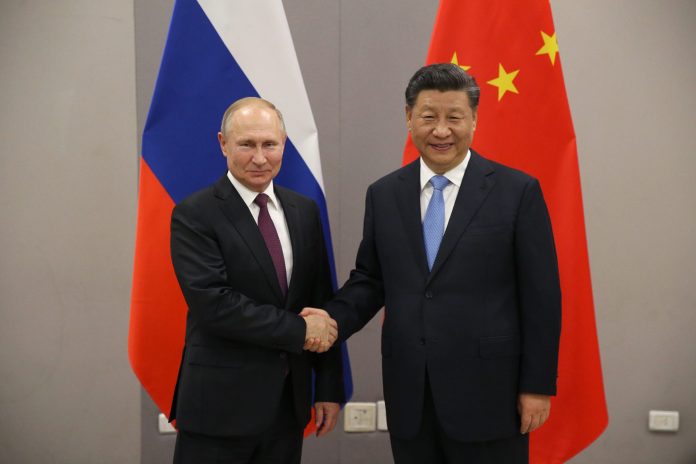
“In the near future we will have events and a meeting with the Chinese Chairman. He calls me his friend, and I am happy to call him my friend, because he is a person who personally does a lot for the development of Russia-China relations and ties and in various fields. And we will definitely discuss with him what else can be done on this issue, and for the development of humanitarian contacts,” Putin stated at a meeting with students “Important Conversations”.
As relations between the two countries grow stronger, the leaders meet increasingly often. In fact, the announced meeting is going to be the 41st one in the affluent list of the leaders meetings.
“You are the first foreign head of state I have met. I get the impression that you and I always treat each other in an openhearted manner. We are similar in character and have become good friends,” Xi told Putin during the first visit in 2013.
“I will come to Russia often, and President Putin will visit us more often,” Xi promised.
Last time, the Chinese leader visited Moscow on March 20-22 – days after being reelected for a third term on March 10. Once again, Russia was chosen the first foreign state to visit by Xi after his reelection.
Iran envoy: Iranian-Saudi ties to further boost regional cooperation

“Cooperation between Iran and Saudi Arabia will push the region toward cooperation,” said Alireza Enayati, in an exclusive interview with Shargh news outlet.
“We signed 4 very important documents with Saudi Arabia after 76 years. Now, these documents are on the negotiating table between the two countries,” he explained.
“What happened during the talks between Tehran and Riyadh, and what took place before these meetings or in the middle of the meetings completely show the two countries’ determination to further enhance and deepen their relations,” he added.
“[These documents include] an agreement on air and sea transportation, and a road transportation deal will probably be added to these documents,” he said.
“Of course, during the talks with Riyadh, they agreed on double tax avoidance and also highlighted a customs agreement and encouraged support for mutual investment,” the Iranian ambassador added.
About the nature and benefits of yoghurt in the Iranian traditional medicine

Here, you will get to know the properties of different dairy products. We start by giving some insight into the use of yogurt in traditional medicine.
Dairy products in traditional medicine are generally divided into fresh cheese, old cheese, cream, buttermilk, sour cream, pasteurized milk, fresh local milk, Qareh Qurut, butter, curd, yogurt, and solid yogurt.
Most of these dairy products have a cold and moist nature, but some of them also have a warm and moist, warm and dry, and also cold and dry nature.
We will discuss the properties and nature of yogurt in Iranian traditional medicine.
Properties and nature of yoghurt in traditional medicine
Properties and nature of yogurt are two important factors in traditional medicine. The nature of yogurt is cold and moist, and the more sour and thinner it is, the colder and moister it would be.
Some of the properties of yoghurt are as follows:
- -Quenching thirst in hot weather and strengthening sexual powers of people with a warm temperament
- Increasing the moisture of the body and balancing the temperature thereof
-Using yogurt as a complete snack or even as a meal in summer
Consequences of eating too much yoghurt
- -It produces raw phlegm. Thus, it’s harmful for people with a cold temperament and for people who have a cold stomach.
- It creates white spots in the body of people with a cold temperament and causes colic and joint pain as well.
- It causes a cold and moist mood in the digestive system and the liver, the joints, the brain, etc., especially in people with a cold temperament.
Some points about consumption of yoghurt
- -People who suffer from indigestion and constipation due to coldness and flatulence should consume less yogurt and should avoid eating thin sour yogurt.
- Trachyspermum, mint, thyme, kakuti, oregano, raisin, red flower, ginger, currant, walnut and black seed should be eaten as reformer of the properties of yogurt.
- Consumption of yogurt with meat and sour foods causes food spoilage in the stomach and causes chronic diseases in the long run.
FAQs and answers about yoghurt in Iranian traditional medicine
1- What does reformer mean?
In Iranian-Islamic traditional medicine, for different food items, another substance is viewed as a reformer and they believe this would help balance the nature of that food and if consumption thereof causes problems in the body, the consumption of the reformer along with the food solves that problem.
2- What is the nature of yoghurt like in the Iranian traditional medicine?
Yoghurt’s nature is cold and moist. The best reformer for yogurt is trachyspermum , mint, garlic, kakuti, thyme, olive, oregano and black seeds. Solid yogurt also has a warm and moist nature, and its ingredients are walnut kernels, honey, thyme, mint, and aromatic vegetables in general.
3- When is the best time to consume yogurt in Iranian traditional medicine?
The best time for consumption of yoghurt is when you eat your snack after dinner. That is because yoghurt is a low-calorie and high-protein food item and the best one for late night. Eating yogurt in the late night snack will help reduce muscle shrinking while sleeping because yogurt proteins are such that they reduce muscle-destroying factors.
4- What are yoghurt’s benefits for the body from the viewpoint of the Iranian traditional medicine?
- Reducing the risk of colon cancer
- Controlling stomach acid
- Reducing the risk of genital infections
- Preventing depression
- Controlling blood pressure
- Reducing the risk of genital infections in women
- Improving sexual problems in people with a warm temperament
Israeli minister restricts family visits for Palestinian prisoners
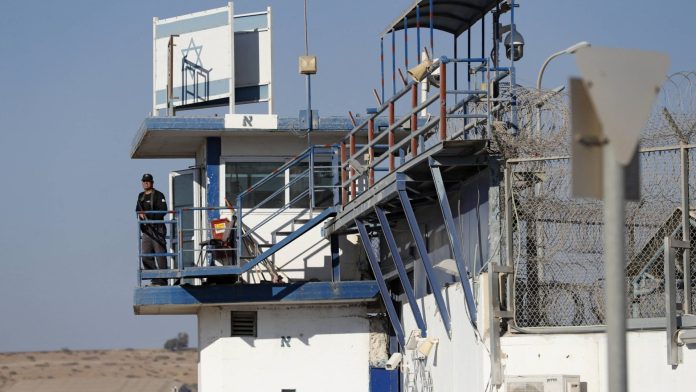
Ben Gvir’s decision was first reported by the Israeli daily Yedioth Ahronoth, and the minister confirmed the directive in a tweet. The newspaper said the country’s security agencies were not consulted before the directive was issued.
Later, however, the office of Prime Minister Benjamin Netanyahu came out against the media reports, calling them “fake news”.
“No decision has yet been made,” the office announced in a statement, adding that a final decision will be made next week.
If implemented, the directive would limit family visits for Palestinian prisoners from once per month to once every two months, starting on Sunday.
The move is the latest in a series of punitive measures taken against detainees and has sparked an immediate backlash among Palestinian rights groups, Israel’s internal security service the Shin Bet, and the Israeli military.
Qaddura Fares, chairman of the Palestinian Prisoners and Ex-Prisoners’ Affairs Commission, issued a statement condemning the decision as a “racist and retaliatory approach aimed at harming the prisoners and their families”.
“This decision infringes upon the basic rights of Palestinian prisoners, in clear violation of both Israeli laws and international legal standards,” said the statement.
Fares added that the move would end up inflaming tensions not only in Israeli prisons but also in the occupied West Bank, where the status and treatment of Palestinian prisoners is a particularly sensitive matter.
“[Israel’s] continued targeting of [our] prisoners will be the focal point of the next confrontation with the Israeli occupation, involving all Palestinian factions, forces, and institutions rallying behind the cause of the prisoners,” he stressed.
In its report, Yedioth Ahronoth said the country’s security bodies were not consulted before the directive was issued.
Sources within the Israeli military and the intelligence services, speaking to the paper, warned that the security implications of the move had not been considered and that the decision was “irresponsible”.
The commissioner of the Israel Prison Service, Katy Perry, also objected to Ben Gvir’s decision, warning that it could increase tensions within prisons.
Ben Gvir went on to attack Perry and the Shin Bet for being soft and not showing enough “determination and backbone in front of the prisoners”.
In response to Ben Gvir’s announcement, Palestinian prisoners announced that they would begin a hunger strike, starting on 14 September.
The decision is expected to impact at least 1,600 prisoners out of 5,000 who can receive visits.
Perry also warned that a drawn-out hunger strike by Palestinian prisoners would result in additional burdens on already overstretched hospitals across the country, pushing them to breaking point.
The latest move by Ben Gvir follows another arbitrary decision earlier this week, when he rushed a law through the Israeli parliament that would effectively ban prisoners from being released several weeks early if they had been sentenced for minor security offences.
Shin Bet chief Ronen Bar warned that the decision would likely result in overcrowding in prisons, especially at a time when Israeli forces are conducting near-nightly raids in the occupied Palestinian territories.
Officials in the Israeli prison system have described the situation in the country’s jails as “severe, a national crisis” and “really a catastrophe”, in part due to the ballooning Palestinian prison population.
Following the formation of a coalition – the most right-wing in Israel’s history – by Netanyahu in December last year, Ben Gvir wasted no time delivering on his plans to create harsher conditions for Palestinian prisoners in Israeli jails.
In January, the Israeli government embarked on a policy of moving dozens of Palestinians to Nafha prison, widely considered to be one of the most notorious in the country.
Over the past year, Ben Gvir has adopted a policy of making the lives of Palestinian prisoners incrementally more difficult.
The move to transfer detainees to a harsher prison was indicative of collective punishment.
When prisoners are transferred, their environment and social circles change, and their families might have to wait months to find out where they have been moved to.
In February, Israel’s national security minister ordered the closure of Palestinian prisoner-run bakeries in jails.
Ben Gvir’s office said in a statement at the time that the move was aimed at denying “benefits and indulgences to terrorists” in Israel, benefits it said were denied to regular prisoners.
Later that month, the Israeli parliament passed the first stage of a bill that would stop the funding of non-essential medical treatment for Palestinians. It is unclear what those who drafted the bill deem as non-essential medical treatment.
Zaher Birawi, chairman of the civil society organisation Europal Forum, told Middle East Eye at the time that the legislation is aimed at “slowly killing” Palestinian prisoners.
Such policies have been implemented against Palestinian prisoners for decades, Birawi said, but now “they are taking on legitimacy through the Knesset”.
Armenia, Azerbaijan report border clash casualties
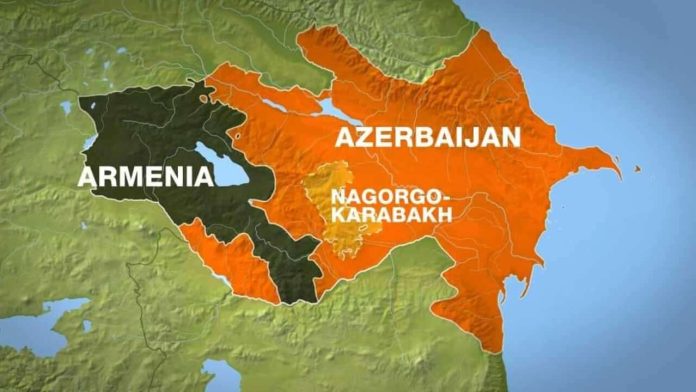
Armenia’s Defence Ministry said on Friday four of its servicemen had been killed and another wounded in shelling near the border villages of Sotk and Norabak.
Azerbaijan said Armenia had struck its positions across the border in the Kalbajar region using drones, wounding three servicemen.
The incident came a day after Armenia accused treaty ally Russia of “absolute indifference” towards attacks on its territory.
Armenia accused Azerbaijan of massing forces close to the border, and striking its positions using drones, mortars and small arms fire. Azerbaijan denied gathering forces, but said it was taking “retaliatory measures”.
Nagorno-Karabakh, internationally recognised as part of Azerbaijan but inhabited primarily by ethnic Armenians, has been a source of conflict between the two Caucasus neighbours since before the collapse of the Soviet Union in 1991, and between ethnic Armenians and Turkic Azeris for well over a century.
Despite sporadic discussions on a peace deal to agree on borders, settle differences over the enclave and unfreeze relations, tensions remain high and skirmishes along the shared border are a regular occurrence. Two days of clashes in September last year saw around 300 servicemen killed on both sides.
Continued fighting, along with a months-long blockade of Karabakh by Azerbaijan, have strained once warm relations between Armenia and Russia, which is Yerevan’s traditional ally, and which has a peacekeeping contingent in Karabakh.
Any normalization with Israel strategic mistake: Iran FM
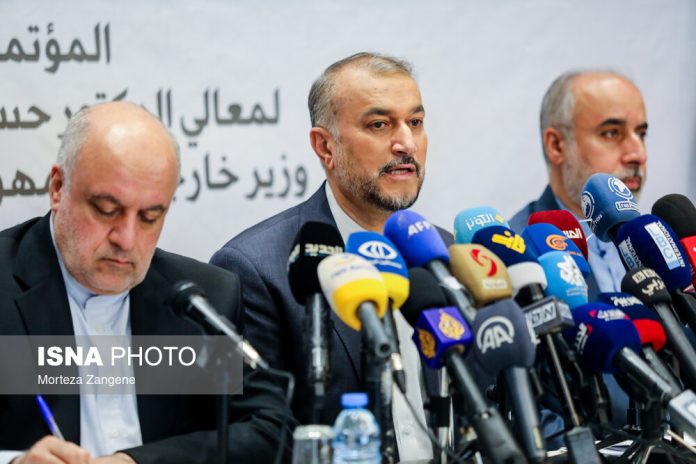
“We always advise our friends in the region to prevent any normalization of relations with a regime that brought nothing to the region but insecurity,” Amirabdollahian stated, addressing a press conference in Beirut on Friday.
The US-brokered normalization deals in 2020, which saw the United Arab Emirates, Bahrain, Sudan, and Morocco normalize ties with Israel, have sparked widespread condemnations from the Palestinians as well as nations and human rights advocates across the globe, especially within the Muslim world.
The top diplomat further said Iran has always supported diplomacy and negotiations to restore the 2015 nuclear deal, officially known as the Joint Comprehensive Plan of Action (JCPOA).
A recent agreement between Iran and the United States on unfreezing Iran’s assets illegally frozen in foreign banks and the exchange of prisoners will have a “positive impact on indirect talks about the removal of sanctions.”
The minister reiterated Tehran’s political will to revive the JCPOA if all parties fulfill their obligations as per the deal.
The exchange of messages between Iran and the parties in the nuclear agreement are currently underway based on an initiative made by Oman, he noted.
The JCPOA enabled limited sanction relief for Iran, which, in turn, volunteered to change some aspects of its nuclear work.
The US, however, left the agreement in 2018 as part of former President Donald Trump’s so-called “maximum pressure” policy against Iran, returning all the sanctions that the deal had lifted.
The US’s allies in the deal — France, Britain, and Germany — then bowed under Washington’s pressure by toeing the sanction line and suspending their trade activities with Tehran.
Negotiations to revive the agreement started in April 2021. The talks have, however, stalled amid Washington’s refusal to offer guarantees that it would not ditch the deal again.
Members of anti-revolutionary group captured in southeastern Iran
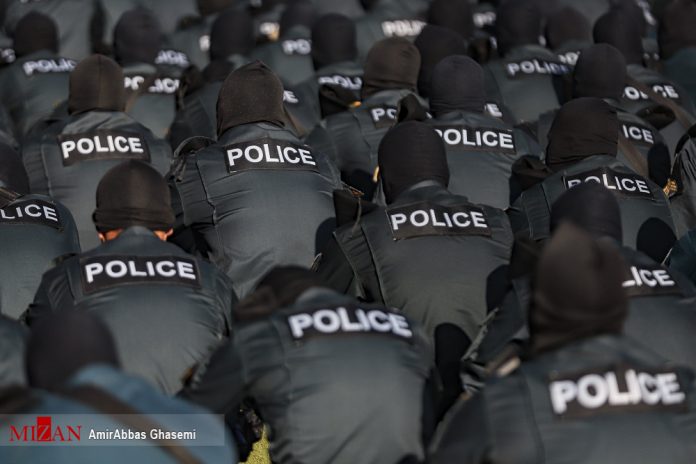
The group comprised of four people, who had received direction from abroad had over the past months to chant slogans against the Islamic Republic during sporadic riots after Friday prayers in the provincial capital of Zahedan.
The members of the outfit had confessed to being directed through foreign social media platforms and been given a number of anti-Iran flags and posters via an “intermediary.”
They had also been instructed to raise the flag of the former U.S.-backed Pahlavi regime and take video clips of their gatherings after the Friday prayers in Zahedan and send them to the foreign agent.
The group aimed to portray the public as “aligned” with the Pahlavi monarchy by hanging anti-Iran flags and posters, according to reports.
Iran’s Intelligence Ministry announced in a statement on Wednesday that its forces had dismantled a number of terrorist cells affiliated with the Israeli regime in four provinces across the country.
The ministry added the “sabotage cells” were part of a vast “Zionist-terrorist” network that had carried out several operations in the four Iranian provinces of Khuzestan, Mazandaran, Kermanshah, and Sistan and Baluchestan.
The terrorists were reportedly attempting to stage attacks and blame on the country’s police and law enforcement force.
Palestinian shot dead by Israeli soldiers in West Bank town
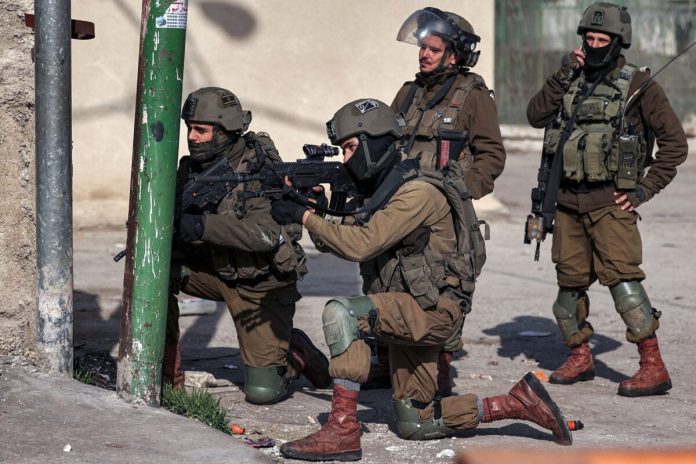
Abdul Rahim Fayez Ghannam, 36, was shot in the head in Aqaba, north of Tubas, and pronounced dead at the local hospital on Friday.
Nidal Odeh, director of emergency services in Aqaba, told local media that Israeli forces prevented ambulances from reaching the wounded, and one ambulance was directly targeted by live ammunition.
Israeli forces raided the town looking for Ahmad Walid, who they accused of carrying out a shooting attack near a checkpoint in the Jordan Valley last month.
Witness Saleh Abu Arra told Al Jazeera the Israeli soldiers thought Walid was hiding in one of the buildings but he was not there.
“The raid started at about 5am. My two brothers live with their families in the building that was surrounded by Israeli forces,” the 39-year old said.
One of his brothers, Bakr Abu Arra, was apprehended by the Israelis.
“They yelled at him on loudspeakers to come out with his family, and proceeded to beat him with their guns and curse at him, terrifying his wife and children,” Saleh Abu Arra stated.
After half an hour, Israeli forces started firing sound bombs and tear gas canisters at the building, then targeted the second and third floors with antitank grenades, which also destroyed an adjacent wedding hall.
Violent confrontations ensued for the next five hours, another witness Amir al-Qasem said, with Israeli soldiers firing at the ruined building with live ammunition, and Palestinian residents throwing objects at military vehicles.
Armed Palestinian men also targeted the Israeli convoy with live fire.
“The martyr Fayez was caught in the crossfire,” al-Qasem continued, adding, “He is a farmer and was on his way to his fields.”
Al-Qasem said the Israelis failed in their mission to arrest Walid, and then began firing randomly at the destroyed house and surrounding areas.
“I’ve never seen such a huge amount of bullet casings inside the building,” he added.
Israeli forces arrested the two brothers Bakr and Mohammed Abu Arra and their father Abdelrazeq.
Ahmad Walid’s brother Mushrif told Al Jazeera he were surprised when Israeli intelligence called him on the phone.
“My brother is a labour worker inside Israel, and he goes away for two weeks to a month at a time,” Mushrif stated, adding, “We told the Israelis that he isn’t here, but they forced my elderly parents outside and took them to the Abu Arra building and made them call for Ahmad to surrender himself on the loudspeakers.”
In a statement, the Israeli army said a firefight broke out between armed fighters and soldiers and “a hit was identified on one of the gunmen”.
Troops also “used shoulder-fired missiles and grenades” and subsequently found improvised explosive devices and other weapons in the building, it added.
The near-daily Israeli military raids have resulted in some of the worst fighting in the occupied West Bank since the early 2000s.
More than 200 Palestinians have been killed by Israel since the start of this year, with the United Nations saying 2023 is the deadliest year for Palestinians since the world body began recording Palestinian fatalities in 2006.
Protests in Syria over economy target President Assad

“Bashar out! Syria free!” shouted a large crowd on Friday in the city of Sweida, according to the Reuters news agency.
“Syria is not a farm. We are not sheep,” read a poster.
Syria is in a deep economic crisis that has seen its currency plunge to a record low of 15,500 Syrian pounds to the dollar last month in a rapidly accelerating free fall. It had traded at 47 pounds to the dollar at the start of Syria’s war 12 years ago.
The protests were initially driven by surging inflation and the war-torn country’s worsening economy but have quickly shifted focus with marchers calling for the fall of al-Assad’s government.
Centred in the government-controlled province of Sweida, the heartland of Syria’s Druze, a religious minority that had largely stayed neutral in the conflict between al-Assad and the Syrian opposition, the protests are unusual.
Open criticism of the government had remained rare in government-controlled areas, but as the economic situation has grown worse, the discontent has gone public.
Friday’s turnout was large despite apparent divisions within the Druze leadership over the demonstrations. Some Druze sheikhs have criticised protesters’ calls for al-Assad to step down and say that any improvement to the socioeconomic situation must come through dialogue.
Dozens of protesters also gathered on Friday in the neighbouring province of Daraa, where the 2011 protests kicked off. Peaceful protests in 2011 were met by a violent response from the Syrian government, leading to the outbreak of a war that has continued to this day and led to hundreds of thousands of deaths.
The front lines have largely been quiet in recent years as the Syrian government, with the backing of Russia and Iran, pushed back militants into the northwest.
Residents of other government-held parts of Syria – where restrictions are tighter – have made more discrete gestures of protest to avoid detection by government forces.
In the coastal province of Tartus on Thursday, some residents held up small postcards reading, “Syria belongs to us, not to the [ruling] Ba’ath party,” according to photographs posted on activists’ social media pages.
A large billboard picturing al-Assad could be seen in the background.
