Thursday, December 25, 2025
Home Blog Page 1277

Iran’s Entekhab news outlet banned; editor in chief says due to story about Friday prayer leader

Iran Mobile Internet

Mostafa Faghihi told Rouydad24 that his news outlet, Entekhab, faces some complaints lodged by the media regulator and other authorities but the complaints were so serious as to lead to banning Entekhab.

Faghihi added that some quarters waged a campaign against Entekhab after it ran a story it took from Mehr News Agency.

The story quoted the Friday prayer leader of Shiraz as saying that President Ebrahimi Raisi has created 20 million jobs.

Faghihi stressed that Entekhab ran the story exactly as it was published by Mehr News without any addition.

Fars News Agency however says the media regulator of Iran decided to ban Entekhab after it posted an editorial titled “Auctioning off the Iran brand: Why has Iran’s foreign policy weakened so much?”

Fars added that Entekhab has published other editorials which were at odds with national interests and targeted the principled policies of the Islamic Republic of Iran.

Entekhab news outlet is seen close to the reformist camp in Iran.

Israel and Bahrain agree to bolster trade ties

Israel FM Bahrain

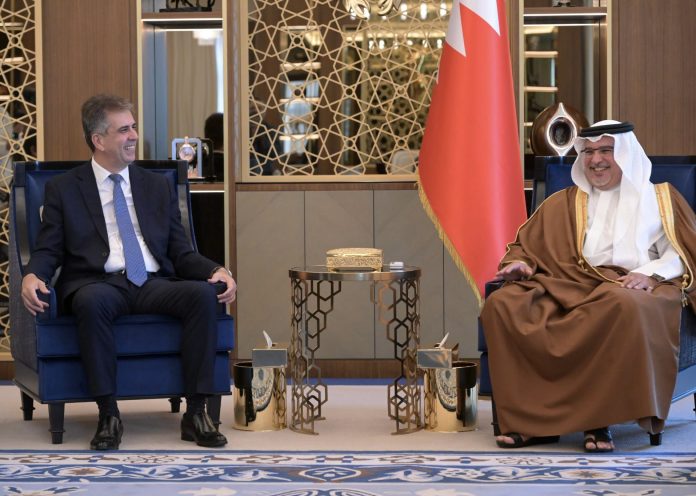
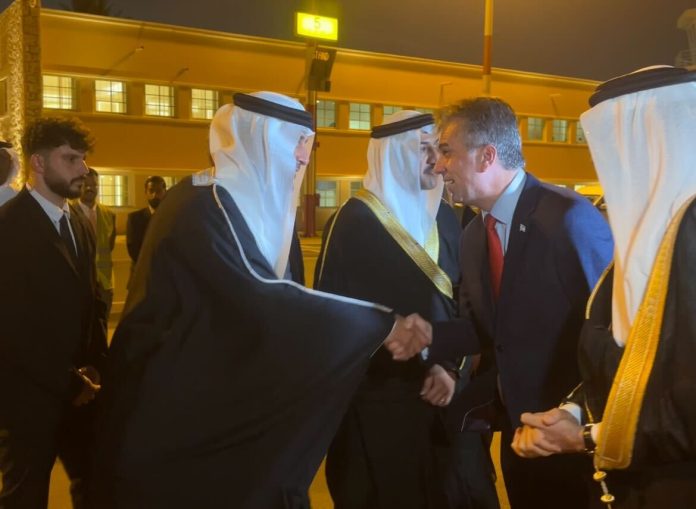
“The foreign minister and I agreed that we should work together to increase the number of direct flights, the tourism, the trade volume, the investment,” Cohen said during a ceremony to inaugurate Israel’s new embassy.

The embassy in the capital Manama will replace the first embassy Israel opened in 2021, a year after it established diplomatic relations with Bahrain as part of the US-brokered Abraham Accords.

Under the accords, Israel also established ties with the United Arab Emirates and Morocco.

Monday’s ceremony was attended by Bahraini Foreign Minister Abdullatif Al Zayani, who said the event signified a “shared commitment to strengthening and cultivating bilateral relations”.

“As we build into deeper diplomatic endeavours and engage in bilateral cooperation across various sectors, the establishment of this new embassy assumes a pivotal role in our collaboration,” he told reporters.

Cohen arrived in Bahrain on Sunday, accompanied by a business delegation of more than 30 companies working in high-tech, logistics and real estate.

Earlier on Monday, he met Crown Prince Salman bin Hamad Al-Khalifa and discussed “the importance of advancing a free trade agreement and projects to connect youths in Israel and Bahrain”, Cohen posted on X, formerly Twitter.

“We look forward to expanding the circle of peace and normalisation to other states in the area,” he added.

Despite now having steady ties with Israel, Bahrain and the UAE have joined other Persian Gulf Arab states in issuing a series of condemnations against it this year.

The storming of the Al Aqsa mosque in Jerusalem and raids by Israeli forces on Nablus and the Jenin Palestinian refugee camp in the occupied West Bank were among Israeli moves that sparked outcry.

However, Cohen’s trip coincides with growing speculation about an impending normalisation deal between Israel and Saudi Arabia, which is not a signatory to the Abraham Accords.

Riyadh and Washington have held talks on Saudi conditions for progress on normalisation with Israel, according to people briefed on the meetings.

In Bahrain, Cohen also visited the US Navy’s Fifth Fleet base where he discussed maritime security cooperation, according to a statement by US Naval Forces Central Command (NAVCENT).

The visit “underscores our expanding partnership with Israel”, NAVCENT commander Vice-Admiral Brad Cooper was quoted as saying.

Medicine shortages in Kuwait leave patients without treatment

Pakistan Hospitals

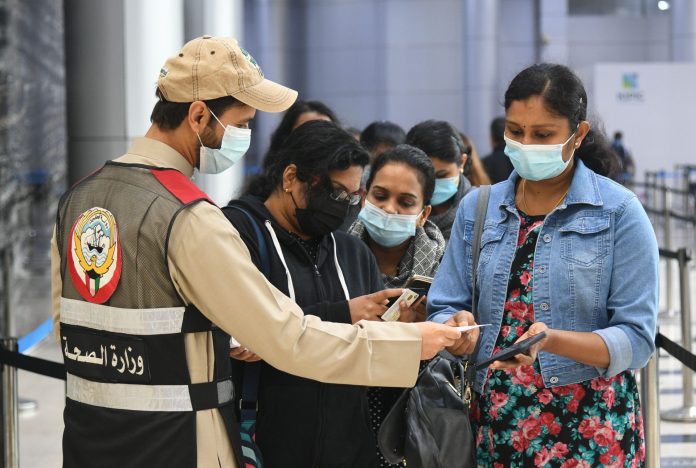
Both doctors and ordinary citizens have been using social media platforms to express their concerns over the medicine shortage, detailing how difficult it has been to obtain certain medications.

Many are placing the blame on the minister of health, and are demanding the issue be addressed.

Using the hashtag “medicine shortages” in Arabic on X (formerly Twitter), doctors are stating that they are unable to treat patients, some of whom are in serious conditions.

Some social media users have also directed their frustration towards the council of ministers, demanding an answer as to what has caused the shortages and for a solution to the issue.

One doctor, Sh’aib Nuri al-Kalaf, joined in the conversation, and said that doctors cannot be held responsible for the consequences of the lack of medication in pharmacies and hospitals.

“The state is responsible for caring for the patient and providing them with comfort and treatment. We have a huge shortage of medicine, including biological medicines which are used for patients with Crohn’s disease as well as ulcerative colitis,” he posted on X.

“We are not the ones who are able to offer new medicines to patients or provide the necessary dosage of medicines to those who have been diagnosed long ago.”

Patients have also complained about their deteriorating conditions after not being able to get hold of medicines.

“The shortage of medicines is truly a catastrophe, I went to the Eye hospital with allergies but unfortunately the treatment is not available, they transferred me to a centre for mid-next month… so I have to wait for a month and two weeks,” a patient wrote.

Last week, the country’s health minister, Ahmed al-Awadhi, was questioned over the medicine crisis and given a chance to address the issue.

Member of parliament Hamdan al-Azmi said he would take a “decisive and firm step at the beginning of the upcoming parliamentary year” if the issue remains unsolved, according to local media.

Last month, the health minister assured people that there was “no severe shortage” of medicine, and that there are alternatives to medications that are unavailable or are in short supply.

He also caused outrage this week after reportedly responding to a journalist’s questions about the medicine shortage with a thumbs-up gesture.

The Kuwaiti al-Qabas newspaper reported last year that the country has been plunged into a medicine crisis, with dozens of treatments unavailable.

Al Qabas quoted health sector sources as saying: “The shortage of medicines has expanded to include many vital medicines, which are prescribed to a wide category of patients on a daily basis.”

The sources confirmed that the shortage of medicines requires increasing the current budget from $651m to $814m to permanently solve the crisis.

Report: IAEA says Iran has slowed its enrichment of “near-weapons-grade uranium”

Iran nuclear program

The confidential report comes as Iran and the United States are negotiating a prisoner swap and the release of billions of dollars in Iranian assets frozen in South Korea. However, international inspectors also noted new challenges in trying to monitor Iran’s program.

Former US President Donald Trump pulled the US out of the JCPOA and imposed tough economic sanctions against the Islamic Republic under what he called the “maximum pressure” policy.

In 2019, Iran began its retaliatory remedial measures by reducing its commitments to the 2015 deal after the European parties to the deal — France, Germany, and Britain — failed to protect Iran’s interests under the JCPOA.

Tehran began to gradually remove a cap set in the JCPOA on its nuclear activities at bi-monthly intervals. Tehran maintained that it would reverse its nuclear decision if the Iranian economy were to be shielded from sanctions.

Multilateral diplomatic efforts to revive the JCPOA have been stalled since last August, with Iran blaming the United States for failing to guarantee that it will not leave the deal again.

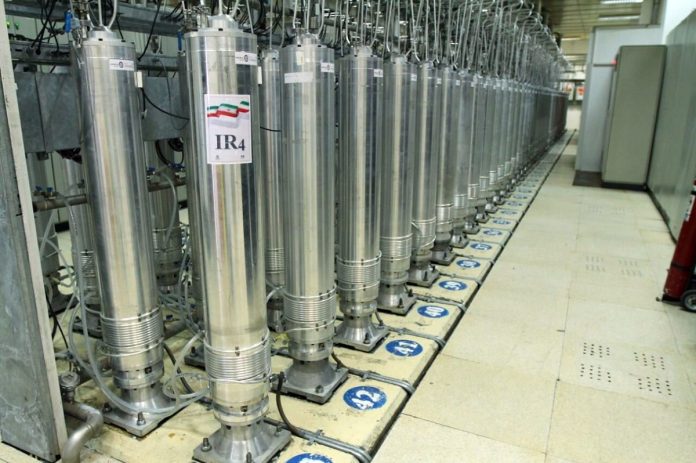
The International Atomic Energy Agency said in its report that Iran has 121.6 kilograms (268 pounds) of uranium enriched up to 60%. That means its stockpile of the fuel is growing at its slowest pace since 2021.

A report in May put the stockpile at just over 114 kilograms (250 pounds). It had 87.5 kilograms (192 pounds) in February.

Uranium enriched at 60% purity is just a short, technical step away from weapons-grade levels of 90%. Iran has maintained its program is peaceful, but the IAEA’s director-general has warned Tehran has enough enriched uranium for “several” nuclear bombs if it chose to build them.

Iran likely would still need months to build a weapon. U.S. intelligence agencies said in March that Tehran “is not currently undertaking the key nuclear weapons-development activities that would be necessary to produce a testable nuclear device.” The IAEA, the West and other countries say Iran had a secret military nuclear program it abandoned in 2003.

Tehran has repeatedly declared that its nuclear program remains purely peaceful as always and that the Islamic Republic had no intention of developing nuclear weapons as a matter of an Islamic and state principal.

Leader of the Islamic Revolution Ayatollah Seyyed Ali Khamenei issued an official fatwa (religious decree) clearly establishing that any form of acquisition, development, and use of nuclear weapons violate Islamic principles and are therefore forbidden.

Overall, the IAEA report estimated Iran’s total enriched uranium stockpile at 3,795.5 kilograms (8,367 pounds). That’s a drop from the last IAEA report, which put the stockpile at 4,744.5 kilograms (10,459 pounds). The stockpile reportedly declined because Iran diluted some of its enriched uranium.

U.S. President Joe Biden has said he’d be willing to re-enter a nuclear deal with Iran, but formal talks to try to find a roadmap to restart the deal collapsed in August 2022. In the time since, Oman and Qatar have mediated indirect talks between Iran and the U.S. that led to the current planned prisoner swap and asset release.

Under that proposal, anywhere from $6 billion to $7 billion, depending on exchange rates, would be changed from South Korean won into euros. The cash represents money South Korea owed Iran — but had not yet paid — for oil purchased before the Trump administration imposed sanctions on such transactions in 2019.

The U.S. maintains that, once in Qatar, the money will be held in restricted accounts and Iran will only be able to use it for humanitarian goods, such as medicine and food. Those transactions are currently allowed under American sanctions targeting the Islamic Republic over its nuclear program.

In exchange, Iran would release five Iranian-American prisoners now under house arrest. The U.S. likely will release Iranian prisoners as well, though those details remain murky. If that deal goes through, it could improve the chances of overall talks on the nuclear deal resuming — though Biden already faces strident criticism from Republicans and others over the prisoner swap.

While Iran has slowed enrichment, the IAEA reported other problems with trying to monitor its program. The report from the watchdog seen by the AP said Iran had denied visas for agency officials and affected their ability to work in other ways as well.

Iran has not acknowledged the visa denials.

The IAEA also hasn’t been able to access surveillance camera footage since February 2021 under Iranian restrictions, while the only recorded data since June 2022 has been from cameras at a workshop in the Iranian city of Isfahan.

Iran says won’t wait nuclear deal revival in foreign trade

Nasser Kanaani

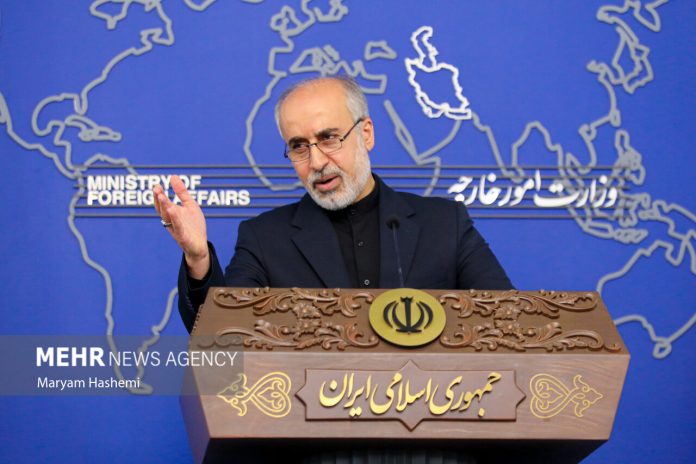
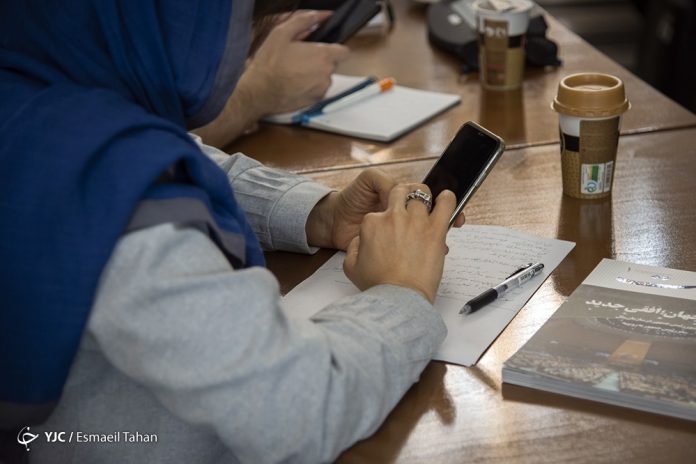
Speaking at a weekly press conference on Monday, Kanaani said Iran remains committed to diplomatic courses, but won’t wait for the result of the negotiations on the revival of the Joint Comprehensive Plan of Action (JCPOA).

Iran is seriously pursuing efforts to nullify the sanctions without pinning its hopes on the revival of the JCPOA or the US government’s decision about Iran’s trade relations with other countries, he stated.

The spokesman emphasized that Tehran will resort to all legal procedures to restore the Iranian nation’s rights.

“We managed to export our oil and maintain our position in spite of the sanctions. The cruel sanctions have undoubtedly placed limitations on Iran and its partners, but Iran proved that it won’t be restricted by sanctions,” Kanaani added.

Iranian President Ebrahim Raisi, who took office in August 2021, has highlighted the economic growth and production boom in Iran under his tenure, saying his administration has not linked the settlement of problems to plans for shaking hands with outsiders or appeasing them.

In an address at the beginning of the Iranian year 1402, Leader of the Islamic Revolution Ayatollah Seyed Ali Khamenei stressed the need for Iranian officials to focus on controlling inflation and boosting production.

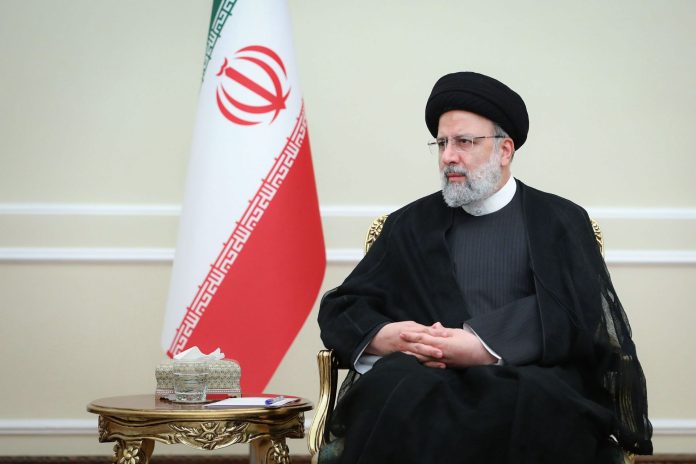
President Raisi calls Iran and Saudi Arabia influential governments of Muslim world

Ebrahim Raisi

While noting that Iran’s policy is to bolster ties with all neighbors, Raisi called for Riyadh and Tehran to use all their potentials to expand their ties.

The Iranian president stressed that cooperation among regional nations will elevate their standing in the region and the whole world.

He added that this also restricts interference by extra-regional governments in the region.

Iran and Saudi Arabia have been expanding their relations every sine the restored diplomatic ties several months ago.

Saudi Arabia cut ties with Iran unilaterally in 2016 following a raid on its embassy in Tehran. The attackers were angry with Riyadh over the execution of s Shia leader in the kingdom.

Several months ago, the two sides reached a rapprochement deal mediated by China.

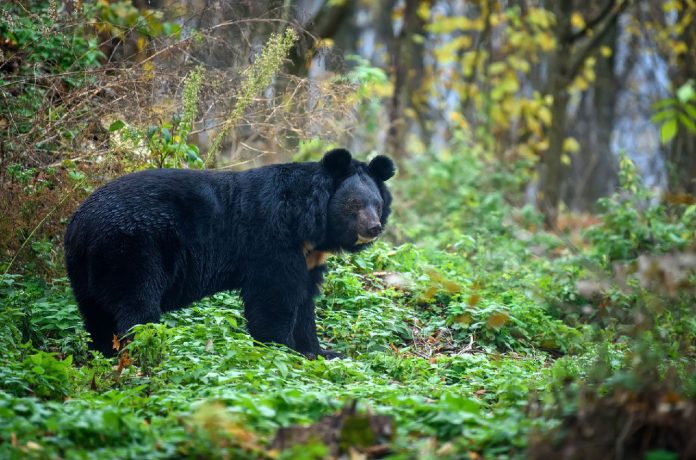
Black bear spotted in Kahnouj، southern Iran

Black Bear

The Environmental Protection Department urged the citizens not to approach the animal, which is on the red list of endangered species, and refrain from hunting it.

The region is a habitat of different species of leopards, wolves, bears, goats, pigs and sheep, as well as indigenous and migratory birds and reptiles.

Asian black bears, teetering on the edge of extinction, can be found in tiny numbers in Japan, China, Russia, Taiwan, India, Nepal, Vietnam, Afghanistan, Pakistan, and Iran.

Iran says ready to hold joint drills with friendly states

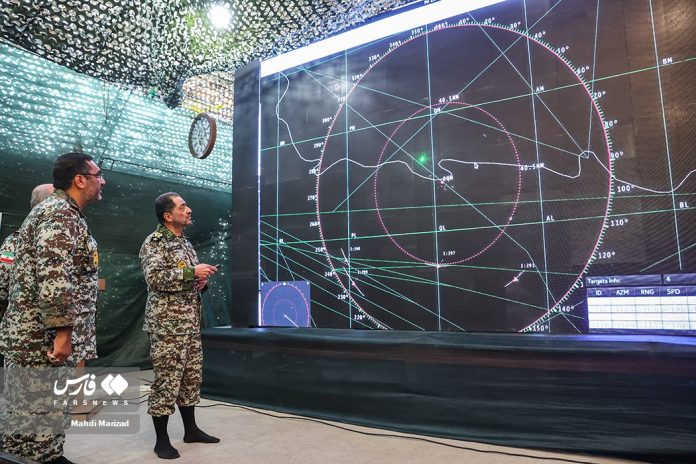
Iran Air Defense

In comments at a meeting with the foreign military attachés residing in Iran, Commander of the Iranian Army’s Air Defense Force Brigadier General Alireza Sabahifard said the Islamic Republic’s message for the allied and friendly countries is “peace and friendship”.

The Iranian Air Defense is prepared to promote military cooperation with the allied states in various fields such as training, the exchange of technical and operational experiences, and holding joint war games, he added.

Stressing the need to broaden constructive interaction and exchange technical know-how with the friends and allies, General Sabahifard underscored that the Iranian Air Defense has fully ensured the security of the country’s airspace.

“Iran’s defense doctrine is based upon friendly and mutual relations with all world countries, specifically the friendly and neighboring states in the West Asia,” he underlined.

Pointing to the development of advanced homegrown military equipment, the commander stated Iran does not need any unconventional arms or weapons of mass destruction, which have no place in the country’s defense doctrine.

In remarks in 2018, Leader of the Islamic Revolution Ayatollah Seyed Ali Khamenei described the air defense base as a very crucial part of the Armed Forces that is at the frontline of confronting enemies of Iran.

The Leader also stressed the importance of accelerating the capabilities of the base and the Air Forces’ staff.

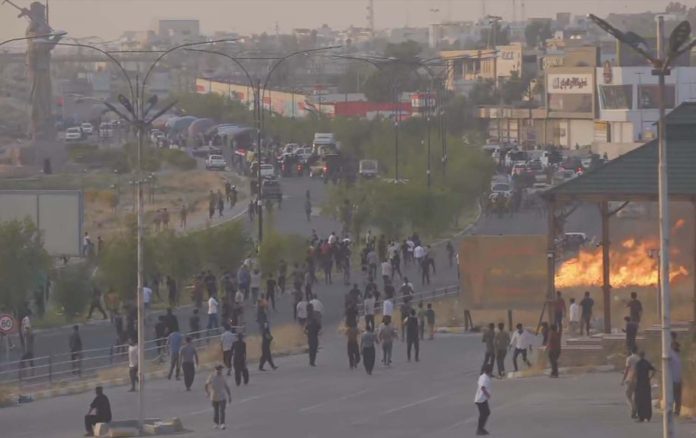
Iraqi security troops deployed in Kirkuk after 4 protesters killed

Iraq Kirkuk Unrest

Four demonstrators were shot dead on Saturday in clashes between ethnic groups in Kirkuk that broke out after days of tensions. Police and medical sources said all four were Kurdish.

Amir Shwani, a spokesperson for Kirkuk police, announced in a statement to reporters a curfew had been lifted and vehicles were moving normally in the city on Sunday.

But security forces had deployed additional troops on the streets to “prevent violence and protect civilians”, he added.

The dispute centres on a building in Kirkuk that was once the headquarters for the Kurdistan Democratic Party (KDP) but which the Iraqi army has used a base since 2017.

Iraq’s federal supreme court issued an urgent temporary ruling on Sunday obliging the government to delay procedures regarding the handover of a building in Kirkuk to the KDP, the state news agency reported.

The court ruling halted an order issued by Prime Minister Mohammed al-Sudani in his capacity as the commander-in-chief of Iraq’s armed forces to hand over the army building to the KDP on September 1, according to a copy of the ruling seen by Reuters.

Sudani in a cabinet meeting held after the court ruling urged political parties in Kirkuk to “steer clear of any potential conflicts, emphasising the need to avoid resorting to violence or clashes that could harm Iraq’s overall stability”, according to a statement from his office.

The ruling could raise tensions amid discussions over the return of the powerful Kurdish party to the city.

Iraqi Kurdish Prime Minister Masrour Barzani condemned the federal court ruling as a “farce”, he posted on social media platform X, formerly known as Twitter.

Military helicopters flew over the city on Sunday, according to four Kirkuk residents who spoke to Reuters by phone.

Shwani confirmed that four protesters had been killed and 15 people were wounded. Residents say police detained several people on Sunday who had participated in the clashes but police refused to comment on any arrests.

Kirkuk, an oil-rich province in northern Iraq along the fault lines between the Kurdish autonomous region and areas controlled by Iraq’s central government, has been the focus of some of the country’s worst post-Daesh violence.

Arab residents and minority groups, who say they suffered under Kurdish rule, have protested the KDP’s return to the city.

Israeli foreign minister lands in Bahrain for high-profile talks

Israel FM Bahrain

Cohen was accompanied by a political and commercial delegation, and is scheduled to meet Bahrain’s king as well as his counterpart in Manama during the two-day trip.

It is his first official visit to one of the signatories of the 2020 US-brokered Abraham Accords, which saw Israel normalise relations with Bahrain, the United Arab Emirates and Morocco.

Cohen’s trip comes less than two weeks before the third anniversary of the accords in mid-September.

Despite now having steady ties, Bahrain and the UAE have joined other Persian Gulf Arab states in issuing a series of condemnations against Israel this year.

The storming of the Al-Aqsa Mosque in Jerusalem and raids by Israeli forces on the city of Nablus and the Palestinian camp of Jenin in the occupied West Bank were among the Israeli moves that sparked massive anger.

Cohen’s trip coincides with growing speculation about an impeding normalisation deal between Israel and Saudi Arabia, which is not a signatory to the Abraham Accords.

Riyadh and Washington have held talks on Saudi conditions for progress on normalisation, according to people briefed on the meetings.

Israeli press commentators suggested such efforts have been severely compromised on the back of Israel’s announcement of a meeting last month between Cohen and his then-Libyan counterpart in Rome.

The announcement sparked protests in Libya, which does not recognise Israel, and led to the dismissal of Najla al-Mangoush as foreign minister.

Israel later denied that it had been the source of the announcement.