Thursday, December 25, 2025
Home Blog Page 1278

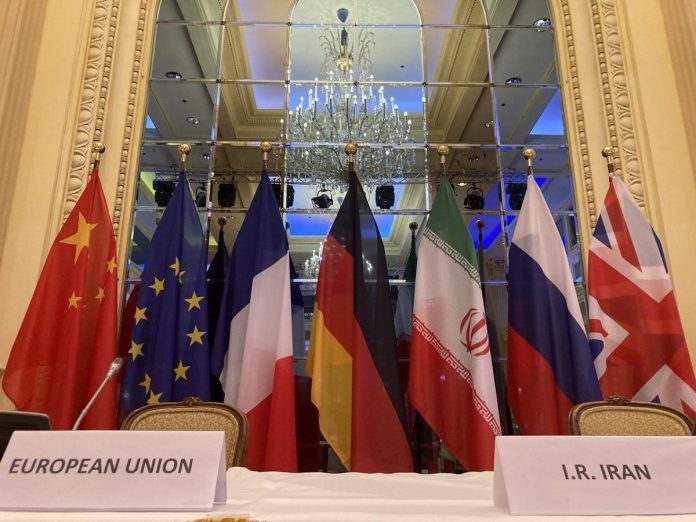
Ex-diplomat: Russia might step up efforts to obstruct JCPOA revival

Vienna Talks

In an interview with Jamaran news website on Sunday, Iran’s former ambassador to Germany Ali Majedi said, “Russia has started a war (in Ukraine) and, due to our sheer mistake, it has managed to get us involved in it.”

Majedi, who is a former member of Iran’s negotiation team, said the developments come amid some limited agreements between Iran and the United States in recent months, including releasing five Americans from Iranian prisons in exchange for freedom of several jailed Iranians and access to about $6 billion in Iranian oil revenue.

The former Iranian diplomat said, although the prisoner exchange deal was a ‘minor’ achievement, both sides can help resuscitate the JCPOA by keeping the negotiations on the right track and called on them to engage in direct talks.

Russia might create problems for forging a deal on the JCPOA revitalization because it has conflict of interests with Iran, the diplomat noted.

Multilateral diplomatic efforts to salvage the Iran nuclear deal and remove anti-Iran sanctions have so far failed.

Majedi said the developments that unraveled since both parties left the negotiating table months ago, including the Russian war on Ukraine, complicate the revival of the nuclear agreement.

Israeli PM calls for deportation of Eritrean refugee ‘rioters’

Eritrean refugee

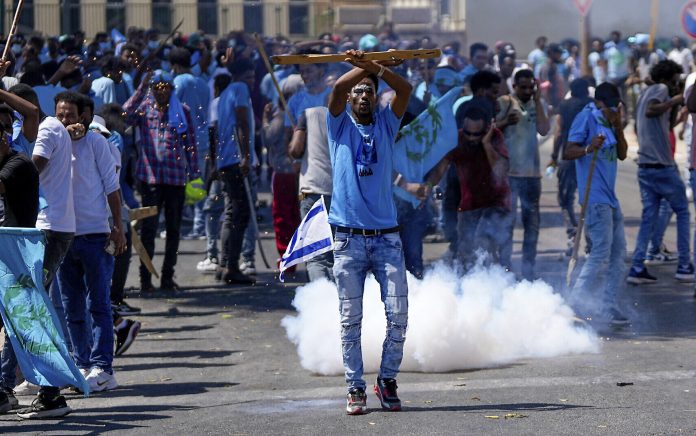
The remarks came a day after bloody protests by rival groups of Eritreans in south Tel Aviv left dozens of people injured.

“We want harsh measures against the rioters, including the immediate deportation of those who took part,” Netanyahu said in a special ministerial meeting called to deal with the aftermath of the violence on Sunday.

He requested that the ministers present him with plans “for the removal of all the other illegal infiltrators,” and noted in his remarks that the Supreme Court struck down some measures meant to coerce the refugees to leave.

Under international law, Israel cannot forcibly send migrants back to a country where their life or liberty may be at risk.

Ahead of an official visit to Cyprus, Netanyahu stated the ministerial team was seeking to deport 1,000 supporters of the Eritrean government who were involved in Saturday’s violence.

“They have no claim to refugee status. They support this regime,” Netanyahu continued, adding, “If they support the regime so much, they would do well to return to their country of origin.”

About 25,000 African migrants live in Israel, mainly from Sudan and Eritrea, who say they fled conflict or repression. Israel recognizes very few as asylum seekers, seeing them overwhelmingly as economic migrants, and says it has no legal obligation to keep them.

On Sunday, Israel’s far-right National Security Minister Itamar Ben-Gvir visited the site of the unrest, voicing his support for the police and calling for those who broke the law to be placed in detention until they are deported.

Some people heckled Ben-Gvir as he walked with a police escort, telling him to “go home.”

Earlier on Saturday, Eritreans – supporters and opponents of Eritrea’s government – faced off with construction lumber, pieces of metal and rocks, smashing shop windows and police cars.

Israeli police in riot gear shot tear gas, stun grenades and live rounds while officers on horseback tried to control the protesters.

Netanyahu stressed Sunday that he didn’t think deporting supporters of the Eritrean government would be a problem.

Israel recognises very few as asylum seekers, seeing them overwhelmingly as economic migrants, and says it has no legal obligation to keep them.

The country has tried a variety of tactics to force them out, including sending some to a remote prison, holding part of their wages until they agree to leave the country or offering cash payments to those who agree to move to another country, somewhere in Africa. Critics accuse the government of trying to coerce the migrants into leaving.

President Raisi stresses enhanced Iran-Turkey collaboration

Raisi Fidan

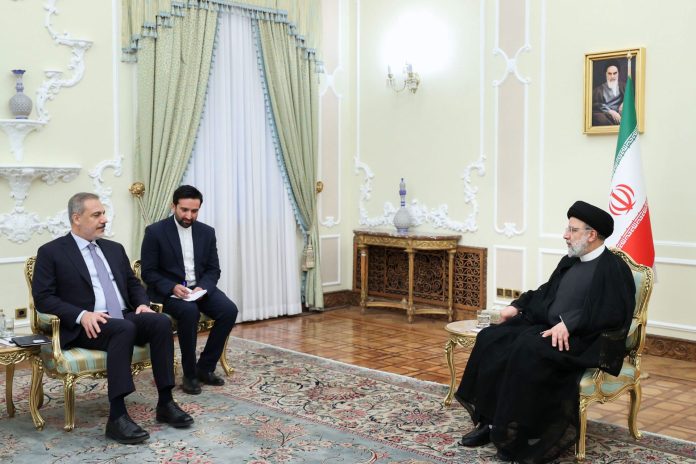
President Raisi made the remarks in a meeting with the visiting Turkish Foreign Minister Hakan Fidan and his accompanying delegation in Tehran on Sunday.

Pointing to Turkey’s security concerns in the region, Raisi considered the most effective way to deal with terrorism respect for the national sovereignty and territorial integrity of all countries in the region, adding that the effective exercise of national sovereignty of any government over all its territories is the best way to prevent terrorists and anti-security activities.

Referring to the cultural and historical commonalities between Iran and Turkey, the president expressed hope that the level of cooperation between Iran and Turkey will be further improved in the new term of Erdogan’s presidency.

Highlighting the necessity of confronting the presence of foreign countries in different regions, including the Caucasus, he emphasized resolving problems through dialogue and cooperation among the countries of any region.

President Raisi further considered the activation of the Joint Economic Cooperation Commission as effective in paving the way for stepped-up trade interactions between the two countries and exchanging mutual potential.

The Turkish foreign minister, for his part, stated that Iran and Turkey have a lot of potential to expand and strengthen their cooperation and interactions with each other, and considered it possible to achieve the target of raising the level of bilateral trade to $30 billion. He also stressed Turkey’s will to achieve that target.

Fidan noted that expanding the level of interaction between the two countries requires special attention and support from the leaders of Iran and Turkey. He further asked for the Islamic Republic of Iran’s support for his country’s membership in the BRICS group, as well as the dialogue and cooperation between the two countries in the field of resolving regional issues.

Cooperation between Iran and Turkey helps regional stability: Iranian security chief

Ahmadian Fidan

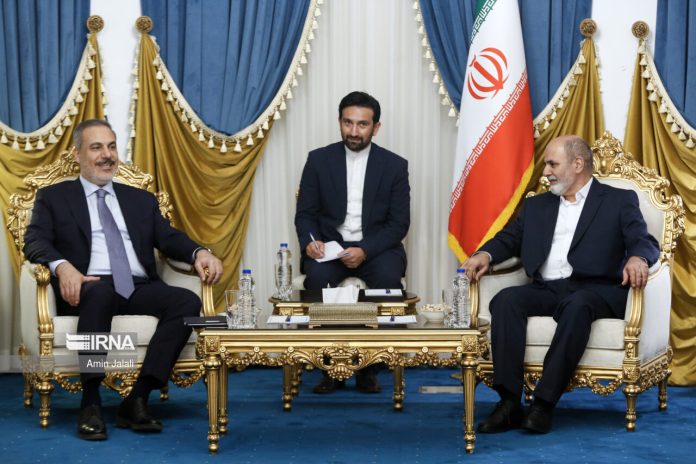
Fidan was received for a meeting by Ahmadian to discuss the all-out expansion of cooperation, especially in the security and economic fields.

In the meeting, Ahmadian pointed to the long-standing history of cooperation between the two countries and asserted that the relations between the two countries create security and stability in the region.

He also emphasized the necessity of strengthening the economic cooperation between Tehran and Ankara, especially in the field of energy and transit, and considered the target of %30 billion bilateral trade to be within reach.

Referring to the necessity of cooperation between the two countries in dealing with Islamophobia and desecration of the Holy Quran, Ahmadian stated, “Iran and Turkey, as the two largest countries in the Islamic world, have a duty to abide by their religious and historical commitments and stand against the cowardly attack of international Zionism’ agents who target the beliefs of millions of Muslims across the world.”

The Turkish foreign minister, for his part, congratulated the appointment of Ahmadian as the SNSC secretary and announced his country’s interest in the all-out expansion of relations with Iran.

He expressed hope that a new chapter for bilateral and multilateral cooperation will open during Ahmadian’s tenure.

Armenia’s dependence on Russia for security a strategic mistake: PM

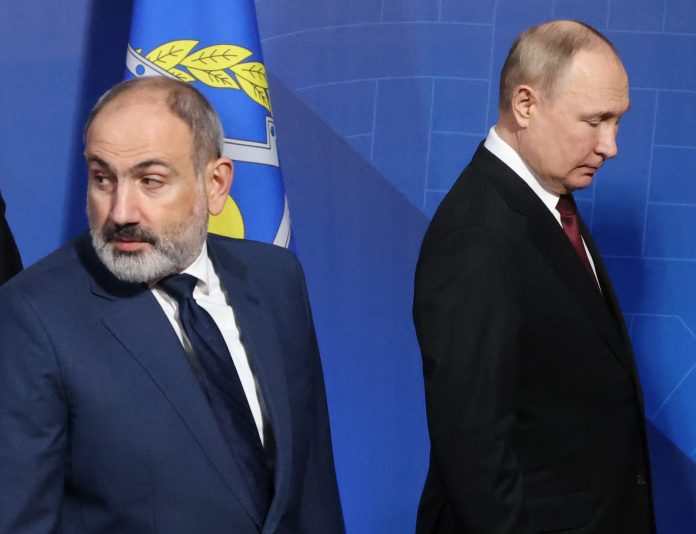
In an interview with Italian newspaper La Repubblica published on Sunday, Pashinyan accused Russia of failing to ensure Armenia’s security in the face of what he said was aggression from neighbouring Azerbaijan over the breakaway Nagorno-Karabakh region.

He suggested that Moscow, which has a defence pact with Armenia and a militray base there, did not regard his country as sufficiently pro-Russian and said he believed Russia was in the process of leaving the wider South Caucasus region.

Yerevan was therefore trying to diversify its security arrangements, he said, an apparent reference to its ties with the European Union and the United States and its attempts to forge closer ties with other countries in the region.

“Armenia’s security architecture was 99.999% linked to Russia, including when it came to the procurement of arms and ammunition,” Pashinyan told La Repubblica.

“But today we see that Russia itself is in need of weapons, arms and ammunition (for the war in Ukraine) and in this situation it’s understandable that even if it wishes so, the Russian Federation cannot meet Armenia’s security needs,” he continued, adding, “This example should demonstrate to us that dependence on just one partner in security matters is a strategic mistake.”

His words underscore resentment inside Armenia about what many there see as a failure by Russia to defend their interests.

There was no immediate response to Pashinyan’s interview from Moscow, which has chaired talks between Yerevan and Baku in what it says is the complex search for a peace deal.

Moscow has in the past bridled at such criticism, defended its actions, and rejected the idea that it has downgraded its foreign policy priorities because of Ukraine.

Nagorno-Karabakh is internationally recognised as part of Azerbaijan but its 120,000 inhabitants are predominantly ethnic Armenians. It broke away from Baku’s control in a war in the early 1990s. Heavy fighting took place again in 2020 until Russia brokered ceasefire.

Pashinyan accused Russian peacekeepers deployed to uphold the ceasefire deal of failing to do their job.

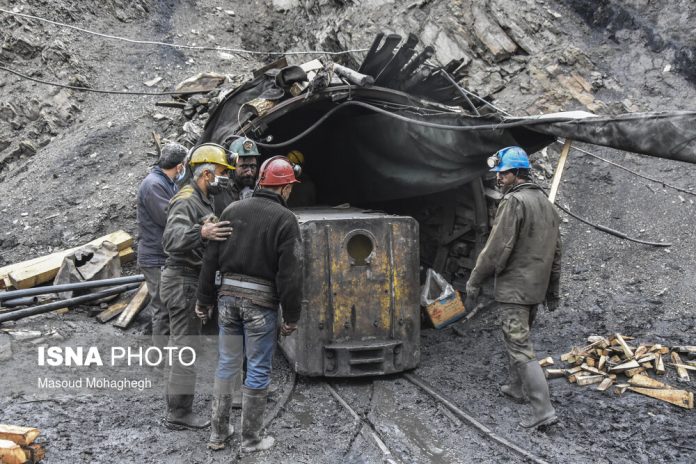
All 6 bodies trapped in collapsed mine in Iran’s Damghan found

The explosion in the Eastern Alborz Coal Mine in Tazreh happened at 19:30 local time (16:00 GMT) on Sunday due to gas accumulation, which trapped the six miners at a depth of 700 meters.

A number of workers also suffered from gas poisoning.

Rescue teams were dispatched to the scene immediately after the collapse of the mine located north of Damghan in Semnan Province.

Tazareh coal mine has a history of similar deadly incidents. In May 2021, a blast claimed the lives of two miners.

The accidents are common in Iran, where much of the infrastructure is outdated, partly due to international sanctions that have blocked the importing of new equipment.

Live Update: Russia’s “Special Operation” in Ukraine; Day 558

Putin says Ukraine counteroffensive ‘a failure’

Russian President Vladimir Putin has once again claimed that Ukraine’s counteroffensive to retake lank seized by Russia has been a “failure”.

“It is not that it is stalling. It is a failure,” Putin told a news conference in Sochi. “At least today this is what it looks like. Let’s see what happens next.”

Putin has repeatedly claimed that Ukraine was not making any headway against Russian defensive positions in Moscow-occupied territories.
However, Russian military bloggers have reported front-line problems for Moscow’s troops.


Erdogan calls on Ukraine to soften stance on Russia with regard to grain export deal

Turkey’s President Recep Tayyip Erdogan has said he believes a solution can be found soon to revive the Black Sea grain export deal, including filling the remaining gaps.

After meeting Russian President Vladimir Putin, the Turkish president also told reporters that “Ukraine needs to especially soften its approaches in order for it to be possible for joint steps to be taken with Russia”.

He added that more grain needed to be destined for Africa rather than European countries.

Putin has restated after meeting Erdogan that Moscow would be ready to return to the Black Sea grain deal once all agreements relevant to the accord are fulfilled.

The Russian president repeated previous criticism of the West over the deal, which Moscow quit in July.

Putin also stated that the Black Sea corridors should not be used for military purposes.


Ukraine’s foreign minister expects Zelenskyy to talk to Erdogan after Sochi meeting

Ukrainian Foreign Minister Dmytro Kuleba has said he expects President Volodymyr Zelensky to talk to Turkish leader Recep Tayyip Erdogan after the latter’s meeting with Russian President Vladimir Putin in Sochi.

“I am convinced that, based on the results of Erdogan’s conversation with Putin, there will be contact between President Erdogan and President Zelenskyy,” Kuleba said in Kyiv.

“There is trust in relations between President Zelensky and President Erdogan,” he added.


Russia says it repels drone attack on power plant in Bryansk region

Alexander Bogomaz, the governor of Russia’s Bryansk region says the country has successfully thwarted a Ukrainian drone attack on a thermal power plant in the southern region of Bryansk.

He added that no one was injured and the was no damage to the facilities. He also said that another drone crashed in a field.


Kremlin says first half of Putin-Erdogan talks constructive

Kremlin spokesman Dmitry Peskov has said in a video posted on Telegram by a Russian state media journalist that the first part of talks between President Vladimir Putin and Turkey’s Recep Tayyip Erdogan had been very constructive.

Separately, Russian state news agency RIA reported that Peskov stated no documents are expected to be signed on conclusion of the talks.

Talks in Sochi between Putin and Erdogan have finished after three hours, according to a report by Russian state news agency TASS.


‘Our strategic political goal is opening EU accession talks’: Zelensky

Ukraine’s President Volodymyr Zelensky has stated that Ukraine’s strategic political goal is “opening EU accession talks.”

“The European Commission has made seven recommendations to Ukraine. We’ve already completed a number of them,” he said in a statement on the social media platform X (formerly known as Twitter).

“For the rest, the Ukrainian parliament must demonstrate tangible results. Timely results,” the president added.


Ukraine sentences Russian soldier to 12 years for torture of civilian

A Russian soldier has been convicted of torturing a Ukrainian civilian and sentenced to 12 years in prison, according to a report by a regional prosecutor’s office in Ukraine.

The Chernihiv District Court found the soldier guilty of illegally detaining the man with another soldier in March 2022 during the temporary occupation of the village of Lukashivka in the northern region of Chernihiv.

“They used physical violence against him in order to learn information about the location of the positions of the Armed Forces. Not having received the necessary data, the occupiers took the man to the territory of the homestead, knocked him to the ground and began to beat him,” the prosecutors said.

“Then the accused hit the victim on the head with the butt of a machine gun, and the second Russian serviceman shot him in the leg with an automatic firearm,” they added.


Russia “open” to negotiations on grain deal: Putin

Russian President Vladimir Putin has told visiting Turkish leader Recep Tayyip Erdogan that Russia is ready to discuss resurrecting the Black Sea Grain Initiative.

“We have a lot to talk about, including ensuring security in the region,” Putin told Erdogan, in an exchange ahead of their talks in Sochi.

“We will not ignore the topic of the Ukrainian crisis. I know you intend to raise questions about the grain deal, we are open to negotiations on this issue,” Putin said.

Meanwhile, Erdogan told Putin that talks on the grain corridor will be “very important.”

“Today everybody is watching the grain corridor issue here,” Erdogan stated, adding, “I believe the message at the news conference will be a very important step, especially for underdeveloped countries in Africa.”

Russia allowed the Black Sea grain deal, brokered by the United Nations and Turkey, to lapse in July. The deal guaranteed the safe passage of Ukrainian grain from its Black Sea ports.

Since withdrawing from the deal, Russia has resumed its blockade of Ukraine’s ports and subjected them to heavy bombardment, targeting storage facilities and infrastructure and sparking fears for global food security.

Putin also noted on Monday that last year the trade turnover between Russia and Turkey grew by 86%, and “in the first half of this year the positive trend continues.”


Putin and Erdogan begin talks in Sochi

Russian President Vladimir Putin and Turkish President Recep Tayyip Erdogan have begun talks in the Russian city of Sochi on the Black Sea coast.

Television coverage showed the two men shaking hands before talks began. Greeting the Turkish leader on Monday, Putin stated: “If you want to, come on holiday here, it’s very nice here.”

“This is our first personal meeting since the elections in Turkey. I would like to congratulate you once again on the [election] results,” Putin said to Erdogan.

The talks are expected to cover the possibility of resurrecting the Black Sea Grain Initiative, from which Russia withdrew in July.

There will also be talks, according to the Russian side, on a proposal from Moscow to supply 1 million tons of Russian grain to Turkey, which would then be distributed to countries most in need, with financial assistance from Qatar.

Following bilateral talks in Moscow with his Turkish counterpart last week, Foreign Minister Sergey Lavrov reiterated that Russia would be ready to rejoin the Black Sea grain deal as soon as it sees guarantees that benefits promised to Russia will be implemented.

The supply of natural gas from Russia to Turkey may also be part of the discussions on Monday, according to the official Russian news agency TASS.


Ukraine’s defence minister submits resignation letter

Ukrainian Defence Minister Oleksii Reznikov submitted his resignation letter to the chairman of parliament, he said in a post on X.

“It was an honour to serve the Ukrainian people and work for the (Ukrainian army) for the last 22 months, the toughest period of Ukraine’s modern history,” Reznikov added.

President Volodymyr Zelensky nominated Rustem Umerov, a Crimean Tatar who has been head of the State Property Fund since last year, to replace Reznikov.


Ukraine claims limited gains on southern front near Bakhmut

Ukraine announced its forces had made limited gains against Russian forces along the southern front – the focus of its counteroffensive – and clawed back territory near Bakhmut in the east.

“The defence forces of Ukraine are continuing offensive operations in the Melitopol sector. Our forces had success near Novodanylivka and Novoprokopivka,” Deputy Defence Minister Ganna Malyar said on state television,

She added that Kyiv’s forces had also captured three square kilometres (about one square mile) near the war-battered town of Bakhmut.


Four Ukrainian military boats destroyed in Black Sea: Russia

Russia says it destroyed four Ukrainian military boats carrying troops in the Black Sea.

“Naval aviation aircraft of the Black Sea Fleet destroyed 4 ‘Willard Sea Force’ US-made high-speed military boats with landing groups of the Armed Forces of Ukraine,” Russia’s Defence Ministry wrote on Telegram.

The ministry added the boats were “traveling in the direction of Cape Tarkhankut on the Crimean coast”, without providing further details.

Earlier on Monday, the ministry announced it had repelled a separate Ukrainian attack over the Black Sea.

“Ukrainian unmanned aerial vehicles (UAVs) were destroyed in the air over the Black Sea near the Crimean Peninsula,” it wrote on Telegram.


Ukrainian forces down 17 drones in Odesa, strikes damage buildings

Ukrainian forces have downed 17 Russian drones over the southern Odesa region, officials said, adding that strikes caused damage in a district on the Danube River that borders NATO member Romania.

“Seventeen drones were shot down by our air defense forces,” region’s Governor Oleg Kiper wrote on Telegram, adding there were no civilian casualties.

“In several settlements of Izmail district, warehouses and production buildings, agricultural machinery and equipment of industrial enterprises were damaged.”


Zelensky fires Ukrainian Defense Minister Oleksii Reznikov

Ukrainian President Volodymyr Zelensky has dismissed Defense Minister Oleksii Reznikov, saying the ministry needs “new approaches” as the war with Russia enters its 19th month.

“This week, parliament will be asked to make a personnel decision. … I have decided to replace the minister of defense of Ukraine. Oleksii Reznikov has gone through more than 550 days of full-scale war,” the Ukrainian leader said.

Zelensky nominated Rustem Umerov, the former people’s deputy of Ukraine, to become the new defense minister.

“The Verkhovna Rada (legislature) of Ukraine knows this person well, and Mr. Umerov does not need any additional introductions,” Zelensky continued, adding, “I expect parliament to support this candidate.”

Reznikov’s removal comes in the wake of a number of corruption scandals involving Ukraine’s Ministry of Defense. While Reznikov has not been implicated in any of them, the scandals have still been seen to damage him by association.

Zelensky has stated rooting out corruption across Ukraine’s government is vital to Kyiv’s chances of attaining long-awaited membership in NATO and the European Union.

The Ukrainian president made cracking down on internal scandals a central issue in his campaign for office.

On Saturday, one of Ukraine’s most powerful oligarchs and a key Zelensky supporter, Ihor Kolomoisky, was arrested as part of a fraud investigation.


South Africa says inquiry found no evidence of arms shipment to Russia

South African President Cyril Ramaphosa says an inquiry into a United States allegation that a Russian ship had picked up weapons in South Africa late last year found no evidence that the vessel had transported weapons to Russia.

“None of the allegations made about the supply of weapons to Russia have been proven to be true,” Ramaphosa stated in an address to the nation.

“No permit was issued for the export of arms and no arms were exported,” he added.

In claims that sparked a diplomatic row, the US ambassador to South Africa, Reuben Brigety, told local journalists in a May briefing that Russian cargo ship Lady R had uploaded weapons at a naval base near Cape Town in December.


F-16 jets to be deployed by next spring: DM

In an interview, Ukraine’s Minister of Defence Oleksii Reznikov has expressed hope that the state-of-the-art F-16 fighter jets supplied by Ukraine’s allies will be deployed against Russia by next spring.

Reznikov said that pilots had to be trained on the jets, and infrastructure, experts and maintenance facilities had to be maintained before they are deployed to the front lines.

The Netherlands, Denmark and Norway have all promised Ukraine the jets.

Reznikov added he had to write several letters with assurances that these NATO weapons would be used for defence purposes only and not on Russian territory.


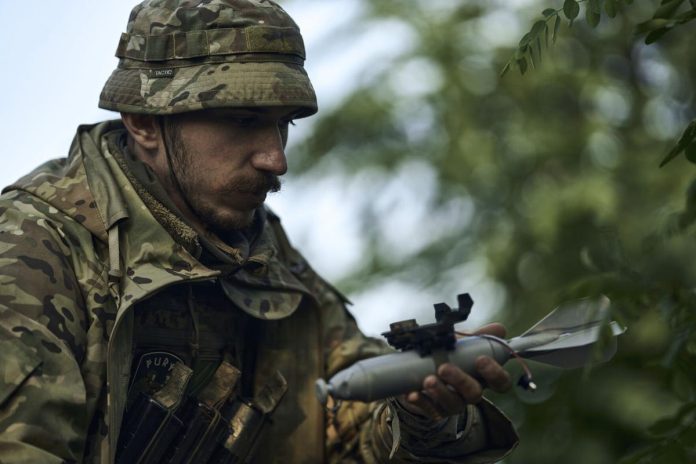
Ukraine expects boom in drone production

Ukraine intends to increase drone production as early as this autumn, the Ukrainian defence minister was quoted as saying, as the country conducts more frequent drone attacks on Russian territory.

“I think this autumn there will be a boom in the production of various Ukrainian drones: flying, floating, crawling, etc., and this will continue to grow in volume,” Oleksii Reznikov told the state-run Ukrinform news agency.

He said one reason for the growth of production was that authorities had reduced various regulations and laws.

“So we rewrote regulations… and simplified the processes. And I believe that we also succeeded in that and gave us the opportunity for such a booster. Especially for drone manufacturers who started production from garages,” he continued.

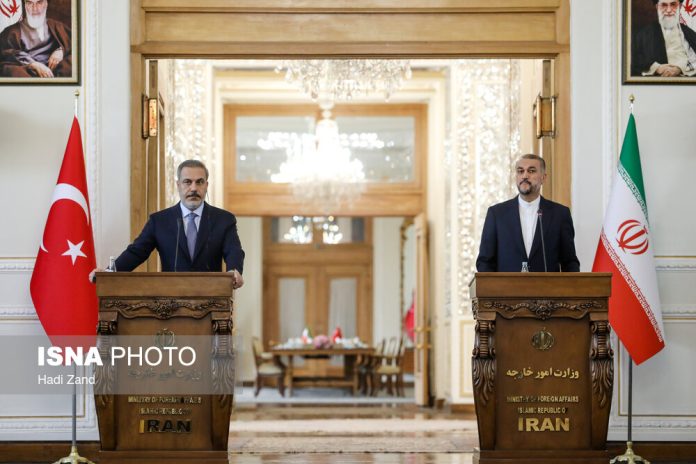
Iran warns over geographical changes in region

Amirabdollahian Fidan

Amirabdollahian made the remarks in a joint press conference with his Turkish counterpart in Tehran on Sunday.

The two sides say they discussed the implementation of a comprehensive program of joint cooperation between the two countries.

The program, initiated during Turkish President Erdogan’s visit to Tehran a few months ago, aims to achieve a target volume of 30 billion euros in commercial exchange.

He also highlighted the upcoming meeting of the convicts transfer committee in Ankara after a five-year hiatus.

The Turkish Foreign Minister acknowledged Iran and Turkey as powerful countries in the region and discussed various topics including Iraq’s fight against terrorism, Islamophobia, and recent developments between Iran and Saudi Arabia.

He stressed the importance of peaceful relations between Iran, Saudi Arabia, and Turkey.

Regarding Syria, both ministers called for increased cooperation from the Syrian government in addressing the PKK issue.

They also expressed their desire for Syrian citizens residing in Turkey to return safely to their home country.

In addition, it was announced that Turkey will be hosting the Iranian president in the coming days, further strengthening bilateral ties between the two nations.

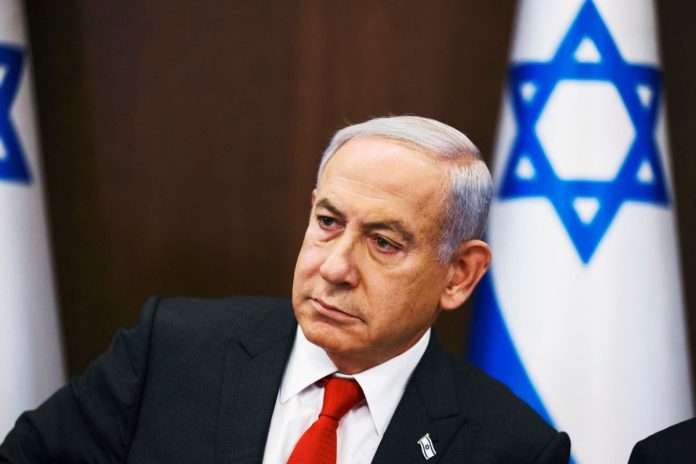
Israel PM rues his foreign minister’s disclosure of meeting with Libyan top diplomat

Benjamin Netanyahu

Cohen’s office on Aug. 26 went public with his having met Mangoush in Italy earlier in the month. The statement came on the heels of an Israeli media report about the meeting.

The news triggered protests in Libya, which does not recognise Israel and where pro-Palestinian sentiment is strong, and led Prime Minister Abdulhamid al-Dbeibah to fire Mangoush.

“It is not helpful, now that’s clear,” Netanyahu told Cypriot TV station ANT1 when asked about the publication.

“I’ve issued a directive to all our government ministers that such meetings of this kind have to be cleared in advance with my office, and certainly their publication has to be cleared in advance with my office.”

Analysts say Dbeibah and other Libyan leaders have attempted to build ties with Israel in the hope that the United States, which sees Arab normalisation of relations with Israel as a priority, would support them in Libya’s internal political rifts.

Israel, for its part, is keen to pursue discreet talks with potential Arab and Muslim partners in the hope that they will develop into full ties. In the ANT1 interview, Netanyahu called the handling of the Cohen-Magoush meeting “an exception to the rule”.

In an Aug. 28 social media post pushing back against the furore, Cohen defended his ministry for “always working in overt and covert channels, and in a range of discreet means, to bolster Israel’s foreign relations”.

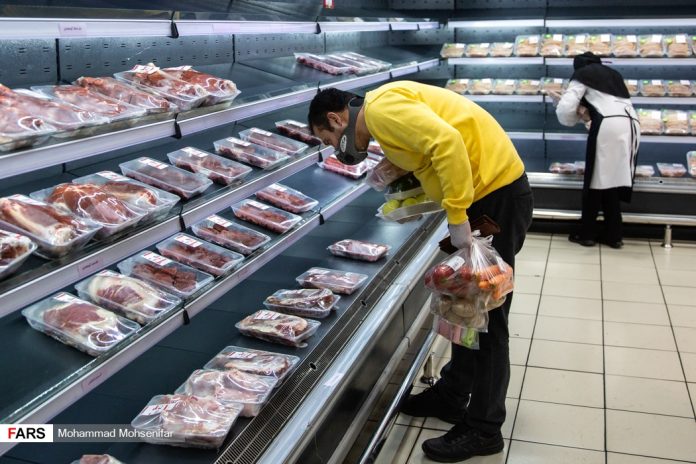
Analyst: Fixing Iran economy contnigent on JCPOA, FATF

Iran Economy

In an interview with Khabarfori news outlet, Ali Bigdeli emphasized that it may take at least one and a half years to see any progress regarding the JCPOA.

He highlighted that unlike previous discussions, which were conducted through secret diplomacy, recent developments have led to an increase in oil exports.

However, the prominent university professor stressed the need to focus on economic aspects and highlighted Saudi Arabia’s willingness to invest generously in Iran if these issues are resolved.

He further emphasized that without addressing the JCPOA, IAEA, and FATF concerns, Iran will remain trapped in its current economic crises.

Lastly, he criticized Iran’s membership in Shanghai Cooperation Organization (SCO) and BRICS as mere political gestures with no tangible impact on solving economic problems or alleviating political isolation.