Monday, December 29, 2025
Home Blog Page 127

Majority of Germans oppose NATO attacking Russian jets: Poll

Some 67% of respondents said they were against striking Russian jets, according to a poll conducted by the Forsa market research company for Stern magazine. Only 24% of those polled favored the option. Supporters of German Chancellor Friedrich Merz’s CDU/CSU bloc were the most hawkish, with 35% approving of the measure. Among the backers of other major parties, support barely exceeded 20%.

The survey was conducted by phone on September 25-26 and included 1,001 respondents.

The issue gained traction among NATO leaders following incidents the bloc blamed on Russia. Estonia claimed Russian aircraft briefly violated its airspace in mid-September, while Poland earlier alleged that multiple Russian decoy drones had entered its territory. Moscow denied the claims in both cases.

Poland and the UK then threatened to shoot down Russian aircraft if they entered NATO airspace “without permission.” Lithuania’s defense minister also urged NATO to take such action. EU Commission President Ursula von der Leyen said the option was “on the table,” while NATO Secretary General Mark Rutte stated that decisions are made “in real time” and on a case-by-case basis.

Moscow responded by saying that NATO members had failed to produce any substantial evidence for their accusations. Kremlin spokesman Dmitry Peskov also slammed what he called “reckless and irresponsible” threats by bloc members in the wake of the incidents.

Ex-UK defense chief calls for Crimea to be made ‘uninhabitable’

Crimean Bridge

Speaking at the Warsaw Security Forum on Tuesday, Wallace argued that Russia views the Black Sea peninsula as a “Holy Mount,” and that Ukraine should strike where it can inflict the greatest damage.

“We have to help Ukraine have the long-range capabilities to make Crimea unviable. We need to choke the life out of Crimea,” Wallace stated.

“If it is not inhabitable or not possible for it to function… I think, if we do that, [Russian President Vladimir] Putin will suddenly realize he’s got something to lose.”

He suggested that Kiev should prioritize attacks on the Kerch Strait Bridge, which connects Crimea with Russia’s Krasnodar Region. Ukrainian forces struck the bridge in October 2022 and July 2023, temporarily halting traffic.

Wallace, who served as defense secretary from 2019 to 2023, previously urged Ukraine to mobilize more of its population to fight Russia.

Crimea voted to secede from Ukraine and join Russia shortly after the 2014 Western-backed coup in Kiev. Since then, Ukraine has imposed an economic blockade, cutting electricity and water supplies to the region. Home to around 2.5 million people, the peninsula also hosts Russia’s Black Sea Fleet.

The Kremlin has described the UK as “one of the leaders of this pro-war camp” due to its military aid to Kiev and calls for tighter sanctions on Russia.

Hamas has ‘3-4 days’ to respond to Gaza peace plan: Trump

“We’re going to do about three or four days. We’ll see how it is,” Trump told reporters when asked about the timeline for a response from the Palestinian resistance group.

He said all Arab and Muslim countries, along with Israel, have signed up for the proposal.

“We’re just waiting for Hamas, and Hamas is either going to be doing it or not — and if it’s not, it’s going to be a very sad end,” he added.

Trump on Monday unveiled the 20-point plan to end Israel’s war on Gaza during a White House press conference with Israeli Prime Minister Benjamin Netanyahu.

The plan calls for the release of all Israeli captives in exchange for dozens of Palestinian prisoners, the complete disarmament of Hamas, a gradual withdrawal of Israeli forces, and the formation of a technocratic, apolitical Palestinian committee to govern the enclave.

The Israeli army has killed over 66,000 Palestinians, most of them women and children, in Gaza since October 2023. The relentless bombardment has rendered the enclave all but uninhabitable and led to starvation and the spread of diseases.


UN warns Afghanistan internet cut ‘extremely serious’ For human rights

Mobile phone signal and internet service in Afghanistan, ruled by the Taliban government, weakened on Monday night until connectivity was less than one percent of normal levels.

“Nationwide internet shutdown by (the) Taliban has extremely serious human rights ramifications across the country,” the UN rights office wrote on X.

The shutdown has curtailed the free flow of information crucial to everyday activities, including access to essential services from health and education to banking.

“Women and girls already excluded from public life are especially affected. We call for immediate reconnection,” the office added.

Afghans have been unable to contact each other, online businesses and the banking systems are frozen, while members of the diaspora cannot send crucial remittances to their families.


Hamas pledges to study US Gaza plan ‘responsibly’: Qatar

Hamas

“Hamas received Trump’s plan late last night and promised to study it responsibly,” Foreign Ministry spokesperson Majed Al Ansari told a news briefing in Doha.

He stated that bilateral meetings will be held with Hamas’ negotiating team and the participation of Turkish and Egyptian delegations.

On Monday, Trump unveiled a 20-point plan to end Israel’s war on Gaza during a White House press conference with Israeli Prime Minister Benjamin Netanyahu.

The plan calls for the release of all Israeli captives in exchange for dozens of Palestinian prisoners, the complete disarmament of Hamas, a gradual withdrawal of Israeli forces, and the formation of a technocratic, apolitical Palestinian committee to govern the enclave.

The Israeli army has killed over 66,000 Palestinians, most of them women and children, in Gaza since October 2023. The relentless bombardment has rendered the enclave uninhabitable and led to starvation and the spread of disease.


Rezaei: Trump’s letter to Leader raised nuclear talks, not missiles

Iran Missile

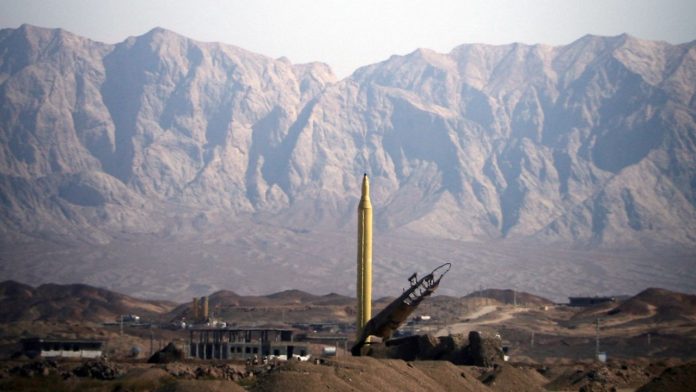
He criticized recent proposals to limit the range of Iran’s ballistic missiles, saying such caps—reportedly suggested at 400 kilometers—would leave the country unable to strike adversaries like the Israeli regime in retaliation.

“They bombed our nuclear sites thinking our program was finished,” Rezaei said, arguing that restrictions on missile range would undermine Iran’s ability to defend itself.

The remarks come amid ongoing diplomatic and security debates over Iran’s nuclear and missile programs, and follow calls chiefly from Western capitals for constraints on Tehran’s missile capabilities alongside negotiations on its nuclear activities.

Top Iranian lawmaker: Cooperation with IAEA currently suspended

Iran nuclear programe

Nabavian stated: “At present, our cooperation with the Agency is suspended in full. According to the law of the Parliament, any cooperation is conditional upon the protection of the security of our nuclear facilities and scientists, the guarantee of non-aggression against our territory, and the recognition of Iran’s inalienable right to enrichment under Article 4 of the NPT. Unless these are assured, we have no obligation to cooperate.”

The senior legislator further underlined: “There are no IAEA inspectors in Iran at the moment.”

Nabavian’s remarks come as Tehran has time and again stressed that the path to continued technical engagement with the IAEA depends on respect for its sovereign rights and full adherence to the provisions of the NPT by all parties, not selective or politically motivated enforcement.

Most Americans oppose more aid to Israel: Survey

According to the findings, 51% of Americans oppose sending “additional economic and military support to Israel,” while only 31% back further aid. Six out of ten voters (58%) say Tel Aviv should immediately end its Gaza campaign, even if hostages remain in captivity and Hamas is not eliminated.

The poll also found that 40% of US voters believe Israel is intentionally killing civilians in Gaza. A larger share (62%) say Israel is not taking enough precautions to avoid civilian casualties.

Overall, 34% of respondents side with Israel and 35% with the Palestinians in the conflict. The survey was conducted nationwide from September 22 to 27 among 1,313 registered US voters.

The findings contrast sharply with polling in the immediate aftermath of the Hamas attacks on Israel on October 7, 2023, when the group killed 1,200 people and seized more than 250 hostages. At that time, 47% of American voters sided with Israel and only 20% with the Palestinians.

Since the Gaza escalation in October 2023, Washington has approved billions in emergency weapons and defense aid to Israel. Its campaign in Gaza has killed more than 65,000 Palestinians – a toll that a UN committee this month labeled genocide. Israel also recently launched a ground offensive in Gaza City, one of the last areas outside of IDF control – spurring some countries to recognize a Palestinian state, while international bodies and hostage families have pressed for a settlement.

On Monday, the US unveiled a 20-point plan to end the Gaza war, calling for an immediate ceasefire, a hostages-for-prisoners exchange, a staged Israeli withdrawal, Hamas disarmament, and a transitional international administration.

Prime Minister Benjamin Netanyahu endorsed the framework but warned that Israel would “finish the job” militarily if Hamas refuses.


Iranian FM urges diplomacy, says nuclear technology is indigenous

Abbas Araghchi

In a wide-ranging interview, Seyed Abbas Araghchi reiterated that Iran has never sought nuclear weapons and pointed to the 2015 nuclear deal (JCPOA) as proof of its peaceful intent, saying Tehran complied while the US later withdrew.

Araghchi said five rounds of talks took place after Washington signaled readiness to return to negotiations in 2025; a sixth round scheduled for June 15 was disrupted when Israel and the US struck Iranian sites two days earlier.

He warned that military strikes and a push to trigger a UN “snapback” of sanctions would only complicate diplomacy, adding that Iran’s nuclear know-how is domestically developed and therefore not eliminated by attacks on facilities.

The Iranian foreign minister defended limited enrichment for medical and research reactors, noting Tehran’s legal right to peaceful nuclear activities under international agreements and urging multilateral negotiation rather than coercive measures.

On Gaza and regional diplomacy, Araghchi said Iran seeks an end to mass civilian casualties and will judge any peace proposals by whether they respect Palestinian rights to self-determination.

Iran dismisses rumors of poppy cultivation, reaffirms opposition to narcotics production

Speaking on a state television program, Mohammad Zarei said nearly 300 million people worldwide use some form of narcotic substance, with around 500,000 deaths each year linked to drug abuse.

He described addiction as one of the most serious social challenges globally, surpassing the toll of natural disasters and wars.

Zarei highlighted Iran’s heavy sacrifices in the fight against drug trafficking, noting that the country has lost nearly 4,000 personnel and more than 12,000 have been injured over the past four decades.
He emphasized that Iran, located on a major drug transit route, has borne significant costs for global security.

Addressing recent speculation, Zarei stated: “The policy of Iran, which is resolute opposition to poppy cultivation and narcotics production, remains firm.”

He clarified that while discussions exist over meeting medical needs for opioid-based medicines, no decision has been made to allow cultivation, and any such move would involve controlled production of a specific non-opium variety for pharmaceutical purposes only.

He concluded that Iran will continue to strengthen laws and enforcement against illegal cultivation, with harsher penalties under review in parliament.