Friday, December 26, 2025
Home Blog Page 1265

Iran, Pakistan vow to help establish peace, stability in Afghanistan

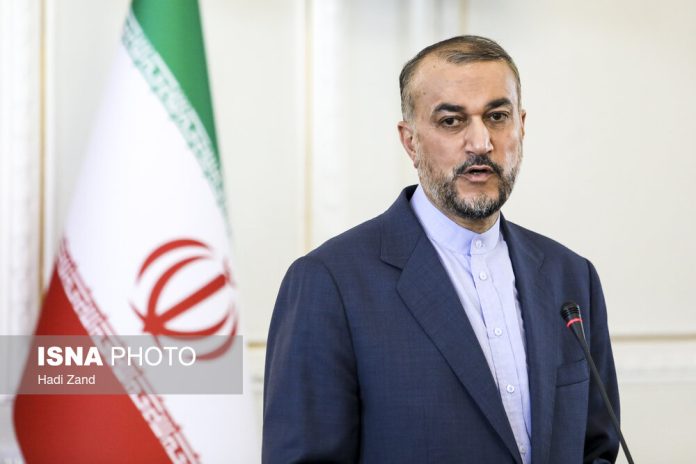
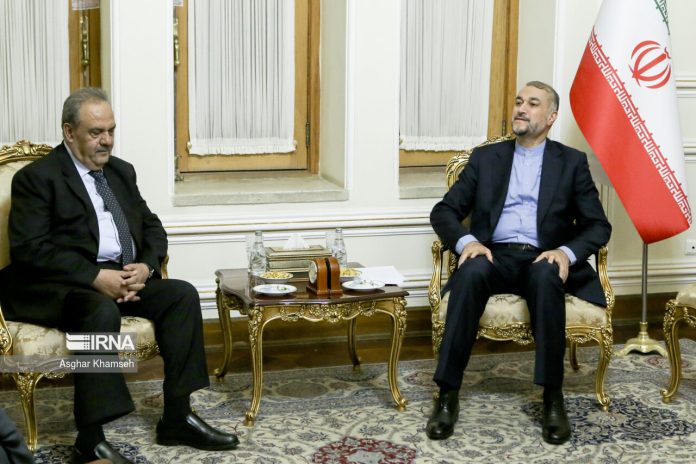
Hossein Amirabdollahian made the comment in a meeting with Asif Ali Khan Durrani, the Pakistani prime minister’s special envoy on Afghan affairs, where the two officials discussed the trend of developments in Afghanistan.

In the meeting, the top Iranian diplomat also emphasized Iran and Pakistan’s key role in regional as well as Afghan developments, expressing hope the continuation of bilateral consultations will further promote peace and tranquility in the region, especially in Afghanistan.

The Pakistani diplomat, in turn, said he was pleased with the opportunity which has arisen to exchange views, and offered his assessment of the developments and situation in Afghanistan in different political and security domains.

He said Pakistan is determined to work with Iran to help establish peace and stability in Afghanistan.

Biden admin defends prisoner swap agreement with Iran against Republican attacks

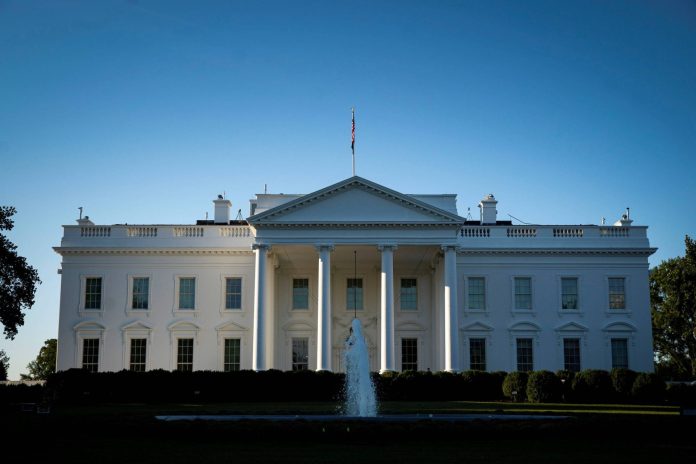
White House

US Department of State spokesperson Matthew Miller said on Tuesday that the administration had to make “real-life choices” to push for the release of five Americans imprisoned in Iran.

He dismissed Republican attacks on the agreement, which also will see Washington release five Iranian prisoners in its custody and release $6bn of Iranian funds frozen in South Korea due to US sanctions.

“Iran is not going to release these American citizens out of the goodness of their heart,” Miller told reporters.

“That is not real life. That is not how this works. That was never going to happen. We had to make tough choices and engage in tough negotiations to bring these American citizens home,” he added.

The Biden administration informed Congress on Monday that it issued sanctions waivers to facilitate the transfer of the $6bn in frozen Iranian funds to Qatar.

Iran will be able to access the money but only use it for humanitarian purposes, including food and medicine, the US has claimed.

The waivers sparked a massive outcry from Republican hawks who accused Biden of paying a ransom for hostages — against stated US government policy.

Under US sanctions, Iran was always able to access frozen funds for humanitarian purchases, but banks have been reluctant to engage in any transactions involving Tehran to avoid penalties from Washington.

Miller stated the $6bn transfer is not yet complete but added that the funds would be under strict US Treasury oversight.

However, Iranian President Ebrahim Raisi said in an interview earlier on Tuesday with NBC News that Iran will spend the $6bn “wherever” it wants.

Miller contradicted that, claiming the US will be able to freeze the funds again if it needs to.

The State Department spokesperson also reiterated that the prisoner swap will not change Washington’s broader approach to Tehran.

“This has been an action we have pursued to free these five wrongfully imprisoned American citizens,” he noted.

“Separately, we do remain focused on constraining Iran’s nuclear programme, constraining its destabilising behaviour. We remain committed to ensuring it never obtains a nuclear weapon.”

The United States, under former President Donald Trump, abandoned the Joint Comprehensive Plan of Action (JCPOA) in May 2018 and reinstated crippling sanctions that the agreement had lifted.

The talks to revive the 2015 deal kicked off in the Austrian capital city of Vienna in April 2021, with the intention of removing anti-Iran sanctions and examining the US seriousness in rejoining the JCPOA.

The discussions, however, have been at a standstill since August 2022 due to Washington’s insistence on its hard-nosed position of not removing all the sanctions that were slapped on Tehran by the previous US administration.

Iran blamed the failure of JCPOA’s revival on the procrastination of the American side in providing an answer and stressed moving to the next stage would have been possible had the US government shown serious willpower and acted responsibly in its promises.

Israeli Supreme Court holds 1st hearing challenging judicial overhaul

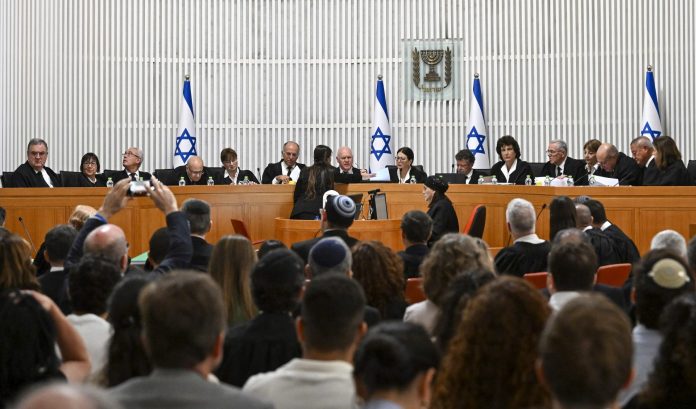
Israel’s Supreme Court

Netanyahu’s coalition, a collection of ultranationalist and ultrareligious lawmakers, unveiled the overhaul earlier this year, saying it was necessary to rein in an unelected judiciary they believe wields too much power.

Critics say the plan — which would weaken the Supreme Court — is a profound threat to Israeli democracy and that it would concentrate power in the hands of Netanyahu and his allies.

They say the court is a key counterweight on majority rule in a country with an otherwise weak system of checks and balances — with just one house of parliament where the governing coalition is headed by the prime minister. The country’s president has largely ceremonial powers, and there is no firm, written constitution.

The case that opened Tuesday focuses on the first law passed by parliament in July — a measure that cancels the court’s ability to strike down government moves it deems to be “unreasonable.” Judges have used the legal standard in rare cases to prevent government decisions or appointments viewed as unsound or corrupt.

The hearing puts Israel’s Supreme Court in the unprecedented position of deciding whether to accept limits on its own powers. In a sign of the case’s significance, all 15 justices are hearing the appeal together for the first time in the country’s history, rather than the typical smaller panels. The proceedings were also livestreamed and aired on the country’s main TV stations.

A ruling is not expected for weeks or even months, but the session Tuesday could hint at the court’s direction. The marathon hearing was largely businesslike, though at times the arguments became tense and heated.

In one exchange, Simcha Rothman, a senior government lawmaker who has shepherded the overhaul through parliament, insisted the court could not be trusted to decide its own fate.

“Can you be the ones to judge this without fear, without prejudice, without bias? Because you are dealing with your own honor and status,” Rothman told the chief justice, adding, “And you talk about the Knesset’s conflict of interest?”

Hayut chided him, responding that the court does not deal with its own status but rather “the essential interests of the public.”

In another exchange, Justice Isaac Amit challenged a lawyer representing Netanyahu’s coalition who said the new law doesn’t endanger democracy.

“Democracy doesn’t die from few strong blows. Democracy dies in series of small steps,” said Amit, who is expected to succeed Hayut as chief justice after she retires later this year.

His comment elicited an outburst from a back row by Tally Gotliv, a lawmaker with Netanyahu’s Likud Party, who shouted: “The Knesset sanctifies democracy.” Hayut swiftly reprimanded her.

Netanyahu has not said whether he would respect a decision by the court to strike down the new law. Some members of his coalition have hinted that the government could ignore the court’s decision.

Legal experts warn that could spark a constitutional crisis, where citizens and the country’s security forces are left to decide whose orders to follow — the parliament’s or the court’s.

The political survival of Netanyahu, who returned to power late last year while standing trial on bribery, fraud and breach of trust charges, is also bound up with the overhaul. His hard-line, religiously conservative coalition partners have threatened to rebel if he doesn’t see the legislation through, and critics say Netanyahu could use the overhaul to get the charges against him dismissed.

The plan has infuriated people across many segments of Israeli society. Hundreds of thousands poured into the streets in repeated mass protests for the past 36 weeks.

“We stand here today with millions of citizens to stop the government coup,” said Eliad Shraga, chairman of the Movement for Quality Government in Israel, one of the groups that asked the court to strike down the new law.

“Together we will preserve Israeli democracy,” Shraga added.

But it has also exposed an enormous gulf in Israel.

Opponents of the plan come largely from the country’s secular middle class. Leading high-tech business figures have threatened to relocate. Perhaps most dramatic, thousands of military reservists have broken with the government and declared their refusal to report for duty over the plan.

Netanyahu’s supporters tend to be poorer, more religious and live in West Bank settlements or outlying rural areas. Many are working-class Mizrahi Jews, with roots in Middle Eastern countries, and have expressed hostility toward what they say is an elitist, secular class of Ashkenazi, or European, Jews.

As the hearing got underway, a couple dozen right-wing activists came out to protest at the entrance to the Supreme Court. “The people are the sovereign!” they shouted through megaphones, blowing horns and holding signs declaring that they had voted for Netanyahu, not Justice Hayut.

The night before, tens of thousands of anti-government protesters rallying against the judicial overhaul flooded the streets near the court, waving national flags and chanting for democracy.

The law under review was passed as an amendment to what in Israel is known as a “Basic Law,” a special piece of legislation that serves as a sort of constitution. The court has never struck down a Basic Law before but says it has the right to do so. The government says it does not, and that lawmakers elected by the people should have the final say over such legislation.

Netanyahu’s Likud issued a statement late Tuesday saying that striking down a Basic Law “is a red line that cannot be crossed.”

While the attorney general would typically represent the government in such a hearing, Attorney General Gali Baharav-Miara has expressed staunch opposition to the overhaul. The bill’s sponsors instead used outside counsel.

The case is at the heart of a wider contest in Israel between fundamentally different interpretations of democracy.

Netanyahu and his coalition say that as elected representatives, they have a democratic mandate to govern without being hobbled by the court, which they portray as a bastion of the left-leaning elite.

Opponents say that if the court’s power to review and overturn some government decisions is removed, Netanyahu’s government could appoint convicted cronies to Cabinet posts, roll back rights for women and minorities, and annex the occupied West Bank.

President Raisi says Iran has authority on released assets

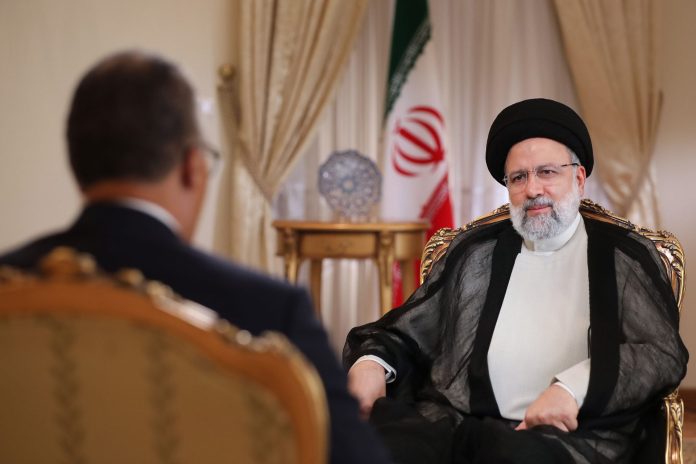
Ebrahim Raisi

Raisi made the remarks in an exclusive interview with the American broadcast television network NBC in the capital Tehran on Tuesday.

He pointed to last month’s deal between Iran and the United States to exchange prisoners and to secure the release of $6 billion of Iranian funds that had remained blocked in two South Korean banks since 2018 because of US pressure on Seoul.

The administration of US President Joe Biden claimed at the time that the funds and the proceeds of Iranian oil sales to South Korea could only be spent on “humanitarian” purposes.

Raisi stated during the interview that Iran would have “authority” over how the funds would be spent, stressing, “This money belongs to the Iranian people, the Iranian government, so the Islamic Republic of Iran will decide what to do with this money.”

Asked whether the released funds would be used for other purposes rather than humanitarian needs, the Iranian president said, “Humanitarian means whatever the Iranian people need, so this money will be budgeted for those needs, and the needs of the Iranian people will be decided and determined by the Iranian government.”

The president also added the American detainees in Iran were “very healthy,” and would be coming home soon as the US-Iran prisoner exchange deal would be completed in “due time.”

The Biden administration announced on Monday that it had taken concrete steps to clear the way for the prisoner exchange, issuing a waiver that allows international banks to transfer the $6 billion to Qatar without the threat of US sanctions.

The waiver means that European, Middle Eastern and Asian banks will not be in violation of US sanctions in converting Iran’s money, which was frozen in South Korea, and transferring it to Qatar’s central bank, where it will be held for Tehran to be used for the purchase of non-sanctioned goods.

The Biden administration also agreed to release five Iranian citizens held in the United States.

The five Iranian detainees were identified as Mehrdad Moein Ansari, Kambiz Attar Kashani, Reza Sarhangpour Kofrani, Amin Hassanzadeh, and Kaveh Lotfollah Afrasiabi.

Top Iranian officials have emphasized that there is no connection between the prisoner exchange agreement reached with the United States and the release of Iran’s frozen assets.

Earlier in August, Iran’s Foreign Minister Hossein Amir-Abdollahian said, “The exchange of prisoners is a completely humanitarian issue and has nothing to do with unblocking our funds in foreign banks.”

Egypt ‘second most at risk of debt crisis after Ukraine’: Report

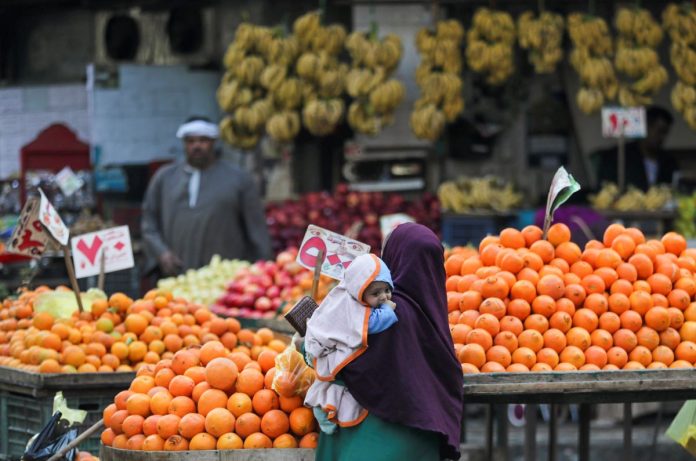
Egypt

The data showed that, taking into account public debt, interest costs and yield on dollar bonds, Egypt’s economy was the most at risk in the Middle East.

Three other Middle Eastern countries – Tunisia, Bahrain and Jordan – were also among those most exposed.

Egypt has been gripped by economic crisis for years, a situation exacerbated by the war in Ukraine which has severely affected food prices in the country.

Official figures have showed annual inflation in Egypt reached a new record 39.7 percent in August, while by early this year the Egyptian pound had lost half its value against the dollar.

Egypt has been dependent on bailouts from its wealthier neighbours and the International Monetary Fund (IMF) in recent years, while investors have pulled billions out of Cairo’s foreign reserves.

Although the financial crisis has a range of causes, many opposition figures have pointed fingers at the increasing grip the military has held over the economy since the 2013 coup that ousted the elected government of Mohamed Morsi.

“According to a Bloomberg analysis, Egypt is the second most vulnerable country on earth to a debt crisis. The only country more vulnerable is Ukraine,” tweeted Egyptian analyst Timothy E Kaldas.

“Ukraine was invaded by Russia’s military whereas Egypt’s economy was invaded by its own military.”

Live Update: Russia’s “Special Operation” in Ukraine; Day 567

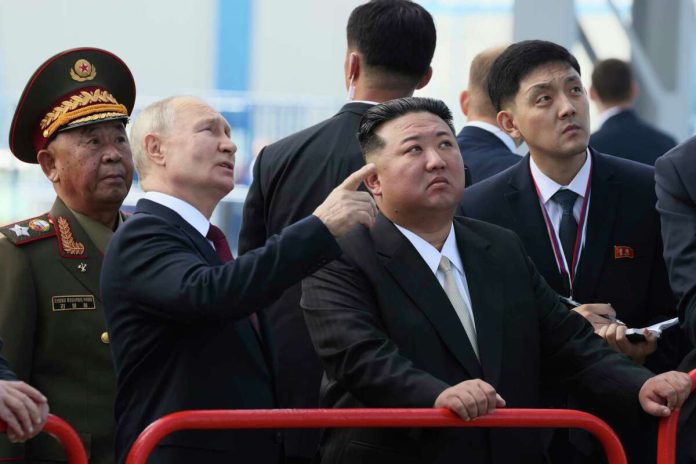
Putin and Kim
Russian President Vladimir Putin and North Korea's leader Kim Jong Un examine a launch pad during their meeting at the Vostochny cosmodrome outside the city of Tsiolkovsky, about 200 kilometers (125 miles) from the city of Blagoveshchensk in the far eastern Amur region, Russia.

Kyiv says 105 Ukrainian port infrastructure facilities damaged in Russian attacks since mid-July

More than 100 port infrastructure facilities have been damaged in Russian attacks on Ukrainian ports since July 18, Deputy Prime Minister Oleksandr Kubrakov has said.

He also added Ukrainian grain exports had fallen by almost 3 million tons per month since July 18, one day after Russia quit the U.N.-backed Black Sea grain export deal.

“Since July 18, due to Russian attacks on Ukrainian ports, 105 port infrastructure facilities have been damaged and partially destroyed. As a result of strikes on the ports of the Danube cluster and the blocking of seaports, grain exports to Asia, Africa and Europe were reduced by almost 3 million tons per month,’ Kubrakov wrote on Facebook.


UK urges North Korea not to sell arms to Russia

Britain has urged North Korea to end talks over the sale of arms to Russia, as North Korean leader Kim Jong Un and Russian President Vladimir Putin met for a rare summit.

“We urge the DPRK to cease its arms negotiations with Russia and to abide by public commitments Pyongyang has made not to sell arms to Russia,” Prime Minister Rishi Sunak’s spokesperson told reporters.

“This visit serves to highlight Russia’s isolation on the global stage, and as the world unites against Putin’s illegal invasion of Ukraine and he has been forced to turn to regimes such as North Korea,” the spokesperson added.


Putin describes talks with Kim as “productive” and “candid”

Russian President Vladimir Putin said his first day of talks with North Korean leader Kim Jong Un was “highly productive,” involving a “candid exchange of views” on both regional matters and bilateral relations.

The pair spent around five hours together on Wednesday, according to according to Russian state news agency TASS.

Putin went on to confirm that Kim is set to fly to Komsomolsk-on-Amur and then Vladivostok as part of his extensive program during his stay in Russia. He will visit factories involved in the production of both civilian and military equipment. Following that, the North Korean delegation will get a demonstration of the military capabilities of Russia’s Pacific Fleet, he told state news agency Russia 1 after concluding the summit Wednesday.

Kim’s program in Russia will also encompass environmental and educational issues, with visits to the Eastern Federal University and the Russian Academy of Sciences, including a marine biology laboratory, Putin said.


EU should grant Ukraine membership: Top diplomat

The European Union should enlarge and absorb Ukraine into its structure, European Commission President Ursula von der Leyen has argued in her State of the Union address. The official claimed that the move would not necessarily require amendment of the Treaties of the European Union, the legal basis for the bloc’s existence.

In her speech in the European Parliament in Strasbourg, France on Wednesday, Von der Leyen proclaimed that the “future of Ukraine is in our Union.” She went on to stress that Brussels is faced with the historic task of “completing our Union.”

The European Commission president insisted that the bloc “cannot afford to leave our fellow Europeans behind,” apparently referring to Ukrainians.

“In a world where size and weight matters, it is clearly in Europe’s strategic and security interests to complete our Union,” the official concluded.

According to Von der Leyen, the potential accession of Ukraine could be implemented even before the European Convention and Treaties were amended.

On Wednesday, Bloomberg, citing undisclosed sources within the EU, reported that some member states harbor certain concerns about potential overextension by accepting Ukraine into their ranks and channeling resources toward it. The article noted that worries about corruption in aspiring nations have also been voiced.


Putin hints at potential for military cooperation with North Korea

Russian President Vladimir Putin has said the country is considering and discussing some military cooperation with North Korea, according to Russia state news agency Russia 1.

Asked whether he discussed military cooperation with Kim Jong Un during their meeting on Wednesday, Putin noted “certain restrictions” on sending military aid to North Korea.

But the Russian President admitted that there are areas open for discussion and consideration, suggesting that the topic will be a feature of the North Korean leader’s visit to Russia.

“Well, there are certain restrictions, and Russia complies with all these restrictions,” Putin told state-owned Russia 1.

“But there are things that we can of course talk about, discuss, think about it. And here too there are prospects,” he added.

Kim has previously stressed the role of military satellites as a means to protect national safety and territorial stability and has spoken of their strategic value when deploying military force preemptively, North Korean state media reported in April.

Providing this technology to North Korea would be in violation of international sanctions, which have been imposed to hamper Pyongyang’s ability to build a fully functioning nuclear weapons and ballistic missile force.

US officials have warned the summit could result in Pyongyang supplying weapons for Moscow’s use in its faltering Ukraine war in exchange for sanctioned ballistic missile technology.


Kim tells Putin that Russia will defeat “evil forces”, in endorsement of Moscow’s war in Ukraine

North Korean leader Kim Jong Un has made his strongest endorsement of Moscow’s war on Ukraine since his summit in Russia began, telling Vladimir Putin that “Russia will emerge victorious in the fight to punish the evil forces.”

Kim said before a toast at a state dinner with Putin that he is “certain that the Russian people and its military will emerge victorious in the fight to punish the evil forces that ambitiously pursues hegemony and expansion.”

He did not name Ukraine but referred to Russia’s “military operation,” the euphemistic phrasing Moscow uses to describe its illegal invasion of Ukraine.

Kim stated the “Russian military and its people will inherit the shining tradition of victory” and demonstrate their reputation on the front line of the “military operation.”

The North Korean leader added that he and Putin had an “in-depth discussion” with Putin on the “political and military landscape of Korean Peninsula and Europe.”

Kim vowed to establish “a new era of 100-year friendship” between two countries, and proposed a toast to “the great Russia’s new victory” and Putin’s health.

Western countries have warned that Putin will seek an arms deal with Kim to bolster his war, which has stretched for 18 months and left Moscow’s army short of supplies and manpower.

Kim’s full-throated support of the war at the dinner will only bolster those fears. North Korea, which has faced years of international sanctions over its nuclear weapons program, is meanwhile short of everything from hard cash and food to missile technology.


Kremlin calls Putin-Kim talks ‘substantive’

President Vladimir Putin’s talks with North Korean leader Kim Jong Un were “important and substantive”, Kremlin spokesman Dmitry Peskov says, according to an Interfax news agency report.

Speaking after the two leaders held talks in Russia’s Far East, Peskov stated North Korea was interested in cooperation with Russia in the areas of aviation and transport.

Russia sees prospects for cooperating with North Korea in space, the Russian state news agency TASS reports, citing the Kremlin spokesman.

Peskov made the comments after Putin held talks with Kim at a cosmodrome where Moscow conducts space launches.


China and India have ‘low intellectual potential’: Zelensky aide

The people leading India and China lack the ability to predict the long-term consequences of their policies, a senior aide to Ukrainian President Volodymyr Zelensky has claimed.

Mikhail Podoliak pointed to what he called “the problem of the modern world,” singling out India and China, in an interview with Ukrainian media on Wednesday.

“The problem with these countries is that they do not analyze the consequences of their own moves. These countries, unfortunately, have low intellectual potential,” he added.

Podoliak suggested that even though India has a lunar exploration program, it “does not mean that this nation understands what the modern world precisely is.”

The dismissive remarks were in the context of Beijing and New Delhi’s refusal to support Kiev in its conflict with Moscow. Podoliak complained that India, China and Turkey were “profiting” from the war by maintaining trade with Russia.

“Technically, it is in their national interests,” he acknowledged, before presenting his view of what would benefit China in the long-run.

“China should be interested in Russia disappearing, because it is an archaic nation that drags China into unnecessary conflicts,” he claimed.

“It would be in their interest now to distance themselves from Russia as far as possible, take all the resources it has, and take part of the Russian territory under their legal control. In fact, they will do that,” he added.

Following the interview, the Chinese Foreign Ministry spokeswoman urged Podoliak to clarify his remarks, when asked about them during a media briefing on Wednesday.

Podoliak has a record of lashing out at nations, organizations and public figures seen as not sufficiently supportive of Kiev.


Kremlin says Kim and Putin will not sign documents, but may discuss “sensitive areas, such as military interaction”

Kremlin spokesperson Dmitry Peskov told reporters there are no plans for Russian President Vladimir Putin and North Korean leader Kim Jong Un to sign documents regarding their Wednesday meeting at the Russian space center, according to state media.

The two leaders met and held closed-door talks for more than an hour at the Vostochny Cosmodrome, Russia’s space rocket launch site, in Amur province in the Far East region.

When asked about reports of arms talks between the two, Peskov said “the full range of relations [between the two countries] implies dialogue and interaction in sensitive areas, such as military interaction,” according to state-run outlet Russia 1.

“All other issues concern only our two sovereign countries,” he continued, adding, “And they should not be a subject of concern to any third state. Our cooperation is carried out for the benefit of the peoples of our two countries, but not against anyone.”

“North Korea is our close neighbor. And despite any comments from the outside, we will build relationships with our neighbors in a way that is beneficial to us and our neighbors.”


Seven people injured in Russian drone attack on Ukraine’s Odesa and Sumy regions

Seven people were injured in a Russian drone attack on the Ukrainian regions of Odesa and Sumy, the head of Odesa region military administration Oleh Kiper said on Wednesday morning.

“A total of seven civilians were injured as a result of Russian attack drones at the Izmail district. Six people in Reni and one in Izmail,” Kiper wrote on Telegram.

“Two men from Reni are in serious condition, in the intensive care unit, today they will be transported to Odesa.”

He added that four others are in a “moderate condition” and will be treated in the city of Reni.

The Ukrainian Air Force also said out of a total of 44 attack drones launched towards Ukraine, 32 were destroyed. The Air Force added the attacks were launched from the Russian town Primorsko-Akhtarsk and Kursk and Chauda in Russian-occupied Crimea.

“Fighter aircraft, anti-aircraft missile units, mobile fire groups of the Air Force and the Defense Forces of Ukraine were involved in repelling the attack,” the Ukrainian Air Force noted.


US already spent over $100bln for supporting Ukraine: Report

The overall number of US funds directed for assistance to Ukraine stands at $110.97 billion at this point, Fox News has reported, citing a document by the Office of Management and Budget of the White House.

The document was prepared in response to a request from a group of Republican senators, submitted to the White House back in January. It contains information about the overall amount of US military, financial and humanitarian aid provided to the Kiev government.

The document says that out of the $110.97-billion total, some $101.19 billion has alreaady been obligated/executed by the Office of Management and Budget.

This sum does not include the new request for more aid to the Kiev government, filed by the administration of US President Joe Biden. It envisages financial assistance of $24 billion, including $13 billion for military purposes.


Kim and Putin begin talks at Vostochny Cosmodrome

North Korean leader Kim Jong Un and Russian President Vladimir Putin have officially begun their talks, sitting beside each other in front of flags from both countries at the Vostochny Cosmodrome.

Putin and Kim sat down for talks on Wednesday at Russia’s Vostochny Cosmodrome space center, where Putin told reporters the two “have a lot” to discuss.

“I am very glad to see and welcome you again in Russia. This time, as we agreed, at the Vostochny Cosmodrome,” Putin said while seated alongside Kim.

“Of course, we need to talk about issues of economic cooperation, humanitarian issues, and the situation in the region. We have a lot of questions [to discuss].”

Kim thanked Putin for his invite to the country and said the two countries have “many issues” that they can cooperate on.

“As you said, the agenda between our countries, including the political, economic, and cultural issues; and there are many issues that our two countries need to cooperate and for us to receive help on in our war of independence as the people of our countries anticipate.
In this situation, I believe this moment will serve to raise our bilateral relations to the next step, to a new height,” Kim said.

The North Korean leader went on tell Putin it was an honor the meeting was being held “at this special place, a space launch site which is like the heart of the space power, which your country has the status of, and giving this opportunity for us to have a deeper understanding of space power’s today and tomorrow.”

Kim also praised Russia for having “stood up against the hegemonic forces” to defend its sovereignty and security, a veiled reference to the US and the West, and said he has expressed “the full and unconditional support to all that Russia does in response.”

“And that in the frontline of anti-imperialism and independence, I will always be standing with Russia, I’m using this opportunity to make it clear,” the North Korean leader added.

Ahead of the meeting, US officials warned that a potential arms deal could see Pyongyang provide weapons for Moscow to use in the war against Ukraine.


World not united in opposing Russia: Zelensky

Ukrainian President Volodymyr Zelensky has stated the world is not yet united enough in opposing Russian war atrocities committed in his country.

Russia wants a policy of genocide to become the new normal, Zelensky said in a video address to Dutch students in The Hague, according to the ANP news agency.

“They want genocide to become something that plays in the background,” the Ukrainian leader added, referring to Russia.

“They want to freeze the war and turn shocking scenes into something common.”


European Council sets up register to hold Russia accountable for damages in Ukraine

The European Council has established a register to record damages caused by the war in Ukraine and to hold Russia accountable, the council announced Tuesday.

The register was set up during a conference held in the Latvian capital of Riga that included representatives from more than 40 countries.

“The ministers of Justice of the European Council member and observer states have adopted a declaration outlining a series of principles (“Riga principles”) to achieve comprehensive accountability for the Russian Federation’s aggression against Ukraine and provide redress to all victims of the war,” the statement read.

The so-called Register of Damage is a digital platform set up “to record the evidence and claims of damage, loss or injury caused to all natural and legal persons concerned, as well as to the State of Ukraine, by Russia’s internationally wrongful acts in or against Ukraine” the council said.

According to the statement, the Register’s budget is “funded by annual assessed contributions of participant states, as well as voluntary contributions.” It added that the Netherlands and European Union “have made substantial voluntary contributions to the startup costs of the Register.”

The European Commission published a survey on Monday indicating that the majority of EU citizens are in favor of continued support for Ukraine.

According to the survey results, “86% approve of the EU continuing to provide humanitarian support to the people affected by the war, 77% accept welcoming in the EU people fleeing the war and 71% back imposing economic sanctions against Russia.”


EU agriculture commissioner urges extension for Ukraine grain import ban

The EU agriculture commissioner has said he believes the European Commission should extend a temporary ban on Ukraine imports into five neighouring EU states as the measure helped boost exports outside the bloc.

“The preventive measures were effective, efficient and stabilising the markets in the five member states and also helped increase exports via Solidarity Lanes,” Agriculture commissioner Janusz Wojciechowski told the European Parliament.

“This is the main argument for prolongation of the preventive measures which is my strong position.”

As a result, farmers in neighbouring states – Poland, Hungary, Romania, Bulgaria and Slovakia – have faced increased competition and bottlenecks in their own markets.


G7 foreign ministers condemn “sham elections” held in occupied Ukrainian territories

Foreign ministers of the Group of Seven (Canada, France, Germany, Italy, Japan, UK and US) and the High Representative of the European Union have “unequivocally condemned” the staging of “sham elections” held by Russia in occupied Ukrainian territories over the weekend, according to a statement published on the UK’s government’s website Tuesday.

“These sham ‘elections’ are a further violation of the independence, sovereignty and territorial integrity of Ukraine and of the UN Charter,” the statement read. “Russia has no legitimate basis for any such actions on the territory of Ukraine. The sham ‘elections’ are a propaganda exercise aimed at legitimizing Russia’s illegal seizure of Ukrainian territory,” it added.

“Donetsk, Kherson, Luhansk, Zaporizhzhia oblasts and Crimea are part of Ukraine. We will never recognize Russia’s illegitimate claims to sovereign Ukrainian territory and call on all States to unequivocally reject them,” the G7 foreign ministers stressed.

They also called the elections an attempt by Russia “to create a situation of fait-accompli,” adding the move would “not alter” their approach nor their support to Ukraine “as it fights to reclaim its internationally-recognized territory.”

“We will stand with the Ukrainian people and continue to provide the financial, humanitarian, security and diplomatic support Ukraine requires for as long as it takes,” the statement concluded.

Kremlin-installed officials held what they have described as “local elections” in the occupied regions, a process that Ukrainian officials have also described as a sham and a propaganda move.

Russian state media reported that Putin’s United Russia party largely won the so-called elections.

Iran confirms release of Americans in exchange for Iranians held in US

US Prison

According to the mission, the five Iranian nationals are: Mehrdad Moein Ansari, Kambiz Attar-Kashani, Reza Sarhangpour Kafrani, Amin Hassanzadeh, and Kaveh Lotfollah Afrasyabi.

Earlier on Tuesday, Iranian President Ebrahim Raisi said that the prisoner swap deal between Iran and the US will be completed in “due time.”

He also added that the American detainees were “very healthy” and would be coming home very soon.

Under a prisoner swap deal between the two countries, the five Iranian nationals who were held illegally for circumventing Washington’s anti-Iran sanctions will be released.

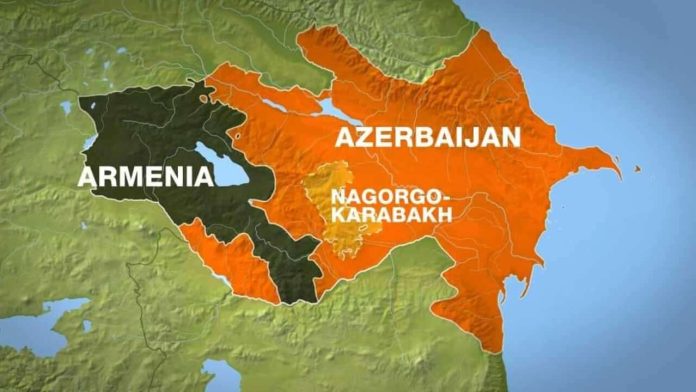
Yerevan de facto recognizes Baku’s sovereignty over Nagorno-Karabakh: Moscow

Armenia Azerbaijan

“It is not only about the results of the latest conflict, it is also about the fact that the Armenian leadership has essentially recognized Azerbaijan’s sovereignty over Karabakh,” Russian President Vladimir Putin said at the Eastern Economic Forum (EEF).

“And in the Prague declaration, the sides simply put it on paper.”

According to Putin, Azerbaijani President Ilham Aliyev now says directly that the question of Karabakh’s status is no longer an issue, that it has been resolved.

“And the Armenian leadership has publicly announced this, counting the entire territory before 1991 within the Azerbaijan Soviet Socialist Republic and giving a figure that includes the territory of Karabakh itself. This has happened. It is not our decision, it is the decision of Armenia’s current leadership,” the Russian president stated.

He also explained how Azerbaijan’s position on Russia’s role in the region now sounds. “And if that is the case, they say to us, then now you should solve all issues with us on a bilateral basis, if you want to do something about Karabakh. Well, what can we say? There is nothing to say. If Armenia itself has recognized that Karabakh is a part of Azerbaijan, what do we have to say?” Putin emphasized.

At the same time, the Russian leader noted that such a situation raises questions about the humanitarian component and the mandate of Russian peacekeepers to remain in the region.

“The mandate is still valid. And the humanitarian issues of preventing some kind of ethnic cleansing there, of course, have not gone away. I fully agree with that. I hope that the Azerbaijani leadership, as they have told us and continue to tell us, is not interested in any ethnic cleansing. And, on the contrary, they are interested in this process being carried out gently,” the Russian leader pointed out.

Putin noted that Moscow has laid out its plan for resolving the Karabakh conflict. He recalled that Armenia “controlled seven districts, which it took under its control after the well-known Armenian-Azerbaijani conflict.”

“We offered to mediate an agreement with Azerbaijan in such a way that two districts – Kelbajar and Lachin – would actually remain under the jurisdiction of Armenia. And the whole of Karabakh. But the Armenian leadership did not agree to this, although we tried to convince those in charge of the country for a decade. For ten to fifteen years,” the Russian president recalled.

According to him, various options were discussed, “but in the end it all boiled down to this.”

“To our question, ‘What are you going to do?’ we were told: ‘We will fight.’ Well, okay,” Putin said, describing his dialogues with the Armenian leadership. “In the end, everything led to the situation that has developed today,” he added.

Responding to remarks that Moscow and the Collective Security Treaty Organization (CSTO) have allegedly failed to help Yerevan while a humanitarian disaster is unfolding in Karabakh, Putin said, “If Armenia has recognized that Nagorno-Karabakh is part of Azerbaijan, that’s it.”

“What is there to talk about? This is what the whole problem is all about. The status of Karabakh has been determined by Armenia itself. That is the whole problem,” he stressed.

China says Xi and Putin to continue intensive contacts

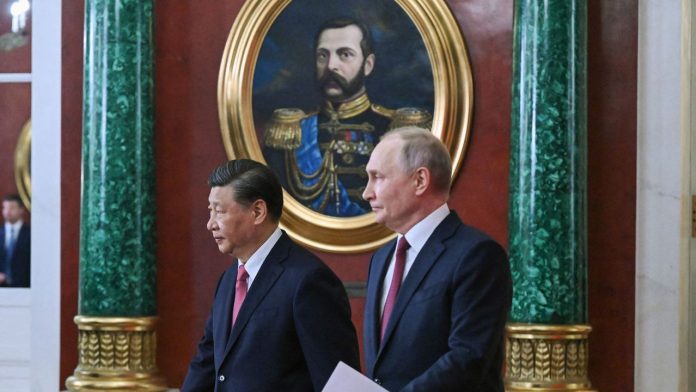
Putin and Xi

“Chinese President Xi Jinping and Russian President Vladimir Putin maintain strategic contacts in various formats as well as exchange views on issues of mutual interest,” the spokeswoman pointed out.

The two leaders will continue close exchanges on the issue of comprehensive strategic partnership and coordination between the two countries in the new era, she added.

Kremlin Spokesman Dmitry Peskov has earlier confirmed plans for contacts between Putin and Jinping in the upcoming months. It was reported that Putin plans to take part in the Belt and Road Forum in China in October this year.

At a meeting with Putin on the sidelines of the Eastern Economic Forum, Chinese Deputy Prime Minister Zhang Guoqing said relations between China and Russia continue to develop rapidly and expand into new areas.

“Under the strategic leadership of President Xi and Mr. President, Chinese-Russian relations of comprehensive partnership and strategic cooperation in a new era between our countries are deepening. Our relations maintain high forward momentum,” he stated.

The official also added Beijing and Moscow demonstrate high mutual support on issues affecting each other’s core interests.

According to the deputy prime minister, the two countries are deepening their mutual political trust and expand the number of common interests.

“Multifaceted practical cooperation is moving forward and the scope of bilateral interaction is constantly expanding,” he stated.

Zhang Guoqing said that bilateral trade reached $155.1 billion in the first eight months of this year, up 32% from a year earlier.

“We have every reason to believe that the goal, which was set at the highest level, to bring bilateral trade to $200 billion will be achieved ahead of schedule this year,” the official continued, adding that China is ready to share development opportunities with Russia and deepen mutually beneficial collaboration.

Iran expresses readiness to resume nuclear talks based on September document

Hossein Amirabdollahian

Amirabdollahian further emphasized that the Islamic Republic is dissatisfied with the current situation and has made it a top priority to actively pursue the neutralization of sanctions.

Amirabdollahian had previously disclosed that a “September document” played a significant role in bringing Tehran and Washington closer to a potential nuclear agreement last year. This reference is made in light of US statements made in October 2022, which indicated that the 2015  nuclear deal was no longer their primary focus.

In mid-October, Robert Malley, the former US envoy for Iran, made the statement that “the talks on the revival of the JCPOA are not currently on the US agenda; the focus is on assessing the ongoing developments within Iran as the talks remain at an impasse.”
He went on to explain that “Iran has maintained a position in these talks for the past two months that is fundamentally incongruent with a return to the original deal.”