Friday, December 26, 2025
Home Blog Page 1266

Iran expresses readiness to resume nuclear talks based on September document

Hossein Amirabdollahian

Amirabdollahian further emphasized that the Islamic Republic is dissatisfied with the current situation and has made it a top priority to actively pursue the neutralization of sanctions.

Amirabdollahian had previously disclosed that a “September document” played a significant role in bringing Tehran and Washington closer to a potential nuclear agreement last year. This reference is made in light of US statements made in October 2022, which indicated that the 2015  nuclear deal was no longer their primary focus.

In mid-October, Robert Malley, the former US envoy for Iran, made the statement that “the talks on the revival of the JCPOA are not currently on the US agenda; the focus is on assessing the ongoing developments within Iran as the talks remain at an impasse.”
He went on to explain that “Iran has maintained a position in these talks for the past two months that is fundamentally incongruent with a return to the original deal.”

Iran holds hearing session for US-backed terror ringleader

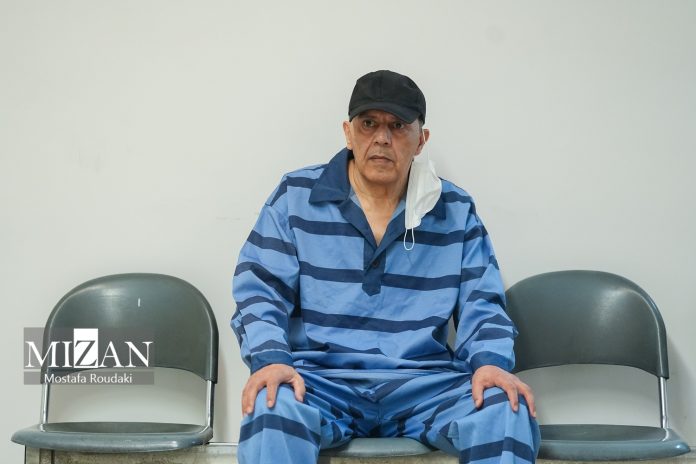
Justice Hosseinzadeh, who presided over the meeting, said the session was held to shed light on the charges against death row convict Jamshid Sharmahd, who planned and orchestrated terrorist acts against the Islamic Republic, including a 2008 attack against a religious congregation center in the southern Iranian city of Shiraz, which killed 14 people and wounded hundreds.

Upon his arrest, Sharmahd admitted to providing explosives for the bombing attack in the targetted mosque in Shiraz.

The lawyer for the victims’ families slammed the US for supporting Tondar (Thunder), adding Iran’s calls on the Interpol to dismantle the terrorist outfit have been ignored several times.

Another lawyer of the case clarified that members of the terrorist group, in a separate scheme, were involved in making bombs in a hotel in Tehran last year to target the Book Exhibition, that draws millions of visitors, but the hotel was set ablaze.
The lawyer added Washington pays exorbitant amounts for the terrorist acts in all stages of the operations.

The 67-year-old Sharmahd was handed a death sentence for his terrorist activities, including for working with US intelligence to spy on Iran’s ballistic missile program.

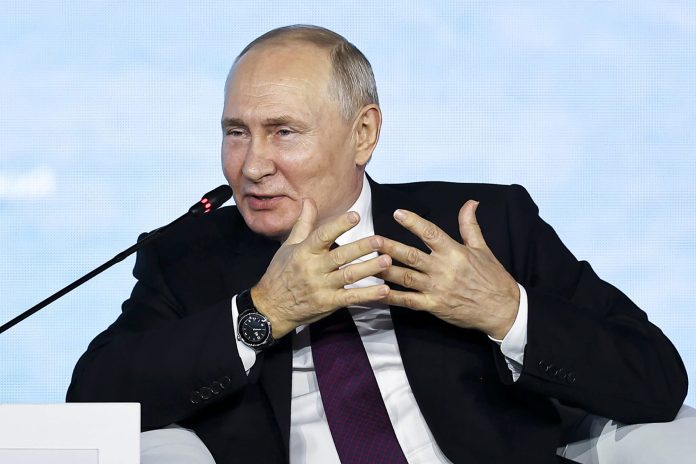
Putin says Russia has earned twice as much money as west seized

The EU, the US, and their allies have frozen hundreds of billions of dollars’ worth of Russian central bank holdings as part of sanctions related to the Ukraine conflict.

“I know that our gold and foreign exchange reserves are frozen. Yes, we have already earned twice as much. But we’re not even talking about this $300 billion, we’re talking about undermining trust in those who did this,” the Russian president argued.

Many economists, including in the West, have warned that the seizure of Russian assets would jeopardize investor confidence in the EU’s banking system and damage the bloc’s status as a global financial center.

Nearly $300 billion of Russian gold and forex reserves have been frozen since the beginning of Moscow’s military operation in Ukraine. The Russian central bank’s reserves decreased by 8.4% in 2022, according to official estimates.

In March of this year, the Bank of Russia resumed publishing data on the structure of state reserves. As of August, the country’s gold and foreign exchange funds amounted to $580.5 billion.

Elsewhere in his remarks, Putin said western countries are destroying the existing framework of global economic relations that they helped to build in the first place, adding that many countries are opposed to this.

The president stated that the landscape of the international economy is changing in part because “some countries, primarily Western nations, are destroying the system of financial, trade, and economic relations with their own hands.”

However, this destructive activity coincided with the expansion of “real business cooperation,” involving many nations around the world that resist any external pressure and pursue their own national interests, Putin said.

“They prioritize not temporary political events, but the promotion of their own projects… that bring direct and long-term benefits to their populations,” Putin continued, adding that this leads to the emergence of a new international model “shaped not by Western standards [and] catering to the selected ‘golden billion,’ but all of humanity… and the developing multipolar world.”

Putin’s comments come after Russian Foreign Minister Sergey Lavrov said earlier this month that the BRICS economic group – which recently announced an unprecedented expansion – and the Shanghai Cooperation Organization (SCO) are gaining more international clout as many nations seek to bypass Western-dominated international institutions that fail to address their grievances.

In June, he also estimated that one in four countries in the world is to some extent sanctioned by the US or European nations. According to Lavrov, this means that the West is using the global economy “as an instrument of coercion, blackmail, and punishment.”

Western countries imposed particularly harsh sanctions on Russia over the Ukraine conflict, including the freezing of Russian gold and foreign exchange reserves to the tune of around $600 billion, a move that Moscow condemned as “theft.”

Putin also stressed that Western sanctions on Russia have jeopardized trust in the dollar and the euro, forcing many global players to reevaluate the viability of relying on these currencies.

Witnessing the way both the US and EU use their currencies as political weapons pushed many countries towards creating alternative payment instruments, Putin stated.

“Restrictions on, let’s say, settlements in dollars. Where do they lead? To the fact that all countries start thinking about creating their own instruments, about creating new settlement systems; thinking whether to continue keeping their reserves in the US or EU, whether to invest in the securities of these countries,” Putin said, adding sanctions cause an “erosion of credibility” in countries that impose them, as well as their currencies.

Both the US and EU imposed a range of financial restrictions on Russia in response to Moscow’s military operation in Ukraine. These included disconnecting Russian banks from the SWIFT interbank messaging system, a ban on servicing Russia’s debt in dollars, the freezing of Russian assets held abroad, and the exit of Visa and Mastercard from the country. Sanctions effectively deprived Russia of the ability to conduct international transactions in dollars and euros.

This led to the increased use of national currencies in Russia’s foreign trade. Ruble trade settlements between Russia and Turkey jumped by 230% in the first seven months of the year compared to the same period in 2022, while the share of national currencies in Russian-Chinese payments recently exceeded 80%.

Putin also stressed that Russia has never and nowhere acted as a colonizer, unlike the Western countries.

“In my opinion, the main thing is that we have never been colonizers anywhere. Our cooperation has always been built on an equitable basis or on the wish to help and support. Those countries which are trying to compete with us now, they had a completely different policy. When people compare what happened in the past in cooperation with Russia, with the Soviet Union, as it was called then, and with other countries, of course, everything is in Russia’s favor. Of course, today we should take this into account and keep it in mind,” he concluded.

Iraqi FM says to visit Iran to discuss security pact

Fuad Hussein

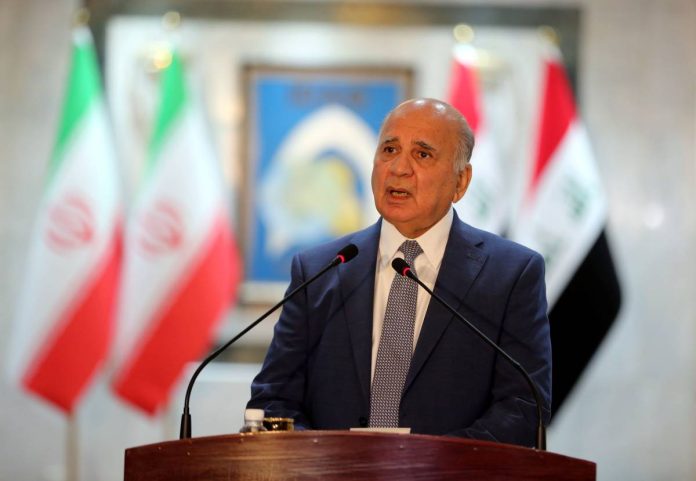
Hussein made the remarks at a press conference with his Austrian counterpart in Baghdad on Tuesday, noting that his government has taken essential measures to eliminate anti-Tehran elements from joint borders with Iran.

He stated he will travel to Tehran on Wednesday to hold talks with Iranian officials to discuss the security pact.

The top Iraqi diplomat also emphasized that his country is committed to complying with its commitments under the security agreement signed with Iran.

Hussein added Iraq and Iran enjoy strong relations, adding that Iraq will not allow its territory to be used by certain groups to attack neighbors.

The security deal with the Iran requires Iraq move militant groups opposed to Iran from border areas in the Kurdistan region.

Hopes fade for survivors as Morocco earthquake toll tops 2,800

Morocco Earthquake

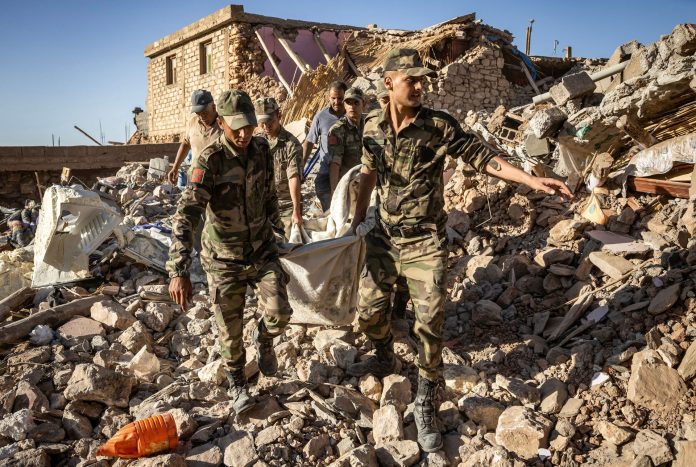
Search teams from Spain, the United Kingdom and Qatar have joined Moroccan rescue efforts after the magnitude 6.8 quake struck late on Friday in the High Atlas Mountains, with the epicentre 72km (45 miles) southwest of Marrakesh.

State television reported that the death toll has risen to 2,862 with 2,562 people injured. Rescuers stated the traditional mud brick houses ubiquitous in the region reduced the chances of finding survivors because they had crumbled.

Among the dead was seven-year-old Suleiman Aytnasr, whose mother had carried him to his bedroom after he fell asleep in the living room of their home in a hamlet outside Talat N’Yaaqoub, in one of the worst-hit areas. He had been about to start a new school year.

“As she came back, the earthquake happened and the ceiling was destroyed and fell on him,” said Suleiman’s father, Brahim Aytnasr, whose eyes were red from crying. He spent Monday trying to salvage items from the debris of his house.

Footage from the remote village of Imi N’Tala, filmed by Spanish rescuer Antonio Nogales of the aid group Bomberos Unidos Sin Fronteras (United Firefighters Without Borders), showed men and dogs clambering over steep slopes covered in rubble.

“The level of destruction is … absolute,” stated Nogales, struggling to find the right word to describe what he was seeing.

“Not a single house has stayed upright.”

Despite the scale of the damage, he said rescuers searching with dogs still hoped to find survivors.

“I am sure that in the coming days, there will be some rescues. We think that there may still be people in the collapsed structures, that there may have been pockets of air, and as I say, we never give up hope,” he added.

After an initial response that was described as too slow by some survivors, search and rescue efforts appeared to be speeding up on Monday, with tent camps appearing in some locations where people were preparing for a fourth night outdoors.

A video filmed by Moroccan outlet 2M showed a military helicopter flying over an area close to the epicentre, dropping sacks of essential supplies to isolated families.

With much of the quake zone in hard-to-reach areas, the authorities have not issued any estimates for the number of people missing.

The harm done to Morocco’s cultural heritage has been emerging gradually. Buildings in Marrakesh’s old city, a UNESCO World Heritage Site, were damaged. The quake also caused significant damage to the historically significant 12th-century Tinmel Mosque.

Residents in Tinmel, a remote village closer to the epicentre where 15 people were killed, said they had been sharing food, water and medicine but desperately needed tents and blankets to shelter from the cold mountain nights.

The mother of a 15-day-old child said she needed milk formula and medicine for her baby.

Initial reports indicate that approximately 100,000 children have been affected by the earthquake.

While the United Nations Children’s Agency does not yet know the exact number of children killed and injured, the latest estimates from 2022 indicate that children represent almost a third of Morocco’s population.

It was the North African country’s deadliest earthquake since 1960, when a tremor was estimated to have killed at least 12,000 people, and the most powerful since at least 1900, according to the United States Geological Survey.

In a televised statement on Sunday, government spokesperson Mustapha Baytas defended the government’s response, saying every effort was being made on the ground.

The army announced it was reinforcing search-and-rescue teams, providing drinking water and distributing food, tents and blankets.

King Mohammed VI has not addressed the nation since the disaster. Prime Minister Aziz Akhannouch told local media the government would compensate victims but gave few details.

Morocco has accepted offers of aid from Spain and the UK, which both sent search-and-rescue specialists with sniffer dogs, from the United Arab Emirates and Qatar, which said on Sunday a search-and-rescue team was on its way.

Meanwhile, an outpouring of online and real-world support has pushed historical tensions between Algeria and Morocco aside as government and civil society offer to join global solidarity efforts.

The European Commission said it will provide 1 million euros ($1.07m) to Morocco to support relief efforts in affected areas.

State television noted the government had assessed needs and considered the importance of coordinating relief efforts before accepting help, and that it might accept relief offers from other countries later.

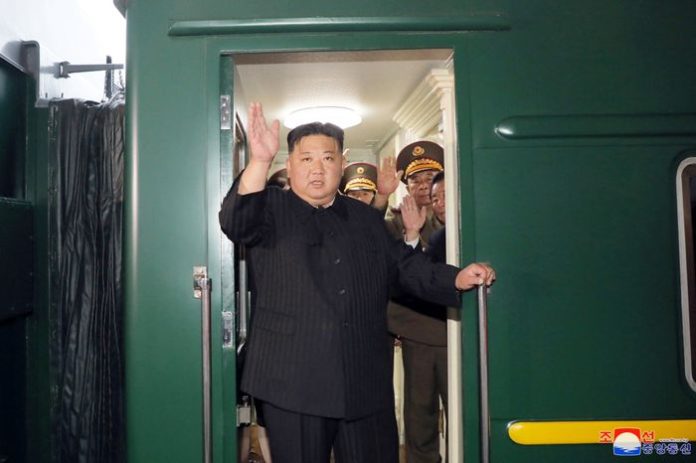
North Korea’s Kim arrives in Russia to meet Putin amid US threats

Kim’s armoured train arrived at Khasan station, the main rail gateway to Russia’s Far East from North Korea, Japan’s Kyodo news agency reported on Tuesday, citing an unnamed Russian official source.

The meeting is expected to be held on Tuesday afternoon on the sidelines of the Eastern Economic Forum in the Russian port city of Vladivostok, where Putin has already arrived.

Kim’s trip to Russia and meeting with Putin will be a full-scale visit to strengthen ties, Kremlin spokesperson Dmitry Peskov said in a video posted online.

The meeting comes amid concerns in the west that Pyongyang plans to provide weapons to Moscow to replace stocks that have been heavily depleted during 18 months of fighting in Ukraine.

On Tuesday, Peskov dismissed US warnings on any arms deal, with Russian news agencies quoting him as saying: “As you know, while implementing our relations with our neighbours, including North Korea, the interests of our two countries are important to us, and not warnings from Washington.

“It is the interests of our two countries that we will focus on.”

Kim was accompanied by senior government officials, including military personnel, North Korea’s official KCNA news agency reported. The delegation is thought to include his foreign minister, Choe Sun-hui, and prominent party members in charge of defence industry and military affairs, including munitions industry department director Jo Chun-ryong.

“The presence of Jo Chun-ryong indicates that North Korea and Russia will conclude some type of agreement for munitions purchases,” stated Michael Madden, a North Korea leadership expert at the Washington-based Stimson Center.

Earlier, KCNA released photos of Kim’s departure from Pyongyang, complete with military guards of honour and crowds of people in dark suits and colourful dresses who waved flowers and flags as he boarded the green-and-yellow train.

The trip marks Kim’s first visit abroad in more than four years and the first since the Covid-19 pandemic.

US officials believe Putin is likely to focus on securing more supplies of North Korean artillery and other ammunition as he attempts to defuse a Ukrainian counteroffensive.

In return, Kim could seek energy and food aid, as well as advanced technology for satellites and nuclear-powered submarines that could increase the threat posed by North Korea’s ballistic missile and nuclear weapons programmes.

Some analysts believe, however, that Russia would be reluctant to share details of its closely guarded weapons technology in return for limited supplies of artillery shells and other munitions.

“Putin is unlikely to provide Kim with technology to miniaturise nuclear devices or propel nuclear-powered submarines because even a desperate war machine does not trade its military crown jewels for old munitions,” said Prof Leif-Eric Easley, a North Korea specialist at Ewha University in Seoul

Securing quantities of North Korean artillery shells and antitank missiles would add to US concerns about a protracted conflict in Ukraine.

“Arms discussions between Russia and the DPRK are expected to continue during Kim Jong-un’s trip to Russia,” stated White House national security council spokesperson Adrienne Watson, using the abbreviation for North Korea’s official name of the Democratic People’s Republic of Korea.

“We urge the DPRK to abide by the public commitments that Pyongyang has made to not provide or sell arms to Russia.”

On Monday, the US state department described Putin as desperate over the Ukraine conflict and renewed warnings that any arms deal could trigger US sanctions.

“Having to travel across the length of his own country to meet with an international pariah to ask for assistance in a war that he expected to win in the opening month, I would characterise it as him begging for assistance,” state department spokesperson Matthew Miller said.

“I will remind both countries that any transfer of arms from North Korea to Russia would be in violation of multiple UN security council resolutions,” he added.

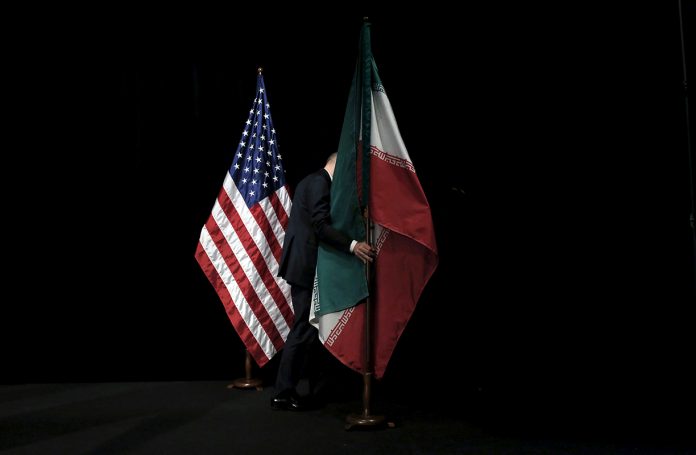
US issues sanctions waiver to allow transfer of Iran’s frozen funds abroad

Iran US Flags

The report released early Tuesday said the Biden administration has also agreed to release five Iranian citizens held in the United States.

It added that Secretary of State Antony Blinken signed off on the sanctions waivers late last week, a month after US and Iranian officials said an agreement in principle was in place on the issue.

The waiver means that European, Middle Eastern and Asian banks will not be in violation of US sanctions in converting Iran’s money, which was frozen in South Korea, and transferring it to Qatar’s central bank, where it will be held for Tehran to be used for the purchase of non-sanctioned goods.

Due to numerous US sanctions, several European countries were not willing to take part in the transfer. Blinken’s waiver is aimed at easing their concerns about any risk of US sanctions, and applies to banks and other financial institutions in South Korea, Germany, Ireland, Qatar and Switzerland.

US media, however, claimed that the waiver is part of a larger agreement between the two countries, which also includes exchange of prisoners between Tehran and Washington. They said five American prisoners detained in Iran will be allowed to leave in exchange for the transfer of the funds and the release of five Iranians held in the United States.

Top Iranian officials, however, have emphasized time and again that there is no connection between a prisoner exchange agreement reached with the United States and the release of Iran’s frozen assets.

Earlier in August, Iran’s Foreign Minister Hossein Amirabdollahian stated, “The exchange of prisoners is a completely humanitarian issue and has nothing to do with unblocking our funds in foreign banks.”

He said the recent agreement reached between Tehran and Washington, mediated by a third country, covers two separate issues, one relating to the prisoners swap and the other about unfreezing Iranian assets illegally blocked overseas under the pretext of US sanctions.

He added that the process to transfer released Iranian assets from South Korean banks to a European bank started on August 10 and will be completed in several phases.

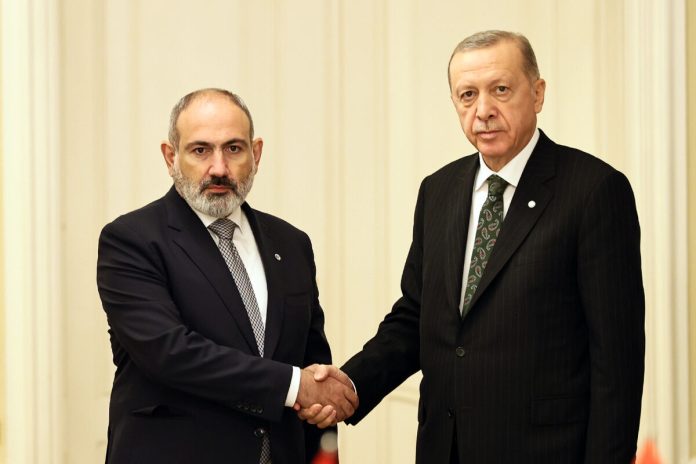
Turkish president, Armenian PM agree to continue efforts toward lasting peace in Caucasus region

“The sides discussed Armenian-Turkish relations and regional matters. The two countries’ leaders stressed that lasting peace and stability in the region will encourage the development and prosperity of all the countries in the region. The sides noted that they will continue diplomatic efforts on this track,” it said.

The office of the Turkish leader also informed about this phone call.

“On September 11, President Tayyip Erdogan held a telephone conversation with Armenian Prime Minister Nikol Pashinyan. The sides discussed Turkish-Armenian relations and regional problems. They also stressed that lasting peace and stability in the region will contribute to the development and well-being of all the countries in the region and pledged to continue diplomatic efforts toward this,” it added.

Erdogan announced his plans to speak with Pashinyan on the sidelines of the Group of Twenty summit in India on Sunday. On the same day, he spoke with Azerbaijani President Ilham Aliyev. The Turkish leader noted that “the steps that are being taken in Nagorno-Karabakh are wrong and cannot be put up with.” In his words, “it is absolutely impossible to recognize” the results of the elections in this region.

On Saturday, the parliament of the unrecognized republic of Nagorno-Karabakh elected Samvel Shakhtamanyan as the region’s new president. The Azerbaijani Foreign Ministry accused Armenia of seeking to aggravate the situation in Nagorno-Karabakh.

The conflict between Armenia and Azerbaijan over the highland region of Nagorno-Karabakh, a disputed territory that had been part of Azerbaijan before the Soviet Union’s break-up, but primarily populated by ethnic Armenians, broke out in February 1988 after the Nagorno-Karabakh Autonomous Region announced its withdrawal from the Azerbaijan Soviet Socialist Republic. Renewed clashes between Azerbaijan and Armenia erupted in September 2020, with intense battles raging in the disputed region of Nagorno-Karabakh. On November 9, 2020, Russian President Vladimir Putin, Azerbaijani President Ilham Aliyev and Armenian Prime Minister Nikol Pashinyan signed a joint statement on a complete ceasefire in Nagorno-Karabakh. Russian peacekeepers were deployed to the region to ensure the operation of humanitarian corridors. Later, the three leaders adopted several more joint statements on the situation in the region.

At a Council of Europe summit on May 17, 2023, Pashinyan stated that Yerevan recognizes Azerbaijan’s sovereignty in the borders incorporating Nagorno-Karabakh.

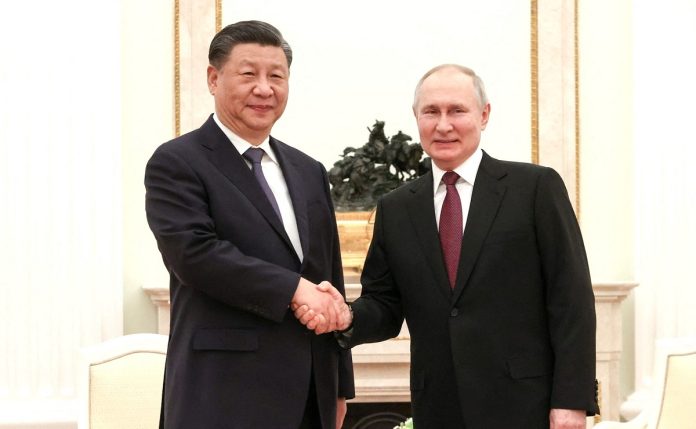
Russia-China relations have reached “unprecedented” levels: Putin

Putin and Xi
Russian President Vladimir Putin and Chinese President Xi Jinping attend a meeting at the Kremlin in Moscow, Russia, March 20, 2023.

Putin, who was meeting with China’s Vice Premier Zhang Guoqing on the sidelines of the Eastern Economic Forum, said he and Chinese President Xi Jinping have “friendly personal and business relations”.

“This certainly helps to the cause of developing bilateral relations and interstate ties,” Putin added.

Putin also praised the “very high” level of economic and political cooperation between Moscow and Beijing.

“Of course, this is all a derivative of what has been achieved in the political sphere,” he said, adding the results are “more than good, they are excellent.”

Xi, a self-described friend of Putin, has continued to bolster China’s economic, diplomatic, and security ties with Russia despite the invasion of Ukraine — which Beijing has never condemned.

China did not send a delegation to international talks on Ukraine in Denmark in June, despite attempting to position itself as a potential peace broker on the conflict in recent months.

And Beijing’s refused to condemn the invasion has further soured its relations with Western nations, especially in Europe.

Armenia conducts joint military exercise with US amid Russia anger

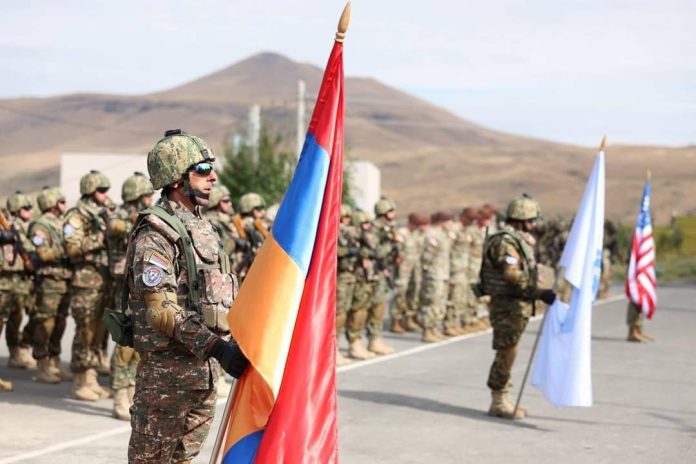
Armenia and US military Drills

The “Eagle Partner” war games will run through Sept. 20 and involve 175 Armenian and 85 troops. They reflect Armenian Prime Minister Nikol Pashinyan’s efforts to forge closer ties with the United States and other Western allies amid the simmering tensions with neighboring Azerbaijan.

The Armenian Defense Ministry announced that the drills are aimed at increasing interoperability of units participating in international peacekeeping missions and exchanging tactical skills.

Moscow has reacted with dismay. On Friday, the Russian Foreign Ministry summoned the Armenian ambassador to lodge a formal protest over the exercises and other moves by Armenia that it described as “unfriendly.”

Russia has been Armenia’s main economic partner and ally since the 1991 Soviet collapse. Landlocked Armenia hosts a Russian military base and is part of the Moscow-led security alliance of ex-Soviet nations, the Collective Security Treaty Organization.

But Pashinyan has become increasingly critical of Moscow’s role, emphasizing its failure to help lift the blockade of Nagorno-Karabakh, a breakaway Armenian-populated region of Azerbaijan and arguing that Armenia needs to turn to the West to help ensure its security.

Nagorno-Karabakh is a region within Azerbaijan that came under the control of ethnic Armenian forces backed by the Armenian military after a six-year separatist war that ended in 1994. Armenian forces also took control of substantial territory around the region.

Azerbaijan regained control of the surrounding territory and a significant part of Nagorno-Karabakh in a six-week war with Armenia in 2020. A Russia-brokered truce that ended the war left the region connected to Armenia by just one road known as the Lachin Corridor, along which Russian peacekeeping forces were supposed to ensure free movement.

Since December, Azerbaijan has blockaded that road, severely restricting the delivery of food, medical supplies and other essentials to the region of about 120,000 people.

Speaking to reporters on Monday, Kremlin spokesman Dmitry Peskov rejected the Armenian authorities’ claims that Moscow wasn’t doing enough to protect its ally and noted that Armenia’s decision to hold joint war games with the US requires a “deep analysis.”

At the same time, Peskov sought to play down the differences between Russia and Armenia, saying that “we will remain close allies and partners.”

“We may have certain problems that need to be solved through dialogue, because the logic of our development and national interests of both countries determine the necessity to further deepen our alliance and partnership,” he added.