Kiev delays talks making it more difficult to negotiate later: Moscow
Russian Foreign Minister Sergey Lavrov has said that the longer Kiev delays negotiations with Moscow, the more difficult it will be to reach an agreement later.
“President Vladimir Putin has repeatedly said that we are not walking away from negotiations, but those [in Ukraine] who dodge talks should understand that the longer they procrastinate, the more difficult it will be to reach an agreement later,” Lavrov said on the Rossiya-1 TV channel.
“This is our official position. I will say once again, against the background of the ban on the negotiations, which was signed by [Ukrainian President Volodymyr] Zelensky, this position should not raise any questions.”
He added that the first step for talks between Russia and Ukraine should be the cancellation of Zelensky’s decree banning dialogue with Moscow. When asked to comment on US Secretary of State Antony Blinken’s statement that if Russian-Ukrainian talks begin, the US will be drawn to them, the top diplomat said that he had read the statement.
“I read the statement. Strange, indeed,” Lavrov noted.
“At least a year ago, or even earlier, I can’t remember, Zelensky signed a decree prohibiting any negotiations with the government of [Russian President] Vladimir Putin. The whole world knows about it. And if those who run this regime have decided that Ukrainians should be ready to negotiate, then perhaps the first step should be a wish or an order to cancel this decree, which, I repeat, prohibits negotiations,” he stressed on the sidelines of the Eastern Economic Forum (EEF).
South Korea calls on Russia to “act responsibly” as permanent member of UN Security Council
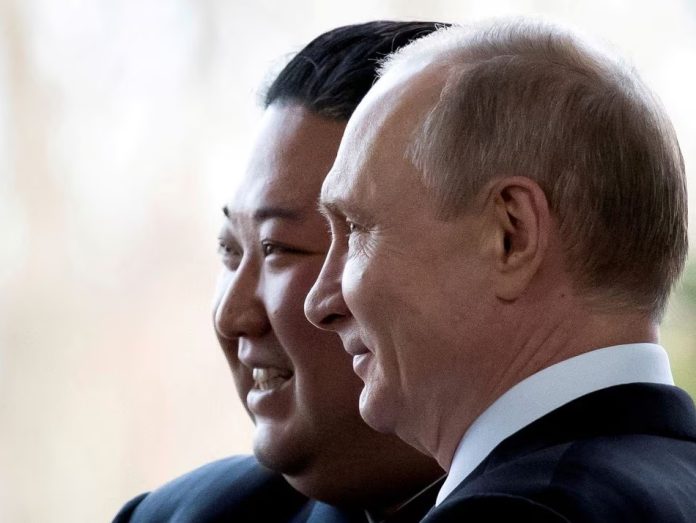
Seoul has called on Russia to “act responsibly” as a permanent member of the UN Security Council, an official from South Korea’s presidential office said on Tuesday, ahead of an expected meeting between Russian President Vladimir Putin and North Korean leader Kim Jong Un.
The comments come as the US government warned that Russia and North Korea are “actively advancing” their negotiations over a potential arms deal.
“Our government has been understanding the overall situation well, independently and by cooperating with allies and partner nations, and making full preparations,” a South Korean presidential official stated.
“Many countries are watching the summit between North Korea, which is under UN sanctions, and Russia, a permanent member of the UN Security Council, with a bit of concern for various reasons, but as the president has stated, we hope Russia will act responsibly as a permanent member of the UN Security Council,” the official added.
Putin criticizes US for sending cluster munitions and depleted uranium shells to Ukraine
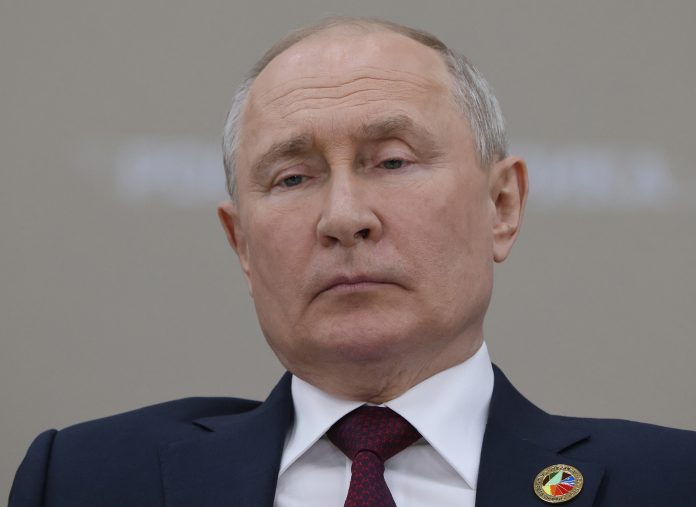
Russian President Vladimir Putin has denounced the United States for supplying cluster munitions and depleted uranium shells to Ukrainian forces.
Speaking at the Eastern Economic Forum in Vladivostok, Putin said that the US stance on cluster munitions was inconsistent.
“Quite recently, the US administration believed that the use of cluster munitions was a war crime. They talked about it publicly. Now they themselves supply cluster munitions to the combat zone in Ukraine,” he stated.
“Of course, it does damage to us,” Putin went on, adding, “The same thing happens with depleted uranium; the area is being contaminated. (This is) bad, very bad.”
Cluster munitions are canisters that carry tens to hundreds of smaller bomblets, known as submunitions. The canisters can be dropped from aircraft, launched from missiles or fired from artillery, naval guns or rocket launchers.
The canisters break open at a prescribed height, and the bomblets inside spread out over that area. They are fused by a timer to explode closer to or on the ground.
Both the Ukrainians and the Russians have used cluster bombs since the full-scale invasion of Ukraine in February 2022. But their use is controversial, due to the potential harm they can do to civilians.
The US announced in July that it would send cluster munitions to Ukraine, which have since been used on the battlefield.
Depleted uranium is what is left over when most of the highly radioactive isotopes of uranium have been stripped out of the metal for use in nuclear fuel or nuclear weapons.
It is far less radioactive than enriched uranium and unable to produce a nuclear reaction. But depleted uranium is extremely dense, making it a highly effective projectile.
The US announced this month that it would send depleted uranium shells to Ukraine. The 120mm rounds can be fired from the US-made Abrams M1 tanks that are set to arrive on the frontlines this fall.
Sweden to consider sending Gripen fighter jets to Ukraine: Report
The Swedish government will ask its armed forces to investigate the potential for sending Gripen fighter jets to Ukraine, Swedish public radio (SR) reported on Tuesday, citing unnamed sources.
The government wants to know, among other things, how a handover would affect Sweden’s defense capabilities and how quickly Sweden could get new Gripen fighters, SR reported.
The government may make a formal request to the armed forces as early as Thursday to officially consider the issue, Swedish Radio added.
According to the SR report, Ukraine has expressed hope of receiving one division, consisting of between 16 and 18 of the Swedish-made jets, which are produced by defense contractor Saab.
Kremlin says grain deal ‘on hold’, no progress yet: TASS
Kremlin spokesperson Dmitry Peskov has stated that the Black Sea grain deal is on hold, and that there has been no progress in restarting it, according to a report by Russian state news agency TASS.
The deal, brokered last year by the United Nations and Turkey, allowed for the safe export of grain and other foodstuffs from Ukraine’s Black Sea ports.
Moscow quit the deal in July, accusing the West of failing to honour promises to ensure the shipment of Russia’s own grain and fertiliser exports.
Turkey and the United Nations have so far failed to persuade Russia to rejoin the deal.
Russian defense minister to join talks with Putin and Kim
Russian Defense Minister Sergei Shoigu is set to participate in the discussions between Russian President Vladimir Putin and North Korean leader Kim Jong Un, according to Russian state military TV channel Zvezda, citing the Kremlin.
A separate meeting between Shoigu and North Korea’s defense minister is not expected, Putin’s spokesman Dmitry Peskov added.
Kim Jong Un’s heavily-armored private train crossed into Russia on Tuesday ahead of an expected summit with Putin, state media reported.
The United States has warned that the two leaders could strike a deal to supply Moscow with weapons for its war in Ukraine.
270,000 Russians have voluntarily signed up to armed forces: Moscow
More than a quarter of a million Russians have voluntarily joined the armed forces in recent months, Russian President Vladimir Putin stated Tuesday.
Responding to questions at the Eastern Economic Forum in Vladivostok, Putin said that the recruitment was in addition to the partial mobilization a year ago.
“We carried out a partial mobilization and 300,000 people were called up. Over the past six or seven months, we have 270,000 people who voluntarily signed service contracts,” noted Putin.
“People come to the military registration and enlistment offices and sign contracts. Every day 1,000-1,500 people sign contracts daily,” he added.
Putin stressed that those enlisting did so voluntarily, “realizing that they can get injured and give their lives for the Motherland.”
Putin announced a partial mobilization of Russia citizens in September 2022, as his invasion of Ukraine looked set to drag on into the fall and take far longer than Russia expected.
The mobilization meant that citizens who were in reserve could be called up, and those with military experience were subjected to conscription.
Putin says supply of F-16s will ‘drag out conflict’
President Vladimir Putin says the supply of F-16 fighter jets to Ukraine will not change the war and will instead “drag out the conflict”.
Several countries in the West have pledged support to Ukraine, supplying these jets and training pilots to fly them in an effort to bolster Kyiv’s air defence systems.
Putin has claimed that Ukraine might want to start negotiating for peace only when it realises it’s running out of resources.
He added that Ukraine also has to annul its law banning peace talks.
Kim stops to meet local officials at Russian border station
North Korean leader Kim Jong Un made a stop to meet local officials at the Russian border station of Khasan before continuing north on his private train, Reuters reported, citing a source with knowledge of the matter.
Kim is expected to meet Russian President Vladimir Putin on this trip, with US officials warning arms negotiations could be on the table with Pyongyang possibly in a position to provide weapons for Moscow to use in Ukraine.
Russian state news agency RIA Novosti reported that Kim’s train passed through Khasan station on Tuesday morning, citing a local administration representative.
The train purportedly carrying Kim has since crossed a railway bridge over the Razdolnaya River in the Primorsky Territory and is moving north, RIA reported.
Kremlin spokesperson Dmitry Peskov said a meeting between Kim and Putin would happen “within days” and “will take place in the Far East,” but didn’t specify a date or location, according to Russian state news agency TASS.
Russia’s Far East region is a massive swath of territory that shares land borders with China, North Korea and Mongolia.
According to South Korean news agency Yonhap, the train believed to be carrying Kim appears to be moving toward a more northerly destination than the eastern port of Vladivostok, toward Khabarovsk province bordering China instead, citing multiple local sources in Vladivostok.
Yonhap reported that there was no appearance of increased security in Vladivostok station, and buses and cars were parked in front of the station as usual on Tuesday.
It was previously thought a Kim-Putin meeting would take place in the port city.
Putin says the West will fail trying to deter China
President Vladimir Putin says the West is trying to deter China, but it will fail.
In comments at a forum in the far eastern city of Vladivostok, he stated Russia-China relations were at an “unprecedented” level.
Beijing has not condemned Moscow’s actions in Ukraine, and the close ties between Putin and China’s Xi Jinping have made Western nations wary.
US Secretary of State Antony Blinken has warned China against providing “lethal support” to Russia.
Meanwhile, Beijing sent a peace envoy to Ukraine, Russia and other European nations earlier this year to find a “political solution” to end the war.
‘Ukraine has not retaken Opytne’: Russia
Russia’s defence ministry has denied claims that Ukraine has managed to gain a foothold in the eastern village of Opytne, according to state media.
Kyiv has announced that it had managed to capture part of the settlement, putting its forces within a couple of miles of Donetsk international airport.
However, Russia claimed Ukraine had failed to advance or reclaim Opytne, while suffering heavy losses in the process.
There are no results of Ukraine’s counteroffensive, Kiev losses some 71,000: Putin
Russian President Vladimir Putin stated there were no results of the Ukrainian counteroffensive and that Kiev had lost about 71,000 soldiers.
Putin commenting on Ukraine’s counteroffensive said that sometimes there is an impression that these are not their people when they throw them into battle.
“Ukraine is conducting a so-called counteroffensive. And there are no results, we will not say now – failure, not failure… There are losses, big losses. Since the beginning of the counteroffensive, 71,000 people have been killed,” he added.
Answering the question about the possibility of cessation of hostilities in Ukraine, Putin noted that Russia cannot stop hostilities if Ukraine is in the counteroffensive.
The president added that the delivery of cluster munitions to Ukraine hasn’t changed anything on the battlefield.
According to Putin, Russian forces have destroyed 543 tanks and some 18,000 armored vehicles belonging to the Ukrainian armed forces.
Ukrainians blame Zelensky for corruption: Poll
The vast majority of Ukrainians believe that President Volodymyr Zelensky is at fault for widespread corruption in the country’s government and military, a new study has revealed.
The poll, released on Monday, found that 78% of Ukrainian adults see Zelensky as “directly responsible” for Kiev’s corruption problem. It was conducted by the Ilko Kucheriv Democratic Initiatives Charitable Foundation and the Kiev International Institute of Sociology.
Prior to the launch of Russia’s military offensive in February 2022, Ukraine consistently ranked among the world’s most corrupt nations, but it was touted as a bastion of freedom and democracy as the US and its NATO allies rallied public support for massive aid to Kiev. However, Ukrainian corruption remains a concern and could hinder the country’s bid to join the European Union, an unidentified Western diplomat told Politico on Monday.
Ukraine is a “very corrupt country,” the diplomat said, adding that Zelensky’s plan to use the Security Service of Ukraine (SBU) to prosecute graft cases could “send the wrong message.”
Kim’s train arrives in Russia ahead of expected Putin meeting
North Korea’s leader Kim Jong Un is now in Russia, ahead of an expected and closely-watched meeting with his Russian President Vladimir Putin, according to Russian state news agency RIA on Tuesday.
The North Korean leader departed the capital, Pyongyang, on Sunday afternoon in a private train, accompanied by top officials, North Korean state media KCNA confirmed on Tuesday morning local time.
The train is currently traveling north through Primorsky Krai in Russia’s Far East region, RIA reported.
It’s not clear when or where they are expected to meet. But the Kremlin confirmed the two leaders are set to meet “within days,” according to Russian state media, citing Kremlin spokesperson Dmitry Peskov.
Bilateral relations will be a priority of the talks, and a formal dinner is planned in honor of Kim’s arrival, stressed Peskov, state media TASS reported.
Biden expected to make final decision soon on sending long-range missiles to Ukraine: Sources
US President Joe Biden is expected to make a final decision soon on sending long-range missiles to Ukraine for the first time.
It’s a major step recommended by the State and Defense Departments after months of Ukrainian requests, people familiar with the discussions told CNN.
Discussions about sending the long-range Army Tactical Missile Systems, also known as ATACMS, picked up substantially in recent weeks, the sources said.
No final decision to send the missiles has been made, officials said.
But “there’s a much greater possibility of it happening now than before,” one official familiar with the discussions stated.
“Much greater. I just don’t know when.”
US officials had been reticent to send the long-range surface-to-surface guided missiles amid fears about escalating the conflict as they could potentially be fired into Russia itself. That concern has largely abated, however, since Ukraine has shown it is not using other US-provided weapons to attack territory inside Russia, officials continued.
Ukraine has carried out strikes inside Russia, but those have been conducted using homegrown drones and weaponry, allowing Kyiv to stand by its commitment not to use American weapons inside Russia.
Currently, the maximum range of US weapons committed to Ukraine is around 93 miles with the ground-launched small-diameter bomb. The ATACMS, which have a range of around 186 miles, would allow the Ukrainian military to strike targets twice as far away.
The transfer of the ATACMS would mark just the latest instance of the US reversing itself on providing a system after months of pressure by Ukrainian officials. The Biden administration also resisted sending multiple-launch rocket systems, Patriot air defense systems, Abrams tanks, and cluster munitions — all of which were ultimately provided to Kyiv.
White House urges North Korea to not give arms to Russia amid Kim trip
The White House is urging North Korea to “not provide or sell arms to Russia” as Pyongyang and Moscow said Monday that Kim Jong Un would travel to Russia at the invitation of Vladimir Putin.
“As we have warned publicly, arms discussions between Russia and the DPRK are expected to continue during Kim Jong-Un’s trip to Russia,” said National Security Council spokesperson Adrienne Watson in response to Russia and North Korea’s announcement.
“We urge the DPRK to abide by the public commitments that Pyongyang has made to not provide or sell arms to Russia.”
Just last week, the US warned Kim might travel to Russia to discuss a potential deal to provide weapons to the country as it wages its war in Ukraine, and the White House has said arms negotiations between the two countries are “actively advancing.”
Pentagon press secretary Brig. Gen. Pat Ryder told reporters at a press briefing Monday the US remains “concerned” that North Korea is considering providing arms and equipment to Russia. Ryder could not say when and where the meetings will be held.
The spokesperson added providing arms and equipment to Russia would “just serve to perpetuate this needless war and result in the death of innocent Ukrainians.”
North Korea is already under United Nations and US sanctions imposed over Pyongyang’s weapons of mass destruction program.
The potential Putin-Kim meeting could lead to Pyongyang getting its hands on the sort of weapons those sanctions have barred it from accessing for two decades, especially for its nuclear-capable ballistic missile program.
It also comes after more than a year and a half of war in Ukraine has left the Russian military battered, depleted and in need of supplies.
Ukrainian officials step up the pressure for long-range missiles
Ukraine lobbying for longer-range missiles “is not just a whim, but a real need,” said Andriy Yermak, head of President Volodymyr Zelensky’s office.
“The effectiveness of the army on the battlefield, as well as the lives of the military and our progress depend on it,” he added.
Ukrainian officials had been working with partners on the issue for a long time, and that Ukraine’s request for ATACMS missile was moving forward, he added.
The ATACMS is a long-range US-guided missile with a range of around 300 kilometers (186 miles). It would extend the range of Ukrainian attacks well beyond the front lines to Russian supply lines and logistics hubs. Acknowledging this missile capability, Yermak said it would “speed up” Ukraine’s victory.
Ukraine is also developing its own longer-range missiles.
Meanwhile, Ukrainian Foreign Minister Dmytro Kuleba emphasized the critical need for further air defense systems to protect Ukrainian ports used to export grain to the world and to prepare against expected Russian attacks on Ukrainian energy infrastructure and cities as winter approaches.
At a news conference in Kyiv with the visiting German Foreign Minister Annalena Baerbock, he said discussion on the supply of German long-range Taurus cruise missiles has been under discussion in Berlin for weeks, and expressed frustration at the delay in receiving the weapons.
“We could have achieved more and saved more lives of Ukrainian soldiers and civilians if we already had Taurus. And all we are telling the German government we respect your discussions, we respect your procedures, but from everything we know about Taurus there is not a single objective argument against not doing it,” he stated.
German foreign minister pledges $21 million to Ukraine on a visit to Kyiv
Germany is pledging an additional 20 million euros (about $21 million) in humanitarian aid for Ukraine to prepare for winter, German Foreign Minister Annalena Baerbock said during a surprise visit to Kyiv Monday.
Baerbock’s visited a transformer substation outside Kyiv which has seen several attacks, as it is playing a major part in the region’s electricity supply.
Ukrainian power supplies had been hit with 1,500 missile attacks “alone last year,“ and the country was preparing for next winter by strengthening its power stations, Baerbock stated during a joint news conference with her Ukrainian counterpart Dmytro Kuleba on Monday in Kyiv.
Russia was “obviously planning the attacks again specifically for the fall and winter,“ she continued.
Ukrainian officials had urged Germany to provide Ukraine with Taurus cruise missiles for the country’s self-defense.
“We could have achieved more and saved more lives of Ukrainian soldiers and civilians if we already had Taurus,“ stated Kuleba, adding that there was not a single argument against the delivery of the Taurus cruise missiles from Germany.
However, Germany is hesitant about delivering long-range cruise missiles as they could be used for attacks on Russian territory.
Kuleba said Ukraine expects German companies to participate in the defense industries forum that will be held in Kyiv soon.
On the issue of sanctions against Russia, Kuleba resisted the idea of diluting them to enable a revival of the Black Sea grain initiative, as has been demanded by Russia.
“I am aware that there are some forces that support Russia’s concessions in this demand,” Kuleba added, but reconnecting Russian banks to the international SWIFT payments system would allow senior Russian officials to make tens of millions of dollars.