Friday, December 26, 2025
Home Blog Page 1258

Iran stands firm on Arash gas field share in Persian Gulf

Arash gas field

Owji expressed optimism regarding the resolution of issues concerning the Arash field through ongoing negotiations with Kuwait.

He assured that Iran remains steadfast in claiming its rightful share in the gas field.

The offshore gas field, known as Dorra in Kuwait and Saudi Arabia, has long been a source of contention between the three countries. The field is located in the neutral zone between the three Persian Gulf states.

Additionally, the Iranian oil minister emphasized the country’s determination to export oil unhindered.

The minister reported that by the year’s end, nearly five petrochemical complexes would become operational in the country, significantly contributing to production.

He said: “These complexes are projected to generate revenues of 6 to 7 million dollars from product manufacturing.”

Iran seizes large shipment of US-made weapons in vessel off Persian Gulf

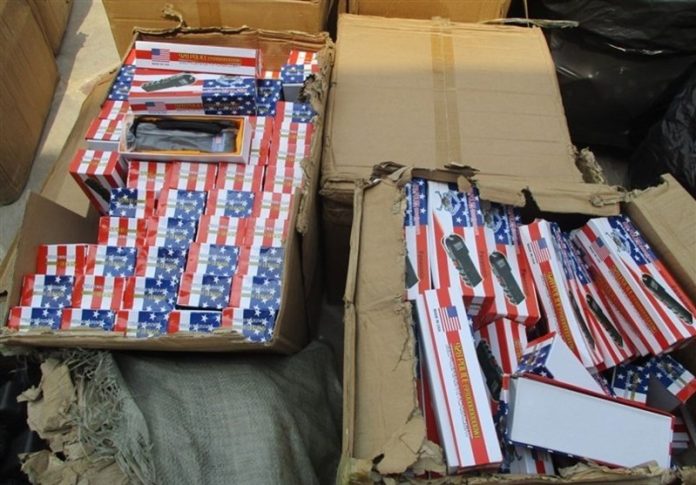
US-Made Stun Guns

Mojtaba Ghahremani, Chief Justice of Hormozgan Province, along the Persian Gulf, said Sunday, “With the coordination between the head of the judiciary of Bandar-e Khamir port city and the monitoring of intelligence forces, a large shipment of American weapons and tools for rioting was discovered and seized upon entering the maritime border of the south of the country.”

The provincial chief justice said the cargo, which included more than 6,000 US-made stun guns, had been stashed in a barge. He added two people related to the case were arrested.

The development comes as Iranian intelligence forces say they have foiled several terrorist attempts and have arrested scores of members of terrorist groups during the past days in the lead-up to the anniversary of the deadly protests and riots in Iran.

Armenia PM: Signing peace deal with Azerbaijan possible by yearend

Armenian Prime Minister Nikol Pashinyan

“The severe humanitarian crisis in Nagorno-Karabakh obviously affects the peace process. We spend much time on closing the Lachin corridor [from Azerbaijan’s side] and the humanitarian crisis in Nagorno-Karabakh,” he said

This energy and time should be spent on addressing the peace deal. I always consider it possible to sign a peace deal by the end of the year as I have accepted an obligation to sign such an agreement. Yes, we believe the signing is possible by the end of the year,” the prime minister added.

The head of the Armenian cabinet stated that Pashinyan and Azerbaijan President Ilham Aliyev do not plan to sign any document at a meeting in Granada in October.

“I would like very much to say yes, we expect the signing of a document in Granada, but no, unfortunately. Hopefully intense talks will continue and we will reach a solution to the problem,” he noted.

European Council President Charles Michel announced earlier that a meeting between Pashinyan and Aliyev is planned on the sidelines of the summit of the European Political Community in Spain’s Granada on October 5.

The conflict between Armenia and Azerbaijan over the highland region of Nagorno-Karabakh, a disputed territory that had been part of Azerbaijan before the breakup of the Soviet Union, but which was primarily populated by ethnic Armenians, broke out in February 1988 after the Nagorno-Karabakh Autonomous Region announced its withdrawal from the Azerbaijan Soviet Socialist Republic.

Renewed clashes erupted on September 27, 2020, with intense battles raging in the disputed region. On November 9, 2020, Russian President Vladimir Putin, Aliyev and Pashinyan signed a joint statement on a complete ceasefire in Nagorno-Karabakh. According to the document, Azerbaijan and Armenia maintained the positions that they had held, while a number of districts were handed over to Baku and Russian peacekeepers were deployed along the line of contact and the Lachin Corridor.

Later, the three countries’ leaders adopted several more joint statements on the situation in the region. Last year, Azerbaijan and Armenia began peace treaty talks, with the issue of demarcation of the common border line having become one of serious obstacles.

Pashinyan and Aliyev have had several personal meetings through the mediation of Russia and the EU.

The parties regularly report new proposals and commentaries on the draft peace deal being sent to each other, though shooting incidents on the border occasionally take place, in which Baku and Yerevan blame each other.

Report: Iran withdraws licenses of 8 French, German IAEA inspectors

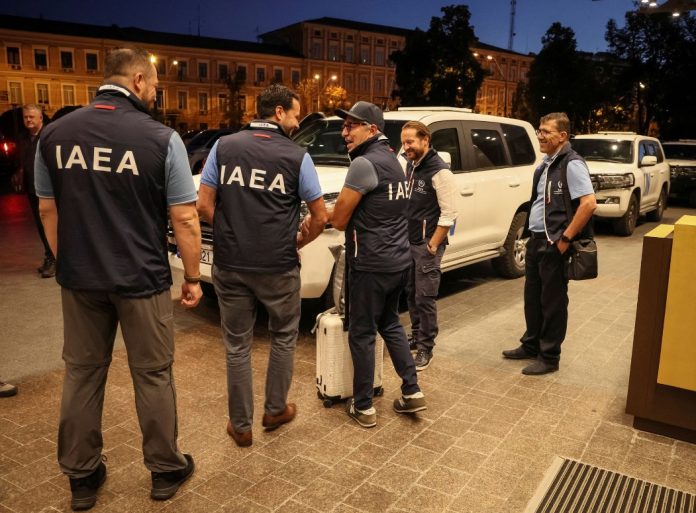
IAEA Team

The Iranian authorities withdrew the licenses in response to a statement by the IAEA’s Board of Governors on Wednesday, sponsored by the UK, France and Germany and the United States, that accused Iran of non-compliance with its safeguards commitments.

Iran slammed the move as “hostile” and “unconstructive”, saying it came “despite Iran’s positive, constructive and continuous interaction with the IAEA.”

Iranian Foreign Ministry Spokesman Nasser Kanaani said on Saturday the US and the three European parties to Iran’s 2015 nuclear agreement with the West, known as the Joint Comprehensive Plan of Action (JCPOA), abused the UN nuclear watchdog with the purpose of achieving their own political objectives.

Kanaani added Iran made the decision in accordance with Article 9 of the agreement with the IAEA for safeguards issues.

North Korean leader’s Russia visit signals a ‘fresh heyday’ in bilateral relations: Report

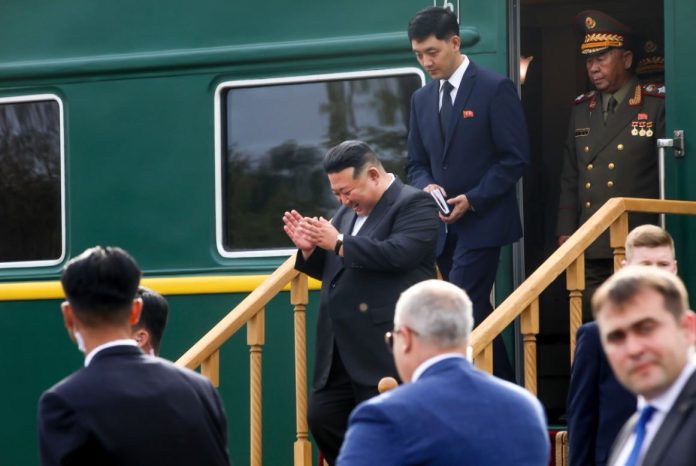
Kim Jong Un

During his visit to Russia, Kim inspected Russian nuclear-capable strategic bombers, hypersonic missiles and warships on Saturday, accompanied by Shoigu.

Continuing his now weeklong train journey, Kim will go to several food enterprises, Russia’s RIA news agency reported.

On Sunday, the train with Kim on board has left the railway station in the Russian Far Eastern city of Artyom, wrapping up his visit to Russia, Russian news agencies reported.

The distance from Artyom to Khasan station on the border with North Korea is over 200 km (124 miles).

Kim arrived in Russia by train on Tuesday for his first visit since 2019. He toured the Vostochny Cosmodrome in Amur Region with Vladimir Putin and held a round of talks with the Russian president. On Friday, the North Korean leader visited military and civilian aviation plants in the city of Komsomolsk-on-Amur in Khabarovsk Region.

US officials warned Kim ahead of his state visit not to sell weapons to Russia. Neither Moscow nor Pyongyang has expressed any intention of engaging in such an arrangement.

NATO says can deploy 3.5mn soldiers if attacked

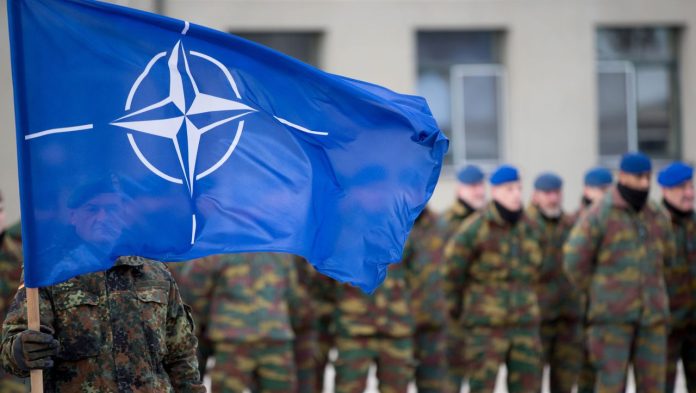
NATO

“If we are talking about collective defense, you do not have the time to prepare for an attack if the attack happens. And it is not us planning the attack, it is the opponent planning the attack. If they attack, you have to be ready,” Bauer told reporters at a press conference with Norwegian Chief of Defense Gen. Eirik Kristoffersen on Saturday.

“Therefore, we need more soldiers at high readiness,” he stressed.

“We are talking, in NATO as a whole if Finland and Sweden have joined, of about 3.5 million soldiers in the alliance. So the 300,000 is the number … that we foresee at high readiness available for basically the first 30 days if it is necessary,” Bauer added.

In July, NATO Secretary General Jens Stoltenberg stressed that the bloc approved new defense plans at the Vilnius summit under which NATO would have 300,000 soldiers at high readiness and member states would invest at least 2% of gross domestic product annually in defense.

Bauer also confirmed that the US-led military alliance is preparing to hold next year its largest drills since the Cold War with thousands of troops in Germany, Poland and the Baltics.

He announced that the massive military exercise, dubbed “Steadfast Defender”, is scheduled to take place next year in Germany, Poland and the three Baltic states of Estonia, Latvia and Lithuania.

“In 2024, the alliance will be holding its largest collective defense exercise since the Cold War: Steadfast Defender. Over 40,000 troops from across the alliance will exercise in Germany, Poland and the three Baltic States,” Bauer was quoted as saying by NATO at a press conference in the Norwegian capital of Oslo.

Stressing that NATO is stepping into a “new era of collective defense,” Bauer added the bloc needs to do “much more” to supposedly protect itself against “current threats, but also against reconstituted threats and potential future threats.”

The admiral also criticized the NATO members’ lack of commitment to what he called a solid security foundation and once again reaffirmed the bloc’s determination to provide Ukraine with arms in its ongoing conflict with Russia.

NATO annually holds several drills, mostly land-focused, to ensure that the alliance’s forces are trained and to test their interoperability and readiness to respond to what it slams as “threats.”

Earlier this week, the Financial Times daily reported that the Steadfast Defender drills would involve more than 50 ships and between 500 and 700 combat air missions close to Russian borders. The paper added the exercises were scheduled to be held in February and March 2024.

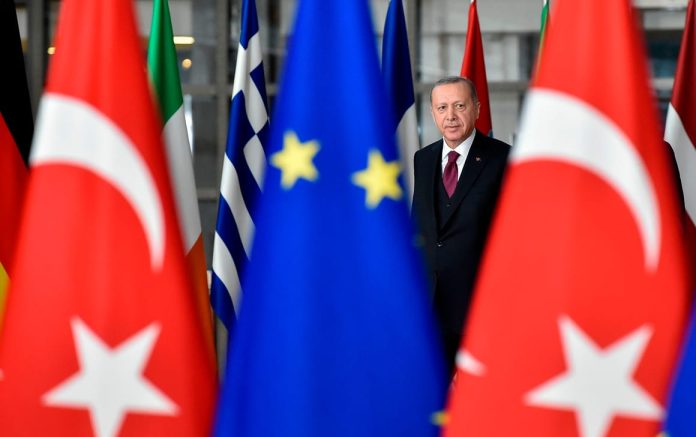
Turkey says could ‘part ways’ with EU if necessary

Turkey EU

“The EU is trying to break away from Turkey,” Erdogan told reporters on Saturday, adding: “We will make our evaluations against these developments and if necessary, we can part ways with the EU.”

Earlier this week, the European Parliament voted to adopt a report censuring Turkey for measures curtailing “fundamental freedoms, human rights and civil liberties, as well as by its actions going against international law and good neighbourly relations.”

The report cited Turkey’s alleged persecution of the LGBTQ community, its territorial disputes with Greece, and its refusal to sanction or condemn Moscow over the conflict in Ukraine as examples of “the growing gap between Turkey and the EU on values and standards.”

In conclusion, it recommended that Turkey’s accession to the bloc be put on hold until these issues, and others, are resolved. Until that point, the report suggests that Ankara be offered “a modernised association agreement” in place of a pathway to membership.

The Turkish Foreign Ministry said that the report contained unfounded allegations, and took “a shallow and non-visionary” approach to the country’s relations with the EU.

Turkey applied for EU membership in 1987 and was recognized as a candidate in 1999. Membership negotiations opened in 2005, but progress was slow, and no talks have taken place since 2016. EU officials have since condemned Erdogan over alleged human rights abuses, and the European Parliament has issued several reports warning that Erdogan risked derailing Ankara’s membership bid.

After a 2017 report stated that constitutional reforms strengthening his powers could run afoul of EU law, Erdogan dismissed the warning.

“You can write as many reports as you want,” he said at the time. “We do not recognize your reports. We will not recognize them in the future, either.”

In recent months, Austrian Chancellor Karl Nehammer, German Foreign Minister Annalena Baerbock, and European Commission spokesperson Peter Stano have all declared that Türkiye is unlikely to be accepted into the EU any time soon.

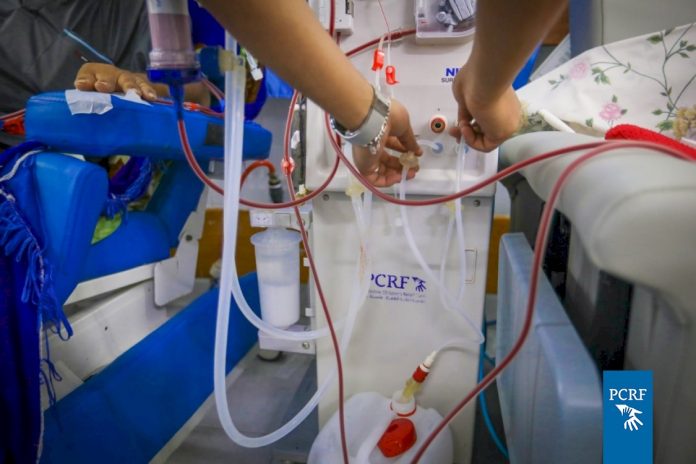
Gaza dialysis services collapsing amid Israeli siege: Health ministry

According to the Palestinian Information Center, Alaa Helles, director of the ministry’s hospital pharmacy department, sounded the alarm on Saturday, warning that patients needing dialysis are in extreme danger due to pending depletion of necessary medical supplements and dialysis equipment.

At present, the besieged territory’s hospitals serve 1,100 patients with kidney failure, including 38 children, with 13,000 dialysis sessions every month, he said.

“The central warehouses are completely empty of medical consumables for dialysis services, including blood filters, cannulas, and blood tubes,” Helles continued, adding that the current supply would only be sufficient to provide dialysis services for just 10 more days.

The official called on the relevant authorities to “take urgent action to provide medical consumables for the needs of kidney failure patients, which means continuing service to them and preserving their lives.”

Israel has been imposing an all-out land, aerial, and naval siege against Gaza since 2007, controlling Gazans’ access to their most basic necessities through the blockade.

Earlier in July, the ministry said 50 percent of cancer patients do not receive treatment due to Israel’s blockade.

Speaking in a press conference, the ministry’s spokesman, Ashraf al-Qidra, warned of the “dangerous consequences” of the severe shortage of medicines needed for cancer patients, calling on the international community “to move to save the lives of cancer patients and to provide the treatment and services that they deserve.”

A leading international humanitarian organization also announced in September that Israel had deprived hundreds of Palestinian children of life-saving healthcare in the Gaza Strip during the first half of 2023.

The UK-based Save the Children said nearly 400 children in Gaza, at least two children per day, were denied permits to travel to the West Bank and receive critical treatment in the first six months of the year.

In the report, entitled, ‘I Can’t Run, Play, or Get Treatment’, the organization explained that “nearly 100 children’s applications to Israeli authorities were denied or left unanswered in the month of May alone,” during the Israeli aggression against Gaza.

During the same month, at least seven children were among 33 Palestinians killed in Israel’s attack on the Gaza Strip between May 9 and 13.

Gaza’s healthcare system has been devastated by 16 years of Israeli blockade and recurrent military attacks, and is currently facing immense challenges with the entry of vital medical supplies, equipment and medications severely restricted by the regime.

Armed terrorists attack security forces in southern Iran, one killed three wounded

Crime Scene

Esmail Ghezel Sofla said two unidentified gunmen on a motorcycle started the shootout at 19:50 (local time) on Friday, targeting the security forces stationed in a main square of the city on the anniversary of the deadly protests and riots in Iran.

The deputy governor said the assailants immediately fled the scene, but police and security forces have launched a probe into the incident to find the culprits.

The deadly shooting took place as Iranian security forces have been on standby across the country to bring any violence on the anniversary of the death of Mahsa Amini, under control. The death in police custody of Mahsa Amini last year caused a major upheaval in the country that left hundreds of people including security forces killed and wounded.

Iranian intelligence forces say they have foiled several terrorist attempts and have arrested scores of members of terrorist groups during the past days.

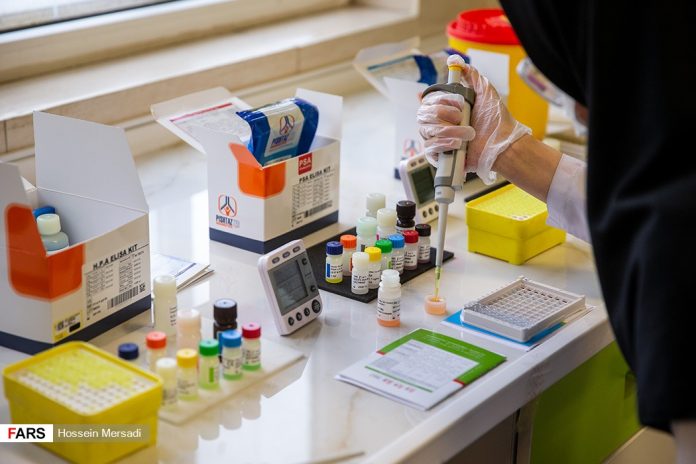
Iran, Cuba establish joint innovation, technology center

Science and Technology in Iran

Referring to the formation of a joint technology committee between the two countries as a major achievement, Montoya said, “The Cuban government emphasizes on progress based on technology and fully welcomes the development of scientific and technological cooperation with Iran.”

The Cuban minister also invited Iranian knowledge-based companies to take part in an exhibition in Havana in 2024 to facilitate scientific and technological cooperation between the two countries.

For his part, Dehghani expressed satisfaction with the G77+China Summit for focusing on the role of science and technology in the development of nations, adding Iran and Cuba need to develop technological collaborations but should not limit their ties to biotechnology and nanotechnology.

He said healthcare, medicine, water, energy, waste management and tackling climate change effects are among Iran’s priorities for cooperation with Cuba.

At the end of the meeting, the Cuban minister presented a draft document for the development of technological cooperation between Tehran and Havana in the field of technology and expressed hope that the interaction would increase after the agreement is finalized.