Saturday, April 18, 2026
Home Blog Page 124

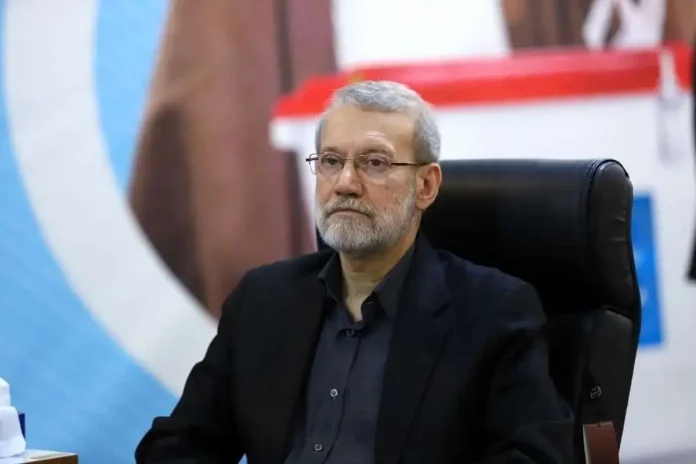
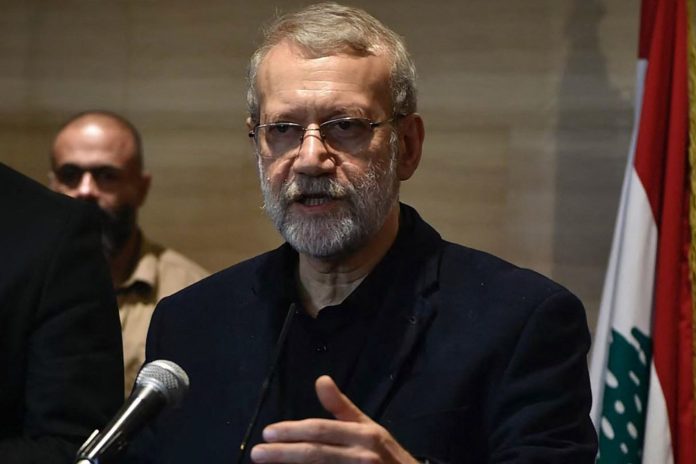
Larijani reaffirms Iran’s support for Lebanon’s unity and resistance

Speaking to reporters after meeting Lebanese Parliament Speaker Nabih Berri, Larijani said Iran views Lebanon as a “dear friend” with a long history of close relations.

Referring to Lebanon’s role in resisting the Zionist regime’s aggression, Larijani praised “the heroism of Lebanese men, including martyr Hassan Nasrallah” and stressed that unity among Lebanon’s people is essential for its future progress.

The Iranian security chief  reiterated that Iran seeks strong and independent regional states, in contrast to foreign powers that “seek to only impose their will”.

While rejecting any notion of imposing conditions, Larijani said, “We have brought no plan for Lebanon…decisions should be made by the Lebanese themselves in consultation with the resistance”.

He criticized US-backed proposals with fixed timelines, warning that external pressures could achieve through diplomacy what the Zionist regime failed to achieve militarily.

On the question of Hezbollah’s disarmament, Larijani made clear that Iran does not interfere in other nations’ internal affairs, adding, “Resistance was not created by order, and it will not disappear by order”.

He underlined that Hezbollah is a national asset for Lebanon and the wider Muslim world.

When asked if Iran would militarily support Lebanon in case of intensified Israeli attacks, he responded, “If the Lebanese government asks for help, we will help”.

Larijani also said Iran is ready to help Lebanon with its reconstruction effort, provided that the government facilitates broader international cooperation.

He further urged Lebanese citizens to “know who your friend is”.

Larijani said Israel is the true aggressor, while Iran and the resistance have defended Lebanon’s sovereignty.
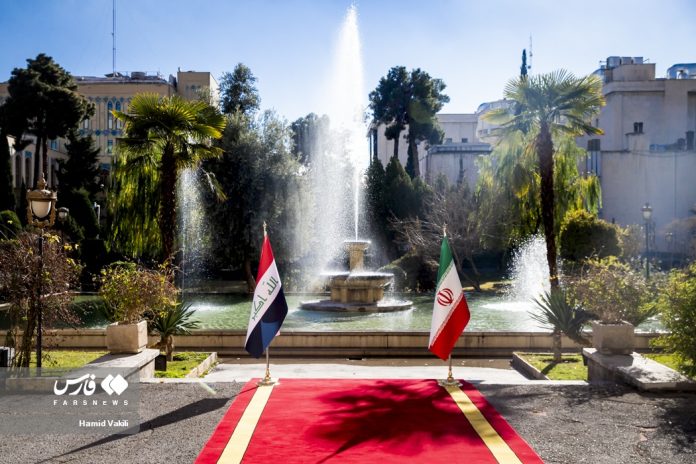
Iran embassy in Iraq condemns US interference in Tehran-Baghdad cooperation

Iran and Iraq Flags

The MoU aims to enhance security cooperation and counter terrorism between the two neighboring countries.

In a statement on Wednesday, the embassy called Washington’s remarks “an unacceptable interference” in the independent bilateral relations of Iran and Iraq.

It described the US position as evidence of a destabilizing approach toward the region and an ongoing attempt to sow division among neighboring and Muslim nations.

The embassy emphasized the shared commitment of Iran and Iraq to strengthen ties based on good-neighborliness and mutual respect.
Such cooperation, it stated, is essential for peace, stability, and security along their shared borders and across the region.

Iran’s statement also noted that intrusive interventions violate the principles of the UN Charter and international law regarding cooperation between sovereign states.

The US spokesperson, earlier commenting on the MoU, claimed that “the United States supports the genuine sovereignty of Iraq, not arrangements that turn Iraq into a client state of Iran,” prompting the embassy’s sharp rebuttal.

Iran says detained 21,000 ‘suspects’ during 12-day war with Israel

Iran Police

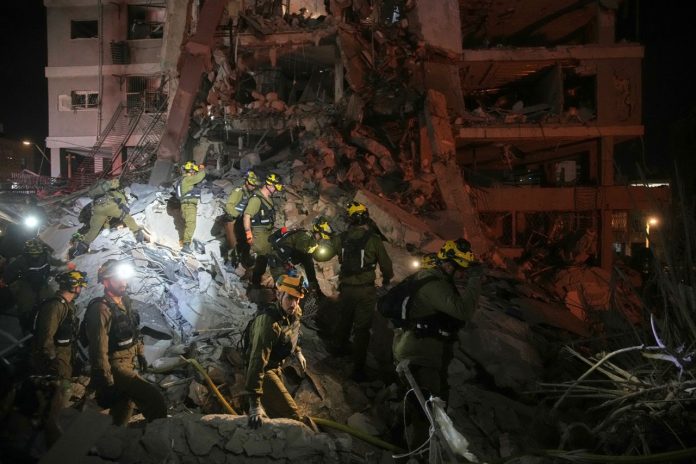
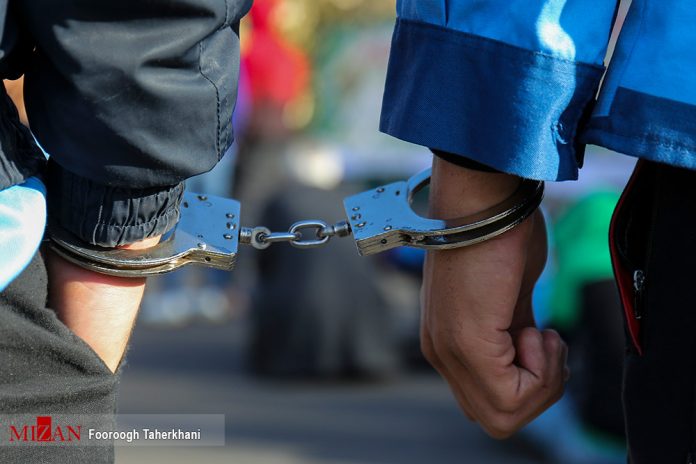
Following massive Israeli air attacks that began on June 13, which killed top military officials and scientists as well as hundreds of civilians, Iranian security forces began a campaign of widespread arrests accompanied by an intensified street presence based around checkpoints and “public reports”.

Iranian citizens were called upon to report on any individuals they thought were acting suspiciously.

“There was a 41 percent increase in calls by the public, which led to the arrest of 21,000 suspects during the 12-day war,” police spokesperson Saeid Montazerolmahdi stated.

He did not say what those arrested were suspected of, but Tehran has spoken before of people passing on information that may have helped direct the Israeli attacks.

Since the end of June, Iran has executed seven men convicted of spying for Israel.

“Law enforcement rounded up 2,774 illegal migrants and discovered 30 special security cases by examining their phones. [A total] 261 suspects of espionage and 172 people accused of unauthorised filming were also arrested,” the spokesperson added.

Montazerolmahdi did not specify how many of those arrested had since been released.

Israel in talks with South Sudan to forcibly transfer Gazans: AP

Gaza War

According to six sources familiar with the matter, Israel has held discussions with South Sudan about the issue, though the progress of these talks remains unclear.

Joe Szlavik, head of a US lobbying firm working with South Sudan, told The Associated Press that he was briefed by South Sudanese officials on the negotiations.

An Israeli delegation is expected to visit South Sudan to assess the feasibility of establishing temporary camps for Palestinians, though no date has been confirmed.

Szlavik stated that Israel would likely fund the construction of these camps.

Two Egyptian officials, who have been aware of Israel’s search for a host country for months, revealed that they have actively lobbied South Sudan against accepting Palestinians.

Egypt strongly opposes any forced displacement of Gazans, fearing a potential refugee crisis along its shared border with Gaza.

Israel’s foreign ministry declined to comment and South Sudan’s foreign minister did not respond to questions about the talks, The AP reported.

Israeli Prime Minister Benjamin Netanyahu has expressed his intent to advance US President Donald Trump’s proposal of forcibly transferring a significant portion of Gaza’s population through what he describes as “voluntary migration.”

In February, US President Donald Trump openly expressed his desire to transform Gaza into what he refers to as the “Riviera of the Middle East.”

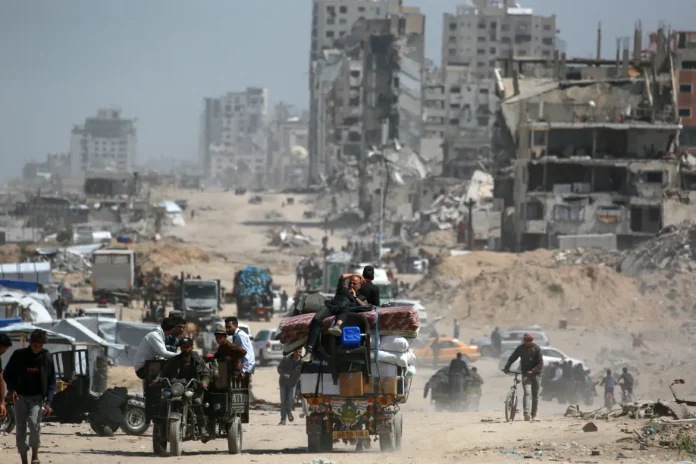
The plan would require Gaza’s existing population of about two million to be emptied out. Legal experts warn that forcible displacement on such a scale would amount to ethnic cleansing.

Reports indicate that Israel has also explored resettlement plans with other African countries, including Sudan and Somalia, as part of its broader strategy.

The plans have faced widespread condemnation, with Palestinians, human rights organizations, and numerous world leaders denouncing them as a veiled attempt at mass expulsion that would breach international legal standards.

Even Palestinians seeking temporary refuge would be reluctant to move to South Sudan, considered one of the world’s most unstable nations.

South Sudan has struggled to recover from a civil war that broke out after independence, and which killed nearly 400,000 people and plunged pockets of the country into famine.

UN warns Israel, Russia over reports of sexual abuse by their armed forces

Russia Ukraine War

The warning on Tuesday resulted from “significant concerns regarding patterns of certain forms of sexual violence that have been consistently documented by the United Nations”, Guterres wrote in a report seen by the Reuters news agency.

In his annual report to the UN Security Council on conflict-related sexual violence, Guterres said that Israel and Russia could be listed next year among the parties “credibly suspected of committing or being responsible for patterns of rape or other forms of sexual violence”.

In his warning to Israel, Guterres said he was “gravely concerned about credible information of violations by Israeli armed and security forces” against Palestinians in several prisons, a detention centre and a military base.

“Cases documented by the United Nations indicate patterns of sexual violence such as genital violence, prolonged forced nudity and repeated strip searches conducted in an abusive and degrading manner,” Guterres added.

Because Israel has denied access to UN monitors, it has been “challenging to make a definitive determination” about patterns, trends and the systematic use of sexual violence by its forces, he said, urging Israel’s government “to take the necessary measures to ensure immediate cessation of all acts of sexual violence, and make and implement specific time-bound commitments.”

The UN chief said these should include investigations of credible allegations, clear orders and codes of conduct for military and security forces that prohibit sexual violence, and unimpeded access for UN monitors.

In March, UN-backed human rights experts accused Israel of “the systematic use of sexual, reproductive and other gender-based violence”.

The Independent International Commission of Inquiry on the Occupied Palestinian Territory, including East Jerusalem, and Israel said it documented a range of violations perpetrated against Palestinian women, men, girls and boys, and accused Israeli forces of rape and sexual violence against Palestinian detainees.

In the case of Russia, Guterres wrote that he was “gravely concerned about credible information of violations by Russian armed and security forces and affiliated armed groups”, primarily against Ukrainian prisoners of war, in 50 official and 22 unofficial detention facilities in Ukraine and Russia.

“These cases comprised a significant number of documented incidents of genital violence, including electrocution, beatings and burns to the genitals, and forced stripping and prolonged nudity, used to humiliate and elicit confessions or information,” he said.

Guterres added that Russian authorities have not engaged with his special envoy on the matter.

Rare footage captures brown bear nursing 3 cubs in Iran

Black Bear

“These scenes, made possible by security and tranquility in the habitat, are owed to the guardians who fight day and night, without expectation, for the survival of wildlife,” Panahpour said.

The brown bear is classified as an endangered species in Iran, with its population mainly distributed across the mountainous regions of the Alborz and Zagros ranges, as well as parts of northern and western provinces including Mazandaran, Kordestan, and Lorestan.

Iran defense minister: Israel heavily censoring extent of damage

In a meeting with General Rudzani Maphwanya, Commander of the South African National Defence Force, in Tehran, Nasirzadeh emphasized that the strike delivered to Israel was unprecedented in its history, saying the regime is hiding the true scale of its losses from public view.

He reiterated Iran’s readiness to respond decisively to any new aggression, noting that during the recent 12-day war, Israel and the United States violated international norms by attacking nuclear facilities, civilian and military areas, hospitals, and assassinating Iranian commanders and scientists while talks with Washington were ongoing.

He praised South Africa’s independent stance, commending its condemnation of Israel’s attacks on Iran and its historic genocide case at the International Court of Justice.

Nasirzadeh highlighted the two countries’ shared positions on resisting injustice, rejecting unilateralism, and combating terrorism.

Maphwanya, in turn, condemned Israel’s actions in Gaza.

He also stressed that BRICS membership offers a platform for strengthening Iran–South Africa solidarity.

EU condemns Israel’s killing of Gaza journalists

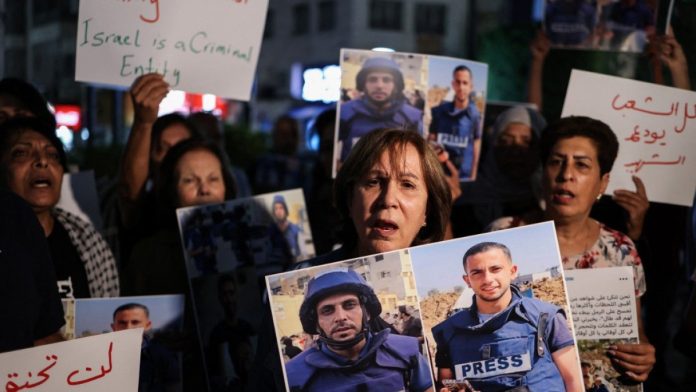
“The EU condemns the killing of five Al Jazeera journalists in an (Israeli military) airstrike outside al-Shifa Hospital in Gaza City, including the Al Jazeera correspondent Anas al-Sharif,” she said after EU foreign ministers discussed the war in virtual talks.

An Israeli military statement accused Sharif of heading a Hamas “terrorist cell” and being “responsible for advancing rocket attacks” against Israelis.

The EU took note of Israel’s allegation, Kallas said, “but there is a need in these cases to provide clear evidence, in the respect of rule of law, to avoid targeting of journalists”.

The 27-country bloc has struggled to take action over the conflict in Gaza as it is divided between staunch supporters of Israel and those who defend the Palestinians.

The EU struck a deal last month to increase aid access to Gaza, but senior officials have said the agreement has been only partially implemented.

Kallas called on Israel to allow more aid into the territory.

“Whereas there is more aid coming in, the needs are still much greater. We urge Israel to allow more trucks and a better distribution of aid,” she added.

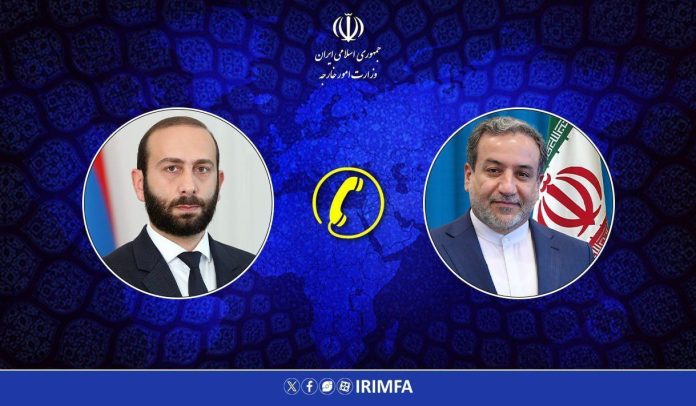
FM says Armenia-Azerbaijan agreement should not cut off Iran’s access to transportation routes

Seyed Abbas Araghchi, In a telephone conversation with his Armenian counterpart, Ararat Mirzoyan,
underlined that in any decision or action, respect for the national sovereignty and territorial integrity of countries must be fully observed.

Referring to certain aspects and sensitivities related to the issue, the Iranian Foreign Minister noted that consideration of factors related to the stability and security of the region and surrounding countries is an essential requirement for any plan or agreement in this regard.

The Armenian Foreign Minister, in turn, stressed that Armenia is a friendly and neighboring country to Iran, and emphasized that Yerevan prioritizes maintaining friendly relations based on good-neighborliness and mutual interests with Tehran, and attaches great value to these relations.

The Armenian Foreign Minister valued and regarded as important the principled position of the Islamic Republic of Iran in respecting Armenia’s national sovereignty and territorial integrity, as well as its attention to geopolitical sensitivities and peace and stability in the region.

He assured that Yerevan, in its decision-making regarding transportation routes, gives fundamental attention to regional peace and stability and to the mutual interests of Iran and Armenia.

Iran security chief: Resistance movements enjoy significant political maturity

At a press conference in Baghdad following consultations with Iraqi officials, Ali Larijani said: “On Monday, I met with the President, the Speaker of Parliament, the Foreign Minister, and influential political figures in Iraq, and we discussed the situation in the region.”

Regarding the security agreement signed between Iran and Iraq, Larijani added: “The core of the memorandum of understanding with Iraq is for both countries to prevent others from harming the security of either country.”

In response to some analyses about Iran’s interference in Iraq’s elections, Larijani said: “I think such analyses are inaccurate. The peoples of Iraq and Lebanon are mature and courageous; they do not need us to tell them what to do. Iran is a friend to both countries and shares ideas with them, but it does not issue orders.”

The Secretary of Iran’s Supreme National Security Council also spoke about the role of the resistance movements in the region, saying: “Hezbollah and the resistance movements possess a very good level of political thinking and do not need guardians. Iran is also not a country to be shaken by such winds.”