Wednesday, December 24, 2025
Home Blog Page 1237

IRGC aerospace force unveils Noor 3 satellite advancements, future space endeavors

Iran Satellite

Jafarabadi highlighted that within 1.5 hours of the launch, Noor 3 stabilized and embarked on its operationalization at an accelerated pace, dwarfing its predecessor, Noor 2, by two and a half times, he noted.

The IRGC commander added: “The launch also saw the deployment of three satellites into space, a testament to the IRGC’s growing capabilities in the realm of space exploration.”

He said the IRGC is eyeing international cooperation, aiming to launch small satellites for neighboring nations.
He went on to emphasize that the critical role of satellite technologies in modern warfare, underlining the strategic importance of space infrastructure for efficient military operations and global security.

Local leader says ‘Nagorno-Karabakh republic’ will no longer exist

Nagorno-Karabakh

Samvel Shahramanyan, the president of the unrecognized republic, issued a decree on Thursday ordering the “dissolution of all state institutions and their branches by January 1, 2024.”

“The Republic of Nagorno-Karabakh (Artsakh) ceases to exist,” the announcement declared, as quoted by the NKR InfoCenter.

The document also says that the region’s inhabitants, including those who have fled, should “familiarize themselves with the conditions of reintegration offered by the Republic of Azerbaijan,” and make an independent decision about whether to return to Nagorno-Karabakh.

According to the decree, the dissolution is “in connection with the current difficult military-political situation” and is aimed at ensuring the safety of Nagorno-Karabakh residents, while taking into account the Russian-brokered agreement with Baku. The latter allows residents of the breakaway region, including military personnel who lay down their arms, to travel freely, the statement said.

The landmark presidential decree puts an end to the history of the unrecognized republic, which seceded from Azerbaijan in the waning days of the Soviet Union. The security situation in the predominantly ethnic Armenian region has been marked by sporadic fighting for decades. The region experienced a major war in the early 1990s that claimed thousands of lives and ended with a ceasefire in 1994.

Another major conflict took place in 2020 when Baku took control of much of the region, with hostilities ending in a Russian-brokered ceasefire.

The current declaration comes after Azerbaijan launched “counter-terrorism measures of a local nature” in the region, while accusing Armenia of massing troops there, which Yerevan denies. After a day of fighting, Nagorno-Karabakh and Baku announced a ceasefire. Under the terms of the agreement, all forces fighting against Azerbaijan in the region must leave their combat positions and hand over all weapons to Baku. The agreement also provides for dialogue on a wide range of issues between representatives of the Nagorno-Karabakh community and Azerbaijan.

The ceasefire has triggered a massive exodus of Nagorno-Karabakh residents from the region, with the Armenian authorities claiming that more than 65,000 people have arrived in the country. Earlier this week, Azerbaijani President Ilham Aliyev expressed his belief that the reintegration of Nagorno-Karabakh would be successful, vowing to respects the rights of local residents.

Iraq arrests 14 suspects, including wedding hall owner, after fatal fire

Iraq Wedding Party Fire

The Iraqi Interior Ministry issued arrest orders for several people, including the wedding hall’s owner, Samir Suleiman Karume Ravo Aso, after which he was arrested in the Erbil governorate and handed over to the ministry, media reported.

The Iraqi Interior Ministry has announced security authorities has detained 14 people involved in the incident. The ministry pledged to announce the results of the investigation within 72 hours.

“Security authorities detained 14 defendants, including ten workers, the owner of the hall and three people involved in lighting the pyrotechnics,” the ministry was quoted as saying by the media.

About 900 people were in the wedding hall where the fire broke out, the ministry added.

Earlier reports citing the Iraqi Interior Ministry, detailed that many people had died because the emergency exits in the wedding hall were closed. Almost 1,000 people were reportedly present at the celebration. One of the guests posted a video on social media of the canopy on the ceiling in the center of the hall, which was crowded with tables with food, catching fire from floor fireworks.

The Iraqi Red Crescent Society confirmed that more than 450 people had either died or had been injured as a result of the fire at the wedding hall.

Nineveh Governor Najim al-Jubouri has declared a week of mourning in the province in connection with the incident, while Iraqi Prime Minister Mohammed Shia Al Sudani announced a three-day nationwide mourning.

Iran’s envoy stresses promoted trade ties with Saudi Arabia

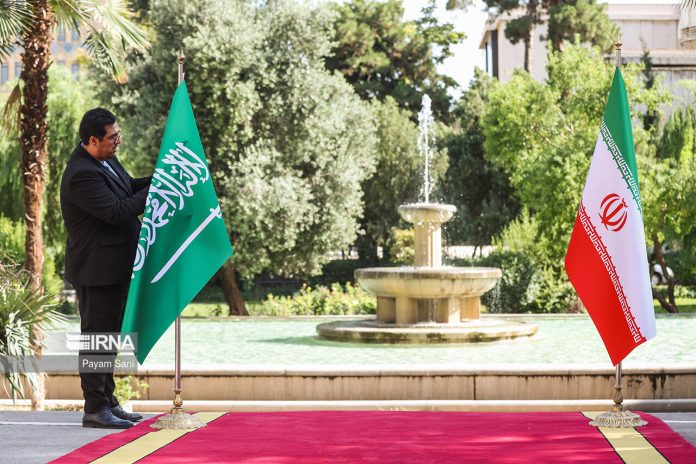
Iran and Saudi Flags

Alireza Enayati made the remarks during talks with the kingdom’s Deputy Foreign Minister For Political Affairs Saud bin Mohammed al-Sati on regional and bilateral issues on Wednesday.

Also on Wednesday, the Islamic Republic’s envoy met with Swiss Ambassador to Saudi Arabia Yasmine Chatila and appreciated Switzerland’s efforts to preserve Iranian and Saudi interests.

“I met with Ms. Yasmin Chatila, the ambassador of Switzerland, and discussed issues of common interest and expressed my gratitude for the efforts by Switzerland during the past years to take care of Iran’s and Saudi Arabia’s interests,” Enayati wrote on X social platform after the meeting.

Tehran and Riyadh recently restored full diplomatic ties after a breakup since 2016 and reopened their embassies in March following a China-brokered deal. Both sides have expressed readiness to boost relations in various fields.

Over half of Karabakh population fled: Armenia

Nagorno-Karabakh

By Thursday morning, “65,036 forcefully displaced persons crossed into Armenia from Nagorno-Karabakh,” Armenian government spokeswoman, Nazeli Baghdasaryan, said in a statement.

Some 120,000 ethnic Armenians were estimated to be living in the territory before Baku’s offensive.

“The state is providing suitable housing to all those who do not have a predetermined place of residence,” she added.

On Sunday, Azerbaijan reopened the sole road linking Nagorno-Karabakh with Armenia, the Lachin corridor policed by Russian peacekeepers — four days after Armenian separatist forces agreed to lay down arms and disband their army.

The return of the Armenian-populated separatist enclave under the control of the central government in Baku has led to a mass exodus of ethnic Armenians.

Internationally recognised as part of Azerbaijan, Nagorno-Karabakh, which broke away from Baku three decades, was at the centre of two wars between mostly Christian Armenia and predominantly Muslim Azerbaijan.

Rights group sues US gov’t in order to block Israel’s entry to visa waiver programme

Israel Palestine

The lawsuit, filed by the American Arab Anti-Discrimination Committee (ADC), accuses the US of failing to adhere to the law when it comes to the tenets of the VWP, namely by allowing Israel to discriminate against Americans entering Israel and the occupied West Bank.

The lawsuit, seen by Middle East Eye, states that the actions taken by the US to give Israel a pathway into the programme “have established discriminatory rules and procedures against United States citizens to participate in the program when traveling to Israel and thus violate the VWP rule of reciprocity and constitutional guarantees of equality”.

“Defendants’ decision to enter into an agreement that allows the Government of Israel to create different classes of US citizens and treat them disparately in a way that is not reciprocal with how the US treats Israeli citizens.”

The ADC has said, that based on credible reports and investigations, Israel is currently on the verge of being accepted into the VWP, despite failing to meet the legal requirements needed for entry.

“This is all so unnecessary, all the US government had to do was maintain the standard it has with every other country in the Visa Waiver Programme. This lawsuit could have been avoided, but the DHS (Department of Homeland Security) and the State Department resurrected the debunked notion that separate is somehow equal. As these plaintiffs show, that notion is a farce,” Huwaida Arraf, a lawyer representing the ADC, told Middle East Eye.

The legal filing seeks an injunction against the US that would prevent the government from making a decision on whether to admit Israel into the VWP until Washington “receives from Israel guarantees of full and equal reciprocal privileges for all US citizens without distinction”.

“The requirements of the Visa Waiver Program are clear and unambiguous. The US government is obligated to ensure that all Americans are treated equally,” Abed Ayoub, the ADC’s executive director, stated in a statement.

“It is our intent to hold the US government accountable for any actions that create separate classes of US citizens. Admitting Israel into the Visa Waiver Program would be an endorsement of discrimination against Palestinian and Arab Americans,” he added.

Israel has long sought entry into the VWP, which permits overseas visitors to remain in the US for up to 90 days without a visa and reciprocates the same privilege to US citizens in participant countries.

In July, the US and Israel signed a “reciprocity agreement” to allow American citizens the ability to freely enter Israel.

Washington also announced it would be monitoring Israel over a trial period of six weeks and then would make a decision about whether or not to allow the country into the VWP by 30 September.

However, experts, rights groups, lawmakers, and Palestinian Americans have raised concerns about Israel’s trial period, saying that the country was creating a multi-tiered system of entry that treats different groups of US citizens unequally, particularly Palestinians and other Arab Americans.

Earlier this month, more than a dozen senators raised these concerns with the Joe Biden administration, sending a letter that warned against moving forward with Israel’s entry into the VWP.

“The contacts we have had from US citizens seeking to travel to Israel since the MOU went into effect, it is clear that Israel is not in compliance with this law as it relates to reciprocal treatment for all US citizens, and is not on track to come into compliance before the September 30, 2023 deadline,” the senators stressed.

The ADC has announced that the discrimination by Israel against American citizens even exists within the country’s current policies, including restrictions on how Palestinian Americans can cross checkpoints into the occupied West Bank and the “inhumane treatment of Palestinian Americans when they try to return to the US”.

Iran president says satellite launch proves failure of western sanctions and threats

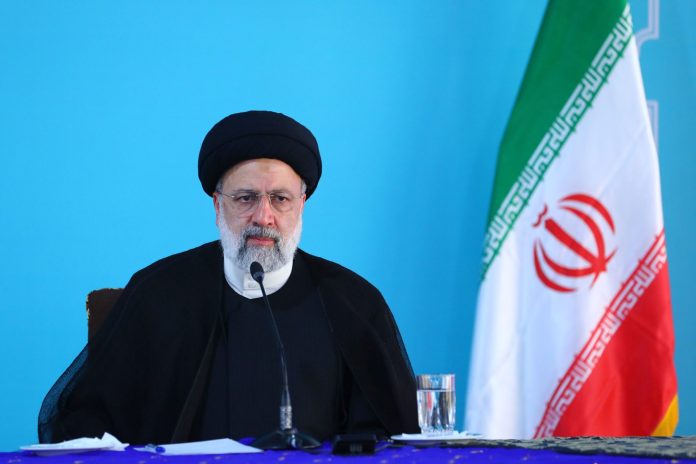
Ebrahim Raisi

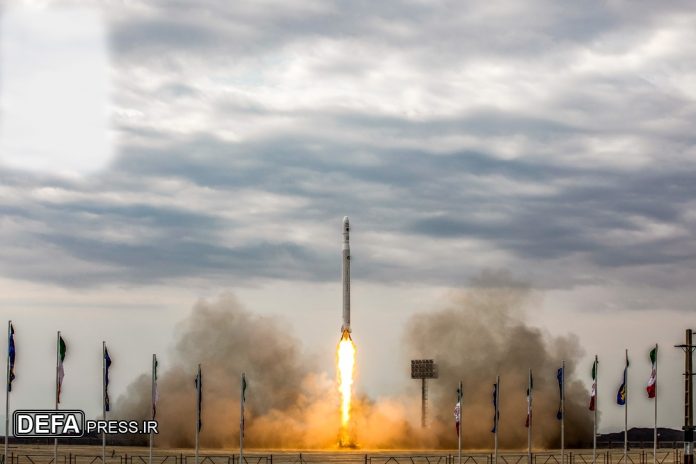
Raisi has congratulated the nation on the successful launch of the Nour-3 imaging satellite into the space, describing the achievement as another sign of the failure of the sanctions and threats by the enemies of the Islamic Republic.

The president issued a message on Wednesday, hours after his Minister of Information and Communications Technology Issa Zarepour announced the launch by the Islamic Revolution Guard Corps’ Aerospace Force.

“The production and placing the Iranian Nour-3 satellite into an orbit of 450km from Earth, using Iranian satellite carrier Qased, once again showed that threats and sanctions have no impact on the determination of our young scientists for the progress of the Islamic Iran,” Raisi said in his message.

He called the launch “a national success” and the result of his administration’s attention to the country’s space industry.

The president expressed gratitude towards all those active in that industry. He also called on the Ministry of Information and Communications as well as the Iranian Space Agency to continue to pave the way for the progress of the country’s space industry.

Iran seeks to expand its aerospace sector to be able to use satellites for various applications, including for management of agriculture lands and for research activities.

Russia calls on Armenian leadership to remember plight of countries that pinned future on US

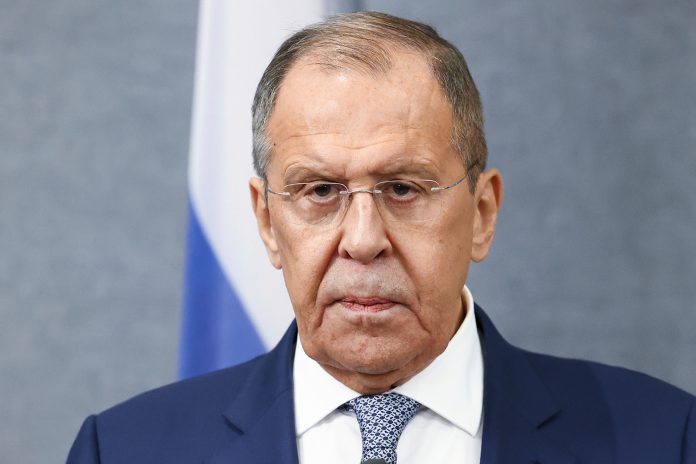
Russian Foreign Minister Sergey Lavrov

Asked whether Armenia might lose Russia, he pointed out that a number of leading politicians in Yerevan wished to follow such a scenario and were looking toward the West.

“You know, there are many of those who wish to lose Russia and make new friends,” Lavrov told TASS.

“If they really rely on the United States, which is well seen in statements by many representatives of the Armenian leadership, then perhaps they should do well to look back on the recent history of how the United States treated those whom it tried to draw into its orbit in advancing its geopolitical interests in areas of the world far away from America’s shores. The fate of all these people was very, very unenviable,” Lavrov said.

He emphasized that in any case, Russia’s interests in the South Caucasus could not be geopolitically ignored.

“Historically, geographically and geopolitically it is impossible to lose Russia in the sense of completely ignoring its interests in the South Caucasus,” Lavrov pointed out. “But such hopes are harbored by some leaders in Yerevan, and they say so outright.”

In particular, Lavrov pointed out that such a remark was dropped by Armenian Prime Minister Nikol Pashinyan in a recent speech. He argued there was a “need to compensate for the failed alliances on which Armenia had relied to ensure its security, and to expand the circle of partners who will ensure this security.”

The Russian Foreign Ministry announced earlier that Pashinyan’s September 24 message on independence contained unacceptable attacks against Russia that Moscow strongly rejected. As the Russian Foreign Ministry emphasized, the head of the Armenian government, in fact, admitted that all this time his country was being deliberately prepared for turning away from Russia.

On September 8, Armenia’s ambassador Vagharshak Harutyunyan was summoned to the Russian Foreign Ministry, to hear a strong warning in connection with Yerevan’s actions, which Moscow regarded as unfriendly. The Russian Foreign Ministry emphasized that Moscow remained certain that Russia and Armenia remained allies and all agreements on the development and strengthening of relations would be fully implemented to the benefit of the peoples of the two countries.

Arab family of five killed as crime rates in Israel soar

Israel Palestine

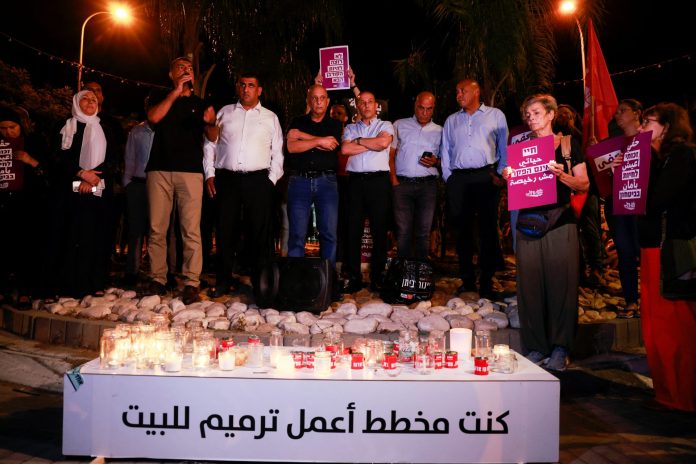
The shooting of the five, including a woman and two teenagers, in the northern town of Basmat Tab’un followed a separate incident in which a 50-year-old man was killed earlier on Wednesday.

More than 180 Arab citizens in Israel have been killed in crime-related violence since January – a seven-year high – in a spate of killings that have continued unchecked, drawing accusations that Prime Minister Benjamin Netanyahu’s religious-nationalist government was ignoring the bloodshed.

“Israel has the abilities, the Israeli government understands what needs to be done, everybody understands what needs to be done, there simply is no will and no leadership,” said Mansour Abbas, leader of one of the parties that represent Israel’s Arab minority.

Arab mayors have accused the government and police of deliberately neglecting their communities and of enabling criminals to act with impunity. They have refused to work with the far-right National Security Minister Itamar Ben-Gvir, who has past convictions of support for terrorism and anti-Arab incitement, and have demanded that Netanyahu intervene instead.

With Israel facing its worst political crisis in decades, over Netanyahu’s drive to push through divisive changes to the judiciary, Arab citizens say the collapse of personal safety in their communities must receive more government attention.

Ben-Gvir, who did not immediately comment on Wednesday’s incident, has rejected accusations of inaction. He has said fighting crime is high on his agenda and that police have stepped up crime-busting activity, including the seizure of weapons and funds from criminal groups.

“As police, we will do everything to get to the killers,” police spokesman Eli Levi told reporters at the scene of Wednesday’s crime.

Arab citizens, most of whom are descendants of Palestinians who remained in Israel during the mass exodus of refugees in the 1948 war surrounding Israel’s creation, make up about a fifth of the country’s population.

They have for decades faced high poverty rates, poorly funded schools and overcrowded towns lacking services and say they are treated as second-class citizens compared with Jewish Israelis.

Iran starts using newly-unblocked assets in Qatar

rial dollar

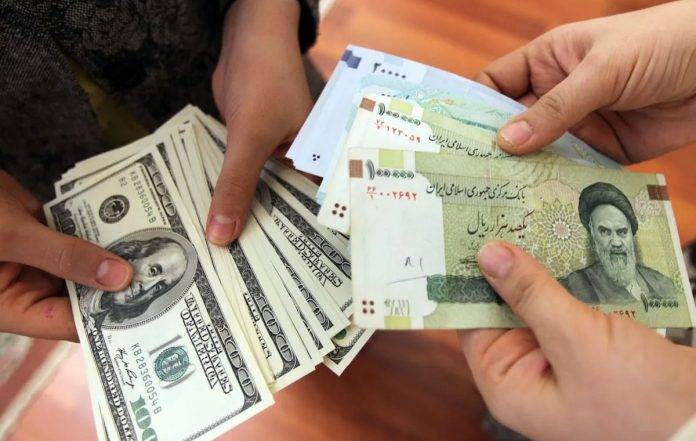
Central Bank of Iran (CBI) Governor Mohammad-Reza Farzin and Qatar’s top banker Sheikh Bandar bin Mohammed bin Saoud Al Thani reached an agreement in Doha on Wednesday to start banking operations to use the funds transferred to Iranian bank accounts in Qatar earlier this month, a CBI statement said.

The statement added the agreement was reached as part of a broader discussion between Farzin and Sheikh Bandar to boost banking cooperation between Iran and Qatar.

Farzin stated on September 18 that some 5.573 billion euros of Iran’s foreign assets had been successfully transferred to accounts held by six Iranian banks in Qatar’s Ahlibank and Dukhan Bank.

The transfer took place under a Qatari-mediated deal between Iran and the US whereby the US agreed to lift sanctions on Iranian funds that had remained blocked in two South Korean banks since 2018. The two sides also exchanged prisoners as part of their deal.

Qatar paid for banking fees related to the change and transfer of the funds from South Korea via Swiss National Bank to Qatari banks.

The CBI statement identified the six Iranian banks holding accounts in Qatar for the purpose of processing the unfrozen funds as Keshavarzi, Saman, Pasargad, Gardeshgari, Shahr and Karafarin.

Iranian authorities have indicated in previous statements that they will use the newly-unfrozen funds in Qatar for purchase of non-sanctioned goods, including for imports of animal feed for which Iran spends billions of dollars each year.