Thursday, January 1, 2026
Home Blog Page 120

Thousands of Palestinians returning to areas vacated by Israeli soldiers in Gaza

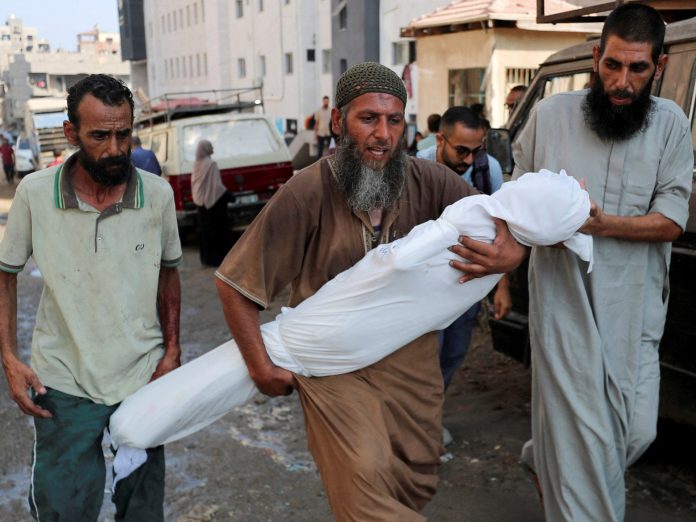
Thousands of displaced civilians departed from southern Gaza to their homes northward, the majority on foot. Some made the hours-long journey using the few vehicles still running amid fuel shortages, along with animal-drawn carts, bicycles, and motorcycles.

Simultaneously, thousands returned to their homes in the central Gaza Strip and some eastern parts of Khan Younis in the south, following the withdrawal of Israeli forces.

The transfers from the south to the north were carried out via the coastal Al-Rashid Street in the west and Salah al-Din Road in the east.

Hundreds of displaced civilians had to set up tents on the rubble of their homes upon returning.

A gradual withdrawal of Israeli troops toward the yellow line was completed on Friday in accordance with US President Donald Trump’s plan.

The army forces withdrew from Gaza City in the north, excluding the Shejaiya neighborhood and some parts of the Al-Tuffah and Zeitoun neighborhoods; and the central and eastern parts of Khan Younis in the south. Palestinians were prevented from entering Beit Hanoun and Beit Lahia in northern Gaza.

The Gaza Government Media Office reported on Saturday that more than 5,000 missions, including humanitarian, health, rescue, and relief operations, were carried out in the past 24 hours across Gaza governorates.

Trump announced Wednesday that Israel and Hamas agreed to the first phase of a 20-point plan he laid out on Sept. 29 to bring a ceasefire to Gaza, release all Israeli captives being held there in exchange for around 2,000 Palestinian prisoners, and a gradual withdrawal of Israeli forces from the entire Gaza Strip.

The first phase of the deal came into force at 12 noon local time Friday (0900 GMT).

A second phase of the plan calls for the establishment of a new governing mechanism in Gaza without Hamas’ participation, the formation of a security force comprising Palestinians and troops from Arab and Islamic countries, and the disarmament of Hamas.

Since October 2023, Israeli attacks have killed nearly 67,200 Palestinians in the enclave, most of them women and children, and rendered it uninhabitable.

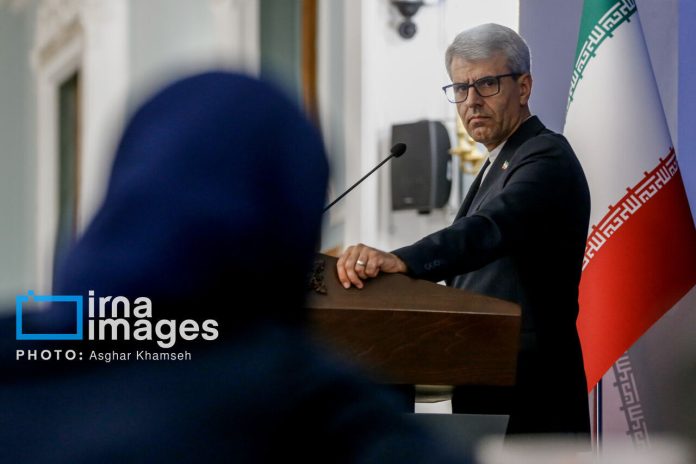
South Korean ambassador in Iran performs iconic Persian song “Jan-e Maryam” to mark 63 years of diplomatic ties

The project was designed and directed by Iranian musician Mehdi Norouzi, and released on the official social media page of the South Korean Embassy in Tehran.

According to the embassy, the performance commemorates the 63rd anniversary of diplomatic relations between South Korea and Iran, celebrating cultural friendship and mutual appreciation through music.

Ambassador Kim, who previously gained attention for his performance of the Persian folk song “Porsoon Porsoon”, once again surprised Iranian audiences with his fluent pronunciation and heartfelt delivery.

The collaboration has been warmly received online, praised as a creative gesture of cultural diplomacy and goodwill.

Jan-e Maryam was originally song by late Iranian maestro Mohammad Nouri.


Once a shining jewel, Kermanshah’s Sarab-e Niloufar dries up amid mismanagement, drought

Environmental officials blame years of drought combined with severe water mismanagement and unsustainable farming practices for the loss of this ecological treasure.

The spring, once famous for its clear waters, floating lotus flowers, and flocks of migratory birds, was a popular recreation site for locals and tourists alike. Today, only dry soil and silence remain where once life and color thrived.

Soraya Ghorbani, deputy director for natural environment and biodiversity at Kermanshah’s Department of Environment, said more than half of the crisis stems from excessive water use in agriculture, particularly from second and third crop cycles of water-intensive plants such as corn grown near wetlands.

Over-extraction from both legal and illegal wells has caused a sharp and possibly irreversible drop in groundwater levels, she noted.

Ghorbani warned that continued depletion could trigger land subsidence and irreversible damage to ecosystems, calling for urgent and comprehensive water-resource management to save what remains of Kermanshah’s natural heritage.

Beijing slams Washington plan to restrict flights over Russia

According to a Reuters report on Thursday, the administration of US President Donald Trump has proposed banning Chinese airlines from flying over Russia on routes to and from America. The Transportation Department argued that using Russian airspace gives Chinese carriers an unfair competitive edge.

The Chinese Foreign Ministry warned that these restrictions would harm US companies, urging Washington to consider the broader consequences of its policy.

“Barring Chinese airlines from flying over Russia on flights to and from the US would hinder travel and people-to-people exchanges,” ministry spokesman Guo Jiakun said at a press briefing on Friday.

“Rather than punishing other countries and passengers around the world, perhaps it’s time the US took a hard look at its own policy and the impact on American businesses,” he added.

Russian airspace offers the shortest routes connecting Asia with Europe and North America, allowing shorter flight times, lower fuel use, and reduced costs for airlines. However, Moscow barred many Western carriers from its airspace in 2022 after Western nations closed their skies to Russian flights amid the escalation of the Ukraine conflict. Chinese carriers do not face these restrictions.

The Trump administration reportedly called the situation “unfair”, announcing it has caused “substantial adverse competitive effects on US air carriers,” and gave Chinese airlines two days to respond. China’s aviation regulator has not commented on the report.

The proposal comes amid rising tensions between China and the US. Although a tariff war earlier this year ended in a tentative deal, Trump threatened 100% tariffs on Chinese goods on Friday over what he called Beijing’s “extraordinarily aggressive” new trade restrictions. The warning followed China’s move to tighten export controls on rare-earth minerals vital to US high-tech and defense industries.

Moscow says US-Russia air travel could resume by late 2025. The issue has been discussed during US-mediated Ukraine peace efforts, and in August, Russian Ambassador to the US Aleksandr Darchiev confirmed that the process of restoring flights between the two countries was already underway.


Lebanon says it thwarted Israeli network plotting bomb attacks

The Lebanese General Security Directorate, a national intelligence agency, announced on Friday that it dismantled “a network working for the Israeli enemy that was preparing terrorist attacks, bombings and assassinations” inside the country.

The statement appears to confirm earlier reports by several Lebanese media outlets that a group of Israel collaborators were working to place bombs inside cars and motorcycles at a commemoration ceremony for slain Hezbollah leader Seyyed Hassan Nasrallah.

The reports said the foiled attacks aimed to cause as many casualties as possible.

The General Security Directorate noted it arrested several people as part of the operation, including a Lebanese-Brazilian suspect and a Palestinian national.

“As a result of the investigation, one of the detainees admitted that this network was responsible for previous assassinations of party officials in al-Jamaa al-Islamiya,” it added.

Over the past two years, Israel has killed several officials from al-Jamaa al-Islamiya – a Lebanese group allied with Hamas.

Thwarting the alleged Israeli plot represents a rare counterintelligence success for Lebanon after Israel was able to penetrate Hezbollah, and identify, locate and kill many of its top political and military leaders, including Nasrallah, last year.

Israel also rigged thousands of pagers used by Hezbollah members last year with explosives, killing at least 12 people and injuring thousands of others, including children.

The news outlet Lebanon Debate reported on Thursday that the recently arrested suspects planned to use similar explosives as the ones used in the pager incident to carry out bombing attacks.

The Lebanese intelligence operation comes as Hezbollah faces growing pressure to disarm.

Earlier this year, the Lebanese government issued a decree to remove Hezbollah’s weapons, but the group said it will treat the decision “as if it does not exist”, arguing that its arms are needed to protect Lebanon against Israeli expansionism.

Tensions have been growing between Hezbollah and Lebanese Prime Minister Nawaf Salam, who has been a vocal advocate of the disarmament push under a United States-sponsored plan.

Despite the ceasefire it reached with Lebanon in November of last year, Israel has been carrying out air strikes regularly across the country, killing hundreds of people.

Critics argue that the bombardment is aimed at preventing residents from border villages from returning and rebuilding their towns.

Last month, an Israeli strike on the southern town of Bint Jbeil killed five civilians, including three children from the same family.

Israel also continues to occupy parts of south Lebanon.

Hamas, Islamic Jihad Hail global solidarity, thank Iran and other allies for supporting Gaza ceasefire

Hamas

They specifically praised Iran, Lebanon, Yemen, and Iraq for their diplomatic, political, and humanitarian roles in backing ceasefire efforts and standing with Gaza during the Israeli genocide.

In a joint statement, the groups said that international voices rejecting genocide and demanding accountability for the occupation have sent a powerful message that the Palestinian cause is both a political and humanitarian issue of global importance.

They noted that the support of these nations and global movements has significantly boosted the morale of Palestinians, demonstrating that “the occupiers are an isolated and besieged entity.”

Hamas and Islamic Jihad also confirmed that despite Israeli efforts to obstruct negotiations and prolong the conflict, the Palestinian negotiating delegation remains focused on securing a permanent end to the war, stopping aggression in Gaza, ensuring withdrawal from occupied territories, and lifting the blockade.

The statement said the first phase of an agreement toward these goals has already been reached and the next phases will be carried out soon.

US says to impose 100% tariffs on China

On Thursday, Beijing announced new export controls of certain strategic minerals that have dual-use in military applications, saying the move was intended to protect national security and meet international obligations, including those related to non-proliferation.

In a post on Truth Social on Friday, Trump stated that China has taken “an extremely hostile position on trade” by sending a global letter declaring plans to implement “large scale export controls on virtually every product they make, and some not even made by them.” The measures, according to the president, would affect all countries “without exception”.

“Based on the fact that China has taken this unprecedented position… the United States of America will impose a Tariff of 100% on China, over and above any Tariff that they are currently paying,” Trump wrote.

He added that Washington would also impose export controls on “any and all critical software” starting the same day.

In August, the US and China agreed to extend a tariff truce following a trade war in which the two nations repeatedly slapped increasingly harsher tariffs on each other. The 90-day pause has seen US tariffs on Chinese goods fall from 145% to 30%, and Chinese tariffs on American products drop from 125% to 10%. The extension expires in November.

Trump described China’s move as “absolutely unheard of in international trade” and “a moral disgrace in dealing with other nations”. He stated that he is speaking “only for the U.S.A., and not other nations who were similarly threatened”.

The president’s announcement sent shockwaves through global markets, sending US stocks down on Friday. The S&P 500 slid 2.7%, marking its biggest one-day loss since April, while the Dow Jones Industrial Average dropped nearly 900 points, or 1.9%. The tech-heavy Nasdaq plunged 3.6% as investors fled high-growth stocks seen as most exposed to Chinese supply chains.

Trump has also threatened to cancel a meeting with Chinese President Xi Jinping that was scheduled to take place in two weeks at the APEC summit in South Korea.


Putin says Russia to unveil new weapon soon

Speaking on Friday at a press conference in Tajikistan’s capital, Dushanbe, Putin said: “I think we will have the opportunity in the near future to break some news about a new weapon that we announced a long time ago.”

The Russian president added that the novel system “is undergoing tests [which] are proceeding successfully.”

When asked about the prospect of extending the New START arms-control treaty, which puts a cap on American and Russian strategic offensive weapons, and is set to expire on February 5, 2026, Putin expressed optimism, saying there is still enough time to prolong the accord, “as long as there is goodwill” on the part of Washington.

In any case, Russia feels secure given the “novelty” of its nuclear deterrent and its constant improvement, the president stressed, describing the level of sophistication of the country’s nuclear arsenal as unsurpassed anywhere else in the world.

He also stated that a “certain arms race is underway” in the world, with some nations considering nuclear tests to ensure their arsenals are up to scratch. Should such trials take place, Moscow would carry out its own, Putin clarified.

Commenting on the prospects of US long-range Tomahawk missiles being supplied to Ukraine, Putin noted that “our response would be the strengthening of the Russian Federation’s air defenses.”

Last week, the Russian president warned that should US President Donald Trump agree to provide Kiev with Tomahawks, which cost an estimated $1.3 million each and have a range of 2,500km (1,550 miles), relations between the US and Russia would be severely damaged, negating the “positive tendencies” of recent months.


Israeli hostages to be released from Gaza on Monday: Trump

Israel Hostages

Speaking to reporters at the White House late on Friday, Trump said Monday will be “big” as Hamas exchanges all 48 Israeli captives, both living and deceased, for roughly 2,000 Palestinian prisoners held in Israeli jails.

“Some of those bodies are being unearthed right now, as we speak. They’re working on it right now,” Trump stated, adding, “It’s a tragedy. It’s a tragedy.”

Of the living captives still held in Gaza, the US president added, “they’re in some pretty rough places, where only some people know where they are”.

Trump said he plans to travel to Cairo this weekend and separately speak at the Israeli Knesset before returning to the US.

Under the terms of the US-brokered peace deal for Gaza, Hamas agreed to release all captives within 72 hours following the start of a ceasefire.

Israel’s government ratified the ceasefire in the early hours of Friday, and it came into force later in the day. Israeli troops then began to withdraw from areas in Gaza to designated locations, and the countdown began on the 72 hours for Hamas to release captives.

Reports surfaced earlier this week that Hamas may struggle to locate and gather the remains of all the deceased captives, potentially complicating the planned exchange on Monday.

As Palestinians began to return to their war-torn homes on Friday amid the Israeli pullback, key questions about Gaza’s future remain uncertain – including plans for a future Palestinian state.

Trump, however, maintained an optimistic tone about both the first and later phases of his unfolding ceasefire plan.

Both Hamas and Israel, he said, are “all tired of fighting”.

“There is consensus on most of it and some of the details, like anything else, will be worked out,” Trump stated.

“Because, you’ll find out that when you’re sitting in a beautiful room in Egypt, you know, it’s easy to work something out,” he said.

“But then sometimes it doesn’t work from a practical standpoint. But for the most part, there’s consensus,” he added.

The US president also appeared to be pleased with support for the deal from the European Union, Iran and Russia, saying that the peace plan will extend “beyond Gaza”.

“This is peace in the Middle East, and it’s a beautiful thing,” he continued.


Palestine factions refuse foreign guardianship on Gaza

In a joint statement on Friday, the Palestinian Islamic Jihad and the Popular Front for the Liberation of Palestine (PFLP) joined Hamas in lauding the steadfastness of Palestinians, which they said foiled Israel’s plans for mass forced displacement in Gaza.

“We renew our rejection to any foreign guardianship, and we stress that the nature of the administration of the Gaza Strip and its institutions are an internal Palestinian matter to be determined by the national component of our people directly,” the statement said.

The groups added that they are working on an “urgent comprehensive national meeting” to discuss next steps after the ceasefire.

“This will unify the Palestinian position, formulate a comprehensive national strategy, and rebuild our national institutions on the foundations of partnership, credibility, and transparency,” they stated.

It is not clear whether Fatah, the faction that dominates the Palestinian Authority, has agreed to be part of the meeting.

United States President Donald Trump’s 20-point Gaza plan includes the creation of a new international body, dubbed the “Board of Peace”, that would be tasked with overseeing an interim authority of technocrats to govern Gaza.

According to the scheme, Trump himself would chair the board, which would also include former British Prime Minister Tony Blair.

The first stage of the ceasefire, to which both Hamas and Israel agreed, is linked to Trump’s plan, but it remains unclear how Gaza will be governed going forward.

Al Jazeera obtained a copy of the stipulations of the agreement, which calls on Hamas to hand over the Israeli captives within 72 hours without any public celebrations or media ceremony.

The deal also would ensure that at least 600 aid trucks reach Gaza daily, as well as the rehabilitation of water stations and the establishment of camps to shelter people in the enclave.

Tens of thousands of displaced Palestinians began their journey to their homes in the north of the territory on Friday as the Israeli military started to withdraw from coastal areas.

Later on Friday, the Gaza Government Media Office stressed the need for a comprehensive reconstruction plan for the territory.

The first phase of the agreement calls for the entry of equipment to remove the rubble – a first step towards reconstruction.

The deal also says that United Nations agencies and other aid groups would distribute the humanitarian assistance, effectively sidelining the controversial Israel and US-backed GHF.

Hundreds of Palestinians were killed over the past months as they tried to reach GHF sites deep inside Israeli lines of control. Rights groups have described the mechanism as a death trap.

But GHF announced on Friday that it will continue to operate despite the ceasefire.

“GHF’s team on the ground continues to provide humanitarian aid and food to all those who need it,” GHF executive director John Acree announced in a statement.

“We will not rest so long as there are Gazans in need. It’s our mission, and it continues on.”

GHF whistleblowers have documented horrific abuses committed in and around the private foundation’s sites.