Sunday, December 28, 2025
Home Blog Page 119

Two security forces killed in terrorist attack in western Iran

IRGC

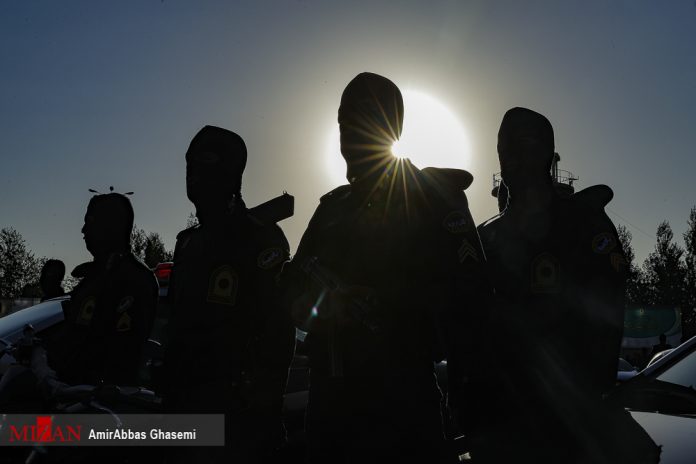
The IRGC’s Beit-al-Moqaddas Command in Kordestan announced that the assault targeted the Hezbollah Resistance Base at the Sarvabad three-way junction in western Iran.

The attackers reportedly used a hand grenade during the incident.

The victims were identified as Alireza Valizadeh and Ayoub Shiri.
Three other individuals were injured and transferred to a local hospital for treatment.

Authorities have condemned the attack, labeling it a terrorist act carried out by members of “anti-revolutionary groups.” Security forces have reportedly launched an operation to identify and apprehend those responsible.

Iranian security forces have periodically clashed with armed groups, mostly foreign-based, on the western border.

Iran daily criticizes years of delay over CFT approval

Tehran Grand bazaar

According to the paper, the Expediency Council last week conditionally approved the Combating the Financing of Terrorism (CFT) bill, a key measure linked to Iran’s potential cooperation with the Financial Action Task Force (FATF).

The report claimed that one cleric’s statement declaring the CFT “forbidden and illegitimate” was among the factors that stalled the decision.

The newspaper questioned the cleric’s authority to issue such religious judgments, saying his “unfounded remarks” contributed to years of economic stagnation and currency devaluation, from 15,000 to 118,000 tomans per US dollar during that period.

The editorial also held the Expediency Council responsible for the delay, asking why members who now consider the bill beneficial opposed it for so long.

It further called for accountability and structural reform within the council, arguing that its members must meet high intellectual and ethical standards to properly safeguard national interests.

The Jomhouri-e Eslami concluded that Iran’s decision-making bodies need greater transparency and responsibility to prevent similar costly delays in the future.

Iranian gov’t spokesperson: US conditions not yet official, cannot be seriously reviewed

Araghchi Witkoff

Addressing questions about reports of a potential meeting between Iranian Foreign Minister Seyed Abbas Araghchi and US envoy Steve Witkoff, Mohajerani said government officials act based on collective decisions rather than personal opinions.

“Neither the foreign minister nor I have the right to express or act upon personal views. The executive branch implements only those matters that have been collectively agreed upon,” she stated.

Speaking at her weekly press conference, Mohajerani also outlined the government’s foreign policy priorities, highlighting regional diplomacy and stronger ties with neighboring countries, including through the Shanghai Cooperation Organization (SCO).

She said Iran is pursuing trade initiatives such as barter mechanisms, border markets, and special economic zones, while also focusing on budget discipline, financial balance, and structural reforms to improve government efficiency.

Mohajerani also emphasized that Iran supports any sustainable peace that leads to an end to the Israeli genocide in Gaza.

Data shows Iran’s oil exports surged in run up to UN sanctions

Iran Oil

Figures released on Monday by a major international tanker tracking service showed that Iran’s oil exports had reached a seven-year record of nearly 2 million barrels per day (bpd) in September.

“Iran’s September 2025 crude oil exports reached levels unseen since mid-2018,” said Tanker Trackers in a post on its X account.

“Boost is believed to be partly attributed to the UN snapback sanctions,” it added, making a reference to the UN sanctions on Iran that were snapped back in late September.

That comes as the US and allies in Europe had anticipated that the UN sanctions and warnings issued about them in September could negatively impact the flow of oil from Iran to major customers like China.

Tanker Trackers’ figures confirm earlier statements by experts and authorities in Iran suggesting that UN sanctions wouldn’t affect Iran’s ability to supply oil to the international markets.

Oil Minister Mohsen Paknejad said last week that UN sanctions would not add any new pressure on the country’s oil exports

Paknejad added that Iran had overcome some of the harshest American sanctions targeting its oil industry in recent years.

The UN re-imposed six sanction resolutions on Iran that had been lifted in 2015 when the country reached an agreement with world powers to settle disputes surrounding its nuclear program.

The sanctions mostly target people and equipment related to Iran’s nuclear activities, as well as an embargo on arms trade.


Trump threatened to pull US out of NATO: Ex-bloc chief

In excerpts from his upcoming memoir On My Watch, Stoltenberg recalls that ahead of a 2018 NATO summit in Brussels, Trump, then in his first term, complained that the US was paying 80-90% of the bloc’s expenses and wasn’t going to do so anymore, threatening to leave.

“Look, if we leave, we leave. You need NATO, desperately. We don’t need NATO,” Stoltenberg quoted Trump as saying, noting that if the US had withdrawn from the bloc, “the alliance would be dead.”

Trump later reportedly made similar remarks during the summit, stating the US “doesn’t need NATO” and would “do our own thing” unless European members increased military spending to 2% of GDP. He also reportedly threatened to walk out, adding, “There’s no reason for me to be here anymore.”

Trump’s attitude reportedly prompted fears that the bloc could fall apart. Stoltenberg says Germany’s then-Chancellor Angela Merkel and French President Emmanuel Macron tried to calm tensions, while former Dutch Prime Minister Mark Rutte, who now leads NATO, helped persuade Trump to stay by noting that bloc members had increased spending by $33 billion.

Stoltenberg says Trump agreed to remain after being publicly credited for that spending rise.

The former NATO chief wrote that if Trump had walked out, it would’ve made the bloc’s treaty and security guarantees worthless. He also added that the episode highlighted how dependent it was on US participation.


Spokesman: Europe has no authority to comment on Iran’s defense capabilities

Esmail Baghaei

The PGCC — comprising Saudi Arabia, the UAE, Bahrain, Kuwait, Oman, and Qatar — and the EU issued a joint statement on Monday during their 29th ministerial meeting, calling on Iran to halt its missile program and to cooperate with the International Atomic Energy Agency (IAEA).

In response, spokesperson Esmail Baqaei on Tuesday dismissed the joint statement’s “baseless and interventionist claims,” including the UAE’s repeated assertions regarding Iran’s sovereignty over the Greater Tunb, Lesser Tunb, and Abu Musa islands.

He condemned the “unwarranted interference” in Iran’s defense and nuclear affairs and warned against divisive European policies in the Persian Gulf.

Baqaei reaffirmed that the three islands are an inseparable part of Iranian territory, stressing that “repeated baseless claims in political statements have no legal value and cannot change geographical and historical facts.”

He advised southern Persian Gulf states to stop repeating “tired and unfounded accusations” against Iran’s territorial integrity and to focus instead on building mutual trust, strengthening regional friendship, and addressing the greatest threat to peace and stability — the Israeli regime.

Criticizing the “subversive role” of certain European countries such as Germany and France — supporters of “the genocidal Israeli regime,” which remains the only nuclear-armed entity in the region — Baqaei said EU interference in Persian Gulf and Sea of Oman affairs does nothing to resolve regional disputes.

The spokesperson also described the joint PGCC–EU statement on Iran’s defense capabilities as “unwarranted and unacceptable interference in matters related to Iran’s national sovereignty.”

He added: “Those who have turned our region into a vast arsenal of advanced and destructive weapons worth hundreds of billions of dollars — and who, through inaction in the face of an expansionist, genocidal regime or by providing it with comprehensive military and political support, have plunged West Asia into endless wars — are in no position whatsoever to comment on Iran’s indigenous and defensive capabilities.”

Baqaei further expressed regret that PGCC member states, instead of holding the EU accountable for its regional policies, have “provided a platform for its deceptive blame-shifting.”

Israel ‘pays people to lie on social media’: Iran’s FM

Abbas Araghchi

Araghchi has denounced a recently revealed Israeli propaganda campaign aimed at drumming up support for the regime on social media.

In a post on his X account on Monday, Araghchi said, “We don’t pay people to lie on social media. That’s what Israel does.”

The comment followed the release of a report by the Quincy Institute, which said that the Israeli regime pays a group of approximately 14 to 18 social media influencers around $7,000 for each promotional post aimed at creating a positive image of Israel in American public opinion.

The publication of this report has drawn significant attention, coinciding with widespread global tensions and criticism regarding Israel’s genocide in Gaza.

Iran objects to British court’s order over NIOC building seizure: Report

Iran Embassy UK

The ruling was issued following a lawsuit filed by Crescent Company, which claimed that the National Iranian Oil Company transferred the property known as “NIOC House” in London to the Oil Industry Employees Pension and Welfare Fund in order to remove its assets from the reach of creditors after an international arbitration award was issued in the company’s favor.

IRNA quoted an unnamed source as saying that Iran formally registered its objection to a UK court ruling on October 3. The court is expected to rule on whether to accept or reject this objection in the coming days.

The source further stated that if the objection is denied and the previous ruling stands, Iranian legal representatives are prepared to appeal the case to the UK Supreme Court.

The Court of Appeal recently upheld a prior decision from the London Court of First Instance, granting authorization to enforce the seizure order for the NIOC’s London building.

The Crescent case dates back to the 2001 gas contract between the National Iranian Oil Company and the Crescent Group, which was not implemented, and the dispute between the parties was referred to international arbitration, and ultimately a verdict was issued in favor of the Emirati company.


EU to curb Russian diplomats’ travel: FT

The European Union

Moscow-sponsored intelligence operatives have been blamed for escalating provocations against Nَ،[ states — from arson and cyber attacks to infrastructure sabotage and drone incursions — in what EU security services call a co-ordinated campaign to destabilise Kyiv’s European allies.

The proposed rules will force Russian diplomats posted in EU capitals to inform other governments of their travel plans before crossing beyond the border of their host country.

The initiative, championed by the Czech Republic, is part of a fresh set of sanctions being drawn up by Brussels in response to Russia’s full-scale invasion of Ukraine. The package requires unanimous support to be adopted. Hungary, the last country opposed to the measure, has dropped its veto, two people briefed on the negotiations said.

However, legal adoption could be delayed by a dispute over Austria’s bid to include another measure that would lift sanctions on assets linked to Russian oligarch Oleg Deripaska, in order to compensate the country’s bank Raiffeisen for damages it had to pay in Russia.

Ambassadors from at least a dozen other capitals said last week they could not back the package if Austria’s proposal was included, the officials said. Further talks will take place on Wednesday.

EU intelligence agencies say that Russian spies, posing as diplomats, often run assets or operations beyond their host countries, in order to better elude counter-espionage surveillance.

“They are posted to one place — but work in another,” said a senior EU diplomat, citing intelligence reports.

“The host country intelligence services know what they are up to but, if they cross the border, it can be harder for that country to keep tabs on them,” the diplomat added.

In particular, the Czech government has been lobbying for restrictions since May last year. Prague has barred a number of Russian diplomats suspected of aiding intelligence activities. However, hundreds are still accredited to neighbouring Austria and from there they can legally cross the border into the Czech Republic.

Jan Lipavský, Prague’s foreign minister, stated that the restrictions were needed to restore reciprocity.

’’There is no ‘Schengen for Russia,’ so it makes no sense that a Russian diplomat accredited in Spain can come to Prague whenever he likes,’’ he told the FT.

‘‘We should apply strict reciprocity to the issuance of short-stay, diplomatic visas under the Vienna Convention.”

In 2014 the Czech Republic suffered one of Russia’s worst sabotage attacks on EU soil when explosions at an ammunition warehouse in Vrbětice killed two people. Prague attributed the attack to agents from Russia’s foreign intelligence agency GRU.

Trump says he made decision on supplying Ukraine with Tomahawk missiles

“I’ve sort of made a decision on that. I would have to ask the question where are they sending them,” he told journalists at the White House on Monday.

“I’m not looking to see escalation,” Trump stressed.

Last month, US Vice President J.D. Vance revealed that the White House was considering supplying Kiev with the rockets, which cost an estimated $1.3 million each and have a range of 2,500km (1,550 miles), meaning that they could potentially reach Moscow and far beyond.

Russian President Vladimir Putin later warned that relations between Moscow and Washington would be ruined in that case. He also argued that Kiev’s forces would be unable to operate such a sophisticated system without the “direct participation of American military personnel.”

Reuters, citing anonymous sources, reported that the US was unlikely to supply Tomahawks to Ukraine, as the current inventories were committed to the US Navy and other uses. The Financial Times also reported that some people inside Trump’s inner circle were skeptical as to the Tomahawks’ ability to change battlefield dynamics.