Sunday, December 28, 2025
Home Blog Page 118

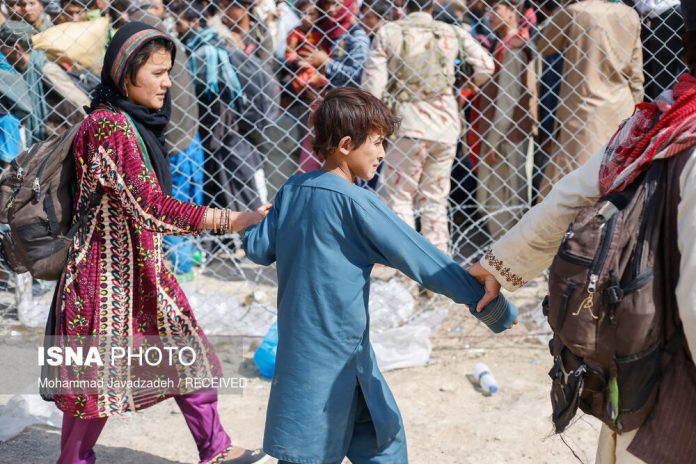
Iranian daily calls for continued expulsions of illegal Afghans amid economic strain

Afghan Refugee

The editorial, citing official reports, said only about 10% of Afghan residents have left in recent months, and that reductions in their numbers have already led to significant savings in consumption of food, housing and services.

It added that, given sanctions, economic difficulties, drought and energy shortages, Iran cannot sustain several million foreign nationals.

Separately, the director-general of the Education Ministry for Tehran county municipalities told the paper that 53,000 Afghan students have registered in schools in Tehran so far this year under a new interior ministry guideline. The director noted that last academic year registrations reached 149,000, a figure the paper said would be far larger if tallied across all 31 provinces.

Tehran’s governor is quoted as saying that the departure of some undocumented Afghans has freed up about 300 classrooms.

The article invoked an “international norm” it described as permitting up to 3% foreign presence per country and urged the interior and foreign ministries to prevent returns of expelled migrants and to restrict visa issuance except in special cases.

The paper called for firm government action and for legal accountability over earlier mass visa grants.

Hamas says wants ‘guarantees’ Israel will end Gaza war

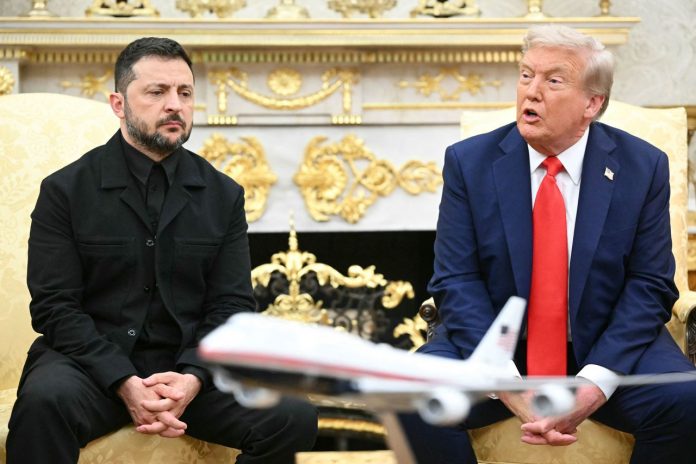
Speaking at the White House on the second anniversary of the start of the war, Trump said that there was a “real chance” of a Gaza deal, as Tuesday’s talks wrapped up in the Egyptian resort town of Sharm el-Sheikh.

Senior Qatari and US officials are headed to Egypt to join the talks that are set to continue on Wednesday.

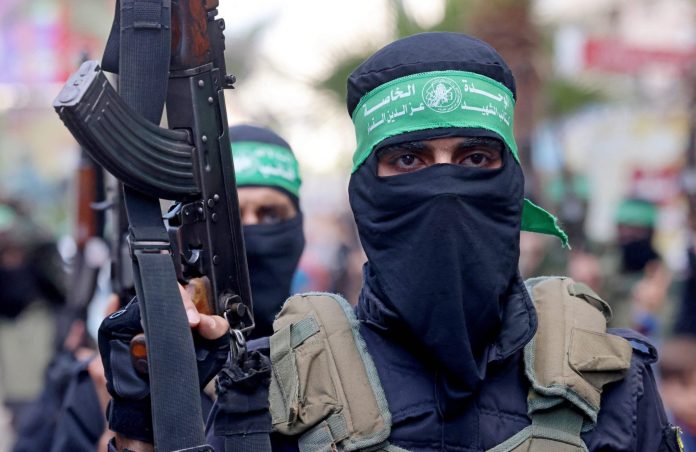
Earlier on Tuesday, an umbrella of Palestinian factions – including Hamas – issuing a statement that promised a “resistance stance by all means”, stressing that “no one has the right to cede the weapons of the Palestinian people” – an apparent reference to a key demand for the disarmament of the armed group contained in Trump’s plan.

Senior Hamas official Fawzi Barhoum stated that the group’s negotiators were seeking an end to the war and “complete withdrawal of the occupation army” from Gaza. But Trump’s plan is vague regarding the exit of Israeli troops, offering no specific timeline for the staged rollout, which would only happen after Hamas returns the 48 Israeli captives it still holds, 20 of whom are thought to be alive.

A senior Hamas official who spoke to Al Jazeera on condition of anonymity after Tuesday’s talks indicated that the group intends to release captives in stages linked to the withdrawal of Israel’s military from Gaza.

The official stated that Tuesday’s talks had focused on scheduling the release of Israeli captives and withdrawal maps for Israeli forces, with the group stressing that the release of the last Israeli hostage must coincide with the final withdrawal of Israeli forces.

Hamas’s top negotiator, Khalil al-Hayya, said the group did “not trust the occupation, not even for a second”, according to Egyptian state-linked Al Qahera News. He added Hamas wanted “real guarantees” that the war would end and not be restarted, accusing Israel of violating two previous ceasefires in the war on Gaza.

Israeli Prime Minister Benjamin Netanyahu released a statement to mark the anniversary of the Hamas-led attack on southern Israel on October 7, 2023, that sparked Israel’s war on Gaza, calling the last two years of conflict a “war for our very existence and future”.

He said that Israel was “in fateful days of decision”, without alluding directly to the ceasefire talks. Israel, he added, would “continue to act to achieve all the war’s objectives: the return of all the hostages, the elimination of Hamas’s rule, and ensuring that Gaza will no longer pose a threat to Israel”.

Despite signs of continued differences, the talks appear to be the most promising sign of progress towards ending the war yet, with Israel and Hamas both endorsing many parts of Trump’s plan.

Qatar’s Ministry of Foreign Affairs spokesperson Majed al-Ansari said the mediators – Qatar, Egypt and Turkiye – were staying flexible and developing ideas as the ceasefire talks progress.

“We don’t go with preconceived notions to the negotiations. We develop these formulations during the talks themselves, which is happening right now,” he added.

Al-Ansari told Al Jazeera that Qatari Prime Minister Sheikh Mohammed bin Abdulrahman bin Jassim Al Thani will join other mediators – including Steve Witkoff and Jared Kushner for the US – on Wednesday in Egypt.

The Qatari prime minister’s “participation confirms the mediators’ determination to reach an agreement that ends the war”, al-Ansari added.

Even if a deal is clinched, questions linger about who will govern Gaza and rebuild it, and who will finance the huge cost of reconstruction.

Trump and Netanyahu have ruled out any role for Hamas, with the former’s plan proposing that Palestinian “technocrats” run day-to-day affairs in Gaza under an international transitional governance body – the so-called “Board of Peace” – that would be overseen by Trump himself and the divisive former United Kingdom Prime Minister Tony Blair.

Barhoum stated that the group wanted to see “the immediate start of the comprehensive reconstruction process under the supervision of a Palestinian national body”.

The Palestinian group has agreed to not participate in the future governance of Gaza after the end of the war.

Still, even amid the talks in Egypt, Israel pressed on with its offensive in Gaza, with drones and fighter jets strafing the skies, targeting the Sabra and Tal al-Hawa residential areas in Gaza City and the road to nearby Shati camp.

At least 10 Palestinians were killed in Israeli attacks across Gaza on Tuesday, according to the official Palestinian news agency Wafa, adding to the grim toll of more than 66,600 deaths over the entire conflict. More than 100 people have been killed in Gaza by Israel since Friday, the day Trump called on Israel to halt its bombing campaign.

Iran summons European envoys over PGCC-EU statement

The Iranian Foreign Ministry

The development took place shortly after issuance of the joint statement that had disputed Iran’s ownership of a trio of Persian Gulf islands, besides portraying the Islamic Republic’s defensive missile might and its peaceful nuclear energy program in a bad light.

Addressing the envoys, Deputy Foreign Minister for Political Affairs, Majid Takht-Ravanchi formally conveyed the Islamic Republic’s “strong protest” regarding the meddlesome stances.

Takht-Ravanchi reaffirmed Iran’s “absolute and permanent” sovereignty over the Iranian islands of Greater Tunb, Lesser Tunb, and Abu Musa, calling them “inseparable” parts of the country’s territory.

European support for “baseless” remarks to the contrary violates the principle of respect for national sovereignty and territorial integrity, the official added, and called the statement politically-charged and biased.

Additionally, Takht-Ravanchi vehemently denounced allegations aimed at tarnishing Iran’s missile program, calling them “clear interference” in the Islamic Republic’s internal affairs.

He rejected any false claims concerning the program as “exaggerated narratives,” and stressed that Iran’s indigenous defensive capacities, including its missile power, were part of its inherent right to self-defense and a guarantor of regional stability and security.

Elsewhere in his remarks, the diplomat strongly criticized the European envoys over the statement’s similarly false claims about Iran’s nuclear program.

“Instead of repeating baseless and stereotypical accusations regarding Iran’s nuclear program, the European parties should be held accountable for their own destructive conduct” that sabotaged a 2015 nuclear deal between the Islamic Republic and others, he stated.

The official was referring to the move that saw the European trio of the UK, France, and Germany, which are part of the deal, suspend their trade with Iran after the United States unilaterally and illegally left the agreement in 2018 and returned its sanctions against Tehran.

The official also slammed the troika’s triggering the agreement’s so-called “snapback” mechanism in August, which led to re-imposition of nuclear-related sanctions against the Islamic Republic.

He noted how the trio’s own sheer non-commitment to the deal had already robbed them of any right to resort to the mechanism.

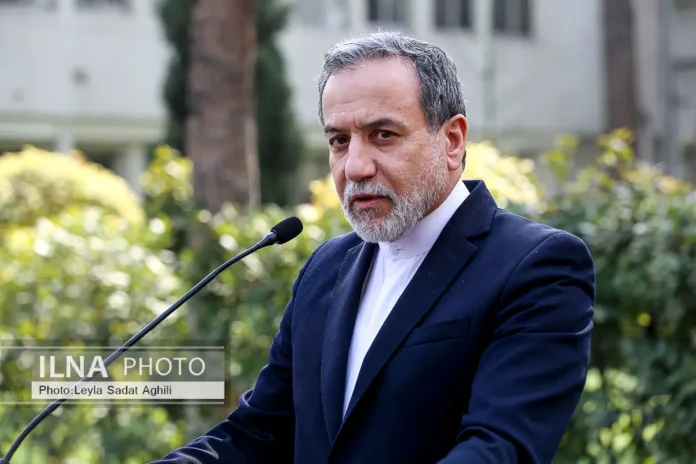
Iran FM to Trump: With zero uranium enrichment, there won’t be any deal

Abbas Araghchi

“When I left for the fifth round of talks with Mr. Whitcoff on May 23, I wrote: ‘Zero nuclear weapons equals agreement; zero enrichment equals no agreement,’” Araghchi stated.

He added that if Trump “looks at the minutes of those negotiations—which were recorded by the mediators—he will see how close we were to celebrating a new and historic nuclear agreement.”

The Foreign Minister stressed that the U.S. administration should have learned from past mistakes. “There was never any intelligence proving that Iraq concealed weapons of mass destruction. What followed were unimaginable destructions, thousands of American casualties, and seven trillion dollars wasted from U.S. taxpayers’ money,” he said.

Araghchi compared the current approach to that period, noting that “likewise, there is no ‘intelligence’ showing that Iran was a month away from developing nuclear weapons had Israel not deceived the U.S. into attacking the Iranian people.”
He said the Israeli regime, after the failure of that operation, “is now trying to fabricate an imaginary threat out of Iran’s defensive capabilities,” while “Americans are tired of fighting Israel’s endless wars.”

Underscoring Iran’s resilience, Araghchi said: “Iran is a great nation, the heir to a great ancient civilization. Buildings and machinery may be destroyed, but our willpower will never be shaken. Insisting on such miscalculations will solve nothing. There is no solution other than reaching a negotiated one.”

Report: Israel unable to wage wars on Gaza, Lebanon, Iran without US support

The reports, which were released by the Costs of War Project at Brown University, found that without US weapons and money, Israel wouldn’t have been able to sustain its genocidal war on the Gaza Strip, start a war with Iran, or repeatedly bomb Yemen.

The report’s findings are also backed up by analysts who stated that Israel’s wars in the besieged and bombardment enclave and in the wider region could not have continued without US financial and diplomatic support.

Israel’s war on Gaza alone has killed more than 67,150 people and wounded another 169,700 since October 2023.

Thousands are still believed to be under the Gaza Strip’s ruins, while Israel has killed dozens in strikes on Yemen and killed more than 1,000 people when it attacked Iran in June.

It increased raids in the occupied West Bank and Jerusalem; killed over 4,000 people in Lebanon while eviscerating swaths of villages; invaded and occupied Lebanese and Syrian land.

But Israel couldn’t have maintained these wars without constant US support, researchers found.

“Given the scale of current and future spending, it is clear the [Israeli army] could not have done the damage they have done in Gaza or escalated their military activities throughout the region without US financing, weapons, and political support,” read the report – US Military Aid and Arms Transfers to Israel, October 2023–September 2025 – by William D Hartung, a senior research fellow at the Quincy Institute for Responsible Statecraft.

Hartung’s report was jointly released by the Costs of War and the Quincy Institute, which describes itself as promoting “ideas that move US foreign policy away from endless war, toward military restraint and diplomacy in the pursuit of international peace”.

Hartung’s findings and a companion report by Linda J Bilmes, an expert on budgeting and public finance at the Harvard Kennedy School, found that the US spent “a total of $31.35 – $33.77 billion and counting” since October 7, 2023 in military aid to Israel and in “US military operations in the region”.

They show how US support for Israel has helped it continue to wage war on multiple fronts for two years, and analysts backed up the reports’ conclusions.
The US has long been Israel’s most fervent backer. When it comes to US foreign aid, Israel is the largest annual recipient (at around $3.3bln yearly) and the largest cumulative one (more than $150bln until 2022).

Over decades and despite the changing of administrations, US support for Israel was constant.

Hartung’s report specifically mentions that the administrations of both US President Joe Biden and his successor, Donald Trump, committed tens of billions of dollars in arms sales agreements, including services and weapons that will be paid for in the coming years.

However, many Americans have started to move away from the mainstream position on Israel. In recent months, as scholars declared the Zionist regime’s actions in Gaza a genocide, public perception of Israel in the US has severely degraded.

This drop is also true among American Jews. According to a recent Washington Post poll, four in 10 US Jews believe Israel is committing genocide, while more than 60 percent say Israel has committed war crimes in Gaza.

A new poll from The New York Times and Siena University also found that nearly two years into the war in Gaza, American support for Israel has undergone a seismic reversal, with large shares of voters expressing starkly negative views about the Israeli government’s management of the conflict.

Disapproval of the war appears to have prompted a striking reassessment by American voters of their broader sympathies in the decades-old conflict in the region, with slightly more voters siding with Palestinians over Israelis for the first time since The Times began asking voters about their sympathies in 1998.

In the aftermath of the Hamas-led attacks on the occupied territories in October 2023, American voters broadly sympathized with Israelis over Palestinians, with 47 percent siding with Israel and 20 percent with Palestinians. In the new poll, 34 percent said they sided with Israel and 35 percent with Palestinians. Thirty-one percent said they were unsure or backed both equally.

A majority of American voters now oppose sending additional economic and military aid to Israel, a stunning reversal in public opinion since the October attacks. About six out of 10 voters said that Israel should end its military campaign, even if the remaining Israeli hostages were not released or Hamas was not eliminated. And 40 percent of voters said Israel was intentionally killing civilians in Gaza, nearly double the number of voters who agreed with that statement in the 2023 poll.

Analysts believe that could have a big impact going forward for anyone in US politics.

In addition to US public criticism of Israel’s actions in the Middle East, analysts say figures like the ones shown by the Costs of War Project’s reports may also draw ire from Americans frustrated by where their tax dollars are going.


President Pezeshkian says Iran not to become battleground for foreign aggressors

Speaking at the National Day of Villages and Nomads, President Masoud Pezeshkian stressed, “We will never allow Iran to become a field for bandits or foreign aggressors.”

Pezeshkian declared, “We will overcome all challenges with strength. Through knowledge, unity, and wisdom, we will emerge from every crisis with our heads held high.”

He added that “false claimants of human rights, blinded by money and power, will never stop their oppression.”

The president further stated, “The world’s bullies remain blind to their own crimes.”


Iran’s navy cmdr.: New joint Caspian drill planned soon

Shahram Irani

Speaking at a meeting of Caspian Sea naval commanders hosted by Russia in St. Petersburg, Rear Admiral Irani expressed satisfaction over the recent combined exercise in Bandar Anzali and the southern Caspian coast, describing it as a successful example of regional cooperation.

“The Caspian Sea belongs exclusively to its five littoral states—Iran, Russia, Kazakhstan, Turkmenistan, and the Republic of Azerbaijan—and all issues concerning it must be resolved only by these countries,” he said.

“The Caspian Sea is no place for transregional powers, and the coastal nations will not permit their interference.”

He underscored that the littoral countries possess sufficient capability to ensure lasting security in the region while promoting economic vitality and addressing environmental challenges.

Admiral Aleksandr Moiseyev, Commander of the Russian Navy, praised the strong coordination among the Caspian states, saying such meetings help align perspectives, strengthen regional synergy, and create equitable opportunities for economic cooperation.

The gathering brought together the naval commanders of Iran, Russia, Kazakhstan, and Azerbaijan to reinforce maritime collaboration in securing stability, supporting economic activity, and addressing shared issues in the Caspian basin.

Rear Admiral Irani attended the meeting accompanied by Iran’s ambassador to Russia and senior naval officers.

Iranian gov’t spokesperson briefly leaves press conference due to illness

According to local media, the incident occurred during Mohajerani’s meeting with reporters when she left the room unexpectedly, prompting a brief pause in the event.

Upon her return, Mohajerani apologized to journalists for the interruption, explaining that her condition was due to exhaustion.

“I apologize, it happens to anyone. The workload and pressure sometimes cause weakness,” she said with a smile.

The press conference resumed shortly afterward, during which Mohajerani addressed a range of issues including Iran’s regional diplomacy, economic reforms, and recent comments about potential US proposals.

Day one of Gaza ceasefire talks ends on ‘positive’ note in Egypt

Gaza War

Negotiators are set to return for more discussions on Tuesday.

Sources told Al Jazeera Arabic that the meeting in the Red Sea resort city of Sharm el-Sheikh on Monday was “positive” and that a roadmap was drawn up for how the current round of talks would continue.

The Hamas delegation told mediators that Israel’s continued bombing of Gaza poses a challenge to negotiations on the release of captives, Al Jazeera Arabic reported.

The Hamas delegation included Hamas leaders Khalil al-Hayya and Zaher Jabarin, two negotiators who survived an Israeli assassination attempt in Qatar’s capital Doha that killed five people last month.

The day-one talks covered the proposed exchange of prisoners and captives, a ceasefire, and humanitarian aid entering Gaza, according to Egypt’s state-linked Al-Qahera News.

White House press secretary Karoline Leavitt also said Trump was pushing for an early exchange of Israeli captives and Palestinian prisoners, in a bid to build “momentum” to implement other parts of his plan to end the Gaza war.

“The technical teams are discussing that as we speak, to ensure that the environment is perfect to release those hostages,” Leavitt stated, adding that teams were “going over the list of both the Israeli hostages and also the political prisoners who will be released”.

Trump, speaking to reporters from the Oval Office on Monday afternoon, said “we have a really good chance of making a deal”, while also noting that he still has his own “red lines”.

“But I think we’re doing very well. And I think Hamas has been agreeing to things that are very important,” Trump added.

Trump’s son-in-law, Jared Kushner, a real estate developer, is also reportedly part of the US delegation.

Al-Qahera has also confirmed that the talks were expected to continue on Tuesday, which marks two years since the Hamas attack on Israel that killed 1,200 people and saw about 250 people taken captive.

Since then, Israel has killed at least 67,160 Palestinians and wounded 169,679 in Gaza, in a war that has been described as genocidal by a United Nations inquiry, leading genocide scholars and leading human rights groups, including Israeli nonprofits.

Even as the talks were held on Monday, Israel killed at least 10 Palestinians in attacks across Gaza, including three who were seeking humanitarian aid, according to Al Jazeera sources.

United Nations Secretary-General Antonio Guterres shared a social media post late on Monday, according to time in New York, acknowledging the second anniversary of Hamas’s “abhorrent large-scale terror attack on Israel” on October 7, 2023.

Guterres also said the “recent proposal” put forward by Trump “presents an opportunity that must be seized to bring this tragic conflict to an end”.

“A permanent ceasefire and a credible political process are essential to prevent further bloodshed and pave the way for peace,” the UN chief added.


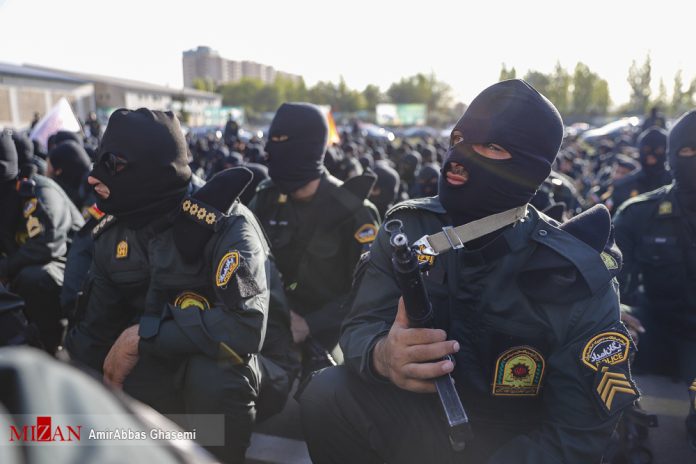
Two security forces killed in terrorist attack in western Iran

IRGC

The IRGC’s Beit-al-Moqaddas Command in Kordestan announced that the assault targeted the Hezbollah Resistance Base at the Sarvabad three-way junction in western Iran.

The attackers reportedly used a hand grenade during the incident.

The victims were identified as Alireza Valizadeh and Ayoub Shiri.
Three other individuals were injured and transferred to a local hospital for treatment.

Authorities have condemned the attack, labeling it a terrorist act carried out by members of “anti-revolutionary groups.” Security forces have reportedly launched an operation to identify and apprehend those responsible.

Iranian security forces have periodically clashed with armed groups, mostly foreign-based, on the western border.