Tuesday, April 7, 2026
Home Blog Page 118

Ukraine, Europe allies support peace negotiations based on current frontline

Trump is seeking to broker a peace deal to end the three-and-a-half-year war, triggered by Russia’s 2022 invasion. Last week, he called on Moscow and Kyiv to stop the fighting “where they are” after talks with both sides.

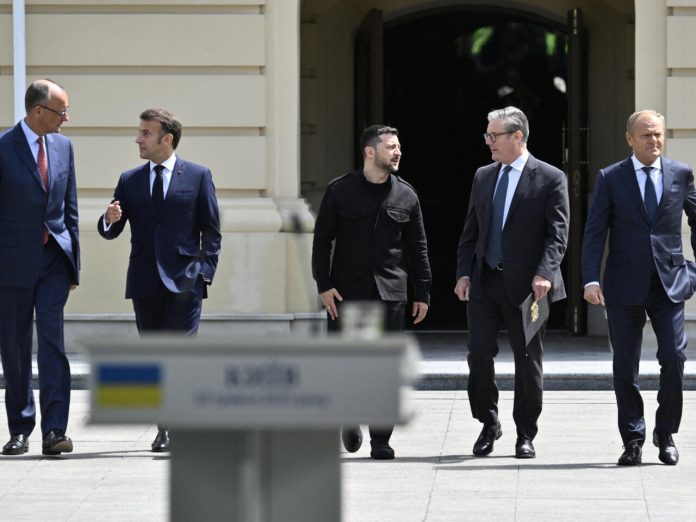
“We strongly support President Trump’s position that the fighting should stop immediately, and that the current line of contact should be the starting point of negotiations,” said a statement signed by Ukraine’s Volodymyr Zelensky, EU chiefs Antonio Costa and Ursula von der Leyen, France’s Emmanuel Macron, Germany’s Friedrich Merz, Britain’s Keir Starmer and Italy’s Giorgia Meloni.

“We remain committed to the principle that international borders must not be changed by force,” said the leaders, who also included those of Denmark, Finland, Norway and Poland.

EU leaders are set to close ranks in support of Ukraine at a Brussels summit on Thursday — followed a day later by a “coalition of the willing” meeting of European leaders in London to discuss the next steps to help Kyiv.

Trump has announced his intention to meet Russian President Vladimir Putin in Budapest in coming weeks, but it was not clear whether Zelensky — who was shut out from the previous meeting in August in Alaska — would attend.

“We are clear that Ukraine must be in the strongest possible position — before, during, and after any ceasefire,” the leaders on Tuesday noted.

“We must ramp up the pressure on Russia’s economy and its defence industry, until Putin is ready to make peace,” they added.

The European Union is considering a new 140-billion-euro ($163-billion) loan for Ukraine funded by frozen Russian central bank assets, which will be discussed at Thursday’s summit in Brussels.

Officials are hoping they will give a greenlight for a more detailed legal proposal to be drawn up.

 

Iran attends FATF plenary in Paris for first time in six years

France, Paris, Cityscape with french flag and Eiffel tower in background

The participation came at the official invitation of the global financial watchdog.

Hadi Khani, Deputy Minister of Economic Affairs and head of Iran’s Financial Intelligence Center, took part in the session to present updates on the country’s Action Plan, particularly regarding the recent approval of legislation to join the UN Convention against Transnational Organized Crime, known as the Palermo Convention.

During the meeting, the Iranian delegation outlined the legislative process and the government’s implementation efforts. Discussions also focused on scheduling follow-up sessions between Iran and FATF representatives to clarify outstanding issues and respond to member questions.

In addition to Iran, the plenary reviewed the progress of several countries on the FATF “grey list,” including Monaco, Bulgaria, Syria, Yemen, Algeria, Mozambique, Burkina Faso, Nigeria, South Africa, the Democratic Republic of Congo, South Sudan, Cameroon, Namibia, Angola, Gibraltar, Kenya, Myanmar, Vietnam, Nepal, Laos, and Venezuela.

The FATF plenary provides member and observer states an opportunity to assess each country’s efforts to strengthen anti–money laundering and counter-terrorism financing frameworks.

Deputy FM: IAEA seeks to inspect Iran’s undamaged nuclear sites

IAEA

Qaribabadi said on Monday that, under the Cairo understanding between Iran and the IAEA, such requests were previously answered within a week, but they now fall under the authority of the SNSC.

Referring to the Iranian Parliament’s resolution and the designation of the Supreme National Security Council as the decision-making body, he noted that any inspection request will be submitted to the Council and Iran will act according to its decision.

He added that during the implementation of the Cairo understanding, IAEA inspectors had visited several undamaged Iranian facilities, but such requests are no longer handled within that framework.

Iranian Foreign Minister Seyed Abbas Araqchi and IAEA Director General Rafael Grossi reached an understanding in Cairo on September 8 on a new cooperation mechanism following attacks on safeguarded nuclear facilities in Iran.

After the agreement was signed, Araqchi stated that the understanding would no longer be valid if any hostile act were committed against Iran or if the “Snapback” mechanism were triggered.

On October 4, following the move by the three European countries — the UK, France, and Germany — to activate the Snapback mechanism, Iran’s Foreign Minister declared that the Cairo agreement could no longer serve as a basis for cooperation with the IAEA.


IRGC commander warns of crushing response to any attack on Iran

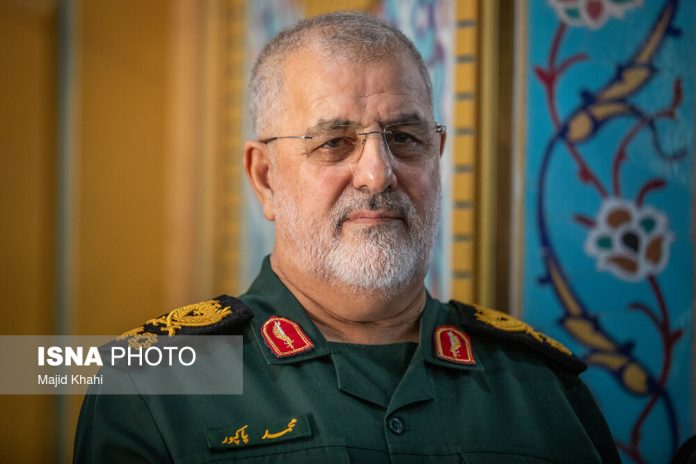
Speaking in Tehran on Tuesday during a meeting with Iraqi National Security Adviser Qasim al‑Araji, Major General Pakpour said the Zionist‑American enemy had relied on its missile shield, including THAAD, but Iranian missiles were fired and struck their intended targets.

General Pakpour stressed that Iran’s armed forces are at full readiness and reiterated that any hostile act against the country would bring a devastating response.

The Islamic Republic has so far responded to aggression by the Zionist regime on three occasions in operations dubbed “True Promise”, the most recent of which occurred during the 12‑day conflict last June.

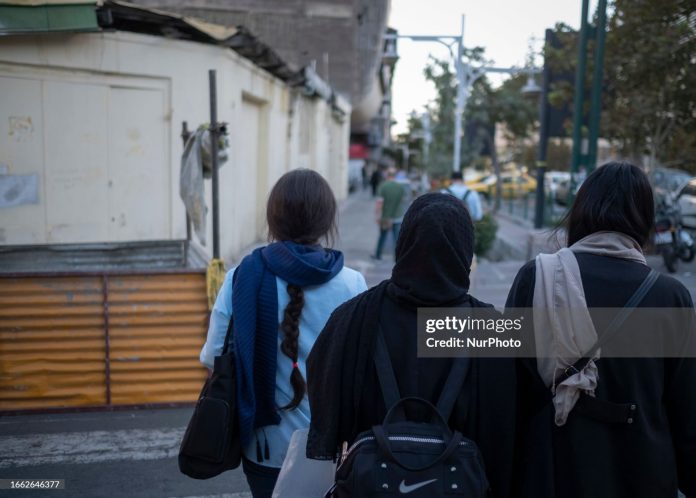
Iran govt. spokesperson: No special budget allocated for ‘hijab situation room’; enforcement must respect social realities

Iran Hijab

Speaking at a weekly press briefing on Tuesday, Mohajerani was responding to recent remarks by the head of Tehran’s Promotion of Virtue Headquarters, who said an operations room on hijab enforcement had been formed, involving 80,000 volunteers.

Mohajerani reiterated that cultural actions should take into account the broader social environment. “We must be cautious about unconventional behavior in society, but we also believe cultural norms should be strengthened through social understanding, not force,” she said.

Quoting President Massoud Pezeshkian, she added, “Hijab cannot be imposed by force, just as no one has managed to forcibly remove it from Iranian women. Such experiences have failed.”

Mohajerani also said the president is committed to fiscal discipline and confirmed that no dedicated funds have been assigned for hijab enforcement.
She urged against creating social polarization and stressed Iran’s long cultural tradition of modesty and dignity.

US opposes EU plan for frozen Russian assets: Bloomberg

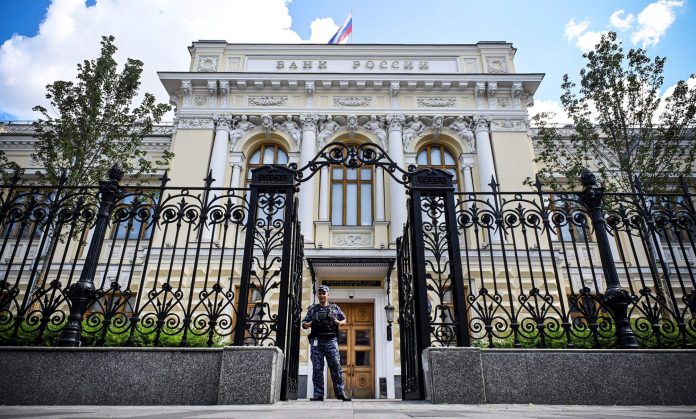
Russian Central Bank

US officials reportedly conveyed the position to their European colleagues during the International Monetary Fund meeting in Washington last week. The US cited risks to market stability associated with the potential seizure of the Russian assets, one of the sources claimed.

The development constitutes a major setback for the EU, which has been trying to secure broader support within the G7 group for the potential action on the Russian assets, Bloomberg noted.

Western nations froze an estimated $300 billion in Russian assets after the escalation of the Ukraine conflict in February 2022 – some €200 billion ($213 billion) of which is held by the Brussels-based clearinghouse Euroclear. Kiev’s Western backers have already tapped into the revenues generated by the funds to bankroll Ukraine.

Recently, the EU has been in discussion of a plan to provide a so-called ‘reparations loan’ of up to €140 billion ($163 billion) to Kiev, while using frozen Russian assets as collateral to back the bloc-issued bonds. The move would effectively amount to their seizure, given that Ukraine would be obliged to repay the loan only once Russia compensates it for the damages inflicted during the conflict.

The proposal has been backed by Germany, France, and several eastern EU countries but faced strong resistance from Belgium. Prime Minister Bart De Wever has insisted that any liability for the proposed move must be shared among all the bloc members rather than Belgium only.

Supporters of the plan argue that the scheme falls short of a seizure and insist Russia could be ultimately forced to pay up as a part of a future peace settlement. Moscow, however, has squarely described any attempts to use its assets and proceedings generated from them as “theft,” threatening retaliation. Third-party skeptics, including IMF chief Christine Lagarde, have also warned that the move could undermine global trust in the EU’s financial system and heavily damage markets.


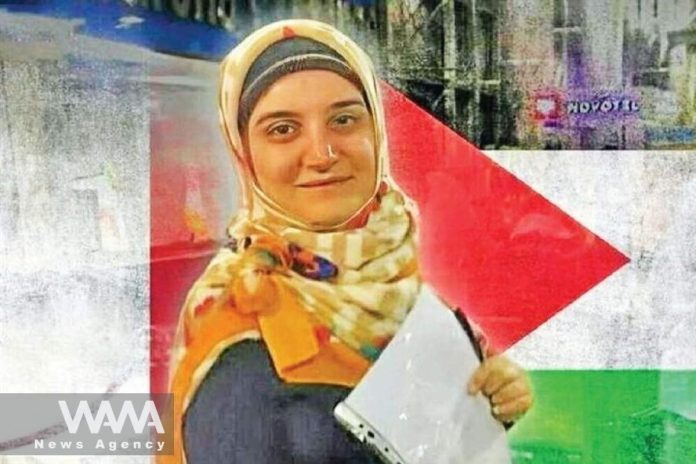
Iran condemns France’s detention of citizen Mahdieh Esfandiari, calls it ‘hostage-taking’

Jalalzadeh said Esfandiari was detained solely for participating in a Telegram channel supporting the Palestinian people, including women and children, and highlighted the contradiction of being detained by a country that presents itself as a “land of freedom.”

According to Jalalzadeh, Iran’s Foreign Ministry initiated consular, legal, and political measures within 24 hours of learning about Esfandiari’s arrest in March.

The Iranian ambassador in France engaged with the French Foreign Ministry, local police, and the judiciary to follow up on her case.

He confirmed that a lawyer has been assigned to Esfandiari, a 39-year-old academic, and that nearly ten consular visits have taken place, with all legal matters being closely monitored.

Jalalzadeh referred to a recent statement by Iran’s foreign minister indicating that Esfandiari is on a potential exchange list and that a political-consular package has been designed between the two countries.

He expressed hope that the process will soon succeed, allowing Esfandiari to return to Iran.

UN says all staff inside compound in Yemeni capital now free

Yemen's Houthi

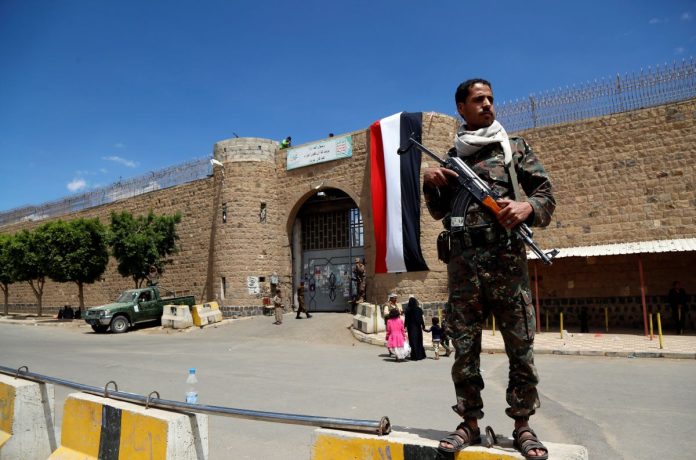
“All fifteen UN international staff are now free to move inside the UN compound in Sana’a and are in contact with their respective UN entities and families,” the team announced in a written update on the situation in the capital.

The UN also confirmed the release of personnel detained by Houthis, saying: “The five national staff who had been detained since 18 October within the same UN compound have been released.”

“Security personnel of (Houthi group) Ansar Allah have vacated the UN compound in Sana’a,” it added.

The statement follows an incident on Saturday in which Houthi forces stormed a UN residential compound in Sanaa and detained UN staff.

Yemen remains mired in one of the world’s worst humanitarian and economic crises, fueled by nearly a decade of war between government forces and the Houthis.

The war in Yemen has claimed over 150,000 lives and has led to one of the worst humanitarian crises globally, resulting in tens of thousands of additional deaths.


Iraq says some US military personnel will stay due to Daesh threat in Syria

US Forces Syria

Washington and Baghdad agreed last year to wind down a US-led coalition fighting IS in Iraq by this September, with US forces departing some bases where they have been stationed.

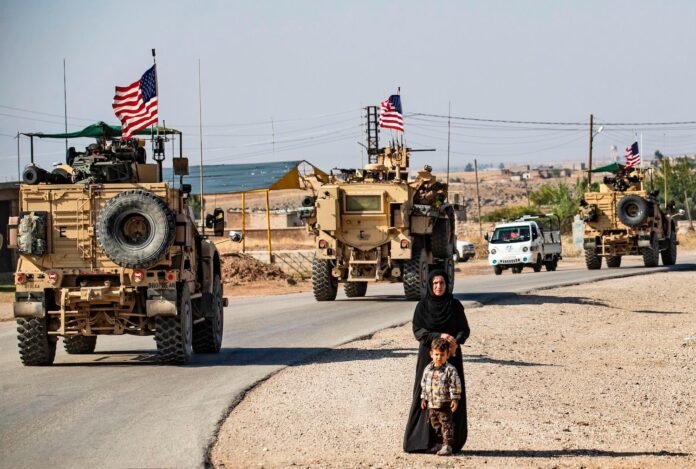
Al-Sudani told journalists in Baghdad that US military advisers and support personnel are now stationed at the Ain al-Asad air base in western Iraq, a base adjacent to Baghdad airport and the al-Harir air base in northern Iraq.

The Iraqi PM noted that the agreement originally stipulated a full pullout of US forces from Ain al-Asad by September, but that “developments in Syria” since then required maintaining a “small unit” of between 250 and 350 advisers and security personnel at the base.

He said they would work to support counter-IS surveillance and coordination with the al-Tanf base in Syria.

He added that other US sites are witnessing “gradual reductions” in personnel and operations.

After the fall of Syria’s former long-time leader Bashar al-Assad in a rebel offensive in December, fears arose in Iraq of an IS resurgence taking advantage of the ensuing security vacuum and weapons abandoned by the former Syrian army.

Al-Sudani maintained that the extremist group, which seized wide swathes of territory in Iraq and Syria a decade ago, “no longer poses a significant threat inside Iraq.”

Iraq has sought to balance its relations with the United States and neighbouring Iran and to avoid being pulled into regional conflicts, a policy that the prime minister said he will continue.

“We put Iraq first and we do not wish to act as a proxy for anyone,” he said, adding, “Iraq will not be a battlefield for conflicts.”

At the same time, al-Sudani urged the US to return to negotiations with Iran, describing the Trump administration’s “maximum pressure” approach to curtail Iranian influence as “counterproductive.”

“Iran is an important and influential country that must be treated with respect and through direct dialogue,” he stated.

There have been tensions between Baghdad and Washington over the presence of Iran-backed militias in Iraq.

The Popular Mobilisation Forces (PMF), a coalition of militias that formed to fight IS, was formally placed under the control of the Iraqi military in 2016 but in practice still operates with significant autonomy.

The Iraqi parliament has been considering legislation that would solidify the relationship between the military and the PMF, drawing objections from Washington.

Al-Sudani did not directly address the proposed legislation but said his government’s programme “includes disarmament and national dialogue to remove any justification for carrying weapons.”

“We encourage all factions to either integrate into state institutions or engage in political life,” which could include becoming political parties and running for election, he added.

Iraq is preparing for parliamentary elections next month that will determine whether al-Sudani serves a second term.

“Armed factions that have transformed into political entities have the constitutional right to participate” in those elections, the prime minister continued.


Hamas hands over remains of another Israeli captive to Red Cross

Israel Hostages

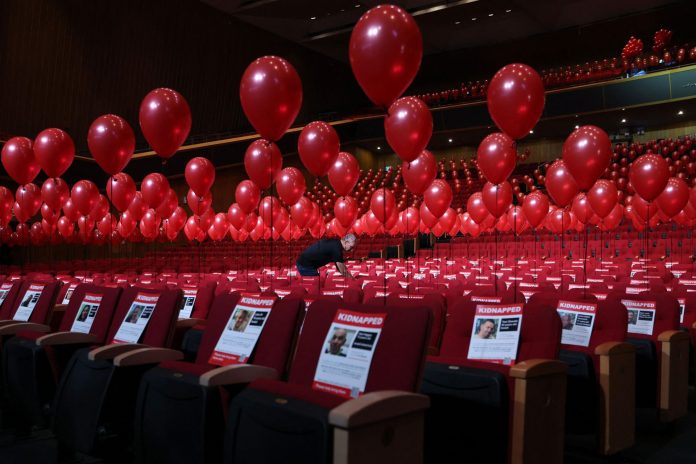
A military statement said the coffin has been transferred to the Red Cross and is on its way to Israeli troops in the Gaza Strip.

Hamas earlier announced that it would hand over the body of another Israeli captive under the ceasefire deal after it was recovered from under the rubble.

Hamas has already released 20 living Israeli hostages and handed over the remains of 13 more captives in exchange for nearly 2,000 Palestinian prisoners under the ceasefire agreement which took effect between Israel and Hamas on Oct. 10, based on a phased plan presented by US President Donald Trump.

Since October 2023, Israel’s genocidal war has killed more than 68,000 people and injured more than 170,000, according to the Gaza Health Ministry.