Thursday, January 15, 2026
Home Blog Page 1150

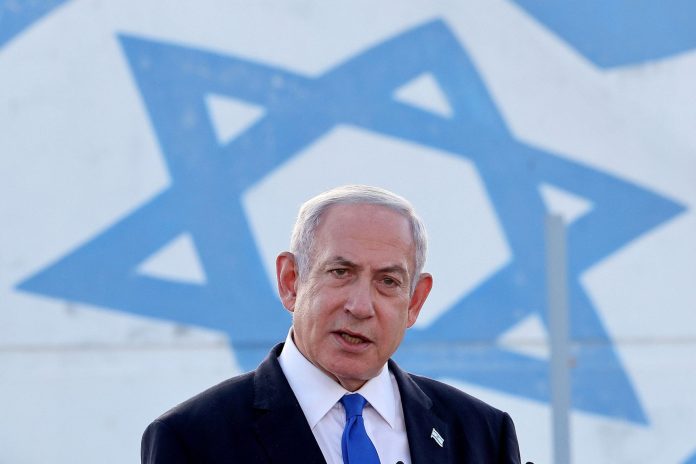
Israeli opposition leader: Netanyahu lying over Gaza war

Benjamin Netanyahu

“Netanyahu is doing what he has been doing throughout his life: incitement, lying, and producing hatred,” Lapid said on social media platform X on Wednesday.

“Now, he (Netanyahu) is doing it only amid a bitter war where soldiers are killed every day,” he added.

Lapid stated while Israeli soldiers are being killed in Gaza, “Netanyahu has once again invented disputes with the US, with me, and with [war cabinet ministers] Benny Gantz and Gadi Eisenkot.”

Netanyahu opposes US efforts to allow the Palestinian Authority to govern the Gaza Strip following the end of the ongoing Israeli war on the blockaded territory.

Washington, for its part, argues that there must be a Palestinian authority or government in Gaza in the post-war period.

Israel has bombarded the Gaza Strip from the air and land, imposed a siege and mounted a ground offensive in retaliation for a cross-border attack by Hamas on October 7.

At least 18,600 Palestinians have been killed and 50,600 injured in the Israeli onslaught since then, according to Gaza’s health authorities.

The Israeli death toll in the Hamas attack stood at 1,200, while around 139 hostages remained in captivity, according to official figures.

Israel says to continue Gaza war, 18,600 Palestinians killed so far

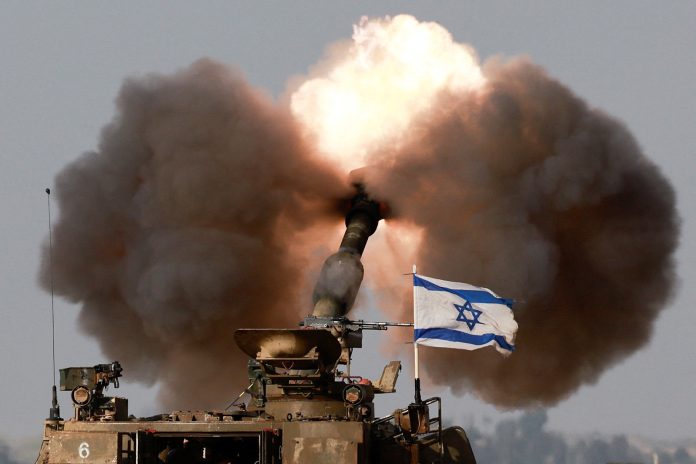
Israeli artillery unit

“Israel will continue the war against Hamas with or without international support,” Cohen stated at a meeting with Australian Assistant Minister for Foreign Affairs Tim Watts.

“The ceasefire at the current stage is a gift to the Hamas terrorist organization and will allow it to return and threaten the people of Israel,” he added.

On October 7, Hamas launched a large-scale rocket attack against Israel from the Gaza Strip and breached the border, killing over 1,200 people and abducting some 240 others.

Israel launched retaliatory strikes, ordered a complete blockade of Gaza and launched a ground incursion into the Palestinian enclave with the declared goal of eliminating Hamas fighters and rescuing the hostages. Over 18,600 people have been killed so far in Gaza as a result of the escalation, the local authorities confirmed.

The Gaza Strip was divided into north and south sections by the Israeli army in November.

British MPs call on UK government to halt arms exports to Israel over war crimes

Gaza War

The lawmakers have questioned what the UK government knows about how British weapons are being used and, consequently, what assessments have been made that the government is following its own arms export laws.

The government is obligated under those laws to suspend arms export licences if it determines that there is a clear risk that British weapons might be used in violations of international law.

According to the Campaign Against the Arms Trade (CAAT), the UK government has licensed at least £472m worth of military exports to Israel since May 2015.

“Do the government know whether British weapons or military equipment are being used in Gaza or not?” said Labour MP John McDonnell, who also asked whether spare parts for F-16 and F-35 aircraft used in bombing had been shipped to Israel.

McDonnell stated he believed arms transfers should be suspended and a “complete review” undertaken, as the government had done during the wars in Gaza in 2009 and 2014, “to see exactly how what we have supplied is being used and whether it is being used in Gaza, because if it is, I am afraid we [have] become complicit in the war crime”.

McDonnell added that many of the questions he posed came from an 8 December letter sent by several UK-based civil society organisation to the government, calling for an immediate end to UK arms transfers to Israel.

McDonnell asked Trade Minister Greg Hands, who was present, if he had seen the letter. Hands said he hadn’t personally seen it, but would find it and see if there was a response.

“As a matter of course, we at DBT [the Department of Business and Trade] respond to letters from non-governmental organisations,” Hands stated.

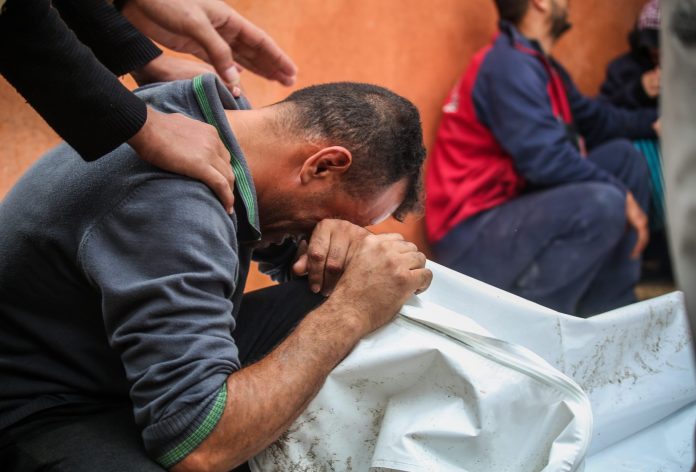
Labour MP Zarah Sultana told the stories of Palestinians who have been killed in Gaza in recent weeks, including a teenager who wanted to be a doctor, a mother and baby killed in their sleep, and a child whose lifeless body was cradled by her grandfather after an air strike.

“I want to remind colleagues and the whole House of the shared humanity of those being slaughtered in Gaza today,” she said, adding, “Whether we like it or not, this place is deeply complicit in the atrocities we see being inflicted on the Palestinian people.”

Sultana, who called the debate, introduced a bill this week which she said would launch an investigation into UK arms sales and suspend them to any state where they might be used in violation of international law, including Israel and Saudi Arabia.

She also noted that the true value of UK arms transfers to Israel is “shrouded in secrecy” because publicly disclosed figures don’t include items sold under opaque open licences which keep the value of arms and their quantities secret.

Independent MP Angus Brendan MacNeil said while MPs and the public might not know the true figure, he wondered if more transparency should be expected from UK companies.

“Should we not be able to expect more of companies in the UK, and that they will not be like immoral drug dealers on the corner, selling to whoever, whenever, regardless of the consequences?” he continued, adding, “We expect companies that live among us in the UK not to be funding or aiding and abetting death in Gaza, as is happening at the moment.”

The Palestinian Ministry of Health announced on Wednesday that the Gaza death toll since the start of the war on 7 October has now reached 18,600, including over 7,000 children.

Last week, the UK abstained from voting on a UN Security Council resolution, submitted by the United Arab Emirates, to halt fighting in Gaza. The US was the sole country to vote against.

The MPs’ comments also came as the UK’s leading arms export monitoring organisations raised concerns that the parliamentary committee tasked with scrutinising arms export policy has not been convened since early this year.

The organisations called on the Committees on Arms Export Controls (CAEC) to hold an inquiry into UK-made weapons used in Israel and Palestine “as a matter of urgency”.

“They have not met since March,” Liberal Democrat MP Richard Foord said, adding, “That is outrageous, and we need to do something about it.

“Frankly, we do not debate arms transfers very often. One reason for that is that we assume that select committees are all over this, but that is not the case.”

Several MPs who spoke defended UK arms transfers to Israel, including Democratic Unionist Party MP Jim Shannon, who said UK aerospace and defence company Thales employs 500 people and contributes £77m to the GDP of Northern Ireland.

Shannon said it is “right and proper” that the government ensure arms export licensing is in line with its international obligations, but that he believes Israel is operating under international law and so arms sales “can and should” continue.

“I know the benefit of arms deals to my local economy, I see the benefit of the product in the war in Ukraine, and I stand with Israel while they legally fight the war on terrorism within the realms of international law,” he added.

Hands, the trade minister, told the MPs that UK military exports to Israel are “relatively small”, representing 0.02 percent of Israel’s military imports overall, and that the situation in Israel and the occupied Palestinian territories “is under constant review”.

“We can, and do, respond quickly and flexibly to change our fluid international circumstances, with all licences kept under careful and continual review as a standard,” he noted.

He also put the onus on Hamas to end the conflict: “The fact remains, however, that Hamas could end this conflict today, stopping the suffering of everybody, including the Palestinian people whom it continues to endanger.”

Conservative MP Jonathan Lord took Hands up on this point, saying he agreed but asking if Hands believed that “if there are war crimes on any scale, arms sales should cease immediately and there should be a full and immediate ceasefire”.

“We have set out in the criteria for the licences what the UK government policy and approach would be,” Hands said, adding, “If [Lord] has information in that regard, I am sure he will share that with the foreign secretary, the secretary of state for defence and us at DBT, and we would be happy to have a look at it.”

Ukraine urges EU not to wait for US

Russia Ukraine War

His statement precedes an EU summit scheduled for Thursday and Friday, during which leaders will discuss the possible initiation of accession talks for Ukraine and the release of €50 billion in aid to the country.

The EU’s deliberations align with a current deadlock in the US Congress over sending an additional $61 billion to Ukraine, with Republicans demanding stricter immigration controls on the US-Mexico border as a precondition for releasing the funding.

Some EU member states, including Hungary, Austria and Slovakia, have expressed reservations about sustaining support for Zelensky’s government. Hungarian prime minister Viktor Orban has insisted that the bloc should first reach a consensus on its Ukraine strategy before deciding on policies, security guarantees, Russia sanctions, and expansion.

In an interview with Politico, Kuleba emphasized the urgency of the situation, warning that denying Kiev a fast track to membership would have “devastating strategic consequences” for the EU.

According to Politico, the minister dismissed concerns of war fatigue and frustrations over Kiev’s stalemate on the battlefield and stressed that neither Ukraine nor the EU had any viable alternative to fighting.

He also suggested that allowing Russia to defeat Ukraine would set a precedent for attacking a European country next, despite Moscow’s repeated assurances that it has no plans to launch attacks against European nations.

Top US officials have claimed that Russian President Vladimir Putin is plotting to attack NATO unless Congress allocates additional funding to Ukraine. Russia’s ambassador to the US, Anatoly Antonov, however, dismissed the warnings as “myth-making and a propagation of dangerous lies”. Washington, he remarked, is adding fuel to the fire of the Ukrainian conflict and has lost touch with reality.

Some US lawmakers, such as Republican Senator Tommy Tuberville, have openly doubted the officials’ warnings, claiming to have “never believed that scenario” and that it was “a good selling point to send more money”.

Russia describes Zelensky’s visit to US as empty

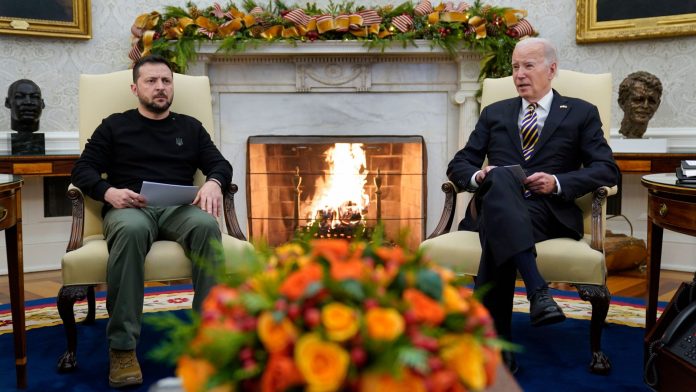
Biden Zelensky

“Zelensky’s trip turned to be completely lacking of substance. An empty attempt to show that Ukraine is more important than US security proved to be a failure. Everyone is tired of the Kievan beggarman,” he said Wednesday.

According to the Russian ambassador, further anti-Russian sanctions and weapons supplies will be of no help to Kiev.

“The anti-Russian steps taken today – including new sanctions and yet another batch of armaments – is just a shot to put a good face on a bad game. Nothing can help Zelensky anymore. But the Americans are risking to be stuck ever deeper in a swamp that is the Ukrainian conflict,” he continued, adding that no restrictions are ever capable of changing Russia’s foreign policy priorities.

Zelensky is currently on a visit to the United States. On Tuesday, he visited the US Congress and held talks with President Joe Biden.

Kremlin Spokesman Dmitry Peskov told reporters on Tuesday regardless of what happens at today’s meeting between Biden and Zelensky, Russia will stay the course with its special military operation.

“It’s certainly important that everyone realize that the tens of billions of dollars that were previously pumped into Ukraine did not help it achieve any success on the battlefield. The tens of billions of dollars that Ukraine wants to be pumped into its economy will be equally doomed. We understand perfectly well how this process goes,” he noted.

“It cannot change the situation on the battlefield or the course of the special military operation. Of this we are certain,” the Russian presidential spokesman said, when asked what effect the Biden-Zelensky meeting could have on the special military operation.

However, Peskov pointed out that the Kremlin would keep a close eye on the upcoming meeting between the US and Ukrainian leaders.

“Of course, we will follow it closely,” he added.

Russian Foreign Ministry Spokeswoman Maria Zakharova also told Sputnik radio the US authorities have never asked their own citizens whether they wanted to provide military aid to Ukraine.

“A large part of [American] society wanted neither to support [the policy of pumping aid to Ukraine] nor to somehow identify with the cause, associate themselves with it or take part in it. They were literally forced into it all, even though [some of them] resisted it to the last,” the diplomat said, commenting on Zelensky’s latest visit to the US.

“No one asked them about it, not when it all began or in the course [of unfolding developments in Ukraine]; no one bothered to ask them any questions or conduct any vote [on the issue],” she added.

According to Zakharova, Biden simply informed the American people of what his administration planned to do as a fait accompli.

“This is the same Democratic [Party] team that initiated this entire story that began with the Maidan [protests and street violence in Kiev] back in 2013-2014. Its members are the same; it’s Biden and [Under Secretary of State Victoria] Nuland again,” the Russian Foreign Ministry spokeswoman noted.

“They started it all back then but had to take a four-year break when [Donald] Trump came [to power]; however, after they got him out of the White House, they went back to the same concept, but in a more frenzied manner,” Zakharova continued.

“No one has asked the [American] people over these years. When Biden ran for president [in 2020], they didn’t say anything indicating that they were going to make [such a mess],” the diplomat pointed out.

Zakharova also commented on US Secretary of State Antony Blinken’s statement that about 90% of the US funds ostensibly allocated for military aid to Ukraine had in fact been invested in the US defense industry.

“So this was your plan to revive the US economy? Then why didn’t you say it straight away? What did you need the Kiev regime for if the initial plan was to ensure investment in the US economy?” the diplomat asked rhetorically.

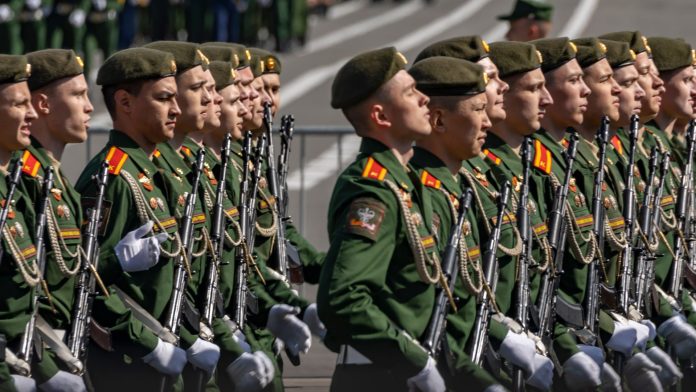
Russia has lost nearly 90% of troops it had prior to Ukraine war: US intelligence assessment

Russian Army

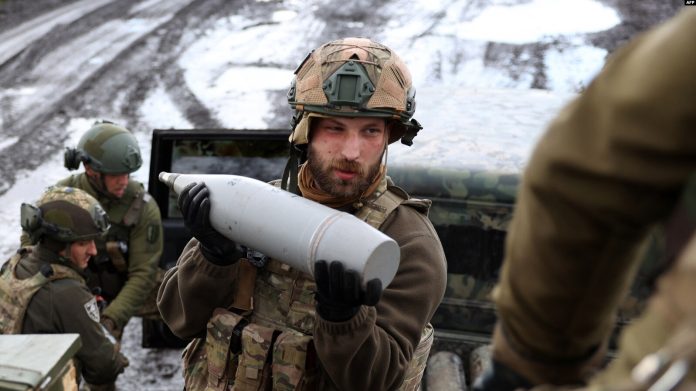
Still, despite heavy losses of men and equipment, Russian President Vladimir Putin is determined to push forward as the war approaches its two-year anniversary early next year, and US officials are warning that Ukraine remains deeply vulnerable. A highly anticipated Ukrainian counteroffensive stagnated through the fall, and US officials believe that Kyiv is unlikely to make any major gains over the coming months.

The assessment, sent to Capitol Hill on Monday, comes as some Republicans have balked at the US providing additional funding for Ukraine and the Biden administration has launched a full-court press to try to get supplemental funding through Congress.

Ukrainian President Volodymyr Zelensky is in Washington on Tuesday, meeting with US lawmakers and President Joe Biden in desperate bid to secure the military and economic aid he says is vital to Ukraine’s ability to maintain the fight against Russia.

Russia has been able to keep its war effort going despite the heavy losses by relaxing recruitment standards and dipping into Soviet-era stockpiles of older equipment. Still, the assessment found that the war has “sharply set back 15 years of Russian effort to modernize its ground force”.

Of the 360,000 troops that entered Ukraine, including contract and conscript personnel, Russia has lost 315,000 on the battlefield, according to the assessment. 2,200 of 3,500 tanks have been lost, according to the assessment. 4,400 of 13,600 infantry fighting vehicles and armored personnel carriers have also been destroyed, a 32 percent loss rate.

“As of late November, Russia lost over a quarter of its pre-invasion stockpiles of ground forces equipment,” the assessment reads.

“This has reduced the complexity and scale of Russian offensive operations, which have failed to make major gains in Ukraine since early 2022.”

Iranian researchers develop home-grown version of infra-red motion sensors

The Iranian Ministry of Science, Research and Technology has set up an exhibition displaying the latest accomplishments in the field of research and technology.

Among the researchers taking part in the expo is Hamid Pakbaz, who has displayed a plan on testing infra-red motion sensors.

“This sensor has applications in three sectors: in the agricultural machinery sector, in the military sector for identification, prevention and confrontation to protect lives, and in the microbiology sector to identify endangered species of animals,” says the researcher.

He says a home-grown version of this type of sensor has been developed in the country for the first time by Iranian researchers.

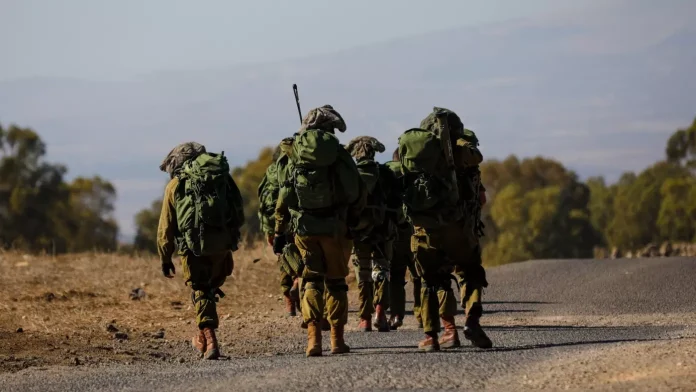
Ten Israeli soldiers killed in Gaza ambush

Israeli Army

Itzhak Ben Basat, 44, the head of the Golani Brigade’s commander’s team, was killed on Tuesday in an ambush by Palestinian fighters in Gaza’s Shejaiya neighbourhood, a stronghold of Palestinian armed groups.

Ben Basat is the most senior Israeli officer to be killed in Gaza since the ground invasion was launched in late October.

The Israeli army confirmed the deaths of eight other soldiers in northern Gaza, including a commander of the Golani regiment, two company commanders, a platoon commander, a company commander, and three combat soldiers.

Since launching its ground offensive in late October, 115 Israeli soldiers have been killed, while more than 300 soldiers were killed in the Hamas-led attack of 7 October. More than 18,000 Palestinians have been killed since Israel began its bombardment of Gaza, according to the Palestinian health ministry.

Among Israel’s casualties since the offensive started, 20 Israeli soldiers died from so-called friendly fire and other accidents, according to new data released by the Israeli army on Tuesday.

Most of these soldiers were killed due to mistaken identification in air strikes, tank shelling, and gunfire, the army added.

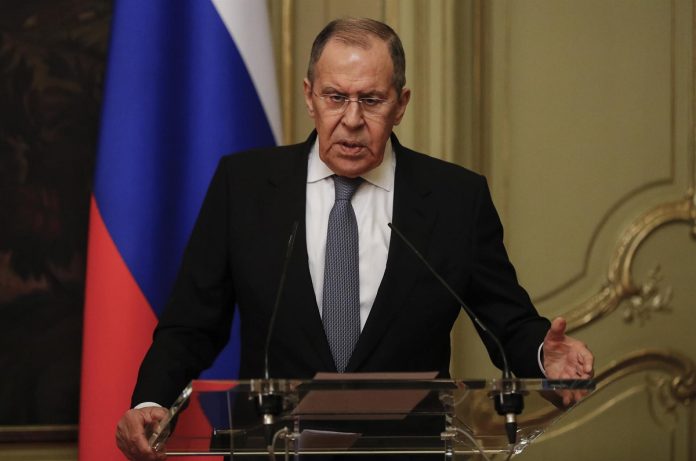
Many conflicts in world stem from US desire to impose views on others: Russia

Russia FM Sergei Lavrov

Addressing the Federation Council (upper house of parliament, or “senate”), he pointed out that “the global situation has not improved” since his previous meeting with the Russian senators.

“Many negative developments are rooted in the insatiable desire of Washington and a small group of countries who have sworn allegiance to the US to impose their views about everything on the rest of the world,” Lavrov pointed out.

According to him, this has resulted in “the disingenuous concept of the much-vaunted ‘rules-based order’ and the tendency of [artificially] dividing countries into democracies and autocracies.”

“The meaning behind such arrangements is clear and simple and no one bothers to hide it: the aim is to preserve their – that is, the West’s – privileged position so that they can continue to achieve their development goals at the expense of others, in this case, at the expense of the global majority,” the top Russian diplomat explained.

“The Westerners are still not prepared to engage in fair and equal cooperation with other countries,” Lavrov concluded.

Yemen advises vessels not to travel towards Palestinian territoriesv

Shipping Firms Red Sea

Houthi added on Wednesday that all ships passing Yemen should keep their radios turned on and quickly respond to Houthi attempts at communication.

He also advised ships not to falsify “their identity” or raise flags different from the country belonging to the cargo ship owner.

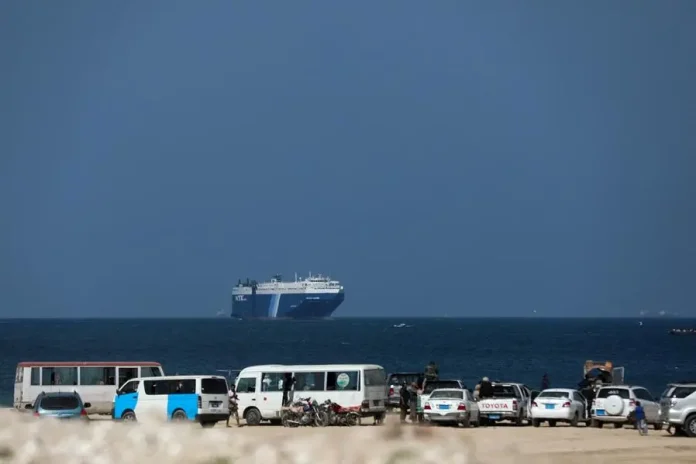
On Tuesday, Yemeni Armed Forces claim responsibility for a missile strike on a Norwegian-flagged tanker in the Red Sea as it was heading towards an Israeli port.

Speaking at a press briefing broadcast live from the Yemeni capital city of Sana’a, spokesman for the Yemeni Armed Forces Brigadier General Yahya Saree stated the strike on the oil tanker Strinda was a “victory” for the Palestinians getting killed in an Israeli “massacre”.

Saree added that Yemeni forces targeted the ship near the Bab el-Mandeb Strait with “an appropriate naval cruise missile”.

According to Saree, over the past two days, Yemeni Armed Forces have blocked passage of several Israel-bound ships.

Saree warned that the Yemeni Armed Forces will not hesitate to target any ship that “violates the terms of our previous statements.”

Yemenis have declared their open support for Palestine’s struggle against the Israeli occupation since the regime launched a devastating war on Gaza on October 7 after the territory’s Palestinian resistance movements carried out a surprise retaliatory attack, dubbed Operation Al-Aqsa Storm, against the occupying entity.

The relentless Israeli military campaign against Gaza has killed at least 18,000 people, most of them women and children, in Gaza since. Another 50,000 individuals have been wounded as well.

On December 4, the Yemeni army targeted two Israeli ships in the Red Sea as they were attempting to cross the Bab el-Mandeb Strait.

Reports revealed that Israeli shipping companies have already decided to reroute their vessels in fear of attacks by Yemeni forces.

Yemeni forces have also launched missile and drone attacks on targets in the Israeli-occupied territories of Palestine after the occupying regime’s aggression on Gaza.

Yemen advises vessels not to travel towards Palestinian territories

Mohamed Ali al-Houthi, the head of Yemen’s Houthi supreme revolutionary committee, has posted a message on the social media platform X, telling cargo ships not to head towards the occupied Palestinian territories.

Houthi added on Wednesday that all ships passing Yemen should keep their radios turned on and quickly respond to Houthi attempts at communication.

He also advised ships not to falsify “their identity” or raise flags different from the country belonging to the cargo ship owner.

On Tuesday, Yemeni Armed Forces claim responsibility for a missile strike on a Norwegian-flagged tanker in the Red Sea as it was heading towards an Israeli port.

Speaking at a press briefing broadcast live from the Yemeni capital city of Sana’a, spokesman for the Yemeni Armed Forces Brigadier General Yahya Saree stated the strike on the oil tanker Strinda was a “victory” for the Palestinians getting killed in an Israeli “massacre”.

Saree added that Yemeni forces targeted the ship near the Bab el-Mandeb Strait with “an appropriate naval cruise missile”.

According to Saree, over the past two days, Yemeni Armed Forces have blocked passage of several Israel-bound ships.

Saree warned that the Yemeni Armed Forces will not hesitate to target any ship that “violates the terms of our previous statements.”

Yemenis have declared their open support for Palestine’s struggle against the Israeli occupation since the regime launched a devastating war on Gaza on October 7 after the territory’s Palestinian resistance movements carried out a surprise retaliatory attack, dubbed Operation Al-Aqsa Storm, against the occupying entity.

The relentless Israeli military campaign against Gaza has killed at least 18,000 people, most of them women and children, in Gaza since. Another 50,000 individuals have been wounded as well.

On December 4, the Yemeni army targeted two Israeli ships in the Red Sea as they were attempting to cross the Bab el-Mandeb Strait.

Reports revealed that Israeli shipping companies have already decided to reroute their vessels in fear of attacks by Yemeni forces.

Yemeni forces have also launched missile and drone attacks on targets in the Israeli-occupied territories of Palestine after the occupying regime’s aggression on Gaza.