Wednesday, December 31, 2025
Home Blog Page 1137

Iran: Israeli PM life hinges upon continuation of Gaza war

Gaza War

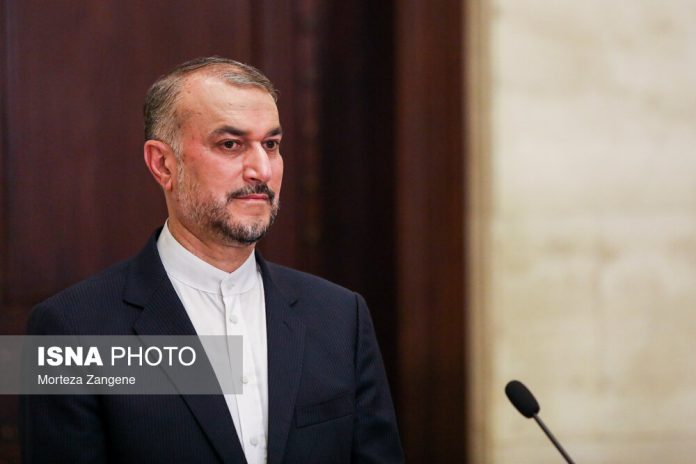
Amirabdollahian held talks with his Chinese counterpart Wang Yi over multilateral and regional relations, especially the recent developments in Palestine.

The Iranian minister expressed displeasure with the US veto of a UN Security Council resolution that demand an end to the genocide in Gaza, appreciating China’s constructive efforts to establish peace and stability in the region.

He also underlined the need to play an active role in stopping the war on Gaza.

“The security of the region is important for all of us, and to this end, the Islamic Republic of Iran has held several rounds of consultations with regional countries”, the top diplomat underscored.

He once again stressed that the war has expanded in the region and if the attacks on Gaza are not stopped immediately, there is a possibility that an explosion will occur and things will spiral out of control. Amirabdollahian maintained that unfortunately, the US side does not soundly understand the danger posed by the spillover of the war across the region.

He added that the life of Israeli Prime Minister Benjamin Netanyahu, an ally of the White House, is only intertwined with the continuation of the war and genocide, but the current situation in the region is not sustainable.

The Chinese foreign minister also voiced regret over the veto of the ceasefire resolution by the US.

Wang Yi said the establishment of a ceasefire and immediately sending humanitarian aid into Gaza are important for China.

He expressed hope that the upcoming meeting of the UN General Assembly will be an opportunity to establish a ceasefire in the region.

The two diplomats haves expressed satisfaction with the trend of bilateral ties. They stressed the need to continue consultations and strengthen multilateral cooperation.
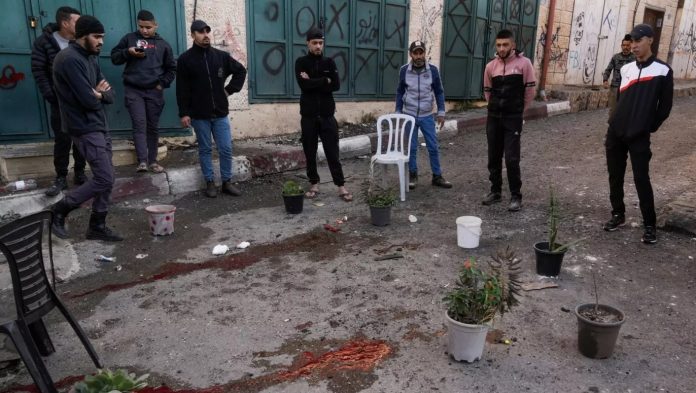
Four Palestinians killed in Israeli drone strike on Jenin, West Bank

West Bank

Dozens of Israeli military vehicles, accompanied by bulldozers, stormed Jenin at dawn, sparking a firefight with Palestinian fighters.

Israeli forces tore up the streets and destroyed many buildings, smashing through the fronts of shops, Arab48 reported.

Yacoub Abdullah, a resident of Jenin’s Sibat neighbourhood, told Middle East Eye that he was sitting with his friends near the main street when they heard the sound of a huge explosion.

An Israeli drone had fired on a group of young men on a street in the neighbourhood, which lies in Jenin’s old city.

“The sound shook the entire city. We ran to the site of the explosion to find all the young men on the ground bleeding. Three of them were dead and the others were seriously injured,” Abdullah stated.

Israel announced it targeted people affiliated with armed groups. Witnesses said the men were not armed. Wissam Abu Bakr, director of Jenin Hospital, named the dead as Rafiq al-Dabbous, Mahmoud Abu Srour, Bakr Siddiq Zakarneh and Thaer Abu al-Tin.

One of those killed is reportedly the brother of two men recently killed by Israel.

Hazem Masarwa, an ambulance driver, told MEE that paramedics hurried to the scene after receiving news that there had been a drone strike on Sibat.

He said the Israeli army stopped the ambulance and searched it before allowing them to continue, causing a delay of more than 10 minutes.

“When we arrived at the place, we found four very seriously injured people, some of whom had died from their wounds,” he continued.

The dead were taken to Jenin Hospital, while the wounded were hurried to Qabatiya Hospital to the south, Masarwa added.

Violence in the occupied West Bank has escalated since 7 October, when a Hamas-led attack from the Gaza Strip targeted Israel, which resulted in the deaths of around 1,200 Israelis.

Since then, 279 Palestinians have been killed by Israeli forces and settlers in the West Bank. Israel, meanwhile, has waged war on Gaza, killing at least 18,000 Palestinians.

Also on Tuesday, Israel carried out raids elsewhere in the West Bank. In Silwad, northeast of Ramallah, Israeli troops arrested 15 people, and several others were detained during a raid on homes in the town of Samu.

Raids were also reported in Bethlehem and Deir Ballut, south of Qalqilya.

Tehran condemns EU sanctions on Iranian individuals, organizations as “destructive action”

The European Union

“The futile efforts by some destructive currents with certain political agendas to spread false information, and resorting to the ineffective ploy of sanctions will not bring any achievements for those who impose the bans, and will increase the self-made hurdles in the path of ties between Iran and Europe,” the spokesman said on Tuesday.

Kanaani stated, “The European Union talks about international law and the United Nations’ Charter, but in practice, it turns a blind eye to the harshest and most blatant violations of the established principles of international law, including human rights and international humanitarian laws, and the irrefutable genocide and ethnic cleansing of the oppressed people in Gaza and the West Bank.”

He added that the EU “has failed to take effective measures to put an end to the usurping Zionist regime’s brutal attacks.”

The spokesperson stressed Iran’s opposition to wars as a principle, stressing on the necessity of sorting out the disputes between Russia and Ukraine through peaceful means.

He also undermined EU sanction imposed on Iran’s defense industry as baseless, stating the Islamic Republic of Iran reserves the right to respond.

Israel dropped over 22k bombs on Gaza in six weeks: Report

Gaza War

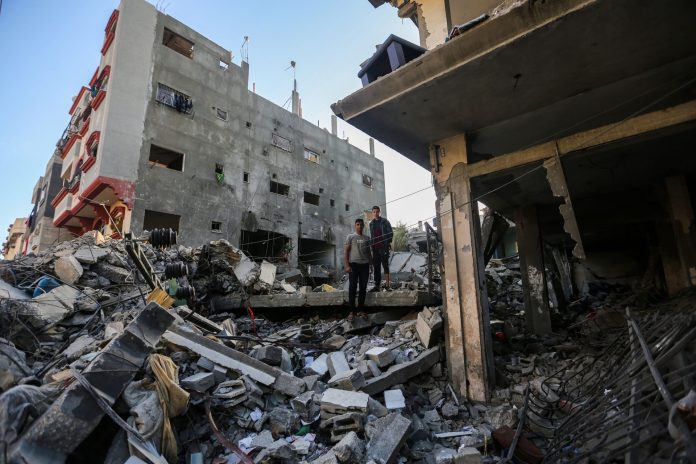
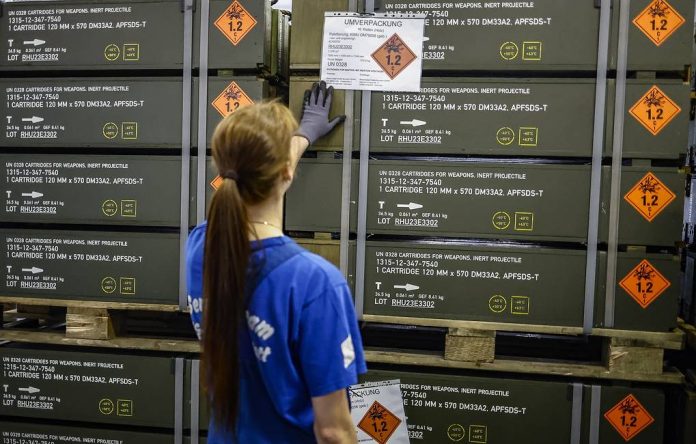
Citing intelligence data supplied to Congress by the US administration, The Washington Post reported that weapons developed by the United States have played a central role in Israel’s brutal onslaught on Gaza, one of the most densely populated areas on Earth.

In just six weeks into the onslaught, the US supplied the occupying regime with at least 15,000 bombs, including 2,000-pound (900 kilograms) bunker busters, as well as 50,000 155mm artillery shells.

The figures suggest Israel dropped roughly one American-made bomb on Gaza for every 100 people living there.

The report quoted unnamed officials as admitting that the US is not conducting “real-time assessments of Israel’s adherence to the laws of war.”

A US official stated the administration was unable to make a contemporaneous evaluation of Israel’s compliance because of a lack of access both to the intelligence Israeli forces’ use for their assaults and to the intentions of the regime’s military commanders.

On Saturday, the US State Department approved the emergency sale of 14,000 rounds of tank ammunition to Israel for about $106.5 million.

The purchase will bypass congressional review, which is usually a requirement for foreign arms sales.

The United States has offered untrammeled support for Israel since October 7, when the usurping entity waged the war on Gaza following a historic operation by the Palestinian Hamas resistance group.

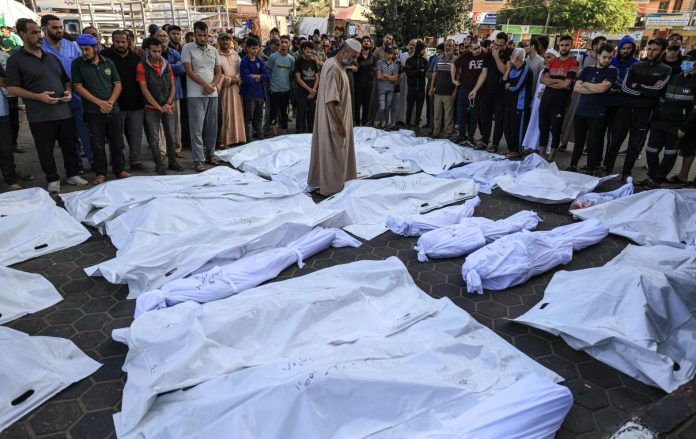
Since the start of the offensive, the Tel Aviv regime has killed at least 18,205 Palestinians, mostly women and children, and injured 49,600 others.

Thousands more are also missing and presumed dead under the rubble in Gaza, which is under “complete siege” by Israel.

EU seeking sanctions on violent Israeli settlers in WB

Israeli settler

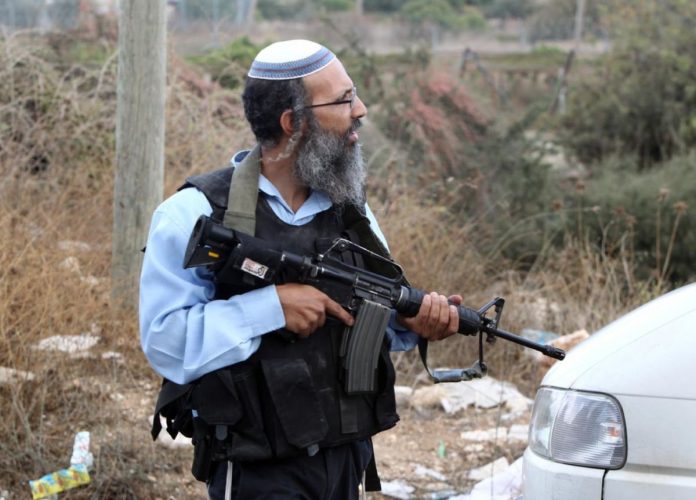
The EU’s foreign policy chief Josep Borrell on Monday said the bloc was “alarmed by the violence in the West Bank by extremist settlers” and condemned the Israeli government’s decision to approve 1,700 more housing units in Jerusalem, in what Brussels considers a violation of international law.

“The time has come to move from words to actions … and to start adopting the measures we can take with regard to the acts of violence against the Palestinian population in the West Bank,” Borrell told reporters after meeting EU foreign ministers in Brussels on their next steps regarding the Israeli war on Gaza.

Since October 7, settler attacks have more than doubled against Palestinians, according to the United Nations. Combined with raids by Israeli forces, at least 275 people have been killed in the occupied territory since, including at least 63 children, with a further 3,365 injured.

While Borrell stated ministers were not entirely enthused about the proposed measure, he will work with the EU officials to draw up a list of prominent settlers who have engaged in attacks.

The foreign policy chief has yet to submit a formal proposal, but he said he will suggest the settlers be sanctioned for human rights abuses.

Borrell did not give details about the sanctions but EU officials have said they will include bans on travel to the EU, a challenging proposal some diplomats say, as countries such as Austria, the Czech Republic and Hungary are staunch allies of Israel.

However, last week, Israel’s biggest ally, the United States, imposed a visa ban on settlers involved in violent attacks in the occupied West Bank.

France last month announced it was also considering such measures, while Belgium noted it will ban settlers from the country.

Israeli settler violence has surged in the last year after Prime Minister Benjamin Netanyahu’s far-right government, which itself includes ultranationalist settlers, signalled support.

Israeli settlements in the occupied West Bank, considered illegal by much of the world, are built on territory Israel captured in the 1967 Arab-Israel war.

The number of settlements in the occupied territory have increased drastically in the last decade, with Palestinians describing settler violence as part of a larger Israeli effort to force them from their land.

Borrell also said he would propose a separate sanctions programme against Hamas, which saw no opposition by any EU minister. The EU already considers Hamas a terrorist organisation.

Iran’s atomic chief dismisses IAEA’s claims on inspectors

Mohammad Eslami

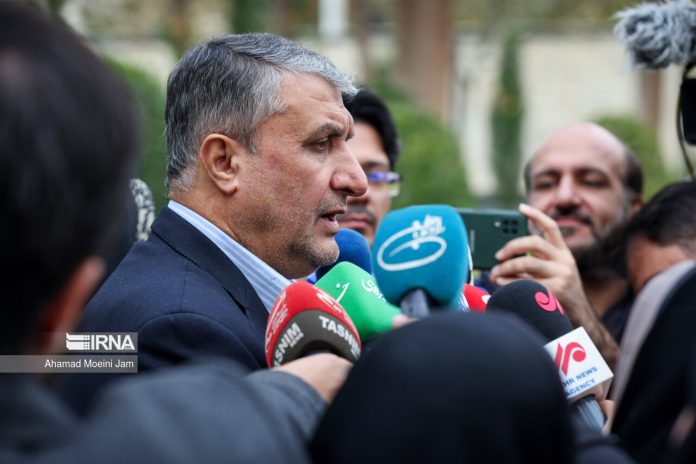
Mohammad Eslami made the remarks on Tuesday in a ceremony in Tehran to unveil the AEOI’s achievements in the field of radiopharmaceuticals.

A day earlier, International Atomic Energy Agency (IAEA) chief Rafael Grossi alleged that Iran has failed to answer questions about its past nuclear activities at three sites and has denied access to the sites for the agency’s inspectors.

“We have the right to accept or reject the inspectors according to our safeguards. Iran has accepted 120 inspectors, some of whom are visiting the sites right now,” Eslami explained.

He asserted that Iran acts within the nuclear Non-Proliferation Treaty (NPT) framework, however the IAEA report is based on the Joint Comprehensive Plan of Action (JCPOA), a nuclear agreement signed between Iran and the West in 2015, which Eslami noted  that the Western side has failed to hold up their end of the bargain in the deal.

“When the (Western) parties did not fulfill their commitments, putting pressure on Iran is unacceptable. If they return to their commitments, so will Iran,” Eslami stated.

The AEOI head also said Iran officially sells its nuclear heavy water to other countries within the restrictions pointed out in international rules and regulations.

US delays in Ukraine aid fulfill Putin’s ‘dreams’: Zelensky

President Volodymyr Zelensky

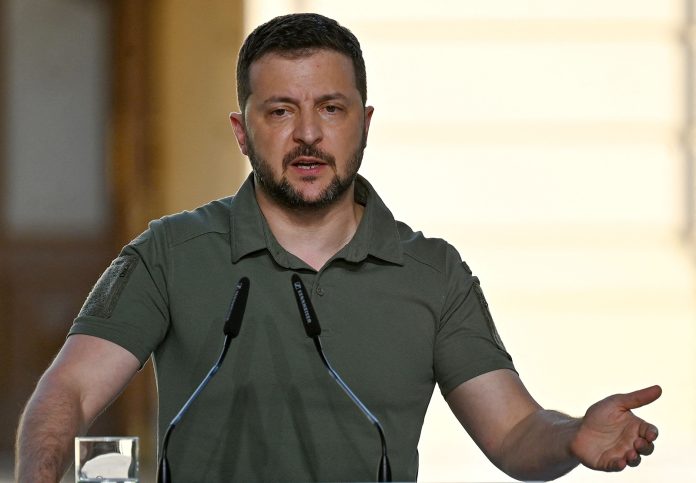
Addressing an audience of US officers at the National Defense University, Zelensky said Ukraine is fighting not just for its own existence but in defense of the freedoms that opened up across Europe in the wake of the Soviet collapse.

In a rebuke to Republicans in Congress who have turned against US funding for the Ukrainian war effort, Zelensky stated politicians should not “betray the soldier” — and he said the drying up of US aid was being cheered by Russian President Vladimir Putin.

“If there’s one inspired by unresolved issues on Capitol Hill its just Putin and his sick clique,” he continued, adding, “They see their dreams come true when they see delays.”

“You can count on Ukraine and we hope just as much to be able to count on you,” Zelensky said, adding, “Putin must lose.”

The Ukrainian leader, who wore his trademark army style green sweatshirt, emblazoned with the words “I’m Ukrainian,” flew into Washington after a round of diplomacy this weekend in Argentina.

He was due to meet Tuesday with President Joe Biden and congressional leaders from both parties, including Republican House of Representatives Speaker Mike Johnson.

White House National Security Council spokesman John Kirby said the visit came at “a critical time” and that Biden would make it clear he was “standing firm” on his bid to get Ukraine the aid it needs to resupply its troops and expand efforts to drive back Russian forces.
Zelensky was also meeting the heads of the International Monetary Fund and World Bank as he seeks to shore up his embattled nation’s economy in the midst of the all-out war. The IMF announced the release of a new $900 million tranche in an ongoing longterm loan.

Throughout the bloody conflict, which has seen swaths of Ukraine destroyed and millions driven from their homes, Ukrainian forces have depended heavily on a US-led coalition of countries delivering tens of billions of dollars in ammunition, weaponry, and economic and social aid.

Now the flow of US aid — described by Biden as part of an existential fight between the democratic world and Putin’s aggressive autocracy — is on the verge of drying up.

Republican senators last week blocked a White House request for $106 billion in emergency aid primarily for Ukraine and Israel.

Conservatives said they would refuse the package for the close foreign allies if Democrats and the White House did not also agree to far-ranging immigration reforms targeting security on the politically sensitive US-Mexican border.

More broadly, the Republican right-wing, led by 2024 presidential candidate Donald Trump, has dramatically soured against Ukraine’s cause.

“What’s in America’s best interest is to accept Ukraine is going to have to cede some territory to the Russians and we need to bring the war to a close,” Senator JD Vance, a close Trump ally, stated Sunday.

He dismissed as “preposterous” White House warnings that allowing Russia to win in Ukraine would put other eastern European countries, including NATO members, at risk.

There should be no “blank check” for Ukraine, Vance continued, adding, “You need to articulate what the ambition is. What is $61 billion going to accomplish that $100 billion hasn’t?“

Europe in panic mode over rapid depletion of military stockpiles amid Ukraine war: Report

Russia Ukraine War Weapons Arms

According to the authoritative US publication, Western countries see “no immediate military danger to Europe from Russia” as long as the conflict in Ukraine continues.

“But if Russia ultimately wins in Ukraine, few doubt Moscow’s capacity to rearm completely within three to four years and cause trouble elsewhere,” the newspaper said. Against this backdrop, “alarm has grown as America has moved toward a more isolationist stance” on the ongoing conflict in Ukraine, the newspaper pointed out.

According to the daily, fears are being driven by the realization that “much of Europe’s industrial capacity to make weapons has eroded over years of budget cuts” after the end of the Cold War. Building up military capacity appears to be a “challenge” due to budget constraints amid slow economic growth in European countries and an aging population, the paper added. In addition, a significant proportion of citizens of European countries do not support the idea of financing military spending through cutting funding for social welfare benefits.

To illustrate the scale of the arms problem, the Wall Street Journal cites data showing that the military arsenal of the United Kingdom, considered Europe’s top defense spender, currently has only 150 tanks and about a dozen serviceable long-range artillery pieces. France, next in military spending, has “fewer than 90 heavy artillery pieces, equivalent to what Russia loses roughly every month” in the Ukraine war zone. As for Germany, the Bundeswehr has only enough ammunition for two days of fighting, the WSJ noted.

Top Ukrainian military commander Valery Zaluzhny acknowledged in an article published in The Economist in early November that the conflict had reached a “stalemate.” Later, in an interview with the same publication, he stated that Ukrainian troops would not be able to make a breakthrough on the front. According to him, a positional conflict of attrition could drag on for years and wear Ukraine down.

The Ukrainian army had been making unsuccessful attempts to conduct an offensive since June 4. According to Russian Defense Minister Sergey Shoigu, Kiev has lost more than 125,000 men and over 16,000 weapons in six months. The Russian side has repeatedly stressed that Kiev’s offensive has failed to bring significant results to Ukraine. In recent weeks, the West and Kiev have repeatedly said that the “counteroffensive” has not been successful enough and that the situation on the front-line is a stalemate for the Ukrainian side.

US veto of UNSC resolution license for Gaza genocide: Iran

Hossein Amirabdollahian

Amirabdollahian made the comment in a Monday phone call with his Russian counterpart Sergei Lavrov concerning bilateral and regional issues, including the latest developments related to Gaza and the occupied West Bank, where the Israeli regime has been ramping up its attacks against Palestinians.

The Iranian minister said Washington has actually granted the Zionist regime a license to continue its genocide in the besieged enclave by blocking the Security Council’s resolution.

He reiterated the necessity of putting an immediate end to Israel’s war crimes and transfer of humanitarian aid to the besieged Palestinian territory.

Lavrov, for his part, laid emphasis on the need for the continuation of international efforts to achieve ceasefire across the occupied Palestinian territories, increase delivery of humanitarian aid to Gaza, and facilitate establishment of an independent Palestinian state.

More than 18,200 Palestinians, mostly women and children, have been killed during the war that Israel launched on October 7 following an operation staged by Gaza’s resistance groups, dubbed Operation al-Aqsa Storm.

Besides its incessant and indiscriminate bombardment of Gaza, Israel has cut off the flow of basic supplies such as water, electricity, medicines, and fuel into one of the world’s most densely-populated territories that houses over two million Palestinians.

The US cast its veto against the resolution on Friday in line with its unbridled military and political support for Israel’s brutal aggression, which has seen Washington providing the regime with more than 10,000 tons of military equipment since the beginning of its onslaught on Gaza.

MSF warns Gaza healthcare system ‘totally collapsed’

Gaza War

The organisation’s services in the war-torn enclave are extremely limited, She told Al-Jazeera from inside the Al-Aqsa Hospital in central Gaza.

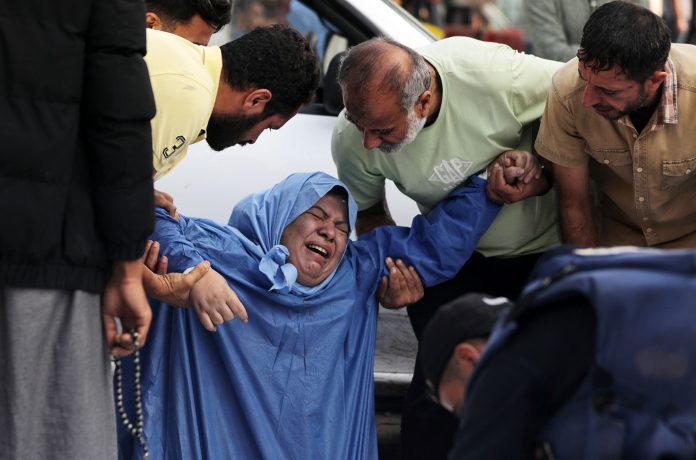
“The healthcare system is completely collapsed at the moment. It is difficult for us to keep up with the constant influx of the wounded,” she said.

“On top of this, it’s extremely difficult for the colleagues to be coming through the ER because they are the ones who are being wounded. Just about an hour ago, one of our colleagues came to the ER badly injured together with his family,” she continued, adding, “It is extremely traumatising.”

Perreaut also stated that many of the wounded are unable to access treatment because health centres are being ordered to evacuate and the roads are not safe to reach the available clinics.

The United Nations has also announced only 13 out of 36 hospitals in the Gaza Strip are partially functional as Israeli occupation forces are targeting medical centers and staff amid heavily bombardment of the besieged territory.

The United Nations Office for the Coordination of Humanitarian Affairs (OCHA) said in a report on Tuesday that the services provided to patients in operational hospitals are “limited” as they have run out of bed capacity.

“The two major hospitals in southern Gaza are operating at three times above their bed capacity while facing critical shortages of basic supplies and fuel,” the report noted, adding, “Only one of these hospitals is in the north.”

“[Bed] occupancy rates are now reaching 206 percent in inpatient departments and 250 percent in intensive care units. Additionally, these hospitals are providing shelter to thousands of displaced people,” it added citing data from the Gaza Ministry of Health.

The Palestinian Health Ministry in Gaza has said at least 18,205 Palestinians have been killed, and 49,645 injured in Gaza since 7 October.

It also noted that Israeli strikes have crippled 22 hospitals and 26 primary care centres,.

It added that 36 medical professionals remain detained by Israeli forces, including Muhammad Abu Salmiya, the director of Al-Shifa Hospital.