Thursday, January 1, 2026
Home Blog Page 1081

UK says to upgrade missile system used against Houthi strikes in Red Sea

Yemen Houthis

The Ministry of Defence announced on Sunday that the Sea Viper Air Defence system would be fitted with missiles featuring a new type of warhead and software to counter ballistic missile threats.

“As the situation in the Middle East worsens, it is vital that we adapt to keep the UK, our allies and partners safe,” Secretary of State for Defence Grant Shapps said in a statement.

“Sea Viper has been at the forefront of this, being the Navy’s weapon of choice in the first shooting down of an aerial threat in more than 30 years. Our strong and enduring relationship with British industry has ensured we can deploy the latest technological capabilities wherever they are required while supporting hundreds of jobs across the country and bolstering UK prosperity,” he added.

The Houthis have carried out a string of drone and missile attacks on ships in the Red Sea region in recent months, following the outbreak of the war in Gaza. They have vowed to continue targeting any Israel-linked vessels until the blockade of the Palestinian enclave is lifted and the hostilities are stopped.

In response, the US has formed a military coalition against Yemeni forces in the Red Sea and endangered maritime navigation in the strategic waterway.

The increased risks faced by ships in the Red Sea have forced the world’s biggest freight firms to avoid the Suez Canal and sent insurance costs soaring. Instead of Suez – the quickest cargo route from Asia to Europe – many vessels are now diverting round the Cape of Good Hope, incurring higher expenses on fuel, maintenance and wages.

Container freight rates for key global trade routes have also surged after the US and UK launched airstrikes on targets in Yemen with the stated goal of protecting maritime commerce in the Red Sea and the Bab-el-Mandeb straits, the world’s busiest routes.

Israel ‘far from destroying’ Hamas in Gaza Strip: US intelligence agencies

Hamas

A report by the US news outlet Wall Street Journal says the agencies also found Hamas still has enough weaponry to continue striking Israeli forces and launch rockets into Israel “for months”.

It noted even though individual Hamas fighters may have to take on more tasks since they have lost comrades, they are far from being incapacitated and have changed their operational tactics to adjust.

The report also added Israeli officials estimate up to 16,000 Hamas fighters have been wounded and about half of those will not be returning to the battlefield. But US estimates puts that number between 10,500 and 11,700 fighters, many of whom could return.

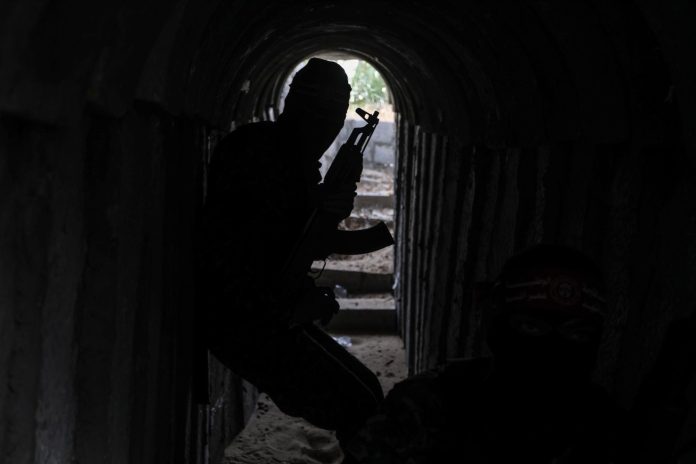
It comes days after a report by the New York Times daily claimed that the Israeli military has been “astonished” by the size and quality of the tunnels Hamas has built under the besieged enclave.

The tunnel network was originally estimated to include 250 miles (400 km) of underground passages and bunkers. Israel Defense Forces (IDF) has since revised these estimates to 350-450 miles (560-725 km) or more.

Two officials, who spoke on condition of anonymity, said there were close to 5,700 separate shafts leading into the tunnels under Gaza. None of the numbers could be independently verified, however.

It could take “years” to disable the tunnels, one Israeli official told the newspaper. They need to be mapped, checked for Israeli captives, and “made irreparable”, he stated, acknowledging that the recent attempts to destroy the tunnels by flooding them with seawater “have failed”.

According to another official, Israel is using a “triangle” model to locate the tunnels, which assumes they will be found under any hospital, school or mosque in Gaza.

The Israeli military has underestimated the “extent and importance” of the tunnels to Hamas, which the Times described as an “intelligence failure”.

The IDF has not disclosed the number of soldiers killed and wounded in tunnel warfare. Officially, almost 190 soldiers have been killed and 240 or so seriously wounded in the fighting since the start of the ground campaign in Gaza.

One soldier, who spoke with the Times on condition of anonymity, said that he took had taken part in destroying about 50 tunnels in Beit Hanoun, in the northeast of Gaza. All of them were rigged with bombs and other explosives, wired to be activated remotely.

The Palestinian group Hamas, which maintains de facto control over Gaza, struck at nearby Israeli settlements on October 7, claiming the lives of approximately 1,200 Israelis. Another 250 were taken into the Palestinian enclave as captives. Israel responded by declaring war on Hamas and launching air and artillery strikes on Gaza, followed by ground troops in November.

Almost 25,000 Palestinians have been killed and another 63,000 wounded in the first 100 days of fighting, according to the Gaza health ministry.

Iran says to preserve military advisors in Syria

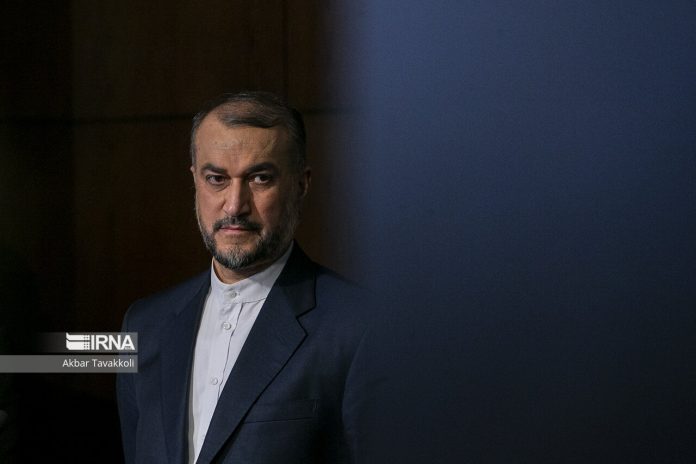
Hossein Amirabdollahian

In a message on the X social network on the assassination of Iranian military advisors in Damascus, Amirabdollahian said, “Iranian military advisors’ activities to fight terrorism and ensure regional security will continue with a vengeance.”

The top Iranian diplomat added, “The Israeli regime is terrorist groups’ main accomplice and the number-one threat to security in the region.”

Referring to Israel’s bloody war on Gaza, he said,  “Indubitably, the Zionists cannot make up for their defeat against the willpower of the people of Gaza with such cowardly acts of terror.”

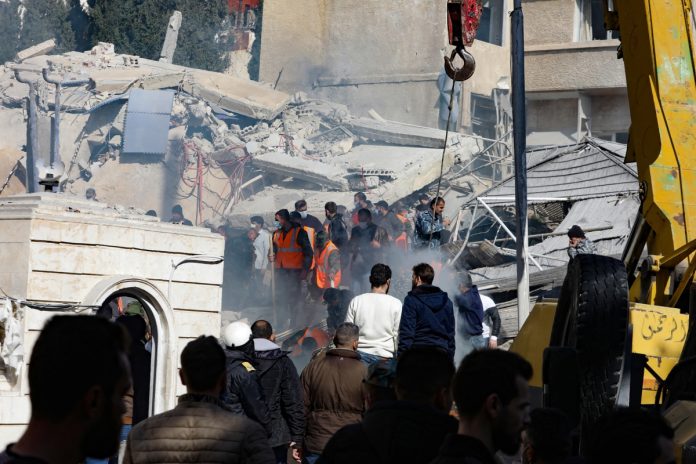
Five Iranian forces with the Islamic Revolution Gaurds Corps (IRGC) were assassinated in the Israeli air raid on Al Mazzeh neighborhood in Damascus on Saturday.

Iran says its anti-terror military advisors are deployed in Syria at the official request of the Syrian government.

Several US soldiers suffer brain injuries in ballistic missile attacks on Iraqi base: CENTCOM

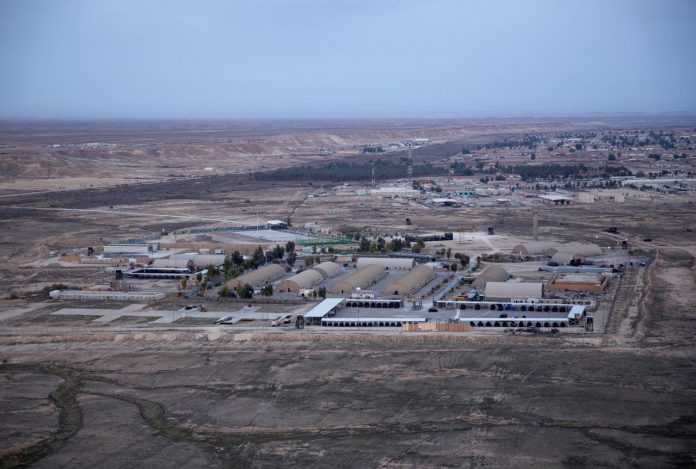
Al-Asad Air Base in Iraq

Most of the incoming missiles and rockets were intercepted by the air defense systems at the base, which is used by both the Iraq and US militaries, but some impacted the base, officials say.

“At approximately 6:30 p.m. (Baghdad time) on January 20, multiple ballistic missiles and rockets were launched by Iranian-backed militants in Western Iraq targeting al-Assad Airbase,” CENTCOM said in a statement.

“Most of the missiles were intercepted by the base’s air defense systems while others impacted on the base. Damage assessments are ongoing,” it added.

“A number of US personnel are undergoing evaluation for traumatic brain injuries. At least one Iraqi service member was wounded.”

Saturday’s attack appears to be the largest of the more than 140 attacks on US troops in Iraq and Syria since mid-October that the US says have been carried out by “Iranian-backed militia groups”.

Iran has stressed that it “neither gives orders to the resistance groups across the region, nor stops them from taking decisions in their own countries based on their own interests”.

Saturday’s attack comes amid deepening tensions in the Middle East more than three months after Hamas’ cross-border attack into Israel, which prompted the Gaza war.

Since the onset of the conflict, US military forces have been attacked in Iraq on at least 58 occasions, and another 83 times in Syria by militants. Most of these attacks use rockets or one-way attack drones.

The US currently has about 2,500 troops stationed in Iraq and another 900 in Syria.

Ukraine openly asks West to use its army as a proxy amid war with Russia

Russia Ukraine War

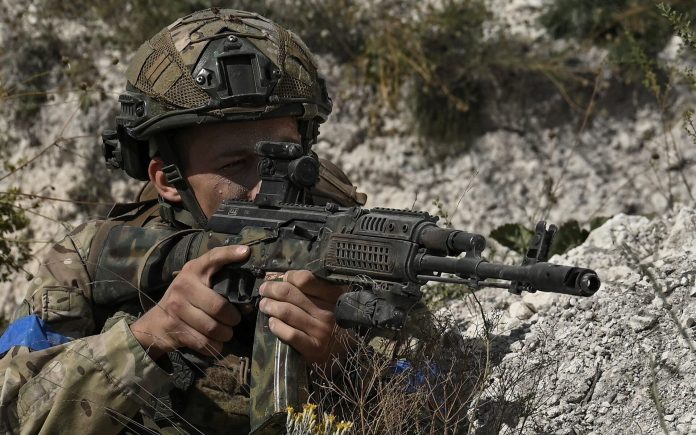
Unlike other US “allies,” Kiev is not even asking for American troops on the ground, Kuleba argued in an interview with Bloomberg at the World Economic Forum in Davos, Switzerland.

“We kind of offer the best deal on the global market of security… Give us the weapons, give us the money, and we will finish the job,” Kuleba stated.

“So you save the most important, you save the lives of your soldiers.”

The Ukrainian diplomat also claimed that Kiev “does not steal any money from American taxpayers”, arguing that “the sum of money allocated to Ukraine is to say the least a very little part” of the US military budget.

“Moreover, a vast amount of this money stays in the United States because it is invested in the production of weapons that go then to Ukraine,” he told reporters, adding that “it needs to be explained to the American taxpayers that their communities benefit from it”.

Russia estimated that Kiev had received more than $203 billion in foreign assistance since the outbreak of the conflict. The US alone sent Kiev over 75$ billion, including over $45 billion in direct military aid, which is over 5% of the Pentagon’s proposed 2024 budget.

Moscow has also repeatedly accused the US and its allies of using the Ukraine crisis to wage a “proxy war” against Russia and turning the battlefield into a testing ground for Western military equipment. Even the Pentagon and the UK’s former defense secretary have described Ukraine as a “battle lab” and a “military innovation laboratory”.

Russia’s Defense Ministry has described Kiev’s losses throughout the conflict as catastrophic, estimating that the Ukrainian military has lost nearly 400,000 troops – killed and wounded – since February 2022, including over 160,000 during its failed counteroffensive last year.

Kiev has never officially disclosed its casualty figures, but the heavy losses have been indirectly corroborated by its ever-widening mobilization effort, which has grown increasingly lawless and violent during the hostilities. Late last year, President Volodymyr Zelensky claimed the country’s military had asked him to round up another 500,000 recruits to bolster the ranks, although a new mobilization bill has yet to be passed.

A senior adviser to President Zelensky has admitted that Western efforts to isolate Russia have failed to produce any results so far. Mikhail Podoliak also acknowledged in an interview with Germany’s BILD magazine published on Friday that Kiev is facing difficulties in trying to mobilize more troops.

Zelensky also expressed concerns in Novermber that Moscow was not being isolated as planned, as China and multiple Global South nations refused to toe the line set by the West and instead maintained a neutral position. Russian Foreign Minister Sergey Lavrov also said that the campaign to reduce Russia to a “rogue state” had failed.

Podoliak replied in the negative when asked whether there is a scenario in which neighboring European countries would send their own troops to Ukraine.

“We will agree to any help but, so far, there is no such talk,” the presidential aide clarified.

“We are talking about weapons and sanctions for isolating Russia… but that has not yet led to results,” he added.

Amid such “disappointments”, Ukrainian authorities will step up efforts to explain to their citizens why they should go to the front line, the senior adviser continued.

Following the country’s failed summer counteroffensive, officials in Kiev have been concerned about a decline in both in the quantity and quality of troops, and have resolved to intensify mobilization, Podoliak explained.

As Ukrainian MPs work out a new law aimed at closing military-service loopholes, reports abound of Ukrainian men attempting to illegally flee the country. Over 20 Ukrainians have died trying to escape in sub-freezing temperatures on Ukraine’s Western border, The Times newspaper reported last week, citing a Ukrainian border guard.

Podoliak warned that European nations should either give Ukraine all the means necessary to prevail on the battlefield now or they can expect the conflict to spread to their soil eventually.

Russian President Vladimir Putin pointed out last month however that “Russia has no interest… geopolitically, economically or militarily… in waging war against NATO.”

While Western leaders and NATO representatives have repeatedly stressed that they have no plans to send their military personnel to Ukraine, there have been multiple reports that some have nonetheless operated in the country.

As recently as Friday, French Defense Minister Sebastien Lecornu acknowledged that “there are French civilians who went to fight in Ukraine in Ukrainian military uniform”. He hastened to emphasize, however, that such individuals “have no connection with the French armed forces”.

His remark came after the Russian Defense Ministry claimed earlier this week that one of its strikes had killed dozens of French fighters in the city of Kharkov.

Late last year, Russian Defense Minister Sergey Shoigu alleged that “NATO service members are directly operating air defense systems, tactical ballistic missiles, and multiple-launch rocket systems” in Ukraine. He cited radio intercepts of communications in English and Polish.

Also in December, Declassified UK, citing a recent book by Polish journalist Zbigniew Parafianowicz, reported that British special forces troops were operating on the outskirts of Kiev in March 2022.

Thousands rally in Tel Aviv calling for snap election

Israel Hostages

Opinion polls show lagging support for Netanyahu, as calls for leadership changes grow stronger. Still, there is no indication that his position is under any imminent threat.

While the crowd in Tel Aviv is much smaller than those seen last year, several thousand people have shown up, with many banging on drums, yelling their dismay and waving Israeli flags.

“The power is in our hands to change and repair,” one protester said from a stage, adding, “This government needs to go home. Now!”

And the crowd answered her, shouting: “Now! Now!”

While divisions have emerged among members of his wartime cabinet, Netanyahu is intent on staying in power.

Opposition leaders have offered to form a unity government not led by Netanyahu, but no moves have gained traction.

Netanyahu has stated that he will not resign from office after facing criticism for failing to anticipate the October 7 attacks by Hamas.

Also on Saturday, Israelis urged Netanyahu’s cabinet to reach a deal with Hamas that would secure the release of Hamas-held hostages.

Hostages released by Hamas and relatives of those taken showed up at the rally in Tel Aviv. The protesters called on the government to put human lives above its military and political ambitions.

Netanyahu took to social media during the demonstration to reiterate that he would never “compromise on Israel’s full security control of the entire area west of Jordan”, which he said ruled out the creation to an independent Palestinian state.

About 1,200 people were killed and some 250 hostages were taken when Hamas launched a massive attack on Israel on October 7. The Israeli counteroffensive against the Gaza Strip has since claimed almost 25,000 Palestinian lives.

Hamas released around a half of its hostages during the week-long truce in November. According to the Israeli authorities, it currently holds nearly 140 people, while dozens of captives have been killed in the fighting.

US and Israel at odds over post-war Gaza

Biden Netanyahu

“I will not compromise on full Israeli security control over the entire area west of Jordan – and this is contrary to a Palestinian state,” Netanyahu wrote on the platform, reiterating his often-stated position on the subject.

Biden claimed after talking to his Israeli counterpart on Friday that a two-state solution was not impossible under Tel Aviv’s current government, insisting there were multiple types of solutions that could fit the bill.

However, Netanyahu has repeatedly and voluminously argued against any form of independent Palestinian government and reminded an audience earlier this week that he had been working for “30 years” to prevent the development of a Palestinian state.

“In the future, the state of Israel has to control the entire area from the river to the sea. This is what happens when you have sovereignty,” the PM told reporters during a televised press conference, referring to the Jordan River and the Red Sea – boundaries that many Palestinians consider to be the borders of their own rightful state.

The PM even appeared to flaunt his disagreement with Israel’s allies in Washington, noting that he had “told this truth to our friends, the Americans,” stopping what he described as “the attempt to impose on us a reality that will jeopardize us”.

“A prime minister in Israel has to be able to say no, even to the best of friends,” he continued.

The US continues to defend Israel in the face of growing allegations from the international community that West Jerusalem is committing war crimes in Gaza, where the Israel Defense Forces have killed nearly 25,000 Palestinians since October 7, the majority of them women and children.

However, some senior American officials have grown more vocal regarding their desire for a two-state solution – long heralded by the UN and others as the only potentially peaceful outcome for the region – even in the face of Israeli opposition.

US Secretary of State Antony Blinken insisted on Wednesday that some form of Palestinian self-governance was necessary for Israel to “get genuine security”. Earlier this month, he claimed Arab leaders were eager to help rebuild Gaza “through a regional approach that includes a pathway to a Palestinian state”.

Washington has called for the Palestinian Authority, which governs the occupied West Bank, to assume control of Gaza after Hamas is defeated, though Netanyahu has repeatedly threatened to keep the war he declared following Hamas’ October 7 invasion going into 2025.

Syria urges international community to stop Israeli strikes on civilian targets

Israel Attack Syria

“Syria calls on the international community to take urgent measures to stop the crimes and massacres committed by the Zionist entity against innocent civilians and civilian objects,” the Syrian Foreign Ministry said in a statement.

On Saturday, Iranian media reported that Israel’s air strike on Damascus killed five military advisers of the Islamic Revolutionary Guard Corps. The Syrian Defense Ministry added that several civilians were also killed and injured as a result of the attack.

Israel frequently targets military positions inside Syria, especially those of resistance fighters, who have played a key role in helping the Syrian army in its fight against the foreign-backed terrorists.

The Tel Aviv regime has over the past months carried out airstrikes on various locations in Syria and Lebanon as the illegal entity attempts to expand its aggression against Palestinians in the besieged Gaza Strip to other fronts across the region.

Iran maintains an advisory mission in Syria at the request of Damascus with the aim of helping the war-torn Arab country vanquish the foreign-backed militants who have been fighting the democratically-elected Syrian government since 2011.

Last month, an Israeli air attack on a suburb of Damascus killed Iranian general Sayyed Razi Mousavi, a longtime IRGC adviser in Syria.

Earlier in December, Israel also killed two IRGC military advisors — Mohammad Ali Ataee Shoorcheh and Panah Taqizadeh — in an attack in Syria.

The IRGC announced in a statement that the two officers were martyred against the backdrop of the relentless savagery of the “fake and child-killing” Israeli regime in Gaza.

Iran president vows response to Israel’s assassination of Iranian military advisors in Syria    

Ebrahim Raisi

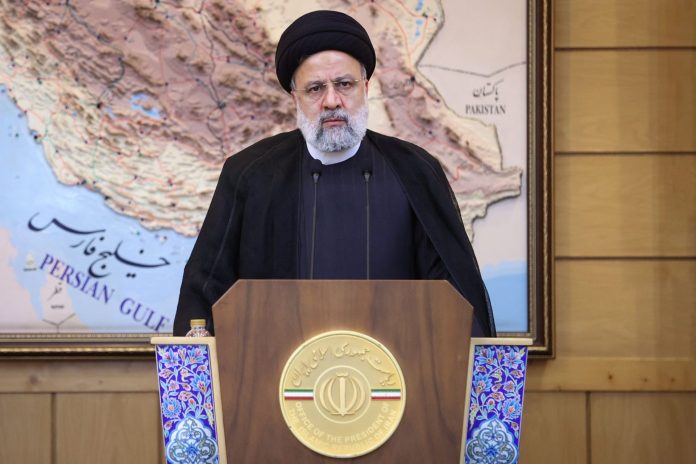
President Raisi strongly condemned the attack, promising that the Islamic Republic of Iran won’t let this go unanswered.

Five Iranian military advisors with the Islamic Revolution Guards Corps (IRGC) were killed in an Israel’s airstrike in the Syrian capital, Damascus.

They were IRGC military advisors deployed to Syria to help with the fight against Takfiri terrorism.

Israel has carried out a number of airstrikes in Syria over the past few weeks, targeting IRGC personnel.

The Iranian military advisors are in Syria at the official invitation of the Syrian government.

The Iranian Foreign Ministry spokesman has earlier warned that Tehran reserves the right to act in kind over Israel’s assassination of the four military advisors.

Israeli drone raid kills 2 Hamas members in Lebanon: Media

Israel Attack Lebanon

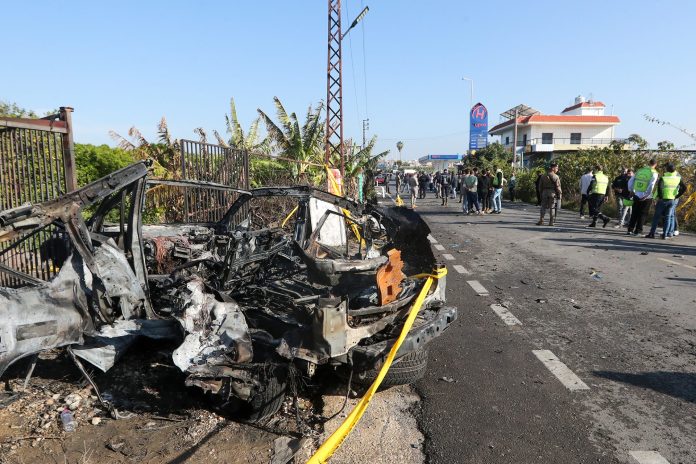
Lebanon’s media outlets, citing local sources, reported that the attack was carried out on Saturday afternoon as the vehicle was traveling along a road linking the Bazourieh area to Burj el-Shemali region in the southern district of Tyre.

The Israeli drone attack came amid strikes by fighters from Lebanon’s movement Hezbollah against Israeli military positions in response to the ongoing Israeli genocidal campaign in the besieged Gaza Strip.

It has been a string of assassinations by the regime in the recent past.

On January 2, senior Hamas official Saleh al-Arouri was assassinated in a “treacherous Zionist strike” on Beirut’s southern suburb of Dahiyeh, the Gaza-based movement announced on its official channel.

Arouri was known to be deeply involved in Hamas’ military affairs. He had previously headed the group in the occupied West Bank.

The Israeli regime launched its devastating hostilities in the Gaza Strip on October 7, 2023, after Hamas carried out surprise Operation Al-Aqsa Storm against the occupying entity.

The Israeli military has also been carrying out attacks against the Lebanese territory since then, prompting retaliatory strikes from Hezbollah. The movement has vowed to keep up retaliatory operations as long as the regime continues its onslaught on Gaza.

The regime has killed almost 25,000 people, most of them women and children, in the blockaded enclave since.