Friday, April 17, 2026
Home Blog Page 108

EU says ‘not optimistic’ on sanctioning Israel over Gaza war

Gaza War

Foreign ministers meeting in Denmark will discuss a proposal to suspend EU funding to Israeli start-ups as initial punishment for the situation in Gaza.

But the bloc has so far failed to garner the majority needed to take that step — let alone move ahead with more forceful measures against Israel.

“I’m not very optimistic, and today we are definitely not going to adopt decisions,” Kallas told journalists at the start of the Denmark meeting.

“It sends a signal that we are divided.”

Splits within the European Union between countries backing Israel and those favouring the Palestinians have seen the 27-nation bloc often left hamstrung in the face of the dire humanitarian crisis in the besieged and bombardment enclave.

A string of EU countries are pushing for more far-reaching punishment for Israel, but have been frustrated.

Denmark’s foreign minister Lars Lokke Rasmussen, whose country holds the EU’s rotating presidency, insisted the bloc “must change words into action”.

He stated that Copenhagen backed suspending trade cooperation with Israel, sanctioning far-right Israeli ministers, and banning imports from illegal settlements.

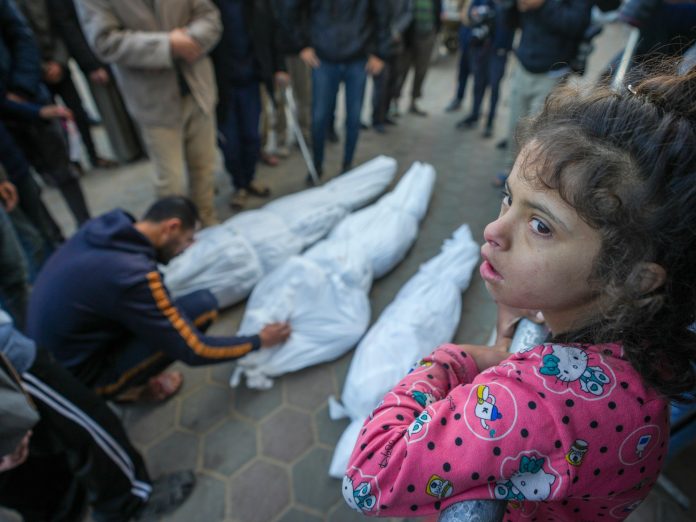
Israel is facing pressure at home and abroad to end its offensive in Gaza, where the vast majority of the population has been displaced at least once and the United Nations has declared a famine.

The war in Gaza has killed at least 63,000 Palestinians, most of them civilians, according to figures from the health ministry in Gaza that the UN considers reliable.
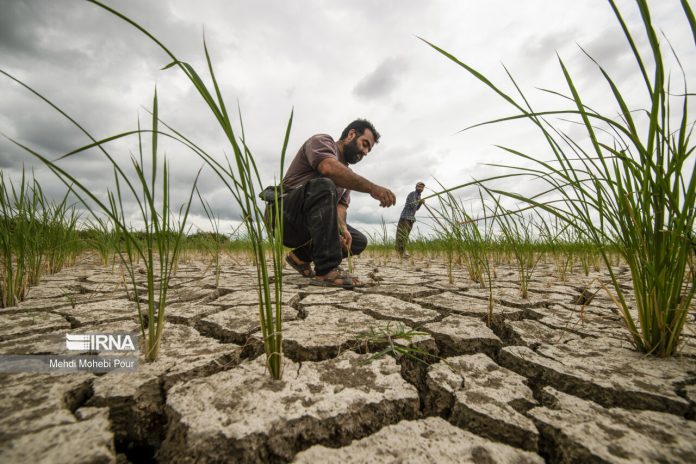

Iran faces severe drought amid poor water management, environment chief warns

Iran drought

She said the crisis is partly driven by climate change, but also by mismanagement of water resources.

Speaking on Saturday, Ansari criticized years of planning that ignored the country’s ecological capacities, citing examples such as the establishment of water-intensive industries in arid cities and unregulated urban expansion.

“To supply these areas, inter-basin water transfers were carried out, creating new environmental and social challenges,” she noted.

Ansari also pointed to unsustainable agricultural practices, including water-intensive crops and outdated irrigation methods, as major contributors to the crisis.

She urged a comprehensive review of water policies, emphasizing the need for better consumption management in agriculture, industry, and urban areas.

Proposed solutions include expanding wastewater treatment systems, reusing reclaimed water, and adopting sustainable consumption models.

On transboundary water issues, Ansari stressed the importance of environmental diplomacy, particularly in managing shared resources like the Hoor al-Azim wetland along the Iran-Iraq border, which suffers from seasonal drying and fires.

She called for stronger regional and international engagement to secure Iran’s environmental water rights.

Renowned Iranian composer Ahmad Pejman dies in Los Angeles

Born in July 1935 in Iran, Pejman began his musical journey in high school, studying violin under Heshmat Sanjari and music theory with Hossein Naseri.

In 1964, he received a scholarship to study composition at the Vienna Academy of Music. Upon returning to Iran, he became a composer for Tehran’s Roudaki Hall and a music professor at the University of Tehran.

During this period, Pejman composed notable operas, including The Farmer’s Celebration, The Hero of Sahand, and The Phoenix.

In 1975, he moved to the US to pursue a doctorate in composition at Columbia University, studying under prominent composers such as Vladimir Ussachevsky and Jack Beeson.

Pejman’s prolific career spanned classical works, orchestral compositions, and memorable scores for Iranian cinema. His innovative style and dedication to both performance and research cemented his legacy as one of Iran’s most influential music figures.

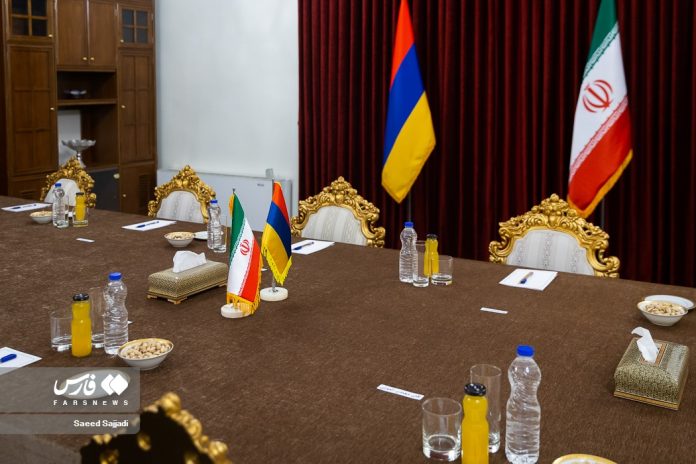
Iran, Armenia discuss security and regional stability

Iran Armenia Flags

The visit, made at Larijani’s official invitation, focused on expanding bilateral relations and addressing regional security concerns.

Larijani emphasized Iran’s opposition to any geopolitical changes in the South Caucasus and reaffirmed Tehran’s support for Armenia’s sovereignty and regional stability.

He also highlighted the importance of cooperation in completing the North-South Transport Corridor, which would link the Persian Gulf to the Black Sea, describing it as a key economic and strategic project.

“Iran has always supported the independence and strength of regional countries to ensure lasting security,” Larijani stated, expressing satisfaction with the current level of political, economic, security, and defense relations between Tehran and Yerevan.

Grigoryan described bilateral ties as “unprecedented” and expressed Armenia’s readiness to sign a comprehensive strategic partnership agreement with Iran in the near future.

He reiterated Yerevan’s adherence to five key principles, including national sovereignty, respect for territorial integrity, judicial authority, inviolability of borders, and reciprocity, and assured Tehran that Armenia remains firmly opposed to any attempt to alter the region’s geopolitical landscape.

The Armenian official also underscored that recent peace negotiations with the Republic of Azerbaijan have preserved Armenia’s exclusive control over its security, military, and customs affairs, providing reassurances to Iran about its regional position.

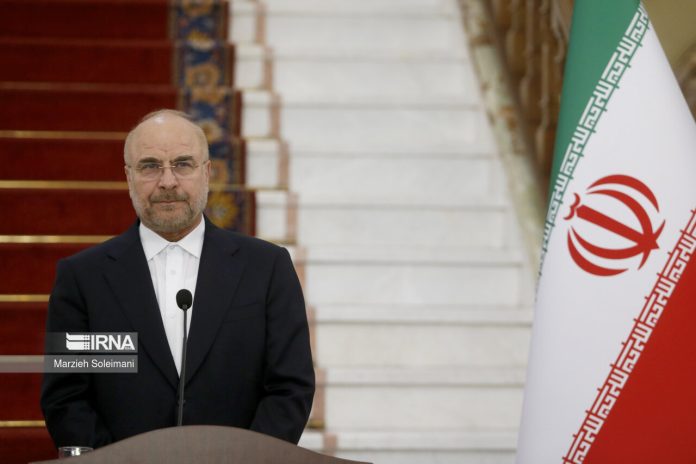
Iranian speaker says US, NATO, Israel aligned against Tehran

Mohammad Bagher Ghalibaf

Speaking at a conference in Tehran marking “World Mosque Day,” Ghalibaf said Iran’s recent military operations, known as True Promise 1, 2, and 3, “demonstrated the country’s ability to confront advanced military systems deployed in the region.”

During US President Donald “Trump’s first term, he integrated the air defense systems of regional countries with a $4 billion plan, and today all those capabilities are arrayed against our missiles,” he said.

Ghalibaf described Israel as the “Nazism of the 21st century,” adding that Tehran’s real strength lies “in the hearts of the people,” not just in missiles or defense systems.

He urged closer coordination among government branches and greater involvement of citizens in national affairs, criticizing over-centralized management and inefficiencies in economic governance.

Warning of the possibility of future conflicts, the speaker emphasized that unity is key, adding: “If our cohesion falters, the enemy will not hesitate to strike again.”

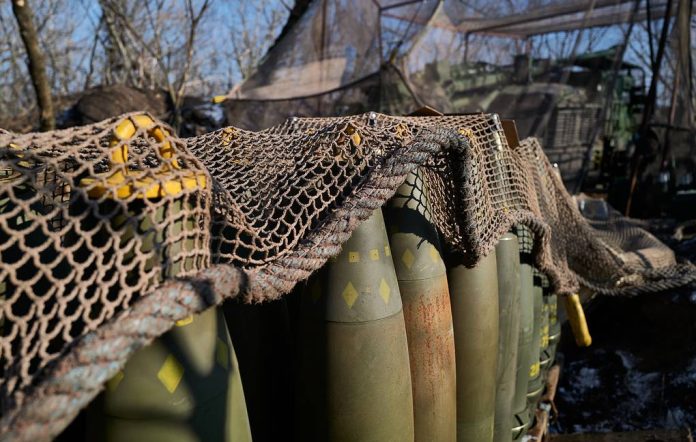
US give Ukraine weapons that enable it to attack deeper into Russia: envoy to NATO

“And finally, you know, we’re giving some deeper strike capabilities, and most likely, the Ukrainians are going to use them,” the diplomat said during a live broadcast on Fox News.

He did not specify which systems he was referring to, but mentioned the plans announced by Washington on Thursday to sell Kiev over 3,000 ERAM air-based missiles, as well as purchases of weapons for Ukraine from the United States by NATO allies.

“President Trump’s making sure that Ukraine can continue to defend itself, and by giving them some deeper strike capabilities that obviously could help them offensively,” Whitaker reiterated.

Russia has repeatedly pointed out that long-range strikes are carried out not by Kiev, but by Western countries, whose specialists provide target guidance. Russia will respond decisively if long-range systems are used against it, stressed Russian Foreign Ministry spokeswoman Maria Zakharova.

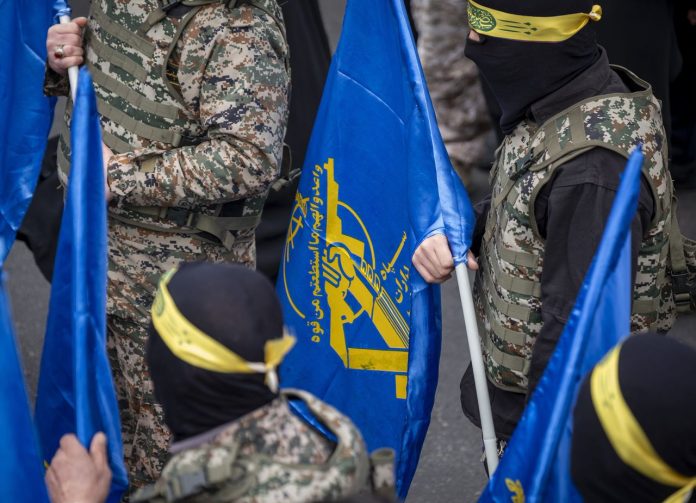
IRGC arrests 8 suspected Mossad agents in northeastern Iran

IRGC

In a statement released on Saturday, the IRGC’s Imam Reza unit said the arrests followed “precise and continuous intelligence operations” coordinated with the judiciary.

The suspects are accused of transmitting sensitive information, including coordinates of critical sites and details of high-ranking military figures, during the 12-day conflict with the US-Israeli alliance in June.

According to the statement, the group had received specialized training online from Mossad operatives and was planning attacks targeting senior Iranian officials and key infrastructure sites in the city of Mashhad.

Authorities also seized materials intended for building launchers, bombs, and explosive devices.

The IRGC said the network had ties with separatist groups and warned that any form of cooperation with Israel is strictly prohibited under Iranian law. Officials urged citizens to report suspicious activities via hotline numbers.

Iran’s parliament passed the “Countering Hostile Actions of the Zionist Regime” law in May 2020, mandating severe penalties for collaboration with Israel in any form.

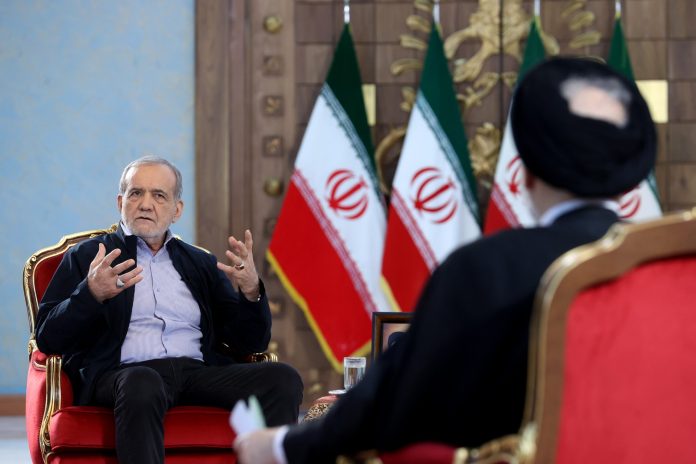
President Pezeshkian says Iran not seeking war, vows to resist assault

In a candid conversation with a number of Iranian political activists from across the spectrum, Pezeshkian said: “We do not want war, and we have said this from the very beginning. But we are not afraid of war either. Our people have also shown that if war is imposed, national unity and solidarity will emerge even more strongly.”

Pezeshkian warned that the United States and Israel are seeking to divide and overthrow Iran.

He emphasized the necessity of unity among political factions as well as the people in confronting adversaries, saying: “We must foster cohesion and solidarity inside the country. If we achieve unity, our strength will be inexhaustible, because when the people stand together, no power will so easily dare to covet our country.”

Referring to the recent 12-day war waged by the United States and the Zionist regime against Iran, he added that the enemies believed Iran was at its weakest point.

“They assumed that once they attacked, on the second or third day the people would flood the streets, and soon the system, the revolution, and the country would collapse.”

The President continued: “Iran belongs to all of our people; it is not the property of one particular group. The enemies never thought we would endure, but we stood firm. We are not seeking war, but if anyone seeks to invade, we will resist with strength.”

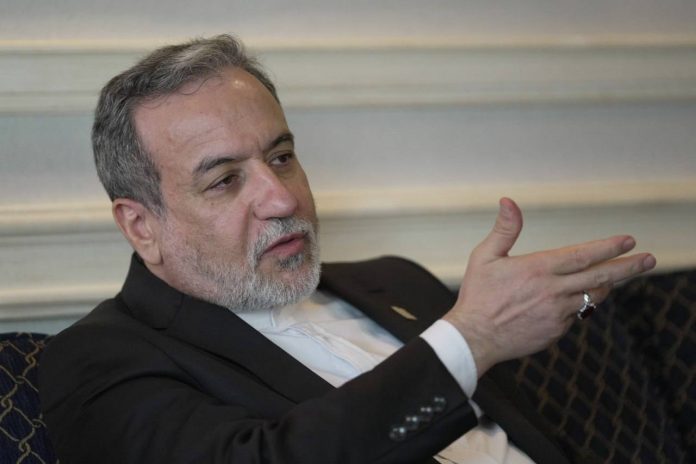
Iranian FM highlights diplomatic efforts amid regional tensions

In an article published by the Iran newspaper, Araghchi said more than 60 phone and video calls were held with foreign ministers worldwide during the 12-day conflict, emphasizing Iran’s right to self-defense under the UN Charter.

“Iran was not and will not be the initiator of war,” he noted, adding that Tehran would “never hesitate to defend its people and territory.”

He highlighted that nearly 120 countries and several international organizations condemned the Israeli attacks, calling it a sign of Iran’s growing diplomatic influence.

The minister also pointed to strengthened regional ties, particularly with Persian Gulf states, Turkey, and Pakistan, while maintaining strategic channels with Syria and Lebanon to secure access to the Mediterranean.

Araghchi said Iran’s foreign policy remains focused on “active, inclusive, and effective diplomacy,” balancing crisis management with economic initiatives.

These include expanding trade with neighboring countries, boosting regional connectivity, and deepening cooperation within blocs such as BRICS, the Shanghai Cooperation Organization (SCO), and the Eurasian Economic Union.

Trump admin. to revoke visas for PLO and PA members ahead of UN General Assembly 2025

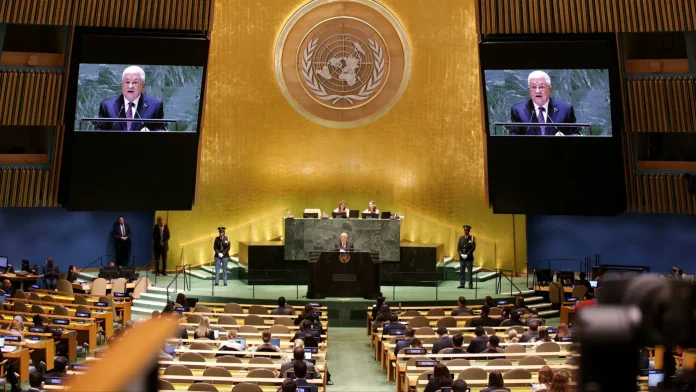
Secretary of State Marco Rubio announced on Friday that he would be denying and revoking visas to Palestinian officials who wish to attend the 80th UNGA session in New York City, which opens on 9 September 2025.

“The Trump Administration has been clear: it is in our national security interests to hold the PLO and PA accountable for not complying with their commitments, and for undermining the prospects for peace,” the announcement read.

It’s unclear if PA President Mahmoud Abbas, who is supposed to attend the UNGA session to deliver an address, is included in the restrictions.

The PA is the governing body that has overseen areas of the occupied West Bank since 1994, as part of the Oslo Accords peace agreement between Israel and the PLO. The PLO is an umbrella political coalition that is internationally recognised as the official representative of the Palestinian people in both the Palestinian territories and the diaspora.

The Trump administration on Friday demanded that the PLO and PA “consistently repudiate terrorism”, citing the 7 October 2023 attacks on southern Israel, and that they must stop “incitement to terrorism in education”, according to a US State Department press release.

The Palestinian Authority on Friday announced it felt “deep regret and astonishment” at the decision of the US State Department not to grant visas to the Palestinian delegation scheduled to participate in next month’s United Nations General Assembly in New York City.

Part of the agreement with the UN is that the host country for its headquarters allows all heads of state to address the annual gathering.

The Palestinian Authority “stressed that this decision stands in clear contradiction to international law and the UN Headquarters Agreement, particularly since the State of Palestine is an observer member of the United Nations,” the Palestine Mission to the UK posted on X.

Abbas condemned the attacks on Israel in June this year in a letter to French President Emmanuel Macron and Saudi Crown Prince Mohammed bin Salman ahead of a UN conference on a two-state solution.

Rubio’s announcement added the PA must halt efforts “to bypass negotiations through international lawfare campaigns”, including appeals to the International Criminal Court and International Court of Justice, and efforts to secure the unilateral recognition of a conjectural Palestinian state”. The Trump administration cites these two actions as having “materially contributed to Hamas’s refusal to release its hostages, and to the breakdown of the Gaza ceasefire talks.”

The ICC issued arrest warrants for Israeli Prime Minister Benjamin Netanyahu and former Defence Minister Yoav Gallant in 2024, while the ICJ found a plausible case for genocide in 2024.

On 31 July, the US first announced it was imposing sanctions and would deny visas to PLO members and PA officials.