Sunday, December 28, 2025
Home Blog Page 1023

EU agrees on 13th package of sanctions against Russia, blacklisting companies in China for first time

Russia EU

The package will be formally approved in time for the second anniversary of the start of the Russian military operation in Ukraine on February 24. Brussels has placed 12 rounds of restrictions on Russia since the start of the conflict in February 2022. The existing sanctions already target a broad range of sectors and include trade embargoes, travel bans and individual sanctions against Russian businessmen and public officials.

“EU Ambassadors just agreed in principle on a 13th package of sanctions in the framework of Russia’s aggression against Ukraine,” the Belgian presidency said, calling it “one of the broadest approved by the EU”.

European Commission President Ursula von der Leyen welcomed the agreement, stating in a post on X: “We must keep degrading [Vladimir] Putin’s war machine.”

The new package will see nearly 200 entities and individuals banned from traveling to the EU, while both the individuals and companies face freezes on their assets.

“With 2,000 listings in total, we keep the pressure high on the Kremlin. We are also further cutting Russia’s access to drones,” von der Leyen wrote.

German Foreign Minister Annalena Baerbock also signaled this week that the new round of Russia sanctions will affect the supply of unmanned aerial vehicles (UAVs).

According to media reports, citing European diplomats, the EU is planning for the first time to sanction companies in mainland China and in other countries including Turkey, India, and Serbia, for helping Moscow circumvent sanctions by allegedly supplying it with components that can be repurposed for use in drones and other weapon systems.

China has reacted to reports that its firms could be blacklisted, saying it rejects “illegal sanctions,” while vowing to protect the interests of Chinese companies.

Moscow has condemned the Western sanctions and has repeatedly warned that they hurt the EU more than Russia in economic terms.

Iran’s destroyer participates in India’s naval exercise

Dena Destroyer

Deputy commander of the Iranian Navy’s southern fleet said the destroyer has partaken in the war game in line with the “very good and growing relations” between the naval forces of Iran and India.

Admiral Jalil Moqaddam stated Iran and India, with rich historical backgrounds, are two naval powerhouses in the region. He said naval cooperation between the two countries could help ensure maritime security and serve regional interests.

The Indian Navy’s largest-ever multilateral naval exercise – Milan 2024 – kicked off in Visakhapatnam port city, also known as Vizag, on Monday with several warships from the Indian Navy and foreign navies participating in the Harbor Phase of the drills.

The Harbor Phase, which began on February 19 and winds down on February 23, features a city parade, maritime seminar, and tech expo, among other events.

During the Sea Phase from February 24 to 27, the participating navies will hold advanced air defense, anti-submarine, and anti-surface warfare drills. Gunnery shoots on aerial and surface targets, maneuvers and underway replenishment would be conducted, according to the Indian English-language daily newspaper The Times of India.

Iran’s Navy has in recent years achieved self-sufficiency in manufacturing surface and sub-surface vessels. It has also increased its presence in international waters to protect naval routes and provide security for merchant vessels and tankers.

The Iranian naval forces have also staged military drills with several countries, including Russia, China and Pakistan, over the past years with the aim of promoting combat readiness. They have also been involved in joint efforts aimed at countering piracy and maritime terrorism.

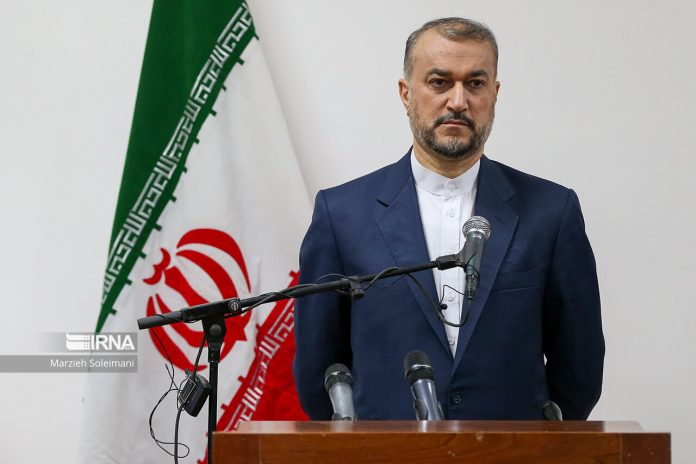
Iran FM: US veto of UNSC Gaza resolution “diplomatic catastrophe of century”

Iranian Foreign Minister Hossein Amirabdollahian

In a message on X social media, Amirabdollahina strongly condemned the
repetition of the US veto of the draft resolution demanding immediate ceasefire in the Gaza Strip.

The top Iranian diplomat wrote: “This repeated veto clearly shows that the White House bears responsibility for the persistence of the genocide by the fake Zionist regime in Gaza and its war crimes in the West Bank.”

He reiterated the world must hold the US to account.

The United States on Tuesday vetoed an Algerian-drafted resolution at the United Nations Security Council that called for an immediate humanitarian ceasefire in Gaza.

Thirteen council members voted in favor of the draft resolution, while Britain abstained.
It was the third US veto of a draft resolution since the start of the Gaza war on October 7. More than 29,300 Palestinians have been killed by the Israeli forces since then.

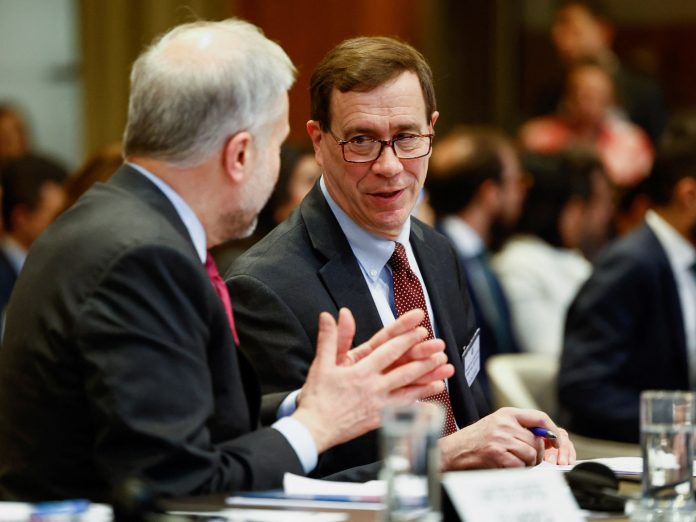
US to ICJ: Israel should not be asked to immediately end occupation of Palestinian territories

US ICJ Israel-Palestine

The ICJ, also known as the World Court, is hearing from about 50 countries throughout the week to present their arguments on the issue of a nonbinding opinion on the legal consequences of the Israeli occupation.

Previous speakers including South Africa and Saudi Arabia have demanded that Israel end its occupation of the Palestinian territories, which came after its victory in the six-day Arab-Israeli war in 1967.

But on Wednesday, the acting legal adviser for the US State Department, Richard Visek, took a different approach.

“The court should not find that Israel is legally obligated to immediately and unconditionally withdraw from occupied territory,” Visek said, adding, “Any movement towards Israel’s withdrawal from the West Bank and Gaza requires consideration of Israel’s very real security needs.”

“We were all reminded of those security needs on October 7, and they persist. Regrettably, those needs have been ignored by many of the participants,” he stated, referring to the Hamas attack on Israel that killed at least 1,140 people. Around 250 others were seized as hostages.

Israel responded to the attack with a devastating assault on Gaza that has killed more than 29,000 people, according to Palestinian authorities. The assault has displaced more than 80 percent of the population and reduced large parts of the territory to rubble.

The ICJ’s 15-judge panel has been asked to review Israel’s “occupation, settlement and annexation … including measures aimed at altering the demographic composition, character and status of the Holy City of Jerusalem, and from its adoption of related discriminatory legislation and measures”.

Visek urged the judges to stick to the established United Nations framework for a two-state solution.

“It is important that the court keeps in mind the balance the [UN] Security Council and the General Assembly have determined is necessary to provide the best chance for durable peace”, he continued.

The address comes after the US vetoed a draft resolution calling for an immediate ceasefire between Israel and Hamas at the UN Security Council on Tuesday.

Linda Thomas-Greenfield, the US ambassador to the UN, said the resolution was rejected because it could affect peace negotiations on securing a temporary ceasefire and exchange of Israeli hostages for Palestinian prisoners by the US, Egypt, Israel and Qatar.

Egypt, which is involved in a mediator role in the negotiations between Israel and Hamas, delivered its stance on the legality of Israel’s occupation on Wednesday and called it a “continued violation of international law”.

Russia and France also presented their arguments on Wednesday.

Vladimir Tarabrin, Russia’s ambassador to the Netherlands, said Israeli settlements in the occupied West Bank were in breach of international law and “are contrary to the principle of inadmissibility of acquisition of territory by force”.

He added that the continued Israeli occupation was blocking Palestinians’ right to self-determination and that a two-state solution with an “independent and viable” Palestinian state would be the best way to bring “an end to Israel’s violations, creating guarantees of their non-repetition and redressing the damage”.

France’s representative, Diego Colas, also condemned Israel’s settlement policy and said Paris would “never recognise the illegal annexation of territories in the West Bank”.

Israel, which is not participating in the oral hearings, submitted a written contribution describing the questions the court had been asked as “prejudicial” and “tendentious”.

Israel has long argued that the territories are formally occupied on the basis that they were captured from Jordan and Egypt in the 1967 war rather than from a sovereign Palestine.

Iran slams US veto of UNSC resolution on Gaza, says Washington behind war

Nasser Kanaani

Slsmming the US move, Nasser Kanaani said the US veto of the resolution at the UN Security Council which demanded the Zionist regime stop the Gaza war and the atrocities against Palestinians once again proves to the world that “the US is not part of the solution to the crisis and the humanitarian catastrophe in Gaza.”

He added that “the uncalculated positions and actions of the US in the Security Council and its extreme use of the veto right” have seriously challenged regional and international peace and security, undermining the main goal of the establishment of the United Nations and the Security Council, which is to maintain international peace and security.

Kanaani added it has also damaged and weakened the trust of governments and nations in the role of the UN in protecting global peace and security.

Kanaani went on to say that the triple US veto of resolutions at the Security Council aimed at ending the Gaza war also clearly shows that Washington is the main orchestrator of this onslaught against Gaza and prevents efforts to stop “the genocide and massacre of Palestinian children and woman” in Gaza and the West Bank.

The Iranian Foreign Ministry spokesman stressed that the international community should keep making efforts to support the Palestinian people and stop the genocidal war on them.

Kanaani also called on the global community to prevent the US from unilaterally taking the UN Security Council hostage.

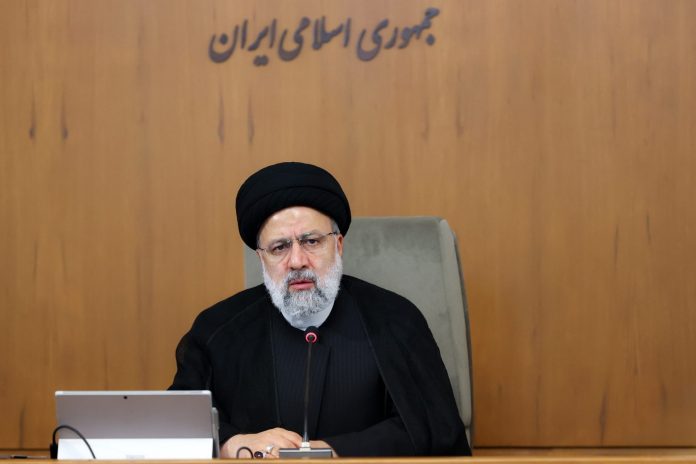
Iran president condemns US’ veto of UNSC resolution on Gaza war

Ebrahim Raisi

Addressing a cabinet session on Wednesday, Raisi lashed out at the US for vetoing the UNSC resolution and blocking a demand for an immediate ceasefire in the Gaza Strip, which the Zionist regime has been pounding for over four months.

“Today, the US is undoubtedly the axis and at the apex of all evil acts in the world,” he said.

The president also slammed the US government as the main sponsor of the Israeli regime’s crimes and genocidal atrocities in Gaza and the one that gets the blame for the continuation of crimes against Palestinians.

He urged that the entire world should condemn the Israeli crimes and the US’ support for them.

On Tuesday, the Arab nations, led by Algeria, put a draft resolution to a vote with the expectation that it would not pass after the US –Israel’s key ally– had warned it would not back the text and proposed a rival draft instead.

The US was the only country to vote against the draft text while the UK abstained. The UN Security Council’s 13 other member countries voted in favor of the text demanding a halt to the Israeli war that has killed more than 29,000 people in Gaza and displaced more than 80 percent of population in the enclave.

Washington traditionally shields the Israeli regime from UN action and has previously vetoed two other Security Council resolutions since the onslaught on Gaza began on October 7.

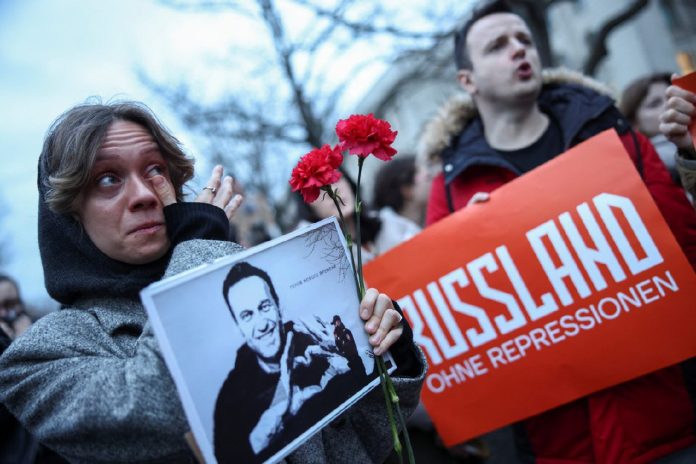
UK imposes sanctions on six officials at prison where Russia’s Navalny died

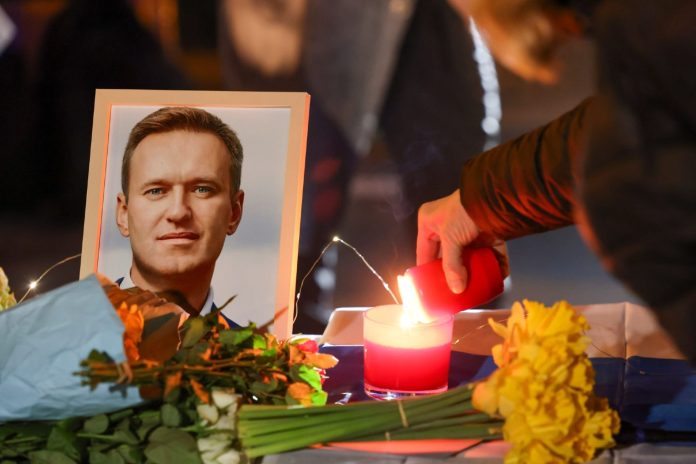
Alexei Navalny

The UK foreign secretary imposed sanctions on six individuals in response to Navalny’s death, which has been widely blamed on the Kremlin.

The head of the penal colony, Vadim Konstantinovich Kalinin is among those hit by the new restrictions.

The Foreign Office said the six had been targeted for “activity that violates the right not to be subjected to cruel, inhuman or degrading treatment or punishment and the right to life”.

Announcing the sanctions, Cameron stated: “It’s clear that the Russian authorities saw Navalny as a threat and they tried repeatedly to silence him. FSB operatives poisoned him with novichok in 2020, they imprisoned him for peaceful political activities, and they sent him to an Arctic penal colony.”

“No one should doubt the oppressive nature of the Russian system. That’s why we’re today sanctioning the most senior prison officials responsible for his custody in the penal colony where he spent his final months.”

“Those responsible for Navalny’s brutal treatment should be under no illusion – we will hold them accountable,” he added.

Rishi Sunak also confirmed the sanctions as he appeared in the House of Commons for prime minister’s questions.

“He died for a cause to which he dedicated his whole life: freedom,” Sunak told parliament.

“And to return home knowing that [Vladimir] Putin had already tried to have him killed was one of the most courageous acts of our time.”

“Together with our allies we are considering all options to hold Russia and Putin to account and this morning we sanctioned those running the prison where Alexei Navalny’s body still lies,” he continued.

In response, the Labour leader, Keir Starmer, stated Navalny had “died to expose the corruption of the Putin regime”, adding that it was a reminder that Putin has “stolen not just the wealth but the future and democracy of the Russian people”.

Navalny died unexpectedly on Friday in a Russian prison, where he was serving a lengthy sentence stemming from several criminal convictions.

According to the Russian authorities, Navalny suddenly “felt ill” and collapsed on Friday. Efforts to resuscitate the 47-year-old apparently failed and he was pronounced dead the same day. The exact cause of death remains unclear, although a source for RT Russian suggested that it was a blood clot. An investigation has since been launched.

Navalny was put behind bars in 2021 for violating the terms of his suspended sentence for fraud. Two years later, he was sentenced to 19 years in prison for “extremist activities”.

The activist denied any wrongdoing and insisted that all cases against him were politically motivated. Navalny also alleged that the prison conditions were tantamount to “torture”.

Multiple Western leaders, including US President Joe Biden, have stated that President Putin and the Russian government are ultimately “responsible” for Navalny’s death.

Russian Foreign Ministry spokeswoman Maria Zakharova blasted the West for “cynically” rushing to blame the Russian authorities instead of waiting until forensic reports are made public.

Kremlin spokesman Dmitry Peskov has stressed that it was “completely unacceptable” for Western politicians to make “outrageous statements” regarding Navalny when the investigation into his death is still ongoing.

The EU’s top diplomat Josep Borrell has also said Russia must allow an international investigation into the death of Navalny. But Kremlin announced Moscow doesn’t accept such demands at all.

Iran says Israel was behind recent gas pipeline explosion

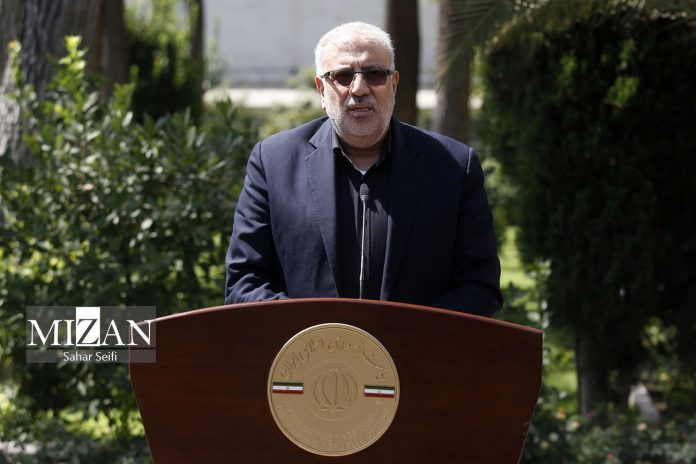
Javad Owji

The minister stated that the Israeli plot ended in failure, because only a few pipelines were damaged.

Last week, sabotage attacks against pipelines in southwestern Iran caused temporary disruption to gas supplies.

Owji said the gas supply network is operating normally. Thanks to the Oil Ministry’s full preparedness, the enemy failed to disrupt the household gas distribution network, he added.

The gas pipelines were immediately fixed and the sinister plot could not affect situation in the cities and villages, the minister continued.

EU summons Russian envoy, demands independent investigation into opposition figure’s death

Alexei Navalny

It said Michael Siebert, a senior official in the European External Action Service, also urged Russia to release Navalny’s body to his family without further delay at the meeting with Kirill Loginov, Russia’s acting permanent representative to the EU.

“The EU side conveyed the EU’s outrage over the death of the Russian opposition politician Alexei Navalny, for which the ultimate responsibility lies with President (Vladimir) Putin and the Russian authorities,” it noted.

Siebert “called upon Russia to allow an independent and transparent international investigation into circumstances” of Navalny’s death, it added.

The Kremlin has denied involvement in Navalny’s death and says Western allegations that Putin was responsible are unacceptable. Russia’s Investigative Committee says it has launched a procedural investigation into the death, and the Kremlin has announced it does not bow to EU demands.

Navalny, 47, fell unconscious and died suddenly on Friday after a walk at the penal colony above the Arctic Circle where he was serving a three-decade sentence, the Russian prison service said.

The EU moved closer on Monday to imposing new sanctions against Moscow over its war on Ukraine as Navalny’s widow visited Brussels. The US is set to announce sanctions against Russia on Friday over Navalny’s death.

Survey finds 10% of Europeans believe Ukraine can still defeat Russia

Russia Ukraine War

The shift in sentiment – this time last year, more Europeans than not said Ukraine must regain all its lost territory – will demand that politicians take a more “realistic” approach that focuses on defining what an acceptable peace must actually mean, the report’s authors argue.

“In order to make the case for continued European support for Ukraine, EU leaders will need to change how they talk about the war,” said co-author Mark Leonard of the European Council on Foreign Relations (ECFR), which commissioned the polling.

Most Europeans “are desperate to prevent a Russian victory” but do not believe Kyiv can win militarily, Leonard said, meaning that the most convincing argument for an increasingly sceptical public was that continuing aid “could lead to a sustainable, negotiated peace that favours Kyiv – rather than a victory for Vladimir Putin”.

The January polling in 12 EU member states – including France, Germany, Hungary, Italy, the Netherlands, Poland, Spain and Sweden – found that Ukraine’s stalled counteroffensive, growing fears of a US policy shift and the prospect of a second US presidential term for Donald Trump were fuelling pessimism about the war’s outcome.

It was carried out before Ukraine’s retreat at the weekend from the eastern town of Avdiivka, which handed Russia its most significant military victory since the capture of Bakhmut by Wagner troops in May 2023. Russia launched its full-scale invasion of Ukraine on 24 February 2022.

The report, Wars and Elections: How European leaders can maintain public support for Ukraine, found that only one in 10 Europeans across the 12 countries surveyed believed Ukraine would win on the battlefield, while twice as many (20%) predicted a Russian victory. Even in the most optimistic member states surveyed – Poland, Sweden and Portugal – fewer than one in five (17%) believed Kyiv could prevail.

In all countries, the polling showed, the most common opinion, shared by an average of 37% of respondents, was that the war would end in a compromise settlement – although some countries were keener on that outcome than others.

In Sweden (50%), Portugal (48%) and Poland (47%), respondents were more likely to say Europe should help Ukraine fight back, while in Hungary (64%), Greece (59%), Italy (52%) and Austria (49%), they preferred pushing Kyiv to accept a settlement. In France, Germany, the Netherlands and Spain, opinions were more evenly divided.

The polling yielded evidence that many Europeans increasingly considered Russia’s war against Ukraine to be of direct concern to them, with 33% saying it had a greater impact on their country – and on Europe (29%) – than the war in the Middle East (compared to 5% who said the opposite on both counts).

The possible return of Trump to the White House was broadly seen as bad news, with 56% of respondents across the 12 countries surveyed saying they would be very or fairly disappointed if the former president was re-elected.

The only exception was Hungary, where 27% of respondents said they would be pleased by Trump’s return and 31% disappointed. Similarly, supporters of only one major political party – Hungary’s Fidesz – were hopeful of a Trump victory.

Among other far-right parties previously expressing support for Trump, only about a third of voters for Germany’s AfD, Austria’s FPÖ or Brothers of Italy said they would welcome his return, with pro-Trump sentiment even weaker among supporters of France’s National Rally and Poland’s Law and Justice.

If the US were to halt military aid to Ukraine under a Trump presidency, 41% of Europeans said that the EU should either increase its support or maintain it at its current level, while 33% would prefer the EU to follow the US lead.

On the second anniversary of Russia’a invasion of Ukraine, the report’s authors said Europeans were not in a “heroic mood”, or even optimistic about the situation. But, they said, Europeans’ commitment to preventing a Russian victory had not moved.

The challenge for western policymakers, they argued, would be to successfully address the dichotomy between falling public confidence about how the war would end, and the desire to maintain support in order to prevent a Russian victory.

“As Europe and the US enter election season, the quest to define peace will be a critical battleground,” the authors wrote.

“Leaders will need to find a new language that resonates with current sentiment.”

Ivan Krastev, the report’s other co-author, stated the biggest danger was that Trump – and the Russian president, Vladimir Putin, who has hinted that he is open to negotiations on his terms – “try to portray Ukraine and its backers as the ‘forever war’ party, while they claim the mantle of ‘peace,’”

A Russian victory “is not peace”, noted Krastev, who is chair of the Sofia-based Centre for Liberal Strategies thinktank.

“If the price of ending the war is turning Ukraine into a no man’s land, this will be a defeat not only for Kyiv but for Europe and its security.”