Sunday, December 28, 2025
Home Blog Page 1022

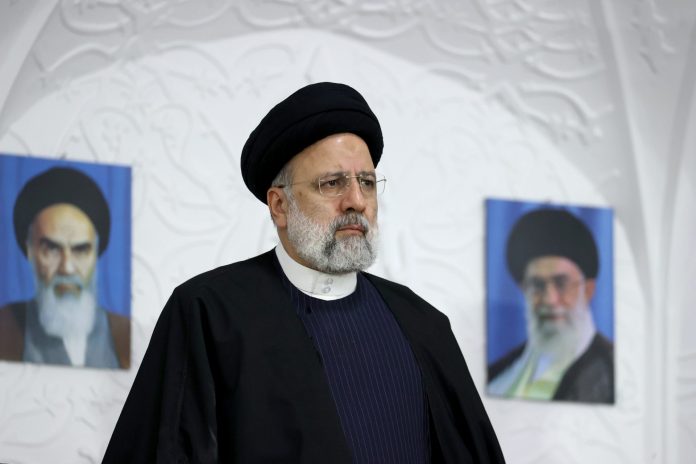
Pro-gov’t daily rejects ‘electoral silence’ criticism against Iran president

Ebrahim Raisi

In an article on Thursday, Iran wrote, “The accusation of ‘electoral silence’ on the part of the government and the president is one of the tricks that can only be found in the bag of tricks of the deniers of the reality; those who try to pass off their delusions as political analysis and draw attention in this way.”

The daily argued, “The facts and the evidence show that the government and the head of the government have not remained silent about the elections and an inclusive participation, but… are implementing all their executive power and political capacity for the election to fulfill their legal role.”

The parliamentary and Assembly of Experts elections are to be held on March 1 while the Guardian Council has disqualified many candidates for the polls, majority of them reformist hopefuls, including former reformist-leaning moderate president Hassan Rouhani.

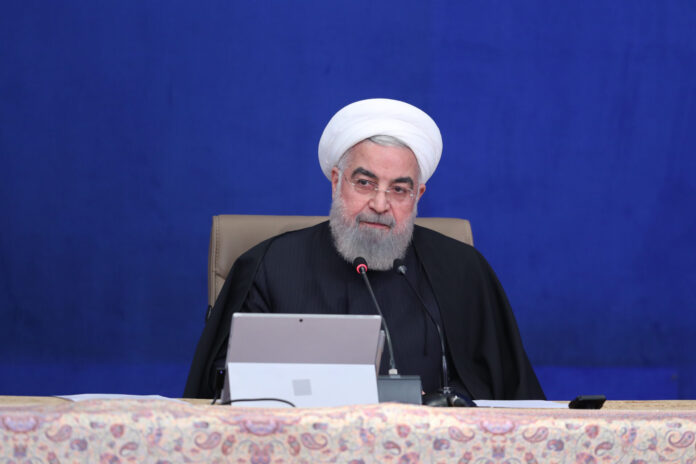
After being barred from running in the polls, Rouhani said for the first time since the victory of the Islamic Revolution in 1979, both the ruling government and the people are showing widespread apathy towards the vote, explaining that a high turnout would put an end to the incumbent administration.

Analysts have warned that the tightening of the noose by the vetting body will lead to an overarching apathy and a rift between the ruling establishment and the nation.

Former Iran President Rouhani asks Guardian Council again to clarify disqualification reasons

Rouhani

The Guardian Council has not answered Rouhani’s previous letters.

The council’s spokesperson Tahan Nazif has earlier said, “Our priority is to check the eligibility of those who have filed complaints. We have not yet looked into the cases of those who have not filed complaints,” implying Rouhani’s case will be reviewed, without specifying a date.

After he was banned from running, Rouhani issued a statement, saying the “ruling minority” made the people disillusioned with the elections scheduled to be held next Friday.

An opinion poll by a government agency has predicted that the turnout in the March 1 general elections will be 15 percent. Some officials have denied the reliability of this opinion poll.

Mahmoud Alavi, a former Iranian Intelligence Minister along with many of the incumbent MPs are among those disqualified for the polls.

British arms manufacturer BAE Systems makes record profit amid Ukraine, Gaza wars

Russia Ukraine War

The FTSE 100 company made underlying profits before interest and tax of £2.7bn on record sales of £25.3bn in 2023.

Shares in weapons manufacturers have surged in the past two years after Russia’s full-scale invasion of Ukraine in February 2022 made governments reassess their plans for military spending.

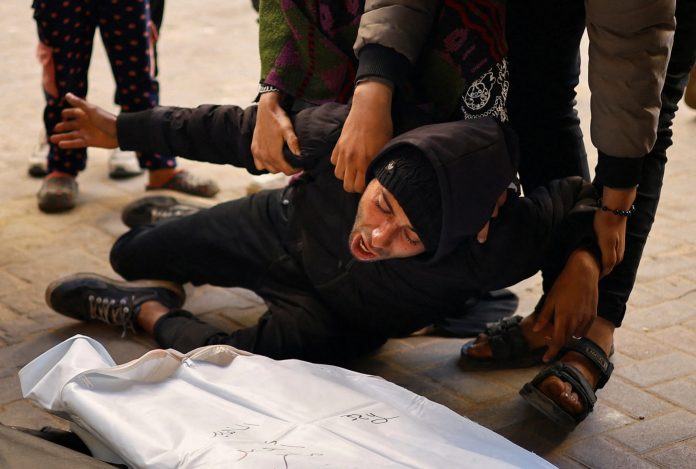
There have also been increased tensions across the Middle East since 7 October, when Hamas, which runs Gaza, killed 1,139 people in an attack on Israel. Israel has responded with months of bombardment of Gaza, killing nearly 30,000 Palestinians.

BAE Systems’ sprawling interests include building nuclear submarines and fighter jets, tanks and ships, as well as guns and ammunition.

Charles Woodburn, the BAE chief executive, said the weapons manufacturer was expecting “sustained growth in the coming years”.

“Instability in Europe, the Middle East and other parts of the world brings into sharp focus the vital role that we play in protecting national security,” he told reporters on Wednesday.

“While most of our order volume was driven by existing programme positions that predate the Ukraine conflict, orders to restock and upgrade heavy armour and munitions are starting to come through.”

Jarek Pominkiewicz, an equity research analyst at Quilter Cheviot, stated BAE would benefit from a “growing recognition of the need to bolster defence spending”, particularly in eastern European and Baltic countries close to Russia’s borders.

BAE’s share price dropped by more than 3% on Wednesday morning because margins were slightly lower than expected, but remain close to record highs, valuing the company at almost £38bn. Its shares have more than doubled in value since February 2022.

BAE was formed in 1999 from the merger of Marconi Electronic Systems and British Aerospace, itself a union of defence companies including British Aircraft Corporation and Hawker Siddeley.

It said it expected sales to rise by between 10% and 12% during 2024. Its long-term order book was also boosted last year by the Aukus pact between Australia, the UK and the US to build the next generation of nuclear-powered attack submarines, and the global combat air programme between Italy, Japan and the UK to develop a new fighter jet.

BAE added that the war in Ukraine in particular had highlighted the importance of autonomous technology, while “reinforcing the critical need for munitions and maintaining legacy capabilities”.

Woodburn also stressed the company was “very happy with our London listing”.

Several of the biggest companies listed on London’s stock market have moved to the US because of concerns that UK companies are relatively undervalued. BAE Systems is unlikely to follow their lead because of the deep influence – including a “golden share” – that the UK government holds to prevent it falling into foreign ownership.

Woodburn added: “If you go back a few years, I think we were trading at a discount to some of our US peers, but I think through the strong performance of the business over recent years, I think we’ve, in many ways, closed much of that gap.”

Gaza war could lead to nearly 86k additional deaths: Report

Gaza War

The Crisis in Gaza: Scenario-Based Health Impact Projections is a joint project from the London School of Hygiene & Tropical Medicine and Johns Hopkins University’s Center for Humanitarian Health.

The study tracked three scenarios, including a worst-case possibility in which hostilities escalate in Gaza, resulting in the deaths of 85,750 Palestinians from physical trauma and disease in the next six months.

That would come on top of the nearly 30,000 deaths that have been recorded by the coastal enclave’s health authorities since hostilities began in early October.

A middle-of-the-road tally based on the continuation of conditions that have existed in the past four months found that injuries and disease would kill 66,720 Palestinians in the next half-year.

A best-case scenario in which a cease-fire is brokered would still lead to the deaths of some 11,580 Palestinians. Just under half of those deaths would be attributed to epidemics.

“Our projections indicate that even in the best-case ceasefire scenario, thousands of excess deaths would continue to occur, mainly due to the time it would take to improve water, sanitation and shelter conditions, reduce malnutrition, and restore functioning healthcare services in Gaza,” wrote the report’s authors.

The project is expected to update its findings regularly through May as the situation on the ground evolves.

It comes as Israeli Prime Minister Benjamin Netanyahu has vowed to take the war to southern Gaza’s city of Rafah where nearly one-and-a-half million people are sheltering. Most have fled to Rafah after being displaced from other parts of Gaza by the war.

Netanyahu has vowed to carry out the ground assault by the start of Ramadan next month if the more than 130 hostages held by Hamas are not freed.

Israeli lawmakers back Netanyahu’s rejection of  Palestinian state

Benjamin Netanyahu

Wednesday’s symbolic declaration, issued during Israel’s war on Gaza, also received backing from members of the opposition with 99 of 120 lawmakers voting in support, a Knesset spokesperson said.

The Israeli position is that any permanent accord with the Palestinians must be reached through direct negotiations between the two sides and not by international dictates.

That is despite Netanyahu openly stating his opposition to a Palestinian state, and presenting himself to the Israeli public as a bulwark against any such state. No talks on Palestinian statehood talks have been held since 2014, when Israel refused to accept a state encompassing all of the Palestinian territory illegally occupied by Israel.

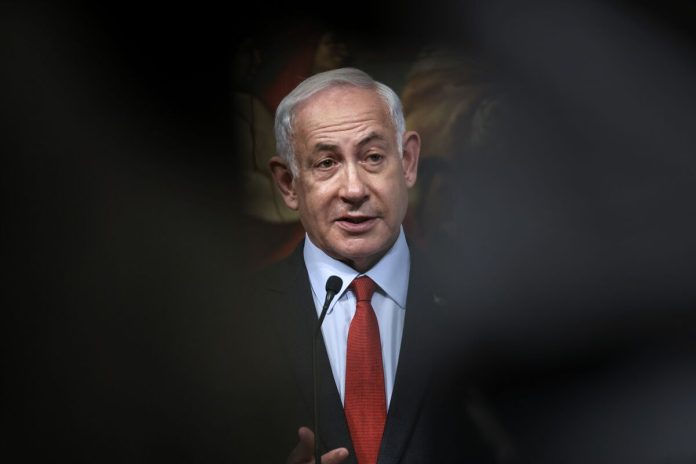
“The Knesset came together in an overwhelming majority against the attempt to impose on us the establishment of a Palestinian state, which would not only fail to bring peace but would endanger the state of Israel,” Netanyahu stated.

The vote was condemned by the Palestinian Ministry of Foreign Affairs and Expatriates, which accused Israel of holding the rights of the Palestinian people hostage by occupation of territories where Palestinians seek to establish a state.

“The ministry reaffirms that the State of Palestine’s full membership in the United Nations and its recognition by other nations does not require permission from Netanyahu,” it announced in a statement.

Little progress has been made towards achieving a two-state solution – establishing a Palestinian state in the occupied West Bank and in Gaza alongside Israel – since the signing of the interim Oslo Accords in the early 1990s.

Among the obstacles impeding Palestinian statehood are expanding illegal Israeli settlements in territories Israel captured in the 1967 Arab-Israeli War. The settlements, which in many areas cut Palestinian communities off from each other, are regarded as a violation of international law.

The two-state solution has long been a core Western policy in the region. Since the outbreak in October of the latest Gaza war, the United States has been trying to promote steps towards the creation of a Palestinian state as part of a broader Middle East deal that would include Saudi Arabia and other Arab states officially normalising relations with Israel.

However, many critics point out that Israel’s actions towards Palestinians – most notably the expansion of the settlements – has made any prospect of a sovereign Palestinian state impossible and a one-state future, whether that be a continuation of the occupation or a state with equal rights for all, more of a reality.

Sources say Russia captured up to 1,000 Ukrainian POWs in Avdeevka

Russia Ukraine War

On Friday, Ukraine’s newly appointed top military commander, General Aleksandr Syrsky, revealed that his forces had retreated from the strategic town located less than 10km from the outskirts of Donetsk. The following day, the Russian Defense Ministry confirmed the capture of Avdeevka, claiming to have inflicted massive casualties on Kiev’s military in the process.

Reporting on Wednesday, the NYT quoted two unnamed Ukrainian service members as putting the number of POWs and missing soldiers at anywhere between 850 to 1,000. Anonymous Western officials have characterized this range as accurate, the paper claimed.

While US officials supposedly do not consider the loss of Avdeevka to be strategically significant for Ukraine, the NYT reported that the “capture of hundreds of soldiers, especially those with battlefield experience”, could pose a serious problem. The Ukrainian military has for months been grappling with a lack of manpower, the daily added, noting that Kiev’s failed summer counteroffensive had already made recruitment difficult.

Anonymous Ukrainian soldiers blamed poor planning for the apparently high number of POWs. Kiev’s forces were also taken aback by the sheer speed with which Moscow’s troops advanced last week, with attempts by elite Ukrainian units to slow it down proving ineffective, the NYT wrote.

According to the article, poor communication between various Ukrainian units who are using different radio equipment may have been a factor.

On Saturday, General Aleksandr Tarnavsky, the commander of Ukrainian forces operating in the area, claimed that the retreat had gone according to plan. He did, however, acknowledge that “some Ukrainian servicemen fell into captivity”, without providing numbers. His spokesperson, Dmitry Lykhovy, dismissed reports of hundreds of Ukrainian POWs as misinformation.

During a meeting with Russian President Vladimir Putin on Tuesday, Defense Minister Sergey Shoigu stated Avdeevka had been taken with minimal losses among Russian troops. He claimed that during their retreat, Ukrainian forces had left behind significant numbers of wounded soldiers, as well as military hardware and equipment.

Chaos erupts in UK parliament over Gaza war

Gaza War

Lawmakers from the SNP and the governing Conservative Party walked out of the chamber on Wednesday in an apparent protest at the speaker’s actions.

The uproar followed a decision by Hoyle to ignore precedent and allow a vote that helped the opposition Labour Party – which is tipped to win a national election later this year – avoid a large-scale rebellion among its own lawmakers over its position on Israel’s war on Gaza.

The debate in parliament was initiated by the SNP, which put forward a motion calling for an “immediate ceasefire” in Gaza. Labour and the Conservatives then proposed amendments, with different conditions they said were necessary before there should be a pause in fighting.

The amendments sought an “immediate humanitarian pause” – and not a ceasefire – and said that “Israel cannot be expected to cease fighting if Hamas continues with violence”.

In an unusual move, Hoyle selected both those amendments to be voted on, breaking with the precedent whereby one opposition party cannot alter another’s motion. Usually, only the government amendment would be selected.

Some lawmakers jeered the speaker when he announced his decision.

During the chaos, the Labour amendment was eventually approved verbally, without a formal vote where individual lawmakers’ views are recorded.

One member of parliament accused Hoyle, a former Labour lawmaker, of causing a “constitutional crisis”.

The government’s Leader of the House of Commons Penny Mordaunt said Hoyle had had “hijacked” the debate and “undermined the confidence” of the House and said the government was pulling out of proceedings.

Hoyle’s decision allowed the Labour Party to avoid a potentially damaging split over the SNP motion. A similar motion, also tabled by the SNP in November, saw Labour leader Keir Starmer suffer the biggest revolt of his leadership.

While the outcome is not binding on the British government or likely to be closely watched in Israel or by Hamas, it had the potential to cause problems for Starmer, who is keen to present his party as united, disciplined and ready for power.

The Labour leader, who initially gave full backing to Israel as it embarked on its military retaliation, is under increasing pressure from Labour lawmakers and party members to back an immediate ceasefire.

Harry Fawcett, reporting from London, said Wednesday’s vote “has ended in this real farce”.

“The Labour amendment [went] through because no Conservatives took part in the vote. The SNP motion, which began the whole story, was not voted on at all; the SNP and Conservatives are furious,” he stated.

“Keir Starmer [and] his Labour Party have kind of gotten out of a sticky mess, but it leaves parliament looking extremely compromised. What was a serious debate about this crucial issue about civilian life in Gaza has ended in this procedural nightmare.”

Ian Blackford, an SNP MP, told Al Jazeera that the day’s events in parliament had distracted from events in Gaza and made the eventual vote less impactful.

“[The Labour Party] came up with this proposition that allowed them to have a vote, and the purpose of that – particularly when the government party [the Conservatives] wouldn’t participate in it – meant that our meaningful vote … wasn’t taken,” Blackford continued, adding, “I regret that tonight we’re having to discuss this, rather than discuss the need of protecting the people in Gaza that need that ceasefire to take place.”

One Conservative MP, William Wragg, has brought forward a parliamentary motion expressing no confidence in the speaker, a sign of the anger of some parliamentarians at what is perceived to be a deviation from the speaker’s traditionally neutral role.

Hoyle returned to the House of Commons later in the evening and apologised.

“I have tried to do what I thought was the right thing for all sides of this House,” Hoyle stated, adding, “It is regrettable, and I apologise, that the decision didn’t end up in the place that I wished.”

Highly dangerous”: Retired Israeli officials warn of Al-Aqsa Mosque restrictions during Ramadan

Israeli Forces Al-Aqsa Mosque

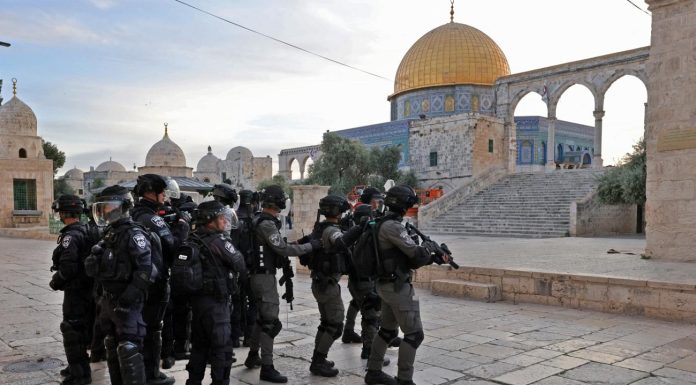
In a letter addressed to the government and intelligence officials, a group of “retired commissioners and superintendents” warned that plans to restrict “Palestinian citizens of Israel” from accessing the Jerusalem holy site would be highly dangerous.

“The exclusion of the Arab citizens of Israel from going up to pray on the Temple Mount could lead to escalation and disturbances on a wide scale,” read the letter, obtained by Channel 12.

“The recommendations of the Minister of National Security are motivated by ideological and electoral considerations and not by operational considerations.”

A proposal put forward by Itamar Ben-Gvir, Israel’s far-right national security minister, to limit the entry of Palestinian citizens of Israel into the mosque was accepted by Prime Minister Benjamin Netanyahu during a meeting with senior officials on Sunday, according to a Haaretz report.

The limitations will be based on criteria such as age and gender, the details of which are to be decided in the coming days.

Ben Gvir reportedly recommended that only Palestinian citizens of Israel above the age of 70 should be allowed into the mosque during Ramadan, which starts next month, while Israeli police recommended entry for those aged over 45.

He also proposed a complete ban on Palestinians from the occupied West Bank worshipping at Al-Aqsa during the holy month, although no decision has been made on this yet.

Among the signatories to Tuesday’s letter were former police commissioners, including Moshe Karadi, Shlomo Aharonishki, Assaf Hefetz and Roni Alsheich.

The letter added it was important “to learn and draw lessons from the events that took place on the Temple Mount in recent years.

“The Israel police knew in the past to allow the existence of prayers while limiting the number of worshippers but only on the basis of an intelligence and operational situational assessment,” it warned.

The proposals had already provoked a backlash from other sections of the Israeli establishment.

The Shin Bet security agency said last week that it opposed restrictions and instead favoured unrestricted access for Palestinian citizens of Israel.

During Ramadan last year, Israeli forces used stun grenades and fired teargas on worshippers at the mosque, before arresting hundreds of people.

And in May 2021, hundreds of Palestinians were wounded after Israeli troops stormed the compound and attacked worshippers during Ramadan with teargas, rubber-coated steel bullets and stun grenades.

The raids, as well as Israeli incursions in the occupied East Jerusalem neighbourhood of Sheikh Jarrah, sparked a major Israeli assault on the besieged Gaza Strip.

At least 256 Palestinians were killed in Gaza, including 66 children.

EU agrees on 13th package of sanctions against Russia, blacklisting companies in China for first time

Russia EU

The package will be formally approved in time for the second anniversary of the start of the Russian military operation in Ukraine on February 24. Brussels has placed 12 rounds of restrictions on Russia since the start of the conflict in February 2022. The existing sanctions already target a broad range of sectors and include trade embargoes, travel bans and individual sanctions against Russian businessmen and public officials.

“EU Ambassadors just agreed in principle on a 13th package of sanctions in the framework of Russia’s aggression against Ukraine,” the Belgian presidency said, calling it “one of the broadest approved by the EU”.

European Commission President Ursula von der Leyen welcomed the agreement, stating in a post on X: “We must keep degrading [Vladimir] Putin’s war machine.”

The new package will see nearly 200 entities and individuals banned from traveling to the EU, while both the individuals and companies face freezes on their assets.

“With 2,000 listings in total, we keep the pressure high on the Kremlin. We are also further cutting Russia’s access to drones,” von der Leyen wrote.

German Foreign Minister Annalena Baerbock also signaled this week that the new round of Russia sanctions will affect the supply of unmanned aerial vehicles (UAVs).

According to media reports, citing European diplomats, the EU is planning for the first time to sanction companies in mainland China and in other countries including Turkey, India, and Serbia, for helping Moscow circumvent sanctions by allegedly supplying it with components that can be repurposed for use in drones and other weapon systems.

China has reacted to reports that its firms could be blacklisted, saying it rejects “illegal sanctions,” while vowing to protect the interests of Chinese companies.

Moscow has condemned the Western sanctions and has repeatedly warned that they hurt the EU more than Russia in economic terms.

Iran’s destroyer participates in India’s naval exercise

Dena Destroyer

Deputy commander of the Iranian Navy’s southern fleet said the destroyer has partaken in the war game in line with the “very good and growing relations” between the naval forces of Iran and India.

Admiral Jalil Moqaddam stated Iran and India, with rich historical backgrounds, are two naval powerhouses in the region. He said naval cooperation between the two countries could help ensure maritime security and serve regional interests.

The Indian Navy’s largest-ever multilateral naval exercise – Milan 2024 – kicked off in Visakhapatnam port city, also known as Vizag, on Monday with several warships from the Indian Navy and foreign navies participating in the Harbor Phase of the drills.

The Harbor Phase, which began on February 19 and winds down on February 23, features a city parade, maritime seminar, and tech expo, among other events.

During the Sea Phase from February 24 to 27, the participating navies will hold advanced air defense, anti-submarine, and anti-surface warfare drills. Gunnery shoots on aerial and surface targets, maneuvers and underway replenishment would be conducted, according to the Indian English-language daily newspaper The Times of India.

Iran’s Navy has in recent years achieved self-sufficiency in manufacturing surface and sub-surface vessels. It has also increased its presence in international waters to protect naval routes and provide security for merchant vessels and tankers.

The Iranian naval forces have also staged military drills with several countries, including Russia, China and Pakistan, over the past years with the aim of promoting combat readiness. They have also been involved in joint efforts aimed at countering piracy and maritime terrorism.