Sunday, December 28, 2025
Home Blog Page 1024

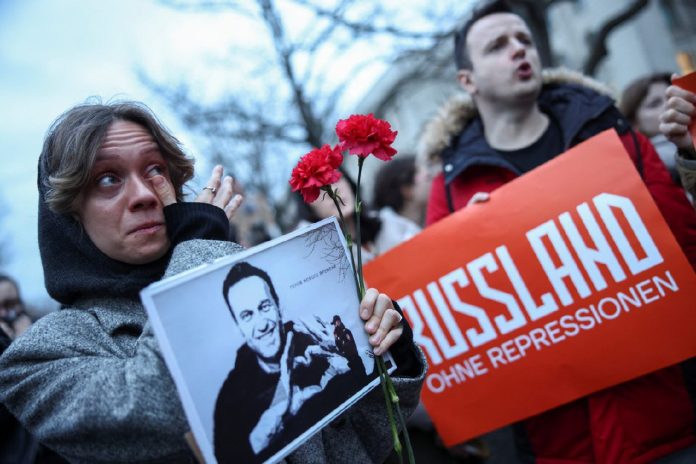
UK imposes sanctions on six officials at prison where Russia’s Navalny died

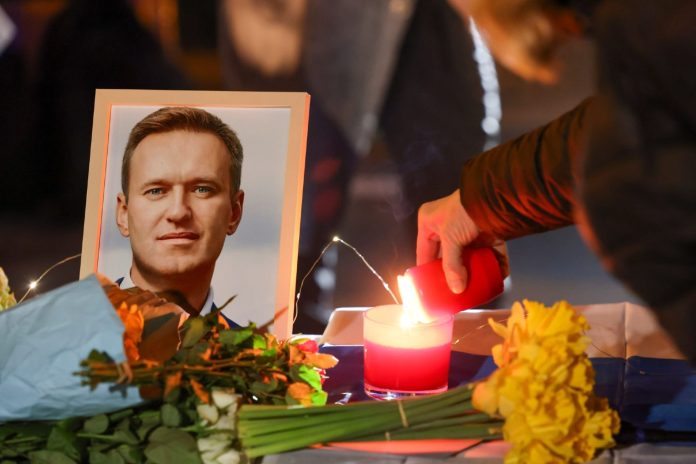
Alexei Navalny

The UK foreign secretary imposed sanctions on six individuals in response to Navalny’s death, which has been widely blamed on the Kremlin.

The head of the penal colony, Vadim Konstantinovich Kalinin is among those hit by the new restrictions.

The Foreign Office said the six had been targeted for “activity that violates the right not to be subjected to cruel, inhuman or degrading treatment or punishment and the right to life”.

Announcing the sanctions, Cameron stated: “It’s clear that the Russian authorities saw Navalny as a threat and they tried repeatedly to silence him. FSB operatives poisoned him with novichok in 2020, they imprisoned him for peaceful political activities, and they sent him to an Arctic penal colony.”

“No one should doubt the oppressive nature of the Russian system. That’s why we’re today sanctioning the most senior prison officials responsible for his custody in the penal colony where he spent his final months.”

“Those responsible for Navalny’s brutal treatment should be under no illusion – we will hold them accountable,” he added.

Rishi Sunak also confirmed the sanctions as he appeared in the House of Commons for prime minister’s questions.

“He died for a cause to which he dedicated his whole life: freedom,” Sunak told parliament.

“And to return home knowing that [Vladimir] Putin had already tried to have him killed was one of the most courageous acts of our time.”

“Together with our allies we are considering all options to hold Russia and Putin to account and this morning we sanctioned those running the prison where Alexei Navalny’s body still lies,” he continued.

In response, the Labour leader, Keir Starmer, stated Navalny had “died to expose the corruption of the Putin regime”, adding that it was a reminder that Putin has “stolen not just the wealth but the future and democracy of the Russian people”.

Navalny died unexpectedly on Friday in a Russian prison, where he was serving a lengthy sentence stemming from several criminal convictions.

According to the Russian authorities, Navalny suddenly “felt ill” and collapsed on Friday. Efforts to resuscitate the 47-year-old apparently failed and he was pronounced dead the same day. The exact cause of death remains unclear, although a source for RT Russian suggested that it was a blood clot. An investigation has since been launched.

Navalny was put behind bars in 2021 for violating the terms of his suspended sentence for fraud. Two years later, he was sentenced to 19 years in prison for “extremist activities”.

The activist denied any wrongdoing and insisted that all cases against him were politically motivated. Navalny also alleged that the prison conditions were tantamount to “torture”.

Multiple Western leaders, including US President Joe Biden, have stated that President Putin and the Russian government are ultimately “responsible” for Navalny’s death.

Russian Foreign Ministry spokeswoman Maria Zakharova blasted the West for “cynically” rushing to blame the Russian authorities instead of waiting until forensic reports are made public.

Kremlin spokesman Dmitry Peskov has stressed that it was “completely unacceptable” for Western politicians to make “outrageous statements” regarding Navalny when the investigation into his death is still ongoing.

The EU’s top diplomat Josep Borrell has also said Russia must allow an international investigation into the death of Navalny. But Kremlin announced Moscow doesn’t accept such demands at all.
Iran says Israel was behind recent gas pipeline explosion

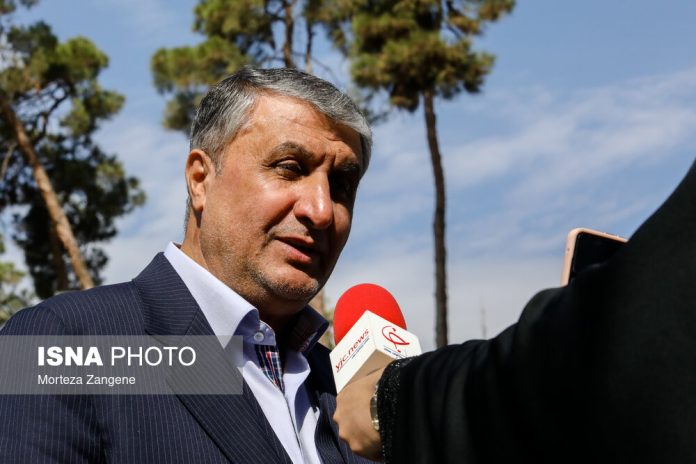
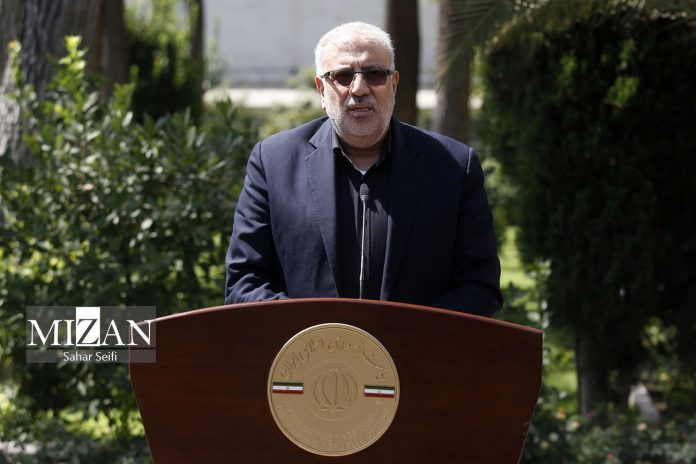
Javad Owji

The minister stated that the Israeli plot ended in failure, because only a few pipelines were damaged.

Last week, sabotage attacks against pipelines in southwestern Iran caused temporary disruption to gas supplies.

Owji said the gas supply network is operating normally. Thanks to the Oil Ministry’s full preparedness, the enemy failed to disrupt the household gas distribution network, he added.

The gas pipelines were immediately fixed and the sinister plot could not affect situation in the cities and villages, the minister continued.

EU summons Russian envoy, demands independent investigation into opposition figure’s death

Alexei Navalny

It said Michael Siebert, a senior official in the European External Action Service, also urged Russia to release Navalny’s body to his family without further delay at the meeting with Kirill Loginov, Russia’s acting permanent representative to the EU.

“The EU side conveyed the EU’s outrage over the death of the Russian opposition politician Alexei Navalny, for which the ultimate responsibility lies with President (Vladimir) Putin and the Russian authorities,” it noted.

Siebert “called upon Russia to allow an independent and transparent international investigation into circumstances” of Navalny’s death, it added.

The Kremlin has denied involvement in Navalny’s death and says Western allegations that Putin was responsible are unacceptable. Russia’s Investigative Committee says it has launched a procedural investigation into the death, and the Kremlin has announced it does not bow to EU demands.

Navalny, 47, fell unconscious and died suddenly on Friday after a walk at the penal colony above the Arctic Circle where he was serving a three-decade sentence, the Russian prison service said.

The EU moved closer on Monday to imposing new sanctions against Moscow over its war on Ukraine as Navalny’s widow visited Brussels. The US is set to announce sanctions against Russia on Friday over Navalny’s death.

Survey finds 10% of Europeans believe Ukraine can still defeat Russia

Russia Ukraine War

The shift in sentiment – this time last year, more Europeans than not said Ukraine must regain all its lost territory – will demand that politicians take a more “realistic” approach that focuses on defining what an acceptable peace must actually mean, the report’s authors argue.

“In order to make the case for continued European support for Ukraine, EU leaders will need to change how they talk about the war,” said co-author Mark Leonard of the European Council on Foreign Relations (ECFR), which commissioned the polling.

Most Europeans “are desperate to prevent a Russian victory” but do not believe Kyiv can win militarily, Leonard said, meaning that the most convincing argument for an increasingly sceptical public was that continuing aid “could lead to a sustainable, negotiated peace that favours Kyiv – rather than a victory for Vladimir Putin”.

The January polling in 12 EU member states – including France, Germany, Hungary, Italy, the Netherlands, Poland, Spain and Sweden – found that Ukraine’s stalled counteroffensive, growing fears of a US policy shift and the prospect of a second US presidential term for Donald Trump were fuelling pessimism about the war’s outcome.

It was carried out before Ukraine’s retreat at the weekend from the eastern town of Avdiivka, which handed Russia its most significant military victory since the capture of Bakhmut by Wagner troops in May 2023. Russia launched its full-scale invasion of Ukraine on 24 February 2022.

The report, Wars and Elections: How European leaders can maintain public support for Ukraine, found that only one in 10 Europeans across the 12 countries surveyed believed Ukraine would win on the battlefield, while twice as many (20%) predicted a Russian victory. Even in the most optimistic member states surveyed – Poland, Sweden and Portugal – fewer than one in five (17%) believed Kyiv could prevail.

In all countries, the polling showed, the most common opinion, shared by an average of 37% of respondents, was that the war would end in a compromise settlement – although some countries were keener on that outcome than others.

In Sweden (50%), Portugal (48%) and Poland (47%), respondents were more likely to say Europe should help Ukraine fight back, while in Hungary (64%), Greece (59%), Italy (52%) and Austria (49%), they preferred pushing Kyiv to accept a settlement. In France, Germany, the Netherlands and Spain, opinions were more evenly divided.

The polling yielded evidence that many Europeans increasingly considered Russia’s war against Ukraine to be of direct concern to them, with 33% saying it had a greater impact on their country – and on Europe (29%) – than the war in the Middle East (compared to 5% who said the opposite on both counts).

The possible return of Trump to the White House was broadly seen as bad news, with 56% of respondents across the 12 countries surveyed saying they would be very or fairly disappointed if the former president was re-elected.

The only exception was Hungary, where 27% of respondents said they would be pleased by Trump’s return and 31% disappointed. Similarly, supporters of only one major political party – Hungary’s Fidesz – were hopeful of a Trump victory.

Among other far-right parties previously expressing support for Trump, only about a third of voters for Germany’s AfD, Austria’s FPÖ or Brothers of Italy said they would welcome his return, with pro-Trump sentiment even weaker among supporters of France’s National Rally and Poland’s Law and Justice.

If the US were to halt military aid to Ukraine under a Trump presidency, 41% of Europeans said that the EU should either increase its support or maintain it at its current level, while 33% would prefer the EU to follow the US lead.

On the second anniversary of Russia’a invasion of Ukraine, the report’s authors said Europeans were not in a “heroic mood”, or even optimistic about the situation. But, they said, Europeans’ commitment to preventing a Russian victory had not moved.

The challenge for western policymakers, they argued, would be to successfully address the dichotomy between falling public confidence about how the war would end, and the desire to maintain support in order to prevent a Russian victory.

“As Europe and the US enter election season, the quest to define peace will be a critical battleground,” the authors wrote.

“Leaders will need to find a new language that resonates with current sentiment.”

Ivan Krastev, the report’s other co-author, stated the biggest danger was that Trump – and the Russian president, Vladimir Putin, who has hinted that he is open to negotiations on his terms – “try to portray Ukraine and its backers as the ‘forever war’ party, while they claim the mantle of ‘peace,’”

A Russian victory “is not peace”, noted Krastev, who is chair of the Sofia-based Centre for Liberal Strategies thinktank.

“If the price of ending the war is turning Ukraine into a no man’s land, this will be a defeat not only for Kyiv but for Europe and its security.”

Atomic chief says Iran standing among top 5 countries in nuclear industry

Mohammad Eslami

Speaking on Tuesday, Mohammad Eslami highlighted Iran’s achievements in its peaceful nuclear energy program, including the production of high-quality heavy water.

“Iran is placed among the world’s top five countries in many fields such as the nuclear industry,” he said.

“Today, we are at the top of the list in terms of the quality and purity of heavy water that is produced without foreign help on the back of research by the country’s scientists. We have been able to have a share in the supply and export of heavy water at the global market.”

Eslami added that heavy water can be used to produce microelectronics and some new medicines.

He further referred to the hurdles on the way of Iran’s scientific progress in the nuclear and space sectors.

Over the past years, Iran has recorded many achievements in its nuclear energy program in defiance of US sanctions.

The country has also been closely cooperating with the International Atomic Energy Agency (IAEA) as a signatory to the Nuclear Non-Proliferation Treaty (NPT).

IAEA chief likely to visit Iran: Top official

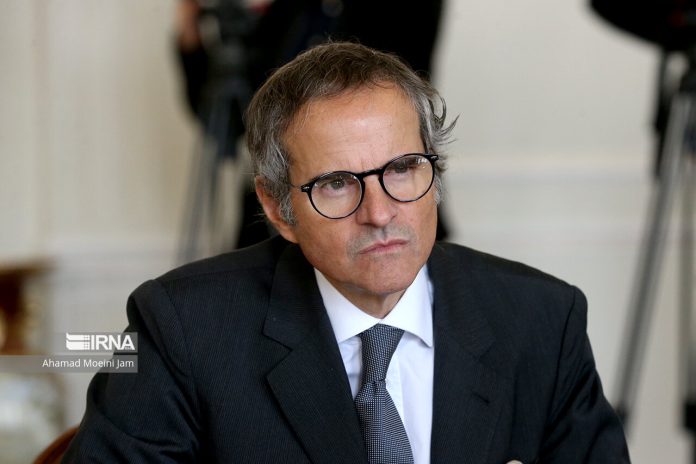
IAEA Grossi

“Iran-IAEA interactions are running their course and negotiations are underway in order to remove ambiguities and expand cooperation,” said the AEOI Director Mohammad Eslami.

“Grossi has expressed his willingness to travel to Iran, and this trip will take place when arrangements are made,” added Eslami.

“We should take this trip as an opportunity given the first international nuclear conference slated for May and the 50th anniversary of the establishment of the AEOI,” he added.

Iran had recently denied a report by the IAEA that Tehran had expedited its uranium enrichment activities.

“We haven’t conducted any new activity and we are just continuing our current work, which is being done in accordance with protocols and regulations,” said AEOI Director Mohammad Eslami.

“What the other side has said is nothing new and is mostly media hype,” he noted.

“Given the political situation and the condition which have emerged for the other side in Gaza, they seek to create another atmosphere and divert public attention from Gaza to Iran,” he explained.

“In fact, it is clear what objectives they pursue by making such moves,” added the Iranian nuclear chief.

Palestine PM calls for international investigation into Israeli crimes against women, children

Gaza War

“Evidence and testimonies documented by Palestinian and international institutions show that many women have been extrajudicially executed, abused, sexually assaulted and deprived of health care, food, and water,” Palestinian Prime Minister Mohammed Shtayyeh said in a statement.

On Monday, UN experts expressed alarm over “credible allegations” of egregious human rights violations that Palestinian women and girls continue to face in Gaza and the West Bank.

Shtayyeh hailed “the UN experts’ courage and commitment to justice and truth despite the pressures exerted on international efforts by Israel”.

The experts stated that they were shocked by reports of the deliberate targeting and extrajudicial killing of Palestinian women and children in places where they sought refuge or while fleeing.

“On at least one occasion, Palestinian women detained in Gaza were allegedly kept in a cage in the rain and cold, without food,” added the experts.

The experts said that at least two female Palestinian detainees were reportedly raped, while others were allegedly threatened with rape and sexual violence.

Israel launched a deadly offensive on the Gaza Strip following an Oct. 7 Hamas attack. The ensuing Israeli bombardment has killed more than 29,000 people and injured over 69,000 others.

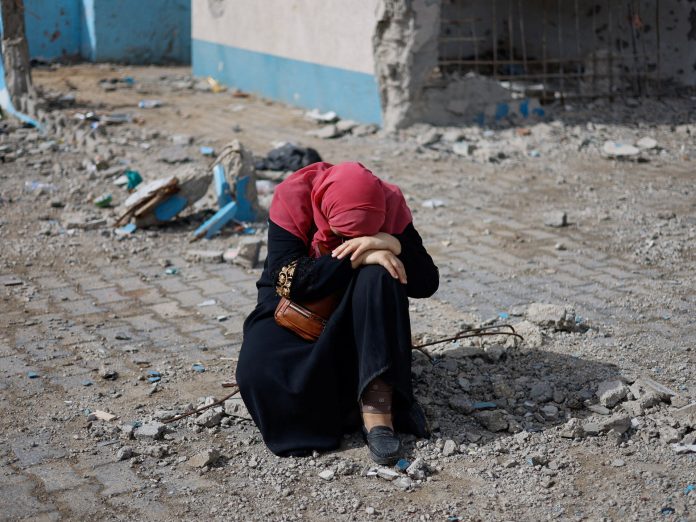
The Israeli war on Gaza has pushed 85% of the territory’s population into internal displacement amid acute shortages of food, clean water, and medicine, while 60% of the enclave’s infrastructure has been damaged or destroyed, according to the UN.

Israel stands accused of genocide at the International Court of Justice. An interim ruling in January ordered Tel Aviv to stop genocidal acts and take measures to guarantee that humanitarian assistance is provided to civilians in Gaza.

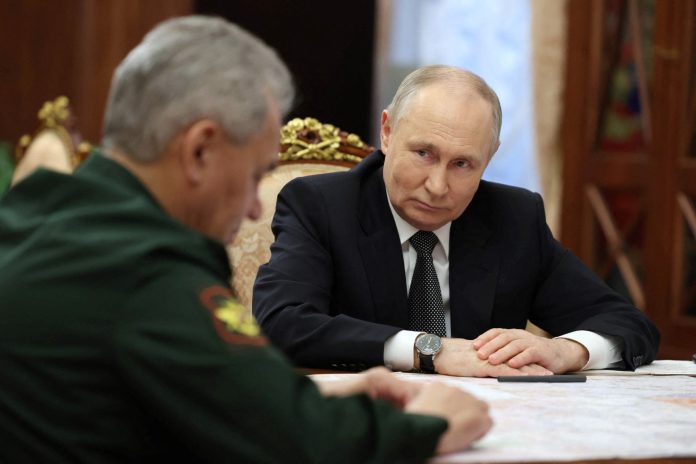
Putin says Russia to push further into Ukraine after fall of strategic city

Putin and Shuigo

The town, which once had a population of 32,000, fell to Russia on Saturday, Putin’s biggest battlefield victory since Russian forces captured the city of Bakhmut in May 2023.

Television footage released by Russia’s defence ministry showed that almost every house in Avdiivka had been branded with war.

Putin said on Tuesday the Ukrainian order to withdraw from the town had been announced after Ukrainian troops had already begun to flee in chaos. He added that all captured Ukrainian soldiers should be accorded their rights under international conventions on prisoners.

“As for the overall situation in Avdiivka, this is an absolute success, I congratulate you. It needs to be built on,” Putin told Defence Minister Sergei Shoigu in the Kremlin.

“But that development must be well-prepared, provided with personnel, weapons, equipment and ammunition,” Putin said. “It seems to be self-evident, but nevertheless I draw your attention to it.”

Ukrainian Foreign Minister Dmytro Kuleba told CNN that Avdiivka would not have fallen had Kyiv received weapons held up by the U.S. Congress’ failure to approve a large aid package.

“We wouldn’t (have lost) Avdiivka if we had all the artillery ammunition that we needed to defend it. Russia does not intend to pause or withdraw…Once Avdiivka is under their control, they undoubtedly will choose another city and begin to storm it,” Kuleba stated.

Ukrainian troops, he added, were “making miracles…but the reason they have to sacrifice themselves and die is that someone is still debating a decision. I want everyone to remember that every day of debate in one place means another death in another place.”

The U.S. Senate this month passed a $95 billion aid package that includes funds for Ukraine, but House of Representatives Speaker Mike Johnson has declined to bring it up for a vote on the floor of the House.

Ukraine announced it withdrew its soldiers to save them from being fully surrounded after months of fierce fighting. The Ukrainian military said there had been casualties, but that the situation had stabilised somewhat after the retreat.

Each side said the other had suffered huge losses.

After the failure of Ukraine to pierce Russian front lines in the east and south last year, Moscow has been trying to grind down Ukrainian forces just as Kyiv ponders a major new mobilisation.

Ukrainian President Volodymyr Zelenskiy appointed a new commander last week to run the war.

Putin sent tens of thousands of troops into Ukraine in February 2022, triggering full-scale war after eight years of conflict in eastern Ukraine between Ukrainian forces on one side and pro-Russian Ukrainians and Russian proxies on the other.

Avdiivka, called Avdeyevka by Russians, has endured a decade of conflict. It holds particular symbolism for Russia as it was briefly taken in 2014 by Moscow-backed separatists who seized a swathe of eastern Ukraine, but was then recaptured by Ukrainian troops who built extensive fortifications.

Avdiivka sits in the industrial Donbas region, 15 km (9 miles) north of the Russian-controlled Ukrainian city of Donetsk. Before the war, Avdiivka’s Soviet-era coke plant was one of Europe’s biggest.

Shoigu stated Russian forces had also taken control of the village of Krynky in Ukraine’s southern Kherson region. Ukraine’s southern military command announced its troops had held their positions on the left bank of the River Dnipro and that Russian attacks were unsuccessful.

Neither side gives death tolls for the war.

Leading rights experts warn Israeli invasion would turn Rafah into ‘graveyard’

Gaza War

“The consequences of a full-scale assault on Rafah are truly unimaginable,” Avril Benoit, executive director of Doctors Without Borders in the US, said at the online press briefing.

“With people in makeshift shelters that can’t even protect against the cold, carrying out a military offensive there would turn it into a graveyard.”

Benoit spoke alongside senior executives from Medico International, Amnesty International, Refugees International, and Oxfam, warning that a looming Israeli invasion of Rafah, where 1.5 million Palestinians are sheltering in squalid conditions, could compound the already dire humanitarian situation in the war-ravaged enclave.

The executives described in gruesome detail the daily reality for aid workers and Palestinians in Gaza. Benoit stated babies have had their legs amputated before they even learn how to walk and pregnant women are giving birth in tents on the street.

Sally Abi Khalil, regional director of Oxfam, said the impeding of humanitarian aid by Israel was “starvation as a weapon of war”.

Jeremy Konyndyk, president of Refugees International, stated that the enclave is on a “very rapid path towards famine”. He blamed the inability of humanitarian groups to deliver supplies on Israel’s failure to establish a meaningful humanitarian deconfliction process, which is used in war zones to facilitate aid deliveries.

He added Israel was breaching an interim ruling by the International Court of Justice (ICJ) and called on it to refrain from impeding the delivery of aid into Gaza and improve the humanitarian situation, along with taking measures within its power to prevent acts of genocide in the besieged enclave.

The UN’s announcement came as the US vetoed a Security Council resolution calling for an immediate ceasefire in Gaza, marking the fourth time Washington has blocked such a measure since the war began in October. Washington also vetoed in December an amendment calling for a ceasefire that Russia had tried including in a Security Council resolution.

As an alternative to the resolution on Tuesday, the US has offered its own counter-proposal that would condemn Hamas for launching the 7 October attacks on southern Israel, while calling for a ceasefire “as soon as practicable”, according to a copy of the draft document seen by Middle East Eye.

The US resolution also offers opposition to Israel’s consideration of a full-scale offensive on Rafah based on the current situation on the ground in Rafah. It is in keeping with US officials’ public statements that Israel first presents a “credible” plan to remove civilians from the town before a ground offensive begins.

Konyndyk, from Refugees International, called that demand “a mirage” providing a “fig-leaf” for a potential Israeli offensive in the future.

“They (Palestinians) are in Rafah in the first place because the rest of Gaza has been made uninhabitable,” he stressed at the press conference.

The Gaza Strip has been decimated by air strikes and roughly 85 percent of Palestinians in the enclave have been displaced from their homes. Israel says it plans to displace Palestinians in Rafah to the north of the enclave where basic infrastructure has been obliterated.

“It worries me to be hearing this from the US government because it suggests that such a thing is possible, when it really is not.”

UN agency halts food deliveries to north Gaza due to ‘complete chaos, violence’

Gaza War

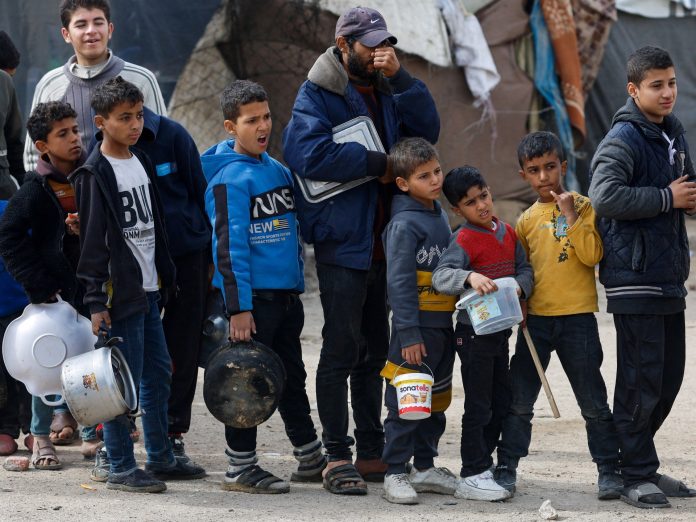
The latest suspension on Tuesday increases fears of starvation in northern Gaza, which has been almost completely cut off from aid since late October amid Israel’s devastating war on the enclave.

The UN’s World Food Programme (WFP) said the decision “has not been taken lightly” as it risks people dying of hunger. But it noted that “the safety and security to deliver critical food aid – and for people receiving it must be ensured”.

The agency added it had first suspended deliveries to the north three weeks ago after a strike hit an aid truck. It tried resuming deliveries this week but stated convoys on Sunday and Monday faced gunfire and crowds of hungry people stripping goods and beating a driver.

Footage from the scene of the operations shows Palestinians fleeing to take cover amid the sound of gun shots and clouds of fumes from smoke bombs.

Witnesses say one man died and many others were wounded in the attacks.

The videos also show Palestinian children scooping up spilled flour from the ground after one sack broke open.

The WFP – which has previously warned of famine-like conditions affecting 2.3 million people in Gaza – said its teams “witnessed unprecedented levels of desperation” in the north over the past two days.

The agency added it was working to resume deliveries as soon as possible and called for better security for its staff as well as “significantly higher volumes of food” and the opening of crossing points for aid directly into northern Gaza from Israel.

The suspension of aid to the north comes amid a sharp decline in the entry of aid trucks into the whole of Gaza. Figures by the UN office for humanitarian affairs (OCHA) show the average number of aid trucks entering Gaza has fallen from 140 a day in January to 60 a day in February.

Israel – which controls entry points into Gaza – has opened just one crossing into the enclave despite growing international pressure for the provision of humanitarian aid, including interim rulings by the International Court of Justice.

UN agencies say cumbersome Israeli procedures have slowed crossings of trucks, while right-wing Israeli protesters have blocked trucks at the Kerem Shalom entry point into southern Gaza, saying the Palestinian people should not be given aid.

When supplies do get through to Gaza, UN staff and aid groups are not able to pick them up at crossing points because of “the lack of security and breakdown of law and order”, according to Eri Kaneko, a spokesperson for OCHA. This includes Israel’s targeted killings of Gaza police commanders guarding truck convoys, aid agencies say.

Shane Low, a spokeswoman for the Norwegian Refugee Council, described the conditions for humanitarian workers in Gaza as “unacceptable”.

“In any other context, humanitarians would be pulling out at this point, because it is simply too dangerous,” she told Al Jazeera.

“There is no guarantee of the safety of humanitarian staff, either because of Israeli targeting of convoys, Israeli targeting of police who are there to protect convoys, and of course due to the desperation because of the lack of aid that’s getting in.”

UNRWA, the UN agency for Palestinian refugees, meanwhile said Israeli authorities have denied 51 percent of planned missions to deliver aid to northern Gaza.

“Food insecurity north of Wadi Gaza has reached an extremely critical state,” it said in a post on X.

According to the Palestinian Health Ministry, at least 29,000 Palestinians, most of them women and children, have been killed in Israeli assaults since October 7, when Hamas – which governs Gaza – launched a surprise attack inside southern Israel.

Some 1,139 people were killed in the Hamas attacks in Israel.