Sunday, December 28, 2025
Home Blog Page 1025

Leading rights experts warn Israeli invasion would turn Rafah into ‘graveyard’

Gaza War

“The consequences of a full-scale assault on Rafah are truly unimaginable,” Avril Benoit, executive director of Doctors Without Borders in the US, said at the online press briefing.

“With people in makeshift shelters that can’t even protect against the cold, carrying out a military offensive there would turn it into a graveyard.”

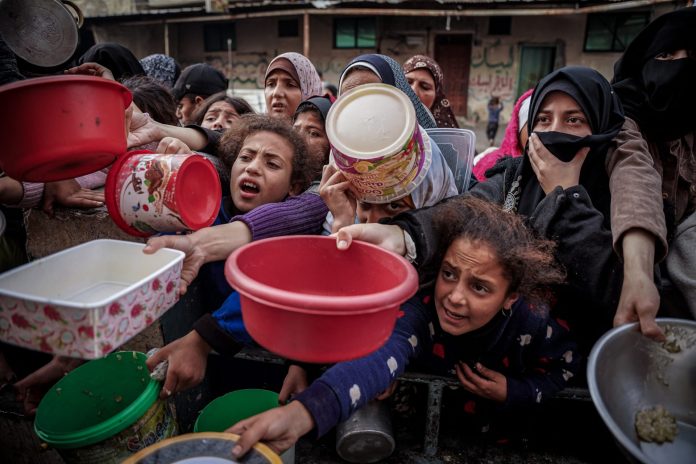
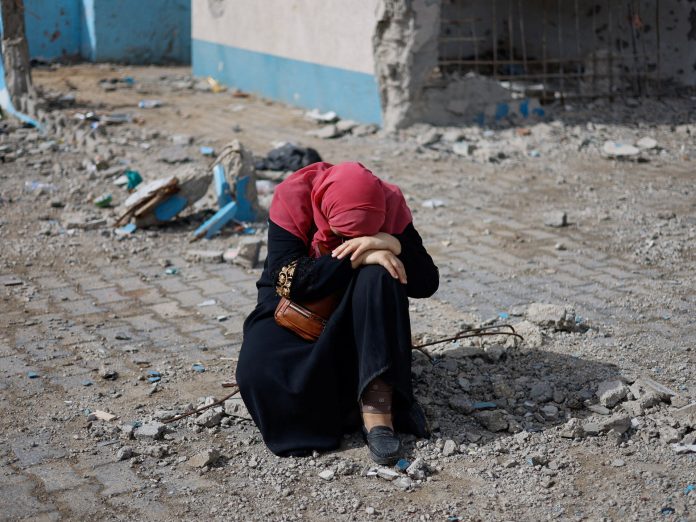
Benoit spoke alongside senior executives from Medico International, Amnesty International, Refugees International, and Oxfam, warning that a looming Israeli invasion of Rafah, where 1.5 million Palestinians are sheltering in squalid conditions, could compound the already dire humanitarian situation in the war-ravaged enclave.

The executives described in gruesome detail the daily reality for aid workers and Palestinians in Gaza. Benoit stated babies have had their legs amputated before they even learn how to walk and pregnant women are giving birth in tents on the street.

Sally Abi Khalil, regional director of Oxfam, said the impeding of humanitarian aid by Israel was “starvation as a weapon of war”.

Jeremy Konyndyk, president of Refugees International, stated that the enclave is on a “very rapid path towards famine”. He blamed the inability of humanitarian groups to deliver supplies on Israel’s failure to establish a meaningful humanitarian deconfliction process, which is used in war zones to facilitate aid deliveries.

He added Israel was breaching an interim ruling by the International Court of Justice (ICJ) and called on it to refrain from impeding the delivery of aid into Gaza and improve the humanitarian situation, along with taking measures within its power to prevent acts of genocide in the besieged enclave.

The UN’s announcement came as the US vetoed a Security Council resolution calling for an immediate ceasefire in Gaza, marking the fourth time Washington has blocked such a measure since the war began in October. Washington also vetoed in December an amendment calling for a ceasefire that Russia had tried including in a Security Council resolution.

As an alternative to the resolution on Tuesday, the US has offered its own counter-proposal that would condemn Hamas for launching the 7 October attacks on southern Israel, while calling for a ceasefire “as soon as practicable”, according to a copy of the draft document seen by Middle East Eye.

The US resolution also offers opposition to Israel’s consideration of a full-scale offensive on Rafah based on the current situation on the ground in Rafah. It is in keeping with US officials’ public statements that Israel first presents a “credible” plan to remove civilians from the town before a ground offensive begins.

Konyndyk, from Refugees International, called that demand “a mirage” providing a “fig-leaf” for a potential Israeli offensive in the future.

“They (Palestinians) are in Rafah in the first place because the rest of Gaza has been made uninhabitable,” he stressed at the press conference.

The Gaza Strip has been decimated by air strikes and roughly 85 percent of Palestinians in the enclave have been displaced from their homes. Israel says it plans to displace Palestinians in Rafah to the north of the enclave where basic infrastructure has been obliterated.

“It worries me to be hearing this from the US government because it suggests that such a thing is possible, when it really is not.”
UN agency halts food deliveries to north Gaza due to ‘complete chaos, violence’

Gaza War

The latest suspension on Tuesday increases fears of starvation in northern Gaza, which has been almost completely cut off from aid since late October amid Israel’s devastating war on the enclave.

The UN’s World Food Programme (WFP) said the decision “has not been taken lightly” as it risks people dying of hunger. But it noted that “the safety and security to deliver critical food aid – and for people receiving it must be ensured”.

The agency added it had first suspended deliveries to the north three weeks ago after a strike hit an aid truck. It tried resuming deliveries this week but stated convoys on Sunday and Monday faced gunfire and crowds of hungry people stripping goods and beating a driver.

Footage from the scene of the operations shows Palestinians fleeing to take cover amid the sound of gun shots and clouds of fumes from smoke bombs.

Witnesses say one man died and many others were wounded in the attacks.

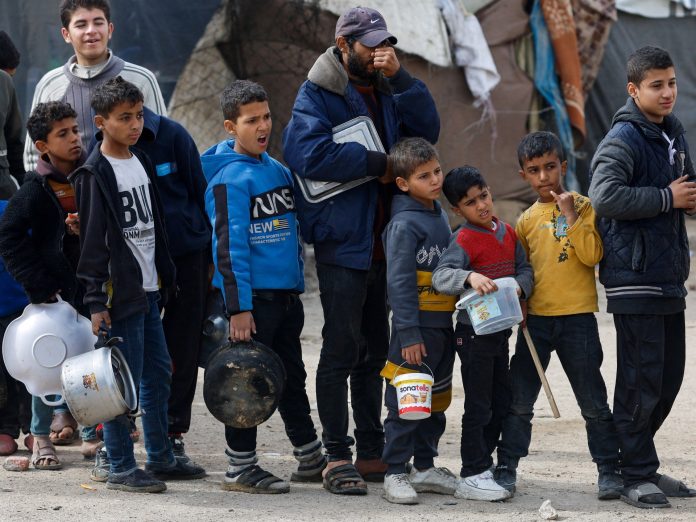
The videos also show Palestinian children scooping up spilled flour from the ground after one sack broke open.

The WFP – which has previously warned of famine-like conditions affecting 2.3 million people in Gaza – said its teams “witnessed unprecedented levels of desperation” in the north over the past two days.

The agency added it was working to resume deliveries as soon as possible and called for better security for its staff as well as “significantly higher volumes of food” and the opening of crossing points for aid directly into northern Gaza from Israel.

The suspension of aid to the north comes amid a sharp decline in the entry of aid trucks into the whole of Gaza. Figures by the UN office for humanitarian affairs (OCHA) show the average number of aid trucks entering Gaza has fallen from 140 a day in January to 60 a day in February.

Israel – which controls entry points into Gaza – has opened just one crossing into the enclave despite growing international pressure for the provision of humanitarian aid, including interim rulings by the International Court of Justice.

UN agencies say cumbersome Israeli procedures have slowed crossings of trucks, while right-wing Israeli protesters have blocked trucks at the Kerem Shalom entry point into southern Gaza, saying the Palestinian people should not be given aid.

When supplies do get through to Gaza, UN staff and aid groups are not able to pick them up at crossing points because of “the lack of security and breakdown of law and order”, according to Eri Kaneko, a spokesperson for OCHA. This includes Israel’s targeted killings of Gaza police commanders guarding truck convoys, aid agencies say.

Shane Low, a spokeswoman for the Norwegian Refugee Council, described the conditions for humanitarian workers in Gaza as “unacceptable”.

“In any other context, humanitarians would be pulling out at this point, because it is simply too dangerous,” she told Al Jazeera.

“There is no guarantee of the safety of humanitarian staff, either because of Israeli targeting of convoys, Israeli targeting of police who are there to protect convoys, and of course due to the desperation because of the lack of aid that’s getting in.”

UNRWA, the UN agency for Palestinian refugees, meanwhile said Israeli authorities have denied 51 percent of planned missions to deliver aid to northern Gaza.

“Food insecurity north of Wadi Gaza has reached an extremely critical state,” it said in a post on X.

According to the Palestinian Health Ministry, at least 29,000 Palestinians, most of them women and children, have been killed in Israeli assaults since October 7, when Hamas – which governs Gaza – launched a surprise attack inside southern Israel.

Some 1,139 people were killed in the Hamas attacks in Israel.

US vetoes another UN resolution demanding Gaza ceasefire

Linda Thomas-Greenfield

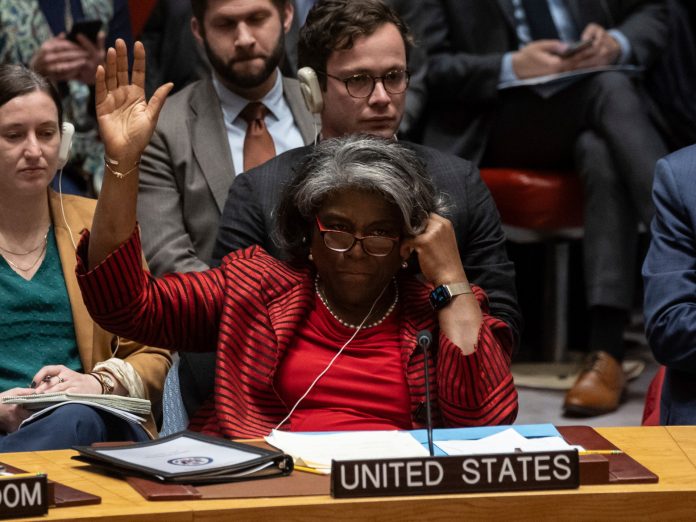
The US was the lone vote against a ceasefire resolution put forward on Tuesday by Algeria. The UK was the sole abstention, with 13 votes in support, including those of close allies of Washington who insisted the humanitarian needs of Palestinians outweighed any reservations over the Algerian text.

Washington was widely lambasted for using its veto again at a time when nearly 30,000 Palestinians have been killed and more than 2 million people are under threat of famine.

“A vote in favour of this draft resolution is a support for the Palestinians right to life,” the Algerian envoy to the UN, Amar Bendjama, told the council.

“Conversely, voting against it implies an endorsement of the brutal violence and collective punishment inflicted upon them.”

The Algerian resolution also called for the implementation of provisional measures ordered in January by the international court of justice (ICJ) in The Hague, which instructed Israel to mitigate its offensive to protect civilians, lift impediments on the flow of aid into Gaza, and take action against Israeli politicians using genocidal language.

“Almost one month after the ICJ [ruling] signs of hope are still absent for improvement of the situation in Gaza,” Bendjama stated, adding, “Silence … is not a viable option. Now is the time for action and the time for truth.”

Zhang Jun, the Chinese ambassador, stressed: “The continued passive avoidance of an immediate ceasefire is no different from giving a green light to the continued slaughter.”

The US is shamefully covering for Israel’s plan to make Gaza uninhabitable, Russia’s envoy to the UN Vassily Nebenzia stressed.

The US has drafted an alternative resolution, which calls for a temporary ceasefire “as soon as practicable”, and calls on Israel not to proceed with a planned offensive on Rafah, the southernmost Gazan city where more than a million Palestinians have sought refuge.

However, the US resolution is not likely to go to a vote for several days at least, and the timing of its third ceasefire veto is embarrassing for the US as Washington seeks to build international solidarity in condemnation of Russia on the second anniversary later this week of its full-scale invasion of Ukraine.

Explaining the veto, the US envoy, Linda Thomas-Greenfield, said that President Joe Biden was in the midst of negotiations with Israel, Egypt and Qatar aimed at clinching a comprehensive hostage deal.

“Any action this council takes right now should help, not hinder these sensitive and ongoing negotiations, and we believe that the resolution on the table right now would in fact negatively impact those negotiations,” Thomas-Greenfield argued.

“Demanding an immediate unconditional ceasefire without an agreement requiring Hamas to release the hostages will not bring about durable peace. Instead, it could extend the fighting between Hamas and Israel,” she added, later denouncing the 13 to one vote for the Algerian resolution as “wishful and irresponsible”.

Thomas-Greenfield looked on stony-faced as a series of Washington allies including France, Slovenia and Switzerland explained their reasons for voting for the resolution, despite sharing the US’s reservation that it did not include any condemnation of Hamas, something the security council has so far failed to do. They all argued the humanitarian disaster in Gaza was so dire that stopping the fighting took precedence over such concerns.

Nicolas de Rivière, the French envoy, said Paris regretted that “the resolution was not adopted given the disastrous situation on the ground”.

The only vote sparing the US from total isolation was the British abstention. The ambassador, Barbara Woodward, stated the UK position was to call for an “immediate suspension in fighting to get aid in and hostages out leading to a permanent sustainable ceasefire”.

But Woodward echoed Thomas-Greenfield’s arguments in adding: “Simply calling for a ceasefire, as this resolution does, will not make it happen. Indeed, it could endanger the hostage negotiations. It could actually make a ceasefire less likely.”

The US showed its alternative draft to other council members before Tuesday’s vote. This unusual step was intended, one western diplomat suggested, to avoid giving the impression that the US veto implied a green light for the Israeli attack on Rafah.

The inclusion in the US text of a clause specifically calling on Israel not to mount such an attack, rather than to limit such an appeal to bilateral channels, is widely seen in the UN as a signal of Biden’s growing impatience with Prime Minister Benjamin Netanyahu’s government, and frustration at the US president’s failure to rein in the relentless Gaza offensive, now in its fifth month. No date has yet been set for the start of formal deliberations on the US draft resolution, however.

“It is awfully embarrassing for the Americans,” Richard Gowan, the UN director of the International Crisis Group, stated, adding, “They’ve had to use a veto just days before the security council meeting commemorating Russia’s all-out assault on Ukraine. That will simply fuel talk about US double standards.”

Famine unfolding in Gaza amid Israeli war: Report

Gaza War

“Famine is worsening day by day in the Gaza Strip, where nearly 2.4 million people live,” the media office said in a statement.

It stated more than 700,000 Palestinians are facing starvation in northern Gaza, where the Israeli army conducted a deadly ground offensive.

“The occupation is pursuing a policy of starvation and thirst, leading to famine, as part of its genocidal war against civilians, children, and women,” it added.

The media office appealed for lifting Israel’s siege on Gaza and allowing the entry of 10,000 aid trucks in the next two days.

Israel has launched a deadly offensive on the Gaza Strip following an attack by Hamas on Oct. 7. The ensuing Israeli bombardment has killed nearly 29,195 and injured about 69,170 with mass destruction and shortages of necessities.

The Israeli war on Gaza has pushed 85% of the territory’s population into internal displacement amid acute shortages of food, clean water and medicine, while 60% of the enclave’s infrastructure has been damaged or destroyed, according to the UN.

Israel stands accused of genocide at the International Court of Justice. An interim ruling in January ordered Tel Aviv to stop genocidal acts and take measures to guarantee that humanitarian assistance is provided to civilians in Gaza.

China criticizes proposed US sanctions over Ukraine war

Russia China Flags

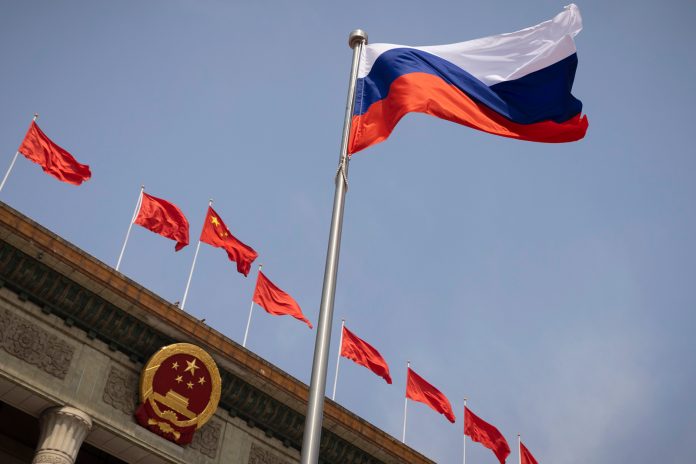
The proposed sanctions were discussed on Monday by CNBC, which interviewed a number of Congress members about the plans. Democrat Gerald Connolly, who sits on the House Committee on Foreign Relations, claimed “the very threat” of sanctions from the US and potentially the EU “ought to clarify some thinking in Beijing”.

However, Chinese Foreign Ministry spokeswoman Mao Ning stated on Tuesday that Beijing rejects unilateral economic restrictions as a matter of principle and will defend the interests of its businesses.

”China has the right to conduct normal cooperation with countries around the world,” Mao said during a daily briefing, adding, “We have always opposed unilateral sanctions and ‘long-arm jurisdiction’ that have no basis in international law and are not authorized by the UN Security Council.”

She dismissed Washington’s suggestion that Chinese businesses were helping Russia with its military operation against Ukraine. Beijing has been impartial on the conflict and has been promoting a peaceful resolution, Mao said.

”We have not watched from afar, let alone taken advantage” of the situation, she added.

The US previously targeted specific Chinese firms and individuals, which it accused of providing assistance for Moscow’s military campaign in various ways. The new round of sanctions will reportedly be the first to directly hit the government in Beijing.

“If broad sanctions were applied to China, it would really hit home,” Connolly told CNBC. He claimed that “China has a lot more to lose than Russia” from such restrictions.

Russia became the world’s most sanctioned nation when the US and its allies ramped up pressure on Moscow in relation to the Ukraine crisis. Contrary to Western predictions, the measures have failed to ruin the Russian economy.

Chinese Foreign Minister Wang Yi discussed the issue of unilateral restrictions and the risks of possible Western disengagement from China with US Secretary of State Antony Blinken on the sidelines of the Munich Security Conference last week, his department said.

The minister emphasized that the attempts to “build ‘a small yard with high fences’ to ‘decouple from China’ will ultimately backfire on the US itself”, it stated. Wang urged his American counterpart to “lift its illegal unilateral sanctions” on Chinese firms.

Iran emphasizes responsible drone exports amid technological advancements

Iran Drone

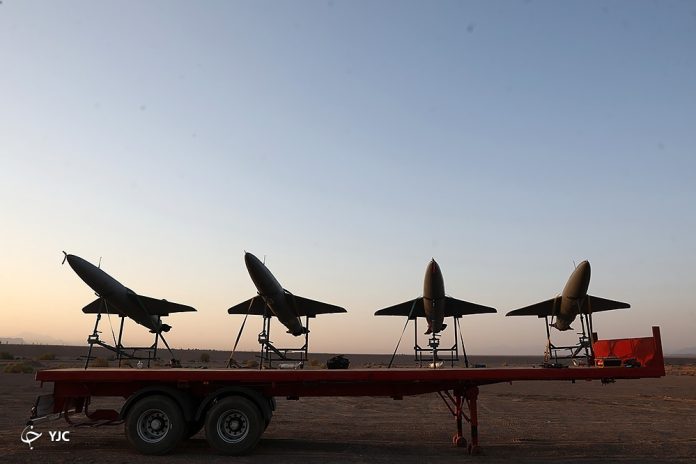
Reza Talaee Nik clarified that Iran’s defense items are specifically directed to countries that refrain from involvement in what he terms “criminal wars.”

Highlighting advancements in drone technology, Talaee Nik mentioned ongoing development and design efforts, with certain unveilings delayed for strategic reasons.

Notably, Iran has achieved significant progress in integrating missile and defense systems with drones, though details remain classified.

Discussing missile capabilities, Talaee Nik emphasized the proportional range to potential threats.

While a 2000 km range has been officially defined for Iran-made missiles, he hinted at the technical capacity for further extension.

The spokesperson’s remarks underscore Iran’s commitment to responsible defense exports and technological prowess in the evolving landscape of military capabilities.

Over 1,500 Israelis killed, More than 14k injured in Gaza conflict: Security institute

Israel Hamas Attack

The Israeli fatalities included 574 soldiers, while 134 Israelis remained in Hamas’ captivity, the Institute for National Security Studies (INSS) said on its website.

According to the institute, 16 Israeli soldiers have been killed in cross-border clashes with the Lebanese group Hezbollah since Oct. 8, 2023.

It added that the conflict has displaced 217,921 Israelis from their areas near the border with the Gaza Strip and Lebanon.

The institute estimated that over 9,000 rockets were fired into Israel from Gaza and 2,000 others from Lebanon since October.

It also reported 49 attacks by Yemen’s Houthi group since the outbreak of the Gaza conflict.

Israel has launched a deadly offensive on the Gaza Strip following a Hamas attack on Oct. 7. The ensuing Israeli bombardment has killed more than 29,000 and injured about 69,000 with mass destruction and shortages of necessities.

The Israeli war on Gaza has pushed 85% of the territory’s population into internal displacement amid acute shortages of food, clean water and medicine, while 60% of the enclave’s infrastructure has been damaged or destroyed, according to the UN.

Israel stands accused of genocide at the International Court of Justice. An interim ruling in January ordered Tel Aviv to stop genocidal acts and take measures to guarantee that humanitarian assistance is provided to civilians in Gaza.

Russia, Iran navies train in India alongside vessels from US, Europe

Iranian Navy

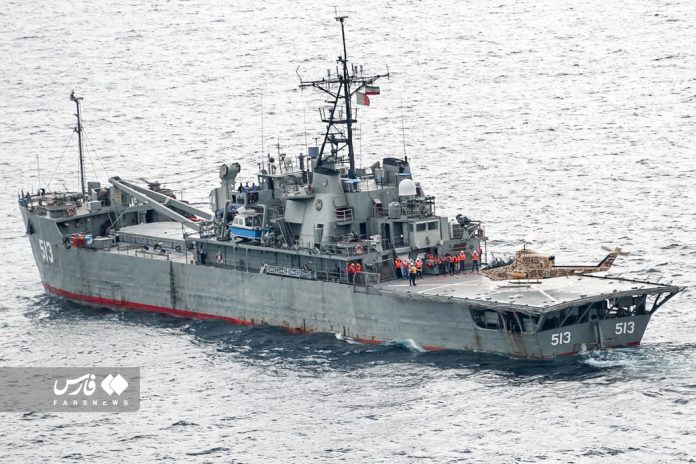
The naval exercises hosted by New Delhi will feature over 50 countries, including the US, UK, France, Germany, Japan, Australia, South Korea, Vietnam, and Indonesia, as well as Iran, Russia, Yemen, Qatar, and Iraq. The timing is crucial, with some of participants having deployed vessels to the Red Sea amid tensions surrounding the Gaza war.

Around 20 warships and submarines, maritime patrol aircrafts, and helicopters will take part in the drills, which will last until February 27.

“The central aim of MILAN 2024 is to enhance professional interaction between friendly navies and gain experience in multilateral large force operations at sea,” the Indian government announced.

Indian Navy chief R Hari Kumar told the media on Monday that his country is undertaking major anti-piracy and anti-drone operations in the North Arabian Sea and Red Sea amid the crisis.

“We are cooperating with friendly foreign navies, largely for information exchange. We are the largest resident naval power in the Indian Ocean region. We are not going to permit anybody to disrupt the security, stability and safety in this region,” he stated.

This year is the 12th edition of the MILAN exercises, which started back in 1995. The drills will involve harbor and sea phases, with the latter running from February 24 to 27 and including air defense exercises, anti-submarine maneuvers, and anti-surface warfare drills. Indian Defense Minister Rajnath Singh will hold talks with delegates from the participating nations on maritime issues of mutual concern, and will exchange potential solutions.

Iran tourism: Naneh Massoumeh Alley in Iran’s Bushehr shows off appealing paintings

Iran Naneh Massoumeh Alley

The alley is named after the female artist behind the splendid paintings, Nessa Chekideh Khoon, nicknamed Naneh Massoumeh.

The alley was in ruins in the past, but Naneh Massoumeh decided to give it a new face by her paintings and managed to make it a tourist spot.

The African themed paintings have drawn praise by the locals and tourists.

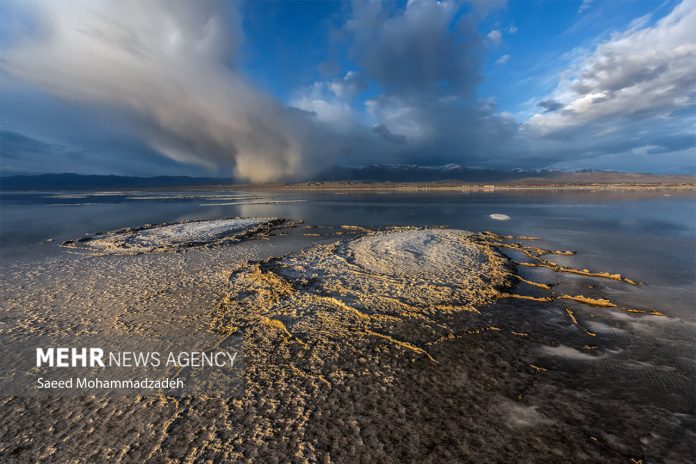
Iran releases water into shrinking Lake Urmia

Lake Urmia

Mohammad Sadegh Motamedian said, “Considering the recent precipitations, the dams in the catchment area of Lake Urmia are in good condition and we will soon release water from other dams.”

Lake Urmia, once the world’s 6th saltwater lake and the biggest of its kind in West Asia, is now on the cusp of drying up.

The tragedy is blamed on a number of factors, including unsustainable water consumption by farmers in the region and climate change.

The rate of rainfall in the region has remarkably reduced in recent decades and the Urmia basin has experienced several multi-year droughts.