Sunday, April 5, 2026
Home Blog Page 10

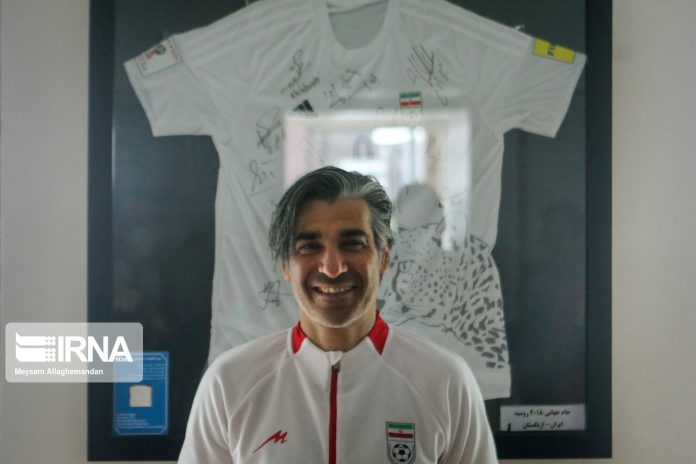
Iran Futsal head coach Shamsaei nominated for world’s best national team coach award

Vahid Shamsaei

Futsal Planet has announced its annual list of nominees for the world’s top Futsal figures across various categories, with Shamsaei included among the candidates for the Best Men’s National Team Coach award.

In the 26th edition of the Futsal Planet Awards, Shamsaei will compete for the title against Hicham Dguig of Morocco, Błażej Korczyński of Poland, Oleksandr Kosenko of Ukraine, Marquinhos Xavier Andrade of Brazil, and Matías Raúl Lucuix of Argentina.

Futsal Planet also announced that Iran’s Naft Abadan women’s futsal club has been nominated for the Best Women’s Club Team in the World award. Winners in each category will be selected by a panel of Futsal Planet experts and announced on January 7.

IRGC says Trump’s threats against Tehran stem from desperation

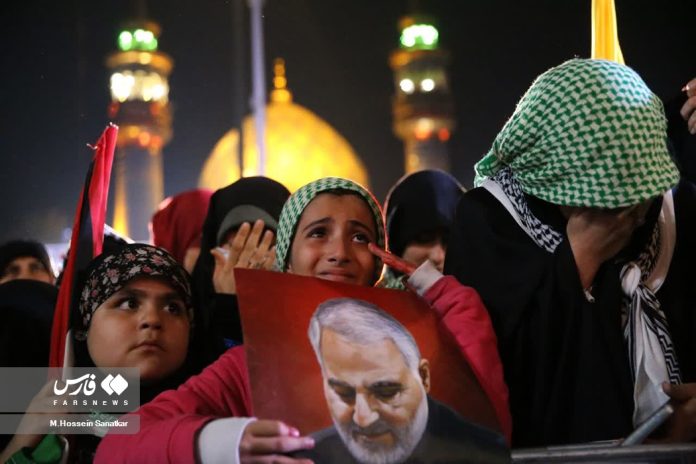
Qassem Soleimani

The IRGC issued its statement on Saturday on the anniversary of Lieutenant General Qassem Soleimani’s assassination by the US in Iraq on January 3, 2020.

It said that Trump’s recent rhetoric follows unsuccessful attempts to force Iran into submission, arguing that such efforts were thwarted by public awareness and unity.

According to the statement, the IRGC renewed its allegiance to the Leader of the Islamic Revolution, Ayatollah Seyyed Ali Khamenei, pledging to continue to serve the Iranian people and remain committed to the goal of a strong, independent Iran, despite external pressure.

The IRGC also described Martyr Soleimani as a defining figure whose legacy continues to shape the Axis of Resistance. It said that six years after Soleimani’s assassination, his influence has expanded as resistance movements in the region have grown stronger. It added that Iran’s resilience during the June 12-day war with Israel demonstrated that numerous people like Martyr Soleimani are living in Iran.

The statement also said that the United States and the Israeli regime are attempting to weaken Iran through destabilization and pressure after failing to undermine the country through military action and targeted killings. It added that continued resistance movements, including Palestinian actions, show that Martyr Soleimani’s path remains influential across the region.


Iran’s Leader: Protests legitimate, rioting not; officials must address public grievances

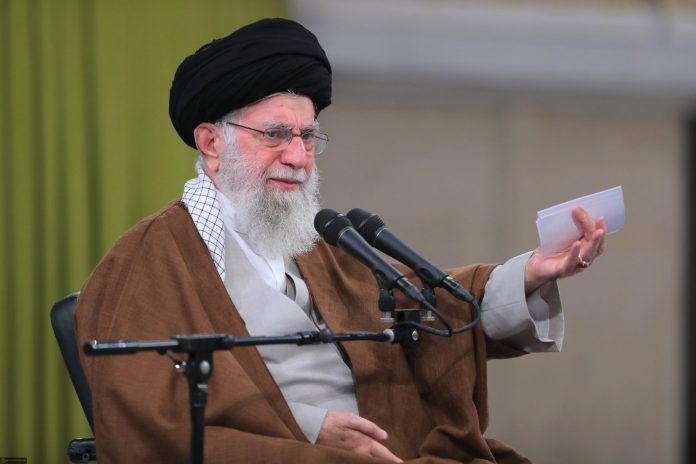
Ayatollah Khamenei

Speaking at a meeting with families of those killed in recent war by the US-Israeli alliance, Ayatollah Khamenei said officials are obliged to listen to public grievances and respond responsibly.

“Protest is justified, but protest is different from rioting,” he said. “Officials must talk to protesters, but talking to rioters is useless; rioters must be dealt with appropriately.”

Referring to recent demonstrations by merchants and shopkeepers in various cities in Iran, the Leader described the bazaar community as one of the most loyal segments of Iranian society.

He said their complaints were rooted in real economic pressures, particularly the sharp decline in the value of the national currency and ongoing volatility in foreign exchange rates.

According to the Leader, such instability has disrupted business activity and made it difficult for traders to plan or operate normally.

Ayatollah Khamenei said the government and other senior officials were aware of the situation and were seeking solutions, but argued that the recent surge and instability in foreign currency prices were “not natural.”

He noted hostile foreign actors were exploiting economic vulnerabilities to put pressure on Iran and create unrest.

The Leader also warned that some groups were attempting to hijack economic protests by promoting anti-state, anti-religious and anti-national slogans.
He said exploiting legitimate public demands to create insecurity was “completely unacceptable.”

Ayatollah Khamenei also cautioned against an ongoing “soft war” waged by Iran’s enemies through misinformation, rumors and psychological operations aimed at weakening public morale and unity.

He called for vigilance, national cohesion and active resistance to such efforts.

Emphasizing resilience, he said Iran would not yield to external pressure and expressed confidence that, with public support, faith and unity, the country would overcome current challenges and thwart hostile plans.

Iran Condemns US attack on Venezuela as violation of UN Charter and international law

The ministry said that the US military attack on Venezuela constitutes a clear violation of the fundamental principles of the UN Charter and the basic rules of international law, and fully qualifies as an “act of aggression.”

It called on the UN and all states that are committed to the rule of law, as well as to international peace and securiy, to explicitly and immediately condemn the aggressive act.

The statement added that the US military aggression against an independent state that is a member of the UN, represents a grave breach of regional and international peace and security. Its consequences affect the entire international system and will further expose the UN Charter-based order to erosion and destruction.

The Ministry of Foreign Affairs of the Islamic Republic of Iran emphasized the legal and moral responsibility of all states and international organizations, particularly the UN and its Security Council, to immediately halt the United States’ unlawful aggression against Venezuela.

It also stressed the necessity of taking appropriate measures to hold accountable the planners and perpetrators of crimes committed in the course of this military aggression.

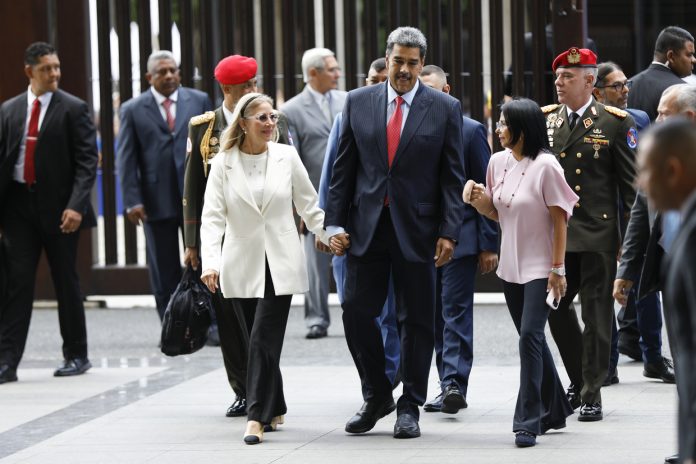
Trump claims Maduro, his wife captured

In a statement on Saturday on Truth Social, Trump confirmed that the US had “successfully carried out a large scale strike against Venezuela.”

“Its leader, President Nicolas Maduro, who has been, along with his wife, captured and flown out of the Country. This operation was done in conjunction with US Law Enforcement,” he wrote, adding that additional details would be provided at a news conference in his Florida residence in Mar-a-Lago at 11am.

Unnamed US officials told CBS that the operation had been carried out by Delta Force, the US Army’s top special mission unit. It has been involved in high-profile operations, including the 2019 raid that killed Islamic State leader Abu Bakr al-Baghdadi, and the 1989 capture of Panamanian leader Manuel Noriega.

Speaking to the New York Times, Trump called the operation “brilliant,” adding “a lot of good planning and lot of great, great troops” took part. A US official told the outlet that no Americans were killed or injured in the operation but would not comment on Venezuelan casualties.

Venezuela’s Vice President Delcy Rodríguez – who is next in line to take Maduro’s reigns – stated that the whereabouts of the head of state are unknown, and asked Trump to provide proof of life.

Tensions between the US and Venezuela escalated over what Washington has described as Caracas’ links to drug trafficking and narco-cartels. Maduro has denied the allegations, calling them a pretext for toppling his government.

As the stand-off persisted, media reports said the US had repeatedly sought to remove Maduro from power, including through efforts to pressure him to step down, and allegedly plotted his capture or assassination.

In October, Trump said that he had authorized CIA operations in Venezuela, prompting a backlash from Caracas. The same month, AP reported that the agents had tried to recruit Maduro’s personal pilot to capture the president and deliver him to the US, which would take him into custody on drug trafficking charges.

In November, the New York Times reported that one plan could potentially involve US Special Operations troops, including the elite Delta Force and Navy SEALs, to capture or kill Maduro – who was reportedly described as a narco-baron to avoid legal hurdles.

In December, Reuters reported, citing sources, that the US had given Maduro an ultimatum to flee the country, promising that in exchange, the Venezuelan president and his family would be shielded from all US sanctions as well as a case which had been brought against him in the International Criminal Court.


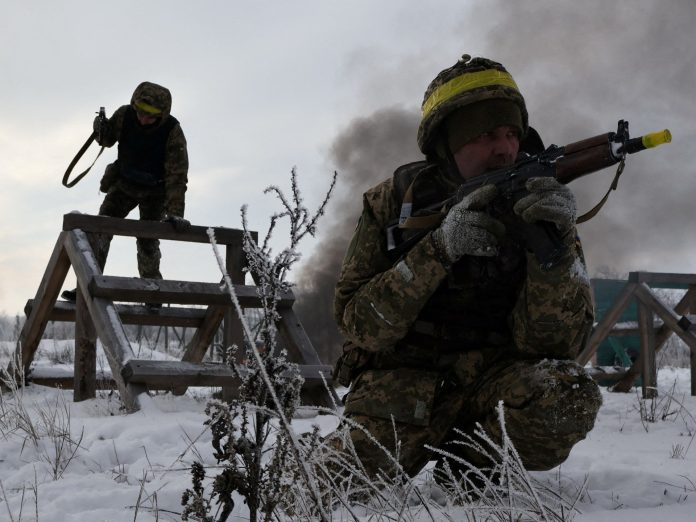
More than 400,000 Russians killed, wounded for 0.8 percent of Ukraine in 2025

On Monday, Russian Foreign Minister Sergey Lavrov accused Ukraine of attempting to assassinate Russian President Vladimir Putin at his residence at Lake Valdai, 140km (87 miles) northeast of Moscow.

“The Kyiv regime launched a terrorist attack using 91 long-range unmanned aerial vehicles (UAVs) on the state residence of the president of the Russian Federation in the Novgorod Region. All the UAVs were destroyed by the air defence systems of the Russian Armed Forces,” said Lavrov in a statement.

He did not say whether Putin was in residence at the time.

Lavrov’s Ukrainian counterpart, Andrii Sybiha, quickly dismissed the claim.

“Almost a day passed and Russia still hasn’t provided any plausible evidence to its accusations of Ukraine’s alleged ‘attack on Putin’s residence’. And they won’t. Because there’s none. No such attack happened,” Sybiha stated.

Russia produced photographs of drone debris lying in the snow two days later, but the drone’s location, manufacture and the time of its downing could not be corroborated from them.

“The attack on Putin’s Valdai residence is presumably a Kremlin fake,” wrote the opposition outlet Sota.

“Residents of Valdai, where Putin’s ‘Dinner’ residence is located, told Sota that last night they did not hear the work of the air defence, which would have shot down 91 drones.”

Sota also pointed out that drones attacking Valdai “necessarily cross a specially protected airspace with objects of the Strategic Missile Forces, East Kazakhstan region, military aviation, closed administrative units such as Solnechny, Lake, etc.

“A drone crossing the territory of these facilities can fly to the Dinner residence only by miracle,” Sota added.

Lavrov’s claim also appeared at odds with an earlier announcement from the Russian Ministry of Defence that only 41 drones had been downed in the Novgorod region on the night of December 28-29.

Russia’s Defence Ministry later issued an update, saying another 49 drones had been shot down over Bryansk and one over Smolensk “flying in the direction of Novgorod region”.

Ukraine observers pointed out that Bryansk and Smolensk are hundreds of kilometres from Valdai.

The Institute for the Study of War (ISW), a Washington-based think tank, stated that none of the usual evidence of Ukrainian strikes accompanied the alleged attack, such as footage, heat signatures, statements from local officials, or local media reports.

For example, a successful Ukrainian attack against an oil depot in Rybinsk on December 31 was well-documented on social media. So was an attack on the Novoshakhtinsk refinery in Rostov a week earlier, as well as a number of other strikes during the week.

News of the alleged attack came a day after Ukrainian President Volodymyr Zelensky concluded successful talks with United States President Donald Trump in Florida, garnering a promise that US forces would participate in Ukraine’s security following any peace agreement with Russia.

It was the first time the US had agreed to such security guarantees, and it appeared to make Polish Premier Donald Tusk optimistic that the war in Ukraine could end early in 2026.

“Peace is on the horizon,” he told a cabinet meeting on Tuesday.

“The key result of recent days is the American declaration… (of) willingness to participate in security guarantees for Ukraine after a peace agreement, including the presence of American troops, for example, on the border or on the line of contact between Ukraine and Russia,” Tusk stated.

Zelensky said Ukraine’s allies, known as the Coalition of the Willing, were scheduled to meet in Kyiv on January 3 and in France three days later.

Lavrov’s announcement cast a pall on this optimism when he said, “Russia’s negotiating position will be reviewed.” On the same day, Putin ordered his forces in southern Ukraine to continue efforts to seize the unoccupied remainder of the southern Ukrainian region of Zaporizhia. Moscow controls three-quarters of the region.

Zelensky added Russia was “looking for a pretext” to escalate hostilities and avoid engaging in peace talks, following his successful meeting with Trump.

“Russia is at it again, using dangerous statements to undermine all achievements of our shared diplomatic efforts with President Trump’s team,” he wrote on social media.

Russia has repeatedly dashed Trump’s hopes for peace, refusing to cede occupied territory or to accept US and European forces on Ukrainian soil.

Yet Trump appeared to believe Moscow’s allegations.

“I don’t like it. It’s not good,” Trump told reporters on Monday.

“It’s one thing to be offensive… It’s another thing to attack his house. It’s not the right time to do any of that. And I learned about it from President Putin today. I was very angry about it.”

Other US officials were not convinced. US Ambassador to NATO Matthew Whitaker expressed scepticism, telling an interviewer on Monday, “It’s unclear whether it actually happened.” On Wednesday, the Wall Street Journal reported that US intelligence had determined that Ukraine did not target Putin’s residence.

Moscow’s messaging appeared to bookend Zelensky’s meeting with Trump, targeting the US president.

Putin held staged meetings with his General Staff on Saturday, December 27, and Monday, just before and after Zelensky’s meeting with Trump, during which commander-in-chief Valery Gerasimov broadcast exaggerated claims of success.

He said Russian forces had occupied 6,640 square kilometres (2,564 square miles) of Ukrainian territory and seized 334 Ukrainian settlements in 2025. The ISW said it had “observed evidence indicating a Russian presence in 4,952 square kilometres (1912 sq miles)” and 245 settlements.

Ukrainian commander-in-chief Oleksandr Syrskii stated that territory amounting to 0.8 percent of Ukraine’s 603,550sq km (233,032sq miles) had been lost. at the cost of almost 420,000 dead and wounded Russians.

Ukraine’s General Staff estimated total Russian casualties for the war at more than 1.2 million, almost 11,500 tanks and 24,000 armoured fighting vehicles, more than 37,000 artillery systems, 781 aircraft and well in excess of 4,000 missiles.

By the end of 2025, Russian forces had still not taken Pokrovsk and Myrnohrad, the eastern Ukrainian towns in Donetsk that they had been fighting to capture for five months. They held 55 percent of Hulyaipole in the southern Zaporizhia region, despite claiming to have seized it. Even Russian military reporters admitted Russian forces were being squeezed out of Kupiansk in the northern Kharkiv region, despite claiming also to have seized that.

“Due to inaccurate reports on the situation to higher authorities, reserves that were ‘not needed’ for the capture and clearing of Kupiansk were redeployed to other areas,” wrote one Kremlin-friendly outlet, citing “systematic exaggeration of successes”.

While it remained doubtful whether Ukraine did target Valdai, Russia’s attacks on Ukrainian cities were documented. During the last week of the year, Russia launched just more than 1,000 drones and 33 missiles at Ukraine’s cities. Ukraine’s Air Force said it intercepted 86 percent of the drones and 30 of the missiles.

 

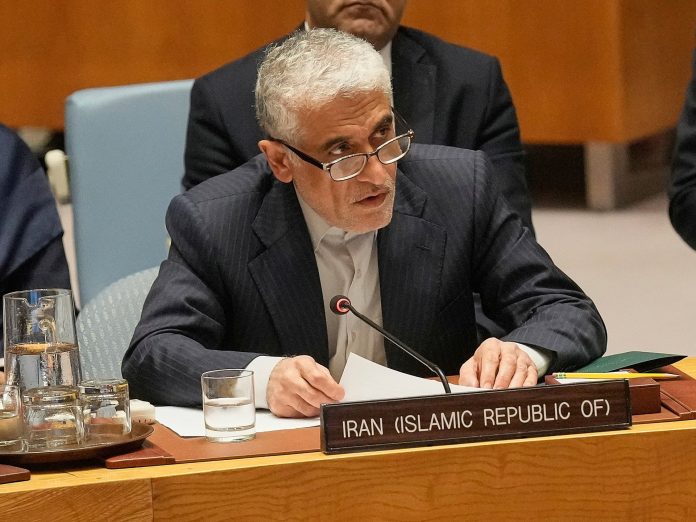
Iran’s envoy warns UN about Trump’s ‘consistent pattern of unlawful conduct’

In a letter addressed to the UN secretary-general and members of the Security Council on Friday, Amir-Saeid Iravani, Iran’s permanent ambassador to the world body, said the US president’s statement made earlier the same day constituted “yet another clear instance of intervention in the internal affairs of a Member State of the United Nations, in violation of international law and the Charter of the United Nations.”

According to the letter, Trump had openly threatened the Islamic Republic with the use of force, declaring that the United States was “locked and loaded and ready to go,” remarks amounting to incitement of violence, unrest, and terrorist acts inside the country.

The envoy stressed that the statement was not an isolated incident, noting that only days earlier the US president had threatened Iran with renewed military attacks, including against the country’s peaceful nuclear facilities and defensive capabilities.

“These repeated and deliberate statements demonstrate a consistent pattern of unlawful conduct by the United States and constitute a clear, explicit, and unlawful threat of the use of force against a sovereign State, as well as interference in its internal affairs,” the letter read.

It added that such threats were strictly prohibited under the international law regardless of political or rhetorical framing.

The ambassador cautioned that any attempt to incite or legitimize internal unrest as a pretext for external pressure or military intervention would constitute a grave violation of the Islamic Republic’s sovereignty, political independence, and territorial integrity, citing Articles 2(1), 2(4), and 2(7) of the UN Charter as well as General Assembly resolution 2625 of 1970.

The letter also argued that encouragement or facilitation of subversive or violent activities within another state amounted to an internationally wrongful act that directly engaged the responsibility of the intervening state.

Iravani rejected the US’s claims of “supporting the Iranian people,” saying such assertions came from a country with a long and well-documented record of military interventions, regime-change operations, and unlawful uses of force worldwide.

He listed Washington’s involvement in the 1953 coup against the government of then–prime minister Mohammad Mossadegh, US support for former Iraqi dictator Saddam Hussein’s regime during the eight-year imposed war against Iran, the downing of Iran Air Flight 655 in 1988, the assassination of Major General Qassem Soleimani, complicity with the Israeli regime in assassinations, sabotage, and attacks against Iranian targets during Tel Aviv’s illegal war against the Islamic Republic in June, and decades of unilateral sanctions.

Against this backdrop, the envoy called on the UN secretary-general and the Security Council to “unequivocally and strongly condemn” Trump’s remarks, demand that the United States cease all threats or uses of force, and urge Washington to comply with its obligations under the UN Charter.

He reiterated that the Islamic Republic “unequivocally rejects and strongly condemns” the statements and reaffirmed the country’s inherent right to defend its sovereignty, territorial integrity, and national security.

The official finally warned that the United States would bear full responsibility for any consequences arising from its unlawful threats.


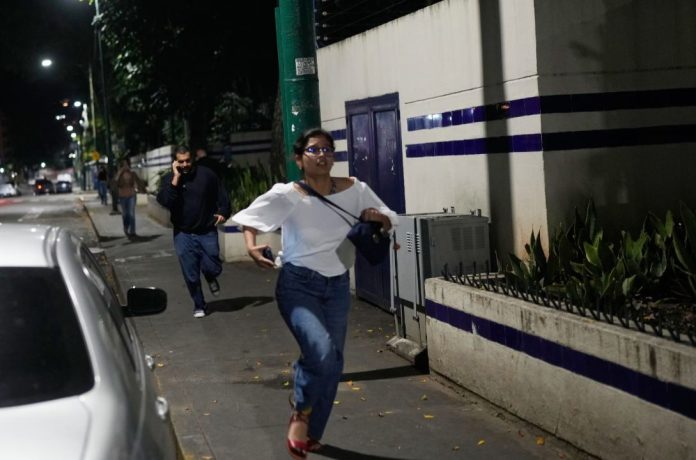
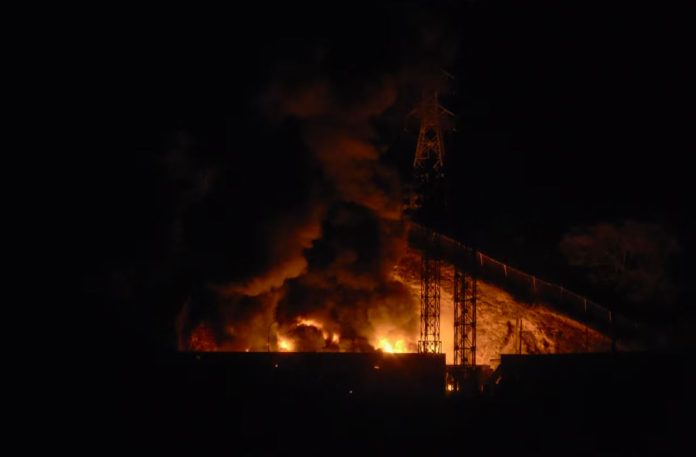
Loud explosions heard in Venezuela’s capital

The explosions come as US President Donald Trump, who has deployed a navy task force to the Caribbean, raised the possibility of ground strikes against Venezuela.

Sounds of blasts were still being heard around 2:15 am, although their exact location was unclear.

Trump on Monday said the United States hit and destroyed a docking area for alleged Venezuelan drug boats.

The Republican leader would not say if it was a military or CIA operation or where the strike occurred, noting only that it was “along the shore.”

The attack would be the first known land strike on Venezuelan soil.

President Nicolas Maduro has neither confirmed nor denied Monday’s strike, but stated Thursday he was open to cooperation with Washington after weeks of US military pressure.

The Trump administration has accused Maduro of heading a drug cartel and says it is cracking down on trafficking, but the leftist leader denies any involvement in the narcotics trade, stressing Washington is seeking to overthrow him because Venezuela has the largest known reserves of oil on Earth.

Washington has ramped up pressure on Caracas by informally closing Venezuela’s airspace, imposing more sanctions and ordering the seizure of tankers loaded with Venezuelan oil.

For weeks Trump has threatened ground strikes on drug cartels in the region, adding they would start “soon,” with Monday being the first apparent example.

US forces have also carried out numerous strikes on boats in both the Caribbean Sea and eastern Pacific Ocean since September, targeting what Washington says are drug smugglers.

The administration has provided no evidence that the targeted boats were involved in drug trafficking, however, prompting debate about the legality of these operations.

The deadly maritime campaign has killed at least 107 people in at least 30 strikes, according to information released by the US military.

Venezuela’s government has condemned what it said was a “very serious grave military aggression” by the US against multiple parts of the country after explosions were reported in the capital Caracas and other locations early on Saturday.

In a statement, the government accused the US of carrying out an attack on Caracas and the states of Miranda, Aragua and La Guaira.

President Maduro has signed a state of emergency and ordered all national defense plans to be implemented “at the appropriate time and under the appropriate circumstances,” a statement from the government read.

It also called on Venezuela’s social and political forces to mobilize and defend the country.

“The people of Venezuela and their Bolivarian National Armed Forces, in perfect popular-military-police unity, are deployed to guarantee sovereignty and peace,” a statement read.

The statement added Venezuela will also file complaints before the UN Security Council, the UN Secretary-General, and other international bodies, demanding the condemnation of the US.


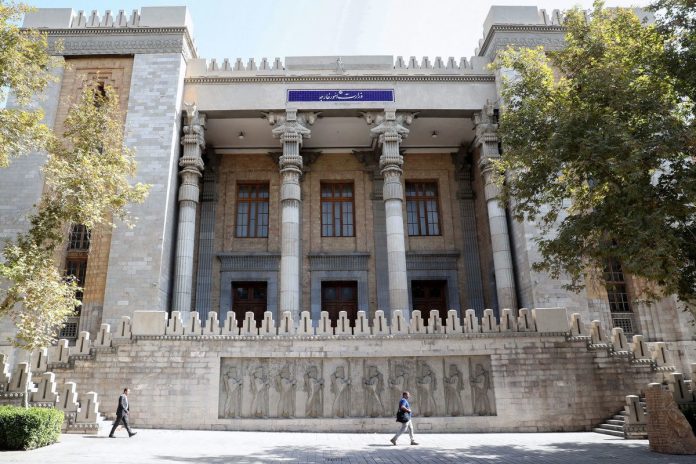
Iran vows ‘decisive, comprehensive’ response to any assault

Iranian Foreign Ministry

In a statement issued on Friday, the Foreign Ministry strongly condemned earlier interventionist and irresponsible comments by the US president and other American officials, saying such positions amounted to a continuation of Washington’s “bullying and unlawful approach” towards the Iranian nation.

The ministry said the remarks constituted a flagrant violation of the fundamental principles of the United Nations Charter and the international law, particularly concerning respect for national sovereignty, and warned that they amounted to incitement to “violence and terrorism” against Iranian citizens.

Recalling a long record of criminal interference by successive US administrations, it dismissed American claims of concern for the Iranian people as hypocritical and aimed at deceiving public opinion and concealing past and ongoing crimes against Iranians.

The statement cited US complicity in the 1953 coup against Iran’s then–prime minister Mohammad Mosaddegh, cooperation with former Iraqi dictator Saddam Hussein’s regime during the eight-year imposed war against the Islamic Republic in the 1980s, the downing of Iran Air Flight 655 by a US warship in 1988 that killed 300 civilians, and decades of sanctions targeting the livelihoods and fundamental rights of Iranian civilians.

It also referred to the US’s collusion with the Israeli regime in Tel Aviv’s illegal war on the country in June that targeted the nation’s vital infrastructure and safeguarded nuclear facilities and led to the assassination and killing of Iranian scientists, officials, and ordinary civilians, including small children.

The ministry emphasized the responsibilities of the UN Security Council and the UN secretary-general, under the world body’s Charter, to safeguard international peace and security in the face of Washington’s aggressive unilateralism.

It stressed that Iranians would not permit any “malicious foreign interference” in their dialogue and interaction aimed at resolving domestic issues.

It, meanwhile, assessed the recent US threats as being aligned with the Israeli regime’s policy of escalating tensions in the region.

The statement cautioned that responsibility for the consequences of whatever situation that might arise out of fresh American adventurism against Iran would rest entirely with the United States.

The remarks came after Trump threatened Iran in a social media post, claiming the US was prepared for military action in response to, what he called, the country’s potential forceful action against sporadic protests over the decline of rial, the Iranian currency.


Iran marks Father’s Day and Men’s Day honoring the birth of Imam Ali

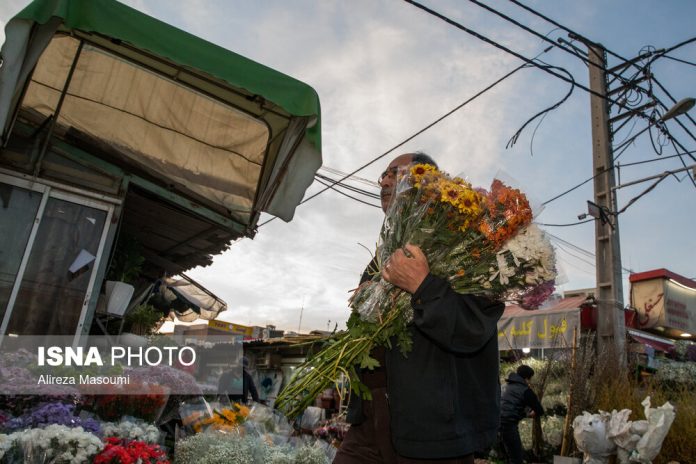
Tehran Flower Market

The occasion falls on the 13th of Rajab in the Islamic lunar calendar, which this year corresponds to January 3.

In Iran, Father’s Day and Men’s Day are closely connected to religious beliefs and long-standing cultural traditions.

The day honors fathers and men for their dedication, sacrifices, and essential roles within the family and wider society.

It is seen as an opportunity to recognize their responsibility, compassion, and guidance in nurturing strong family bonds.

Families celebrate by gathering with fathers, grandfathers, and other male relatives, sharing meals, exchanging warm wishes, and spending meaningful time together. Children often give gifts or write heartfelt messages to express their gratitude and admiration.

Imam Ali is widely respected for his bravery, wisdom, justice, and deep sense of humanity. His life and character are viewed as a model of moral leadership, fatherhood, and masculine virtue.